Artwork
Page from Tales of a Parrot (Tuti-nama): text page
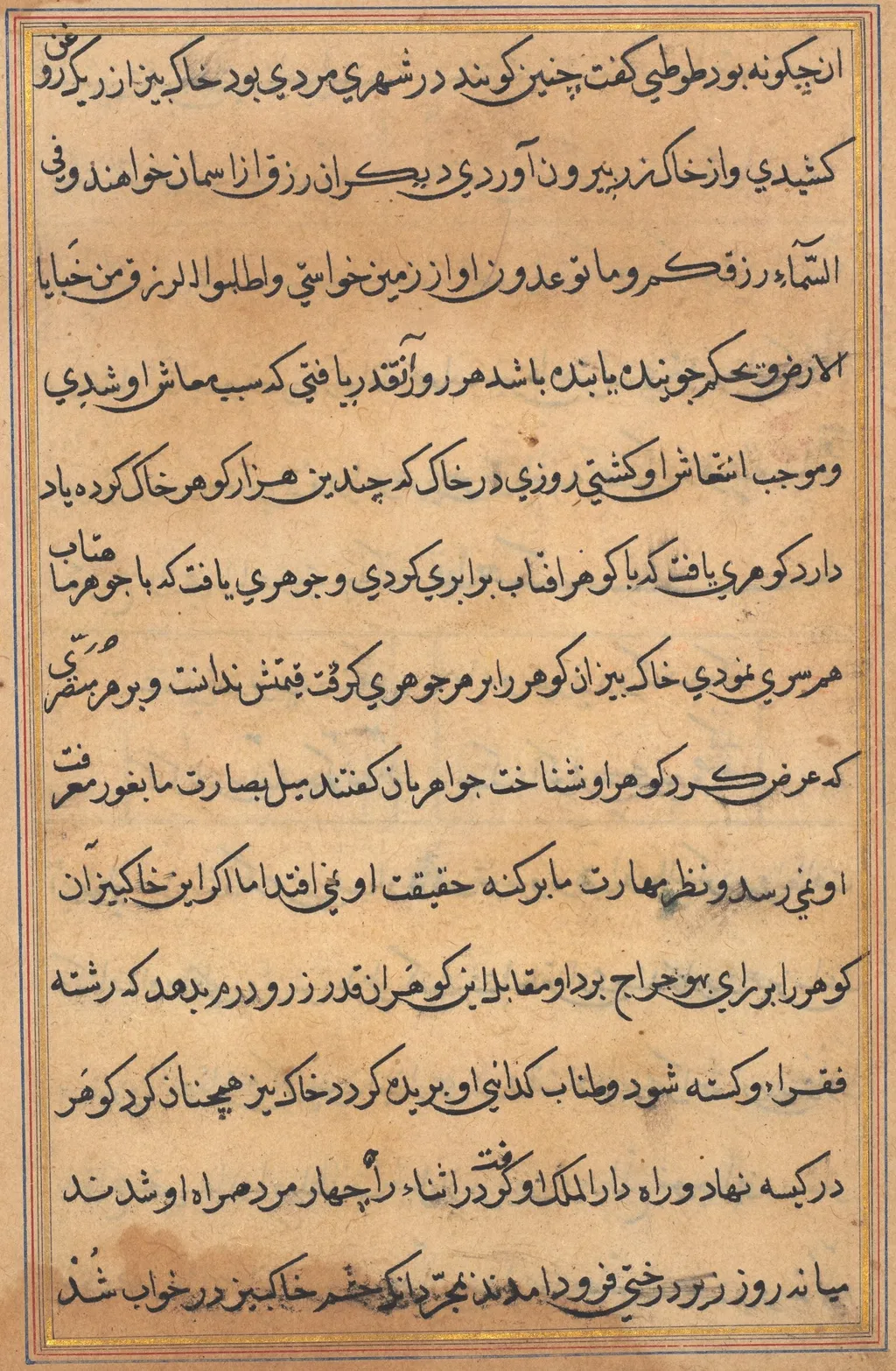
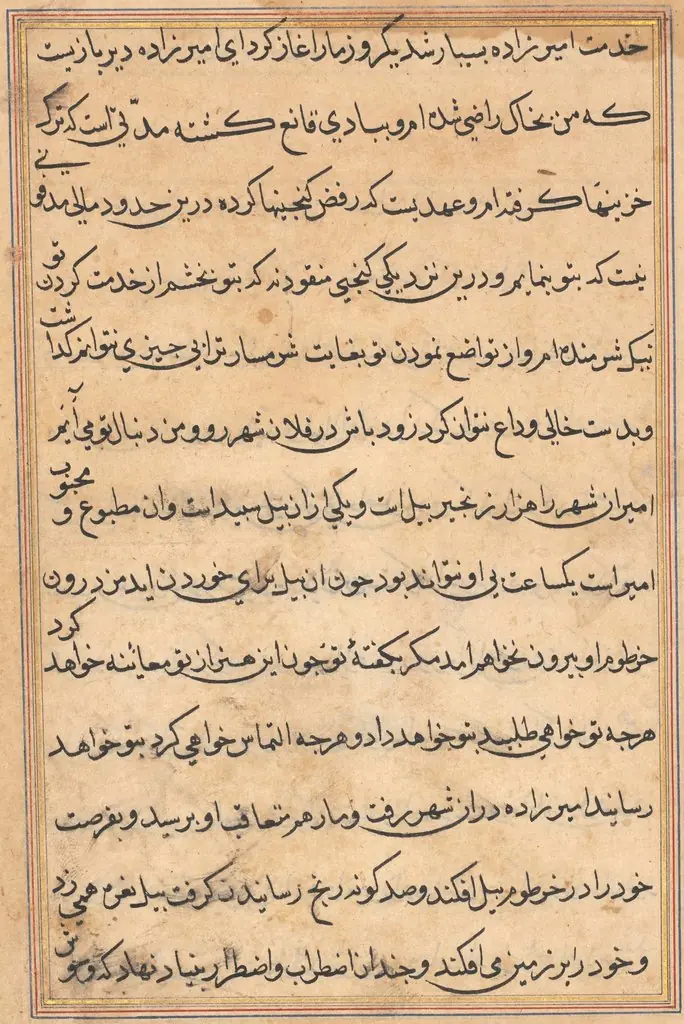
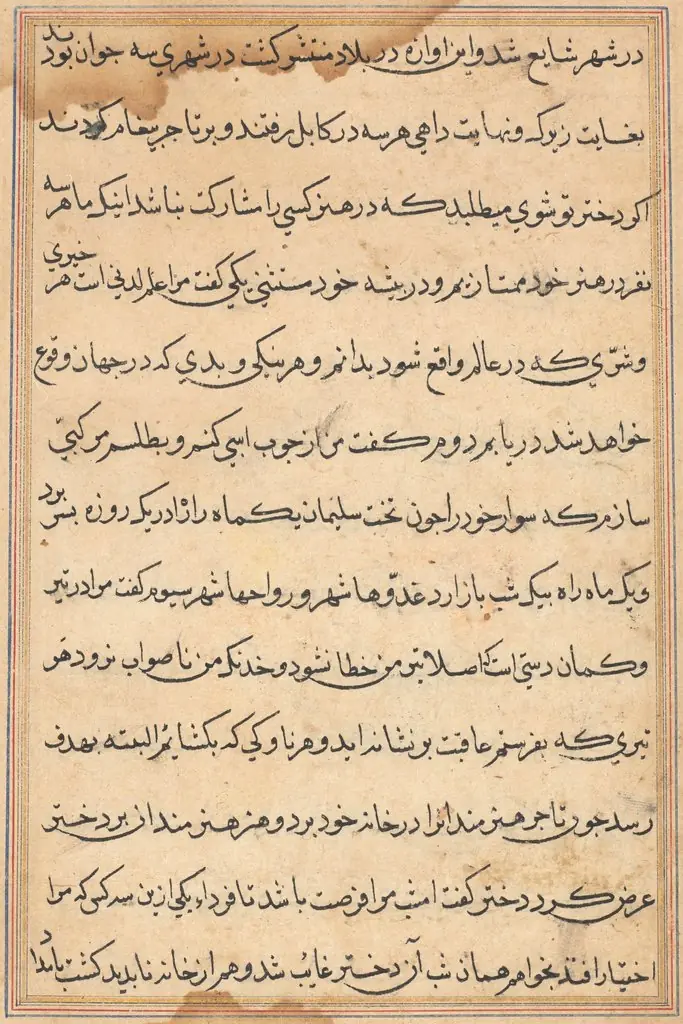
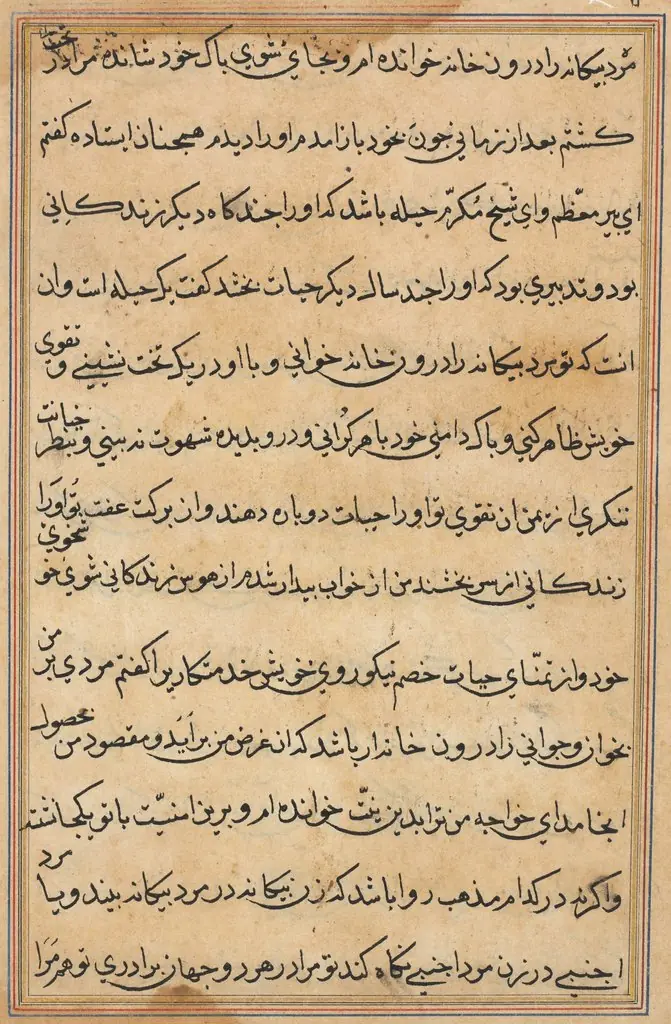
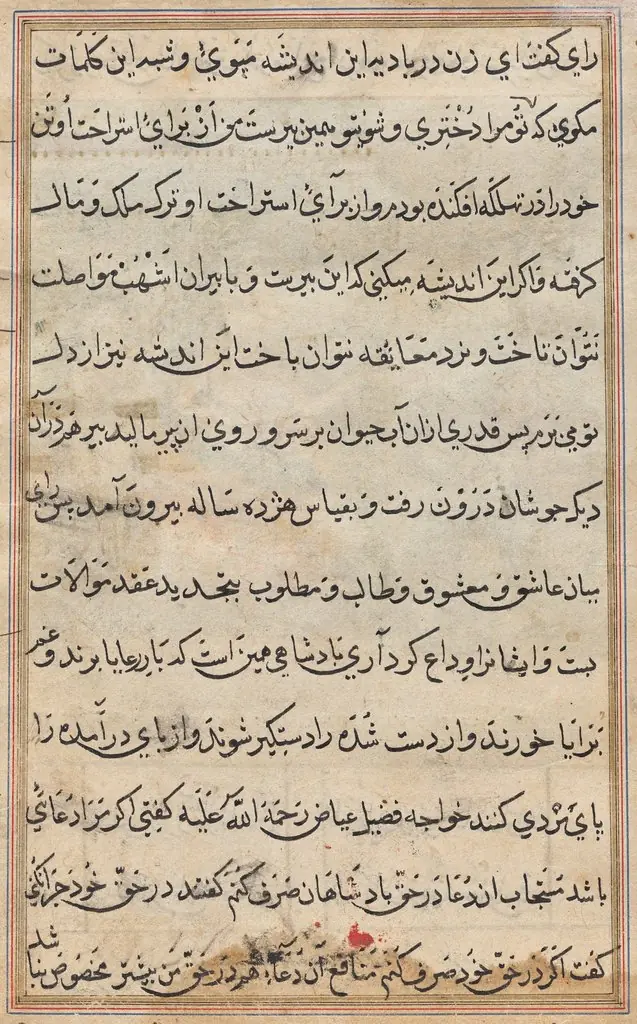
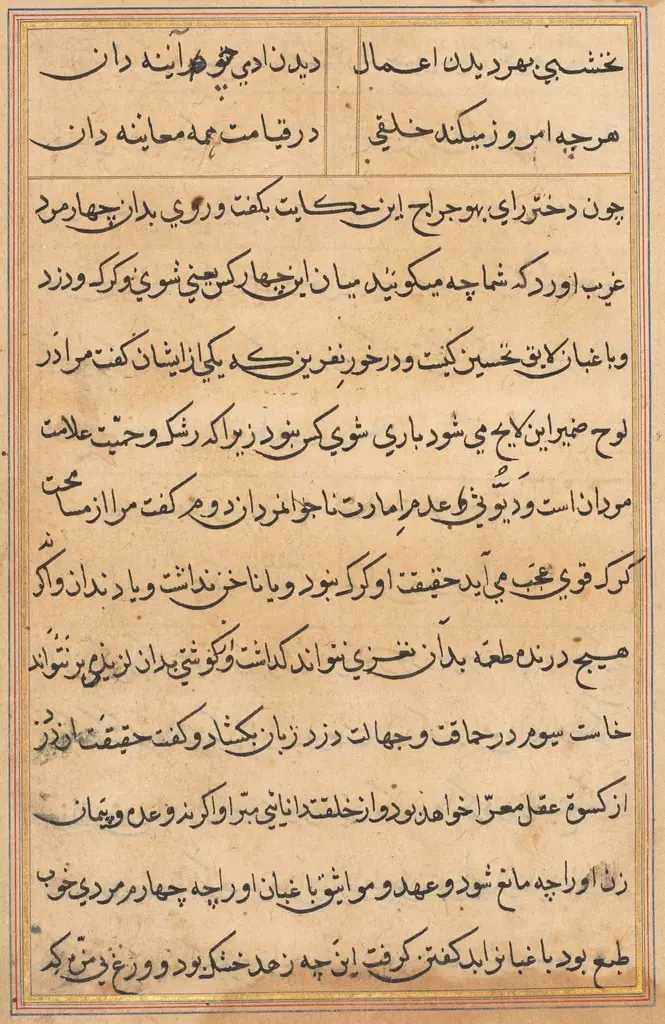
Page from Tales of a Parrot (Tuti-nama): text page is an unspecified painting. It dates from 1560 and is held in the collection of the Cleveland Museum of Art. This illuminated page belongs to the Persian manuscript known as the Tales of a Parrot (Tuti‑nama).
About this work
Overview
This illuminated page belongs to the Persian manuscript known as the Tales of a Parrot (Tuti‑nama). Executed as a painted sheet, it measures roughly the size of a small folio and is presently held in the collection of the Cleveland Museum of Art. The composition is dominated by dense black ink set against a light brown ground, framed by a narrow blue margin.
Subject & Meaning
The text, written in a flowing script that winds across the surface like vines or streams, presents a narrative intended to be read from right to left, reflecting the traditional direction of Persian literary works. The page was produced for Prince Salim, suggesting a patronage context in which the story served either an educational or entertainment purpose for the royal audience.
Technique & Style
The artist employed a single‑brush approach, varying line thickness to convey emphasis and rhythm within the calligraphic flow. The background’s muted ochre tone provides a subtle contrast that enhances legibility while the thin blue border delineates the page’s limits, giving the work a restrained yet deliberate framing device.
History & Provenance
Commissioned for Prince Salim, the page likely originated in a courtly workshop during the late Safavid period, though precise dating remains uncertain. It entered the Cleveland Museum of Art’s collection through acquisition in the twentieth century, where it now contributes to the museum’s representation of Persian manuscript art.
Context
The Tales of a Parrot is part of a broader tradition of illustrated Persian literature that combined poetic storytelling with elaborate calligraphy. Such manuscripts were often produced for elite patrons, serving both as objects of aesthetic appreciation and as carriers of moral or didactic content within the cultural milieu of the Persianate world.
Artist & collection

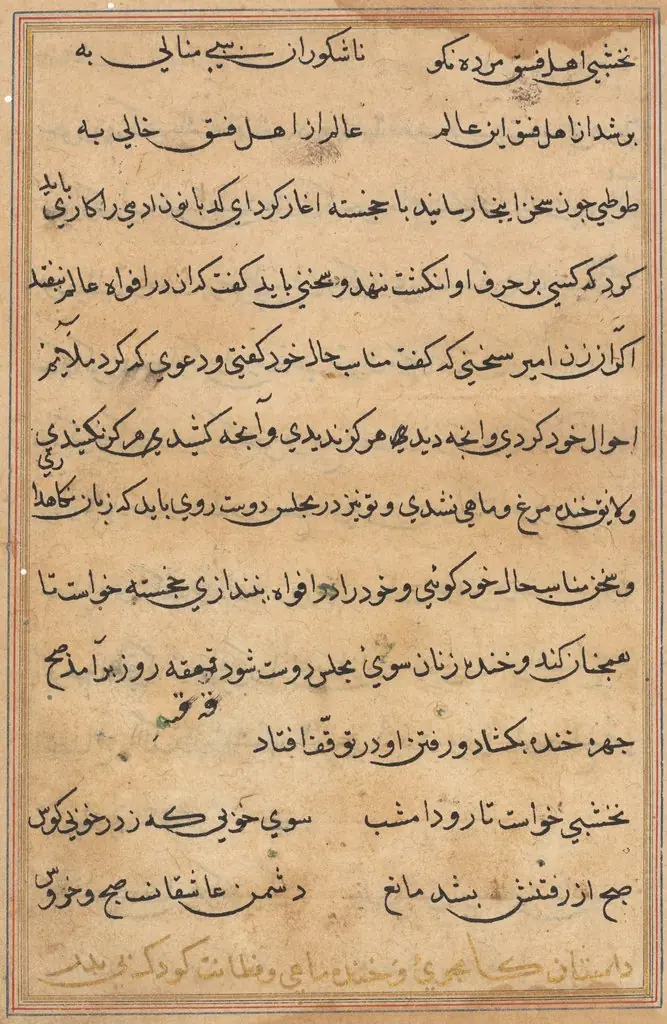 Page from Tales of a Parrot (Tuti-nama): text page
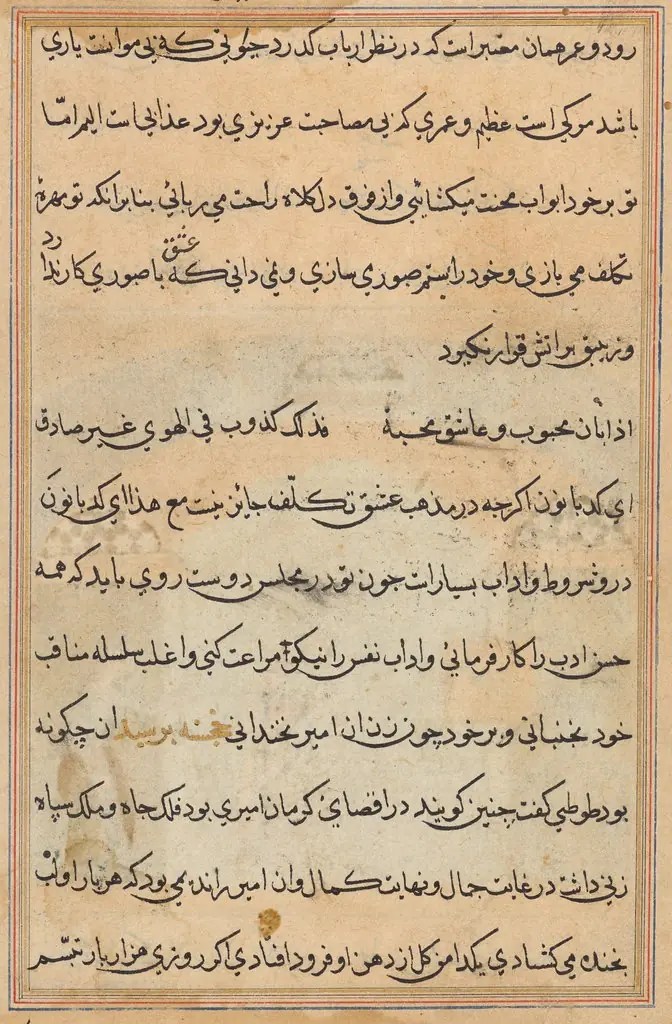 Page from Tales of a Parrot (Tuti-nama): text page
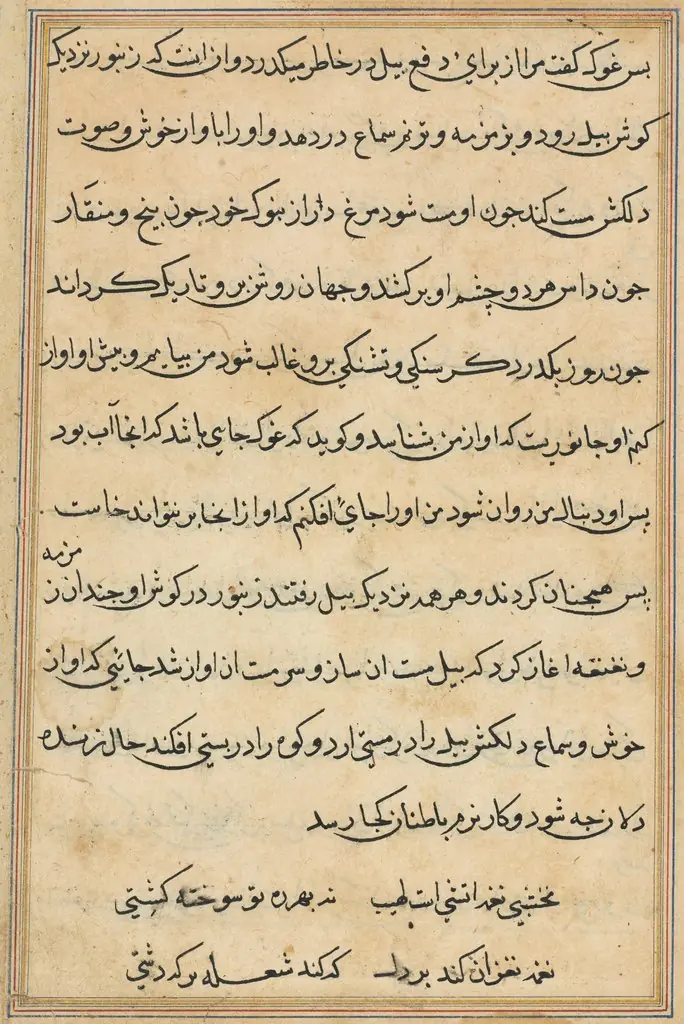 Page from Tales of a Parrot (Tuti-nama): text page
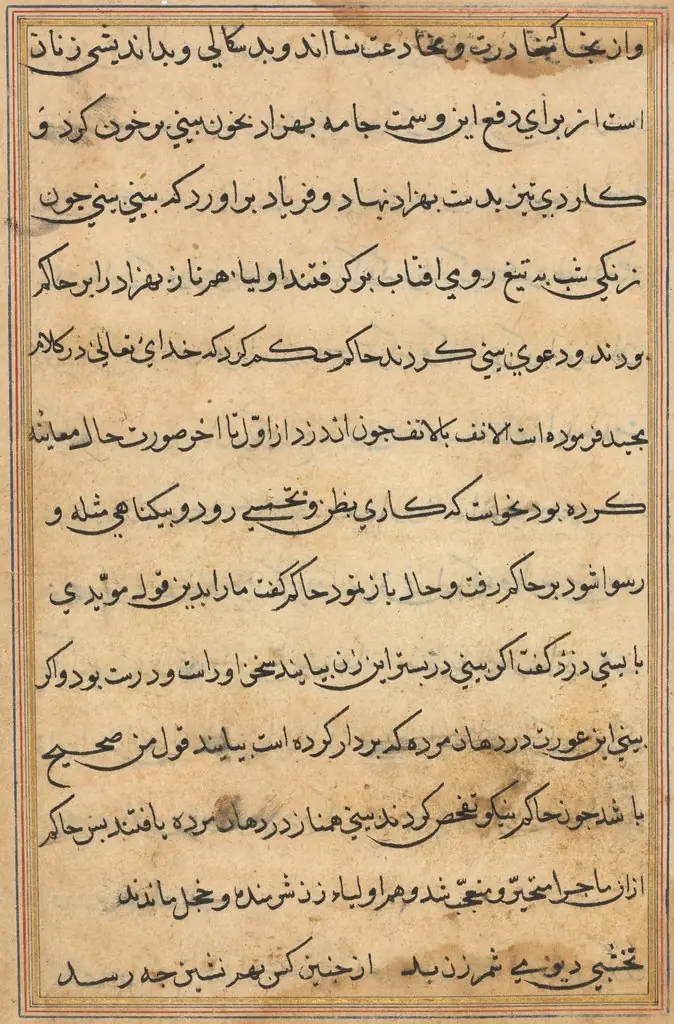 Page from Tales of a Parrot (Tuti-nama): text page
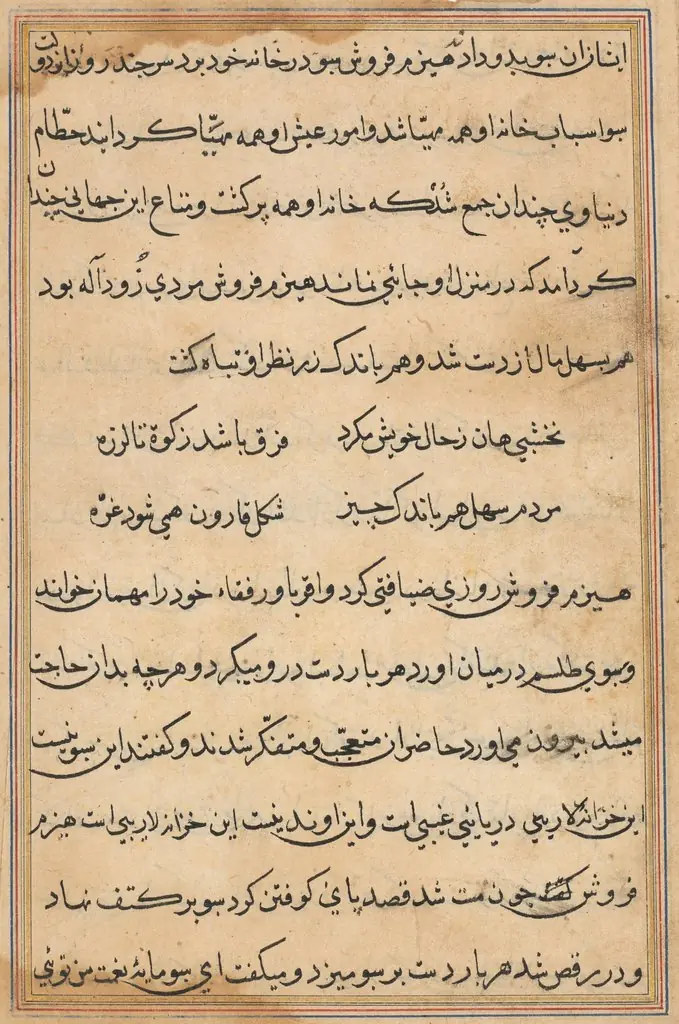 Page from Tales of a Parrot (Tuti-nama): text page
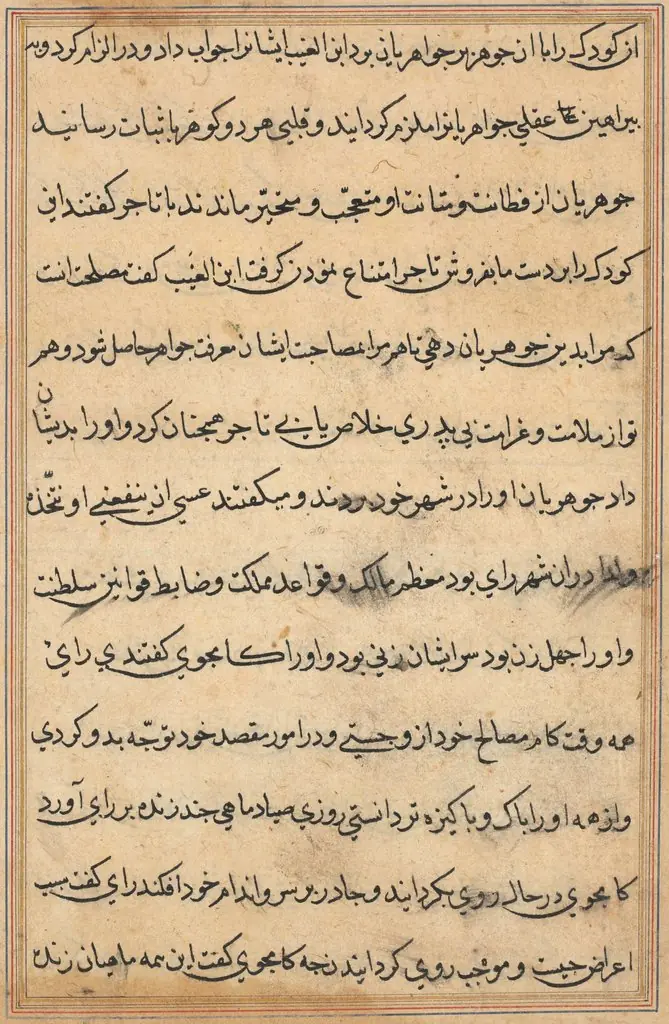 Page from Tales of a Parrot (Tuti-nama): text page
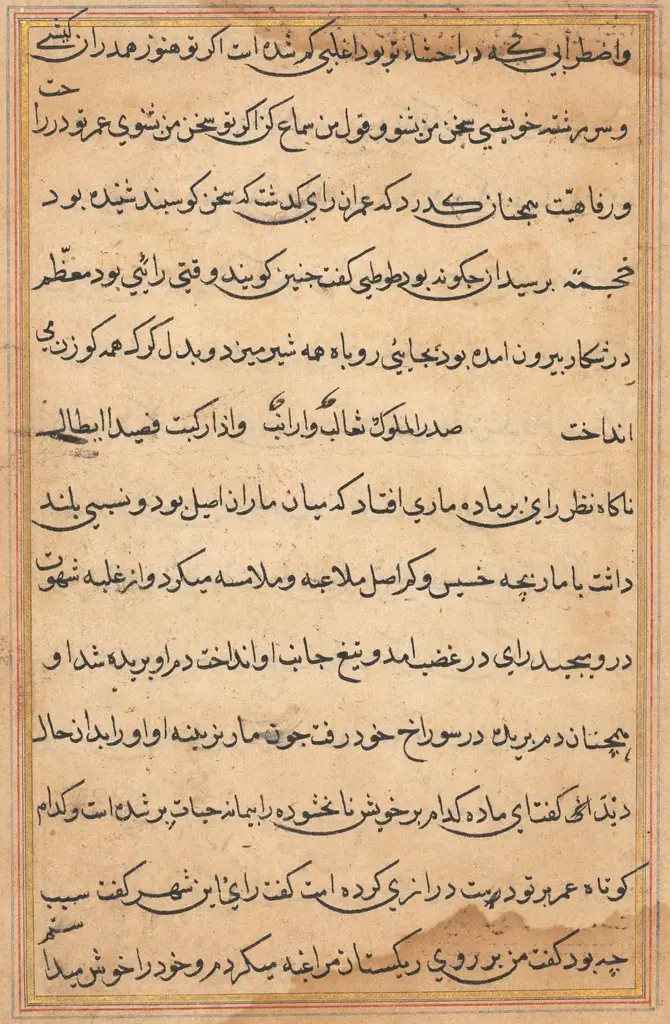 Page from Tales of a Parrot (Tuti-nama): text page
 Page from Tales of a Parrot (Tuti-nama): text page
 Page from Tales of a Parrot (Tuti-nama): text page
 Page from Tales of a Parrot (Tuti-nama): text page
 Page from Tales of a Parrot (Tuti-nama): text page
 Page from Tales of a Parrot (Tuti-nama): text page