Artwork
Kamjuy, the wife of the Raja, averts her face from the fishes, from a Tuti-nama (Tales of a Parrot): Twenty-third Night
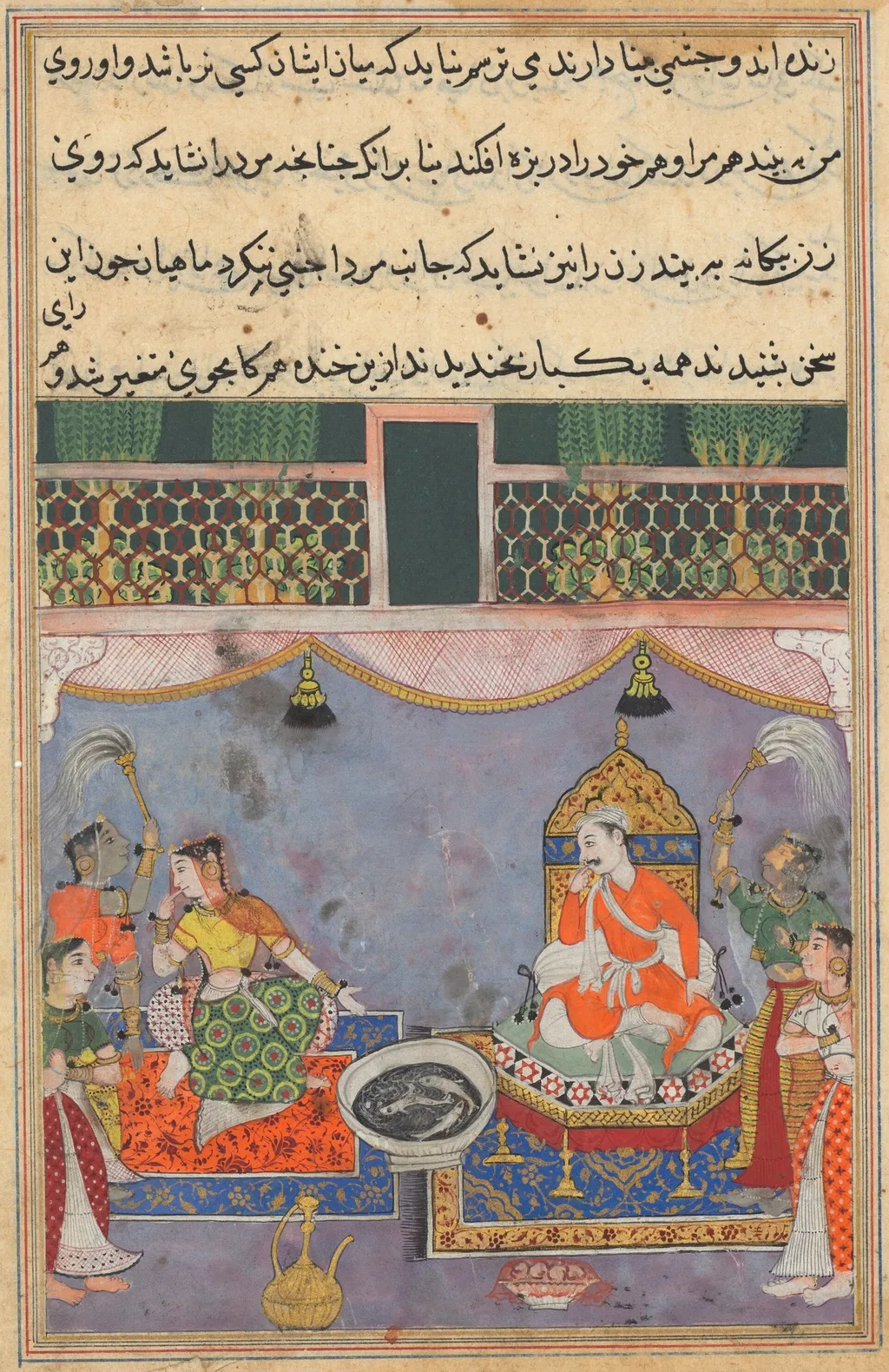
Kamjuy, the wife of the Raja, averts her face from the fishes, from a Tuti-nama (Tales of a Parrot): Twenty-third Night is an unspecified painting. It dates from 1560 and is held in the collection of the Cleveland Museum of Art. The painting depicts a courtly tableau drawn from the twenty‑third night of the *Tuti‑nama* (Tales of a Parrot).
About this work
Overview
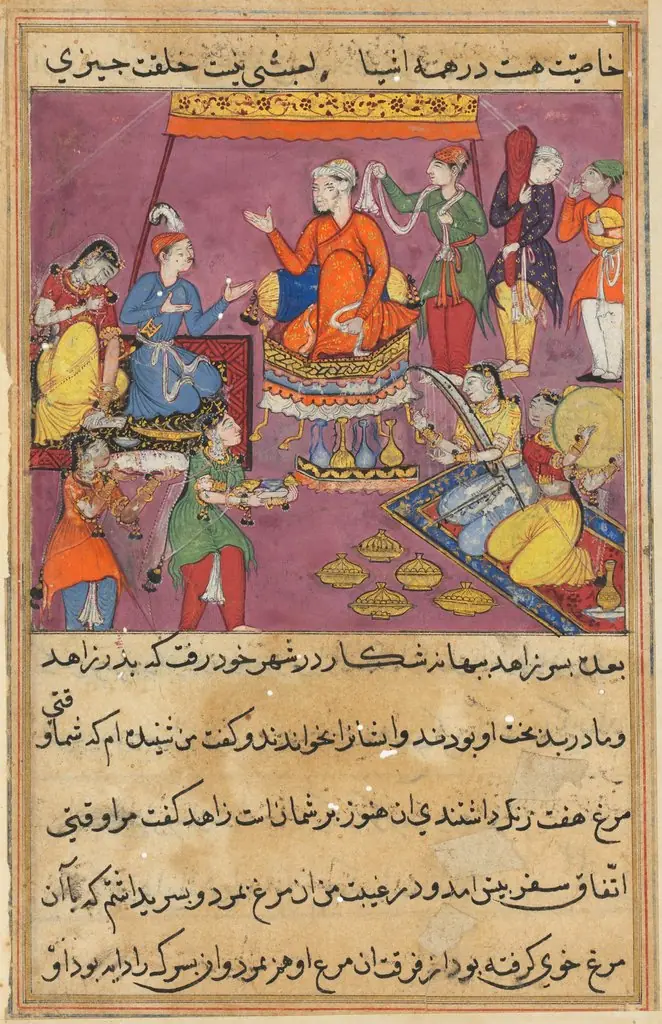
Attendants bearing trays and a gilded pitcher surround them, set against a richly patterned border of green and red motifs and an Arabic inscription above.
The painting depicts a courtly tableau drawn from the twenty‑third night of the *Tuti‑nama* (Tales of a Parrot). A regal figure seated on an elaborately carved chair holds a fan, while a second gentleman in patterned robes appears to play a musical instrument. Attendants bearing trays and a gilded pitcher surround them, set against a richly patterned border of green and red motifs and an Arabic inscription above.
Subject & Meaning
The scene illustrates Kamjuy, the Raja’s wife, turning away from a group of fish, a motif that underscores themes of modesty and the separation of royal women from public spectacle. The inclusion of music and servitude highlights the opulent lifestyle of the court, while the fish may symbolize abundance or the exotic gifts presented to royalty in the narrative.
Technique & Style
Executed in vivid pigments with extensive use of gold leaf, the work combines Persian miniature aesthetics with Indian courtly ornamentation. Fine brushwork renders intricate textile patterns and delicate facial expressions, while the flat, decorative background emphasizes surface pattern over spatial depth, characteristic of manuscript illustration of the period.
History & Provenance
The painting originates from a manuscript of the *Tuti‑nama* produced in the early 17th century for a South Asian patron. It entered the Cleveland Museum of Art’s collection through a mid‑20th‑century acquisition of a private library, where it was catalogued as part of a broader set of illustrated tales.
Context
The *Tuti‑nama* was a popular literary work that blended moral instruction with entertainment, often illustrated for elite audiences. This image reflects the cultural exchange between Persian literary traditions and Indian courtly patronage, illustrating how stories traveled and were visually adapted across regions during the Mughal era.
Artist & collection

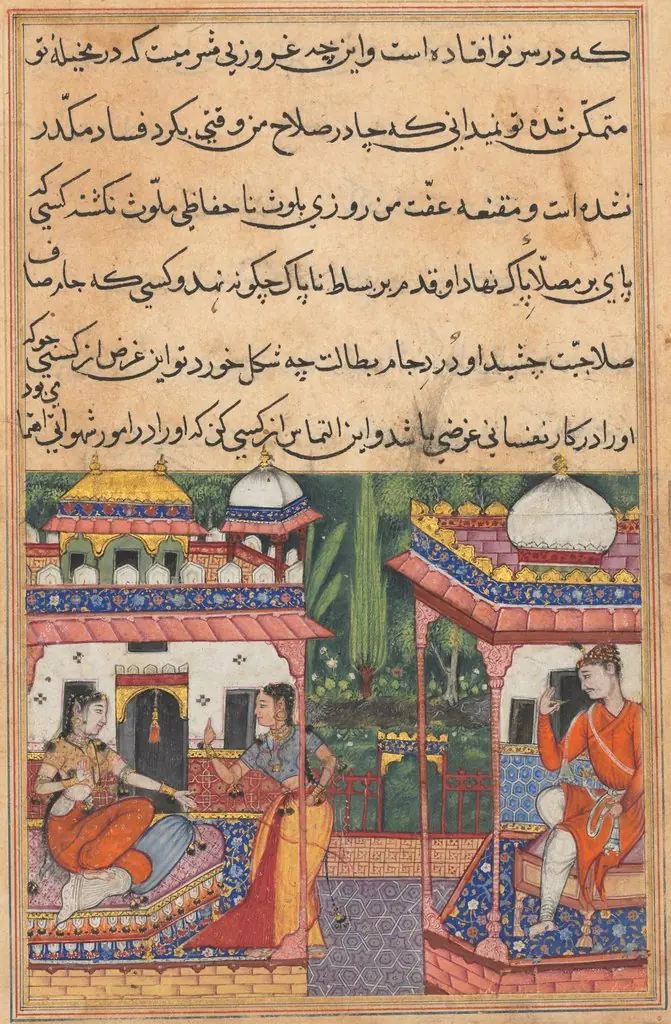 Kaiwan sends a message of love to Khurshid, wife of his brother Utarid who is away on a journey, from a Tuti-nama (Tales of a Parrot): Thirty-second Night
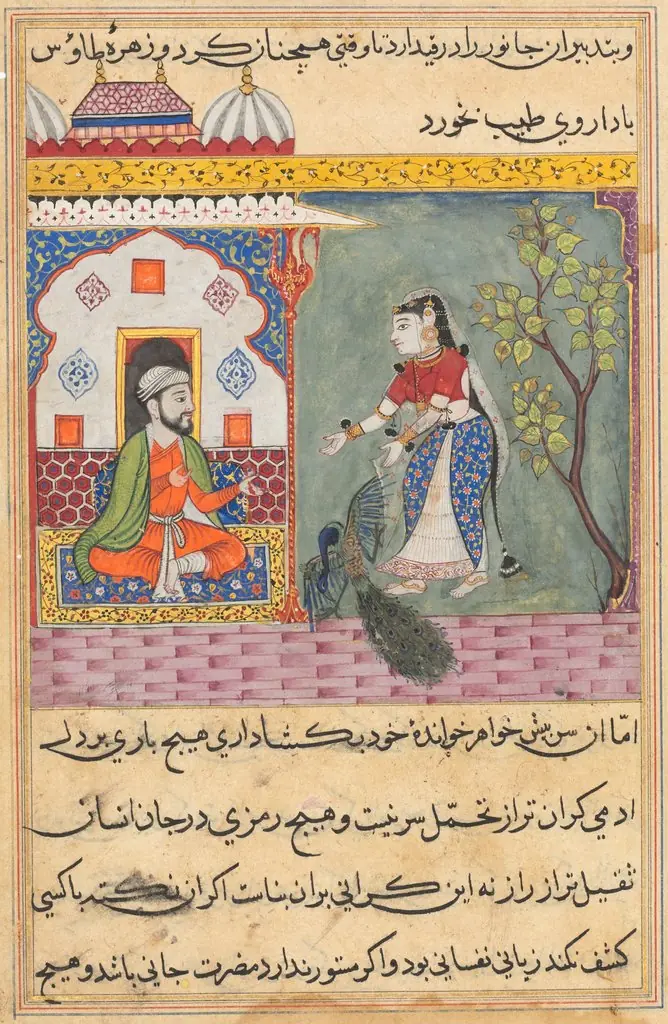 The Brahman’s wife who killed a peacock and ate its gallbladder on the physician’s advice, from a Tuti-nama (Tales of a Parrot): Nineteenth Night
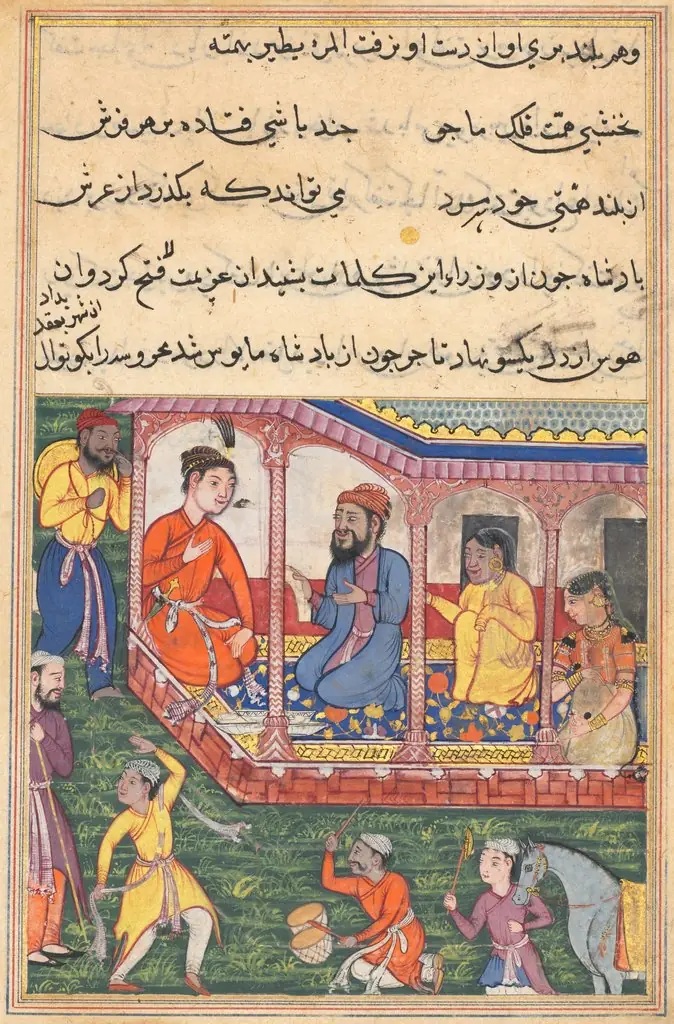 Mahrusa’s marriage to the prefect of the city, from a Tuti-nama (Tales of a Parrot): Thirty-sixth Night
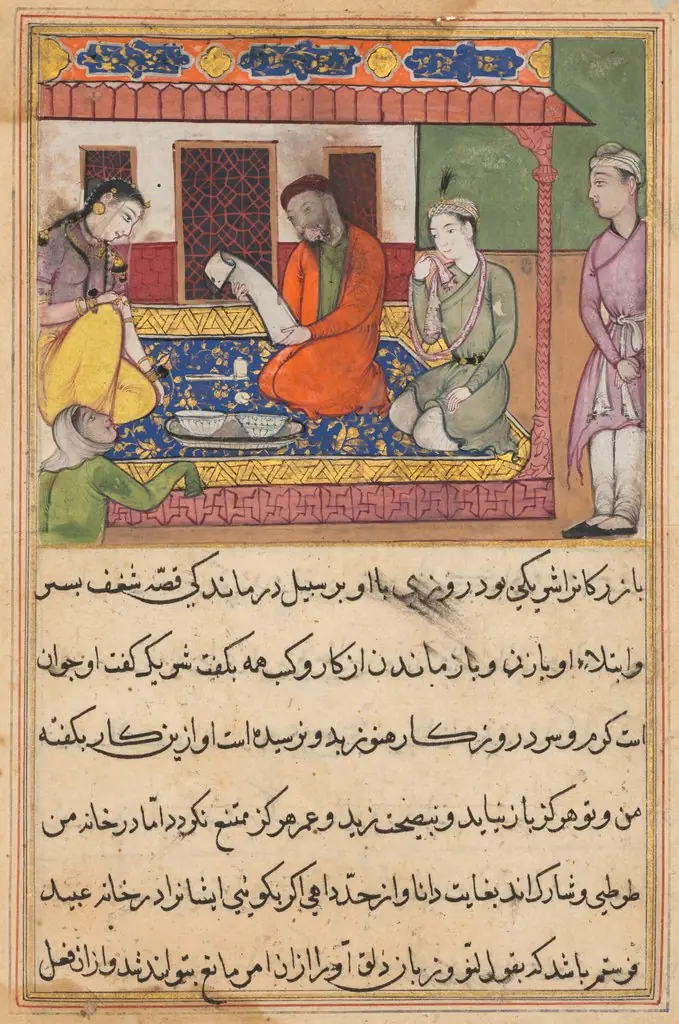 The marriage of ‘Ubaid, son of a merchant of Tirmiz, from a Tuti-nama (Tales of a Parrot): Forty-second Night
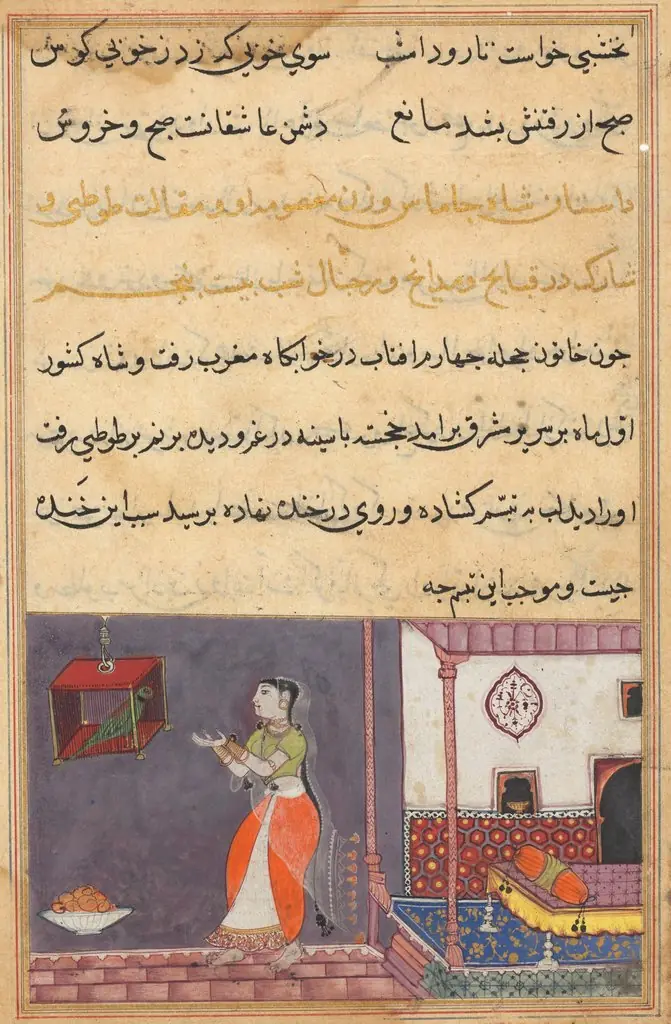 The Parrot Addresses Khujasta at the Beginning of the Twenty-fifth Night, from a Tuti-nama (Tales of a Parrot)
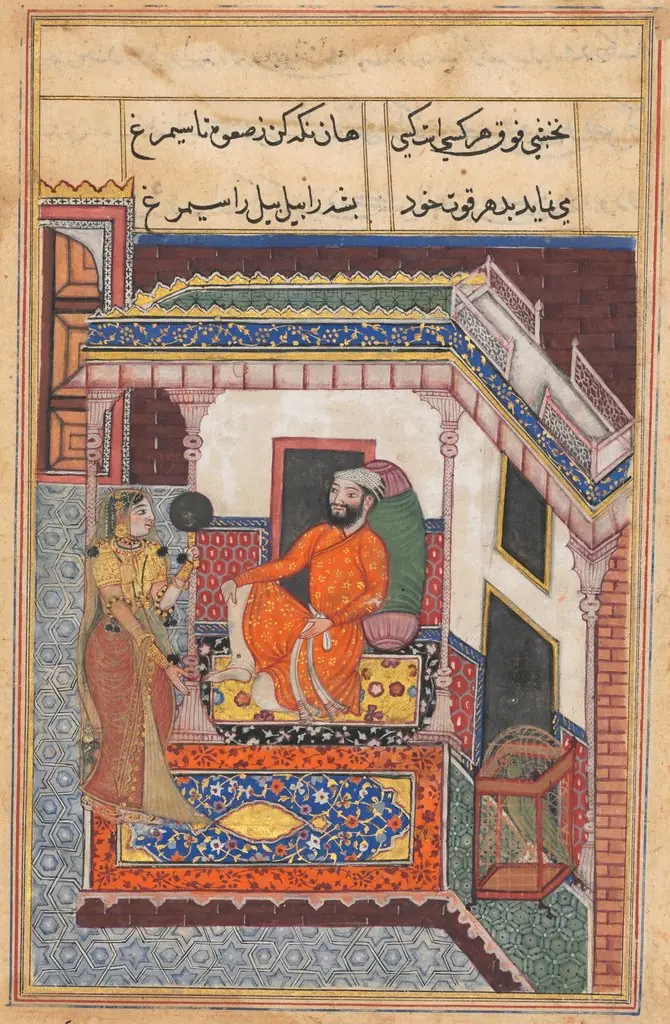 The parrot laughs on hearing the Raja of Ujjain’s wife admire her beauty in a mirror, from a Tuti-nama (Tales of a Parrot: Forty-sixth Night
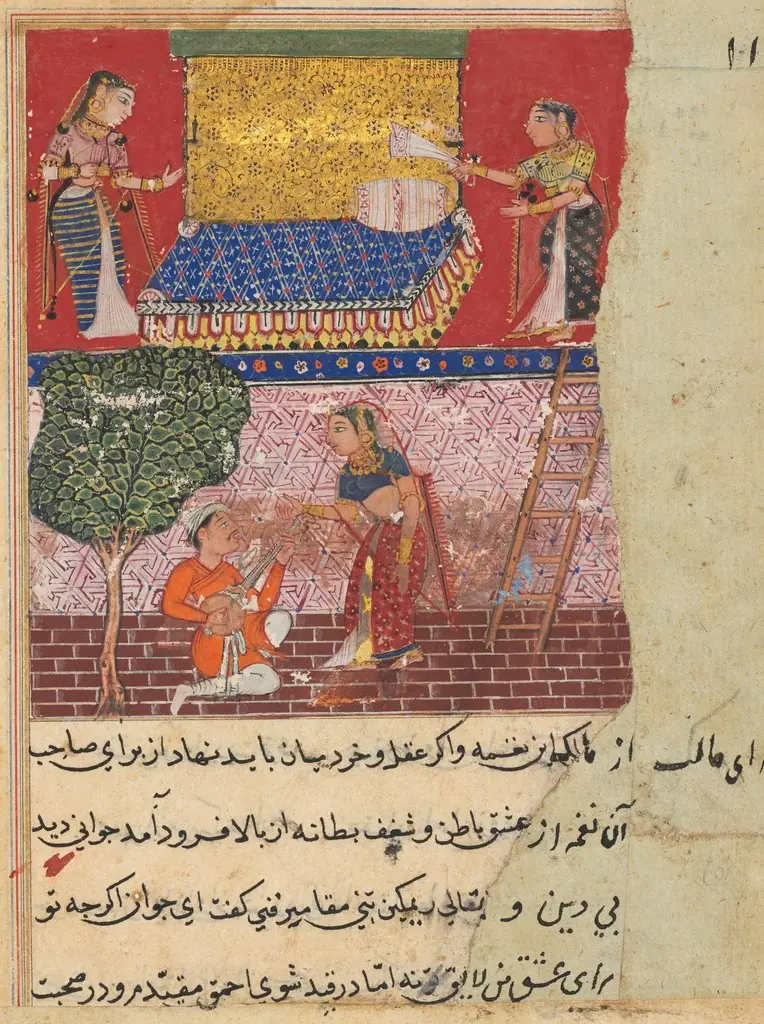 The daughter-in-law of the king of Banaras, charmed by the music of a vagabond, comes down to meet him, from a Tuti-nama (Tales of a Parrot): Sixteenth Night
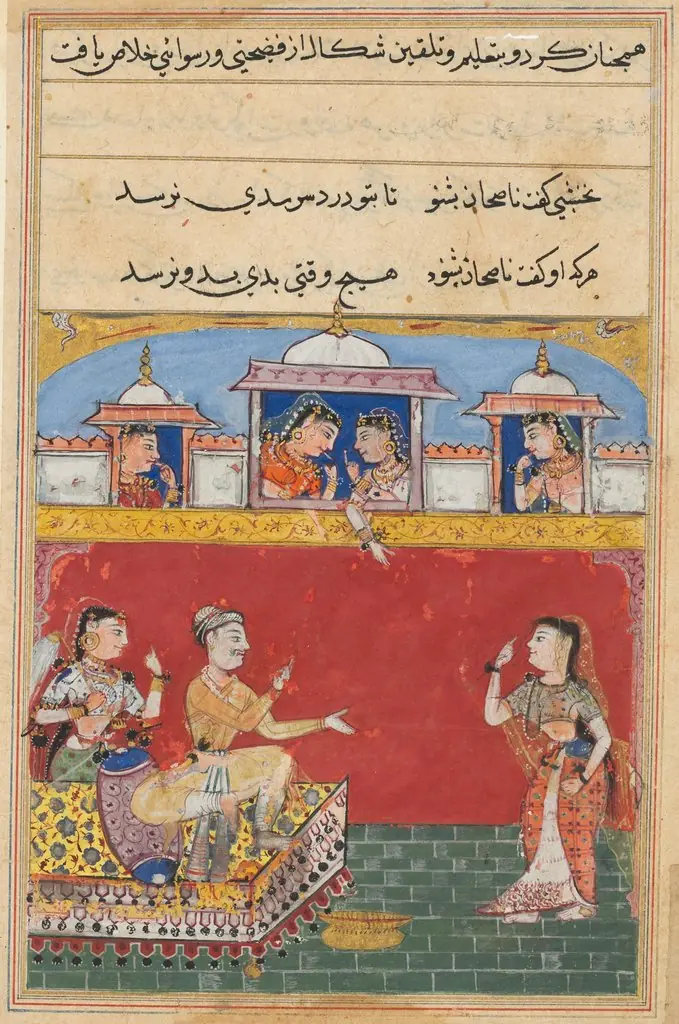 The daughter-in-law returns from her misadventure, feigning insanity, from a Tuti-nama (Tales of a Parrot): Sixteenth Night
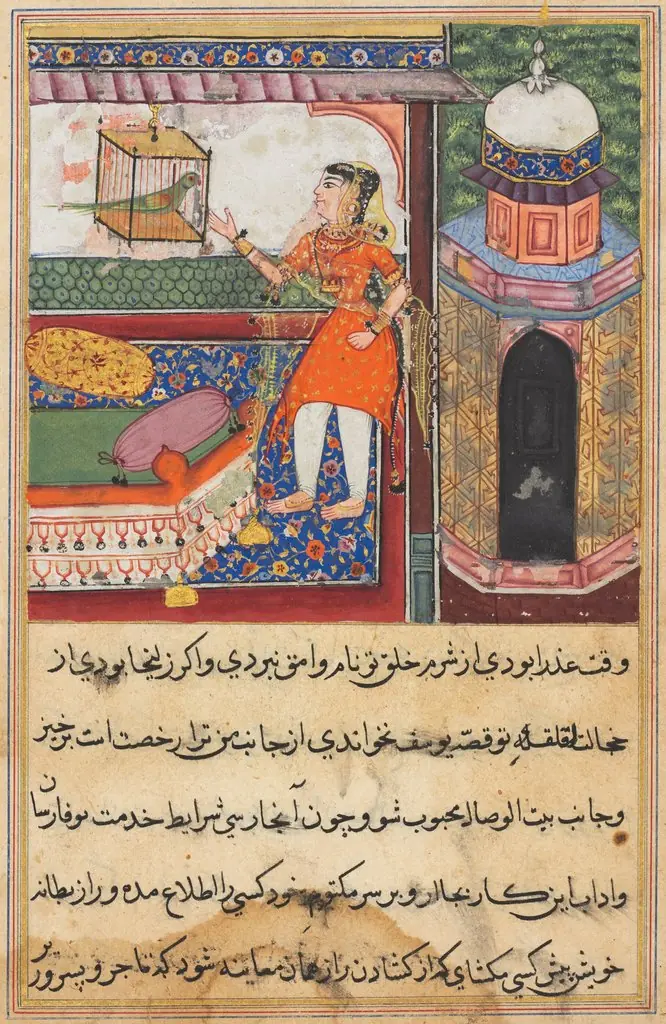
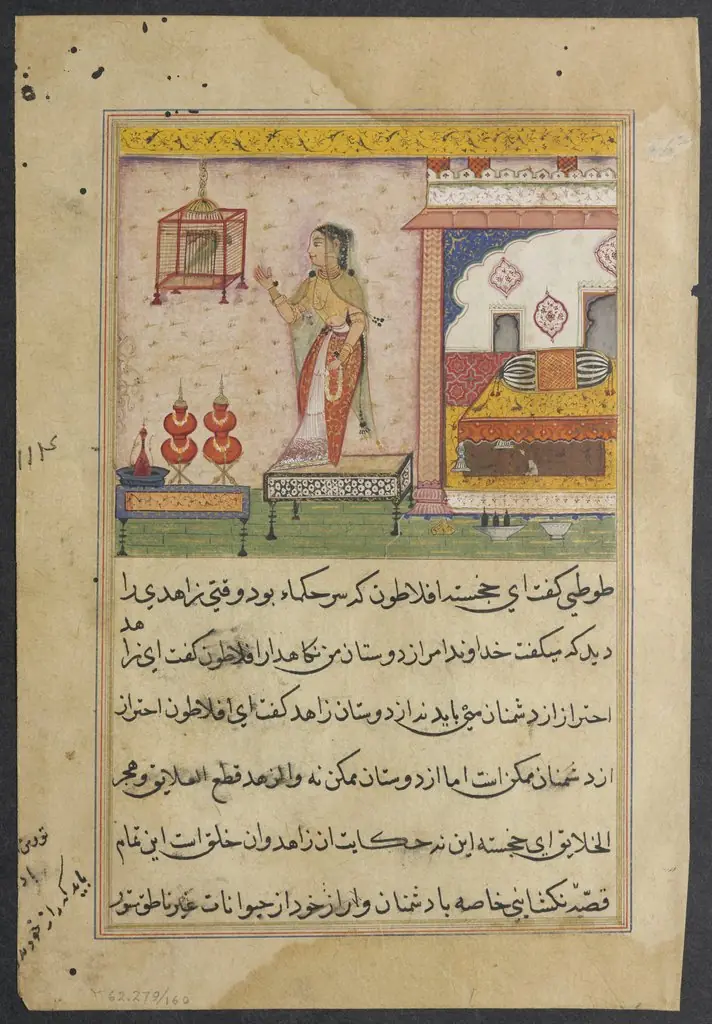 The Parrot Addresses Khujasta at the Beginning of the Twenty-third Night, from a Tuti-nama (Tales of a Parrot)
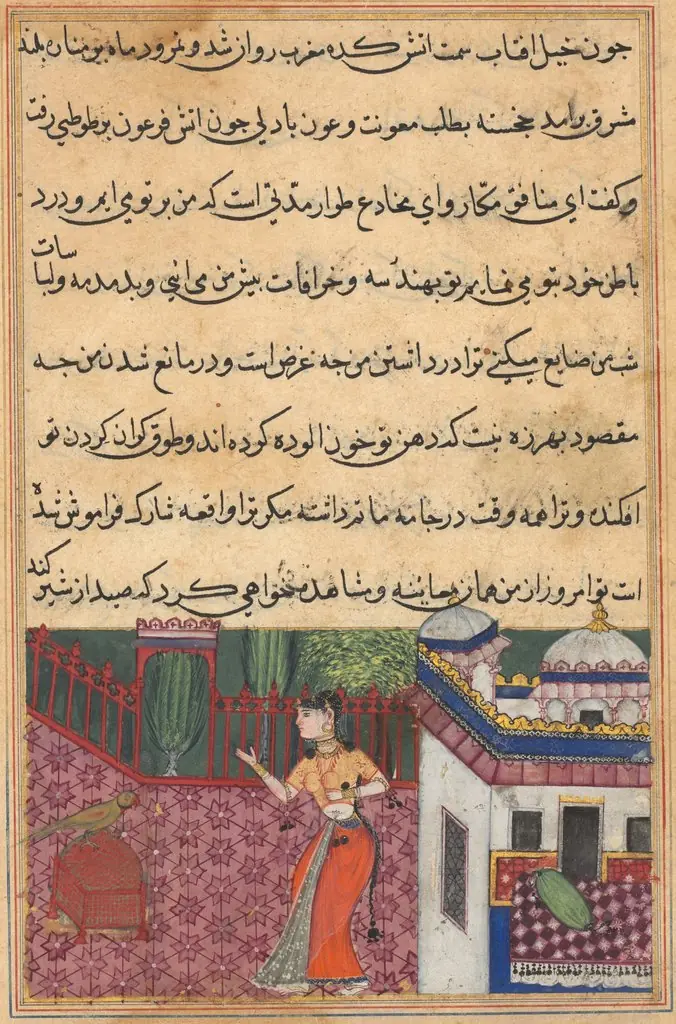 The parrot addresses Khujasta at the beginning of the thirty-third night, from a Tuti-nama (Tales of a Parrot)
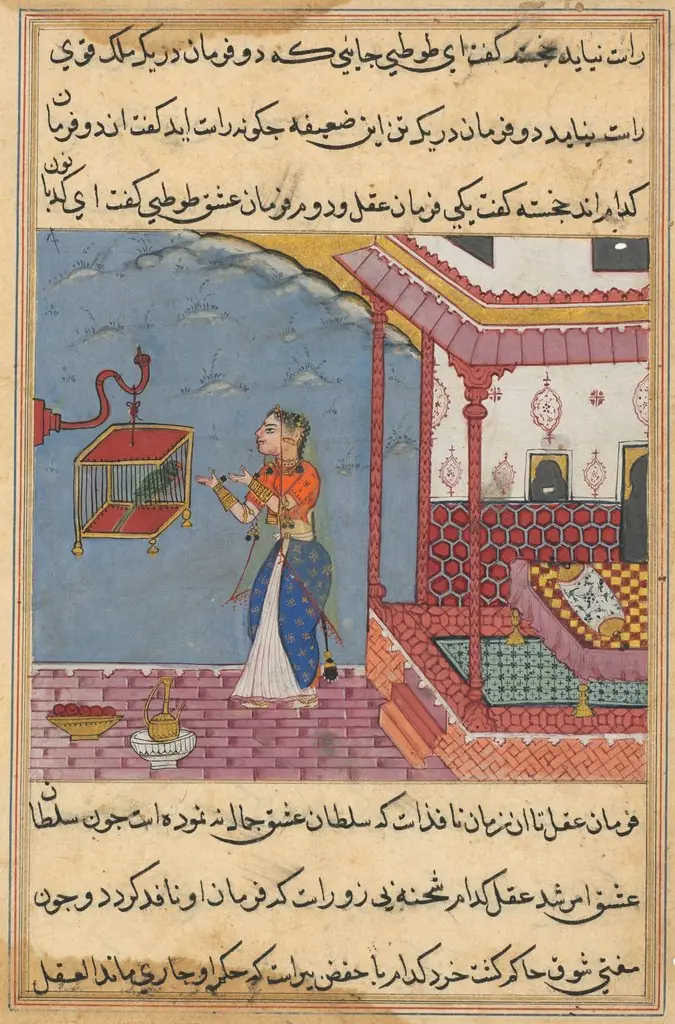 The Parrot Addresses Khujasta at the Beginning of the Twenty-Fourth Night, from a Tuti-nama (Tales of a Parrot)
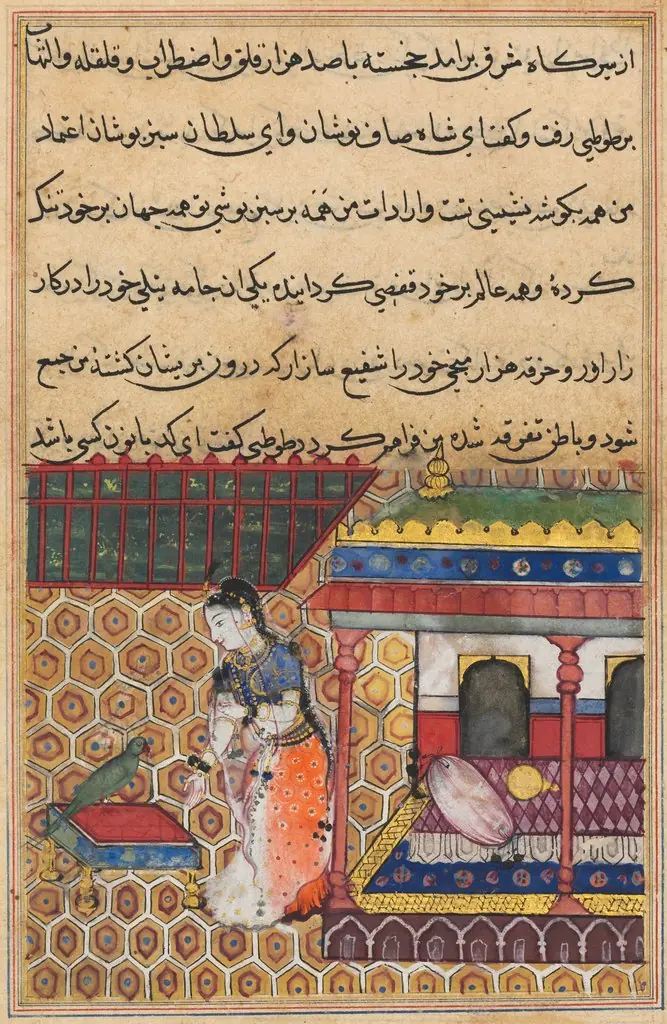 The parrot addresses Khujasta at the beginning of the thirty-eighth night, from a Tuti-nama (Tales of a Parrot)
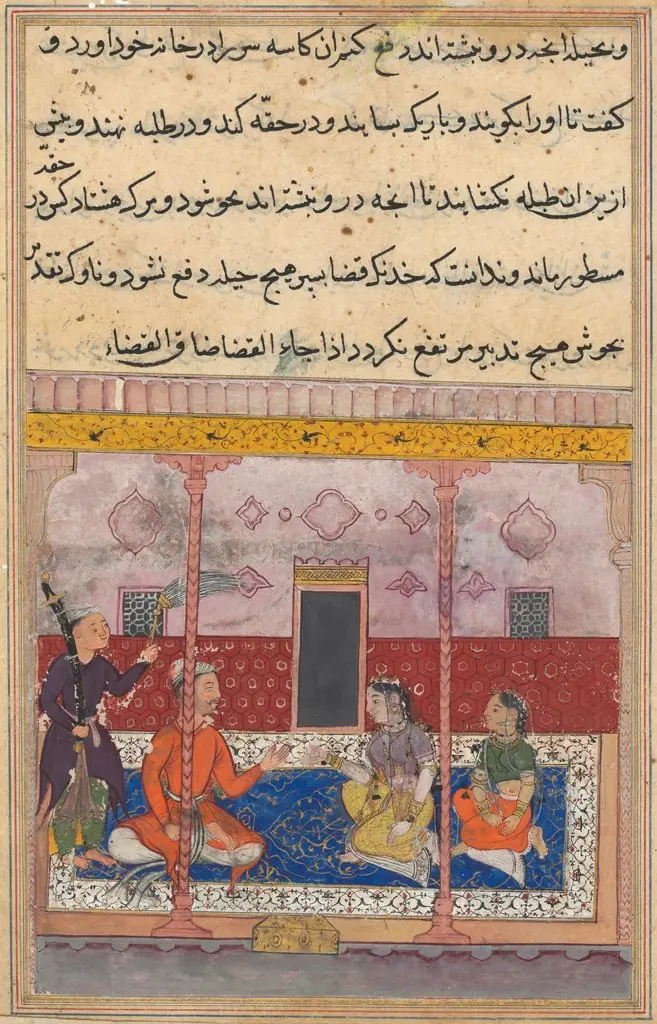 The merchant has the hateful skull ground and put into a box, from a Tuti-nama (Tales of a Parrot): Twenty-third Night
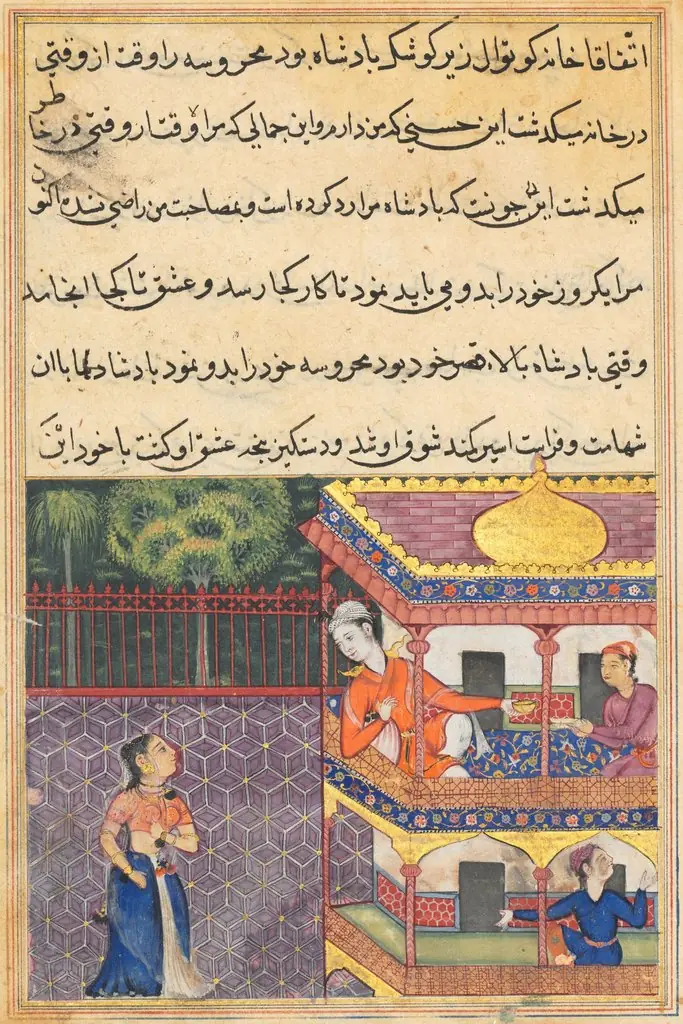 The king of Zabul sees Mahrusa from his palace balcony, from a Tuti-nama (Tales of a Parrot): Thirty-sixth Night
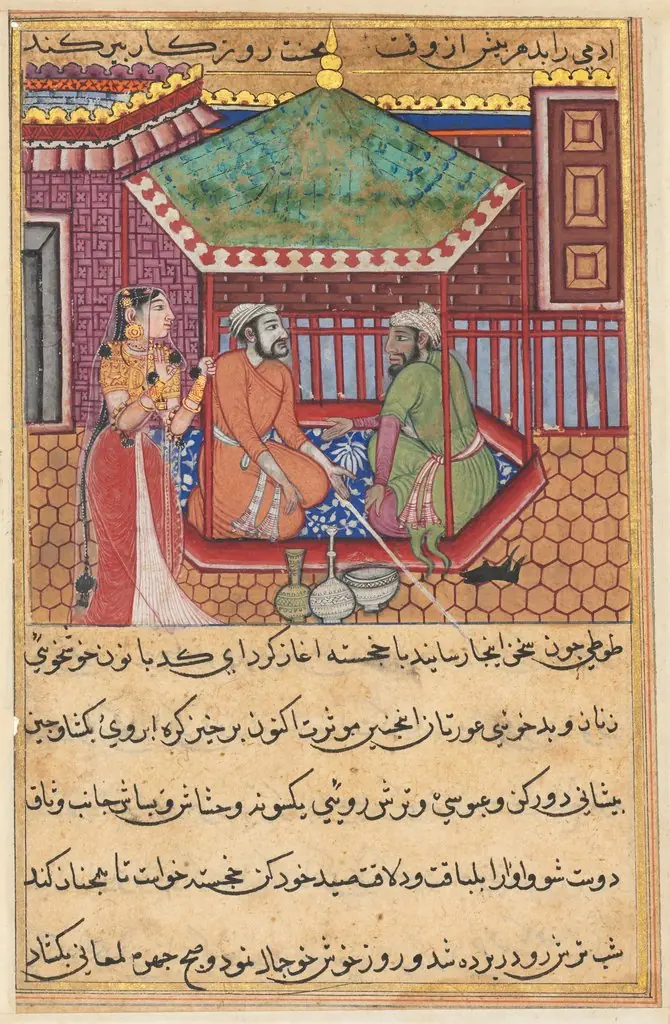 The eldest brother explains the reason for his youthful appearance, from a Tuti-nama (Tales of a Parrot): Forty-ninth Night
 The king gives his daughter in marriage to the pious man’s son, from a Tuti-nama (Tales of a Parrot): Fifty-second Night
 The Parrot Addresses Khujasta at the Beginning of the Tenth Night, from a Tuti-nama (Tales of a Parrot)