Artwork
Tuti-Nama (Tales of a Parrot)
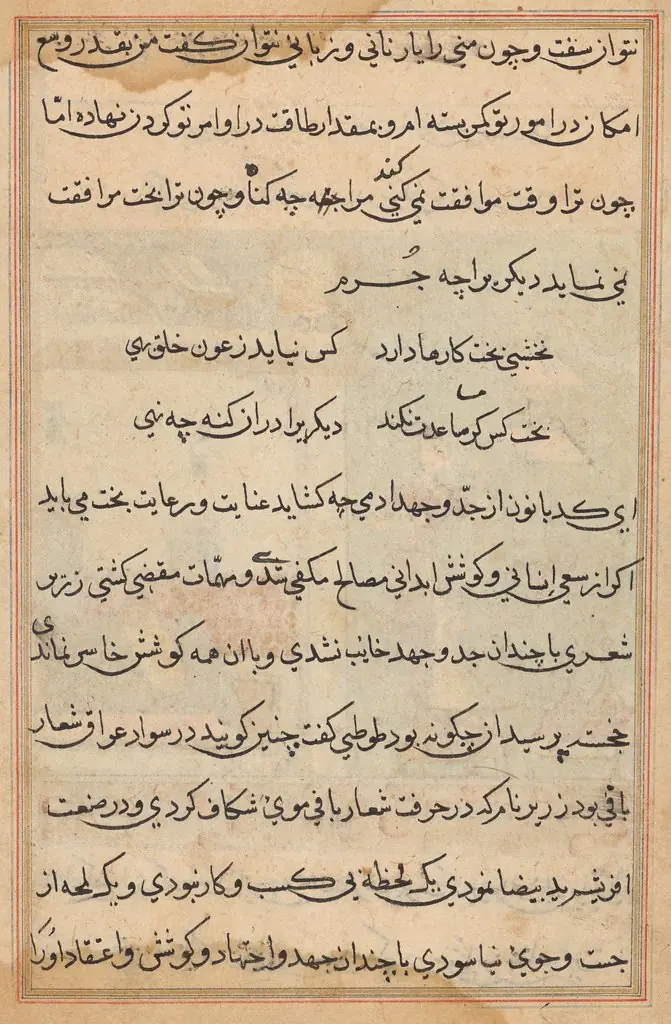
Tuti-Nama (Tales of a Parrot) is an unspecified painting. It dates from 1560 and is held in the collection of the Cleveland Museum of Art. Tuti‑Nama, translated as “Tales of a Parrot,” is presented as a painted sheet rather than a conventional canvas work.
About this work
Overview
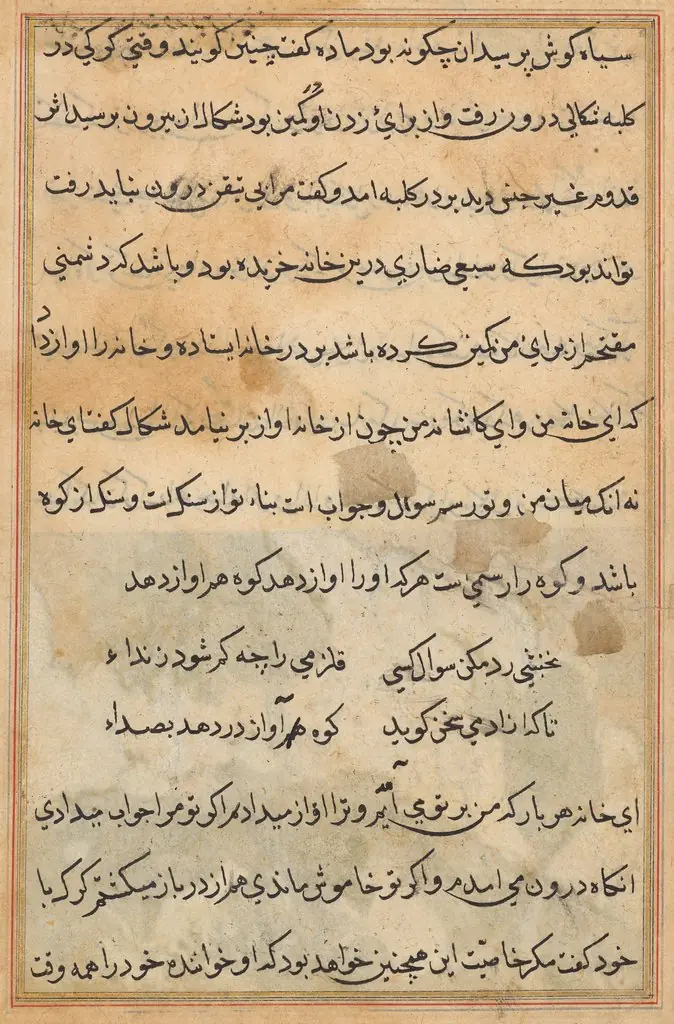
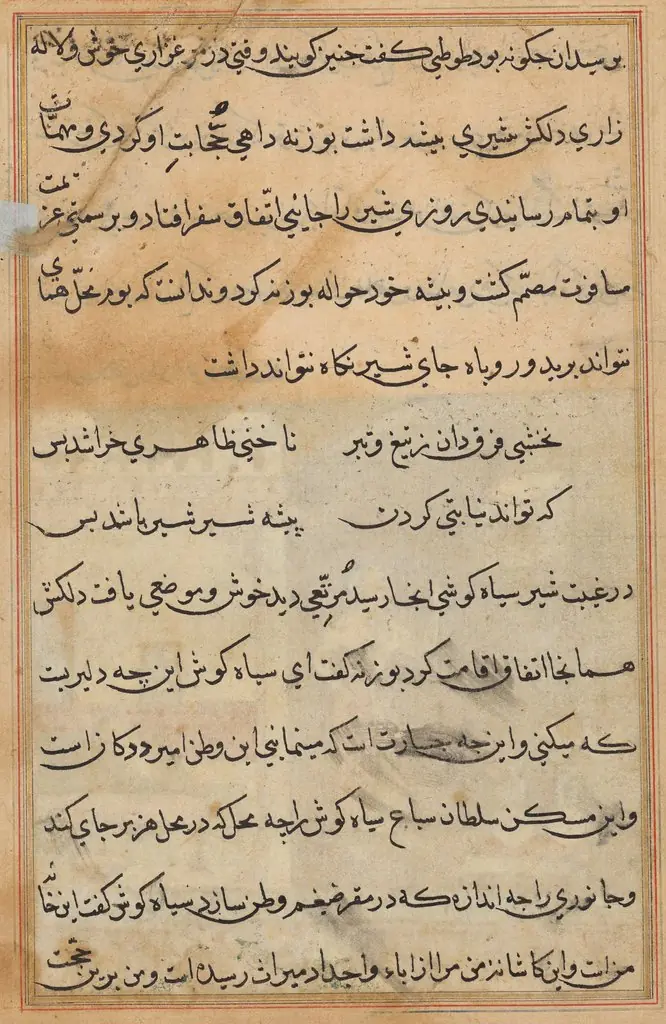
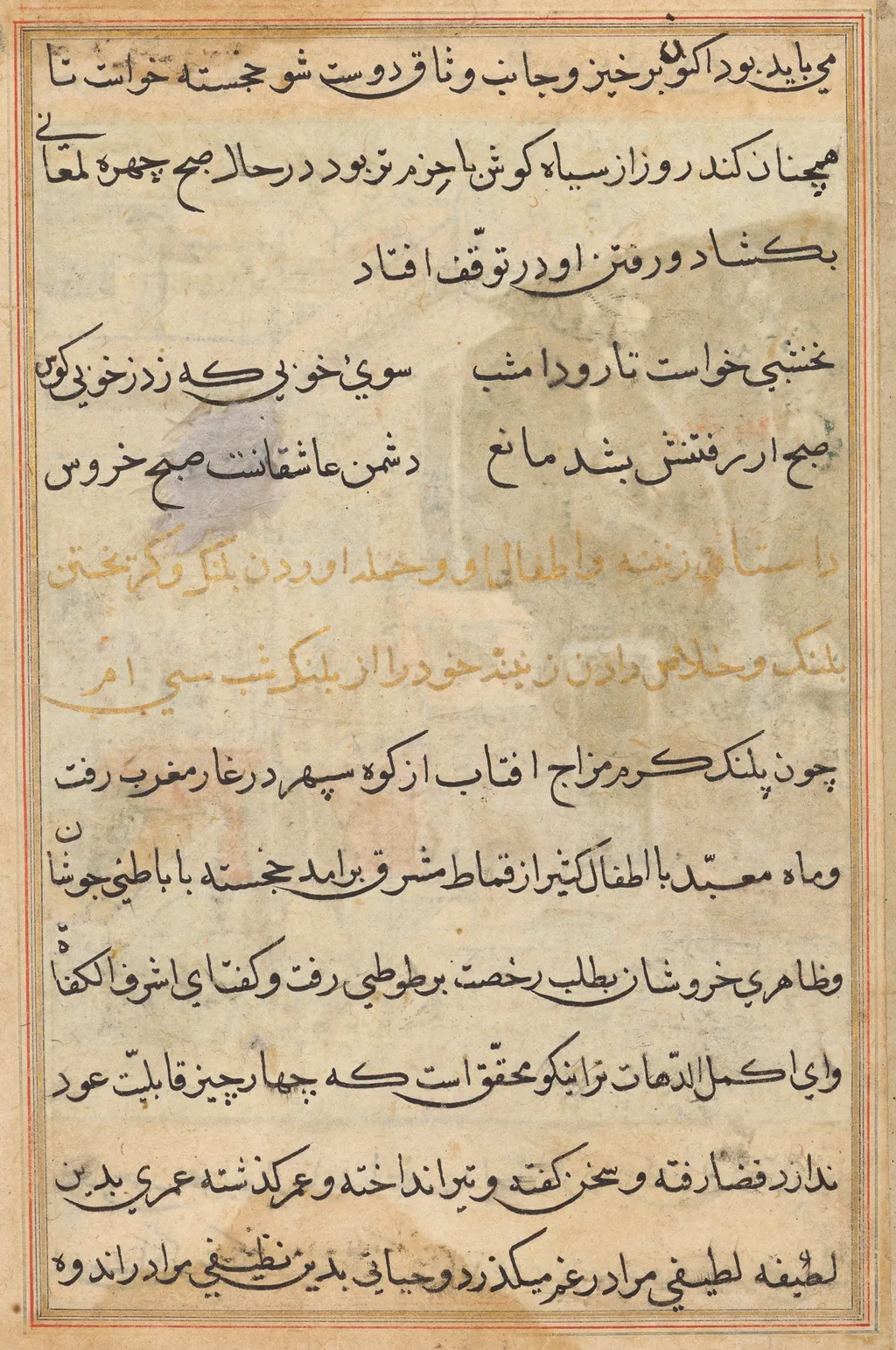
Tuti‑Nama, translated as “Tales of a Parrot,” is presented as a painted sheet rather than a conventional canvas work. The surface is a warm‑toned paper that shows signs of age, including small brown specks that suggest long exposure. A subtle red border outlines the perimeter, framing the dense arrangement of script that dominates the composition.
Subject & Meaning
The work consists entirely of tightly packed black calligraphy, forming a continuous narrative or collection of verses. While the exact content of the script is not specified, the title implies a literary theme centered on a parrot, a common motif in Persian and South Asian storytelling that often symbolizes speech and wisdom.
Technique & Style
Ink is applied with varying pressure, producing strokes that range from bold, dark lines to lighter, almost translucent marks. This modulation creates visual rhythm across the page, balancing curvature and angularity in the lettering. The red border, likely added with pigment rather than ink, provides a contrasting accent that delineates the textual field.
History & Provenance
No specific details about the artwork’s creation date, artist, or ownership history are provided. Its material qualities—aged paper, ink, and pigment—suggest a traditional manuscript tradition, possibly originating from a region where illustrated texts were common. The piece is currently associated with the Cleveland Museum of Art’s collection of handwritten artworks.
Artist & collection

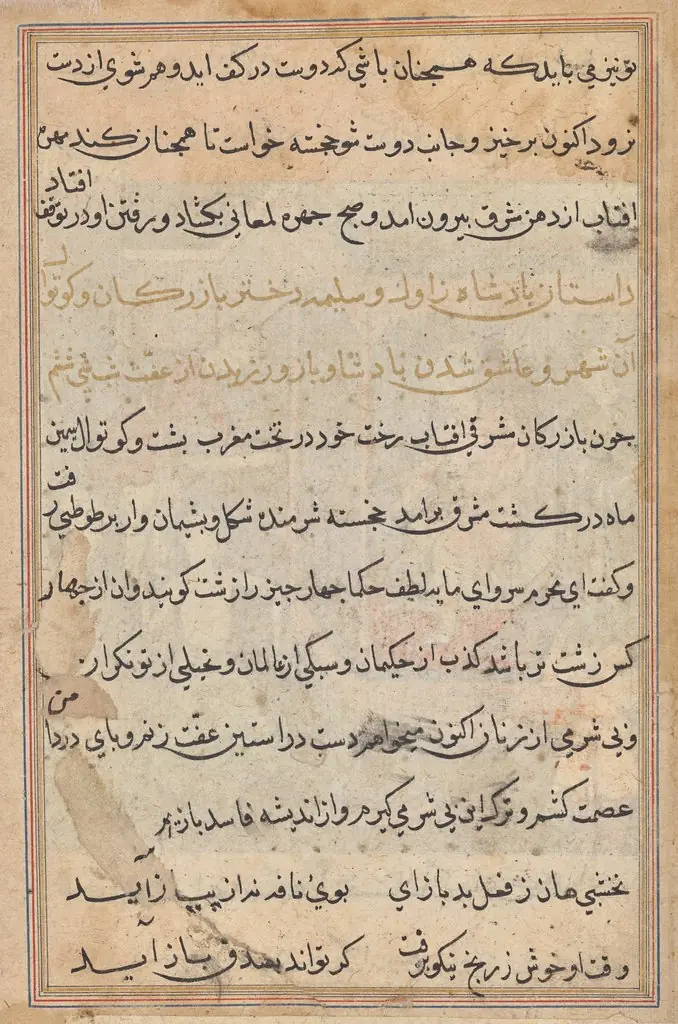 Page from Tales of a Parrot (Tuti-nama): text page
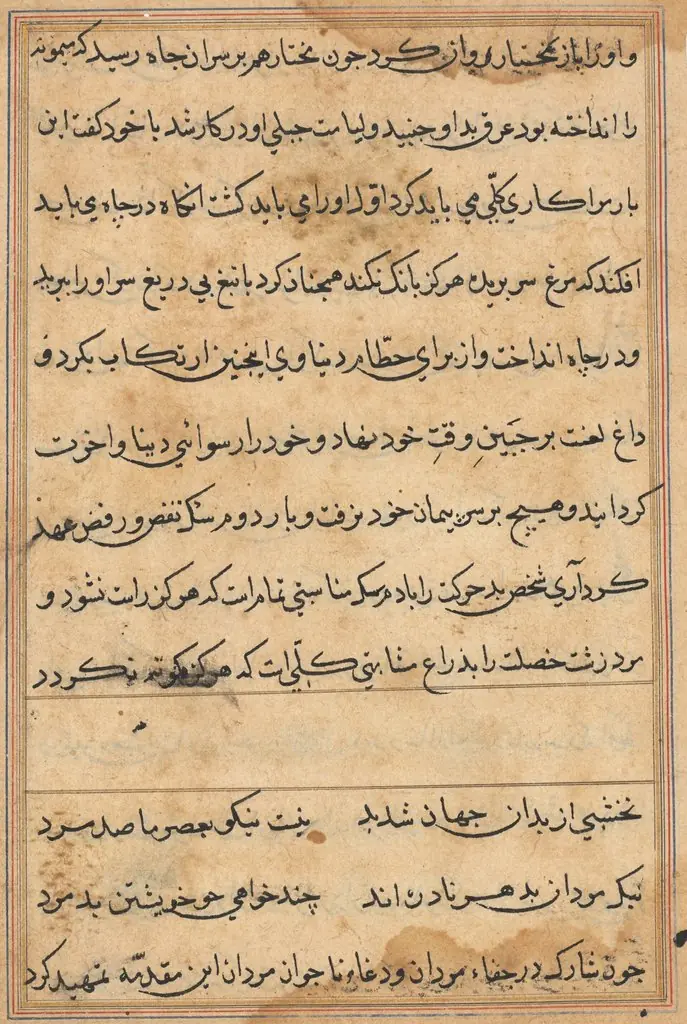 Page from Tales of a Parrot (Tuti-nama): text page
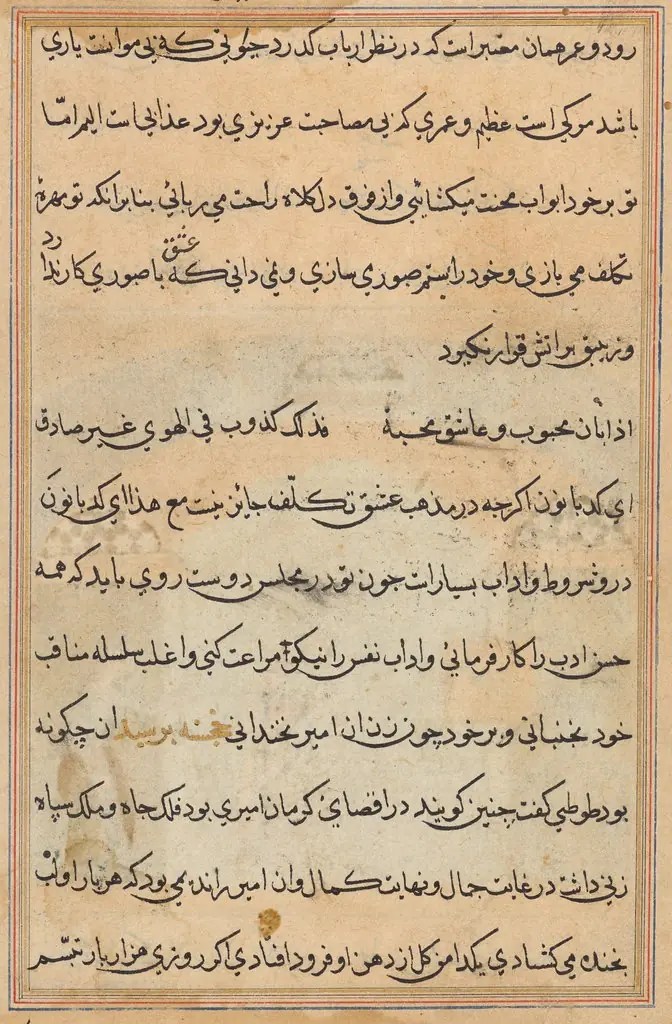 Page from Tales of a Parrot (Tuti-nama): text page
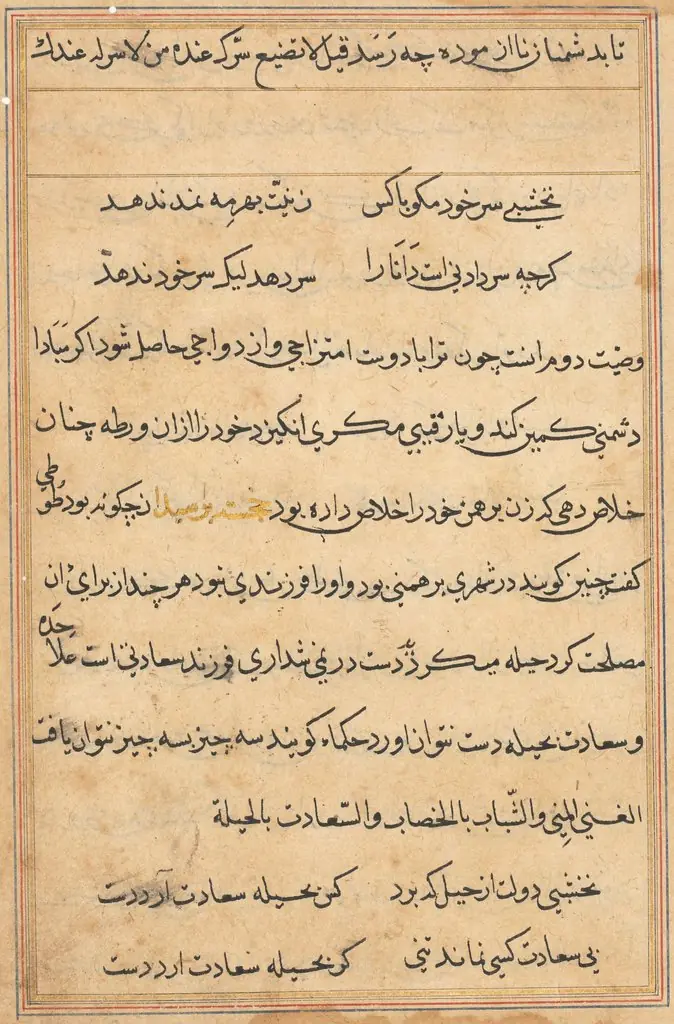 Page from Tales of a Parrot (Tuti-nama): text page
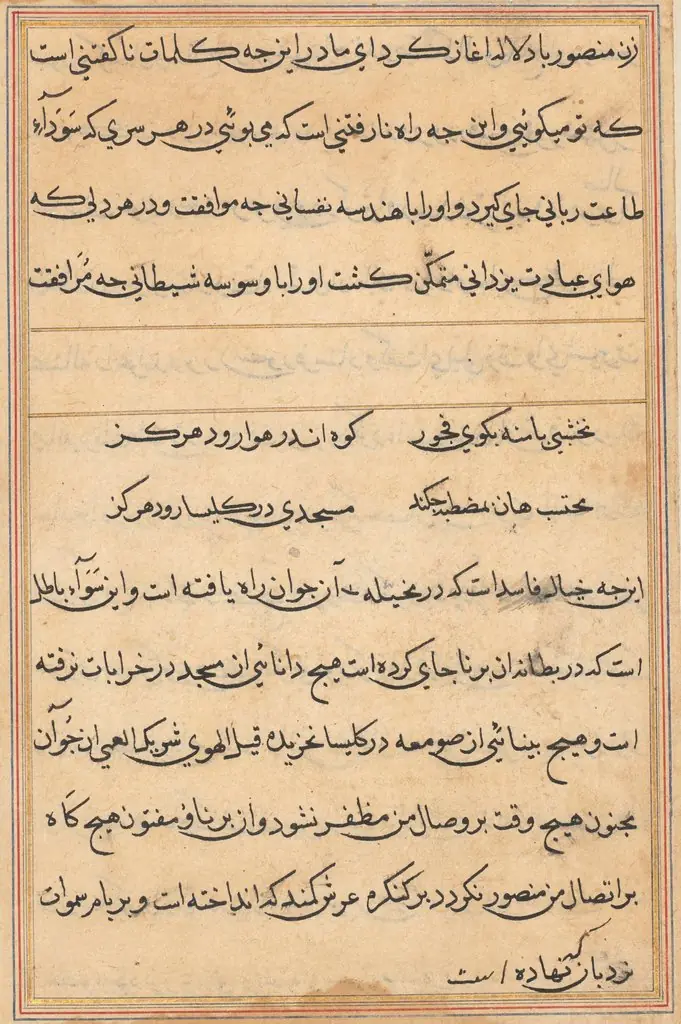 Page from Tales of a Parrot (Tuti-nama): text page
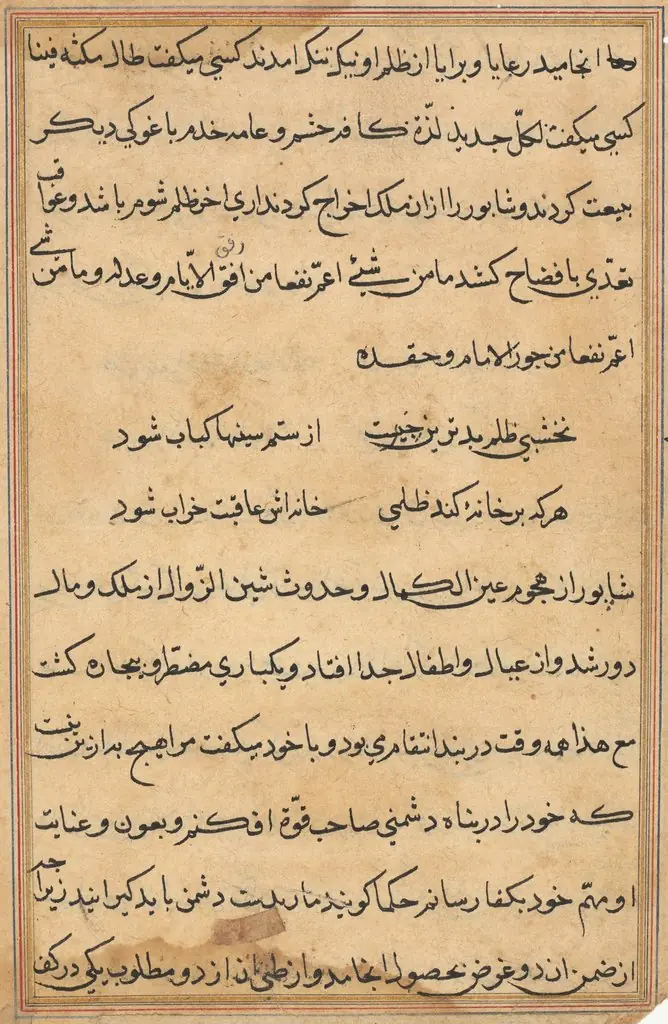 Page from Tales of a Parrot (Tuti-nama): text page
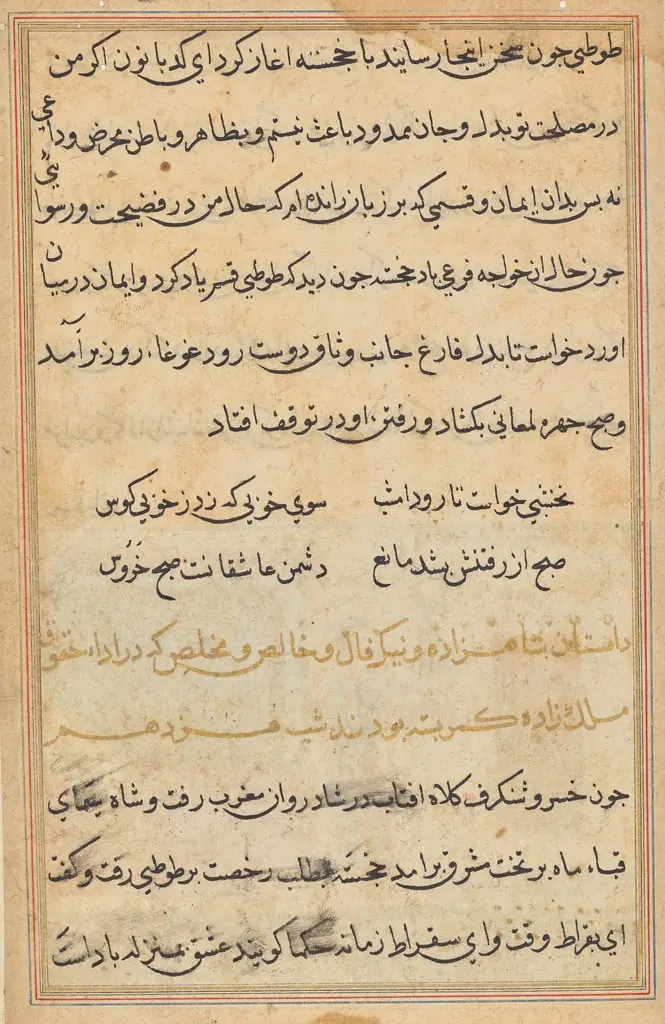 Page from Tales of a Parrot (Tuti-nama): text page
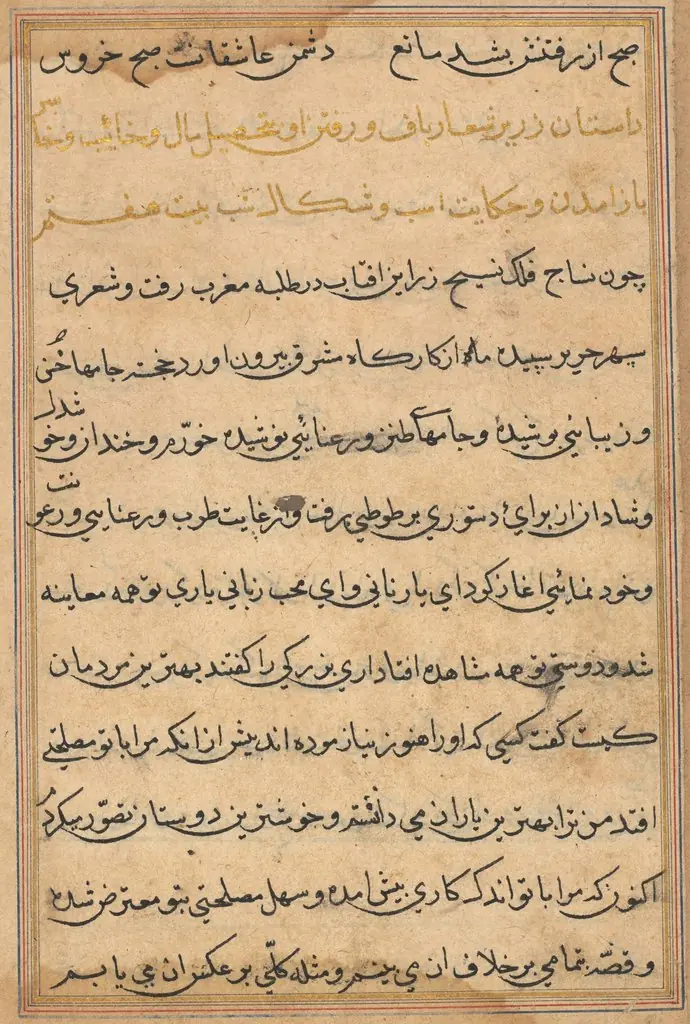 Page from Tales of a Parrot (Tuti-nama): text page