Artwork
Tuti-Nama (Tales of a Parrot)
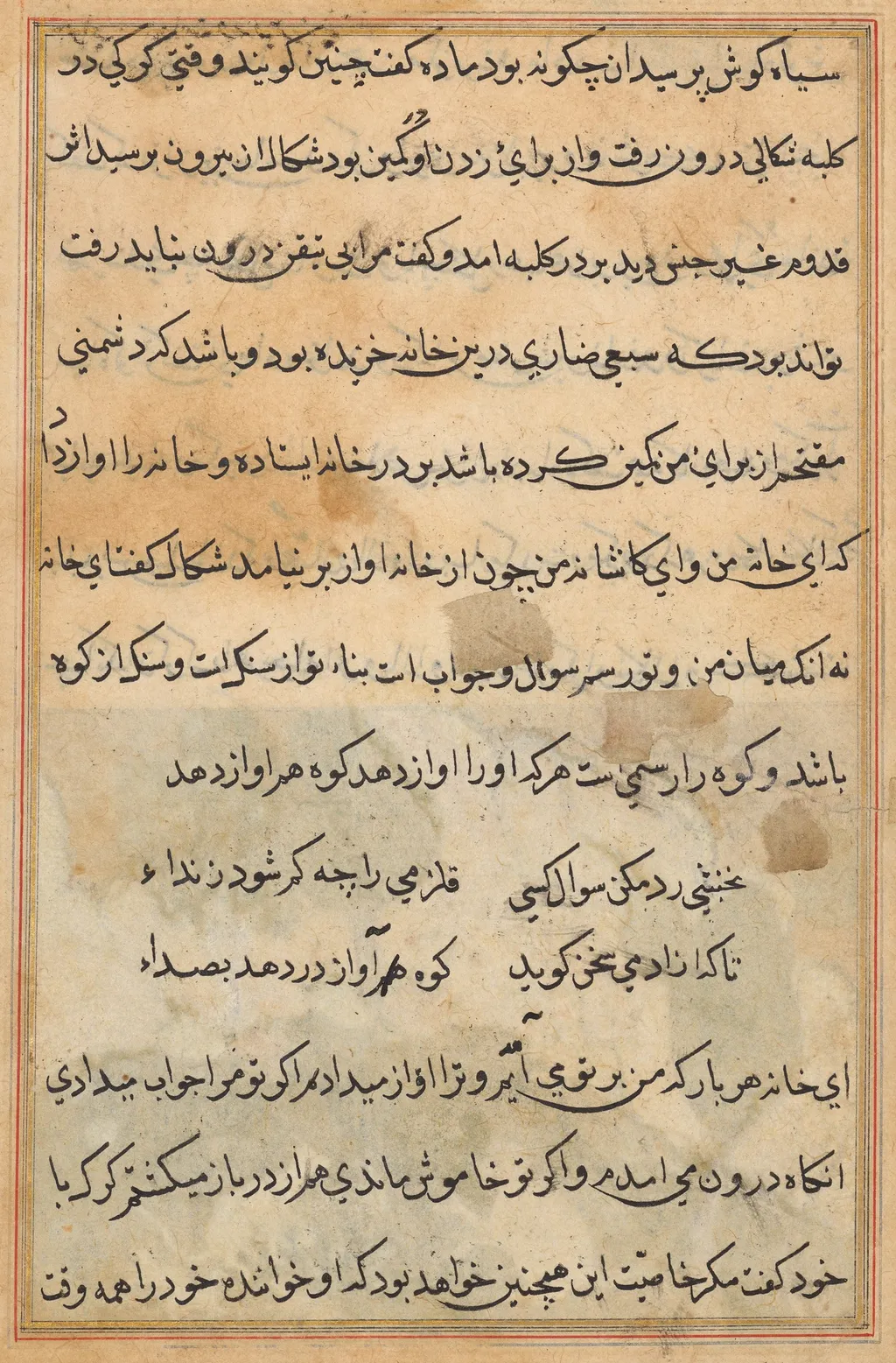
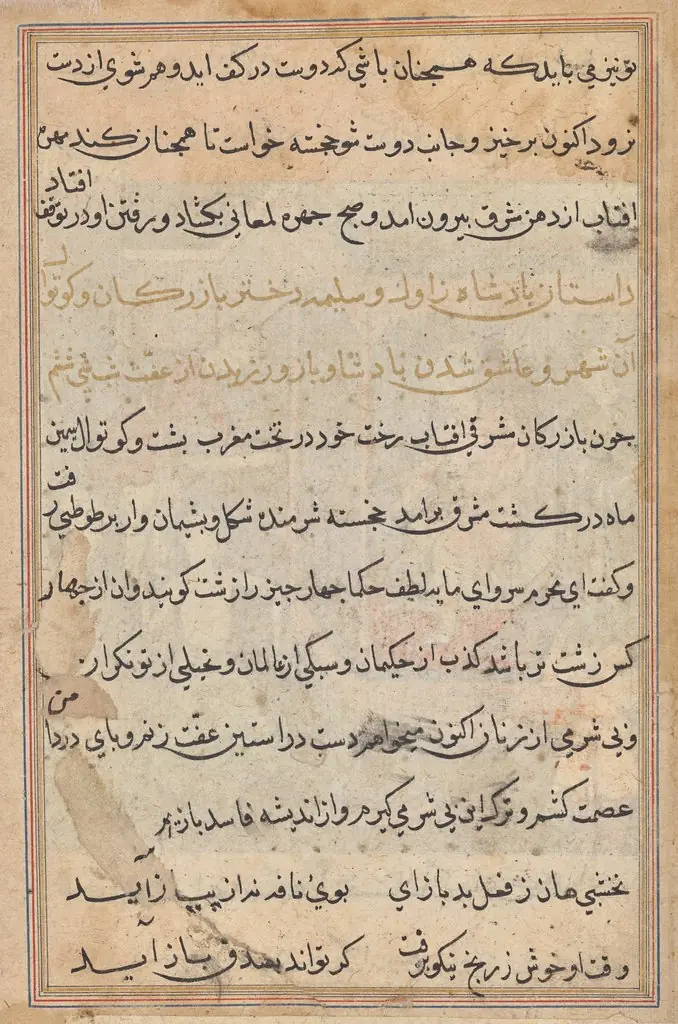
Tuti-Nama (Tales of a Parrot) is an unspecified painting. It dates from 1560 and is held in the collection of the Cleveland Museum of Art.
About this work
Overview
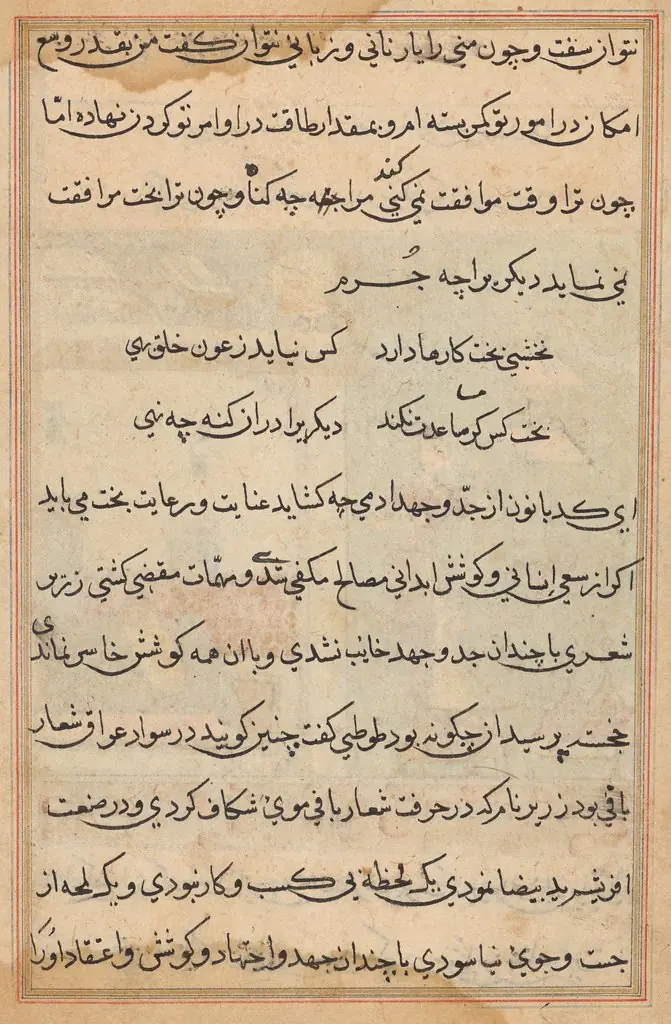
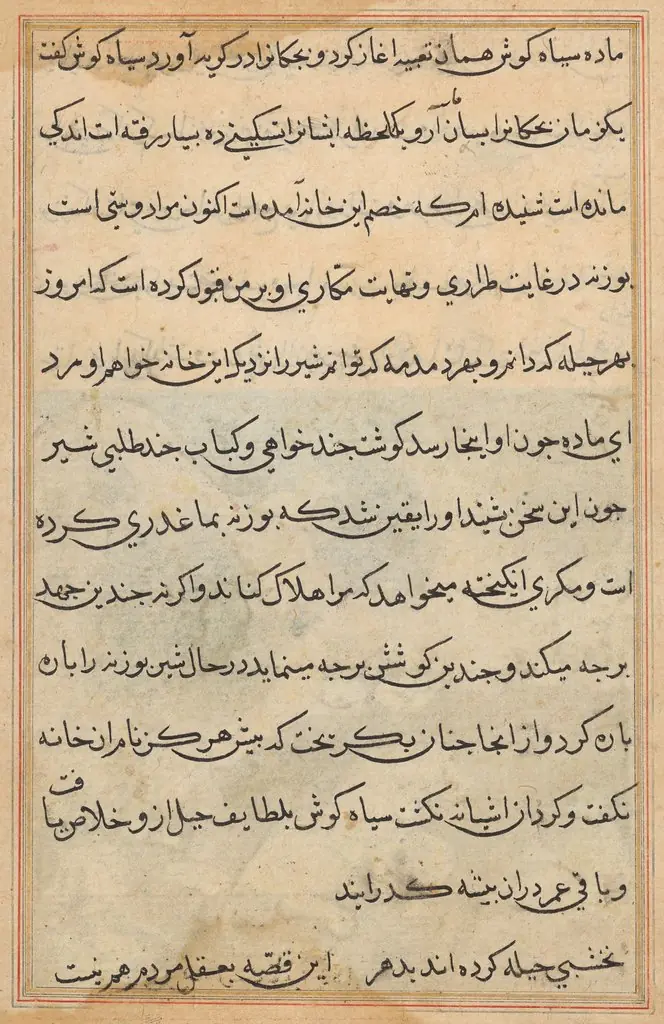
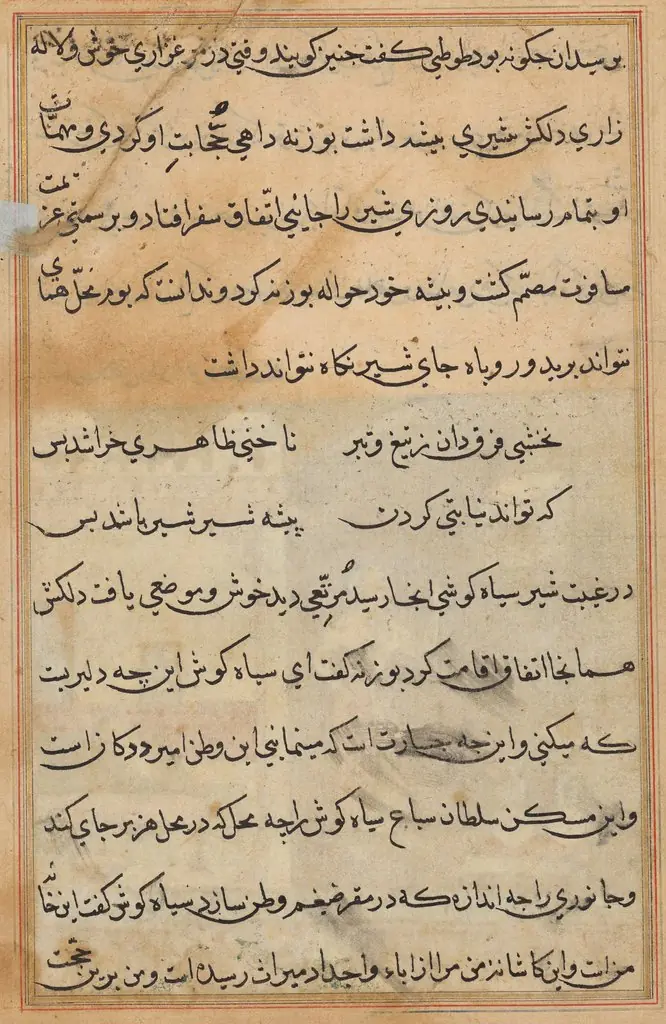
Tuti‑Nama, translated as “Tales of a Parrot,” is a painted manuscript page composed of dense black calligraphy set against a warm, antiqued paper background. The sheet is bordered by a thin red line and bears subtle blue‑green discolorations that suggest age. The text occupies the surface almost entirely, leaving only a narrow margin at the edge.
Subject & Meaning
The work consists solely of prose intended for Prince Salim, a member of the Mughal court. Though the title references a parrot, the page contains no illustrative imagery; its purpose appears to be literary, perhaps a collection of stories or moral anecdotes conveyed through the script itself.
Technique & Style
The calligraphy is executed with meticulous precision, each character rendered in a flowing black ink that contrasts sharply with the paper’s muted tone. A thin red border frames the composition, while the paper’s surface shows faint blue‑green spotting, typical of centuries‑old parchment that has undergone natural aging.
History & Provenance
Created for Prince Salim, the manuscript later entered the collection of the Cleveland Museum of Art, where it is presently conserved and displayed. Its provenance traces from a Mughal patronage context to a modern institutional setting, reflecting the movement of South Asian manuscript material into Western collections.
Context
Within the Mughal tradition, illuminated manuscripts often combined text and ornamentation; however, Tuti‑Nama’s emphasis on script over illustration highlights a variant practice where literary content was prioritized. The work exemplifies the courtly culture of the early 17th‑century Indian subcontinent, where princes commissioned personalized texts for education or entertainment.
Artist & collection

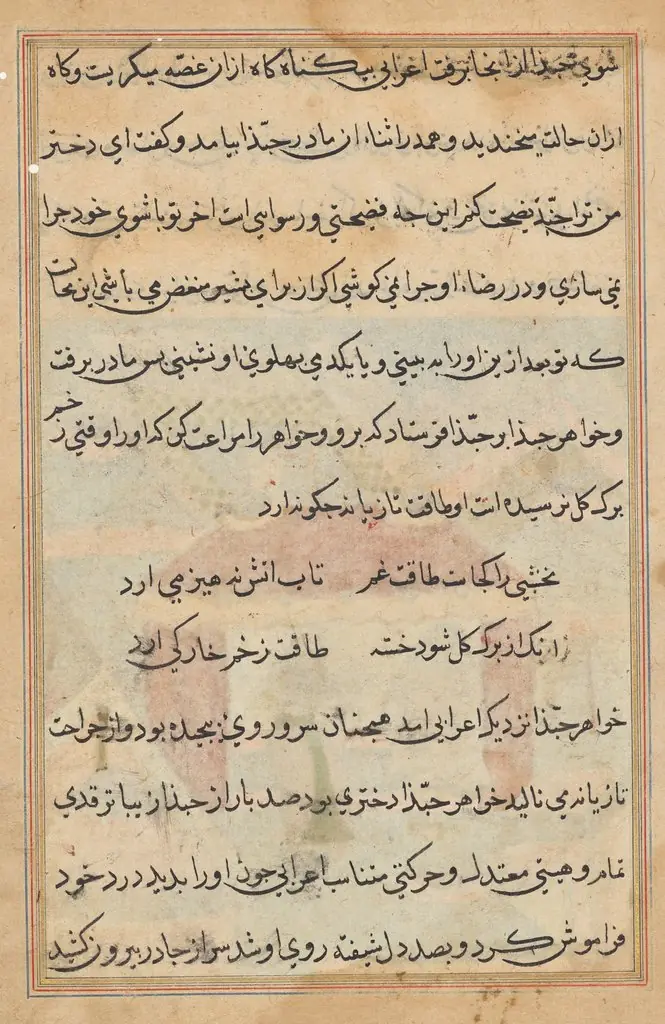 Page from Tales of a Parrot (Tuti-nama): text page
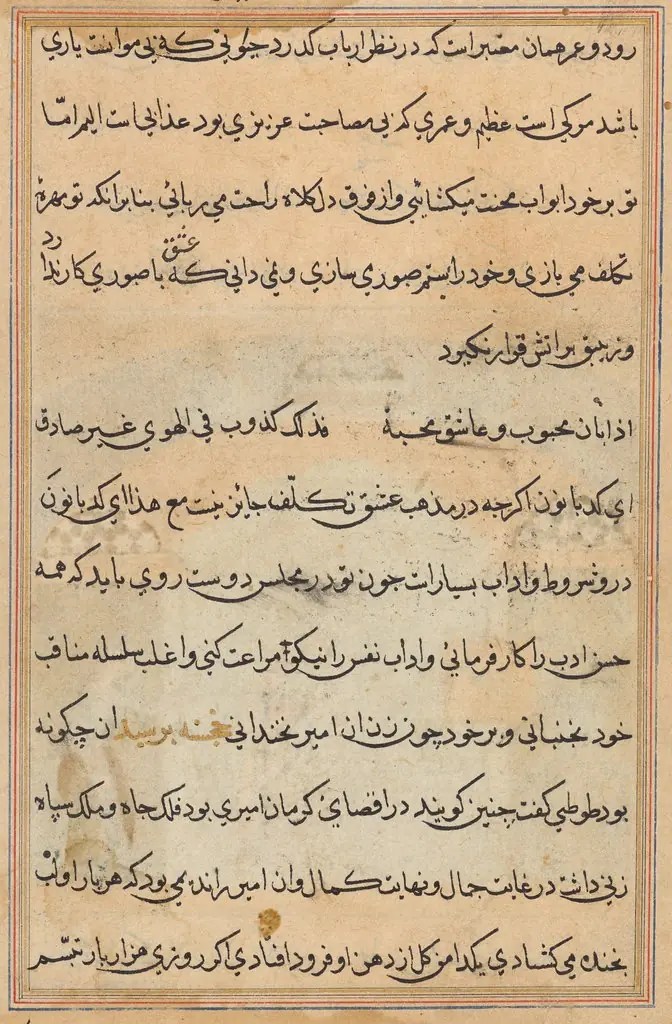 Page from Tales of a Parrot (Tuti-nama): text page
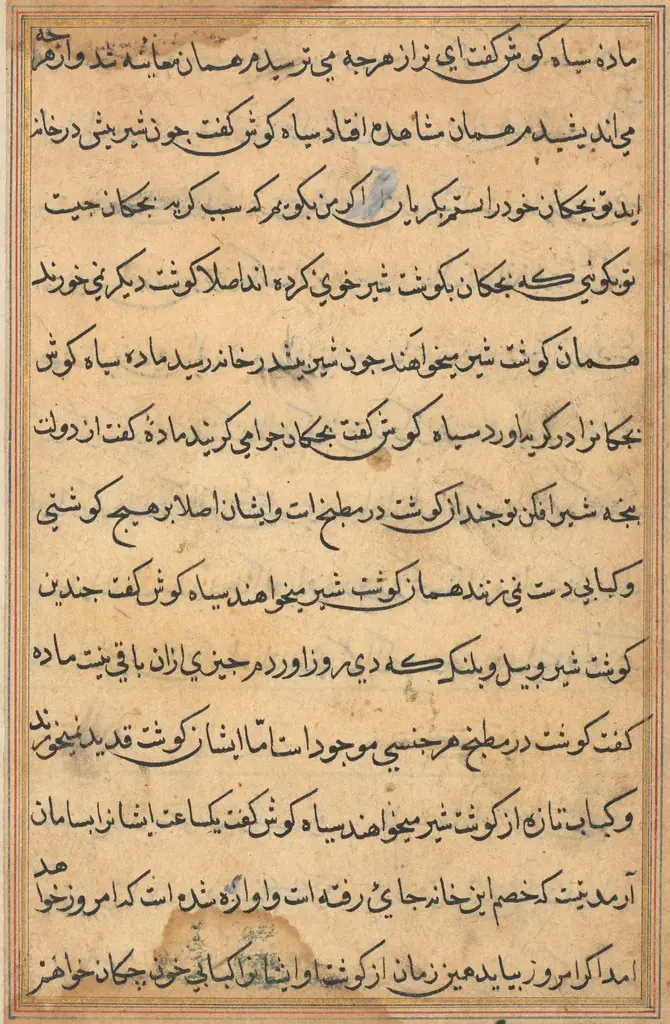 Page from Tales of a Parrot (Tuti-nama): text page
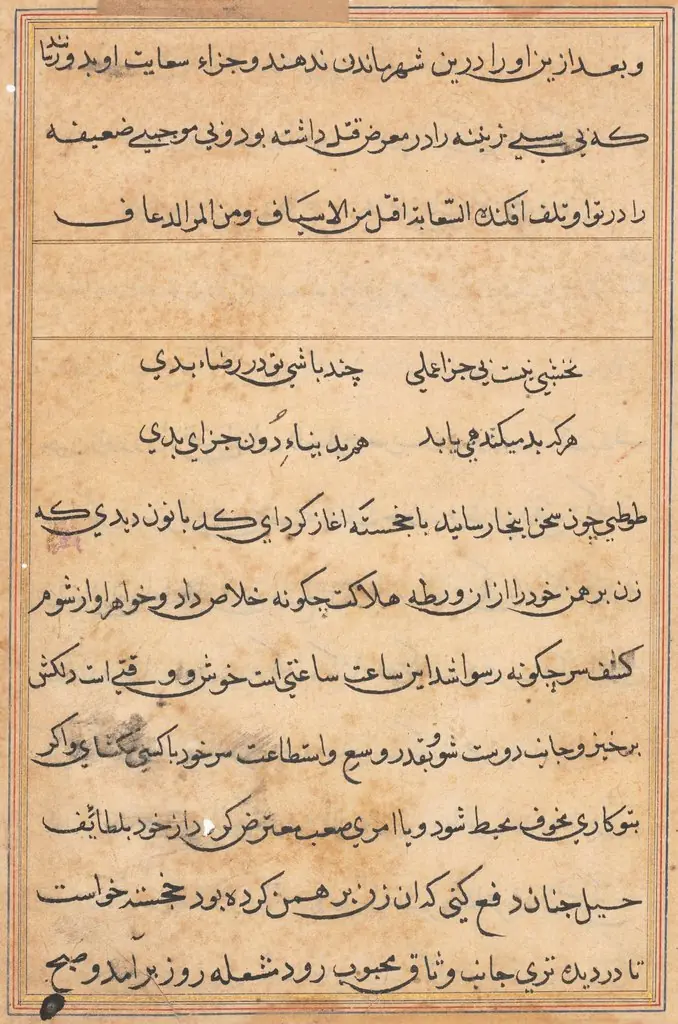 Page from Tales of a Parrot (Tuti-nama): text page
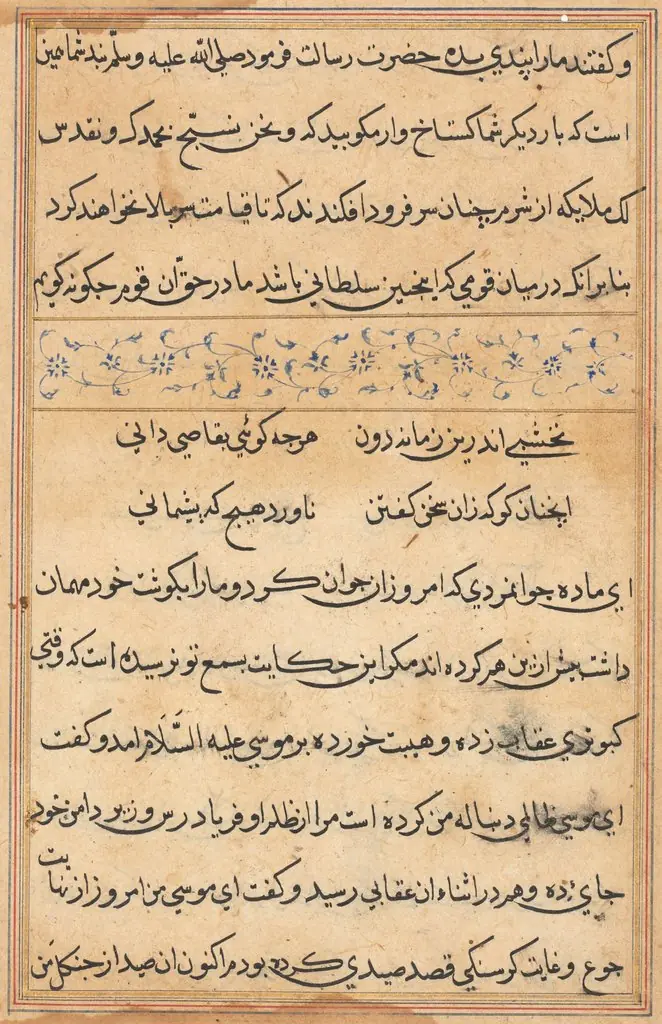 Page from Tales of a Parrot (Tuti-nama): text page
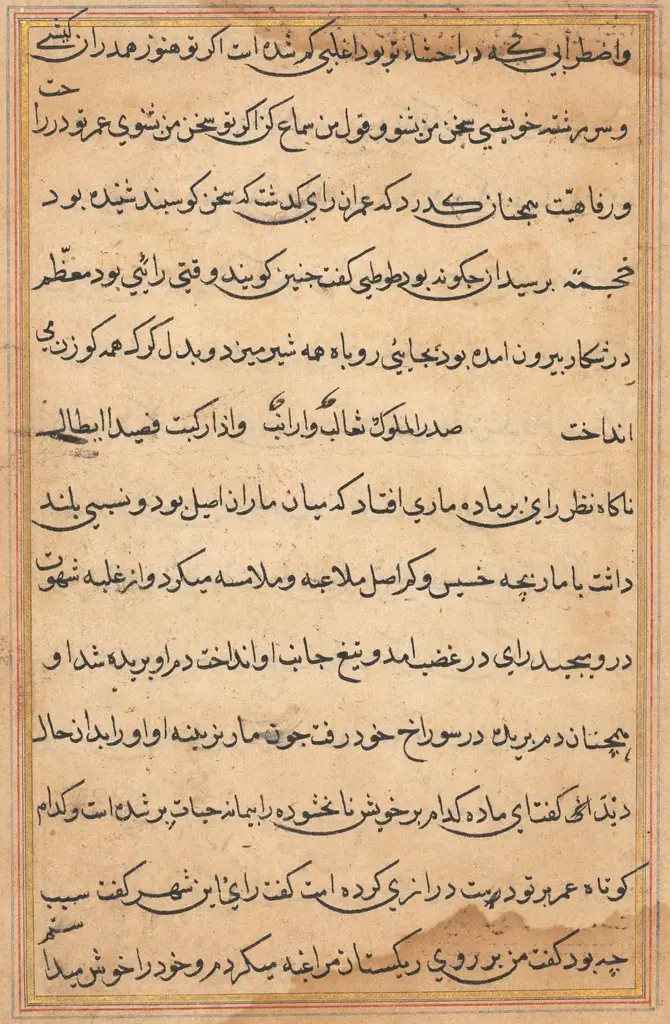 Page from Tales of a Parrot (Tuti-nama): text page
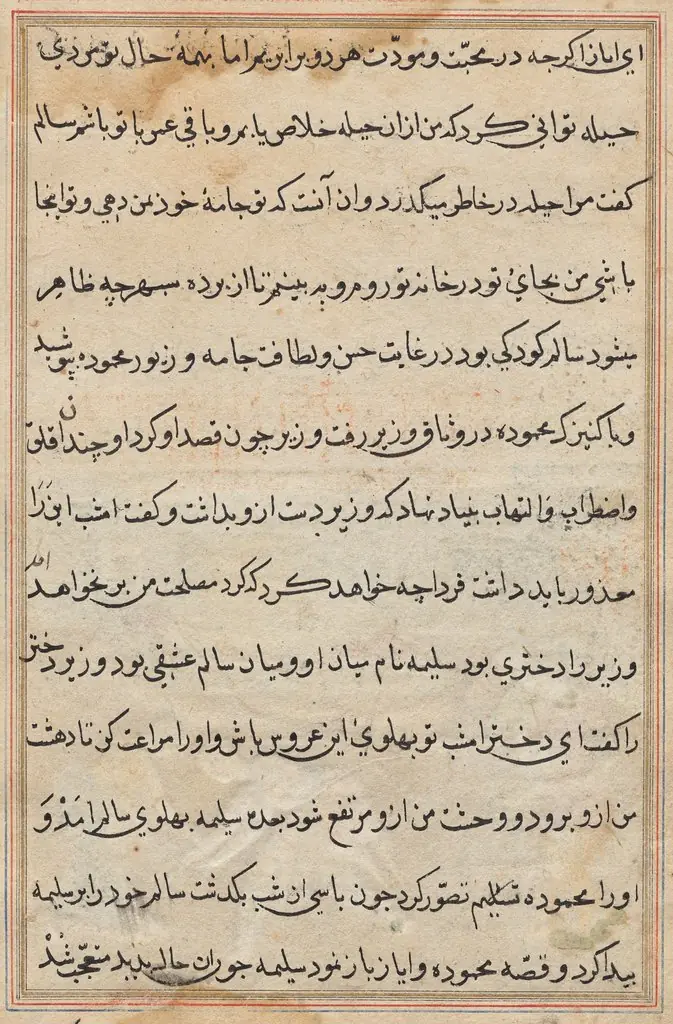 Page from Tales of a Parrot (Tuti-nama): text page
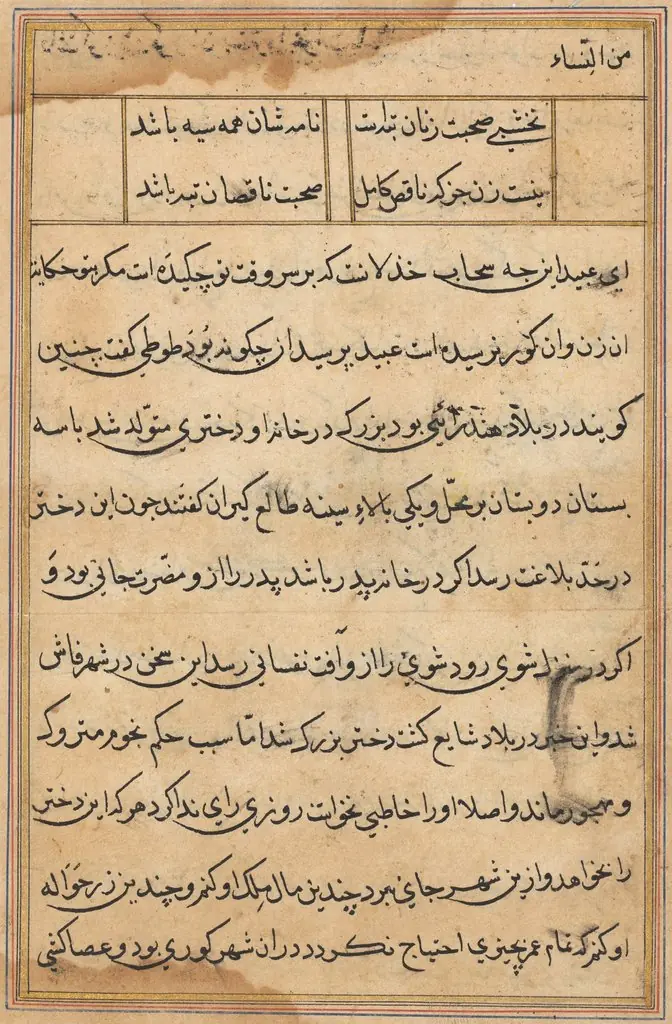 Page from Tales of a Parrot (Tuti-nama): text page
 Page from Tales of a Parrot (Tuti-nama): text page