Artwork
Saint Bartholomew
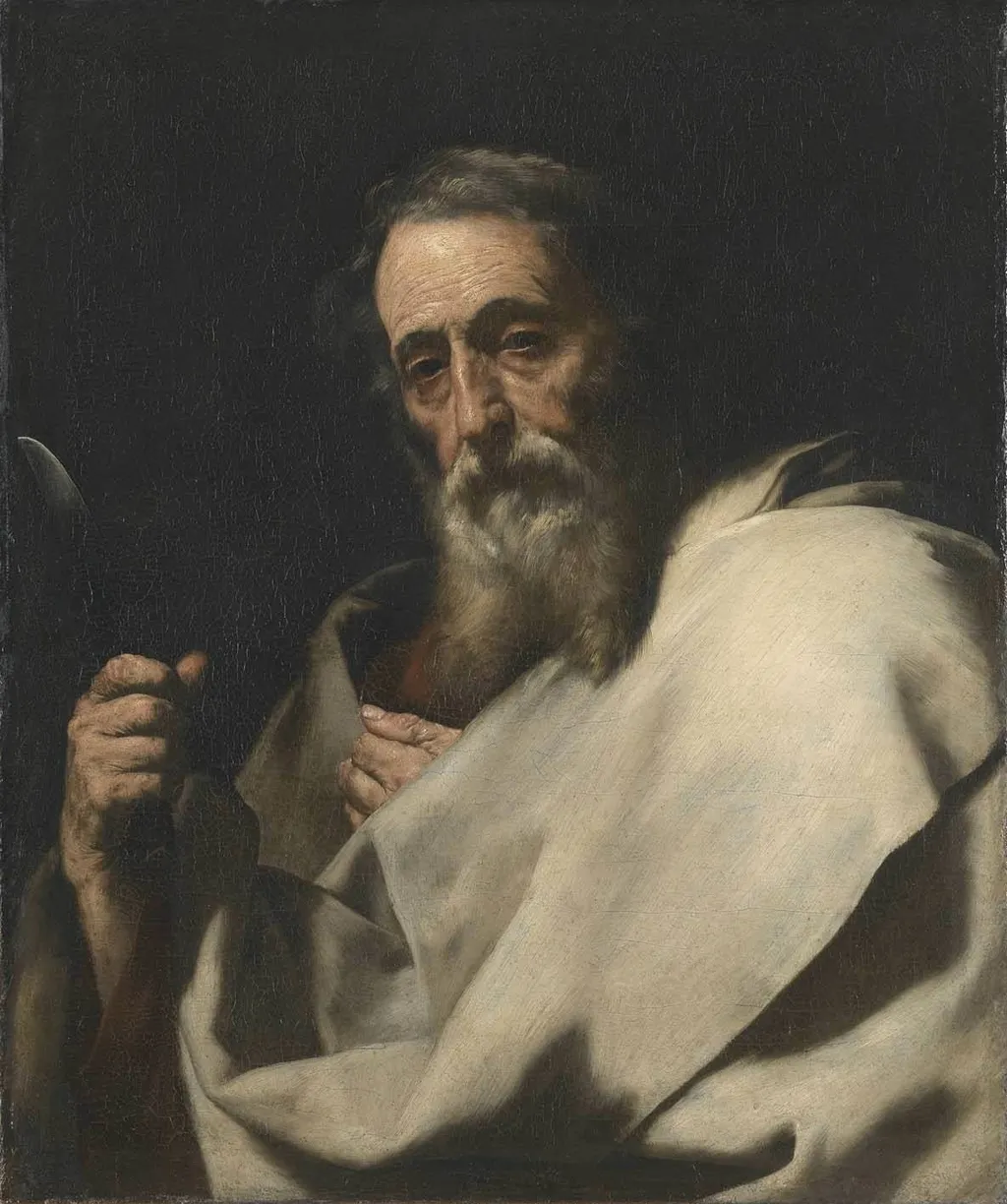
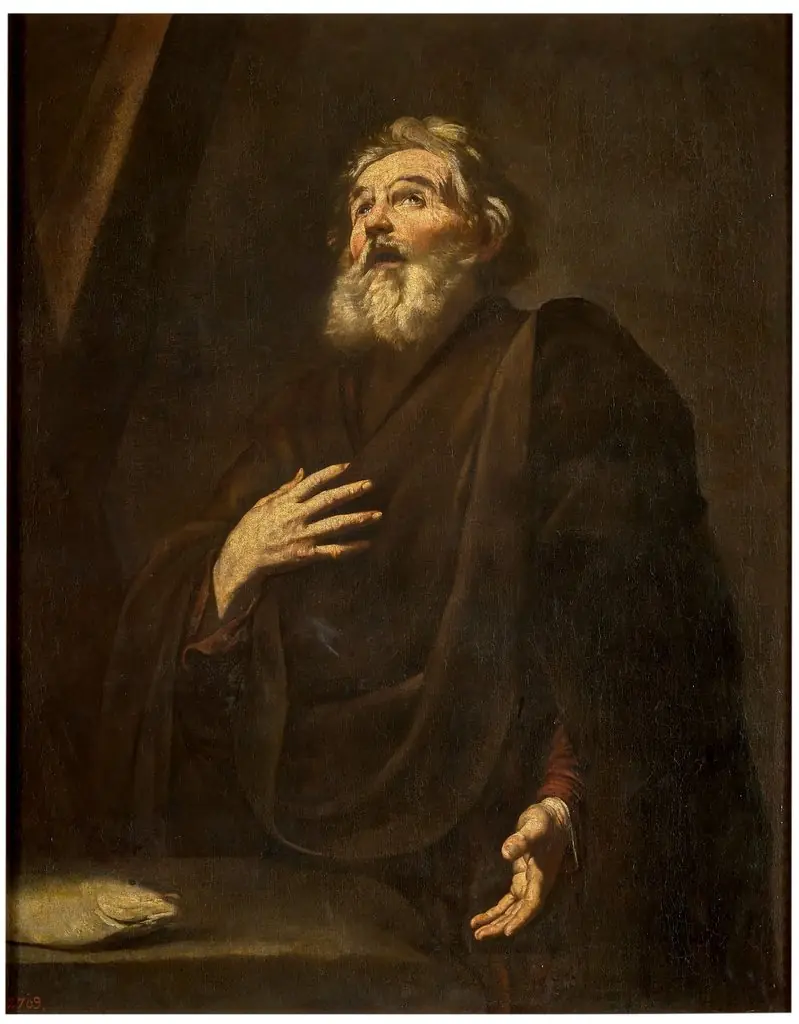
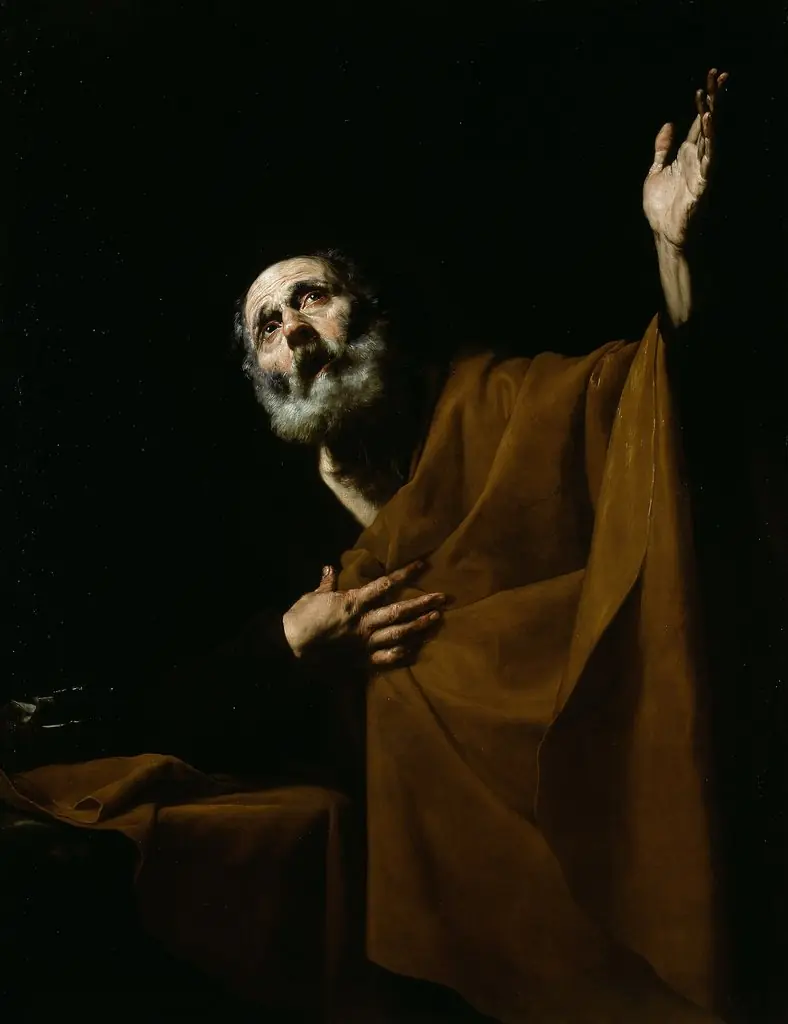
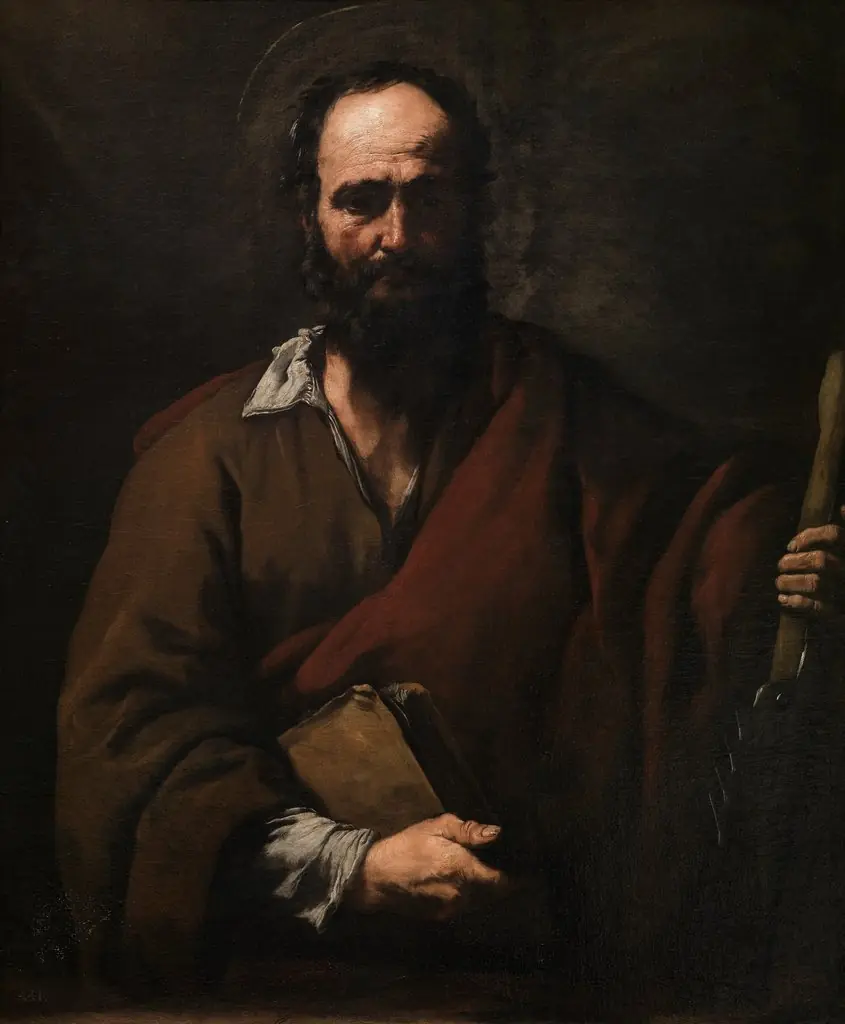
Saint Bartholomew is an unspecified painting by the Early Baroque Italian artist Jusepe de Ribera. It dates from 1634 and is held in the collection of the Bavarian State Painting Collections.
About this work
Overview
Created in 1634 by Jusepe de Ribera, this oil painting portrays the apostle Bartholomew during the artist’s productive period in Naples, where he led the local Baroque school. The work belongs to the collection of the Alte Pinakothek in Munich and exemplifies Ribera’s mature approach to religious subjects.
Subject & Meaning
The figure is identified as Bartholomew, shown holding the knife traditionally associated with his martyrdom by flaying. The solemn expression and the gesture of the hand resting on his chest suggest contemplation of his suffering and steadfast faith, reinforcing the narrative of sacrifice common in Counter‑Reformation art.
Technique & Style
Ribera employs a stark chiaroscuro, casting the saint against a deep, unlit background so that the illuminated face and beard emerge with dramatic contrast. The heavy white drapery, rendered with careful modeling, emphasizes the texture of flesh and cloth, while the limited palette underscores the work’s emotional intensity.
History & Provenance
After its completion in Naples, the painting entered various private collections before being acquired by the Bavarian royal gallery in the 19th century. It has remained in the Alte Pinakothek’s holdings since that acquisition, where it is displayed among other Baroque masterpieces.
Artist & collection
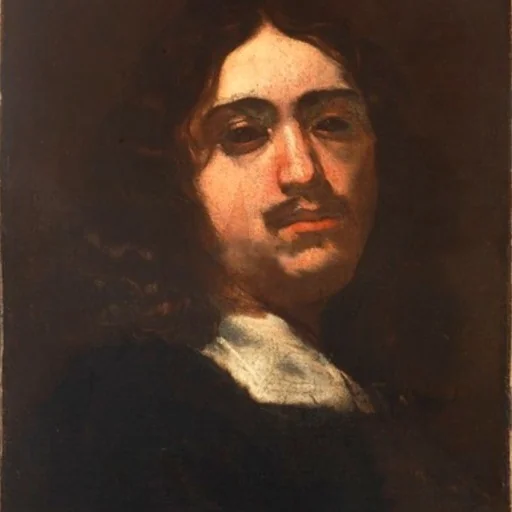
Artist
Jusepe de Ribera (Valencian: ; baptised 17 February 1591 – 3 November 1652) was a Spanish painter and printmaker.