Artwork
Spirit of a Noble Woman (Probably Princess Pari) and Attendant
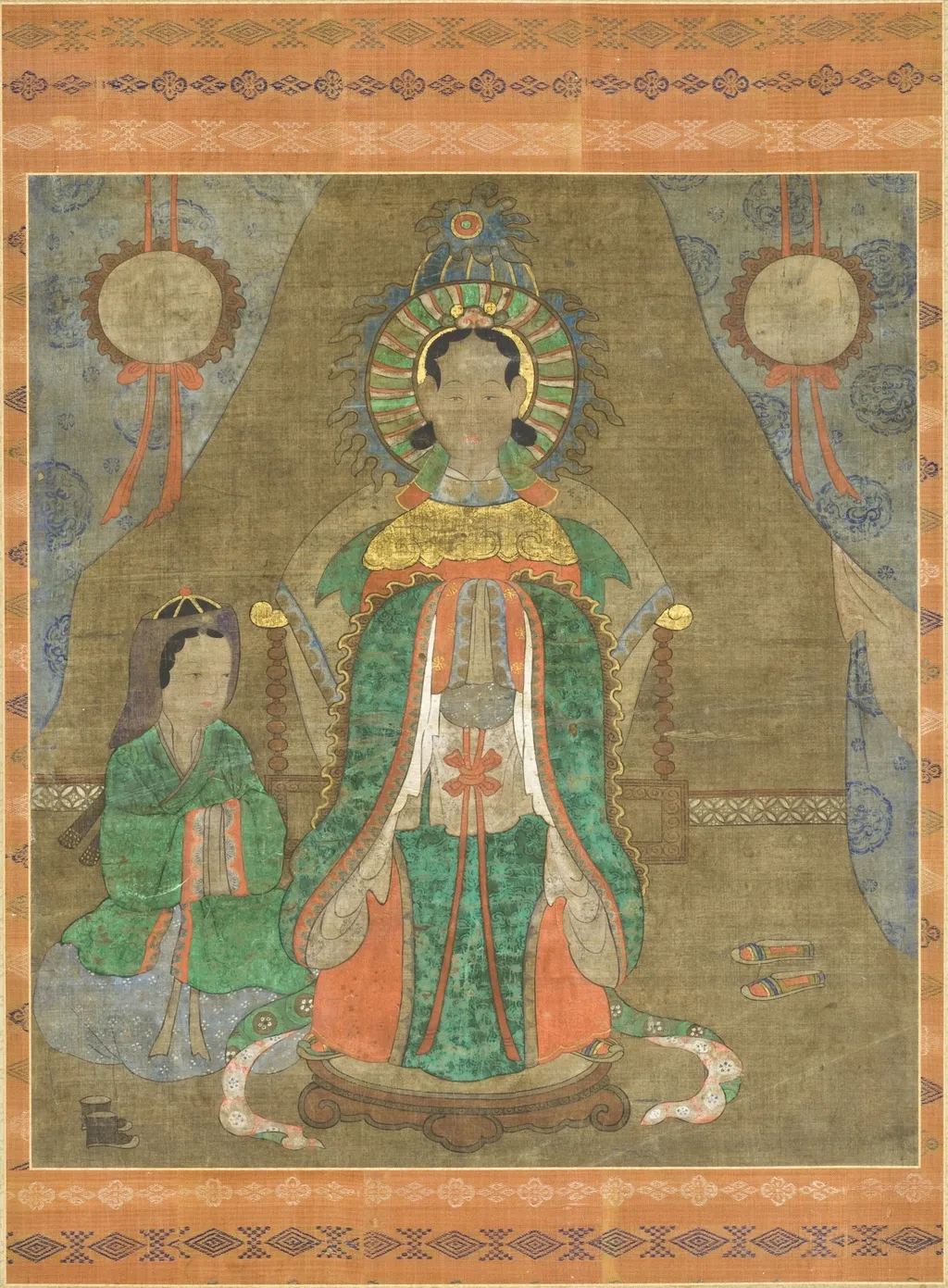
Spirit of a Noble Woman (Probably Princess Pari) and Attendant is an unspecified painting by the Rococo painting artist Unknown. It dates from 1750 and is held in the collection of the Los Angeles County Museum of Art. This painting portrays a noble woman, likely Princess Pari, seated on an ornate chair, accompanied by a kneeling attendant.
About this work
Overview
The background is minimal, drawing focus to the figures and their ceremonial attire, suggesting a devotional or courtly context rather than a narrative scene.
This painting portrays a noble woman, likely Princess Pari, seated on an ornate chair, accompanied by a kneeling attendant. The composition emphasizes stillness and dignity, with rich colors and symbolic elements reinforcing her elevated status. The background is minimal, drawing focus to the figures and their ceremonial attire, suggesting a devotional or courtly context rather than a narrative scene.
Subject & Meaning
The central figure, possibly Princess Pari, is identified through regalia: a gold crown, elaborate robe, and luminous halo, all indicating spiritual or royal authority. The attendant’s lowered posture underscores hierarchy and reverence. The absence of narrative action implies a portrait of enduring status, perhaps intended for veneration or to assert lineage and divine favor within a courtly or religious setting.
Technique & Style
The artist employs flat, decorative patterning with limited depth, typical of regional court painting traditions. Color is used symbolically—green for vitality, gold for divinity, and red for power—rather than naturalistically. The halo and curtain drapery suggest a staged, sacred space. Light is even, avoiding dramatic contrasts; chiaroscuro is not employed, distinguishing this from contemporary European styles.
History & Provenance
The painting’s origins are tied to a South Asian royal or princely court, likely from the 17th or 18th century, though exact provenance remains undocumented. Its survival suggests it was preserved within a family or temple collection. No records confirm its commission or early ownership, but its iconography aligns with depictions of noblewomen in Mughal or Deccan artistic circles.
Context
In contemporary courtly traditions, noblewomen were occasionally depicted with divine attributes to reinforce political legitimacy. This work reflects a blend of Islamicate court aesthetics and indigenous iconographic conventions, where halos and elaborate dress conveyed both earthly rank and spiritual resonance. Such images were not public but circulated among elite circles as markers of lineage and authority.
Legacy
The painting contributes to a broader corpus of South Asian portraiture that merges secular and sacred symbolism. While not widely known outside specialized collections, it exemplifies how regional artists adapted visual language to express status without adopting European naturalism. Its preservation offers insight into the quiet, enduring presence of women in courtly visual culture.
Artist & collection

 Domestic Scene
 Giacomo and Cardinal Marco, investing Andrea, Abbot of San Zeno, with his Benefice
 The Nymph of Fontainebleau
 Portrait of a Woman
 Madonna and Child with Saints in the Enclosed Garden
 Venus and Minerva
 Family Group of Four on Sofa
 Wall painting from Room H of the Villa of P. Fannius Synistor at Boscoreale
 Shakyamuni with two attendants
 Mount Kurama Mandala: Bishamonten Triad (Kuramayama mandara: Bishamonten sanzonzō)
 Kannon
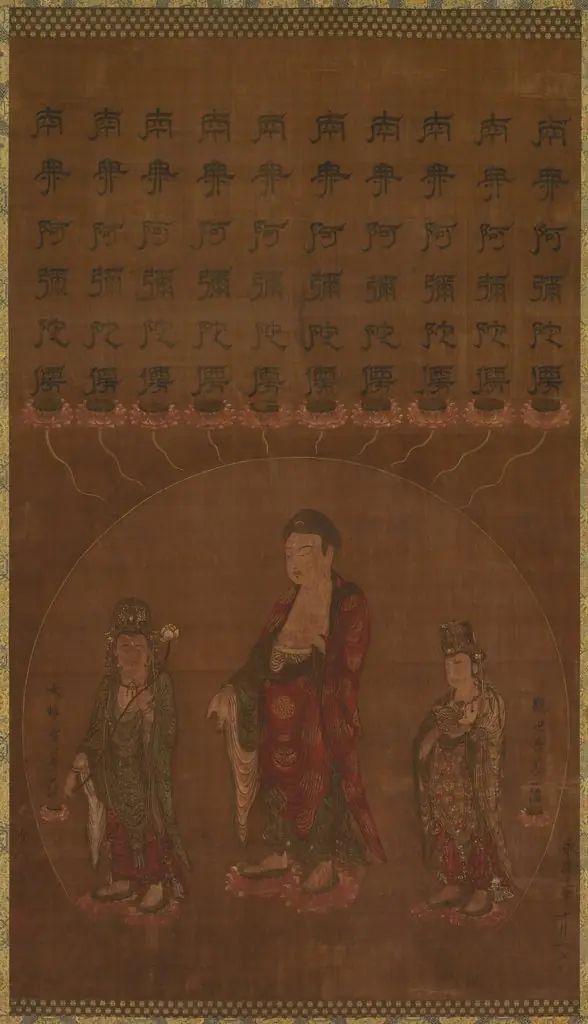 Buddha Amitābha with Two Attending Bodhisattvas
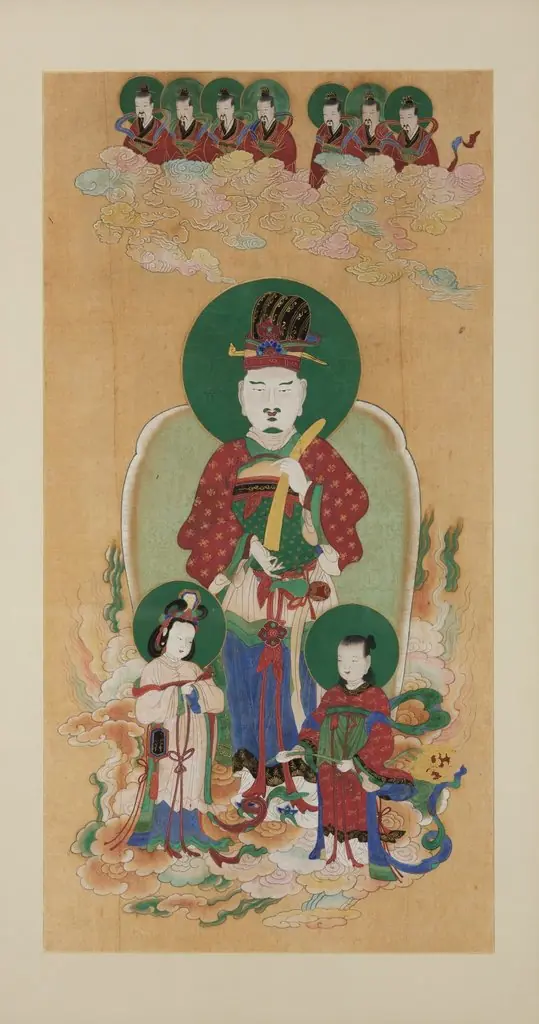 Daoist Official of Heaven with Seven Stars and Jade Maidens
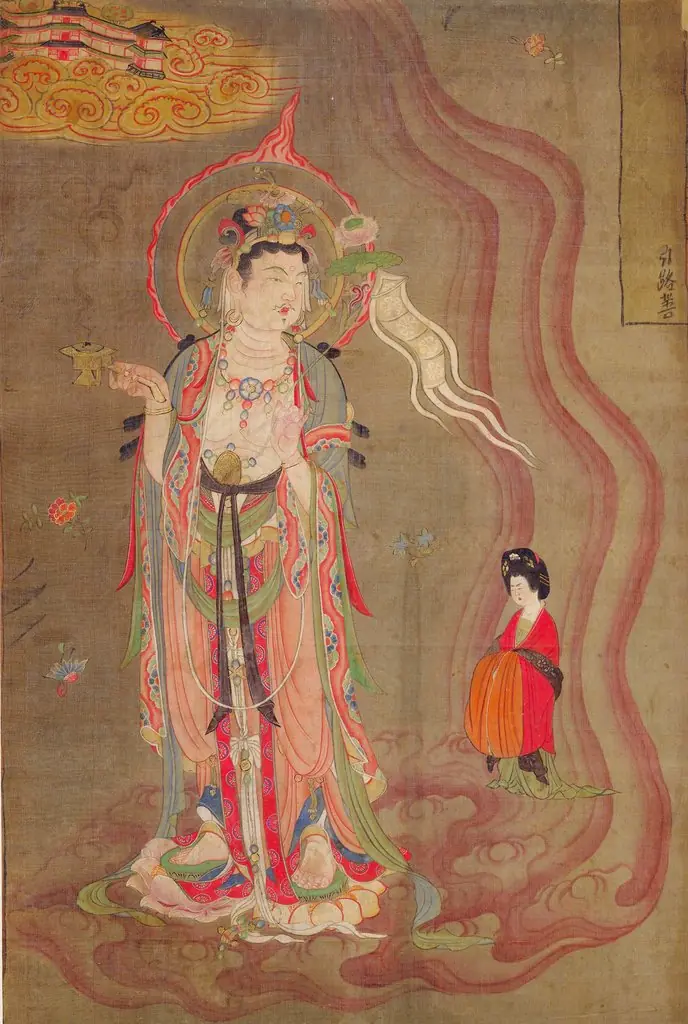 引路菩萨图
引路菩萨图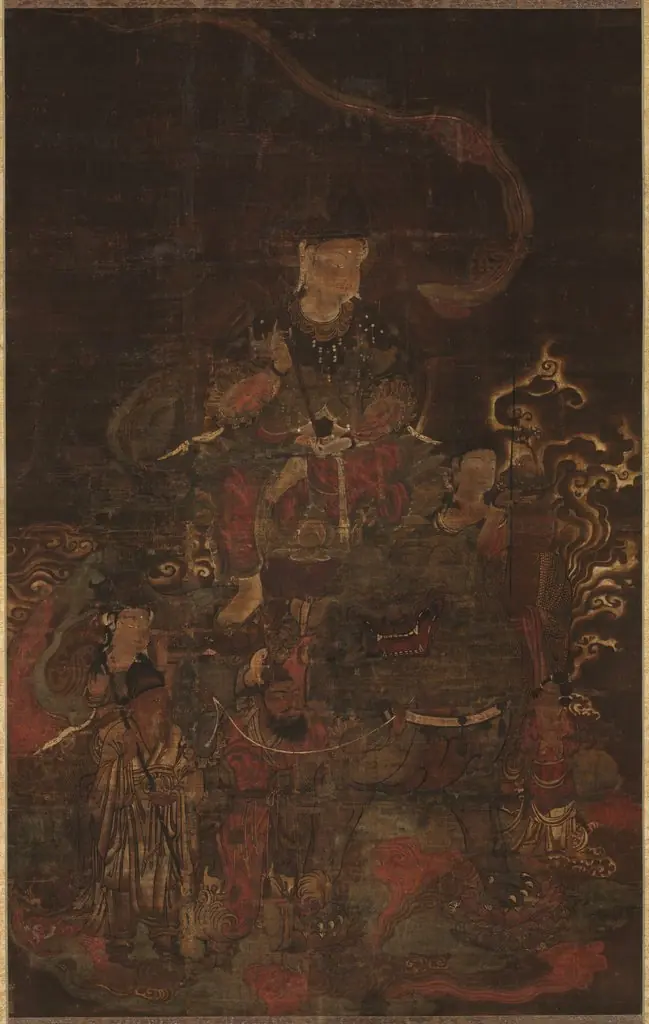 Monju Riding Lion with Attendants
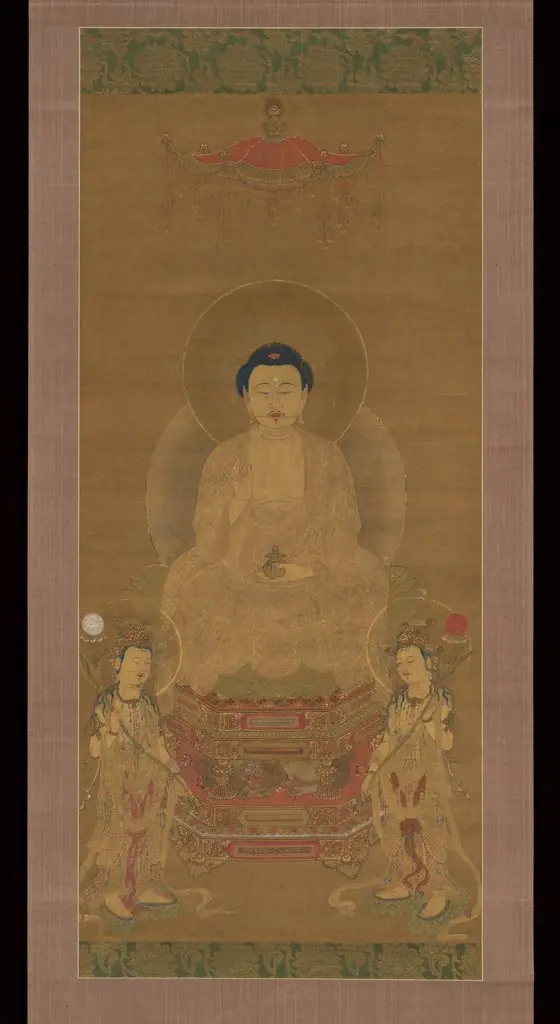 Triad of the Medicine Master Buddha Yakushi (Bhaisajya Buddha)
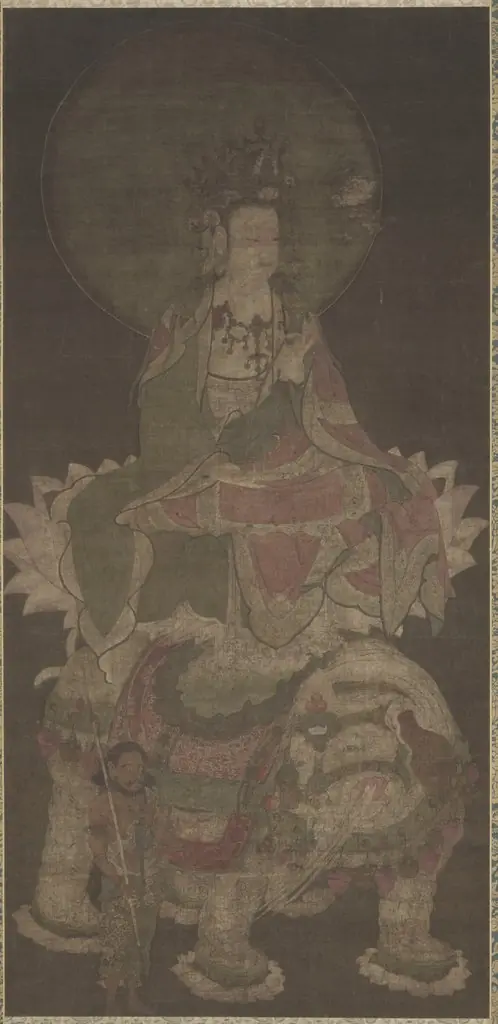 Samantabhadra
 Buddha Amitābha with Two Attending Bodhisattvas
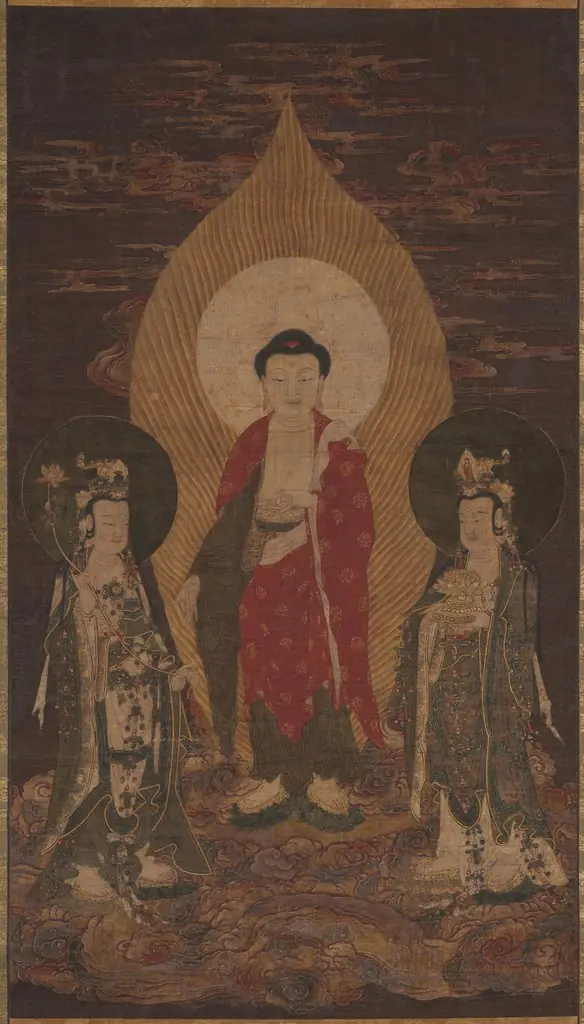 Amitābha Triad
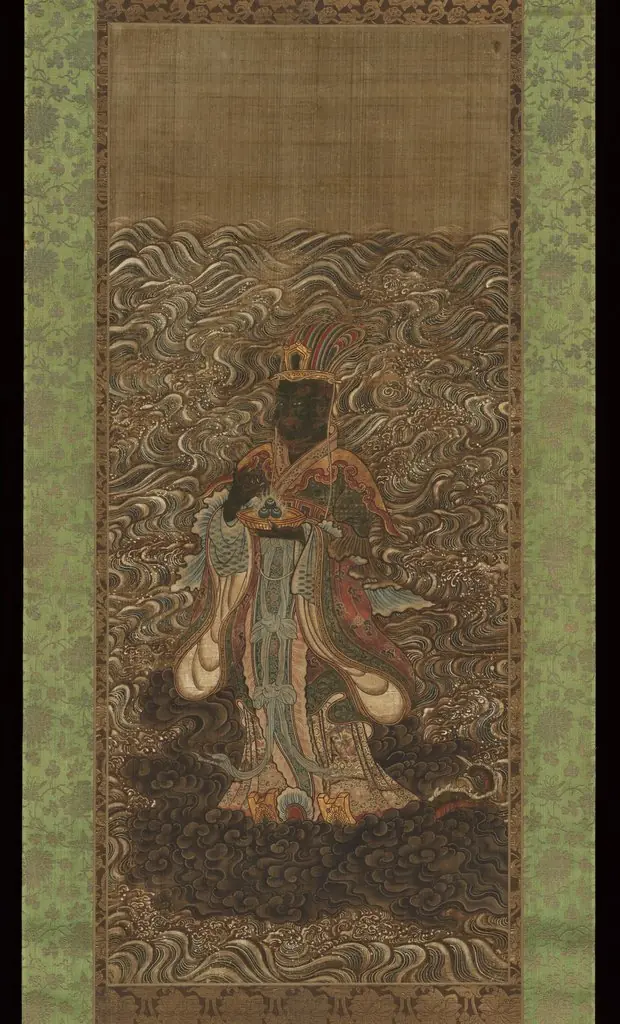 Dragon King