Artwork
Page from Tales of a Parrot (Tuti-nama): text page
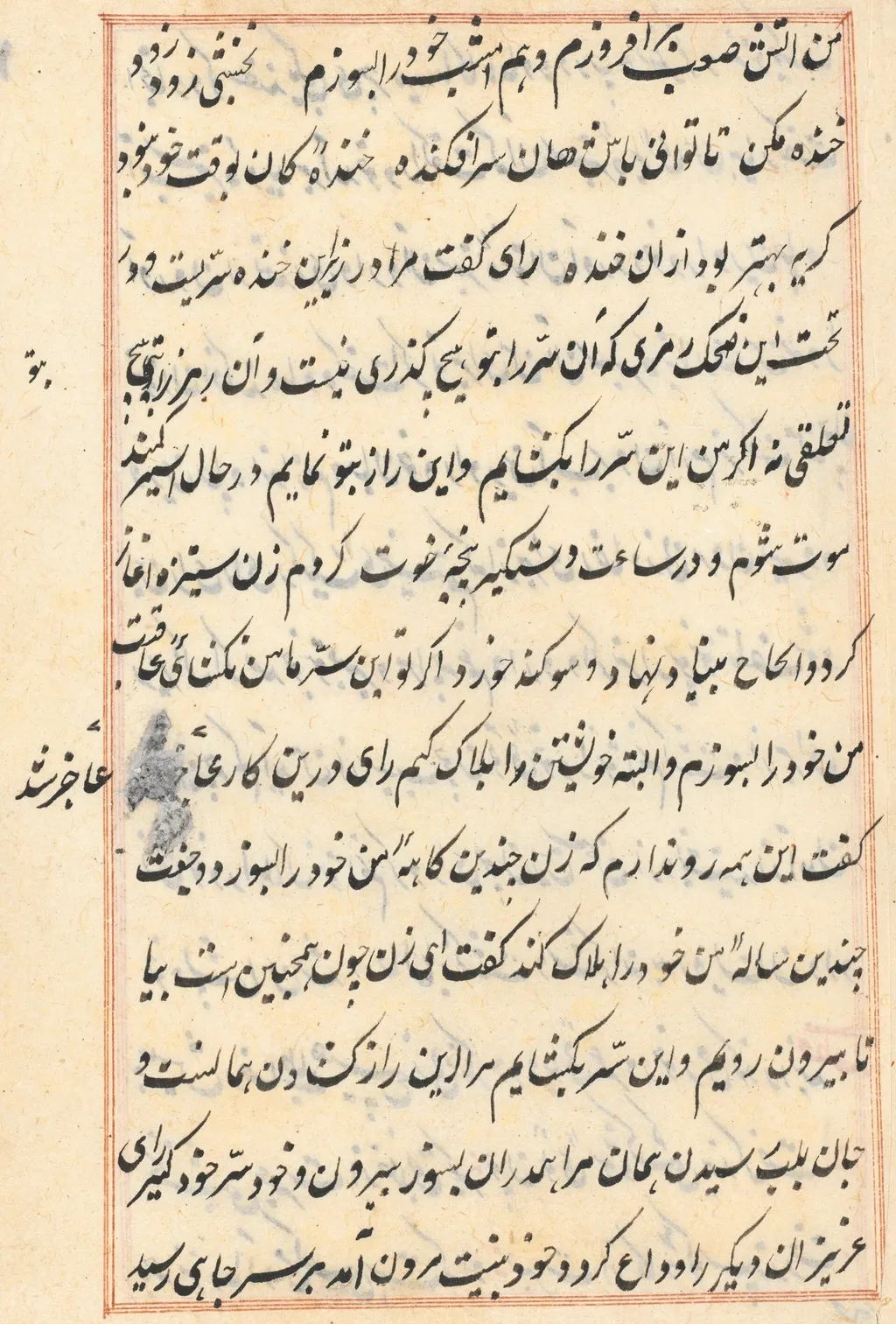
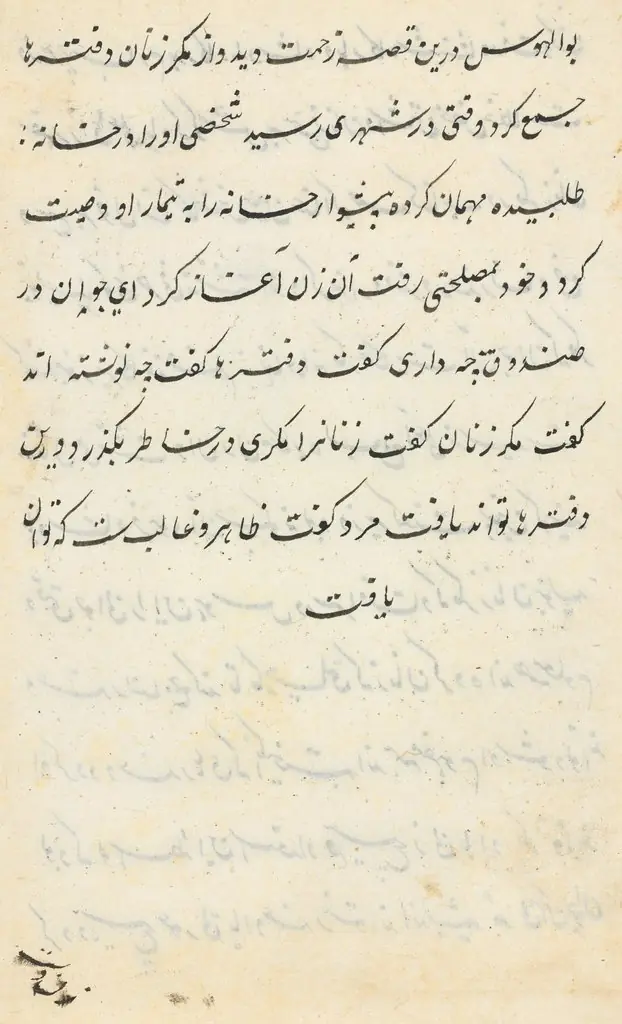
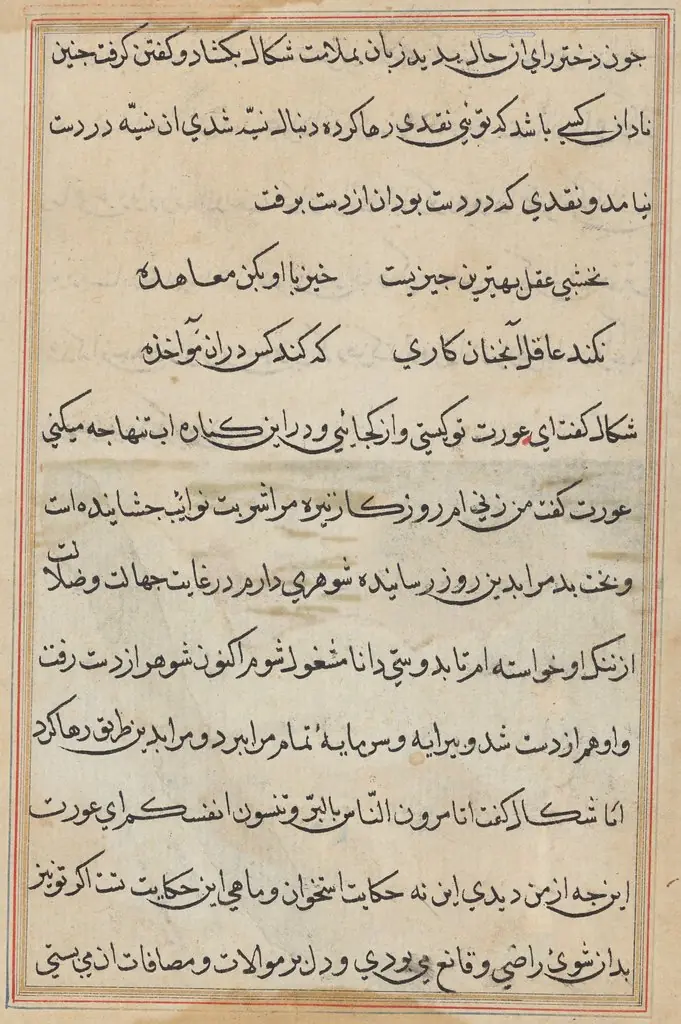
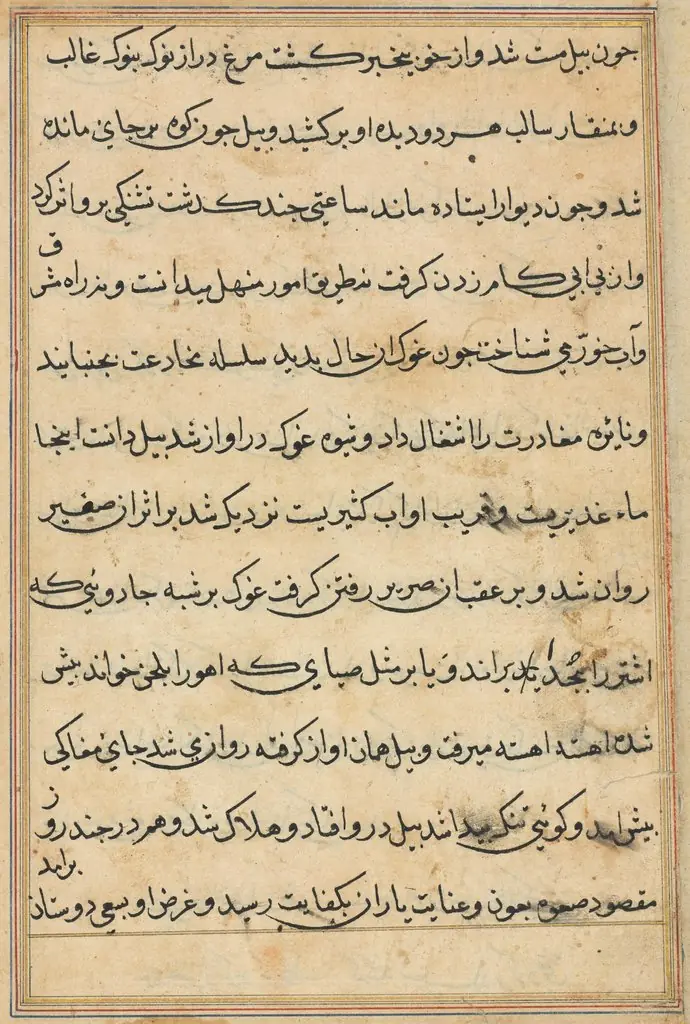
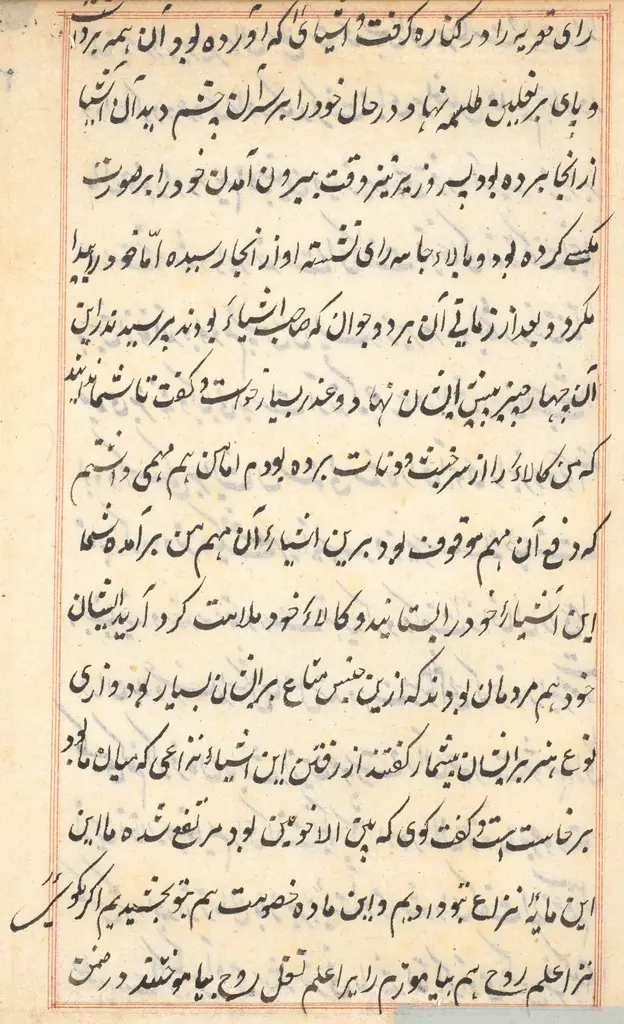
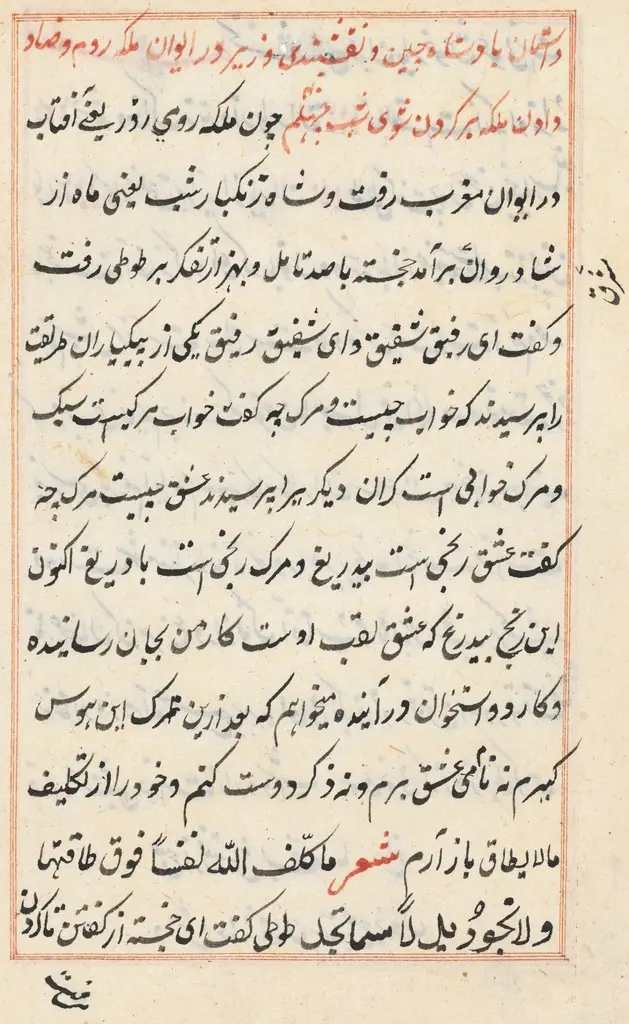
Page from Tales of a Parrot (Tuti-nama): text page is an unspecified painting. It dates from 1560 and is held in the collection of the Cleveland Museum of Art. The object is a painted page from the Persian manuscript known as the *Tales of a Parrot* (Tuti‑nama).
About this work
Overview
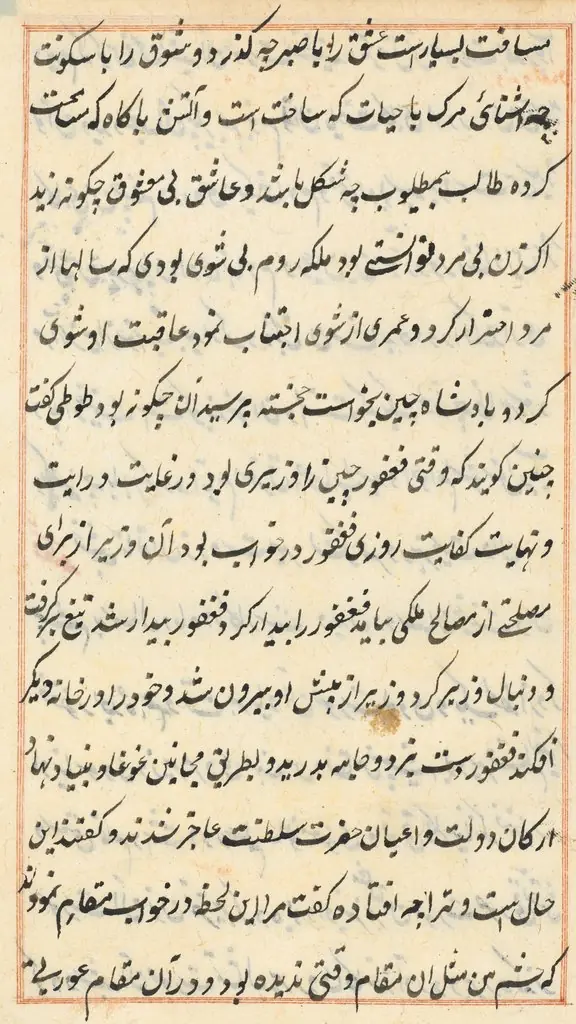
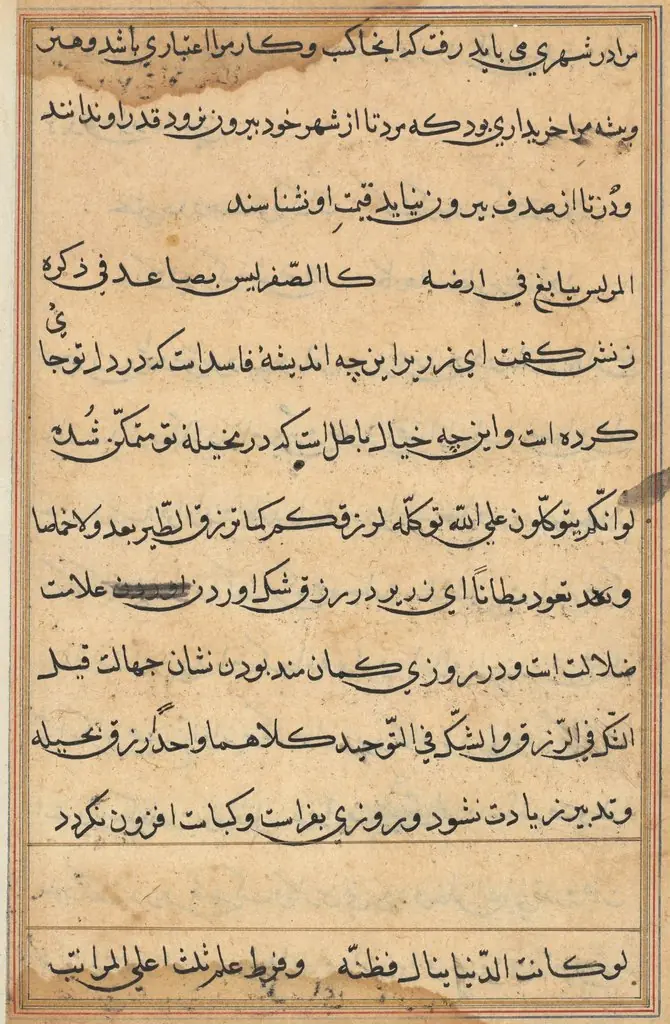
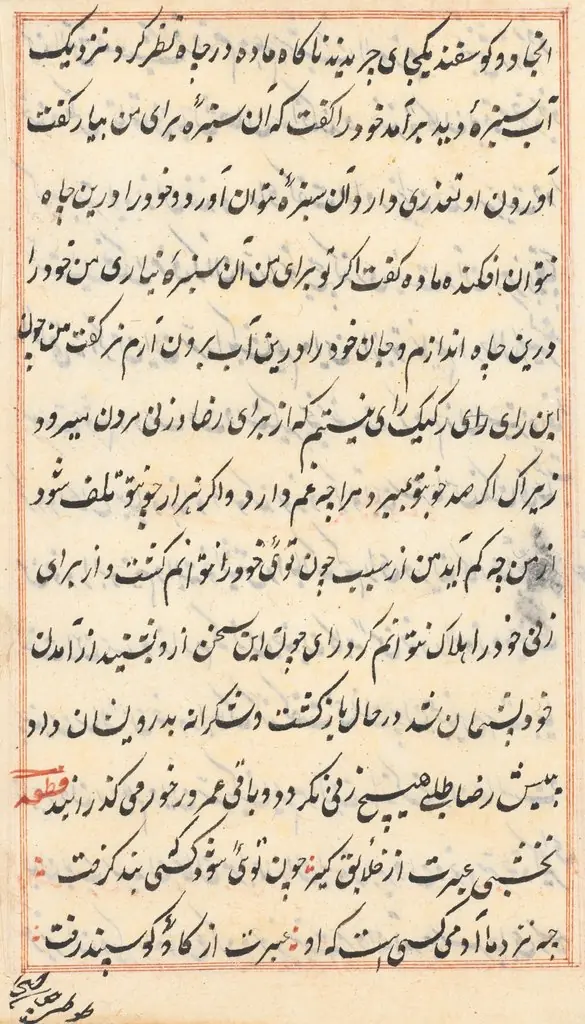
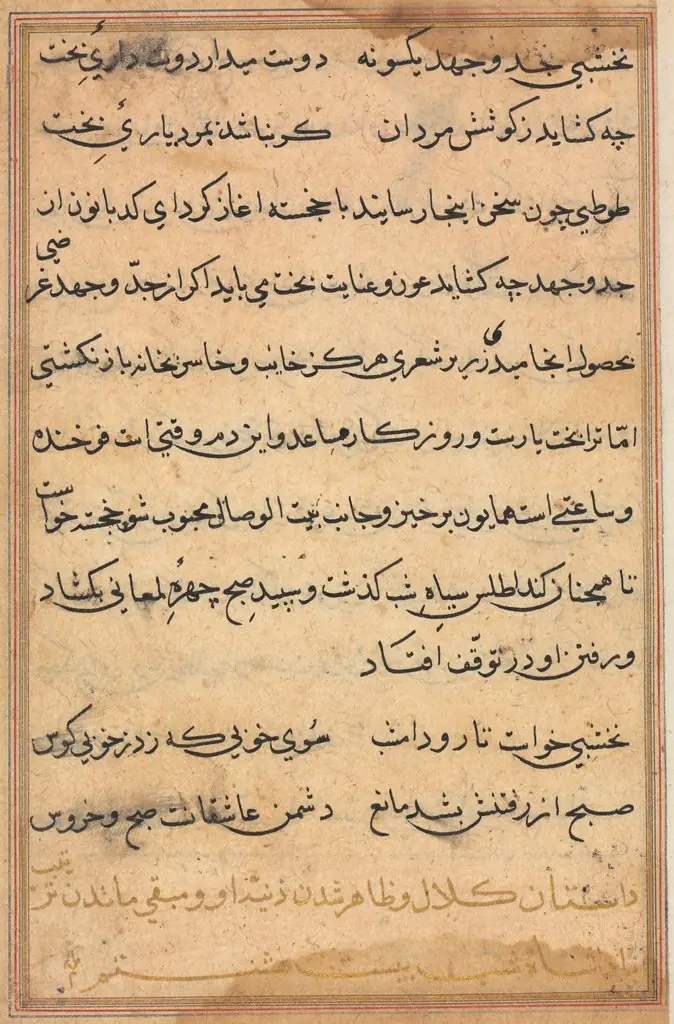
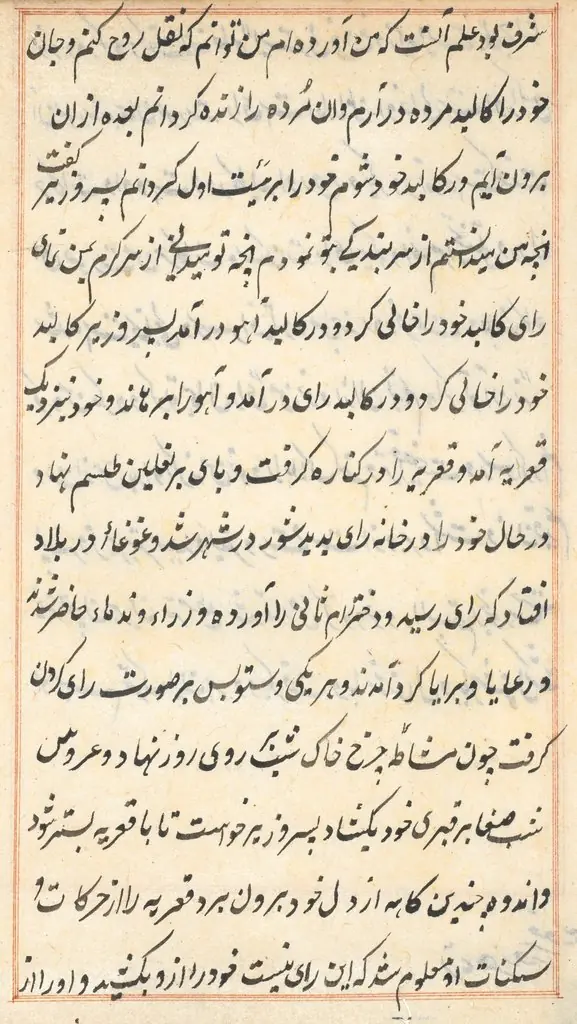
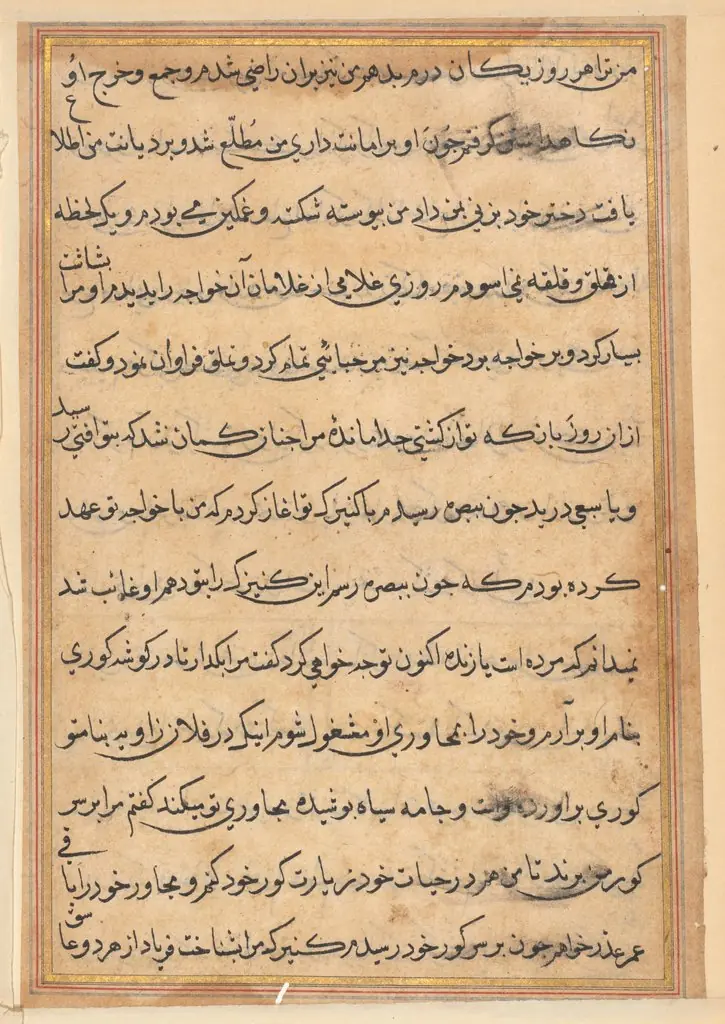
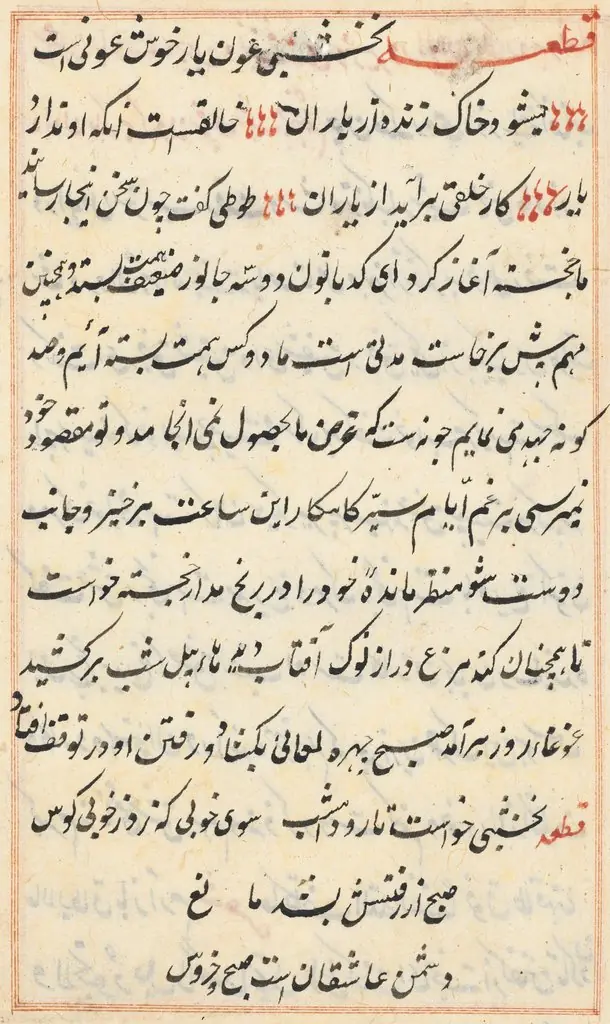
The object is a painted page from the Persian manuscript known as the *Tales of a Parrot* (Tuti‑nama). Executed on paper that has yellowed with age, the page displays a continuous block of text written in a flowing, highly decorative script. Black ink forms the main body of the writing, while selected words are highlighted in red, creating visual emphasis within the narrative.
Subject & Meaning
The text appears to be a poetic or narrative composition, typical of the *Tuti‑nama* tradition, which recounts moral and romantic tales through the voice of a parrot. The highlighted red passages likely mark key verses or thematic turns, guiding the reader’s attention to moments of particular significance within the story.
Technique & Style
The calligraphic hand is intricate, featuring numerous flourishes, loops, and ornamental extensions that characterize high‑court Persian script of the period. Ink application shows a fine, consistent line work in black, while the red accents are applied with a slightly broader brush, providing contrast without disrupting the overall harmony of the page.
History & Provenance
The painted page is part of the Cleveland Museum of Art’s collection and is on public view. Its provenance prior to acquisition by the museum is not detailed in the available information, but the work reflects the manuscript culture of Persian literary production, likely dating from the early modern era.
Context
Manuscript pages such as this one were often produced for elite patrons who valued both literary content and visual elegance. The *Tuti‑nama* genre, popular across the Islamic world, combined storytelling with elaborate calligraphy, serving both educational and decorative purposes in courtly libraries.
Artist & collection

 Page from Tales of a Parrot (Tuti-nama): text page
 Page from Tales of a Parrot (Tuti-nama): text page
 Page from Tales of a Parrot (Tuti-nama): text page
 Page from Tales of a Parrot (Tuti-nama): text page
 Page from Tales of a Parrot (Tuti-nama): text page
 Page from Tales of a Parrot (Tuti-nama): text page
 Page from Tales of a Parrot (Tuti-nama): text page
 Page from Tales of a Parrot (Tuti-nama): text page
 Page from Tales of a Parrot (Tuti-nama): text page
 Page from Tales of a Parrot (Tuti-nama): text page
 Page from Tales of a Parrot (Tuti-nama): text page
 Page from Tales of a Parrot (Tuti-nama): text page