Artwork
Page from Tales of a Parrot (Tuti-nama): text page
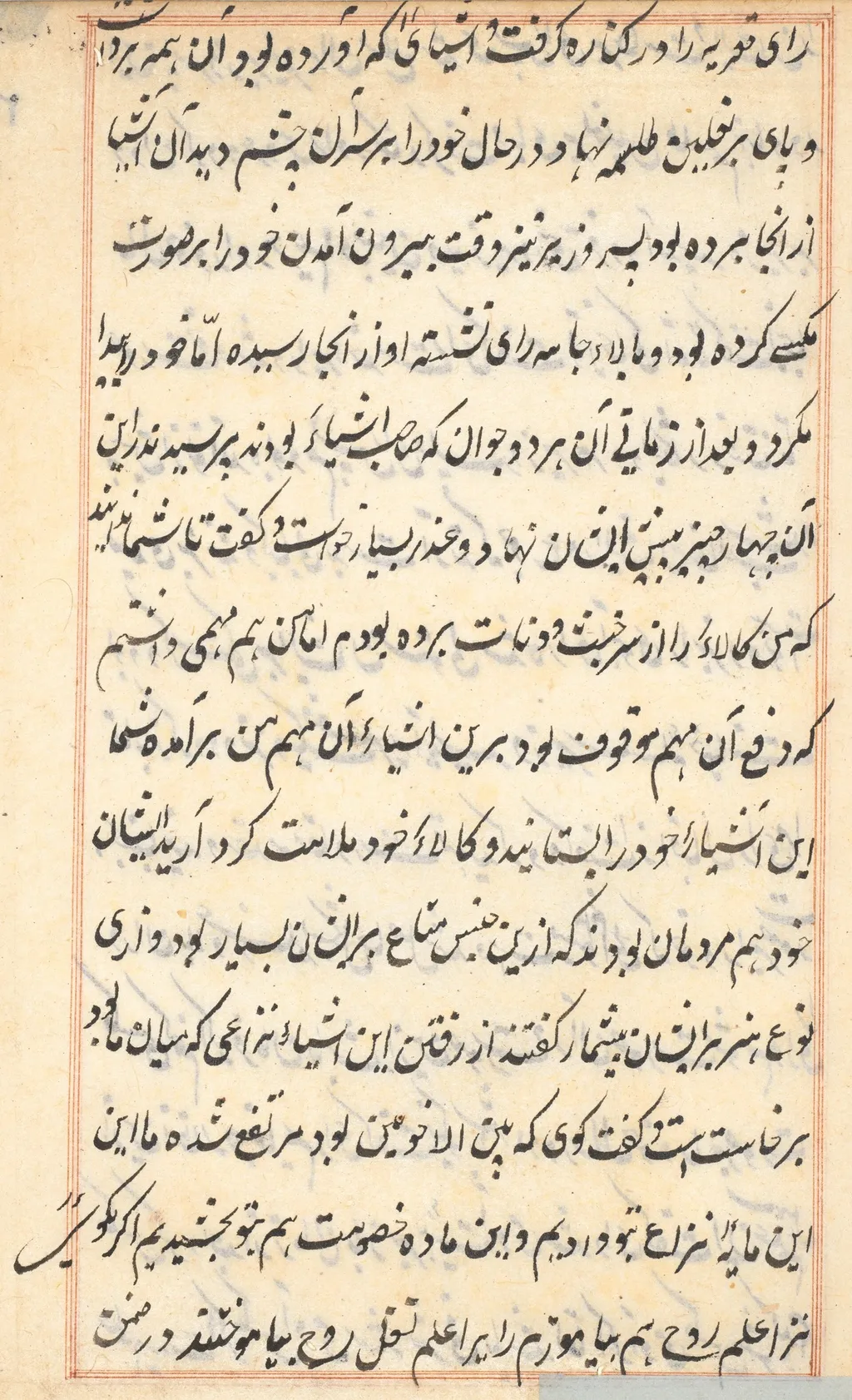
Page from Tales of a Parrot (Tuti-nama): text page is an unspecified painting. It dates from 1560 and is held in the collection of the Cleveland Museum of Art. The object is a single folio from the illustrated manuscript known as *Tuti‑nama* (The Parrot’s Tale).
About this work
The style of the text and the use of red ink suggest that this page may be from a religious or literary text.
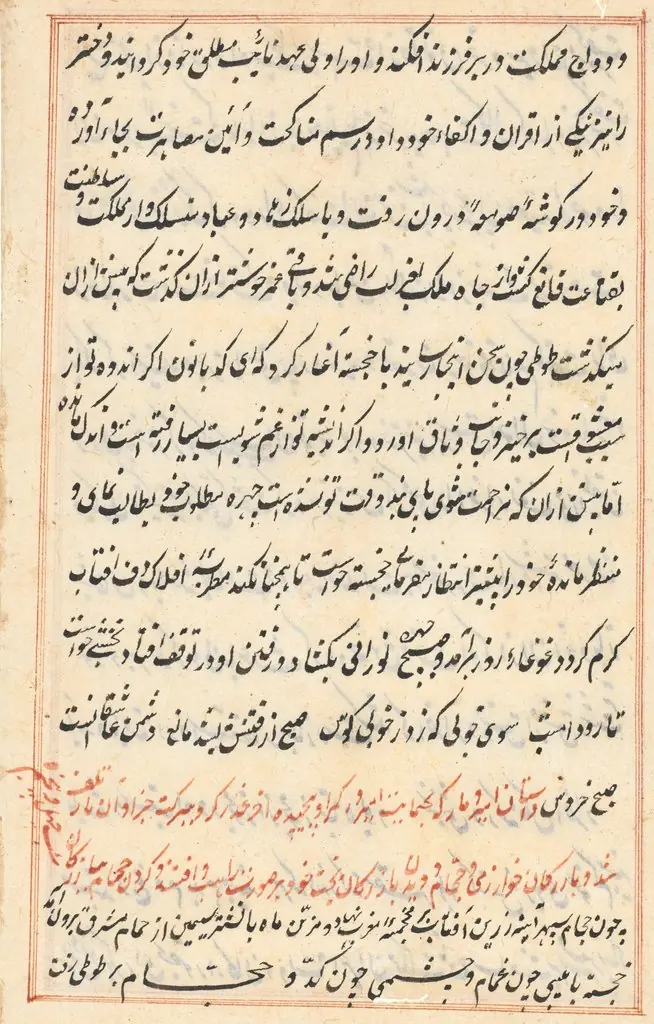
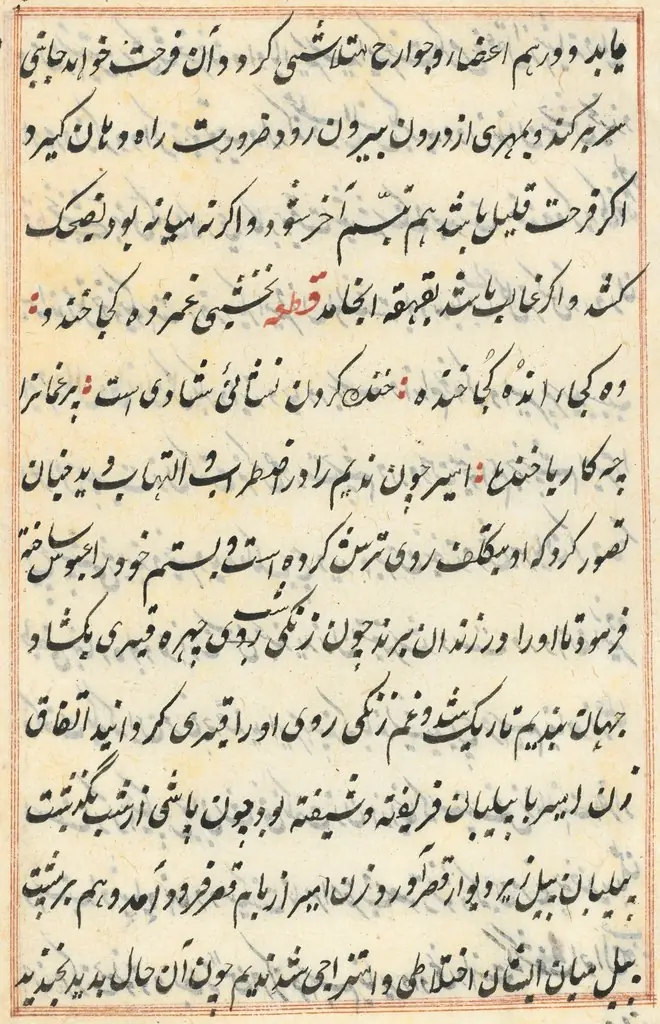
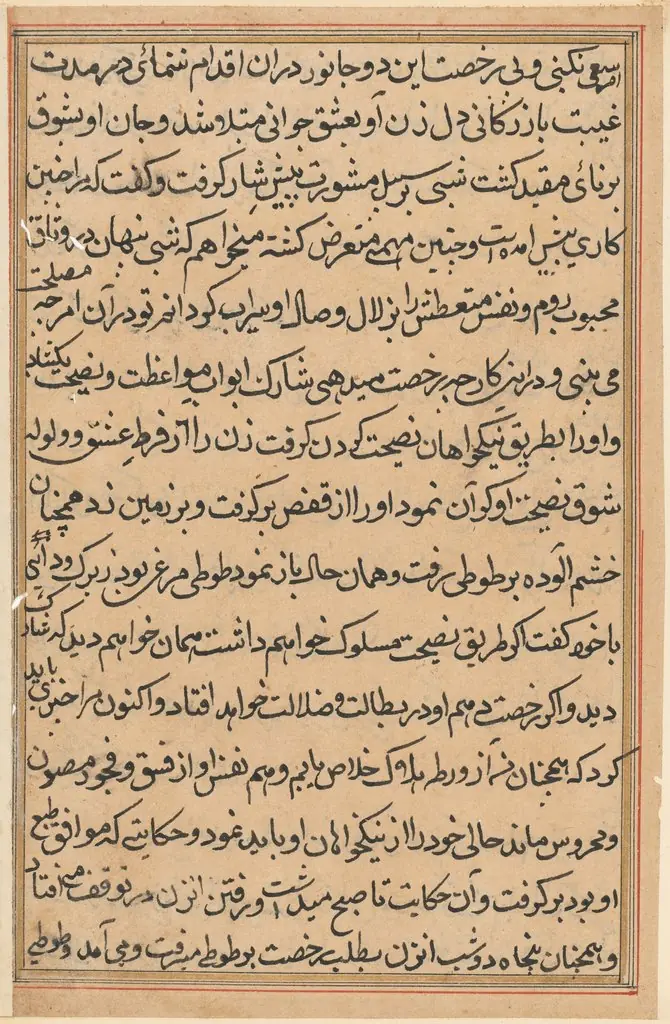
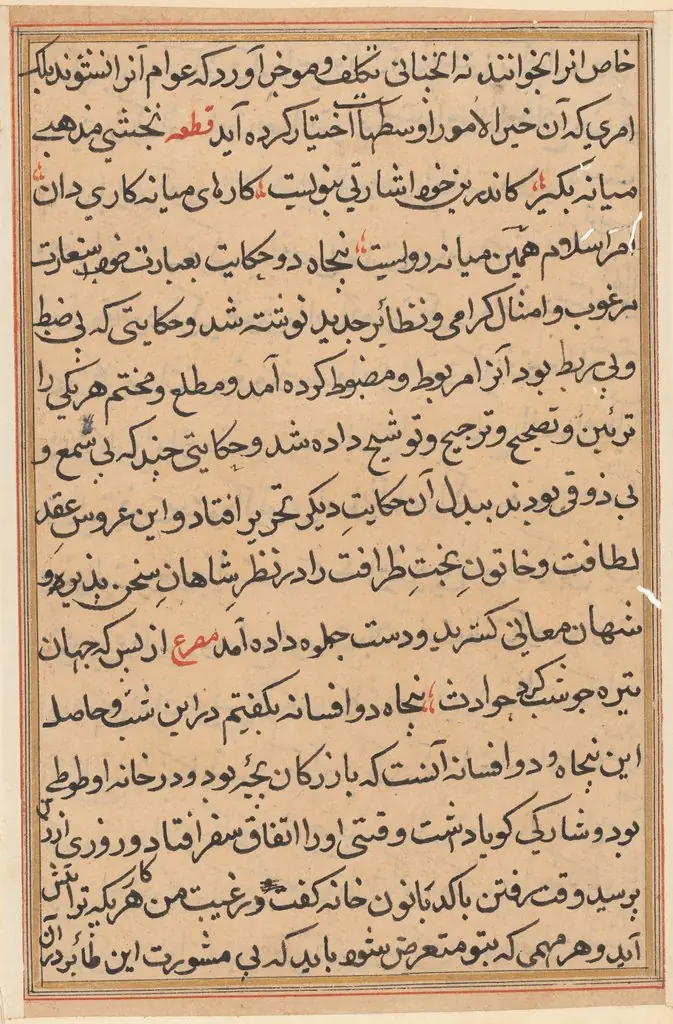
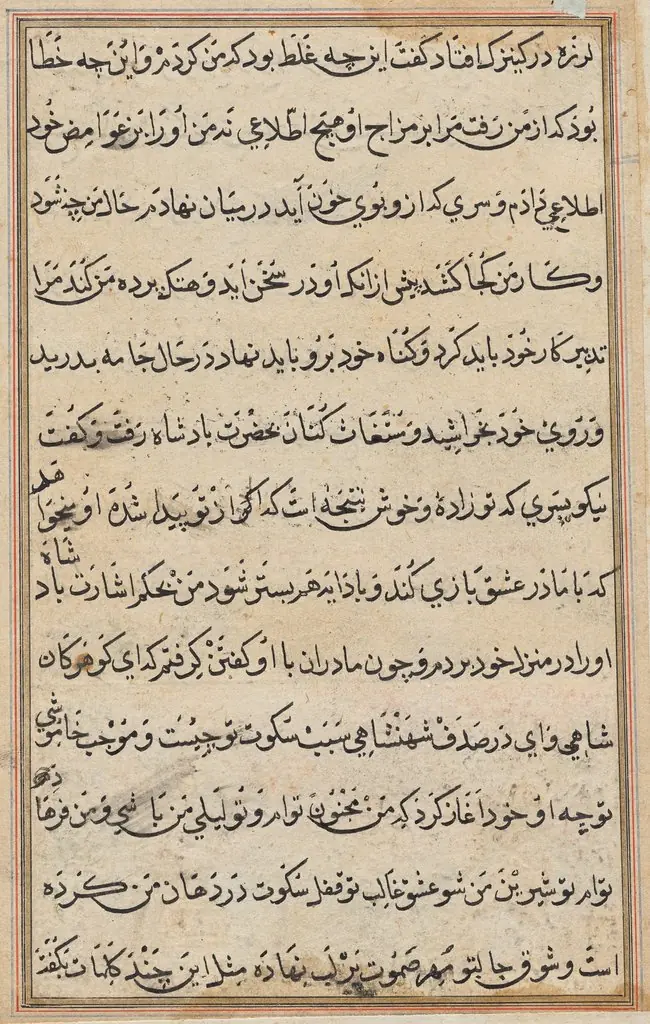
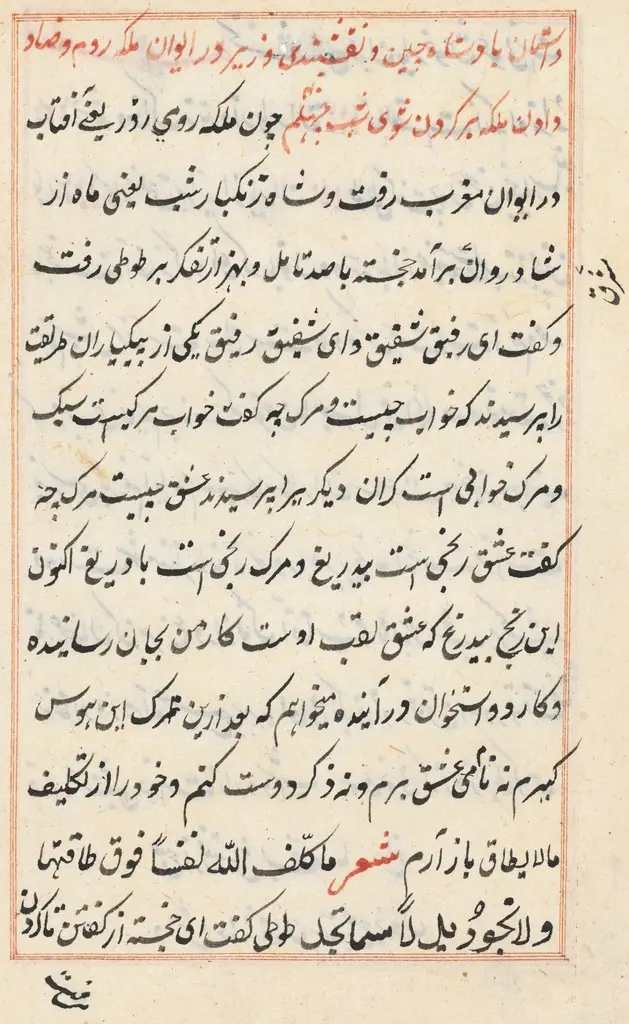
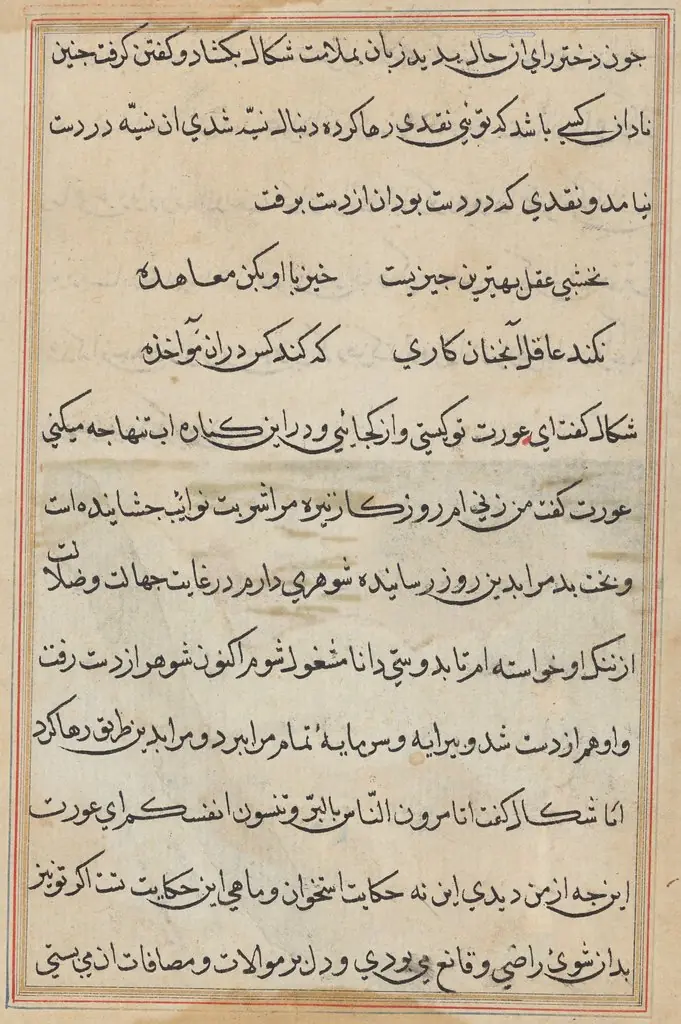
This painting is a page from a book, featuring text in a language that may be Persian or Arabic. The text is written in black ink on a beige background, with a red border around the edges of the page. The text is written in a flowing script, with some words and phrases underlined or highlighted in red. The page appears to be from a manuscript or illuminated book, possibly from the 16th century. The style of the text and the use of red ink suggest that this page may be from a religious or literary text.
Overview
The object is a single folio from the illustrated manuscript known as *Tuti‑nama* (The Parrot’s Tale). It consists of a rectangular page with a beige parchment background, framed by a thin red border. Black ink forms a continuous line of text in a flowing script, while selected words are emphasized with red underlining or highlighting.
Subject & Meaning
The page contains a narrative passage written in a language that appears to be Persian or Arabic, typical of literary and didactic works of the Islamic world. The highlighted sections likely draw attention to moral or theological points within the story, a common practice in manuscripts intended for instruction or contemplation.
Technique & Style
Ink was applied with a reed or quill pen, producing the elegant, cursive script characteristic of 16th‑century Persianate calligraphy. The red accents were added with a separate pigment, possibly vermilion, applied after the main text. The red border frames the page, providing visual balance and reinforcing the manuscript’s decorative scheme without extensive illumination.
History & Provenance
The folio originates from a *Tuti‑nama* manuscript produced in the early modern period, most likely the 1500s, when such illustrated books were popular in Safavid Iran and the broader Persianate cultural sphere. Its exact origin and previous owners are undocumented, but the style aligns with courtly literary productions of that era.
Context
*Tuti‑nama* belongs to a genre of moralistic animal fables that used talking birds and beasts to convey ethical lessons. These texts were often copied for elite patrons and used in educational settings. The presence of both Persian and Arabic elements reflects the multilingual literary environment of the region during the 16th century.
Artist & collection

 Page from Tales of a Parrot (Tuti-nama): text page
 Page from Tales of a Parrot (Tuti-nama): text page
 Page from Tales of a Parrot (Tuti-nama): text page
 Page from Tales of a Parrot (Tuti-nama): text page
 Page from Tales of a Parrot (Tuti-nama): text page
 Page from Tales of a Parrot (Tuti-nama): text page
 Page from Tales of a Parrot (Tuti-nama): text page
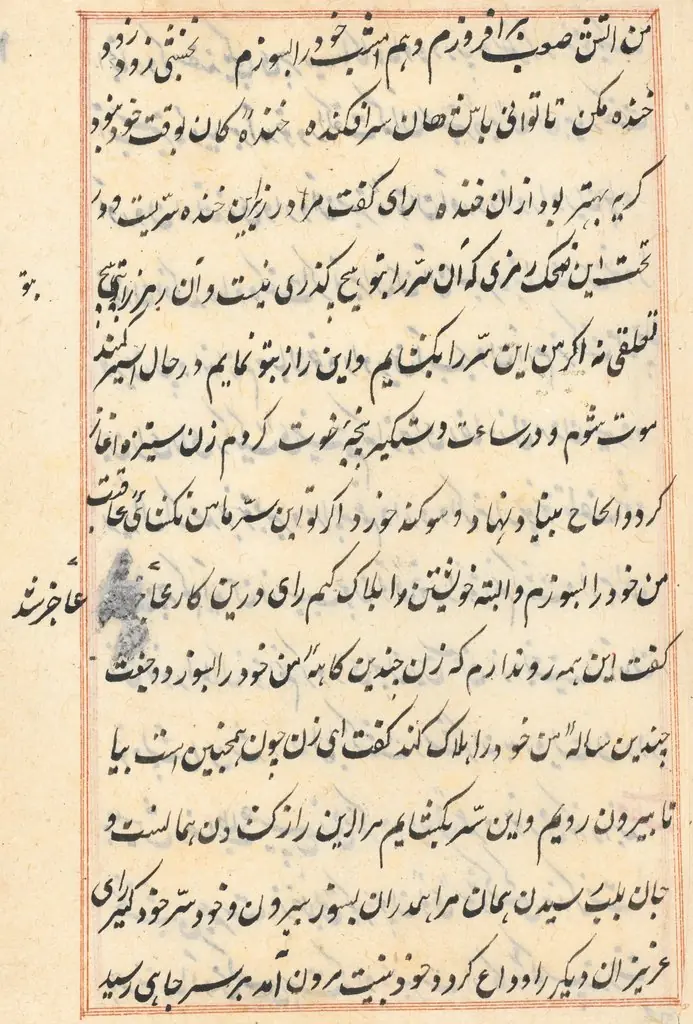 Page from Tales of a Parrot (Tuti-nama): text page
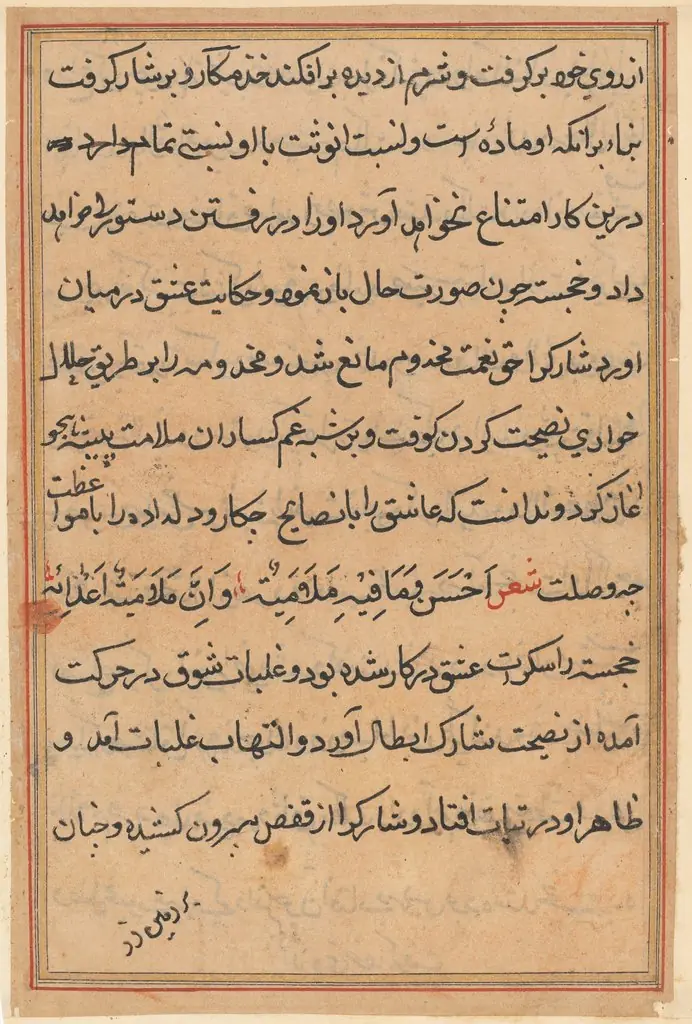 Page from Tales of a Parrot (Tuti-nama): text page
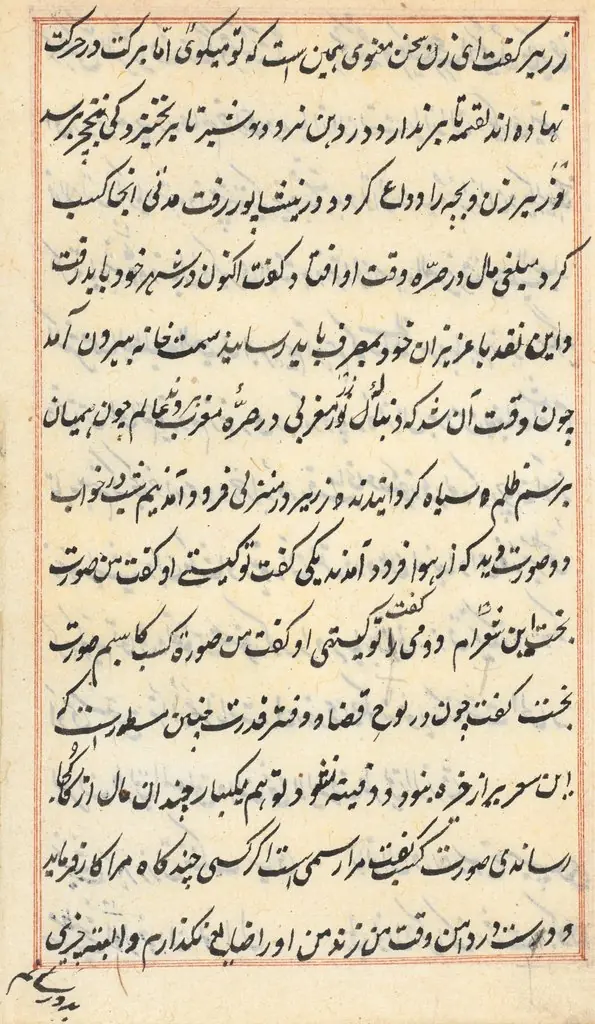 Page from Tales of a Parrot (Tuti-nama): text page
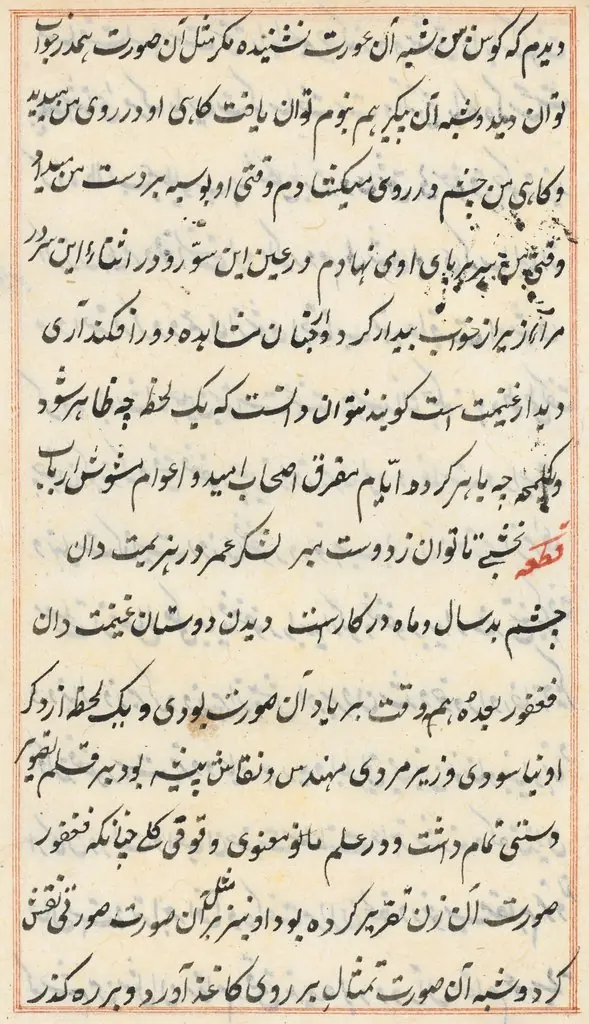 Page from Tales of a Parrot (Tuti-nama): text page