Artwork
The soldier receives a garland of roses from his wife which will remain fresh as long as she is faithful, from a Tuti-nama (Tales of a Parrot): Fourth Night
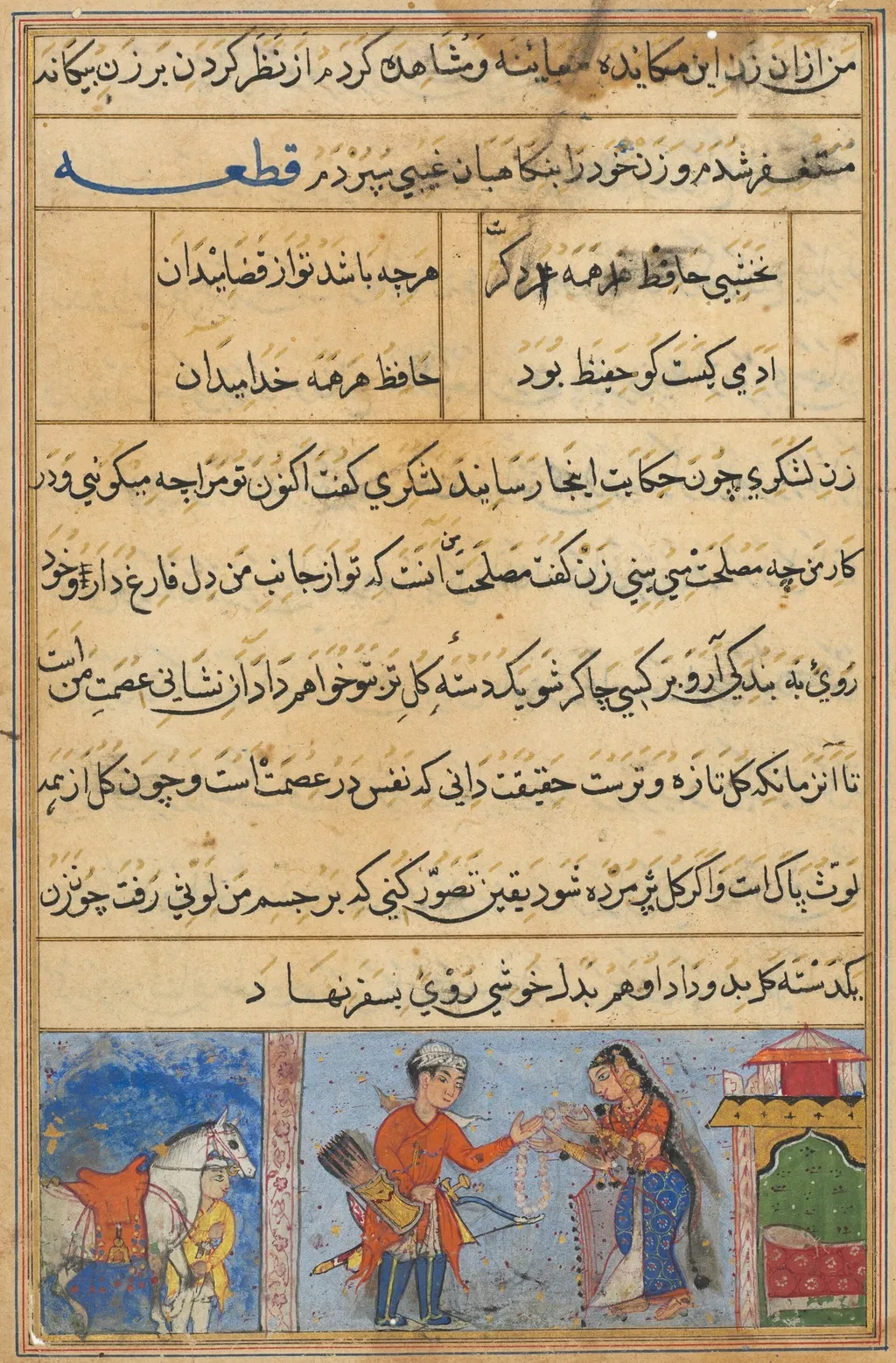
The soldier receives a garland of roses from his wife which will remain fresh as long as she is faithful, from a Tuti-nama (Tales of a Parrot): Fourth Night is an unspecified painting. It dates from 1560 and is held in the collection of the Cleveland Museum of Art.
About this work
Overview
In the composition a soldier in a red tunic and blue trousers receives a garland of roses from his wife, who is dressed in a blue dress with an orange bodice.
The painting illustrates a moment from the medieval Persian manuscript known as the Tuti‑nama, or Tales of a Parrot, specifically the fourth night of its narrative. In the composition a soldier in a red tunic and blue trousers receives a garland of roses from his wife, who is dressed in a blue dress with an orange bodice. The scene conveys a symbolic promise of fidelity linked to the freshness of the roses.
Subject & Meaning
The exchange of the rose garland functions as a visual metaphor: the flowers will remain fresh so long as the wife stays faithful to her husband. This allegorical gesture underscores themes of marital loyalty and the intertwining of love with martial duty, central to the tale’s moral instruction.
Technique & Style
Rendered in the miniature painting tradition of Persian courtly manuscripts, the work employs delicate brushwork and a vivid palette of reds, blues, and yellows. Fine lines define the figures and architectural elements, while the use of flat areas of color and ornamental detailing reflects the stylized aesthetic typical of 14th‑15th century Persian art.
Context
The Tuti‑nama is a collection of moral stories framed as dialogues between a parrot and a nightingale, popular in the Islamic world for didactic purposes. Scenes such as this one were intended to accompany the text, providing visual reinforcement of the narrative’s ethical lessons.
Legacy
Miniatures from the Tuti‑nama have informed modern understandings of Persian narrative art and its didactic functions. The depiction of domestic devotion alongside military imagery offers insight into contemporary conceptions of gender roles and the symbolic language of fidelity in medieval Persian culture.
Artist & collection

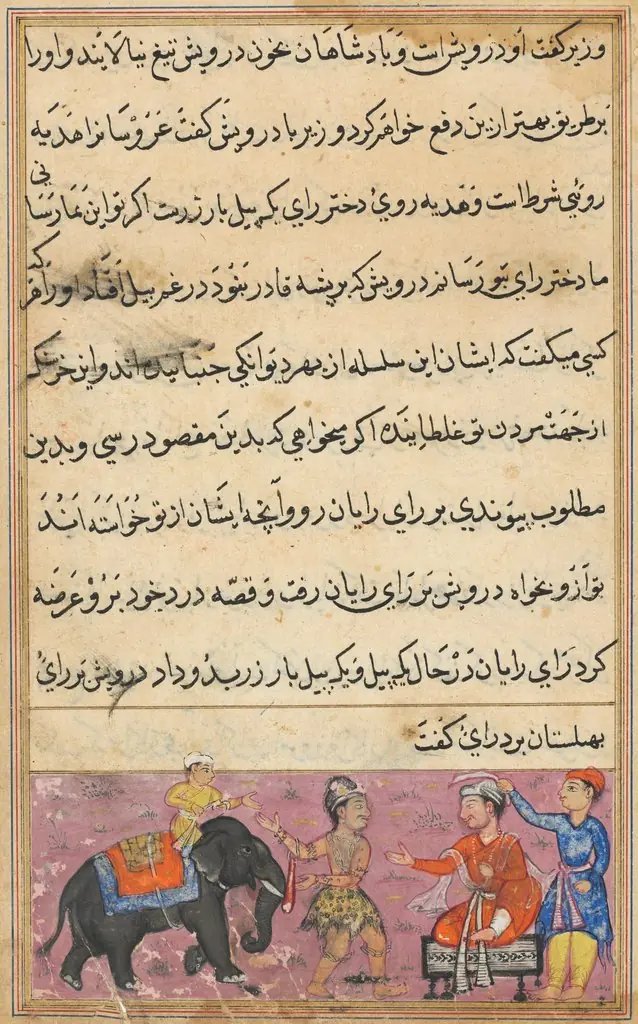 The dervish brings in as dowry an elephant laden with gold, from a Tuti-nama (Tales of a Parrot): Seventh Night
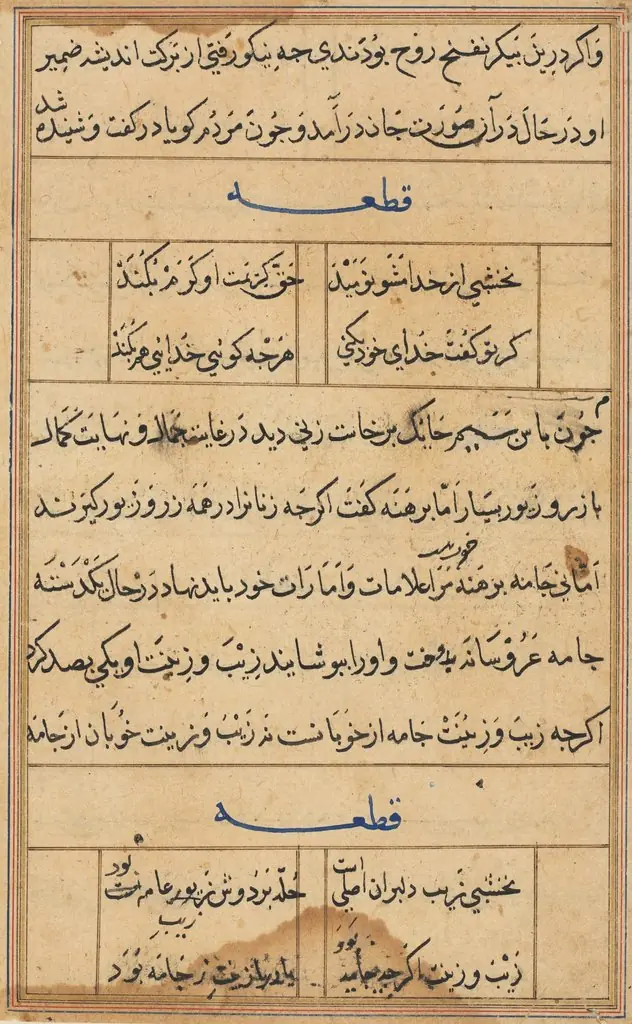 Page from Tales of a Parrot (Tuti-nama): text page
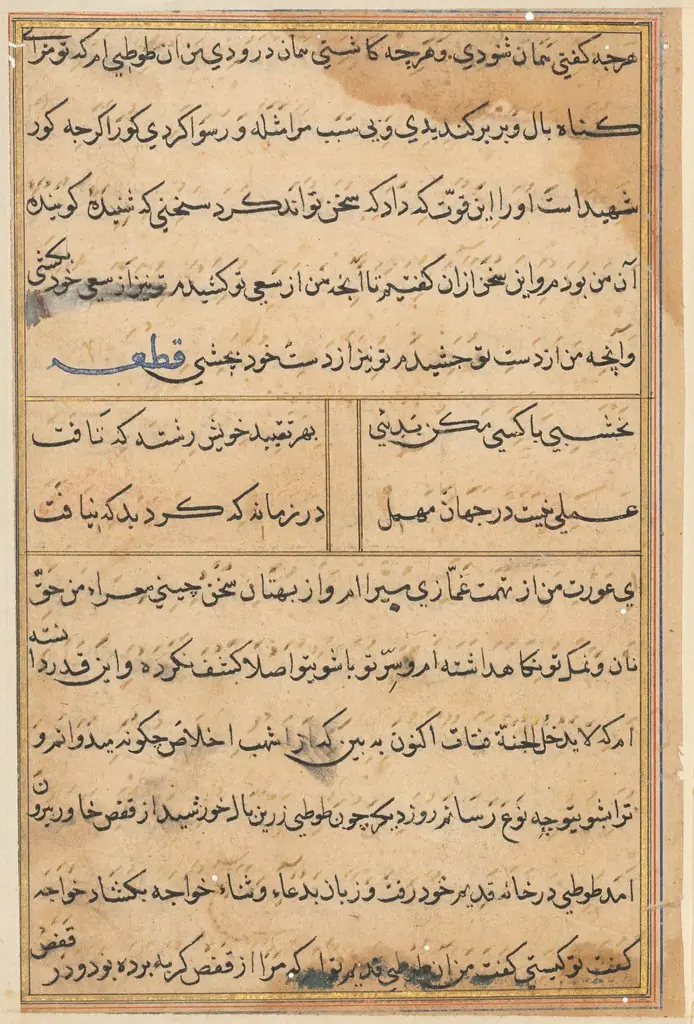 Page from Tales of a Parrot (Tuti-nama): text page
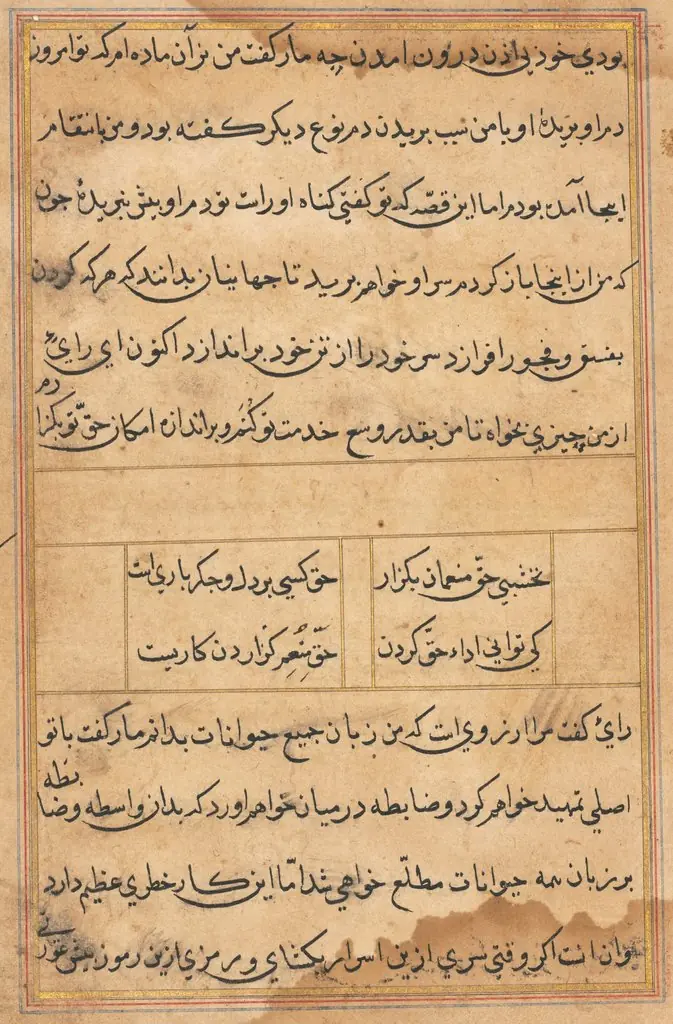 Page from Tales of a Parrot (Tuti-nama): text page
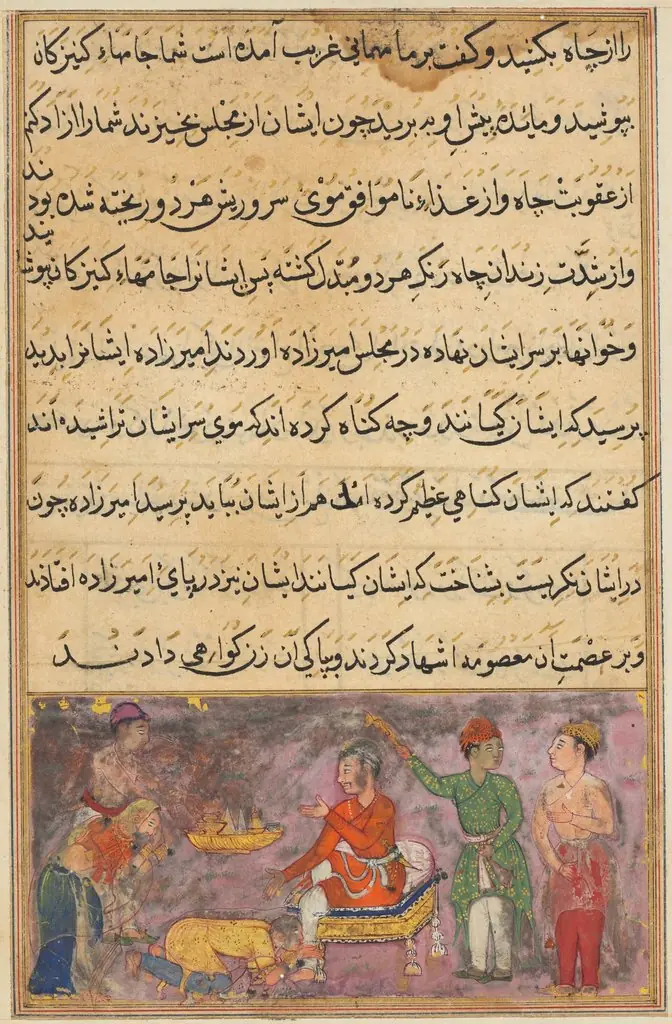 The two erring cooks, dressed as maidservants, fall at the prince’s feet and beg forgiveness, from a Tuti-nama (Tales of the Parrot): Fourth Night
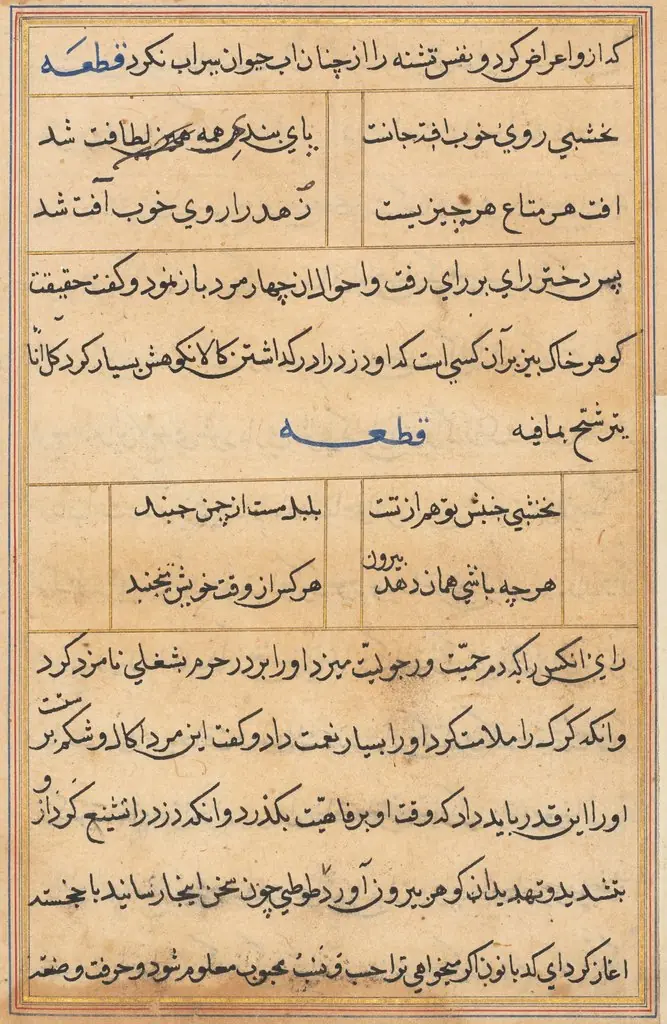 Page from Tales of a Parrot (Tuti-nama): text page
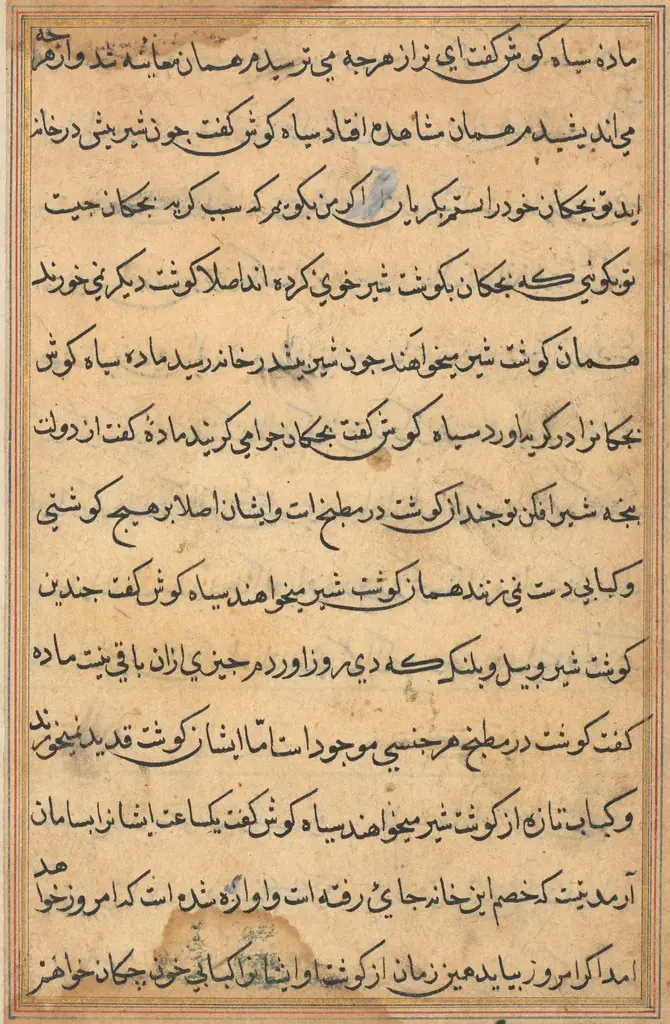 Page from Tales of a Parrot (Tuti-nama): text page
 Page from Tales of a Parrot (Tuti-nama): text page
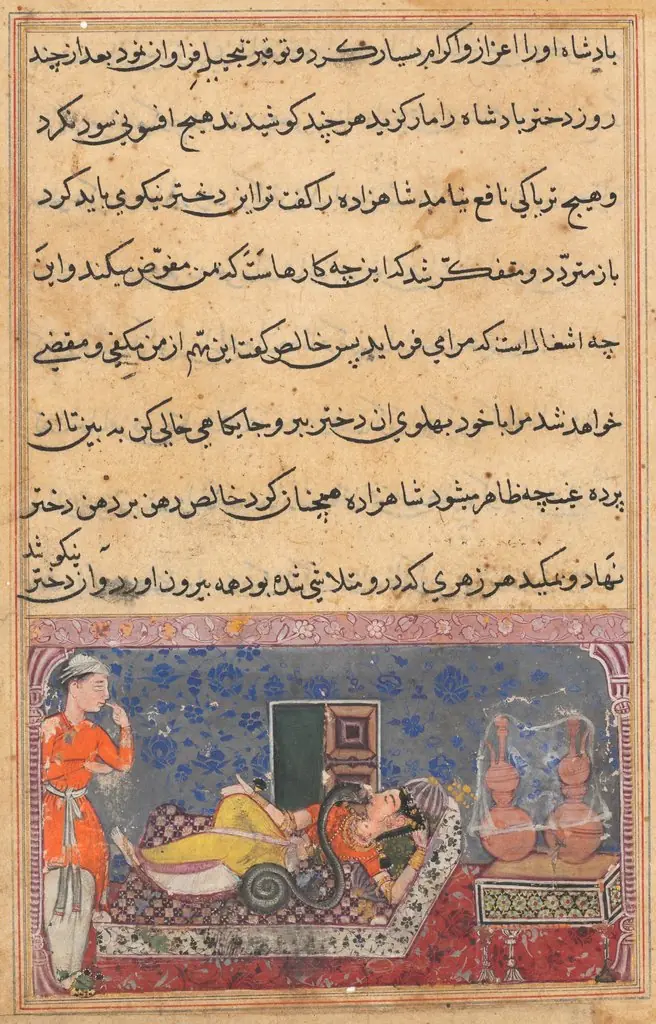 Khalis repays the prince for his kindness by changing into a snake and sucking the poison from the king’s daughter, from a Tuti-nama (Tales of a Parrot): Eighteenth Night
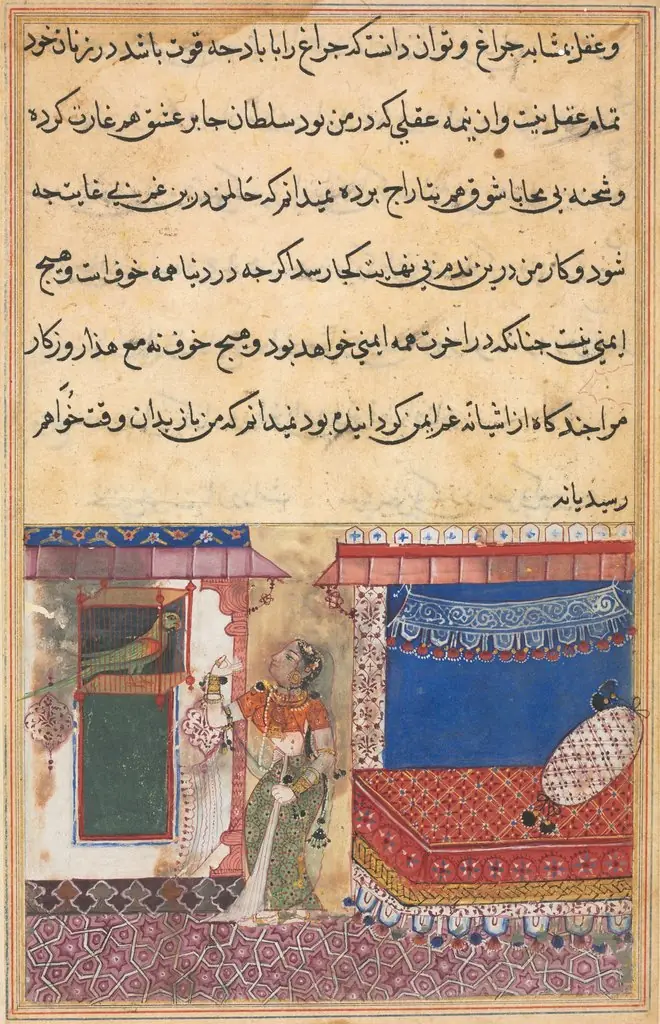 The Parrot Addresses Khujasta at the Beginning of the Eighteenth Night, from a Tuti-nama (Tales of a Parrot)