Artwork
The Parrot Addresses Khujasta at the Beginning of the Eighteenth Night, from a Tuti-nama (Tales of a Parrot)
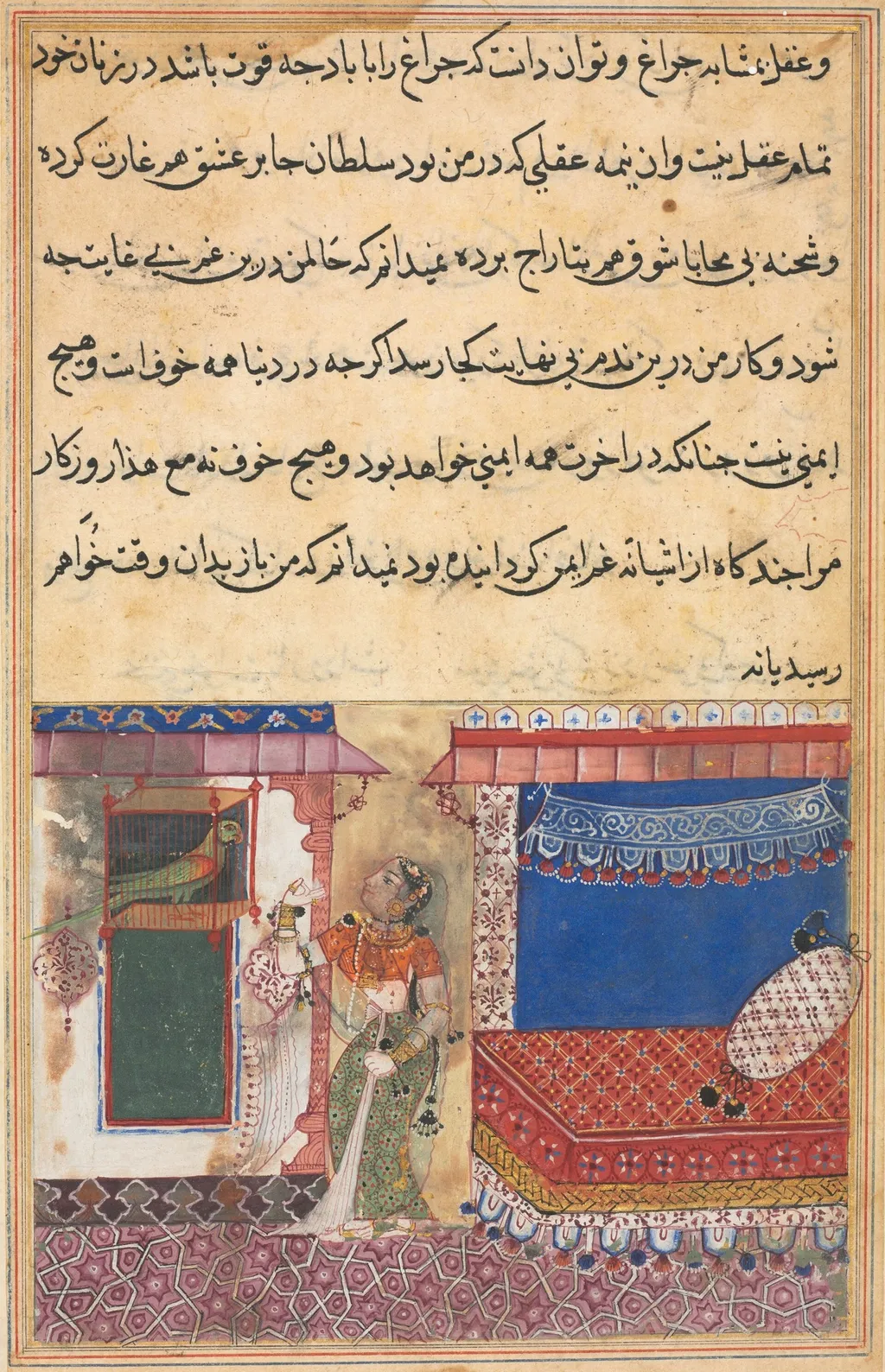
The Parrot Addresses Khujasta at the Beginning of the Eighteenth Night, from a Tuti-nama (Tales of a Parrot) is an unspecified painting. It dates from 1560 and is held in the collection of the Cleveland Museum of Art. The work depicts a seated woman framed by an elaborately decorated doorway.
About this work
Overview
She holds a brightly colored parrot on her hand, her attire consisting of an orange blouse and a green skirt, complemented by ornamental jewelry.
The work depicts a seated woman framed by an elaborately decorated doorway. She holds a brightly colored parrot on her hand, her attire consisting of an orange blouse and a green skirt, complemented by ornamental jewelry. The setting includes a patterned floor, a blue wall behind her, and a red‑and‑white canopy supported by a similarly hued box, all rendered with rich, saturated hues that convey a sense of luxury.
Subject & Meaning
The scene illustrates a moment from the Persian narrative collection known as the Tuti‑nama, in which a parrot delivers a message to the character Khujasta on the eighteenth night. The presence of the bird, a traditional symbol of speech and courtly intrigue, underscores the story’s themes of communication and romantic exchange within an intimate domestic space.
Technique & Style
Executed in a detailed, flat‑picture style, the painting employs precise line work to delineate intricate architectural motifs and textile patterns. The color palette is dominated by contrasting warm oranges and cool greens, punctuated by vivid blues and reds, creating visual depth without reliance on chiaroscuro. Decorative elements such as the canopy and patterned box are rendered with meticulous attention to surface ornamentation.
Context
Originating from the illustrated tradition of Persian manuscript illustration, the image reflects the aesthetic preferences of courtly patronage, where narrative scenes were often accompanied by lavish decorative settings. The inclusion of luxurious fabrics and jewel‑like accessories aligns with the broader cultural emphasis on opulence in visual storytelling during the period in which the Tuti‑nama was compiled.
Artist & collection

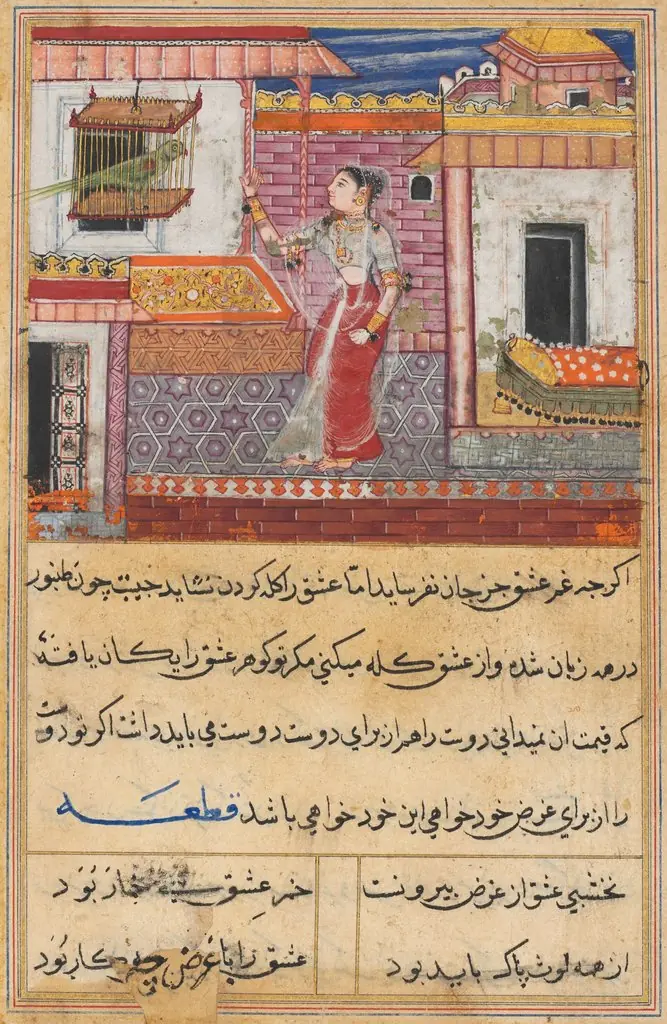 The Parrot Addresses Khujasta at the Beginning of the Thirteenth Night, from a Tuti-nama (Tales of a Parrot)
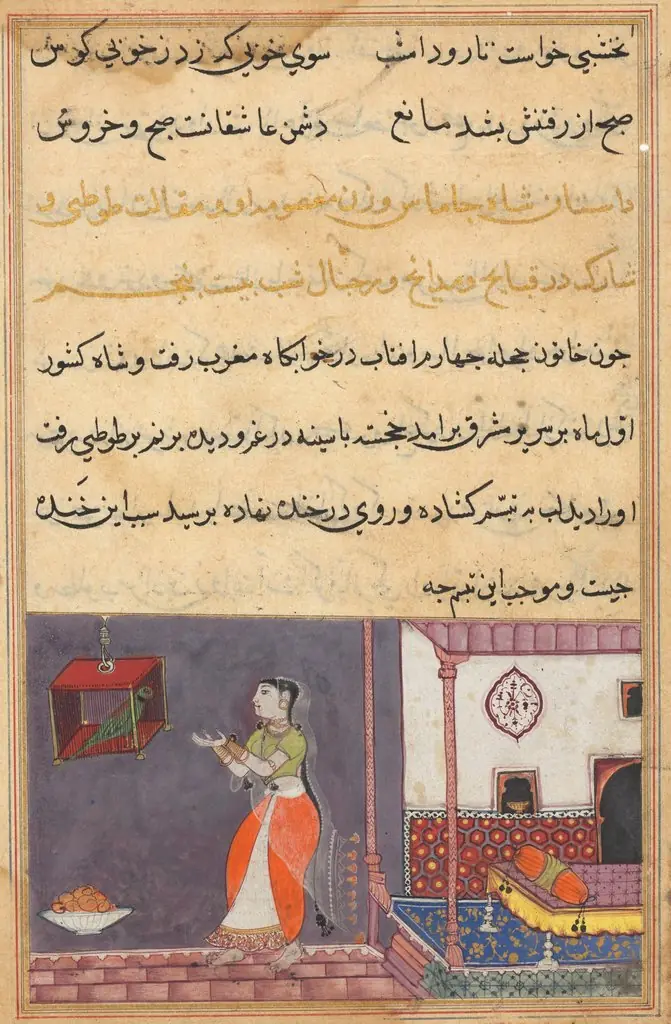 The Parrot Addresses Khujasta at the Beginning of the Twenty-fifth Night, from a Tuti-nama (Tales of a Parrot)
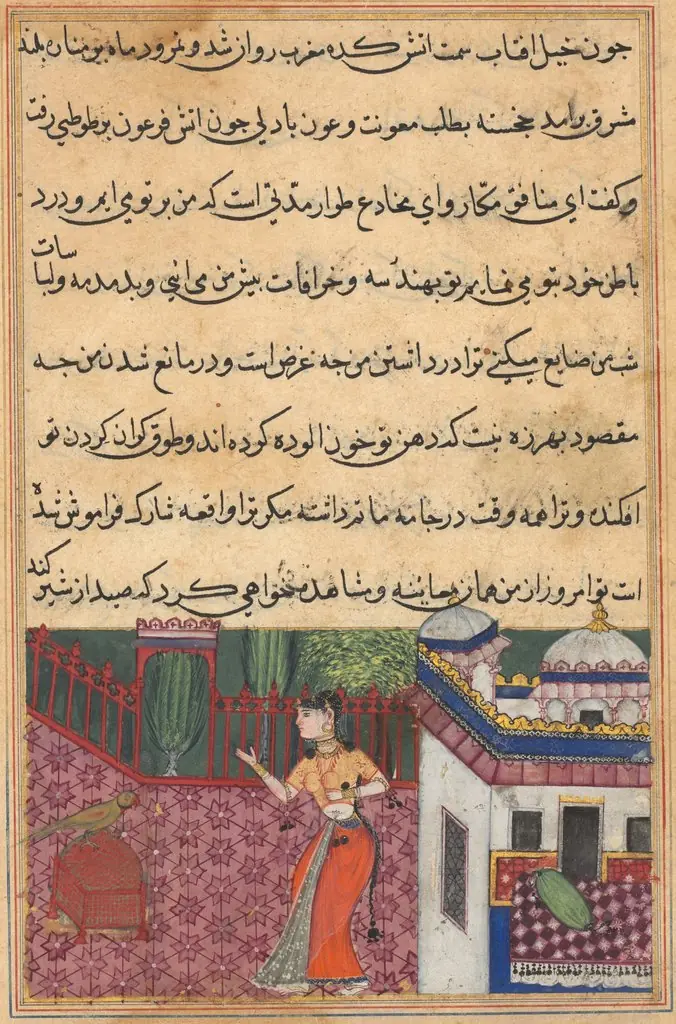 The parrot addresses Khujasta at the beginning of the thirty-third night, from a Tuti-nama (Tales of a Parrot)
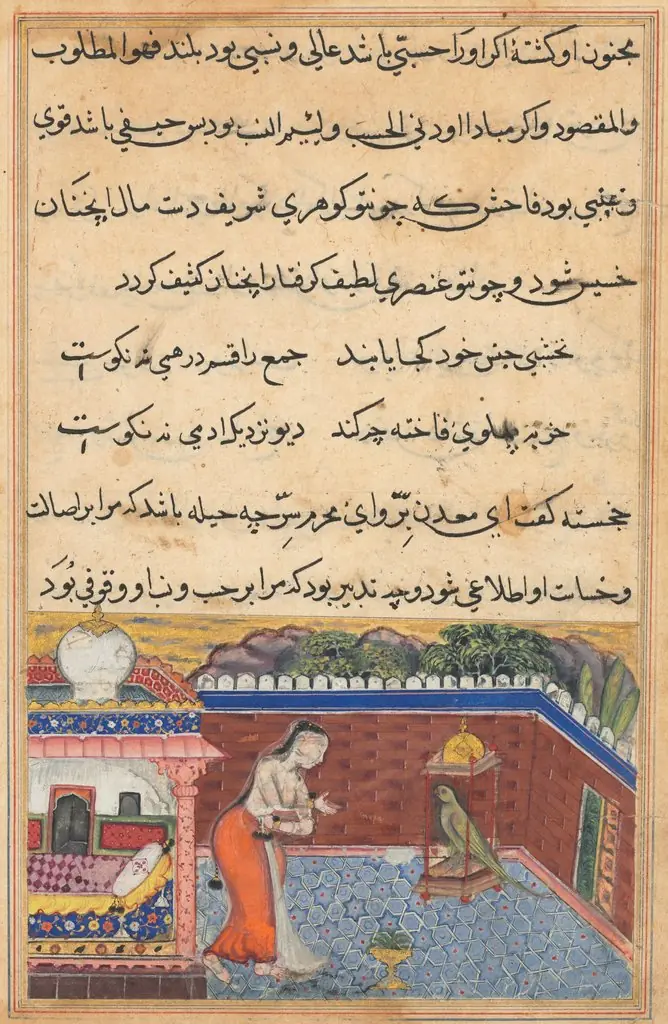 The parrot addresses Khujasta at the beginning of the thirty-first night, from a Tuti-nama (Tales of a Parrot)
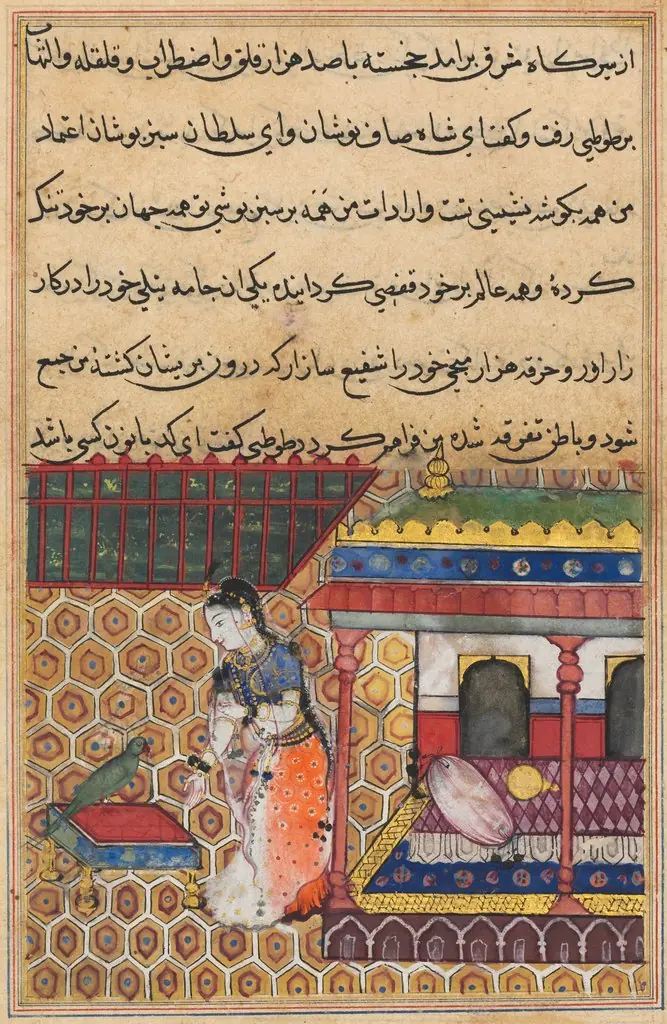 The parrot addresses Khujasta at the beginning of the thirty-eighth night, from a Tuti-nama (Tales of a Parrot)
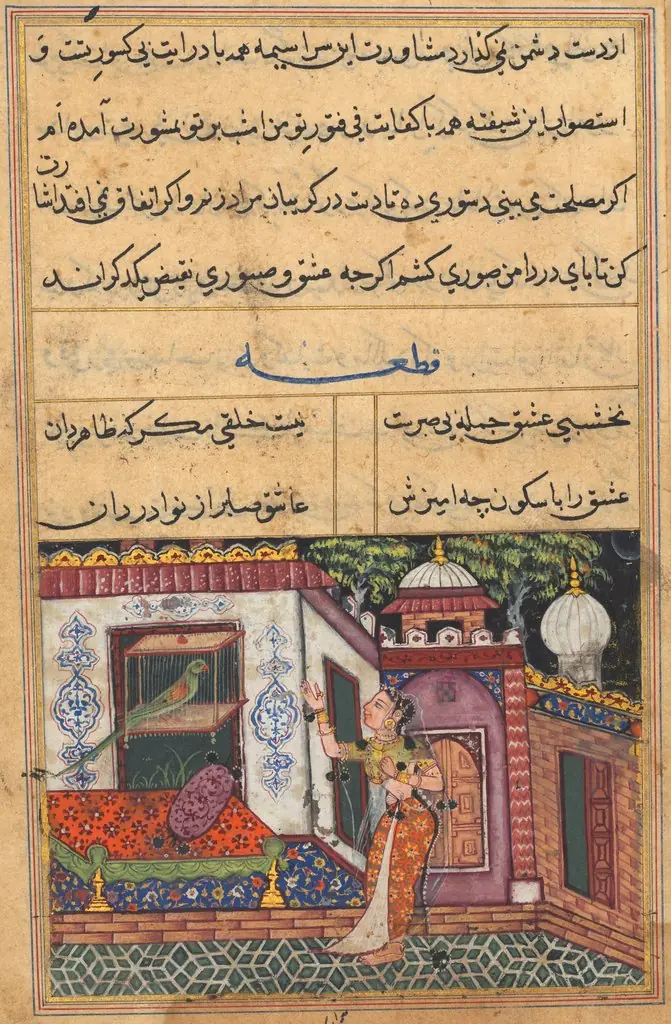 The Parrot Addresses Khujasta at the Beginning of the Eleventh Night, from a Tuti-nama (Tales of a Parrot)
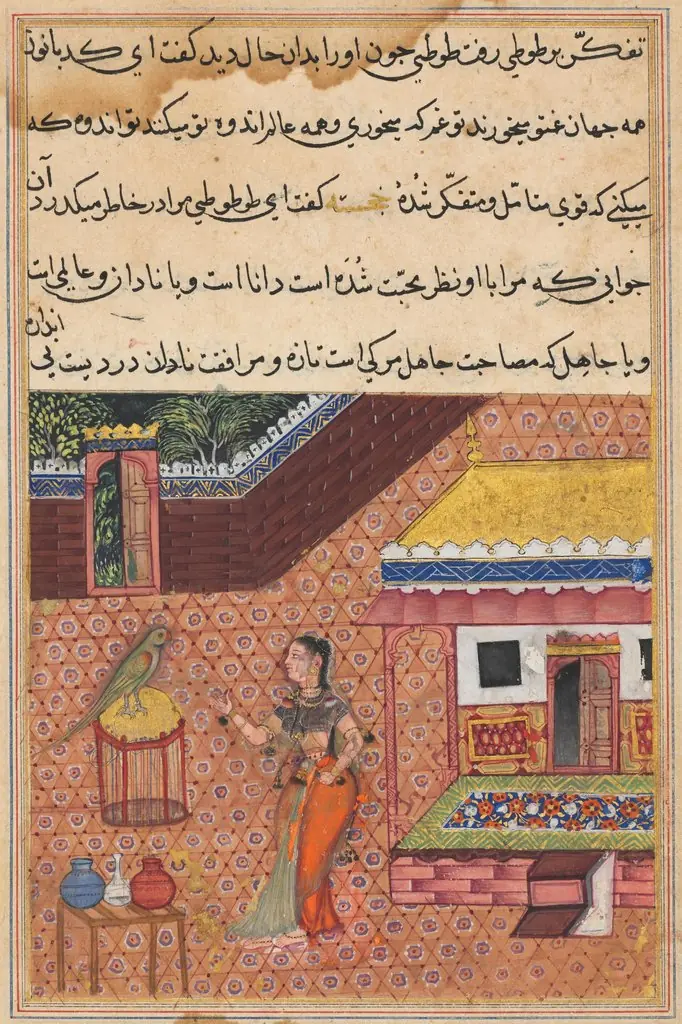 The parrot addresses Khujasta at the beginning of the thirty-fourth night, from a Tuti-nama (Tales of a Parrot)
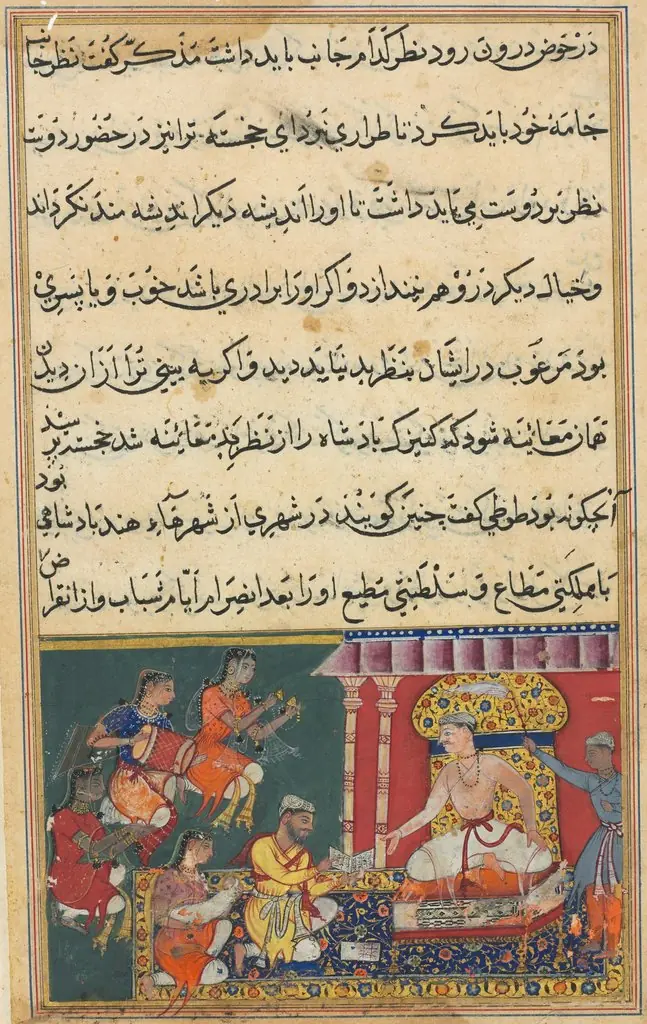 The astrologer predicts a calamity for the newly born prince in his thirteenth year, but one which he would be able to overcome, from a Tuti-nama (Tales of a Parrot): Eighth Night
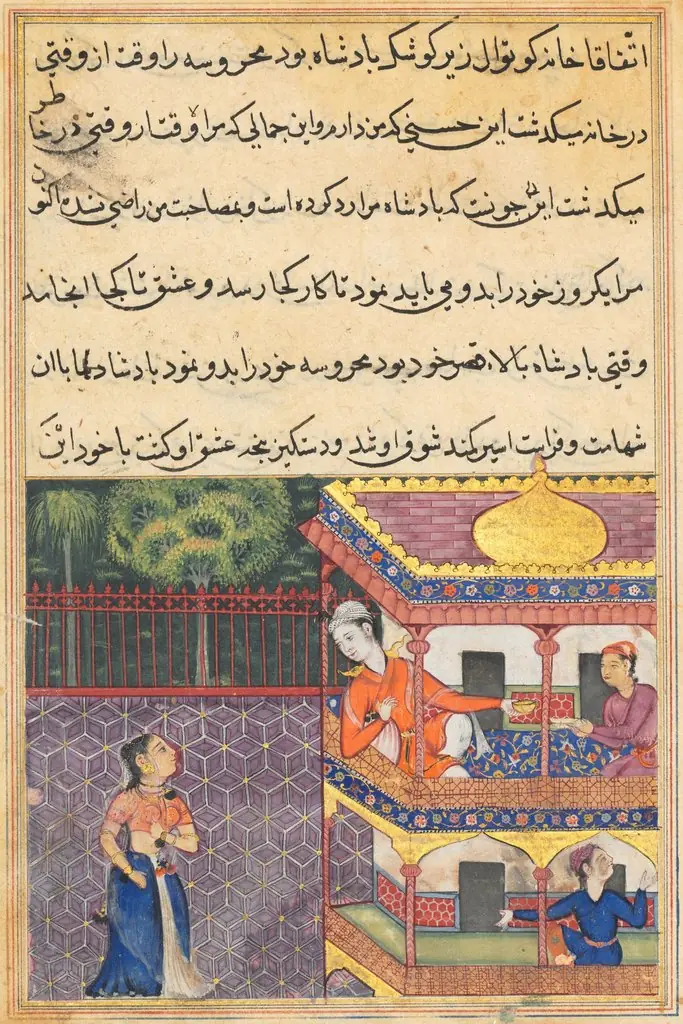 The king of Zabul sees Mahrusa from his palace balcony, from a Tuti-nama (Tales of a Parrot): Thirty-sixth Night
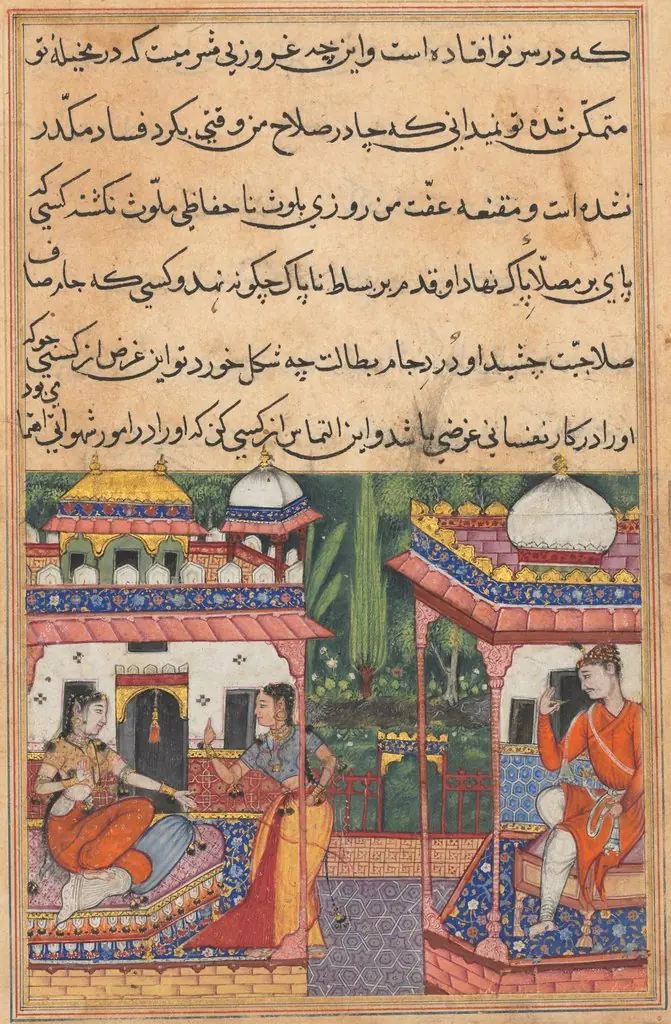 Kaiwan sends a message of love to Khurshid, wife of his brother Utarid who is away on a journey, from a Tuti-nama (Tales of a Parrot): Thirty-second Night
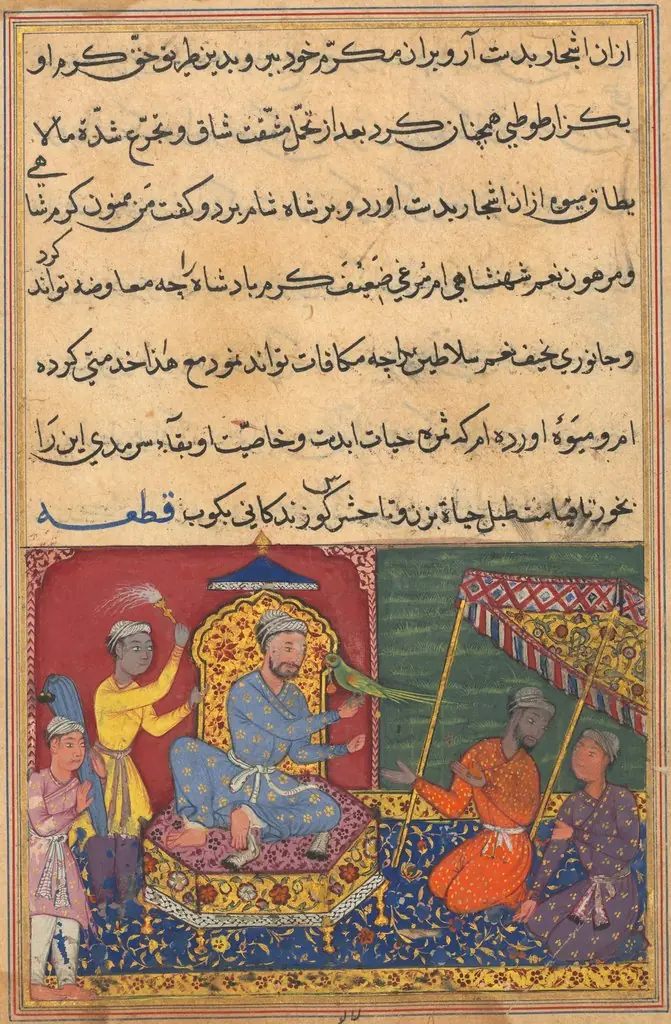 The parrot brings a fruit from the Tree of Life to the king of Syria, from a Tuti-nama (Tales of a Parrot): Ninth Night