Artwork
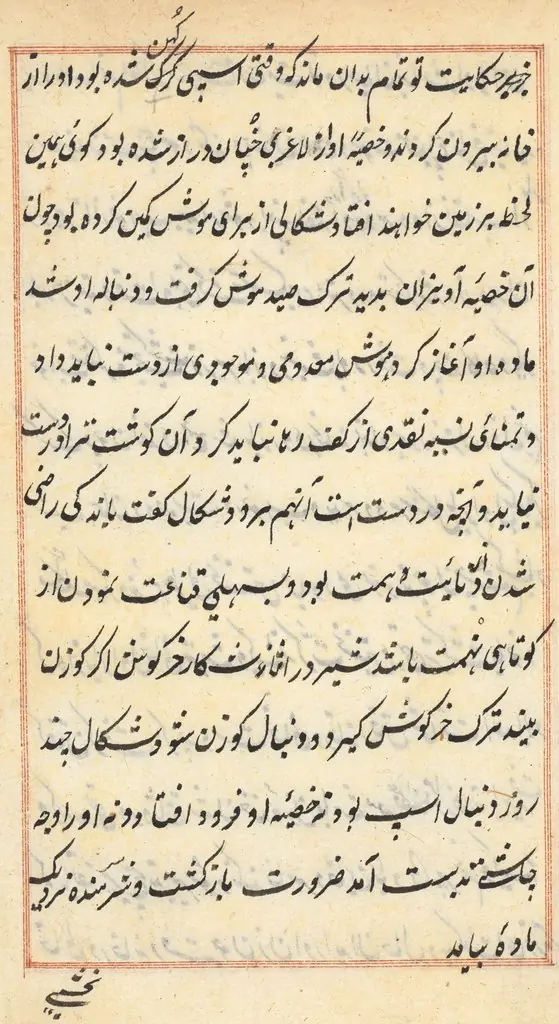
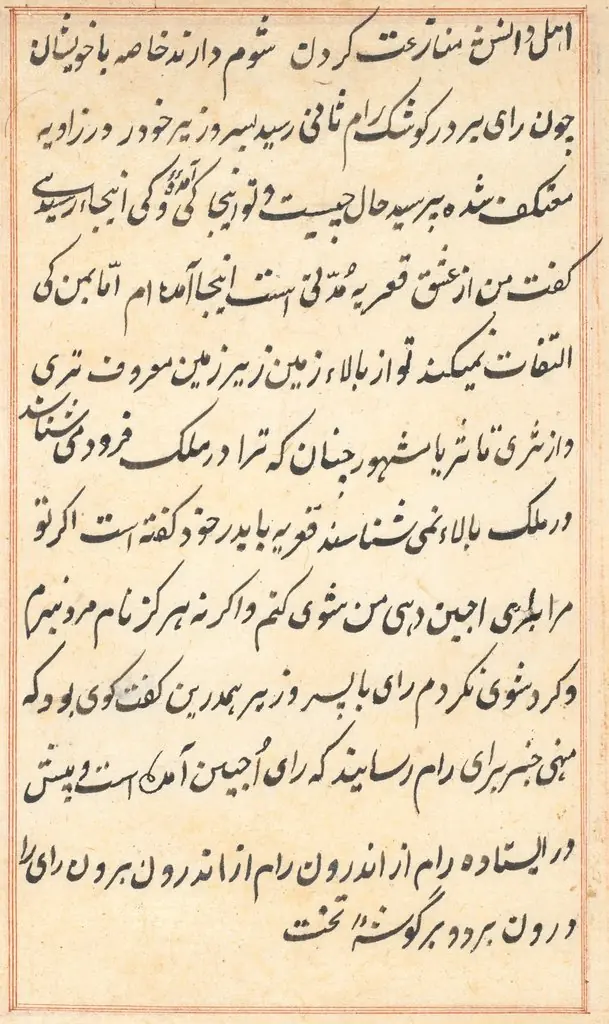
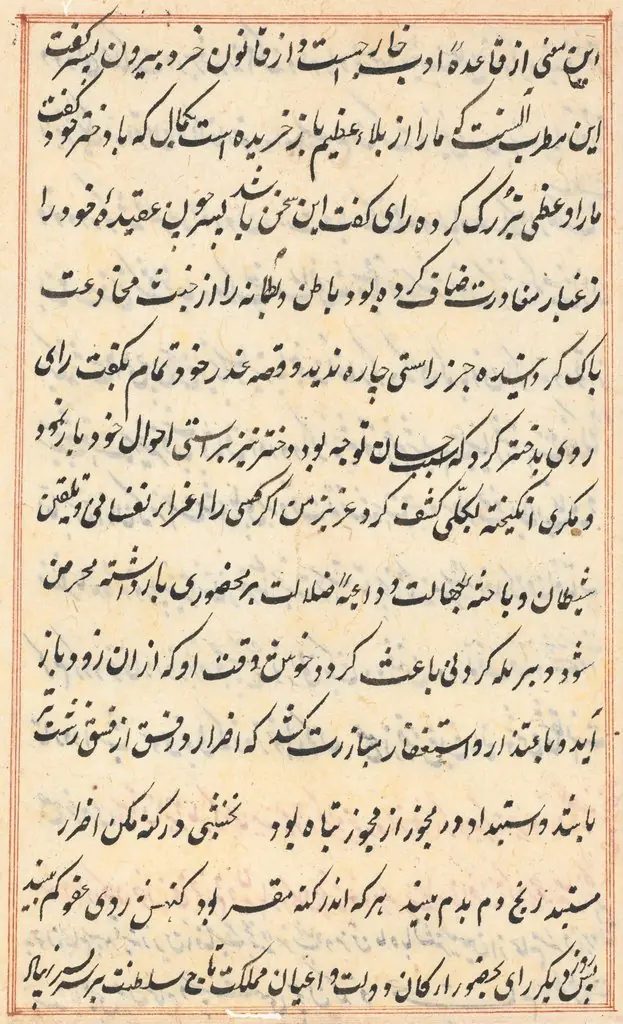
Page from Tales of a Parrot (Tuti-nama): text page
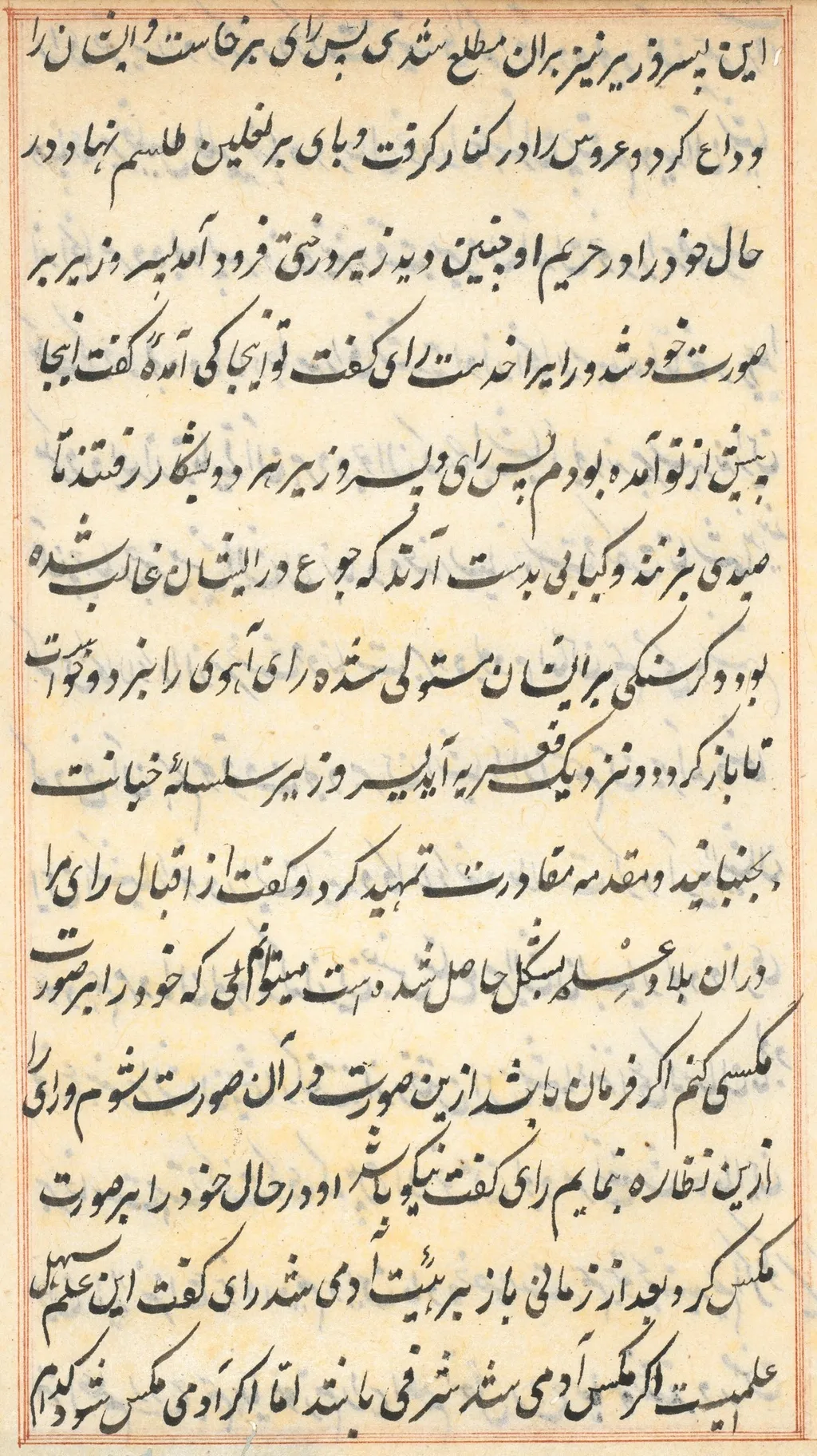
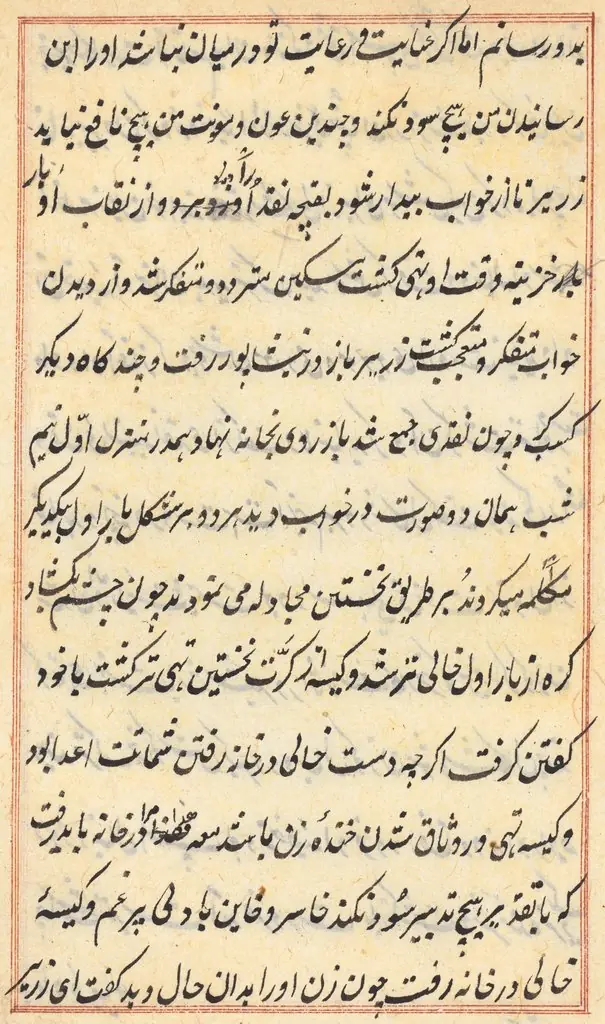
Page from Tales of a Parrot (Tuti-nama): text page is an unspecified painting. It dates from 1560 and is held in the collection of the Cleveland Museum of Art. The object is a painted page from the illustrated manuscript known as the *Tales of a Parrot* (Tuti‑nama).
About this work
Overview
The composition is entirely textual, with the calligraphic lines arranged in graceful, curved registers that fill the surface.
The object is a painted page from the illustrated manuscript known as the *Tales of a Parrot* (Tuti‑nama). Executed as a single sheet, it presents a continuous block of Persian text rendered in flowing black ink against a pale, creamy ground mottled with subtle blue speckles. The composition is entirely textual, with the calligraphic lines arranged in graceful, curved registers that fill the surface.
Subject & Meaning
The inscription appears to be a narrative or poetic passage, typical of the *Tuti‑nama* tradition, which combines moral tales with allegorical storytelling. Though the exact content is not specified, the work reflects the manuscript’s broader aim of imparting ethical lessons through the adventures of a parrot, a common motif in Persian literary culture.
Technique & Style
The calligrapher employed a single brush loaded with black ink, varying the pressure to produce both thick and fine strokes. This modulation creates a rhythmic visual tempo that guides the eye across the page. The background’s light cream hue, punctuated by faint azure dots, provides a delicate contrast that enhances the legibility and aesthetic balance of the script.
Context
The page belongs to a Persian illustrated book tradition that flourished from the medieval period into the early modern era, where text and miniature painting were often combined. The script used aligns with the Nastaʿlīq style prevalent in Persian manuscripts, indicating the work’s cultural and artistic roots in the literary practices of the region.
Artist & collection

 Page from Tales of a Parrot (Tuti-nama): text page
 Page from Tales of a Parrot (Tuti-nama): text page
 Page from Tales of a Parrot (Tuti-nama): text page
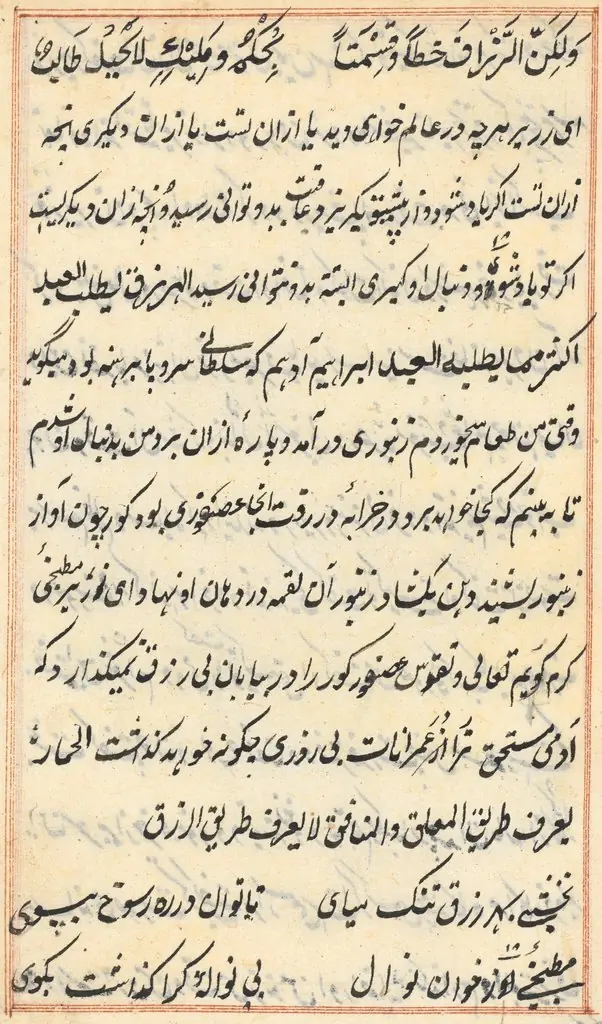 Page from Tales of a Parrot (Tuti-nama): text page
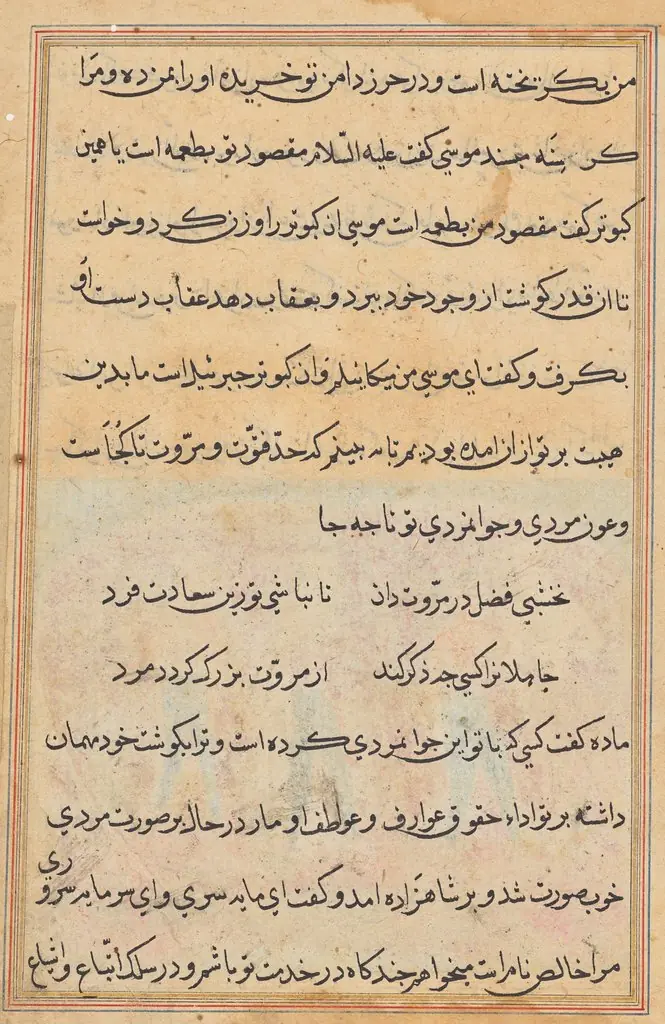 Page from Tales of a Parrot (Tuti-nama): text page
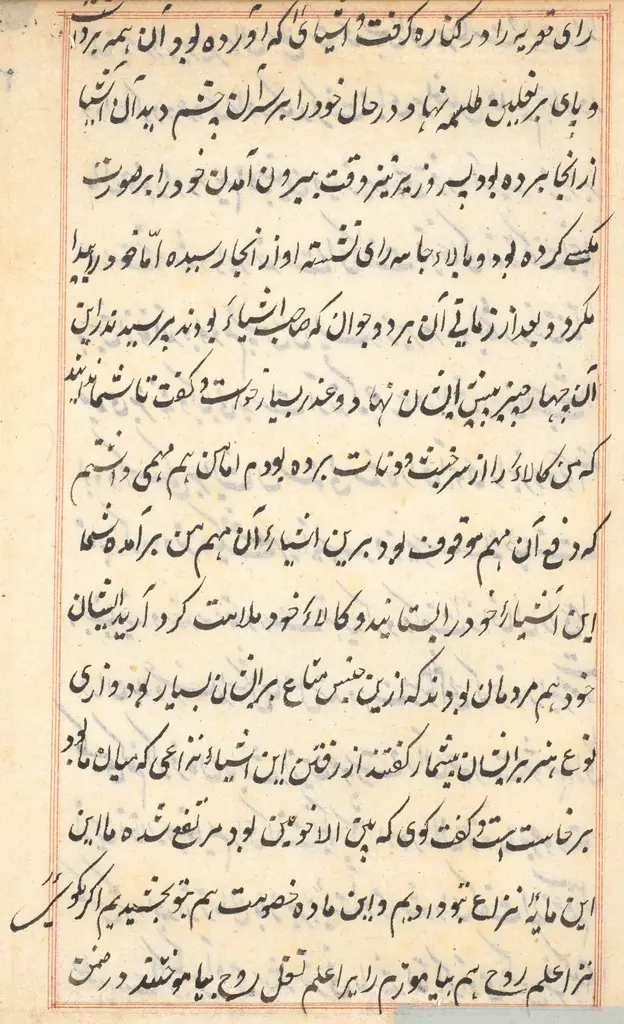 Page from Tales of a Parrot (Tuti-nama): text page
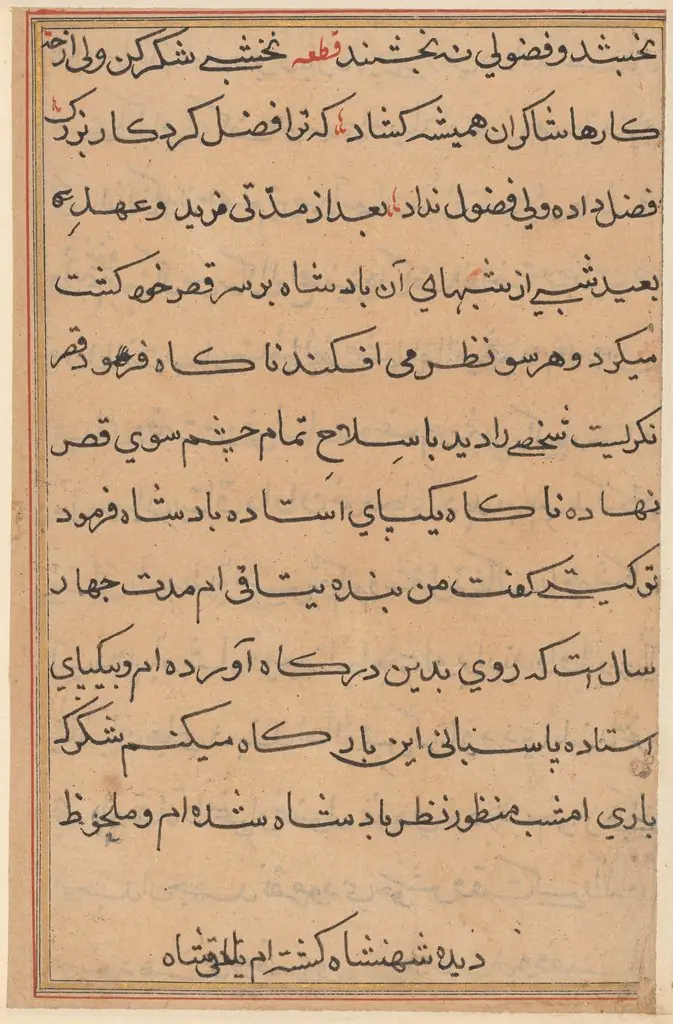 Page from Tales of a Parrot (Tuti-nama): text page
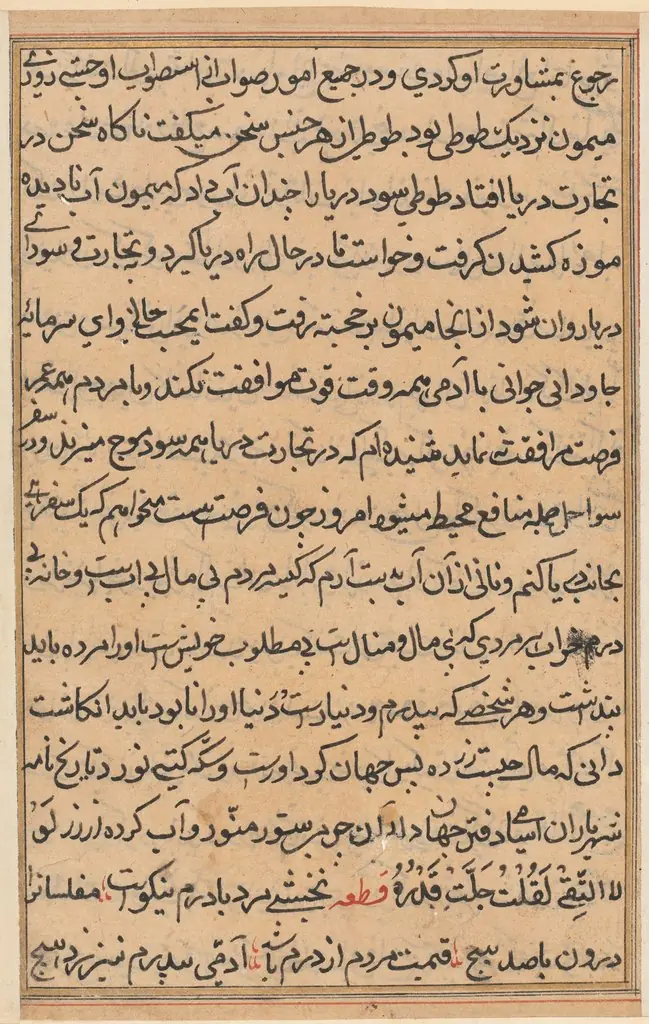 Page from Tales of a Parrot (Tuti-nama): text page
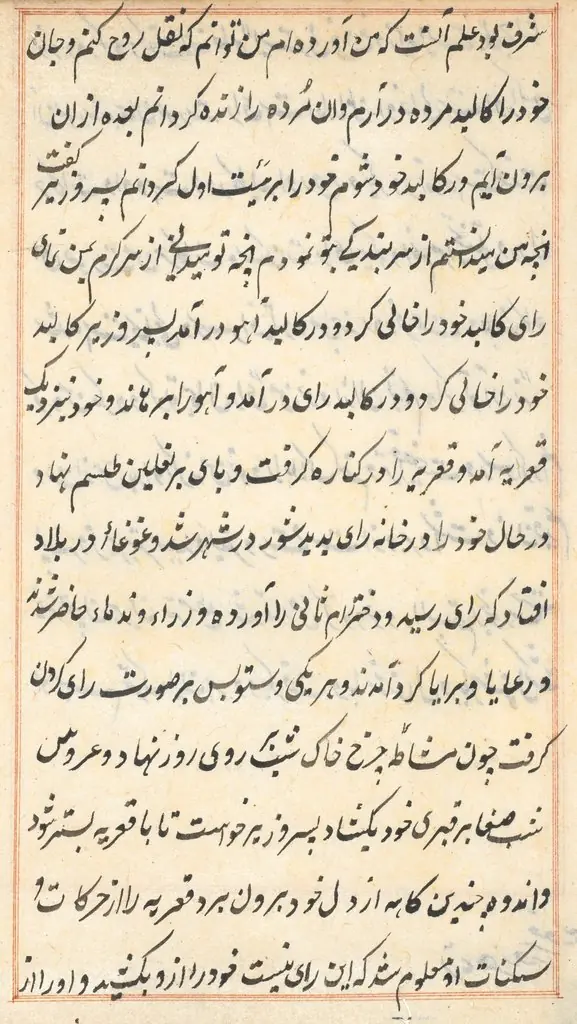 Page from Tales of a Parrot (Tuti-nama): text page
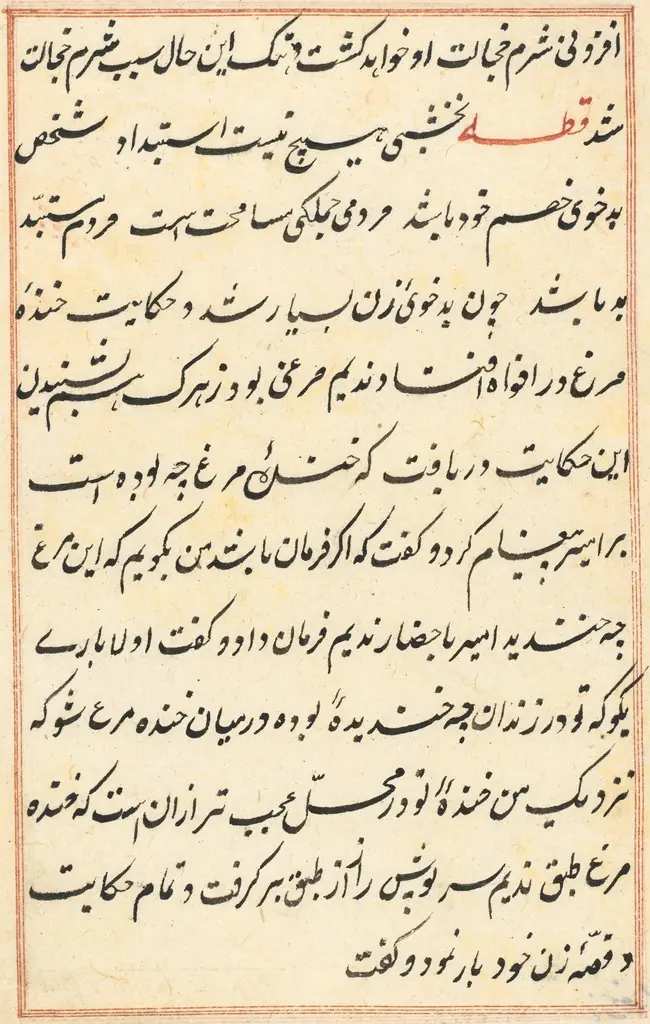 Page from Tales of a Parrot (Tuti-nama): text page
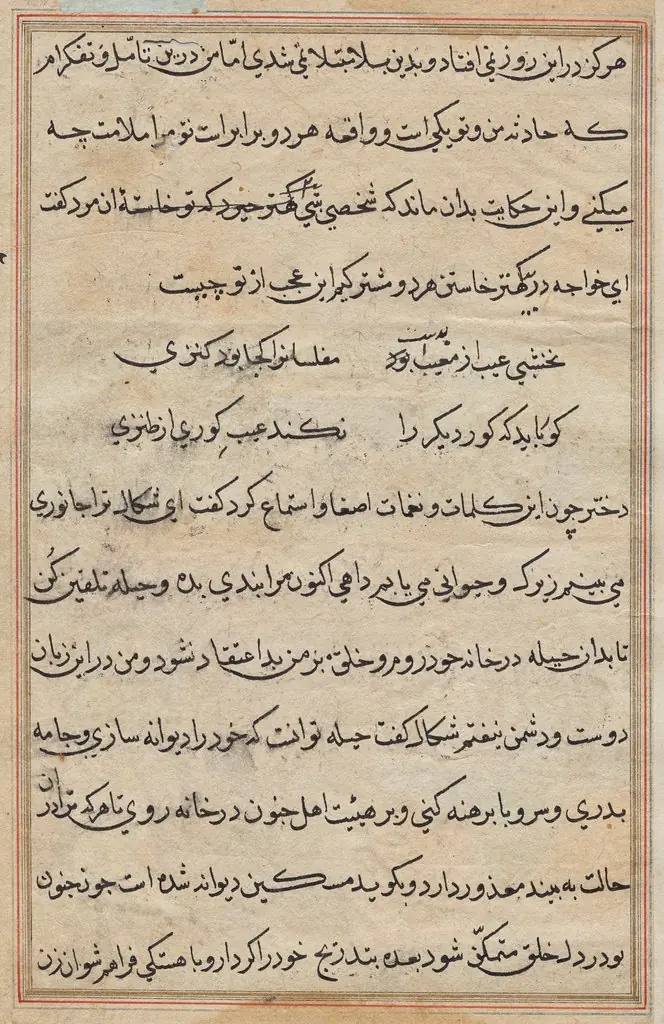 Page from Tales of a Parrot (Tuti-nama): text page
 Page from Tales of a Parrot (Tuti-nama): text page