Artwork
Page from Tales of a Parrot (Tuti-nama): text page
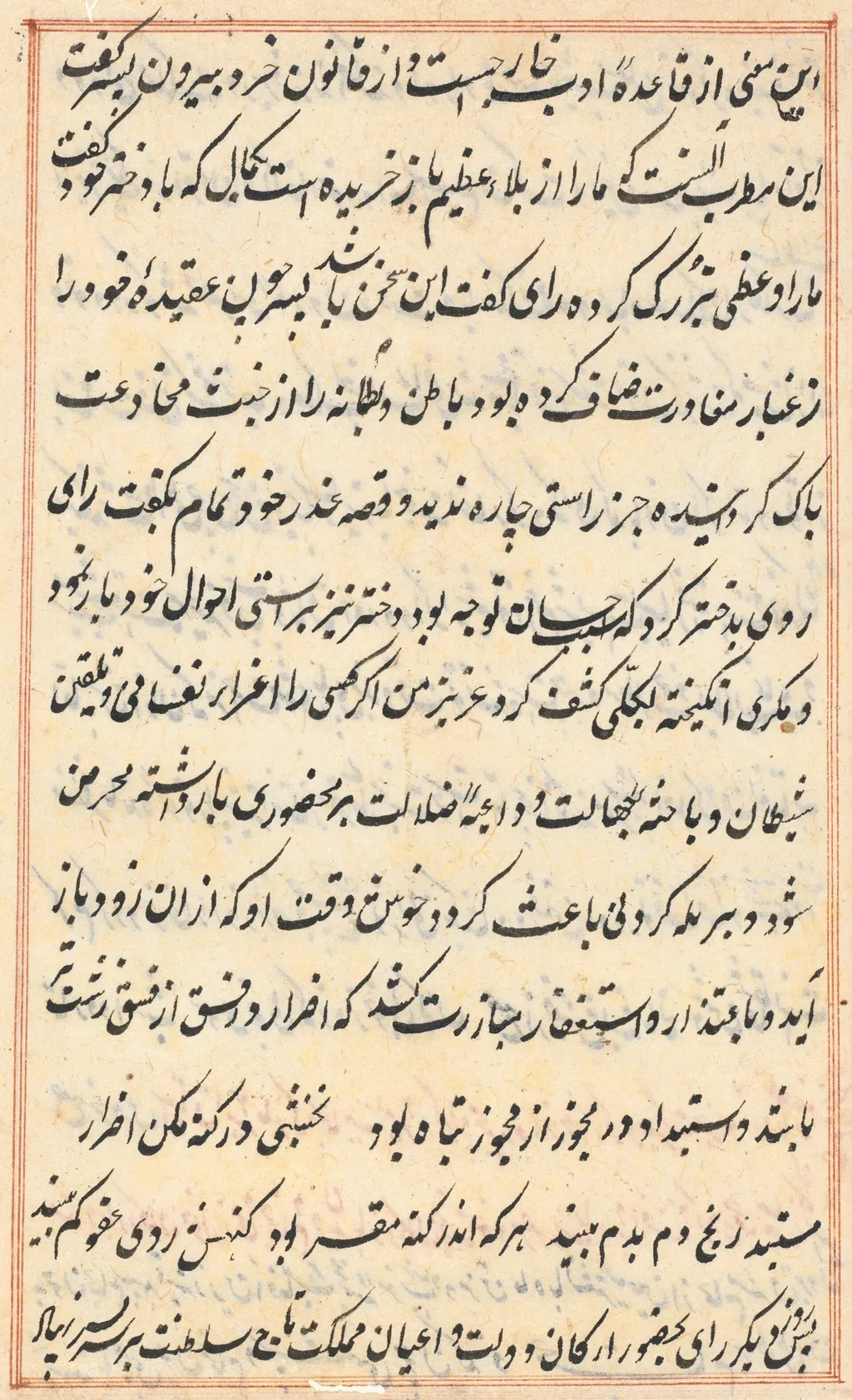
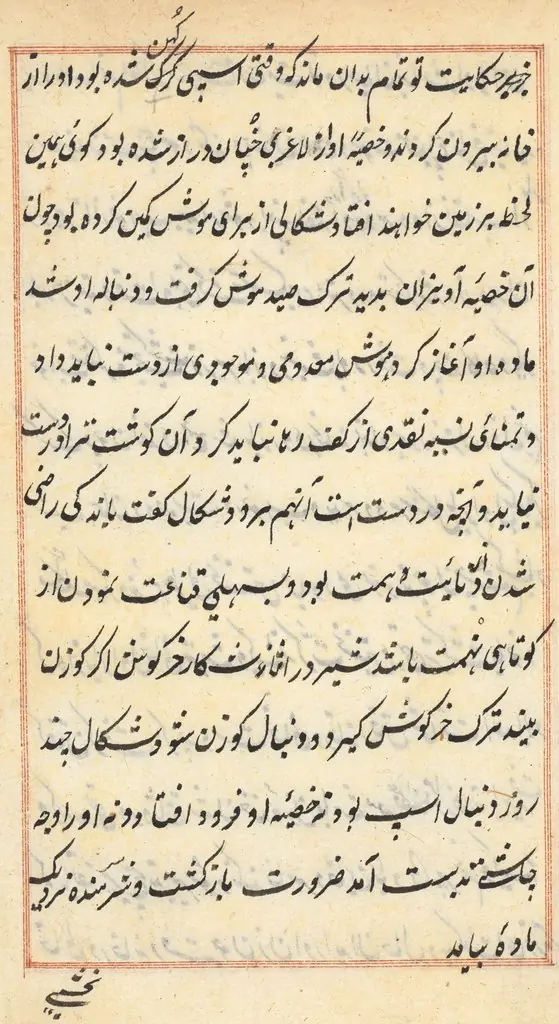
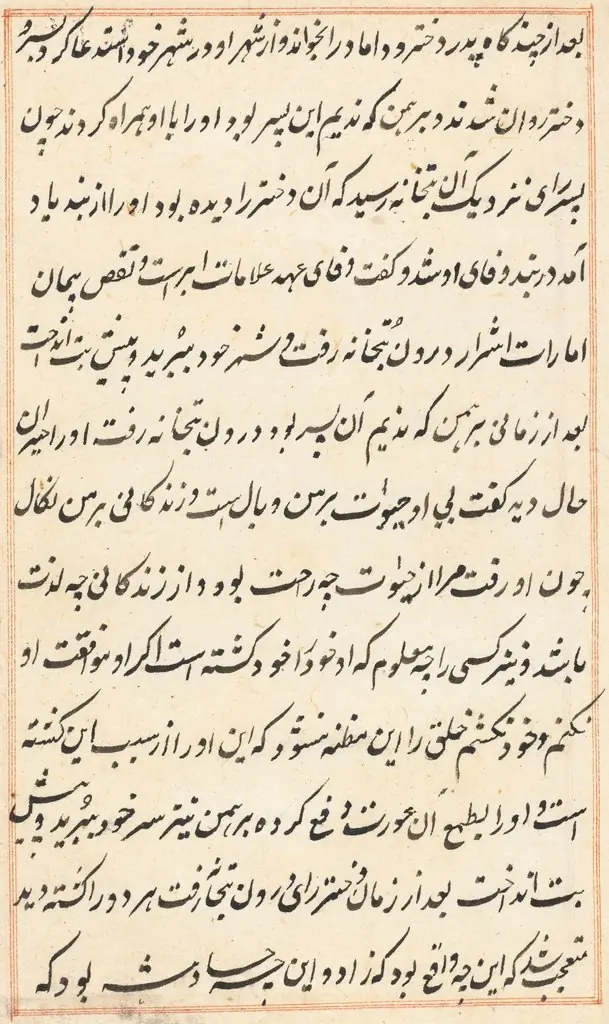
Page from Tales of a Parrot (Tuti-nama): text page is an unspecified painting. It dates from 1560 and is held in the collection of the Cleveland Museum of Art. This work is a painted page from the Persian manuscript known as the Tales of a Parrot, or Tuti‑nama.
About this work
Overview
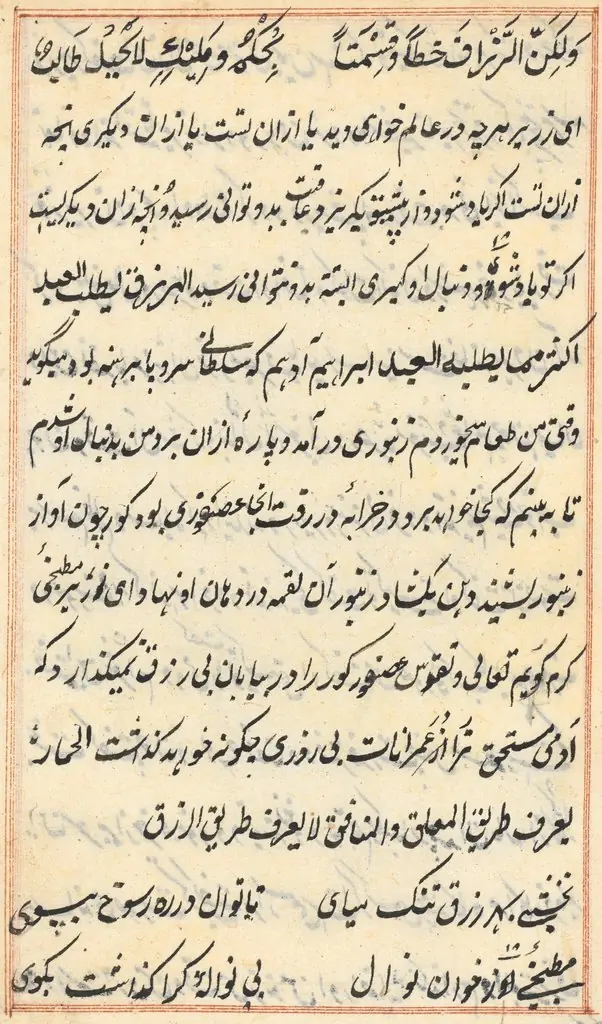
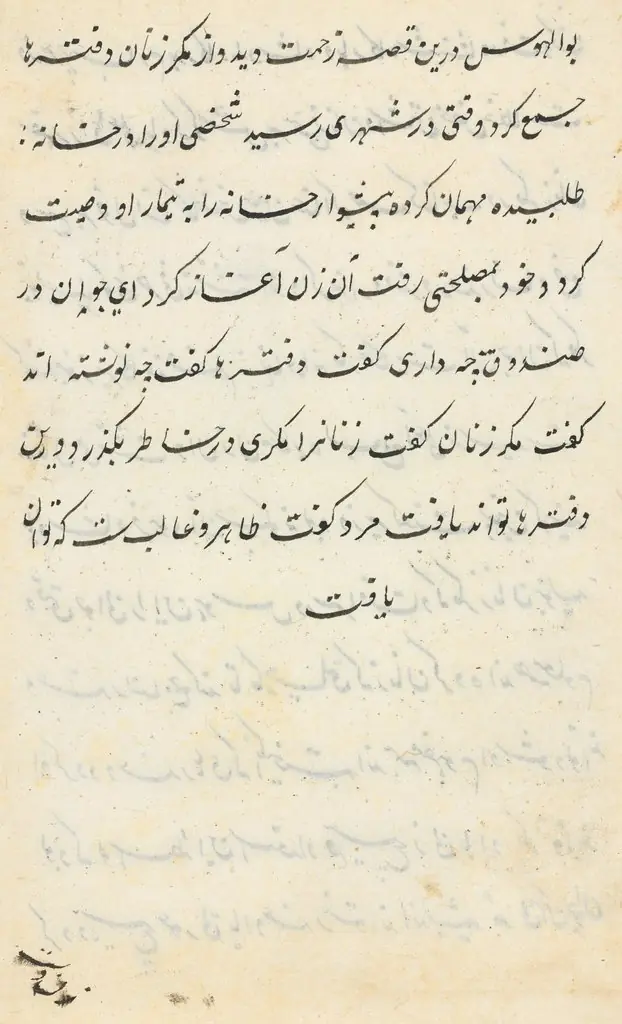
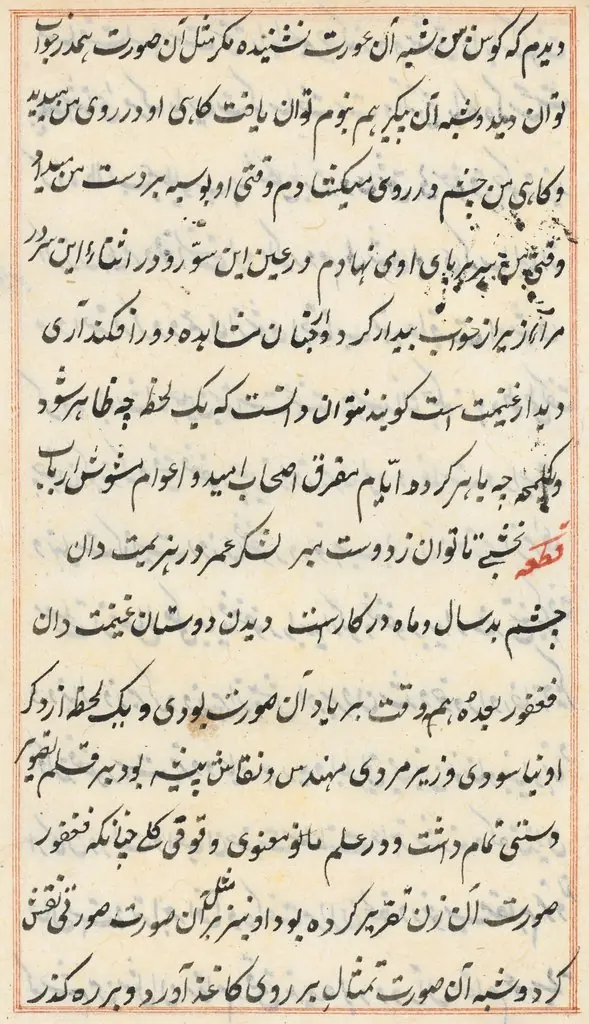
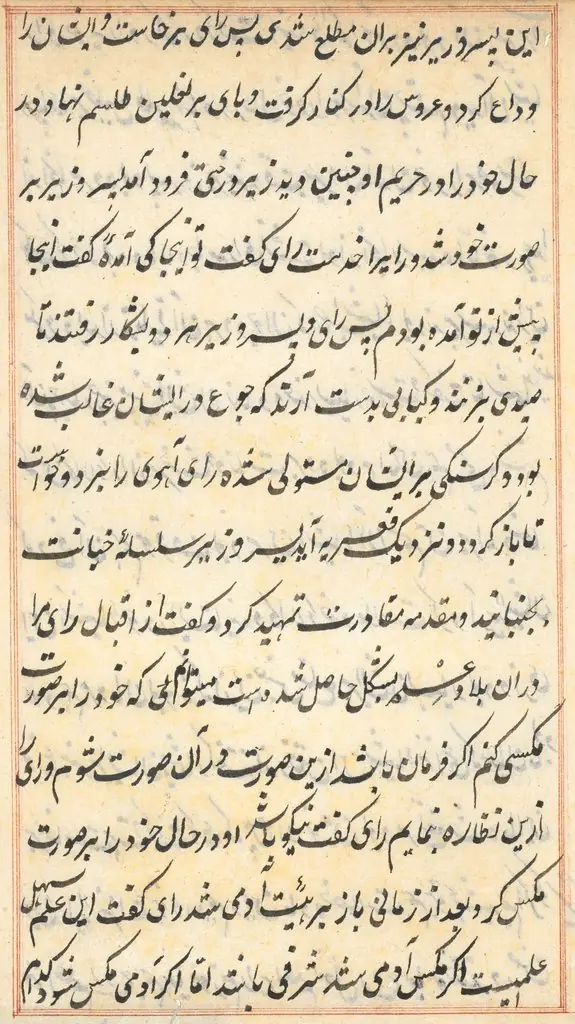
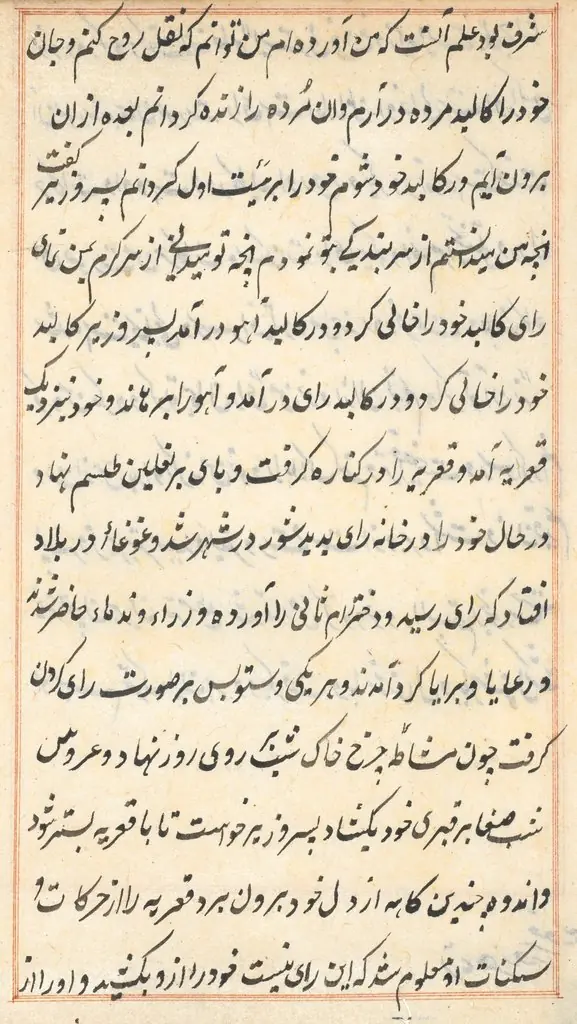
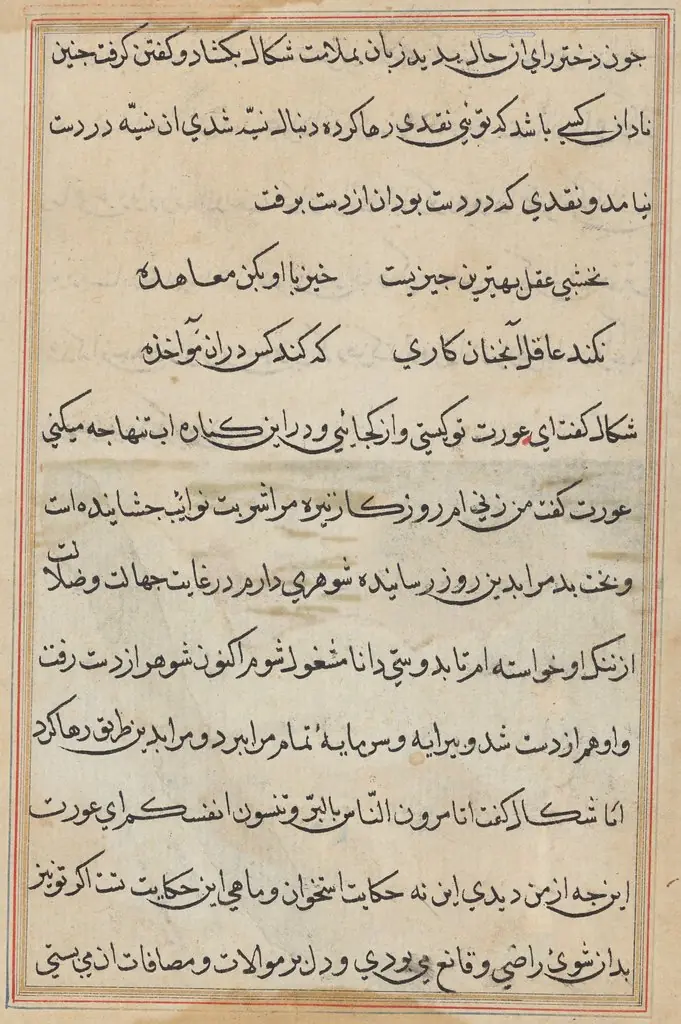
This work is a painted page from the Persian manuscript known as the Tales of a Parrot, or Tuti‑nama. The entire surface is occupied by flowing black calligraphy set against a light ground, creating a dense textual field that functions as the primary visual element.
Subject & Meaning
The script records a narrative episode from the collection of fables, a literary tradition that uses animal protagonists to convey moral lessons. The emphasis on the text underscores the importance of storytelling as a vehicle for cultural values.
Technique & Style
The calligraphic letters are rendered in a precise yet expressive hand, each character combining curved strokes with angular accents that give the script a dynamic, almost pictorial quality. A subtle reddish border frames the page, while minute blue specks scattered across the surface resemble dust, adding texture without detracting from the legibility of the text.
History & Provenance
The page originates from a Persian illustrated manuscript produced in the early modern period, a time when literary works were frequently transcribed and embellished for elite patrons. Its current location is not specified, but similar examples are held in major museum collections, such as the Cleveland Museum of Art.
Context
Manuscript pages like this one were integral to the visual culture of the Islamic world, where the art of calligraphy was esteemed alongside figurative painting. The Tuti‑nama’s blend of narrative and decorative script reflects a broader tradition of integrating literary content with aesthetic presentation.
Artist & collection

 Page from Tales of a Parrot (Tuti-nama): text page
 Page from Tales of a Parrot (Tuti-nama): text page
 Page from Tales of a Parrot (Tuti-nama): text page
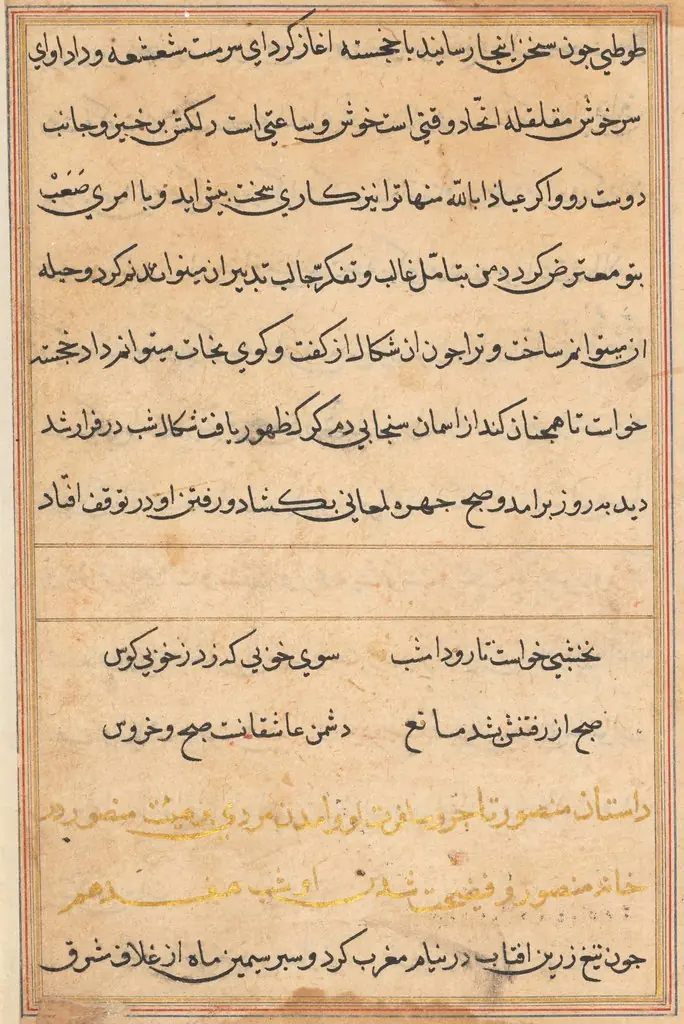 Page from Tales of a Parrot (Tuti-nama): text page
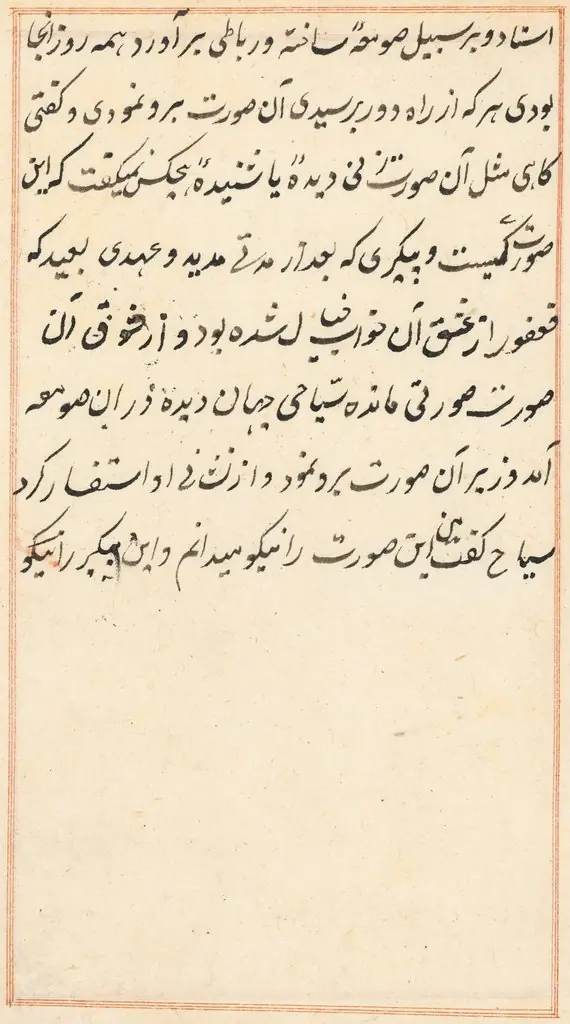 Page from Tales of a Parrot (Tuti-nama): text page
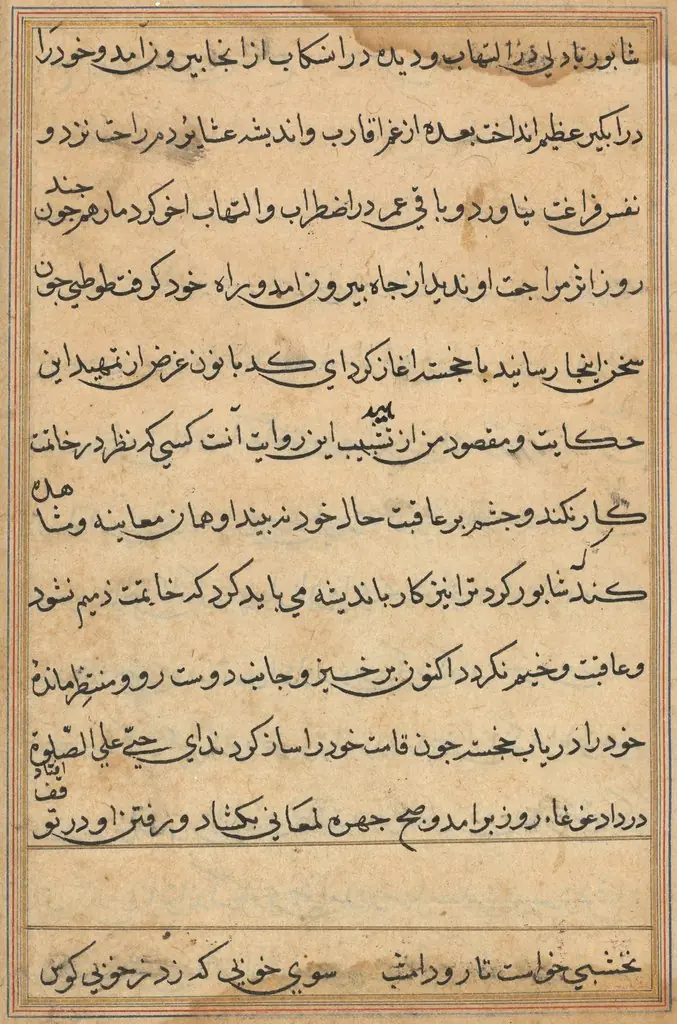 Page from Tales of a Parrot (Tuti-nama): text page
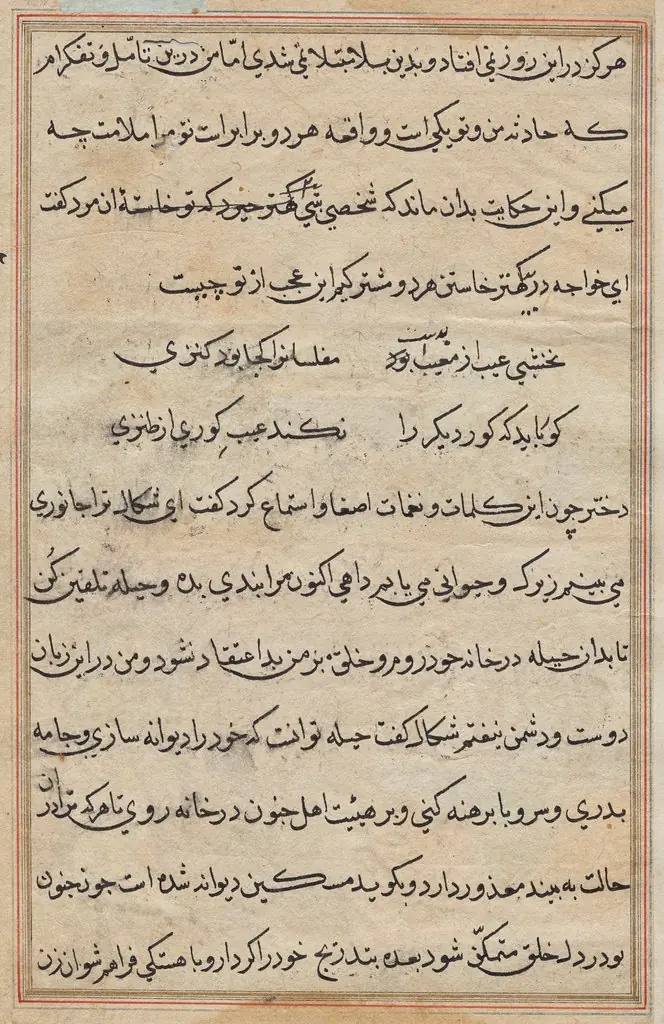 Page from Tales of a Parrot (Tuti-nama): text page
 Page from Tales of a Parrot (Tuti-nama): text page
 Page from Tales of a Parrot (Tuti-nama): text page
 Page from Tales of a Parrot (Tuti-nama): text page
 Page from Tales of a Parrot (Tuti-nama): text page
 Page from Tales of a Parrot (Tuti-nama): text page