Artwork
Garden Scene
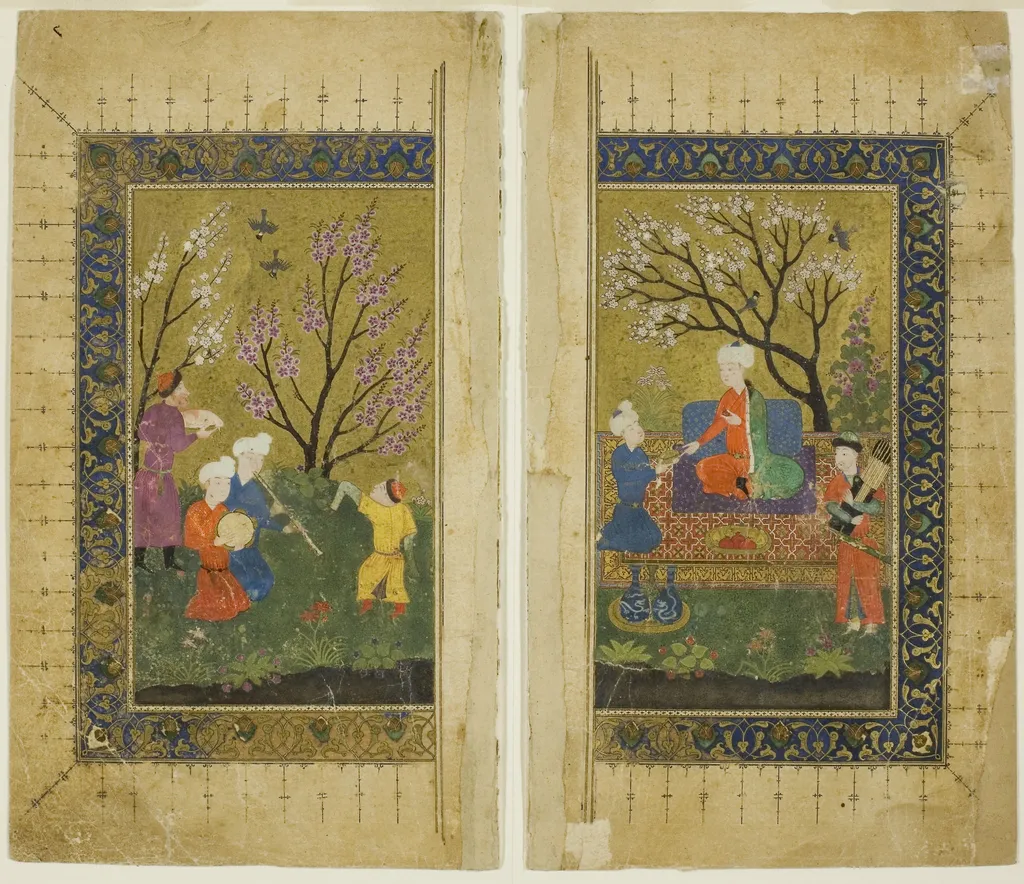
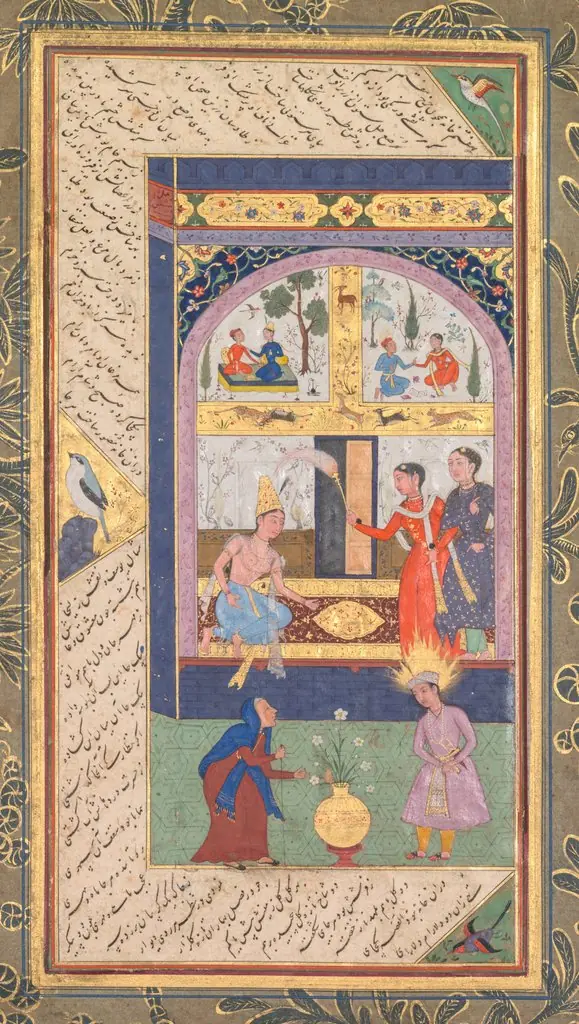
Garden Scene is an unspecified painting by the Early Renaissance artist Unknown. It dates from 1465 and is held in the collection of the Art Institute of Chicago. This painting depicts an outdoor gathering in a lush, ornamental garden.
About this work
Overview
The atmosphere suggests a moment of leisure, possibly tied to ritual or celebration, rendered with careful attention to color and pattern.
This painting depicts an outdoor gathering in a lush, ornamental garden. Multiple figures are arranged in two distinct groupings, each engaged in quiet, intimate activities. The scene is richly detailed with vibrant clothing, flowering trees, and decorative borders that frame the composition. The atmosphere suggests a moment of leisure, possibly tied to ritual or celebration, rendered with careful attention to color and pattern.
Subject & Meaning
The figures appear to be engaged in musical and contemplative pursuits, with instruments like a drum and flute present, suggesting performance or ceremony. The man in red holding a small object may be engaged in a symbolic act, while the figure with a bow and arrow introduces an element of readiness or ritual. The setting implies a private, elevated space, possibly linked to courtly or spiritual traditions where music and stillness coexist.
Technique & Style
The artist employs vivid pigments and fine brushwork to render textiles, foliage, and architectural details with precision. Patterns on garments and borders are meticulously painted, indicating a focus on surface decoration. The composition balances naturalism with stylization, using layered trees and spatial depth to guide the viewer’s eye without strict perspective, characteristic of a tradition valuing ornamental harmony over realism.
History & Provenance
The painting’s origins are tied to a culture that prized detailed courtly scenes, likely from a region with strong traditions of manuscript illumination or panel painting. Its survival suggests it was valued by collectors or institutions, possibly created for a noble patron. No documented ownership chain is widely known, but its condition and style align with works produced in the 16th or 17th century in South or Central Asia.
Context
This work reflects a broader artistic tradition where gardens symbolized paradise, order, and refined leisure. Similar scenes appear in regional art where music, dress, and posture conveyed social status and spiritual ideals. The inclusion of both musical instruments and weapons hints at a world where pleasure and duty coexisted, common in elite circles that valued cultivated aesthetics alongside martial readiness.
Legacy
Though not widely exhibited, the painting contributes to understanding how non-Western traditions depicted leisure and ritual in natural settings. Its intricate details and symbolic figures offer insight into visual languages of power and tranquility outside European norms. Scholars reference it in studies of cross-cultural representations of garden spaces and the role of dress in signaling identity.
Artist & collection

 Domestic Scene
 Giacomo and Cardinal Marco, investing Andrea, Abbot of San Zeno, with his Benefice
 The Nymph of Fontainebleau
 Portrait of a Woman
 Madonna and Child with Saints in the Enclosed Garden
 Venus and Minerva
 Family Group of Four on Sofa
 Wall painting from Room H of the Villa of P. Fannius Synistor at Boscoreale
 Folios A and B from the "Five Treasures" (Panj Ganj) of Jami
 Folios A and B from the "Five Treasures" (Panj Ganj) of Jami
 Mir Muizzu'l Mulk and Bahadur Khan
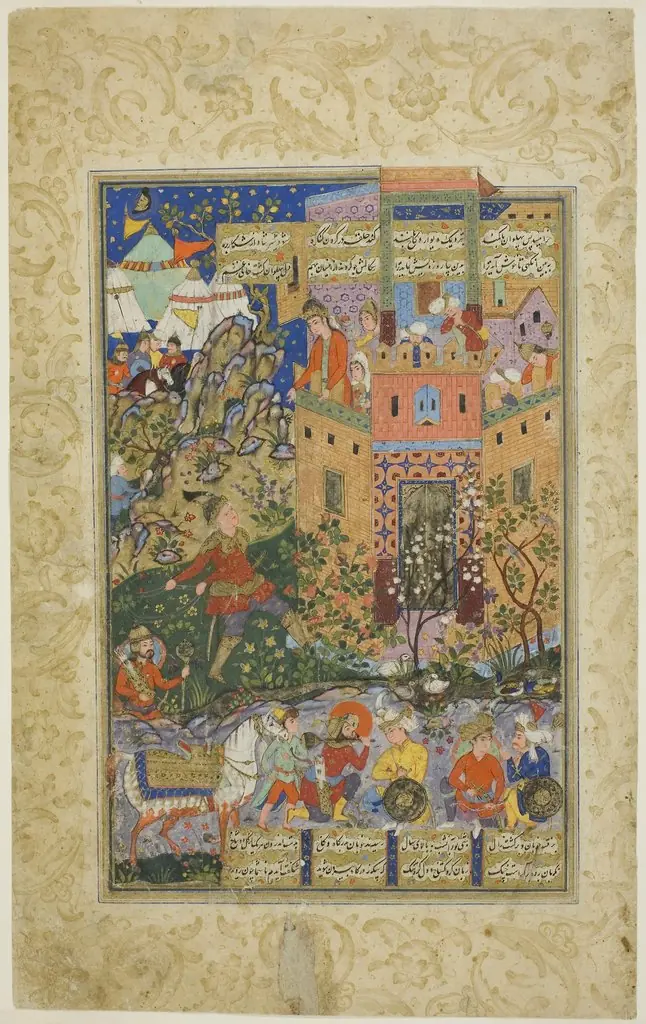 Zal Climbing to Rudaba, page from a copy of the Shahnama of Firdausi
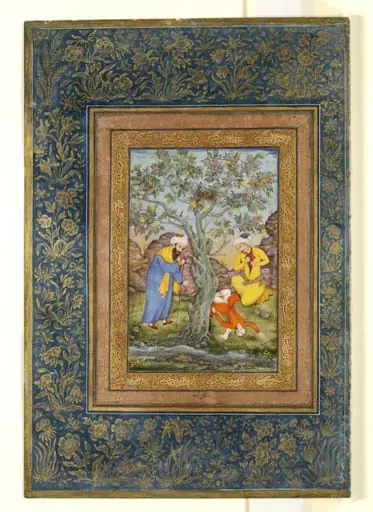 Khwaja Jahan
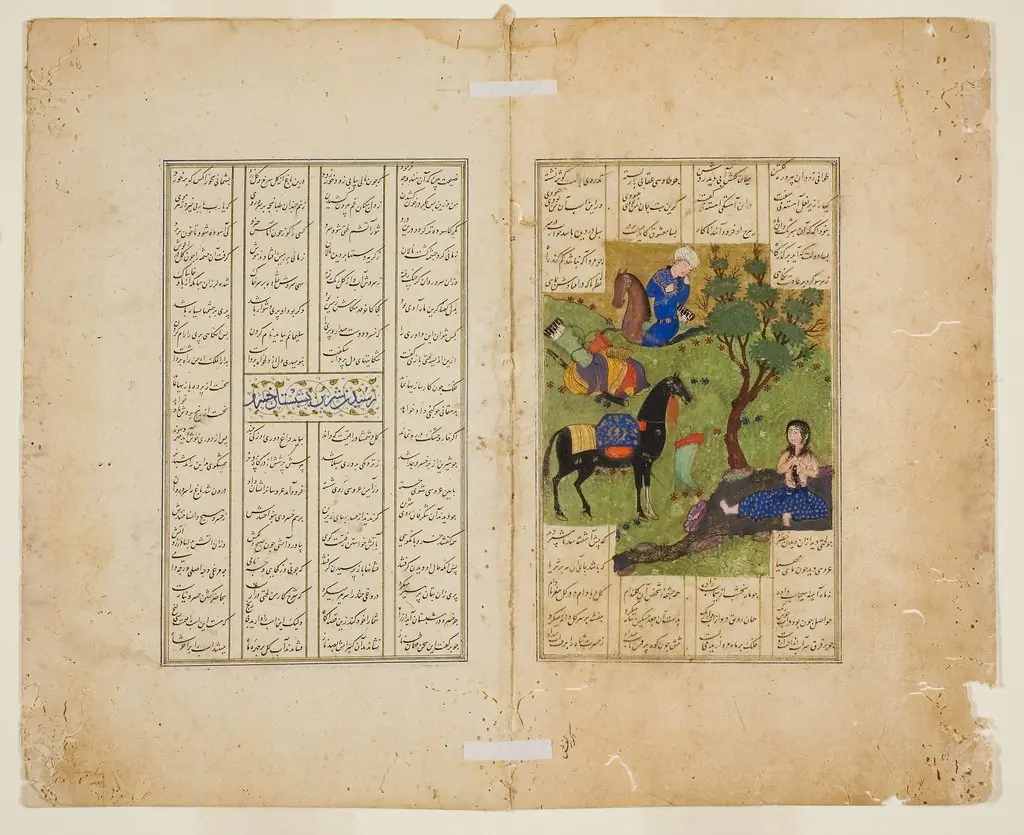 Khusrau Gazing at Shirin, from a copy of the Khamsa of Nizami
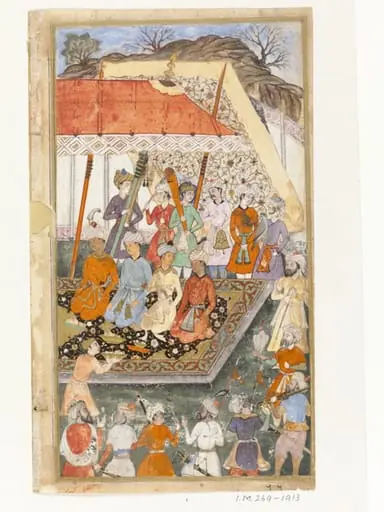 Untitled
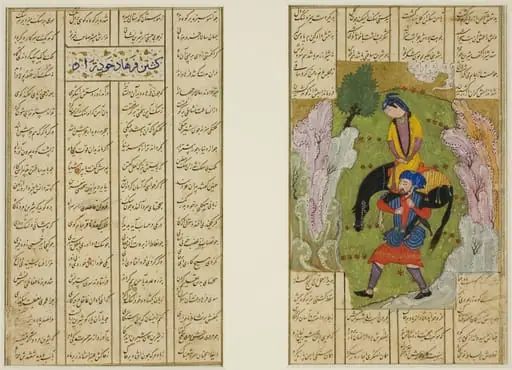 Farhad Carrying Shirin and Her Horse, from a copy of the Khamsa of Nizami
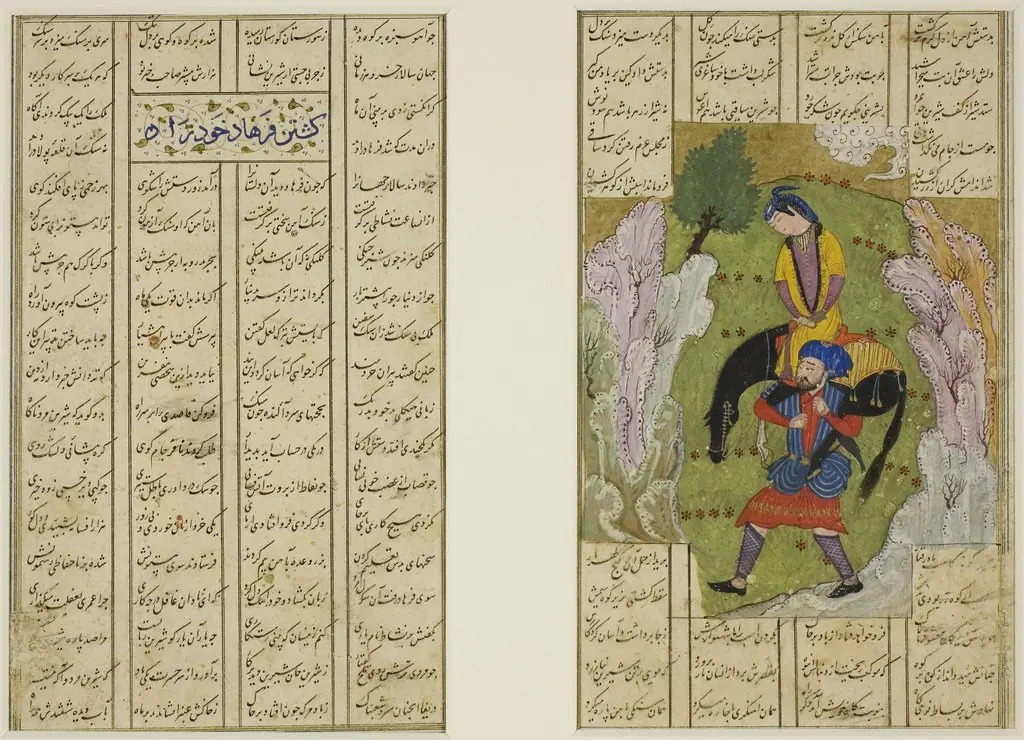 Farhad Carrying Shirin and Her Horse, from a copy of the Khamsa of Nizami
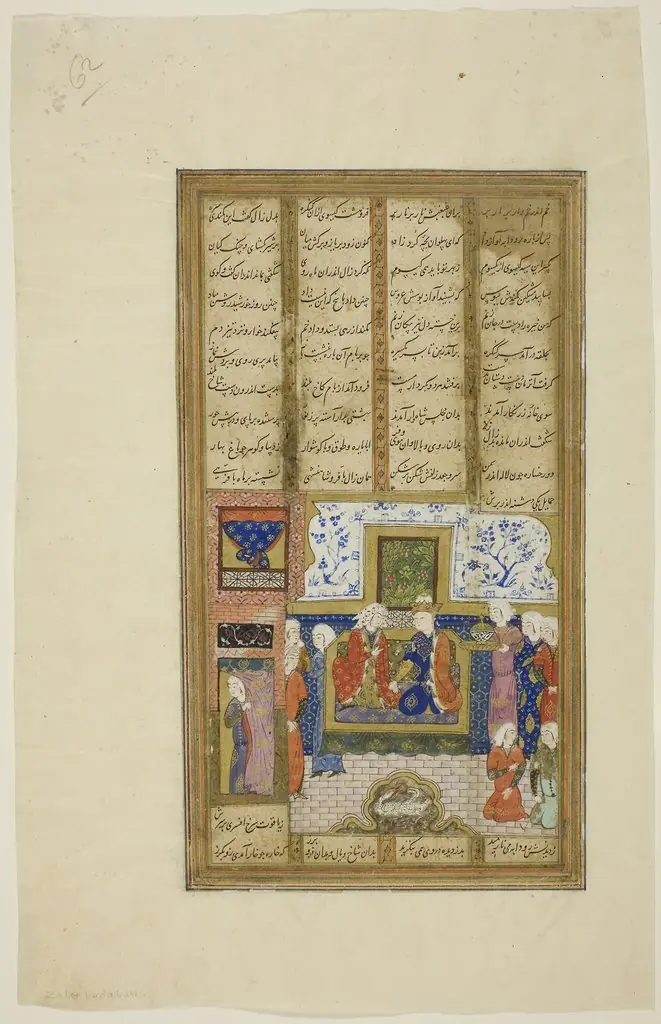 Zal and Rudaba in a Palace, page from a copy of the Shahnama of Firdausi
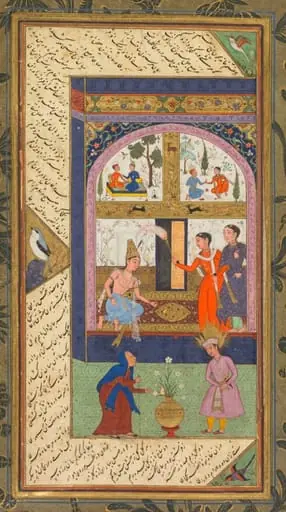 Zulaykha in her palace and as an old woman with Joseph, from a Panj Ganj (Five Treasures) of Abd al-Rahman Jami (Persian, 1414–1492); verso from a Panj Ganj of Abd al-Rahman Jami (Persian, 1414–1492), with two masnavis: Yusuf va Zulaykha (Joseph and Zulaykha) and Khirad-nama-i Iskandari (Alexander’s Book of Wisdom)
 Zulaykha in her palace and as an elderly woman with Joseph (recto), from a Panj Ganj (Five Treasures) of Abd al- Rahman Jami (Persian, 1414–1492)