Artwork
Zulaykha in her palace and as an old woman with Joseph, from a Panj Ganj (Five Treasures) of Abd al-Rahman Jami (Persian, 1414–1492); verso from a Panj Ganj of Abd al-Rahman Jami (Persian, 1414–1492), with two masnavis: Yusuf va Zulaykha (Joseph and Zulaykha) and Khirad-nama-i Iskandari (Alexander’s Book of Wisdom)
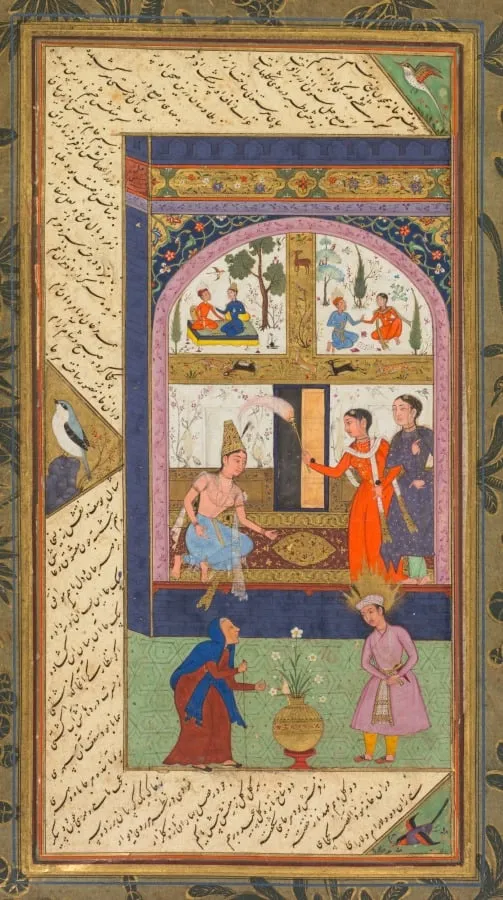
Zulaykha in her palace and as an old woman with Joseph, from a Panj Ganj (Five Treasures) of Abd al-Rahman Jami (Persian, 1414–1492); verso from a Panj Ganj of Abd al-Rahman Jami (Persian, 1414–1492), with two masnavis: Yusuf va Zulaykha (Joseph and Zulaykha) and Khirad-nama-i Iskandari (Alexander’s Book of Wisdom) is an unspecified painting by the Baroque artist Mushfiq. It dates from 1605 and is held in the collection of the Cleveland Museum of Art. This double-sided album leaf features a painting on one side and a section of text from a Persian poem on the other.
About this work
Overview
This double-sided album leaf features a painting on one side and a section of text from a Persian poem on the other. The artwork illustrates two scenes from the story of Joseph and Zulaykha, while the text describes the beauty of Zulaykha's palace.
Subject & Meaning
The painting depicts two episodes from the story of Joseph and Zulaykha: the attempted seduction of Joseph by Zulaykha in her palace, and their later reunion when Zulaykha is an elderly widow. The narrative is rooted in a Persian poem, which uses the story to metaphorically describe a devotee's mystical love for God.
Technique & Style
The artist has skillfully composed two distinct scenes within a single frame, using visual elements to convey the passage of time and the transformation of Zulaykha. The inclusion of a flaming halo around Joseph's head emphasizes his virtuous character. The artist's name and the date are discreetly inscribed on a brick in the upper left corner of the painting.
Context
The artwork is part of a larger tradition of Persian and Mughal Indian painting, where artists used visual storytelling to convey complex narratives and themes. The use of text on the verso side provides additional context and insight into the story being depicted.
Artist & collection
Artist
Mushfiq was a sub-imperial Mughal painter who worked in the atelier of Abd-ur-Rahim Khan-i-Khanan (also called Abdul Rahim Khan-I-Khana), commander-in-chief of the Mughal army in the late 16th/early 17th century.

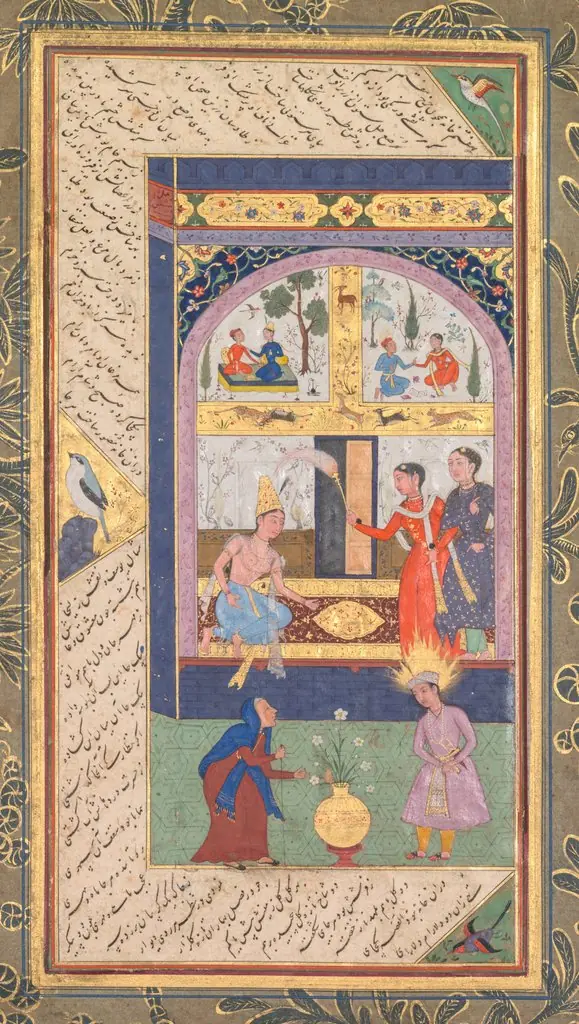 Zulaykha in her palace and as an elderly woman with Joseph (recto), from a Panj Ganj (Five Treasures) of Abd al- Rahman Jami (Persian, 1414–1492)
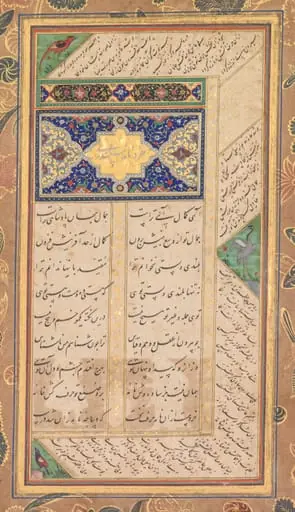 Illuminated page (verso), from a Panj Ganj (Five Treasures) of Abd al- Rahman Jami (Persian, 1414–1492) with two Persian masnavis: Yusuf va Zulaykha (Joseph and Zulaykha) and Khirad-nama-i Iskandari (Alexander’s Book of Wisdom)
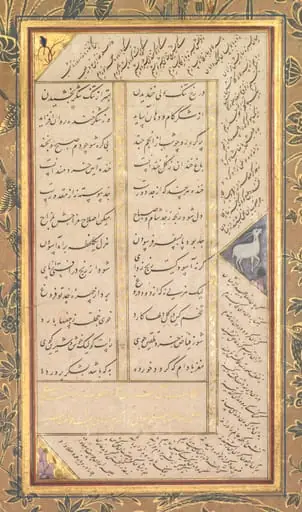 Page from a Panj Ganj (Five Treasures) of Abd al-Rahman Jami (Persian, 1414–1492), with two Persian
masnavis: Yusuf va Zulaykha (Joseph and Zulaykha) and Subhat al-abrar (Rosary of the Righteous) (verso)
Page from a Panj Ganj (Five Treasures) of Abd al-Rahman Jami (Persian, 1414–1492), with two Persian
masnavis: Yusuf va Zulaykha (Joseph and Zulaykha) and Subhat al-abrar (Rosary of the Righteous) (verso)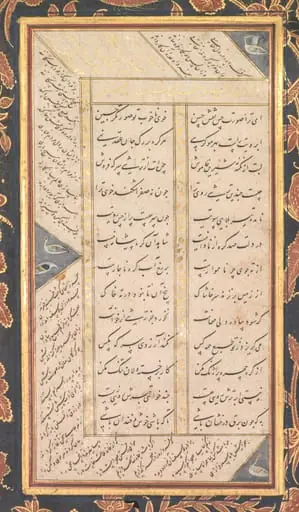 Folio B: Folio from the "Five Treasures" (Panj Ganj) of Jami (recto)
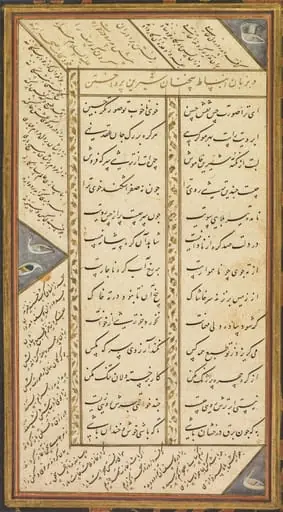 Page from the Panj Ganj (Five Treasures) of Abd al-Rahman Jami (Persian, 1414–1492), with two Persian masnavis (narrative poems): Yusuf va Zulaykha (Joseph and Zulaykha) and Subhat al-abrar (Rosary of the Righteous)
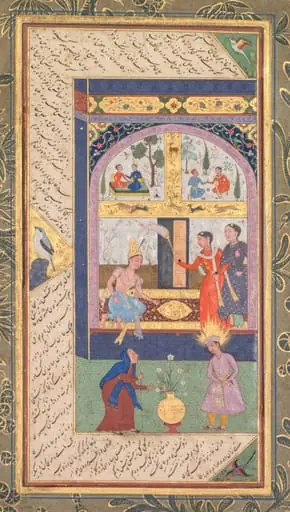 Zulaykha in her palace and as an elderly woman with Joseph (recto), from a Panj Ganj (Five Treasures) of Abd al- Rahman Jami (Persian, 1414–1492)
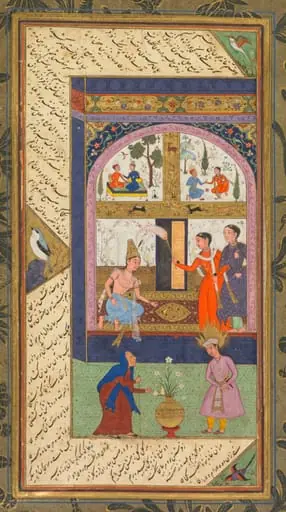 Folios A and B from the "Five Treasures" (Panj Ganj) of Jami
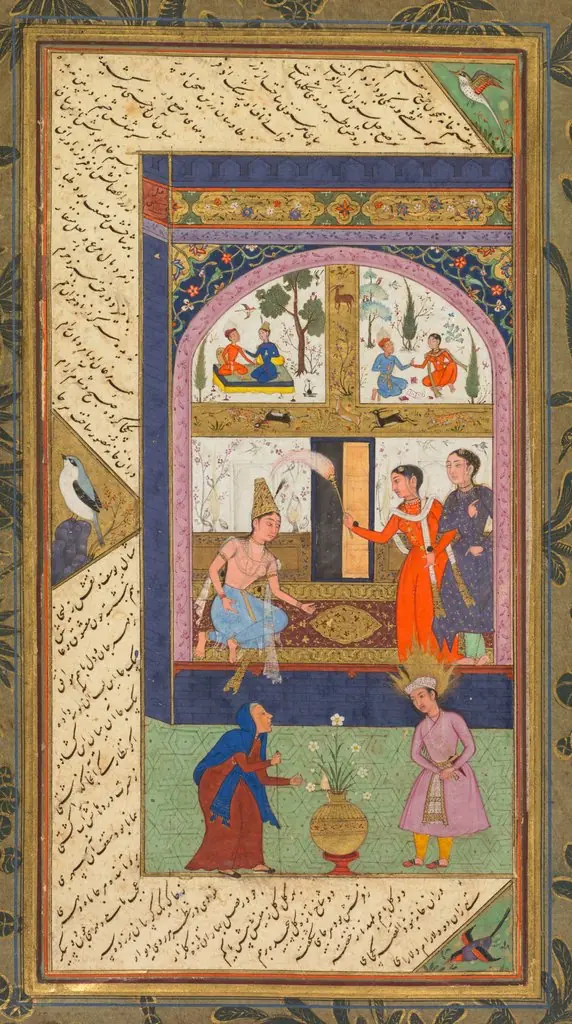 Folios A and B from the "Five Treasures" (Panj Ganj) of Jami
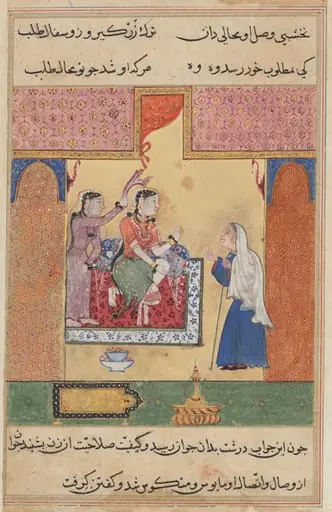 The old procuress conveys the young man’s message of love to Mansur’s wife, from a Tuti-nama (Tales of a Parrot: Seventeenth Night
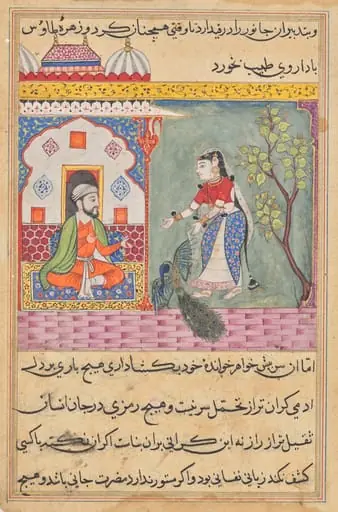 The Brahman’s wife who killed a peacock and ate its gallbladder on the physician’s advice, from a Tuti-nama (Tales of a Parrot): Nineteenth Night
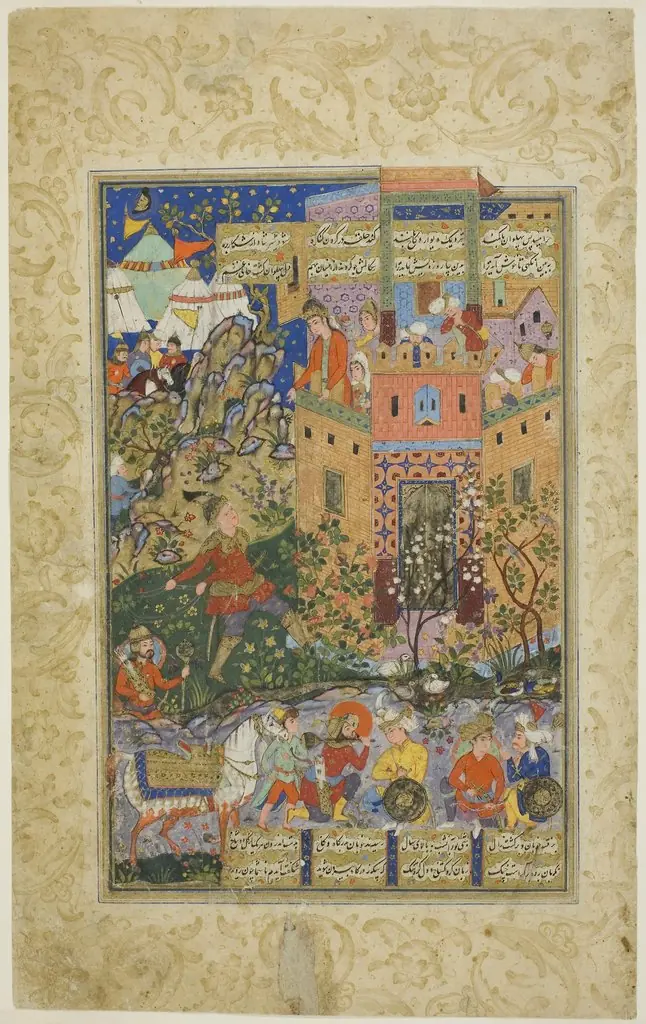 Zal Climbing to Rudaba, page from a copy of the Shahnama of Firdausi
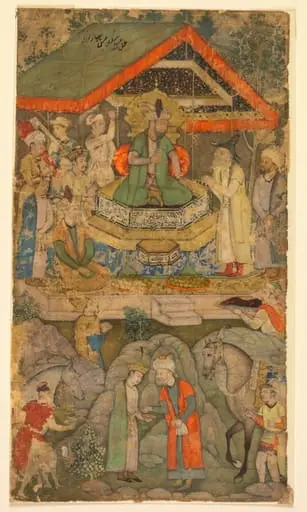 An Ambassador before Humayun
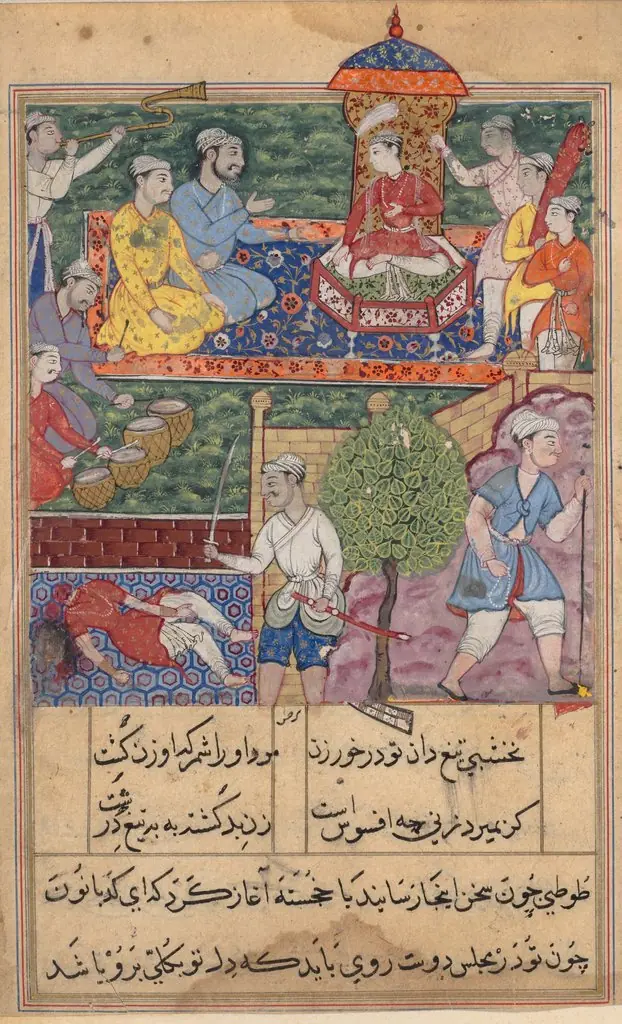 Page from Tales of a Parrot (Tuti-nama): text page
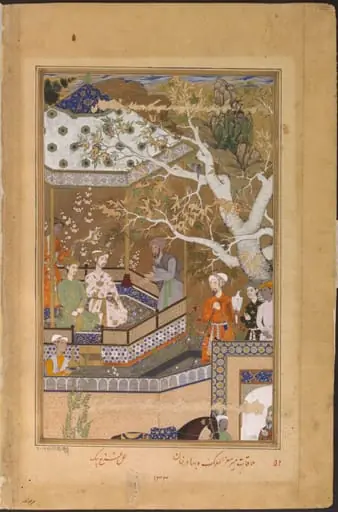 Mir Muizzu'l Mulk and Bahadur Khan