Artwork
Folios A and B from the "Five Treasures" (Panj Ganj) of Jami
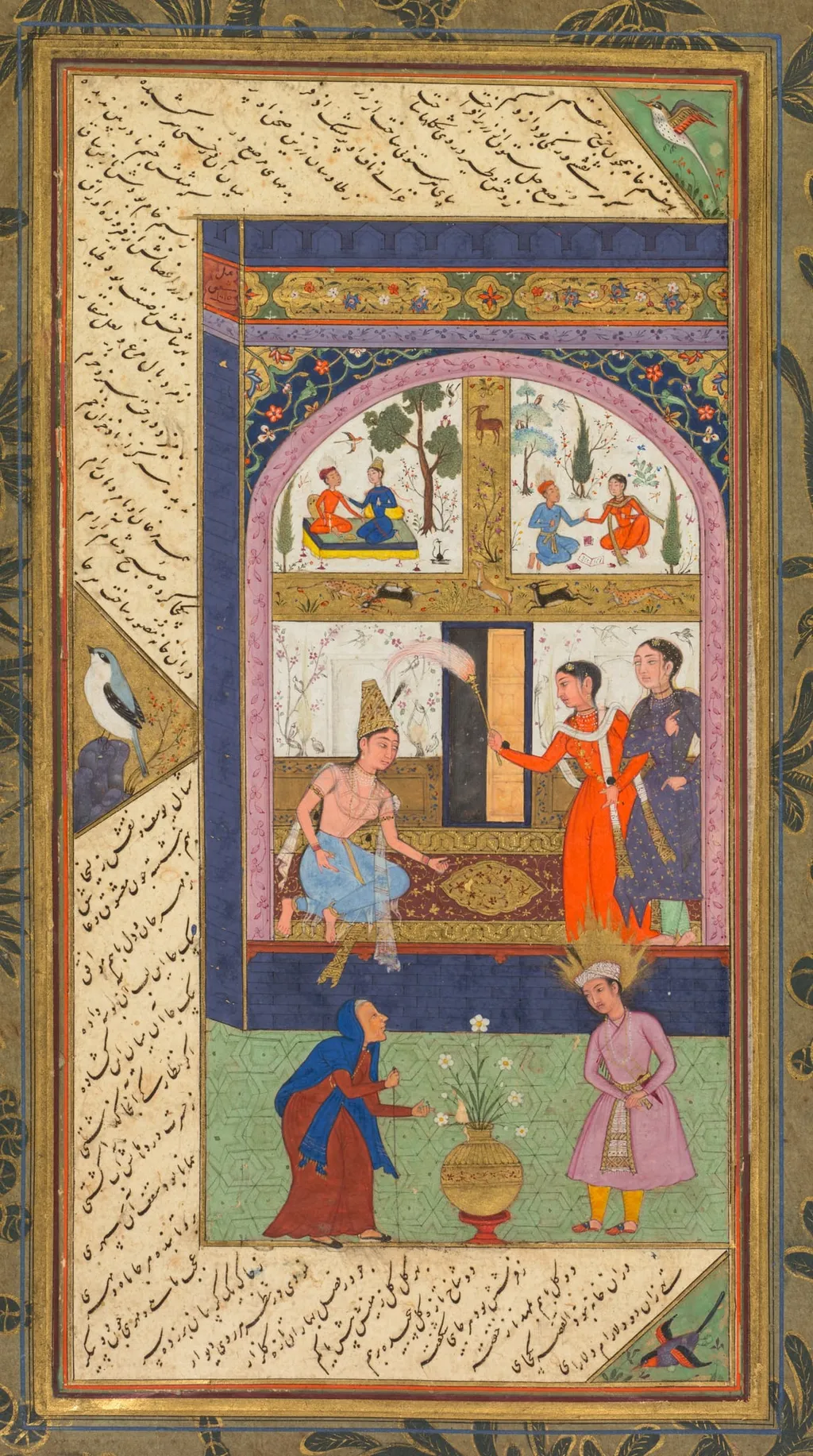
Folios A and B from the "Five Treasures" (Panj Ganj) of Jami is an unspecified painting by the Mughal Painting artist Mushfiq. It dates from 1564 and is held in the collection of the Cleveland Museum of Art. Folios A and B originate from a 1564 illustrated manuscript of Jami’s *Panj Ganj*, a Persian poetic collection.
About this work
Overview
Created within the Mughal atelier system, these pages reflect the literary and visual culture of late 16th-century India.
Folios A and B originate from a 1564 illustrated manuscript of Jami’s *Panj Ganj*, a Persian poetic collection. Created within the Mughal atelier system, these pages reflect the literary and visual culture of late 16th-century India. Though attributed to Mushfiq, a painter active in the early 17th century, the work was produced under the patronage of Abd-ur-Rahim Khan-i-Khanan, a high-ranking court official known for supporting manuscript production.
Subject & Meaning
The folios illustrate episodes from Jami’s *Panj Ganj*, a Sufi-inspired poetic work blending moral instruction with allegorical narrative. Scenes depict figures engaged in quiet contemplation, exchange, and ritual, suggesting themes of spiritual devotion and social harmony. The inclusion of music, floral offerings, and architectural elements evokes an idealized courtly world where earthly beauty mirrors divine order.
Technique & Style
The paintings employ fine brushwork and luminous mineral pigments typical of Mughal manuscript illustration. Figures are rendered with delicate detail, set against intricate architectural backdrops and patterned textiles. The composition is divided into three horizontal registers, guiding the viewer’s eye through layered narratives. Calligraphic inscriptions frame the imagery, integrating text and image as a unified devotional object.
History & Provenance
Produced during the reign of Akbar, the folios were part of a luxury manuscript commissioned by Abd-ur-Rahim Khan-i-Khanan, a noted patron and military commander. The work remained within imperial or noble collections before entering the Cleveland Museum of Art’s holdings. Its survival reflects the enduring value placed on illustrated Persian poetry in Mughal court culture.
Context
Mughal painting flourished under imperial and elite patronage, merging Persian literary traditions with Indian artistic sensibilities. Manuscripts like this one served both aesthetic and didactic purposes, reinforcing cultural identity among the ruling class. The integration of poetry, miniature painting, and calligraphy reflected a broader Indo-Persian intellectual tradition that valued harmony between word and image.
Legacy
These folios exemplify the refinement of Mughal manuscript art during its formative phase. Though not widely publicized, they remain significant for understanding how literary texts were visually interpreted in courtly contexts. Their preservation allows continued study of the interplay between poetry, patronage, and pictorial narrative in early modern South Asia.
Artist & collection
Artist
Mushfiq was a sub-imperial Mughal painter who worked in the atelier of Abd-ur-Rahim Khan-i-Khanan (also called Abdul Rahim Khan-I-Khana), commander-in-chief of the Mughal army in the late 16th/early 17th century.

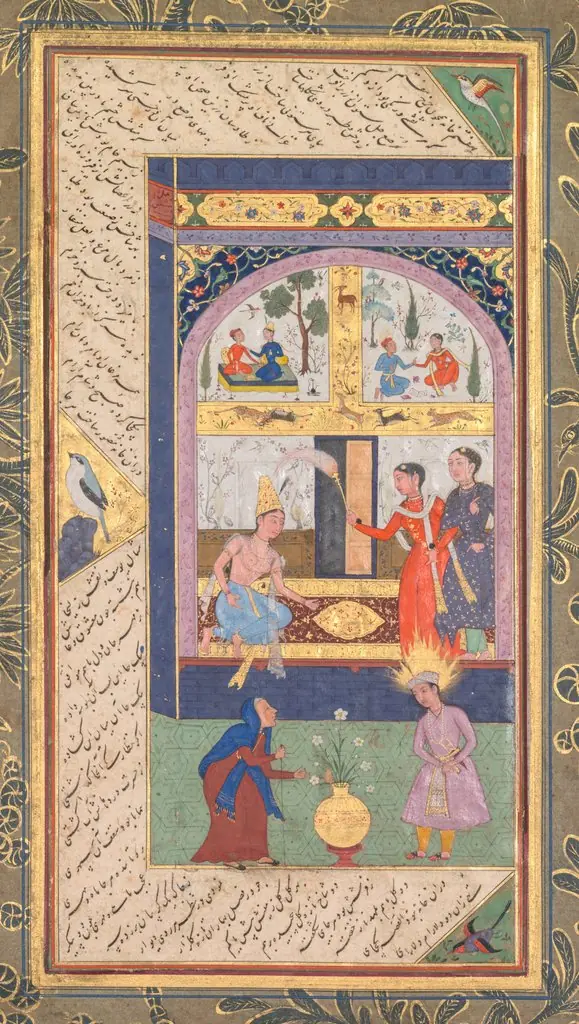 Zulaykha in her palace and as an elderly woman with Joseph (recto), from a Panj Ganj (Five Treasures) of Abd al- Rahman Jami (Persian, 1414–1492)
 Illuminated page (verso), from a Panj Ganj (Five Treasures) of Abd al- Rahman Jami (Persian, 1414–1492) with two Persian masnavis: Yusuf va Zulaykha (Joseph and Zulaykha) and Khirad-nama-i Iskandari (Alexander’s Book of Wisdom)
 Zulaykha in her palace and as an old woman with Joseph, from a Panj Ganj (Five Treasures) of Abd al-Rahman Jami (Persian, 1414–1492); verso from a Panj Ganj of Abd al-Rahman Jami (Persian, 1414–1492), with two masnavis: Yusuf va Zulaykha (Joseph and Zulaykha) and Khirad-nama-i Iskandari (Alexander’s Book of Wisdom)
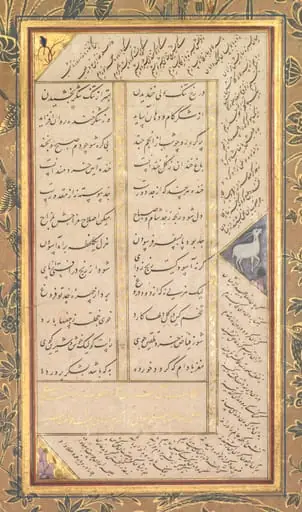 Page from a Panj Ganj (Five Treasures) of Abd al-Rahman Jami (Persian, 1414–1492), with two Persian
masnavis: Yusuf va Zulaykha (Joseph and Zulaykha) and Subhat al-abrar (Rosary of the Righteous) (verso)
Page from a Panj Ganj (Five Treasures) of Abd al-Rahman Jami (Persian, 1414–1492), with two Persian
masnavis: Yusuf va Zulaykha (Joseph and Zulaykha) and Subhat al-abrar (Rosary of the Righteous) (verso)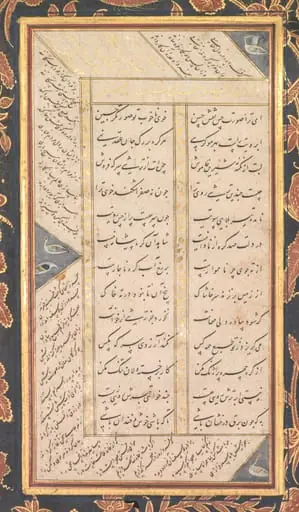 Folio B: Folio from the "Five Treasures" (Panj Ganj) of Jami (recto)
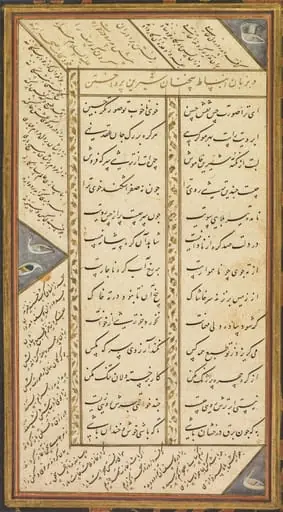 Page from the Panj Ganj (Five Treasures) of Abd al-Rahman Jami (Persian, 1414–1492), with two Persian masnavis (narrative poems): Yusuf va Zulaykha (Joseph and Zulaykha) and Subhat al-abrar (Rosary of the Righteous)
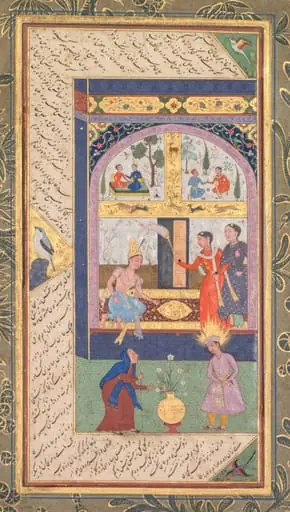 Zulaykha in her palace and as an elderly woman with Joseph (recto), from a Panj Ganj (Five Treasures) of Abd al- Rahman Jami (Persian, 1414–1492)
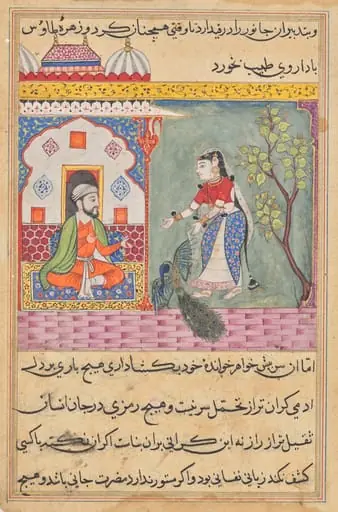 The Brahman’s wife who killed a peacock and ate its gallbladder on the physician’s advice, from a Tuti-nama (Tales of a Parrot): Nineteenth Night
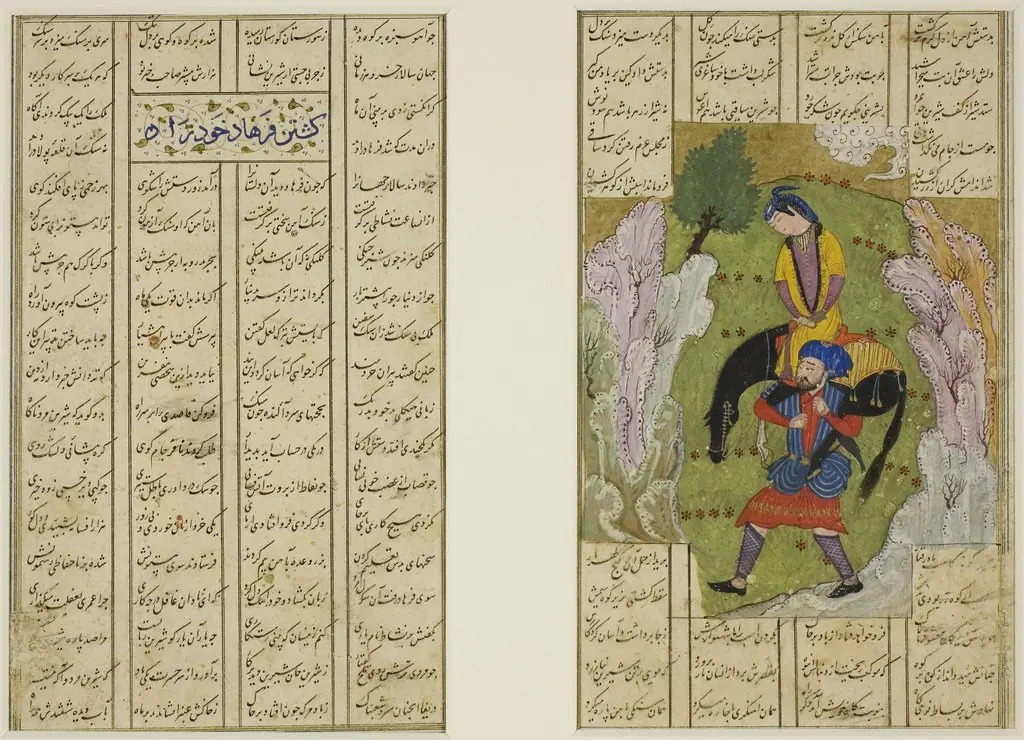 Farhad Carrying Shirin and Her Horse, from a copy of the Khamsa of Nizami
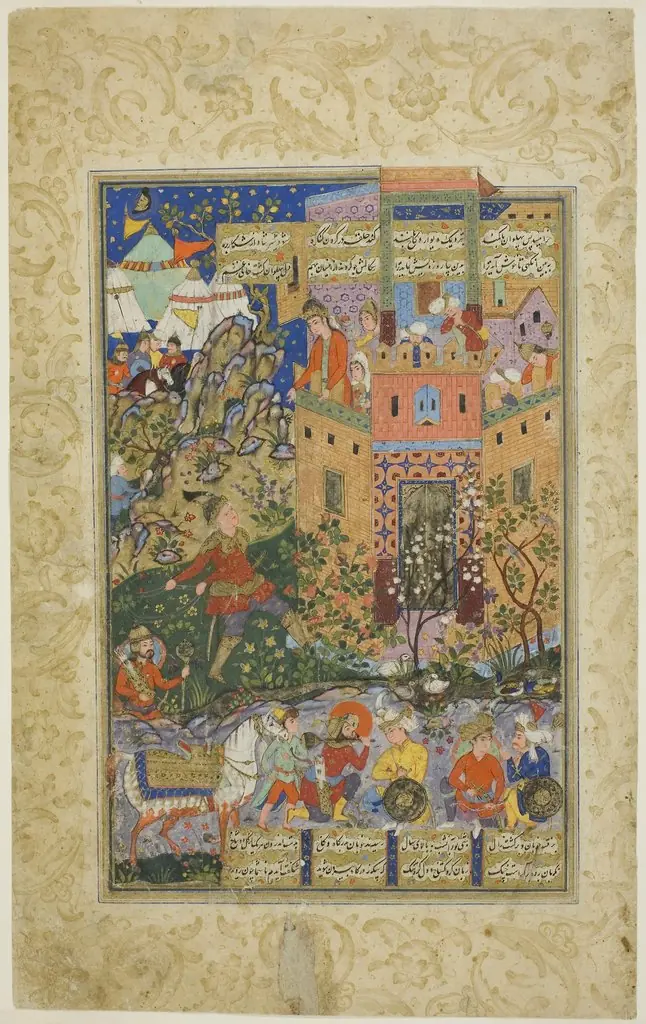 Zal Climbing to Rudaba, page from a copy of the Shahnama of Firdausi
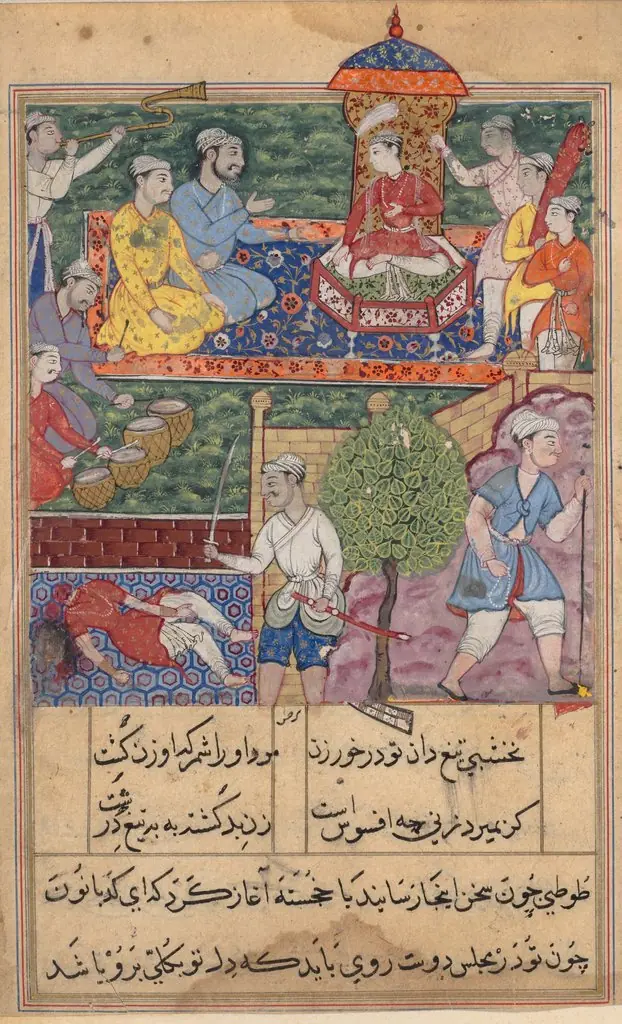 Page from Tales of a Parrot (Tuti-nama): text page
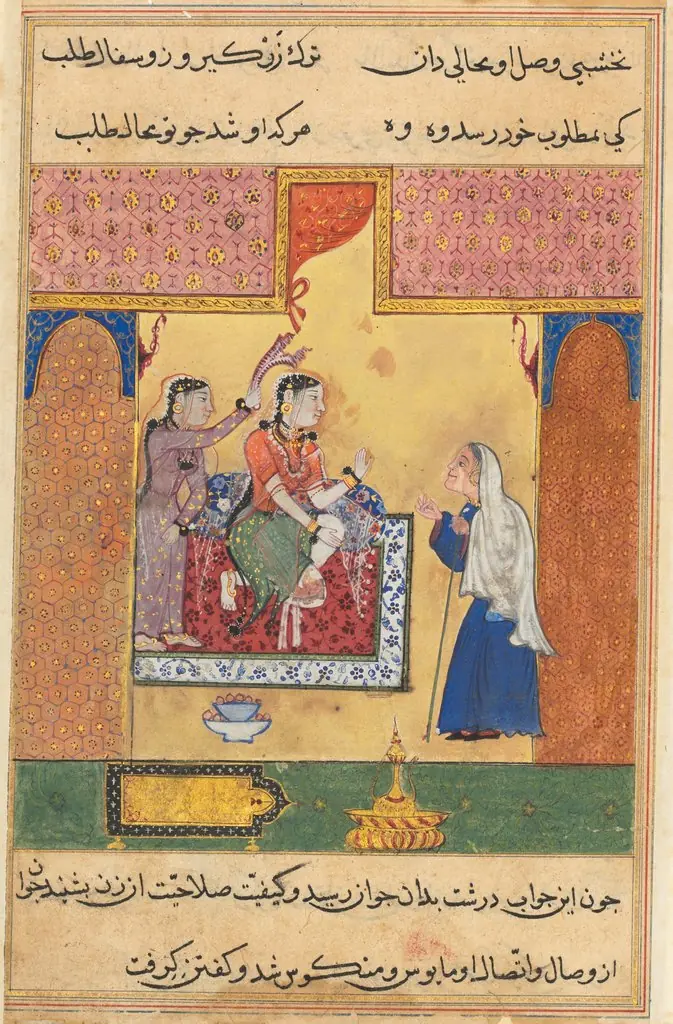 The old procuress conveys the young man’s message of love to Mansur’s wife, from a Tuti-nama (Tales of a Parrot: Seventeenth Night
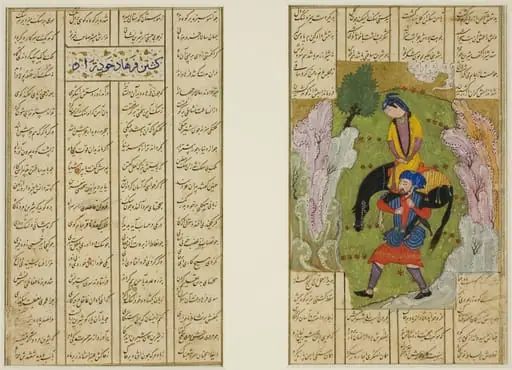 Farhad Carrying Shirin and Her Horse, from a copy of the Khamsa of Nizami
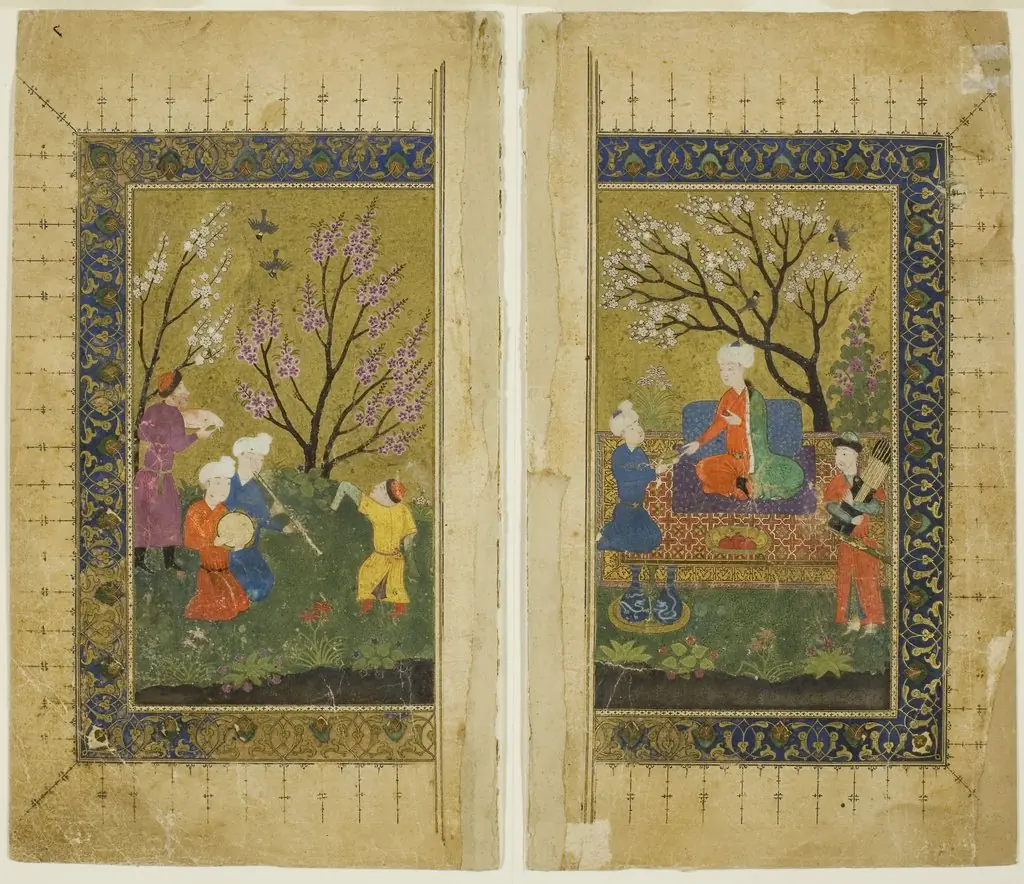 Garden Scene
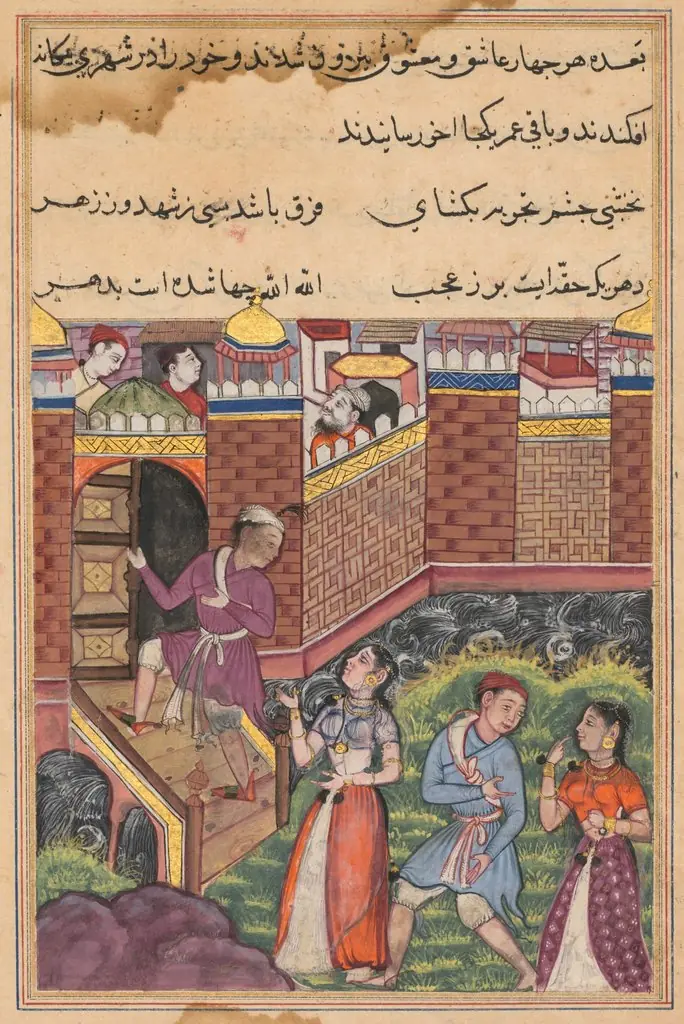 The two couples reach a foreign city where they make their home, from a Tuti-nama (Tales of a Parrot): Thirty-third Night