Artwork
Portrait of a young woman [Sophie Markgräfin von Brandenburg-Bayreuth, née Duchess Sachsen-Weißenfels (1684–1752)?]
![Portrait of a young woman [Sophie Markgräfin von Brandenburg-Bayreuth, née Duchess Sachsen-Weißenfels (1684–1752)?], by Unknown, oil, 1720](https://artifactworldgallery.com/img/unknown--portrait-of-a-young-woman-sophie-markgrafin-von-brandenburg--2d73c9561763e528-w1024.webp)
Portrait of a young woman [Sophie Markgräfin von Brandenburg-Bayreuth, née Duchess Sachsen-Weißenfels (1684–1752)?] is an oil painting by Unknown. It dates from 1720 and is held in the collection of the National Museum in Kraków. This oil painting depicts a young noblewoman in formal attire, rendered with quiet precision against a dark, unobtrusive background.
About this work
Overview
This oil painting depicts a young noblewoman in formal attire, rendered with quiet precision against a dark, unobtrusive background. Her poised posture and restrained expression suggest a commissioned portrait intended to convey status rather than emotion. The composition focuses attention on her clothing and adornments, typical of aristocratic portraiture in the early eighteenth century.
Subject & Meaning
Her attire—brown dress, white lace, red cape with fur trim, and pearl embellishments—signals her high rank and refined taste.
The sitter is likely Sophie, Margravine of Brandenburg-Bayreuth, born Duchess of Saxe-Weißenfels. Her attire—brown dress, white lace, red cape with fur trim, and pearl embellishments—signals her high rank and refined taste. The floral and pearl decorations in her hair and on her necklace reflect contemporary ideals of elegance and purity, reinforcing her identity as a member of the German nobility.
Technique & Style
The artist employed soft brushwork to render the textures of lace, fur, and silk, contrasting with the flat, dark background that isolates the figure. Subtle gradations in skin tone and careful attention to light falling on pearls and fabric edges demonstrate a refined command of oil painting techniques. The neutral gaze and frontal pose follow conventions of court portraiture, emphasizing dignity over individuality.
History & Provenance
The painting is believed to have been created in the early 1700s, possibly during Sophie’s time as margravine. It remained within the Brandenburg-Bayreuth family collection before entering public ownership. Documentation linking it definitively to Sophie is limited, but stylistic and contextual evidence supports the attribution to her.
Context
In early eighteenth-century German courts, portraiture served as a tool of political and social representation. Noblewomen were depicted with elaborate dress and symbolic adornments to affirm lineage and status. This portrait aligns with trends seen in Saxony and Brandenburg, where sumptuous fabrics and pearl motifs were favored to signify wealth and moral virtue.
Legacy
The portrait remains a representative example of aristocratic portraiture in northern Germany during the Baroque period. While not widely exhibited, it contributes to scholarly understanding of how noblewomen were visually constructed in court culture. Its preservation offers insight into the material culture and aesthetic values of a specific time and place.
Artist & collection

 Domestic Scene
 Giacomo and Cardinal Marco, investing Andrea, Abbot of San Zeno, with his Benefice
 The Nymph of Fontainebleau
 Portrait of a Woman
 Madonna and Child with Saints in the Enclosed Garden
 Venus and Minerva
 Family Group of Four on Sofa
 Wall painting from Room H of the Villa of P. Fannius Synistor at Boscoreale
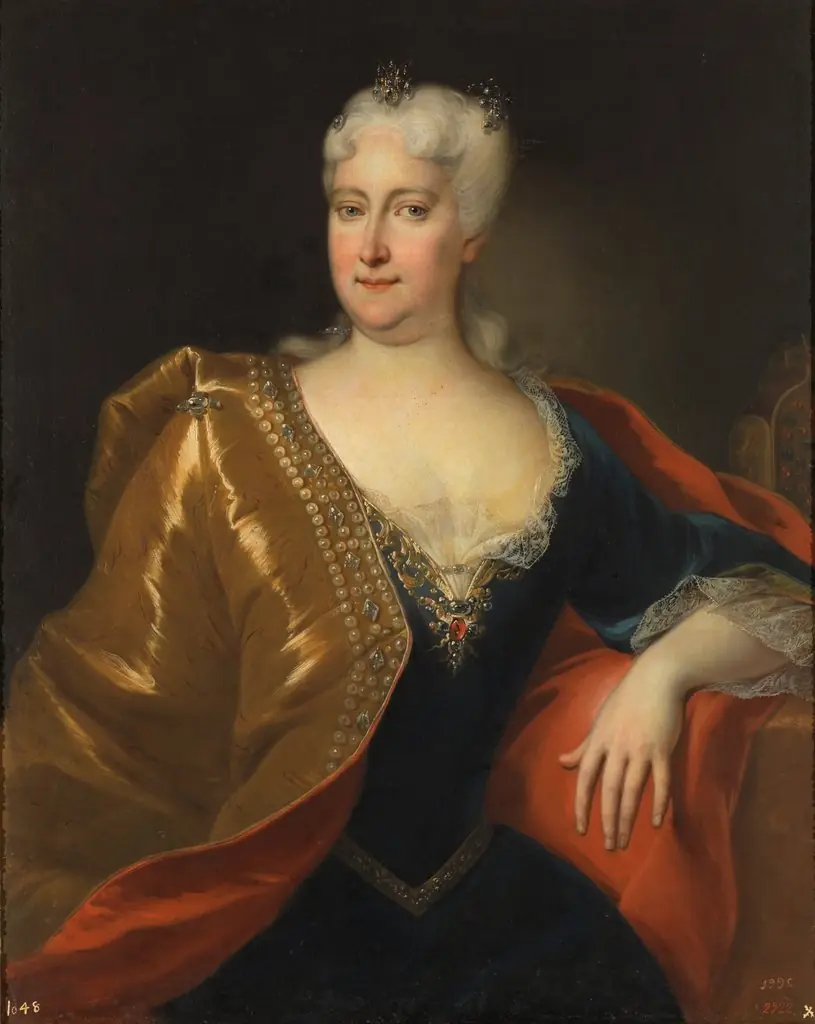 La emperatriz Isabel Cristina de Brunswick
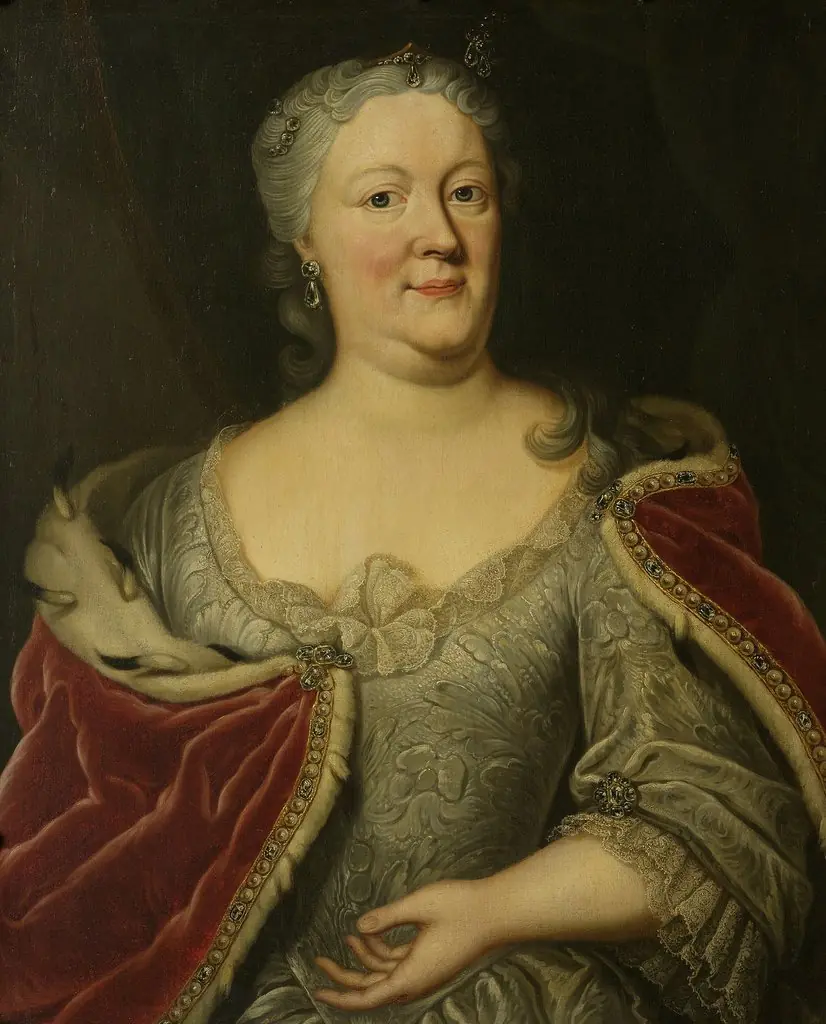 Portrait of Maria Louisa van Hessen-Kassel, called Maaike-Meu. Widow of the Stadtholder of Friesland John Willem Friso, Prince of Orange-Nassau
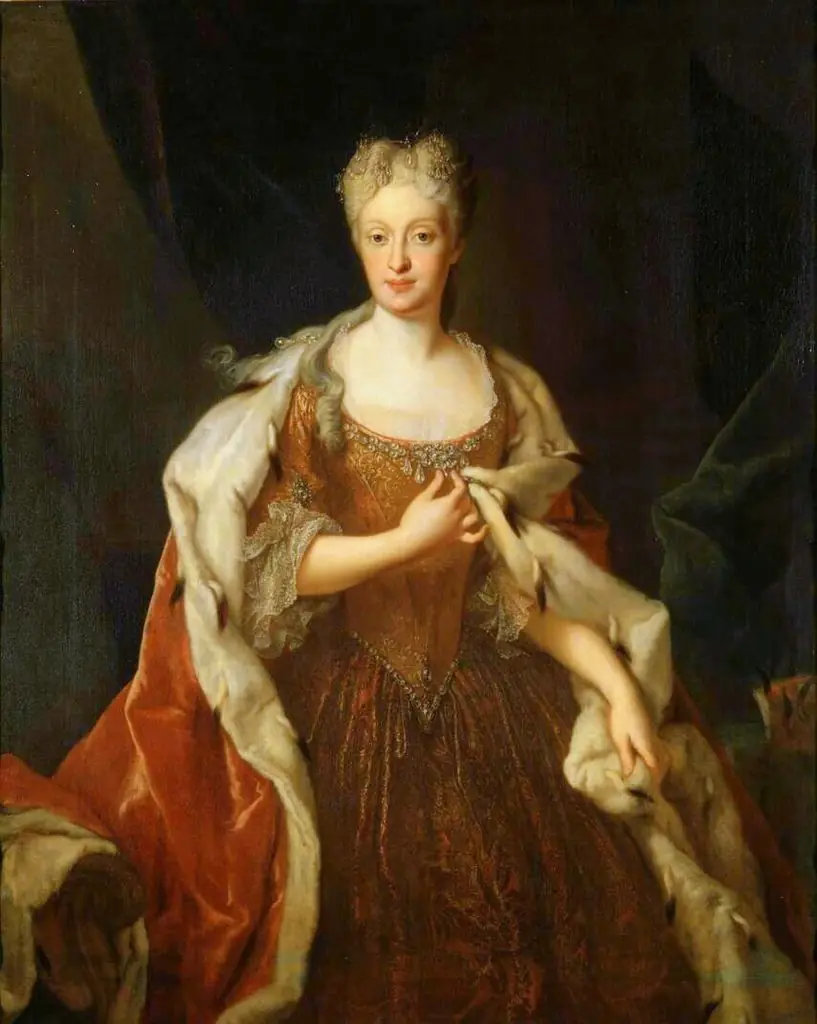 Porträt der Maria Josepha of Austria (1699-1757), Electress of Saxony and Queen of Poland
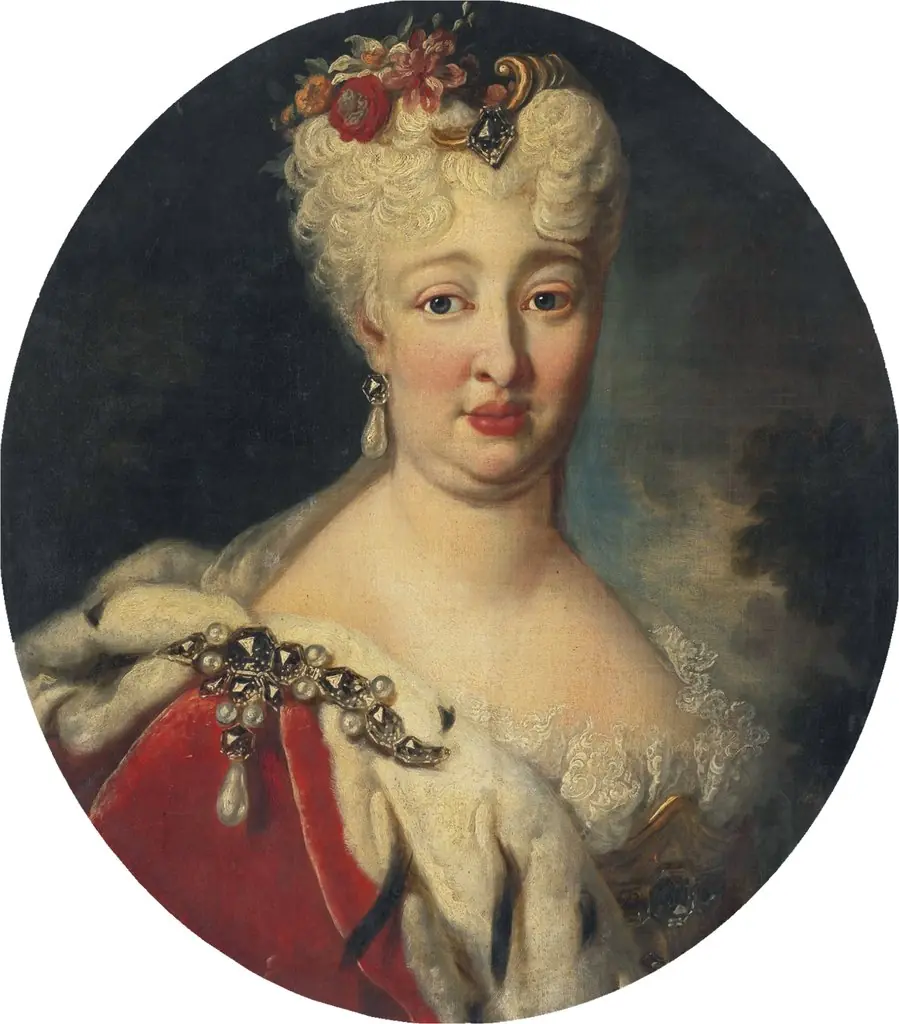 Portrait of Countess Palatine Elisabeth Auguste Sofie of Neuburg (1693 - 1728)
 Portrait of A.I. Kurakina
 Sofia Magdalena, 1746-1813, Prinsessa av Danmark, drottning av Sverige
 Anna Constanze Gräfin von Cosel (1680-1765)
 Elisabeth Charlotte Herzogin von Orléans (?)
 Kreivitär Ingeborg Posse
 Isabella Farnese
 Juliane Marie, Frederik V's anden dronning
 Portret Anny Ludwiki z Mycielskich Radziwiłłowej (1729-1771), żony Michała Kazimierza Radziwiłła "Rybeńki", hetmana wielkiego litewskiego i wojewody wileńskiego