Artwork
The Chariot of Phoebus
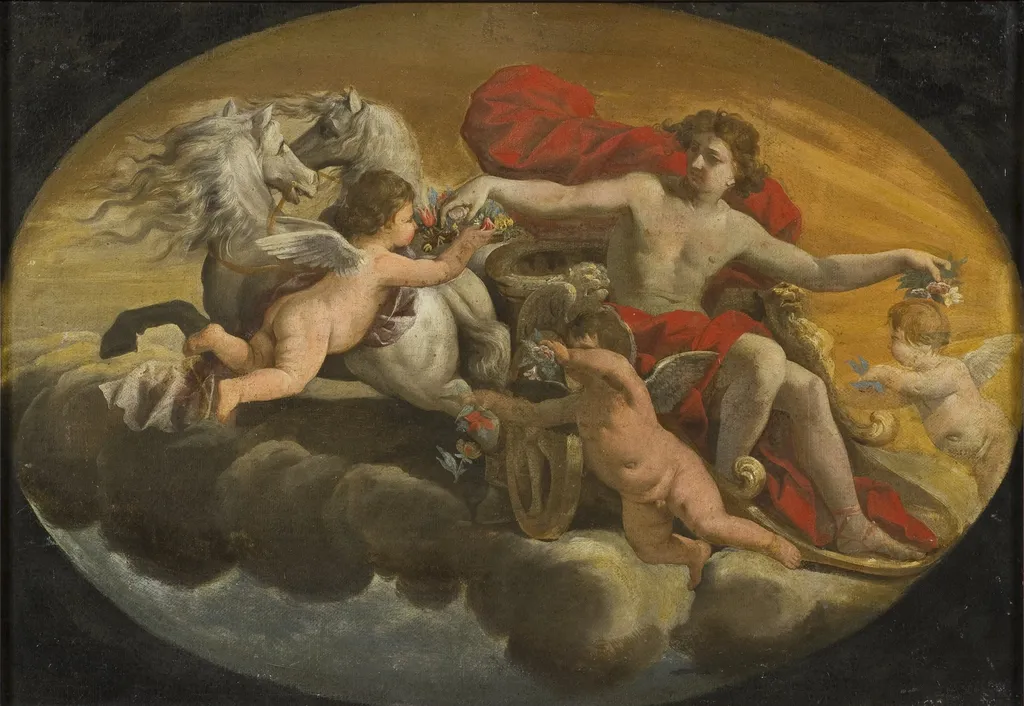
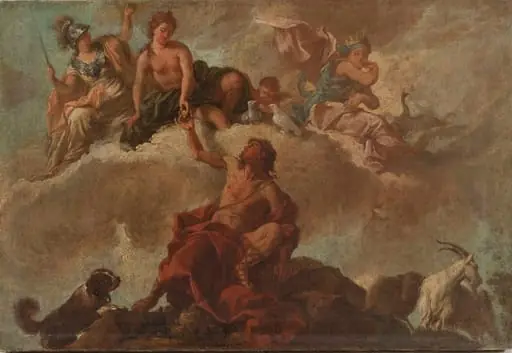
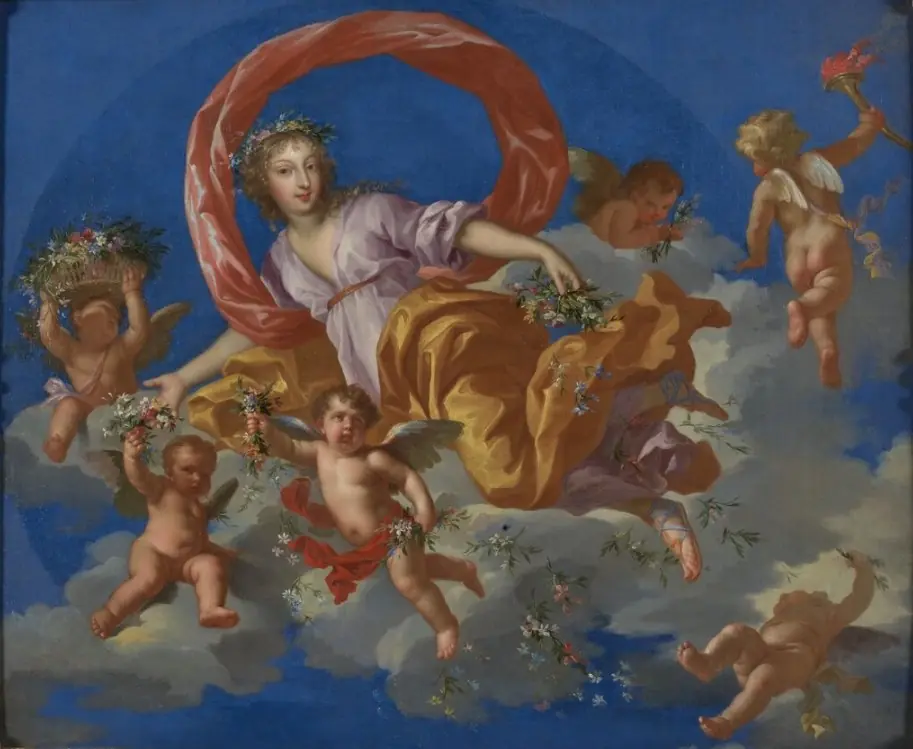
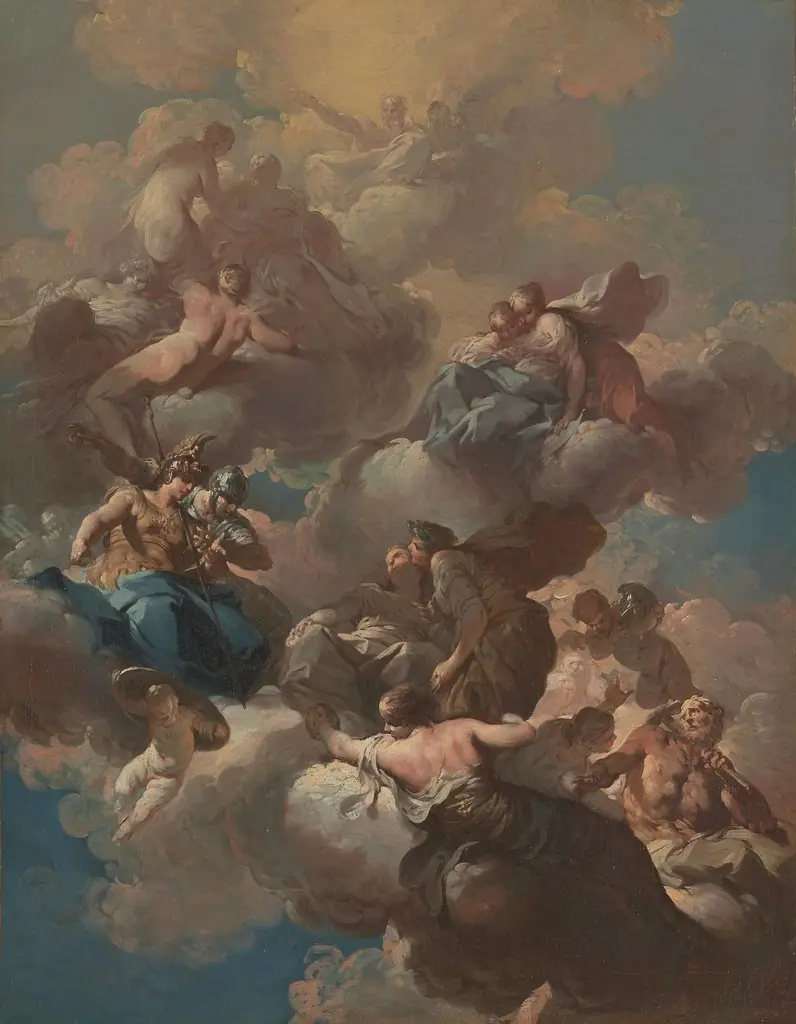
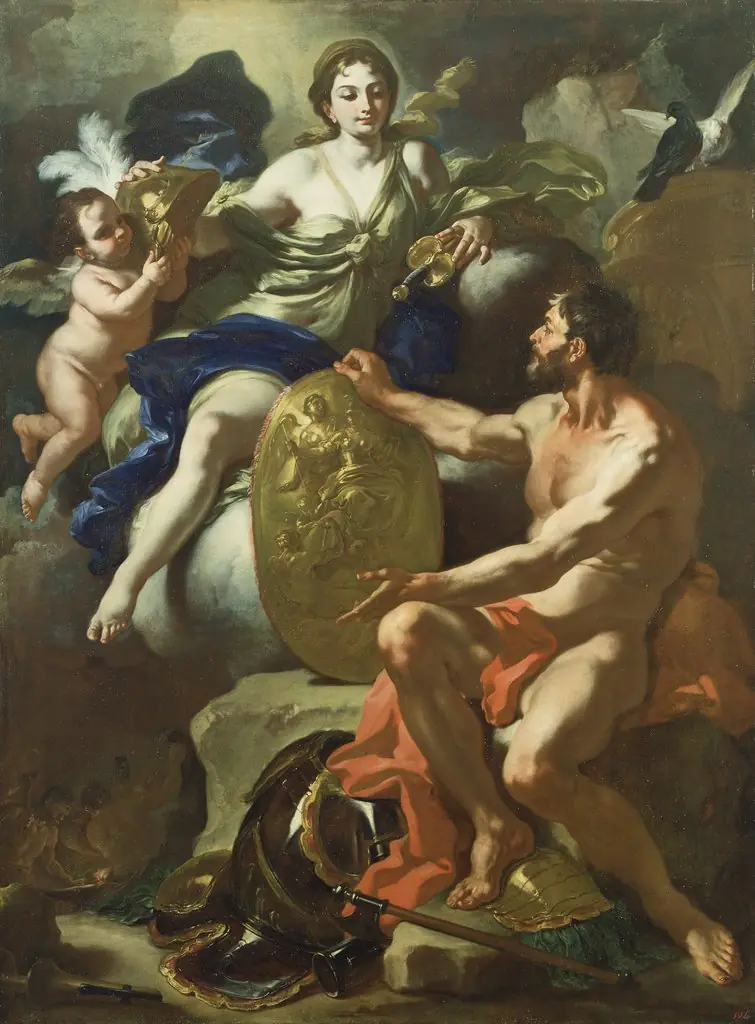
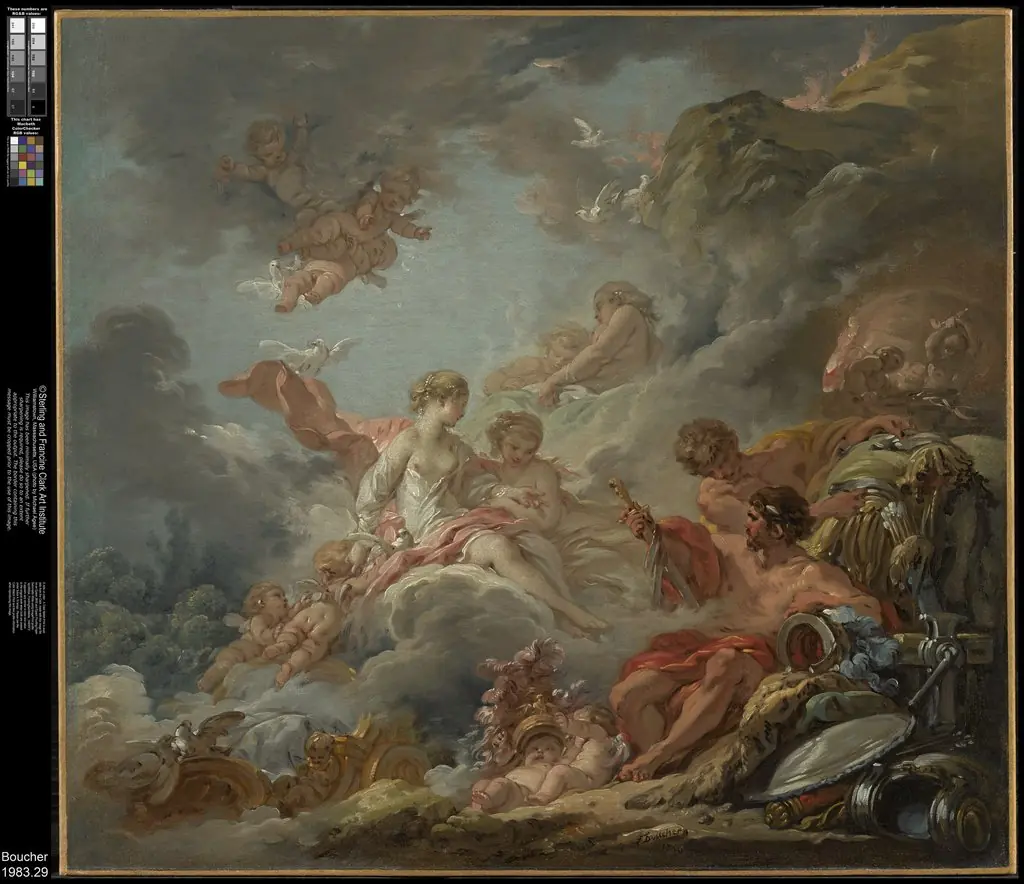
The Chariot of Phoebus is an oil painting by Unknown. It is held in the collection of the Nationalmuseum. The work portrays a solitary figure, likely a deity, seated in a chariot drawn by a single horse.
About this work
Overview
The work portrays a solitary figure, likely a deity, seated in a chariot drawn by a single horse. He wears a vivid red garment and extends his right hand, clutching a flower. Flanking him are two winged youths, with a third positioned in the lower right corner, all rendered against a sky mottled with soft, yellowed clouds.
Subject & Meaning
The central character’s attire and the presence of cherubic attendants suggest an allegorical representation of the sun god, traditionally identified with Phoebus. The flower he holds may symbolize renewal or the fleeting nature of life, while the chariot conveys movement and the daily journey of the sun across the heavens.
Technique & Style
Executed in oil, the painting combines warm reds and golden sky tones with cooler blues and grays of the horse and surrounding figures. Visible brushwork creates a textured surface, and the artist employs chiaroscuro to model forms, giving the scene a three‑dimensional quality that draws attention to the central figure.
History & Provenance
The piece is titled "The Chariot of Phoebus" and is catalogued as an oil painting. No further details on its creation date, artist, or ownership history are provided in the source material.
Context
Depictions of solar deities in chariots were common in classical mythology and later revived during periods that looked to antiquity for inspiration. The inclusion of cherubs reflects a synthesis of Greco‑Roman motifs with later artistic conventions that favored playful, angelic figures.
Artist & collection

 Domestic Scene
 Giacomo and Cardinal Marco, investing Andrea, Abbot of San Zeno, with his Benefice
 The Nymph of Fontainebleau
 Portrait of a Woman
 Madonna and Child with Saints in the Enclosed Garden
 Venus and Minerva
 Family Group of Four on Sofa
 Wall painting from Room H of the Villa of P. Fannius Synistor at Boscoreale