Artwork
Epitaph of Zygmunt Piwnicki
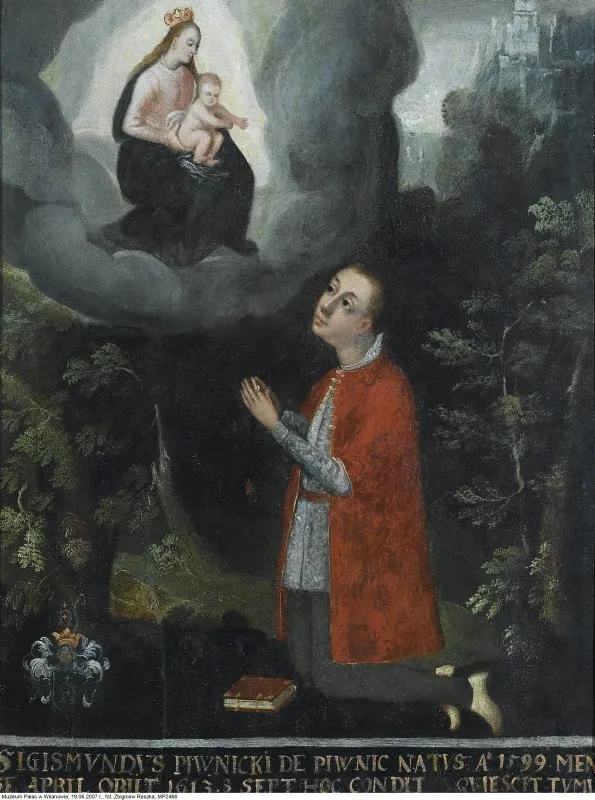
Epitaph of Zygmunt Piwnicki is an oil painting by the Early Baroque Italian artist Unknown. It dates from 1613 and is held in the collection of the National Museum in Warsaw. This oil painting serves as a funerary memorial for Zygmunt Piwnicki, depicting him in a moment of private devotion.
About this work
Overview
The inclusion of a coat of arms and an open book anchors the scene in personal and spiritual identity, reinforcing its function as a commemorative work.
This oil painting serves as a funerary memorial for Zygmunt Piwnicki, depicting him in a moment of private devotion. The composition centers on a kneeling figure surrounded by a somber natural landscape, with celestial figures above suggesting divine intercession. The inclusion of a coat of arms and an open book anchors the scene in personal and spiritual identity, reinforcing its function as a commemorative work.
Subject & Meaning
The central figure, Zygmunt Piwnicki, kneels in prayer, embodying piety and humility before the divine. Above him, a crowned woman holding an infant likely represents the Virgin Mary with the Christ Child, symbolizing heavenly protection and mercy. The open book at his feet may signify scripture or a devotional text, reinforcing the theme of faith as a guiding force in life and death.
Technique & Style
The artist employs chiaroscuro to model the figures with strong contrasts between light and shadow, enhancing the three-dimensionality of the kneeling man and the celestial forms. The dark, textured landscape recedes behind the illuminated central group, directing focus to the prayerful act. Brushwork is controlled yet expressive, balancing realism with symbolic clarity to serve the painting’s devotional purpose.
History & Provenance
Commissioned as an epitaph, the painting was likely created for a private chapel or family tomb in early modern Poland. The presence of Piwnicki’s coat of arms suggests noble lineage and the cultural practice of using religious imagery to affirm social status alongside spiritual aspiration. Its survival indicates continued veneration or preservation within a family or ecclesiastical context.
Context
In 17th-century Poland, devotional portraiture often merged personal commemoration with Catholic iconography, especially in the wake of the Counter-Reformation. Such works reinforced personal piety and the belief in intercession by saints and the Virgin. This painting reflects broader trends in Central European religious art, where earthly figures were shown in direct spiritual dialogue with heavenly ones.
Legacy
The painting remains a quiet testament to the intersection of individual identity and religious belief in early modern Poland. Though not widely known outside regional collections, it exemplifies how private commissions contributed to the visual language of faith. Its preservation offers insight into the domestic and devotional practices of the Polish nobility during a period of intense spiritual renewal.
Artist & collection

 Domestic Scene
 Giacomo and Cardinal Marco, investing Andrea, Abbot of San Zeno, with his Benefice
 The Nymph of Fontainebleau
 Portrait of a Woman
 Madonna and Child with Saints in the Enclosed Garden
 Venus and Minerva
 Family Group of Four on Sofa
 Wall painting from Room H of the Villa of P. Fannius Synistor at Boscoreale
 San Thomas Aquino
 Hl. Benedikt
 The Young Virgin
 St. John of God
 Annunciation (Josefa de Óbidos)
 The Virgin of Mercy Appearing to Saint Peter Nolasco
 Saint Dominic Receiving the Rosary from the Virgin Mary
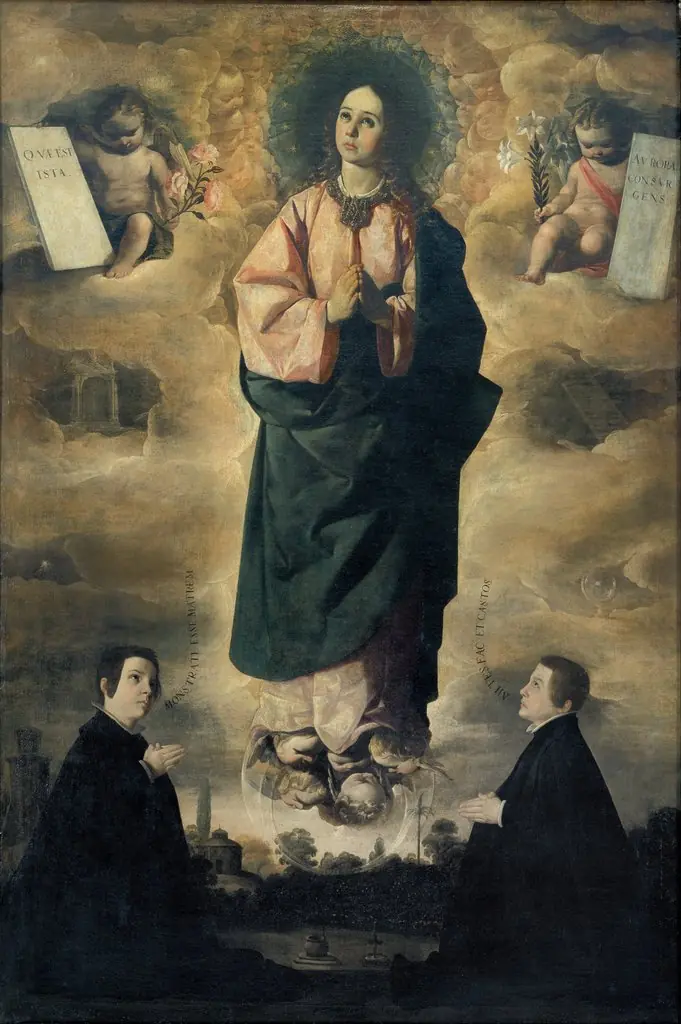 Immaculate Conception
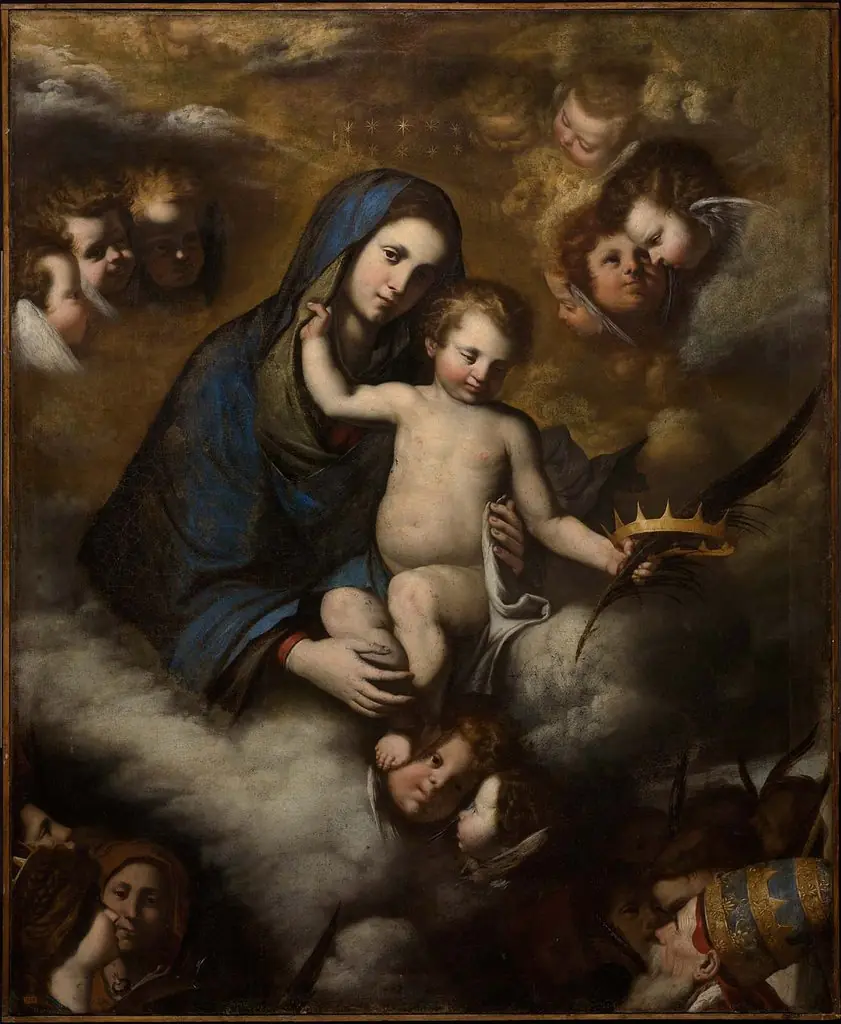 The Virgin and Child in Glory
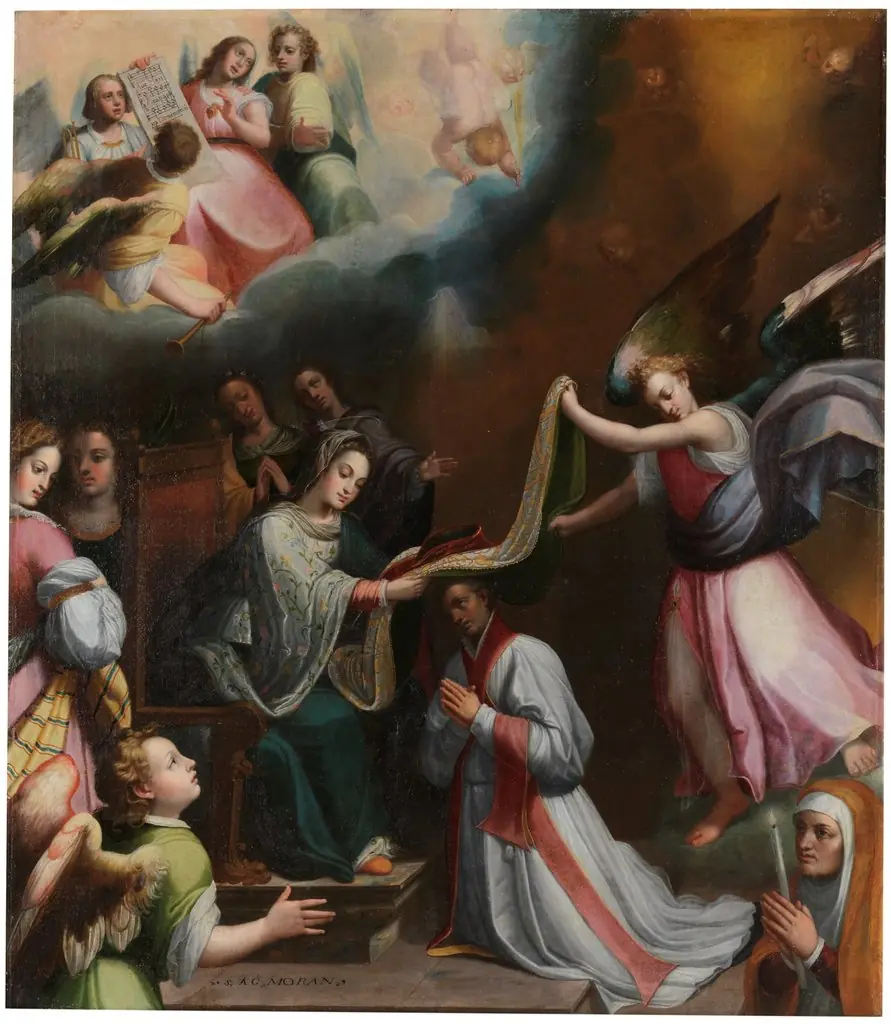 Imposición de la casulla a san Ildefonso
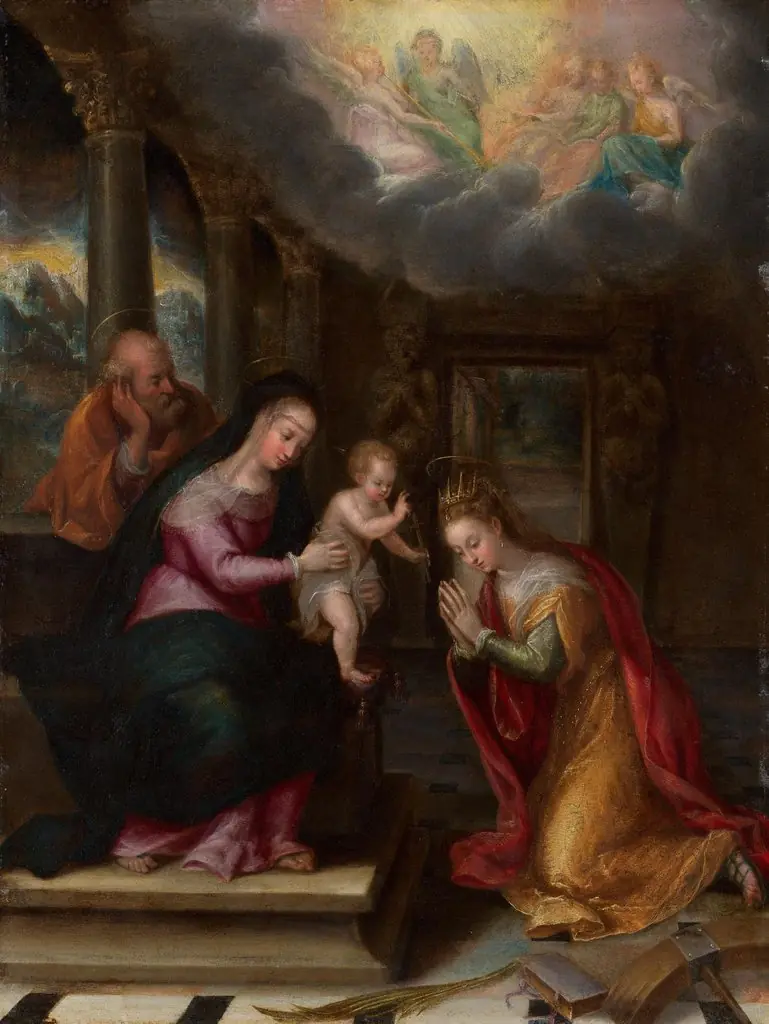 Mariage mystique de sainte Catherine
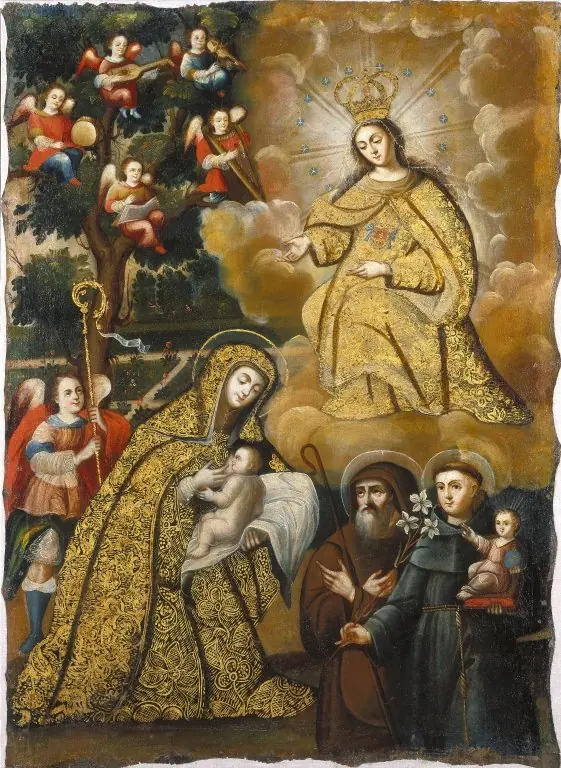 The Virgin of Mercy with Three Saints