Artwork
Imposición de la casulla a san Ildefonso
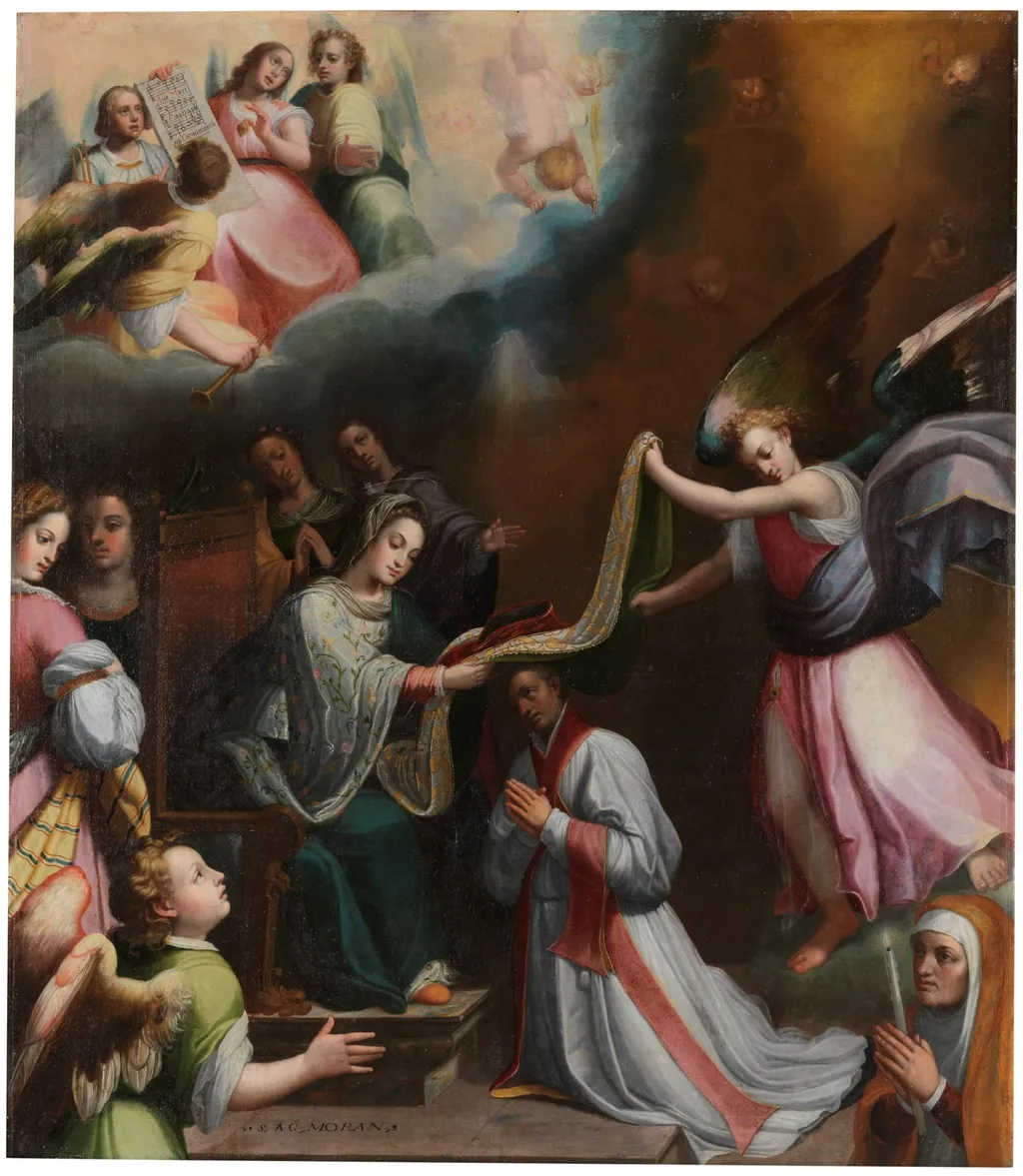
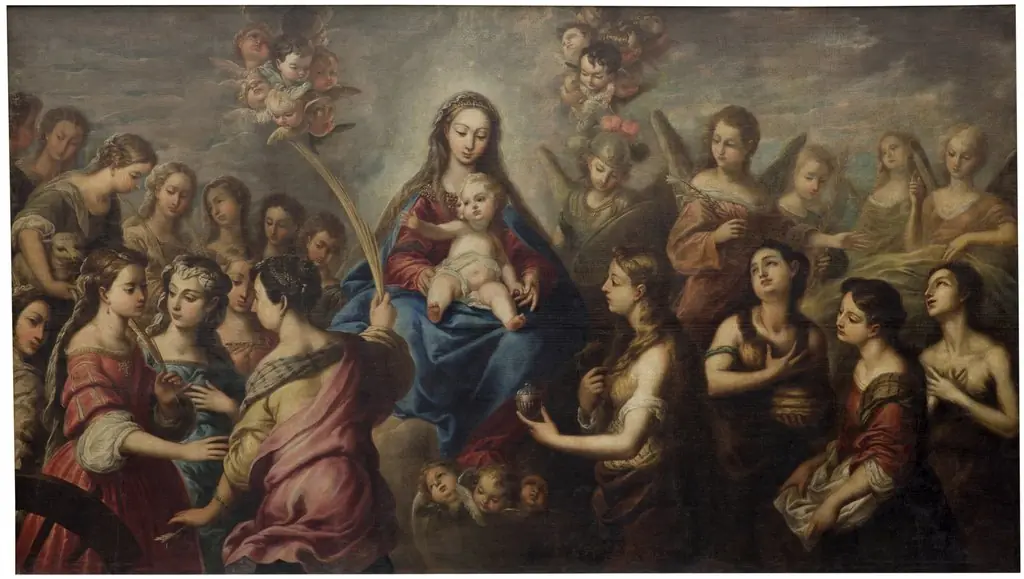
Imposición de la casulla a san Ildefonso is an oil painting by the Early Baroque Italian artist Santiago Morán. It dates from 1603 and is held in the collection of the Museo del Prado.
About this work
Overview
The composition centers on the ceremonial bestowal of a liturgical vestment, framed by a celestial gathering and earthly witnesses.
Painted in 1603 by Santiago Morán, this oil on canvas work depicts a sacred moment from the life of Saint Ildephonsus. Commissioned for religious devotion, it resides in the Museo del Prado in Madrid. The composition centers on the ceremonial bestowal of a liturgical vestment, framed by a celestial gathering and earthly witnesses. Its rich palette and dramatic lighting reflect early 17th-century Spanish devotional painting traditions.
Subject & Meaning
The scene illustrates the legendary moment when the Virgin Mary, appearing to Saint Ildephonsus, presents him with a chasuble as divine affirmation of his devotion. She is shown descending from heaven, attended by angels, while the saint kneels in humility. Below, a child reaching for fruit symbolizes earthly grace, and onlookers represent the faithful community. The narrative blends theological authority with intimate human response.
Technique & Style
Morán employs chiaroscuro to model forms with soft transitions between light and shadow, enhancing the three-dimensionality of figures and fabrics. The Virgin’s blue robe and gold trim catch the light, creating a luminous focus, while angelic wings glow with delicate highlights. Skin tones are rendered with subtle gradations, and the background recedes into muted tones, directing attention to the central act of bestowal.
History & Provenance
Commissioned shortly after Morán’s return to Spain from Italy, the painting entered the Spanish royal collection in the early 1600s. It was later transferred to the Museo del Prado following the secularization of church holdings in the 19th century. Its continuous presence in state collections confirms its recognized importance within Spain’s religious art heritage.
Context
Created during the Counter-Reformation, the painting aligns with Catholic efforts to reinforce doctrinal authority through visual devotion. The emphasis on Marian intercession and clerical sanctity reflects broader trends in Spanish religious art. Morán’s style, influenced by Italian Mannerism yet grounded in Iberian naturalism, bridges regional and international currents of the period.
Legacy
Though not widely known outside Spain, the work exemplifies the devotional intensity and technical refinement of early Baroque Spanish painting. It remains a key reference for understanding how religious narratives were visually codified in post-Tridentine Spain. Its preservation in the Prado ensures ongoing scholarly and public engagement with its quiet, reverent imagery.
Own this work as a print
Artist & collection

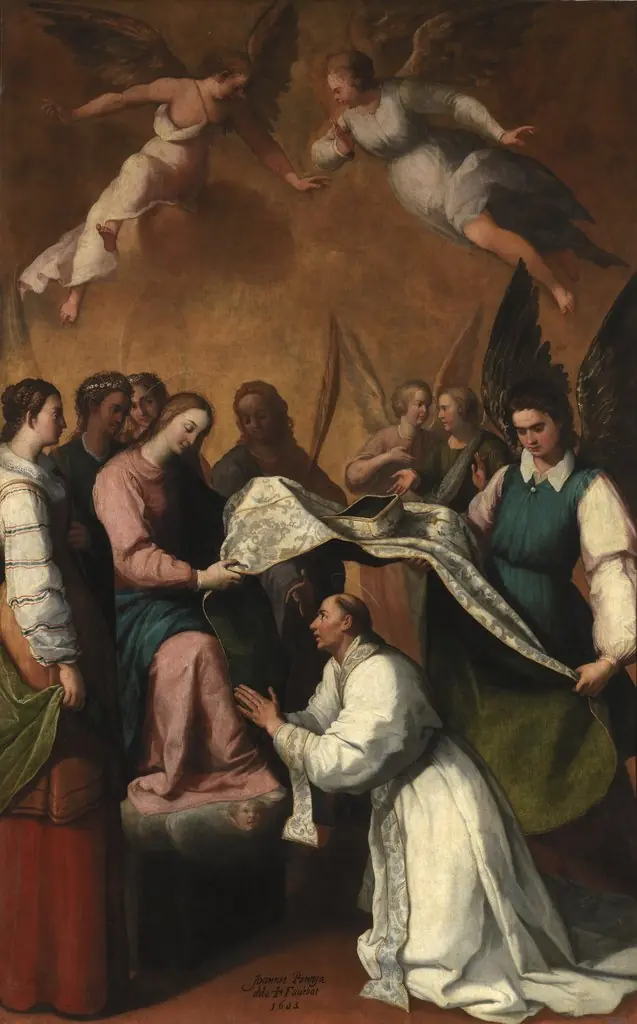 Imposición de la casulla a San Ildefonso
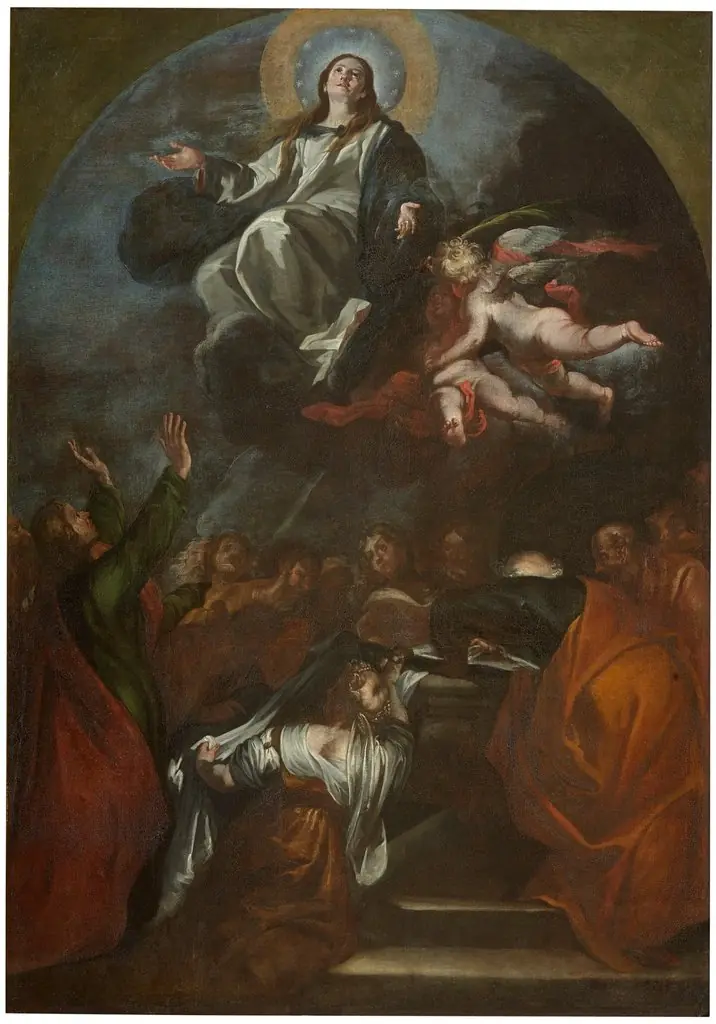 The Assumption of the Virgin
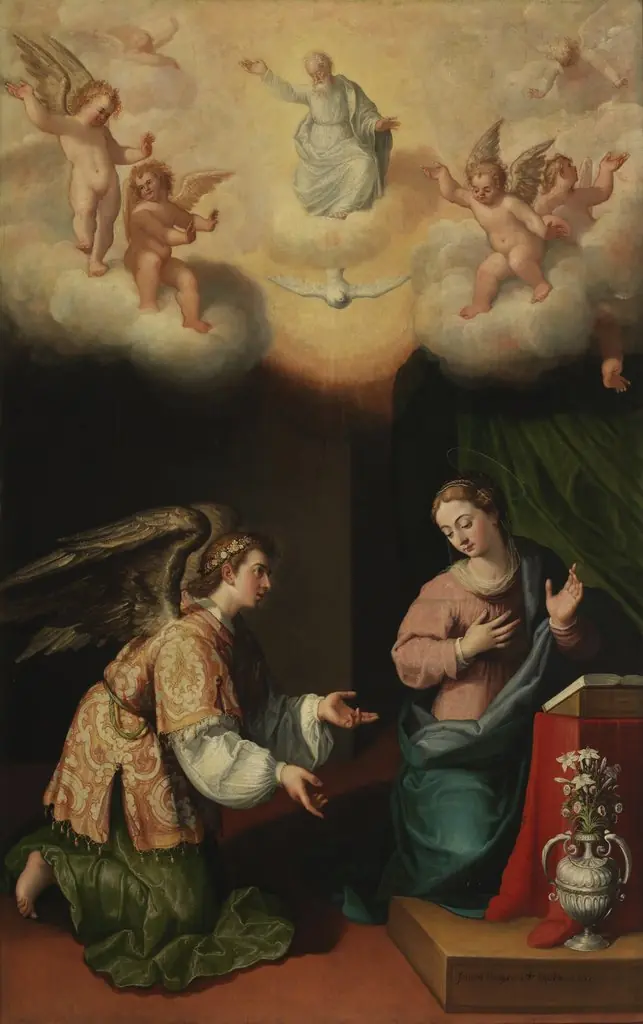 The Annunciation
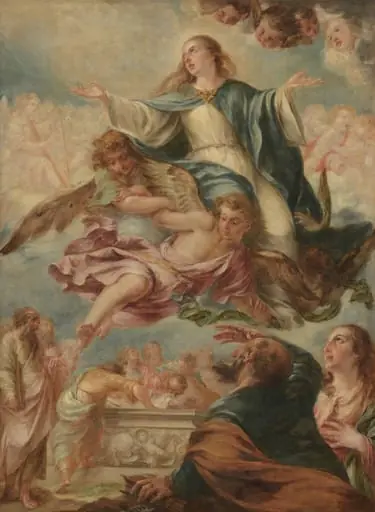 The Assumption of the Virgin
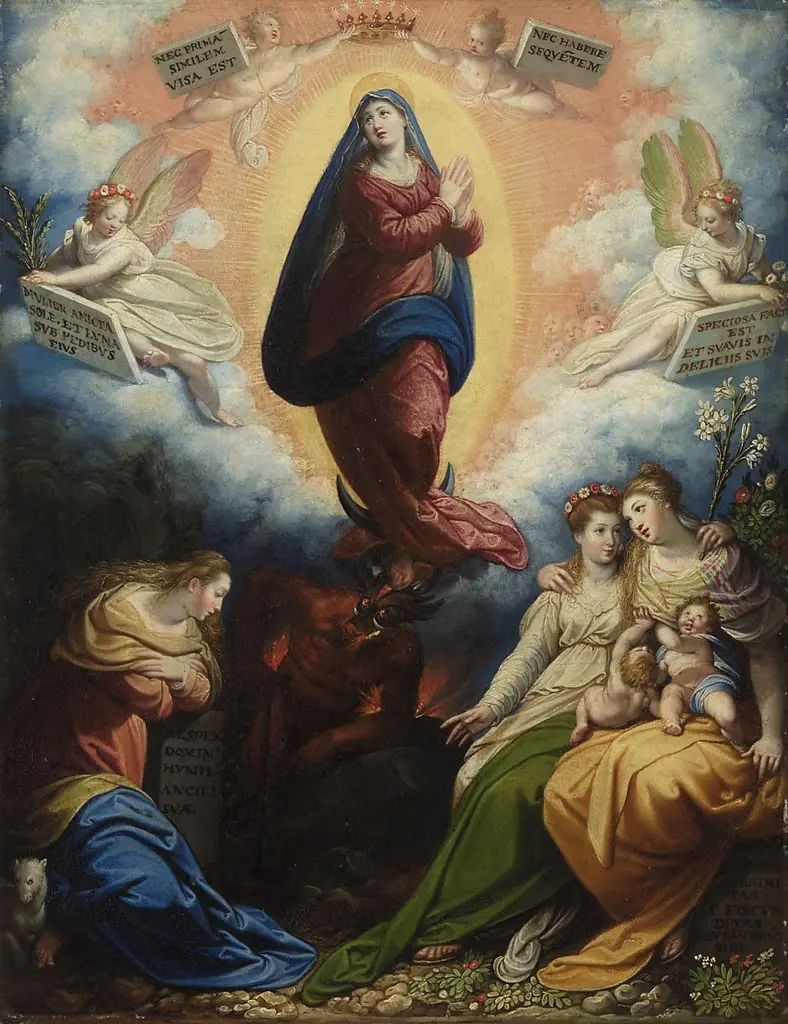 Immaculata
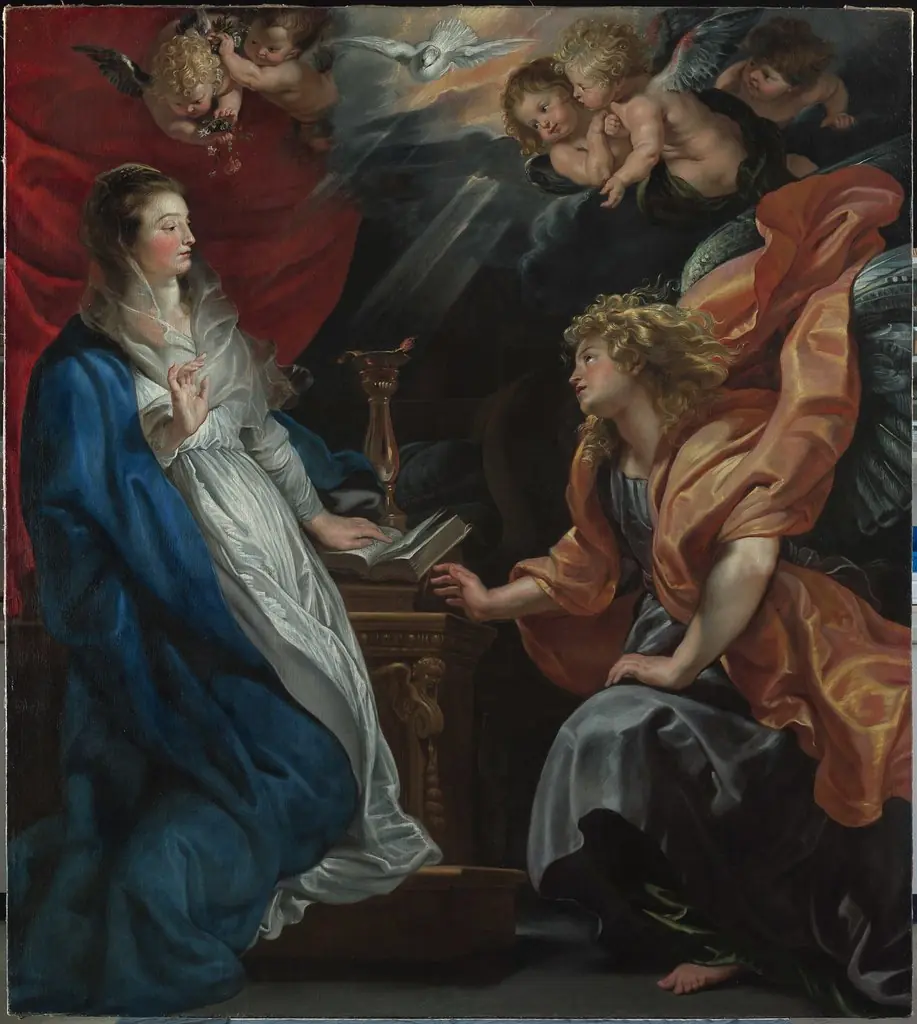 The Annunciation
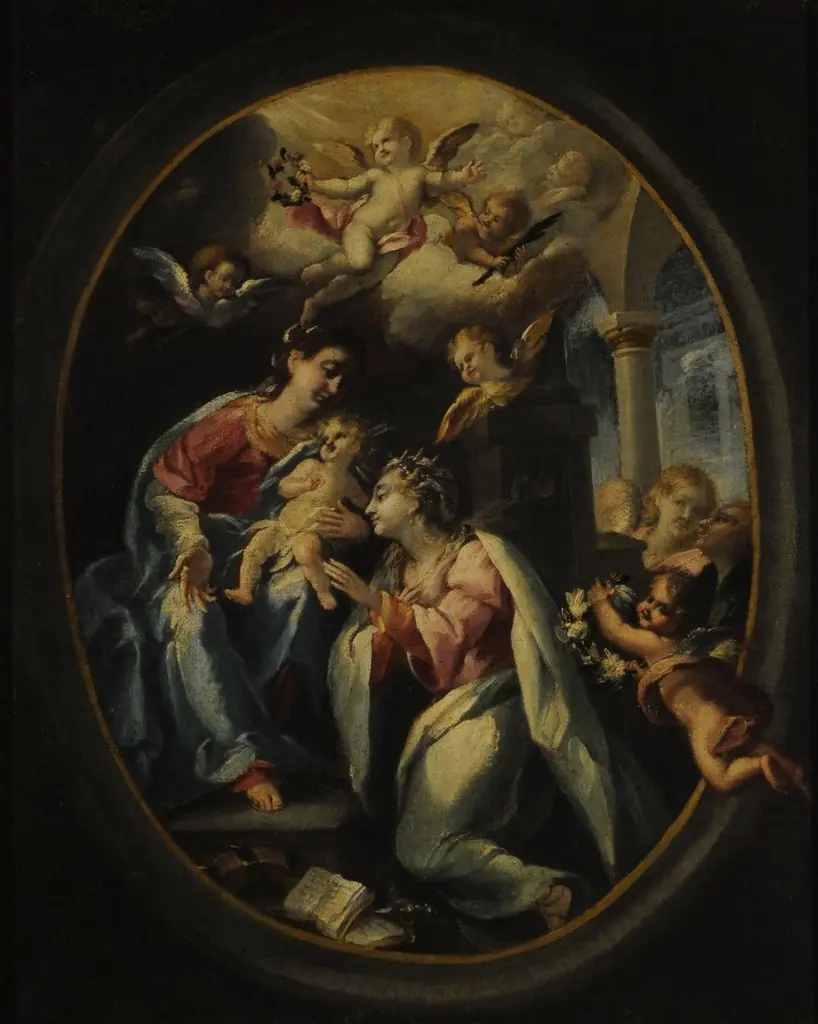 Mystical weddings of Santa Catalina
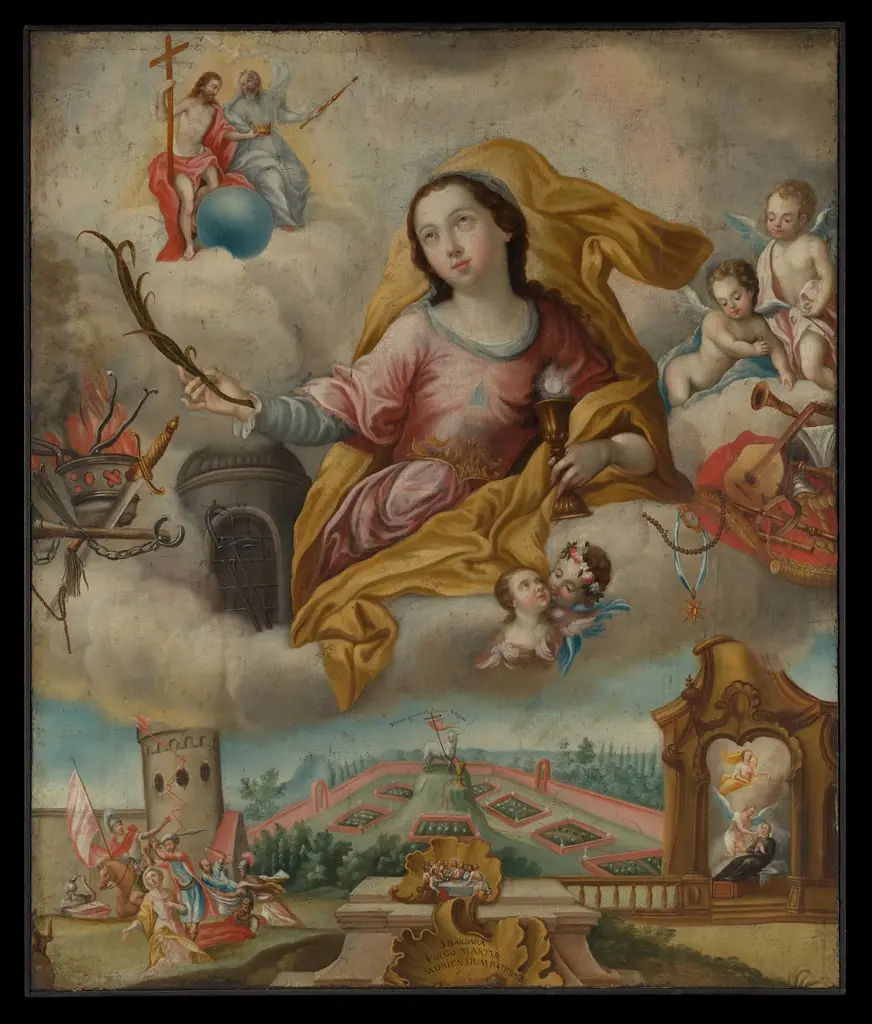 Saint Barbara
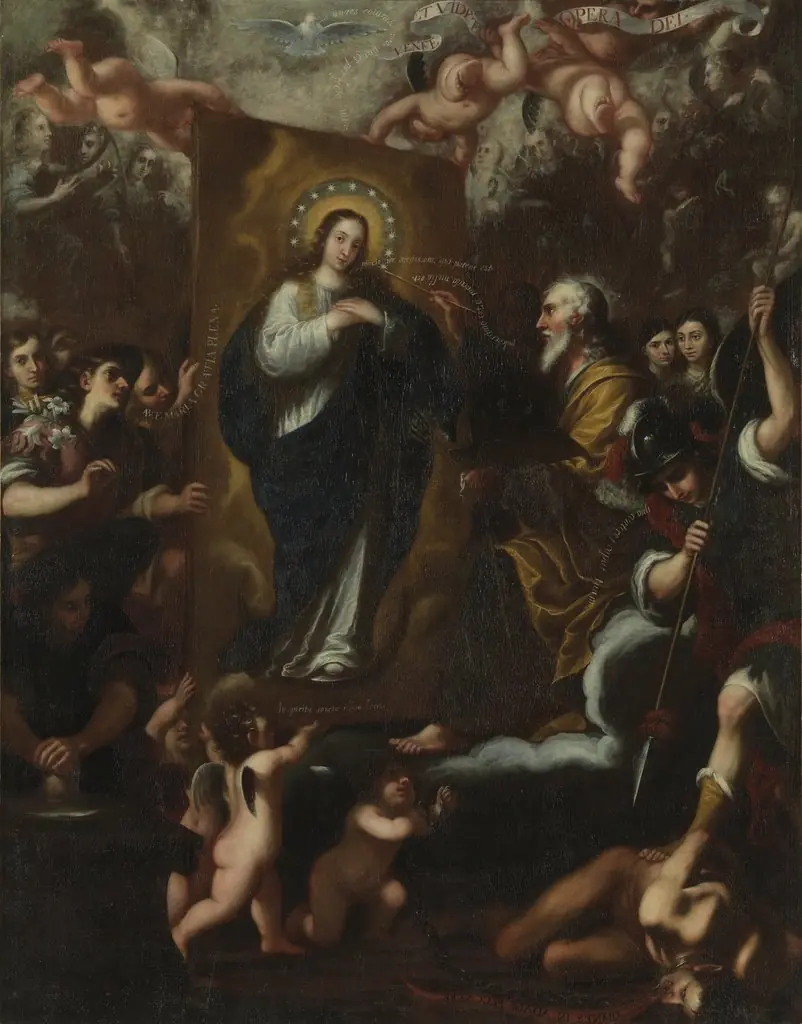 God the Father painting the Immaculate Conception
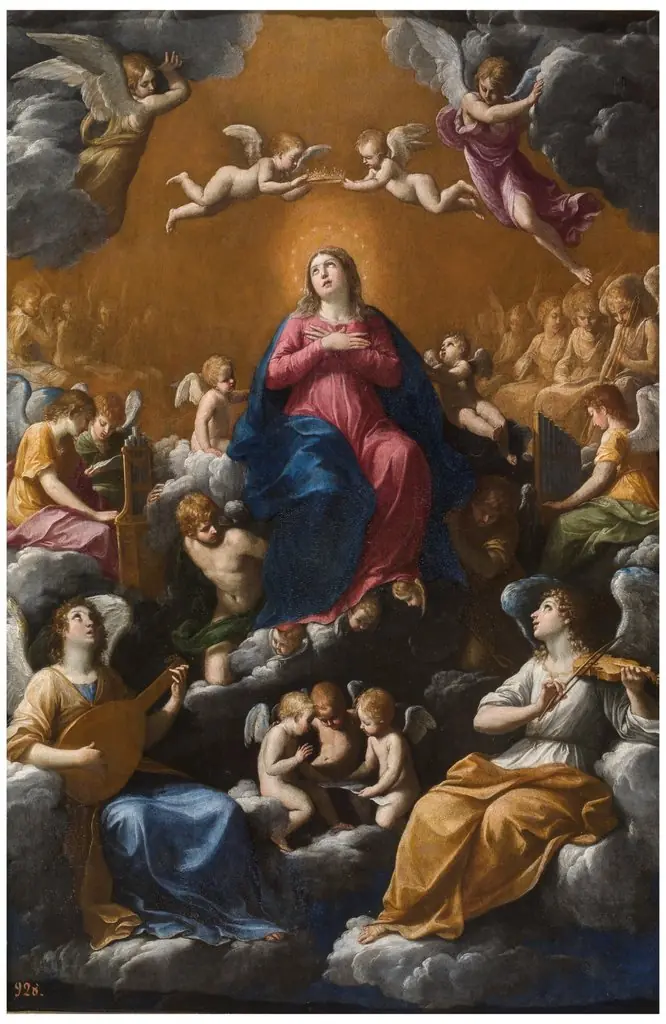 La Asunción y Coronación de la Virgen
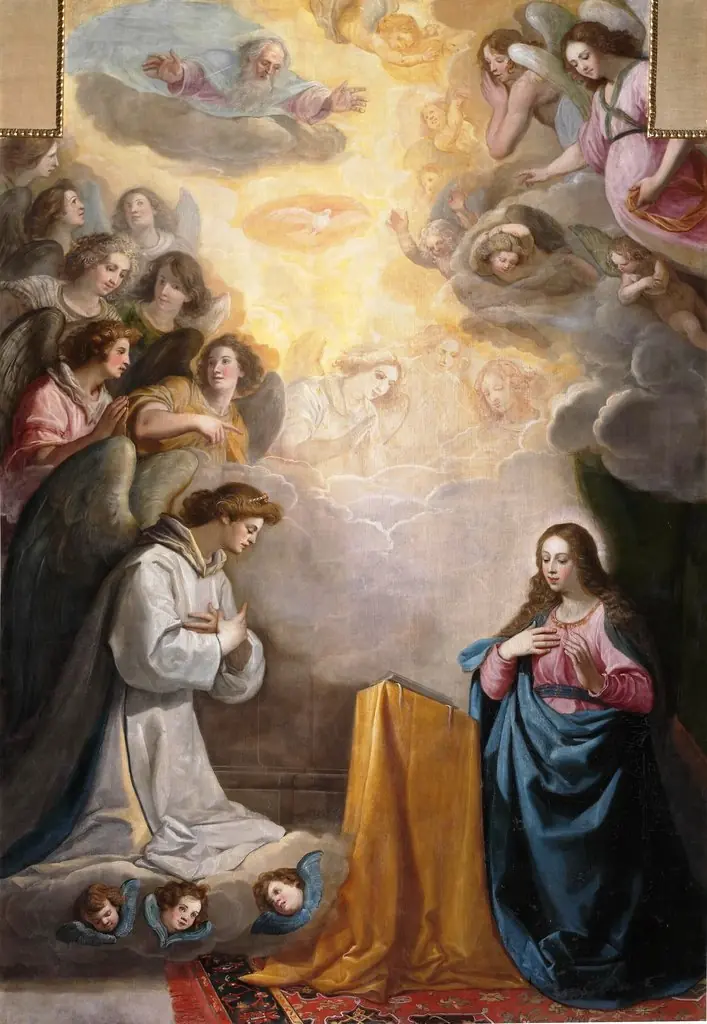 The Annunciation
 La Virgen con santos y ángeles