Artwork
The supper at Emmaus
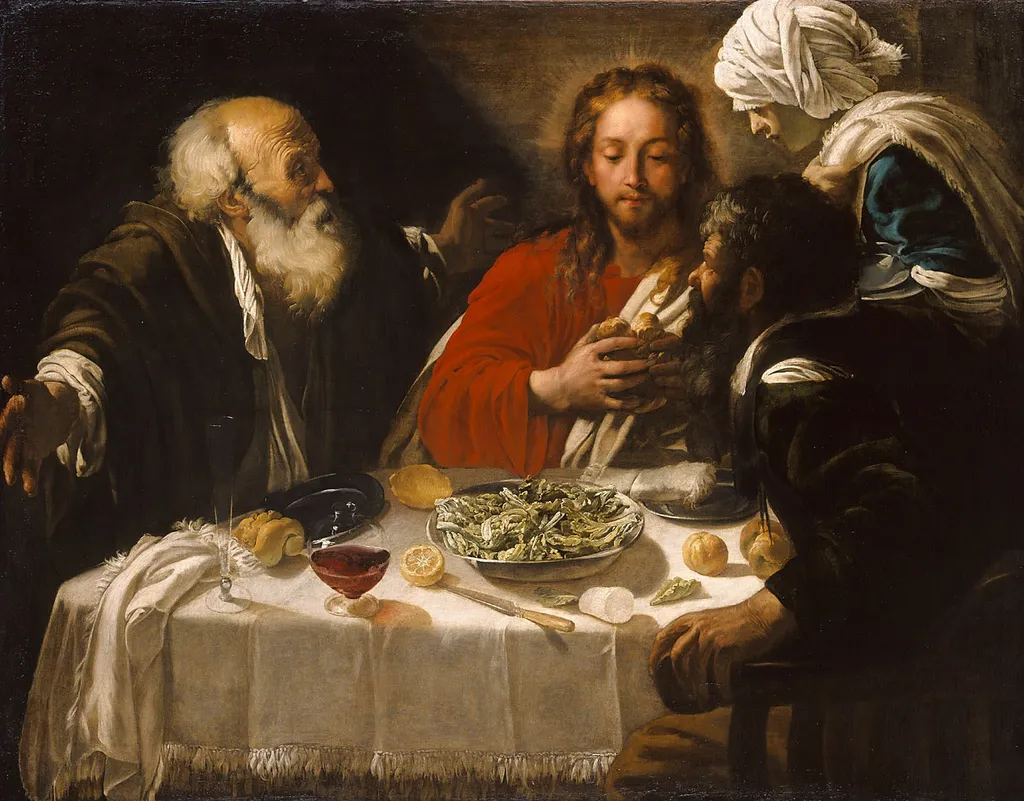
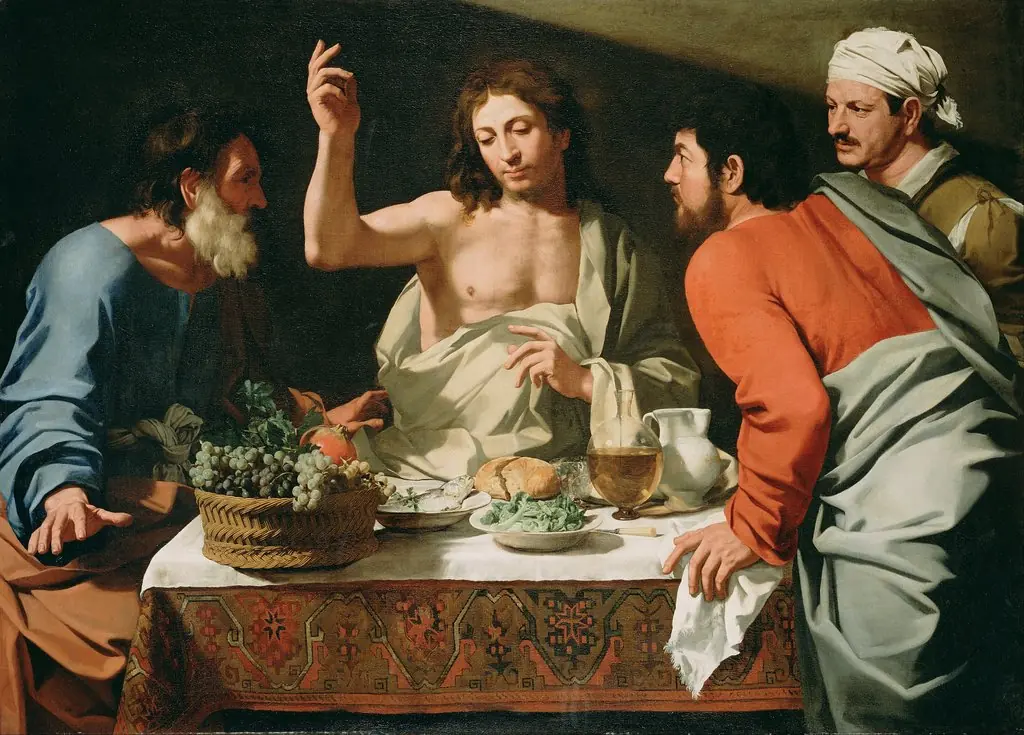
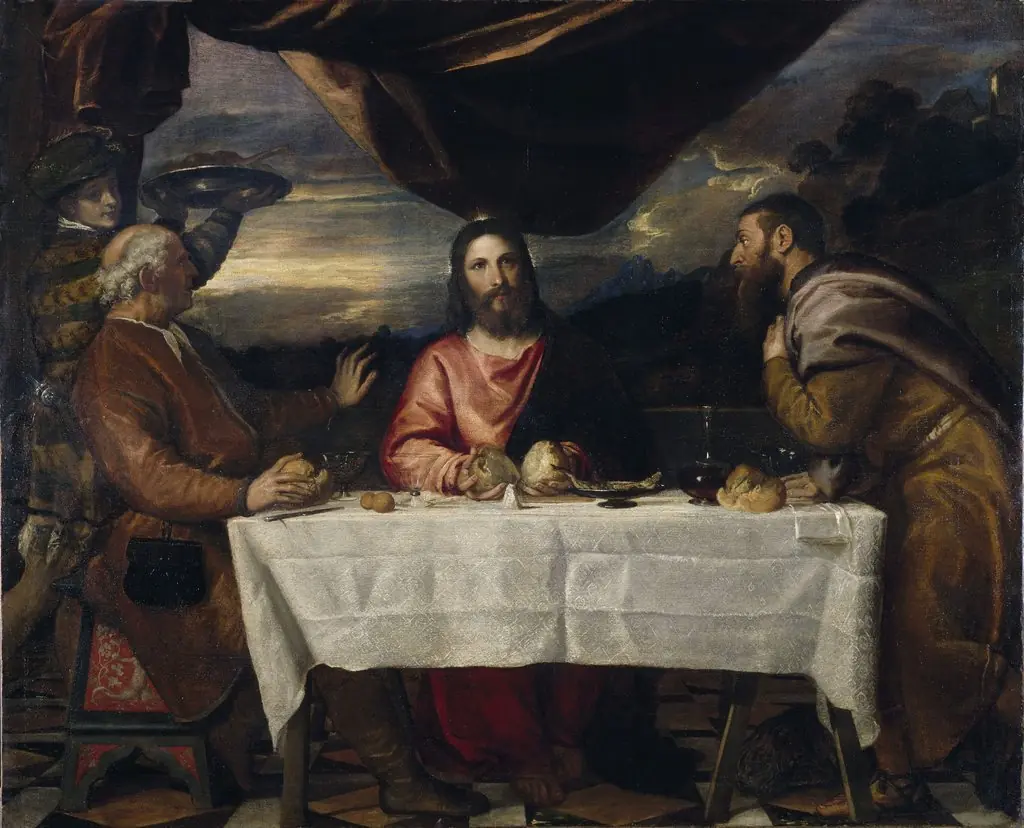
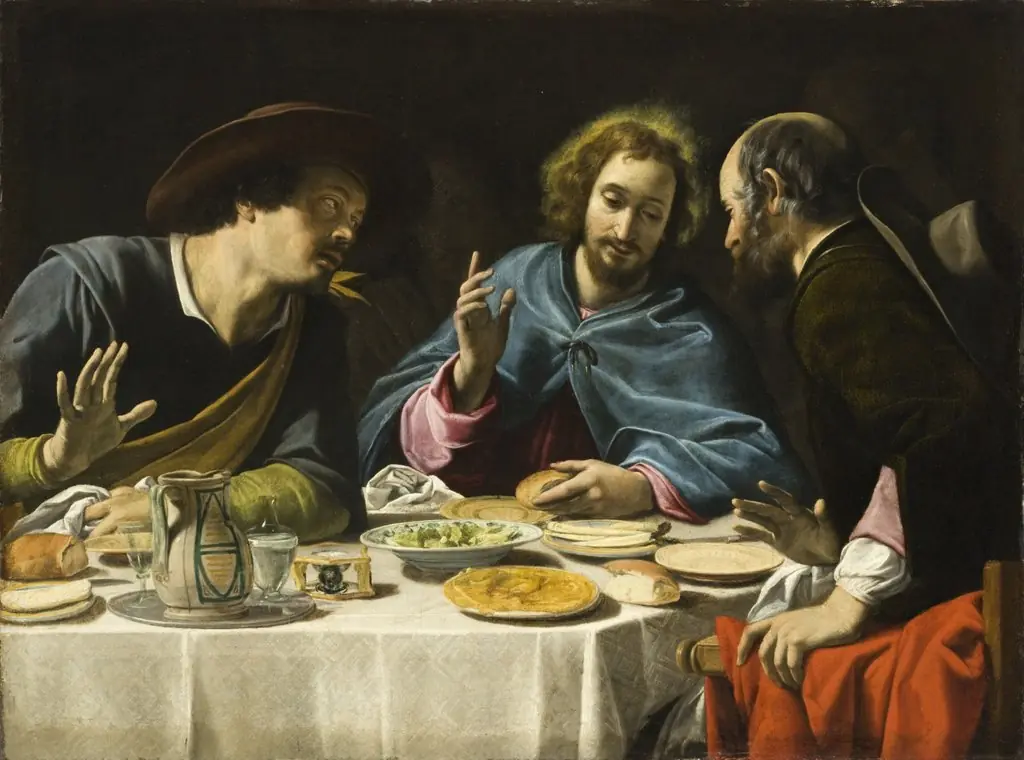
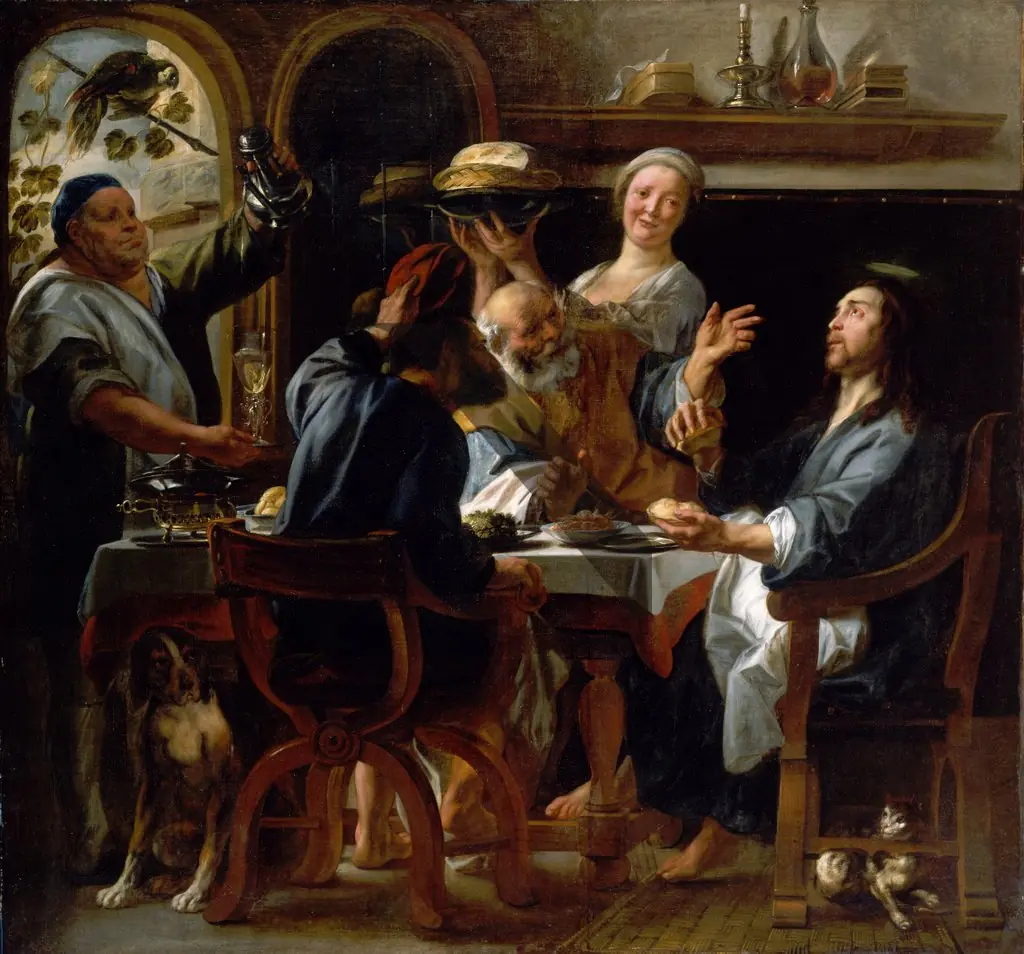
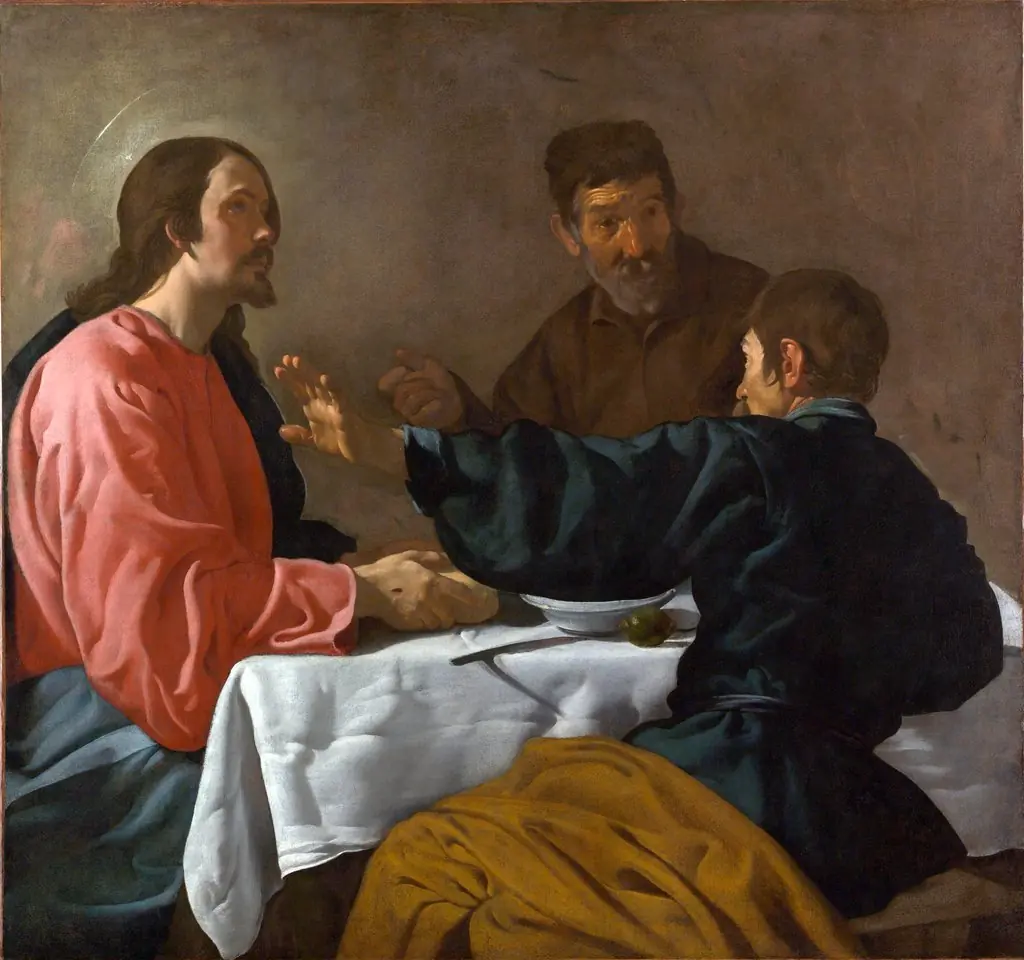
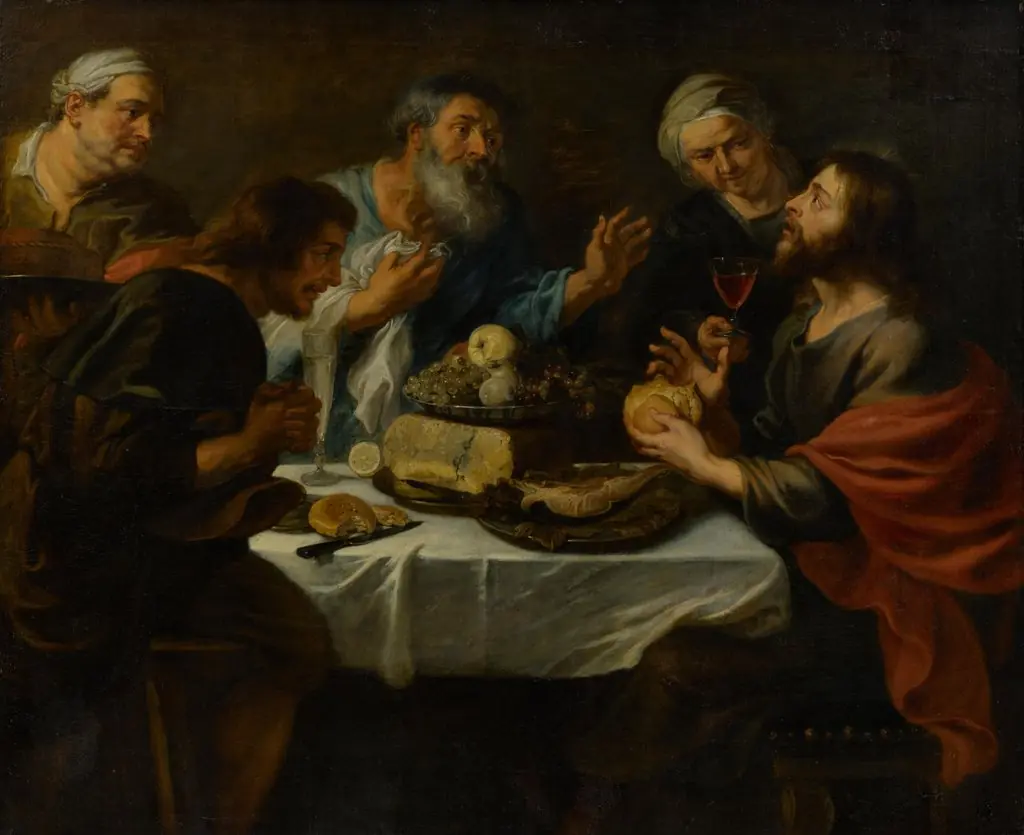
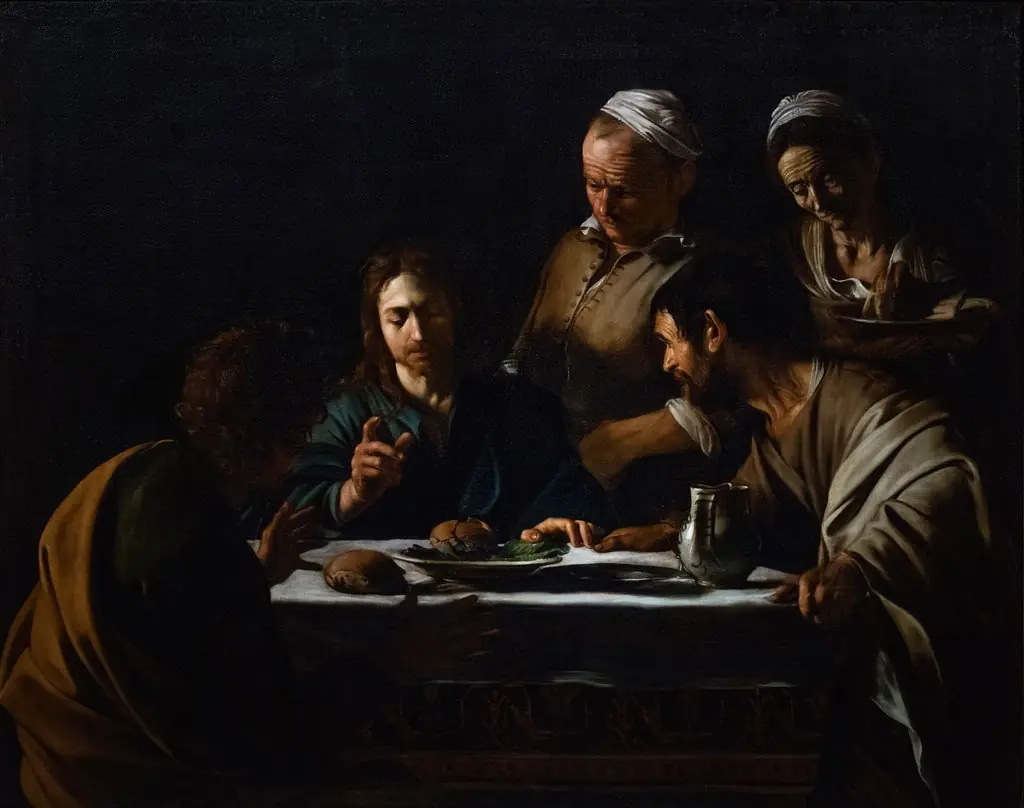
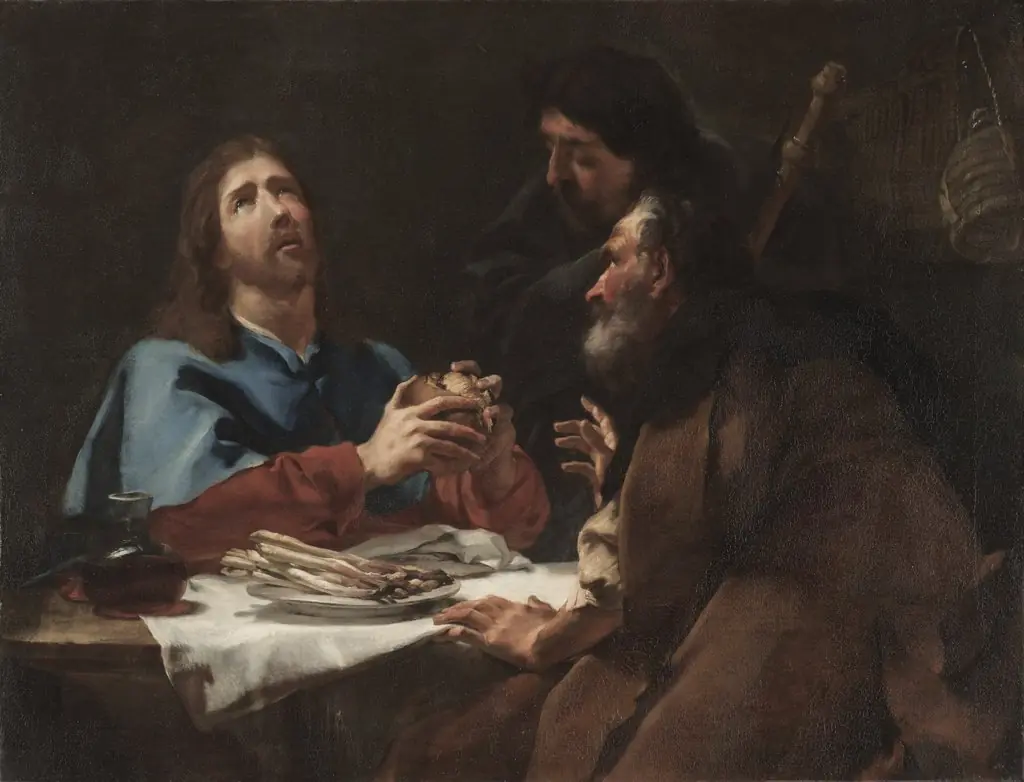
The supper at Emmaus is an oil painting by the Early Baroque Italian artist Unknown. It dates from 1621 and is held in the collection of the Kunsthistorisches Museum. The canvas presents a modest banquet set upon a long table, where bread, a fish, and a dark cup lie illuminated against a dim interior.
About this work
Overview
The composition is dominated by a strong contrast of light and shadow that isolates the meal and the participants from the surrounding darkness.
The canvas presents a modest banquet set upon a long table, where bread, a fish, and a dark cup lie illuminated against a dim interior. Three figures occupy the scene: one in red, another bowed over the plate, and a third wearing a white turban, observing from the edge. The composition is dominated by a strong contrast of light and shadow that isolates the meal and the participants from the surrounding darkness.
Subject & Meaning
The work depicts the biblical episode of the disciples’ supper in Emmaus, capturing the moment of recognition when the risen Christ reveals himself. The gestures—one figure breaking bread, another looking downward—suggest a quiet exchange, while the turbaned observer adds a contemplative distance. The simple fare underscores themes of hospitality, revelation, and spiritual insight within an ordinary setting.
Technique & Style
Employing a dramatic chiaroscuro, the painter directs a focused beam onto the table, causing the food and faces to emerge with luminous clarity. The surrounding gloom recedes, creating a theatrical spotlight effect. Brushwork is rendered with smooth modeling for the illuminated surfaces, while the shadows are rendered in broader, softer tones, enhancing depth and emphasizing the narrative focal point.
Context
Created in the tradition of religious genre paintings, the piece reflects the influence of Baroque artists who explored light as a narrative device. Its oil medium allows for rich coloration, particularly in the red garment, and the subtle rendering of textures such as the crust of bread and the sheen of the cup. The composition aligns with the era’s emphasis on emotional engagement through visual contrast.
Artist & collection

 Domestic Scene
 Giacomo and Cardinal Marco, investing Andrea, Abbot of San Zeno, with his Benefice
 The Nymph of Fontainebleau
 Portrait of a Woman
 Madonna and Child with Saints in the Enclosed Garden
 Venus and Minerva
 Family Group of Four on Sofa
 Wall painting from Room H of the Villa of P. Fannius Synistor at Boscoreale