Artwork
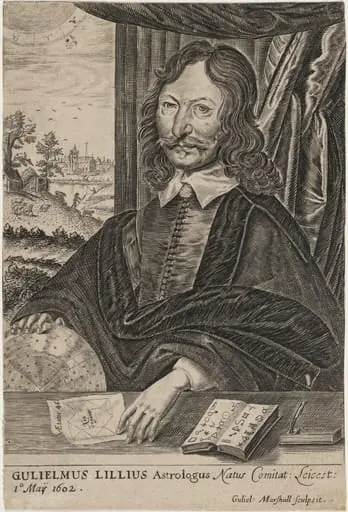
William Lilly
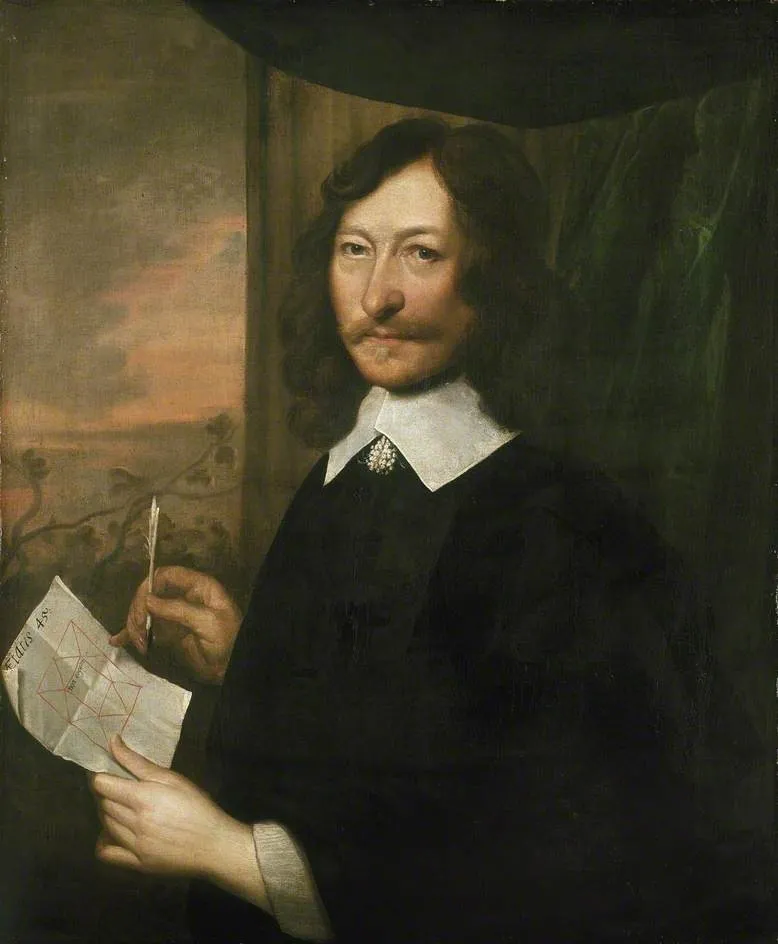
William Lilly is an oil painting by Unknown. It dates from 1646 and is held in the collection of the Ashmolean Museum.
About this work
The use of oil paint and the attention to detail in the subject's clothing and accessories indicate a high level of craftsmanship.
This painting depicts a man with long, dark hair and a mustache, wearing a black robe with a white collar. He holds a piece of paper in his right hand, featuring red lines and writing, and a quill pen in his left. The background is a mix of dark and light colors, with a subtle landscape visible behind the subject. The man's attire and the style of the painting suggest a formal portrait from the 17th century. The use of oil paint and the attention to detail in the subject's clothing and accessories indicate a high level of craftsmanship.
Overview
The work is an oil painting portraying a seated male figure dressed in a black robe with a white collar, his dark hair long and moustache prominent. He holds a paper marked with red lines and script in his right hand, while a quill rests in his left. The background blends chiaroscuro tones and hints at a distant landscape, situating the portrait within a formal 17th‑century visual language.
Subject & Meaning
The sitter appears to be a learned or official individual, suggested by his scholarly attire and the presence of a document and writing implement. The red‑inked paper may indicate a specific text or decree, hinting at the figure’s role in administration, law, or academia, though the exact identity remains unspecified.
Technique & Style
Executed in oil on canvas, the painting demonstrates meticulous rendering of textures: the sheen of the robe, the softness of the hair, and the metallic glint of the quill. Light falls across the figure, creating subtle modeling that enhances three‑dimensionality, while the background’s muted palette recedes to focus attention on the subject.
History & Provenance
The portrait’s stylistic cues—costume, composition, and handling of oil—place it firmly in the 1600s, aligning with the conventions of European court and academic portraiture of that era. No further provenance details are supplied, leaving its subsequent ownership and exhibition history undocumented.
Context
During the 17th century, portraiture served to affirm status, intellectual achievement, and official authority. The inclusion of writing tools and a marked document reflects the period’s emphasis on literacy and bureaucratic power, situating the work within a broader cultural focus on record‑keeping and scholarly identity.
Artist & collection

 Domestic Scene
 Giacomo and Cardinal Marco, investing Andrea, Abbot of San Zeno, with his Benefice
 The Nymph of Fontainebleau
 Portrait of a Woman
 Madonna and Child with Saints in the Enclosed Garden
 Venus and Minerva
 Family Group of Four on Sofa
 Wall painting from Room H of the Villa of P. Fannius Synistor at Boscoreale
 Portrait of Francois Lotin de Charny
 Charles I
 John Selden
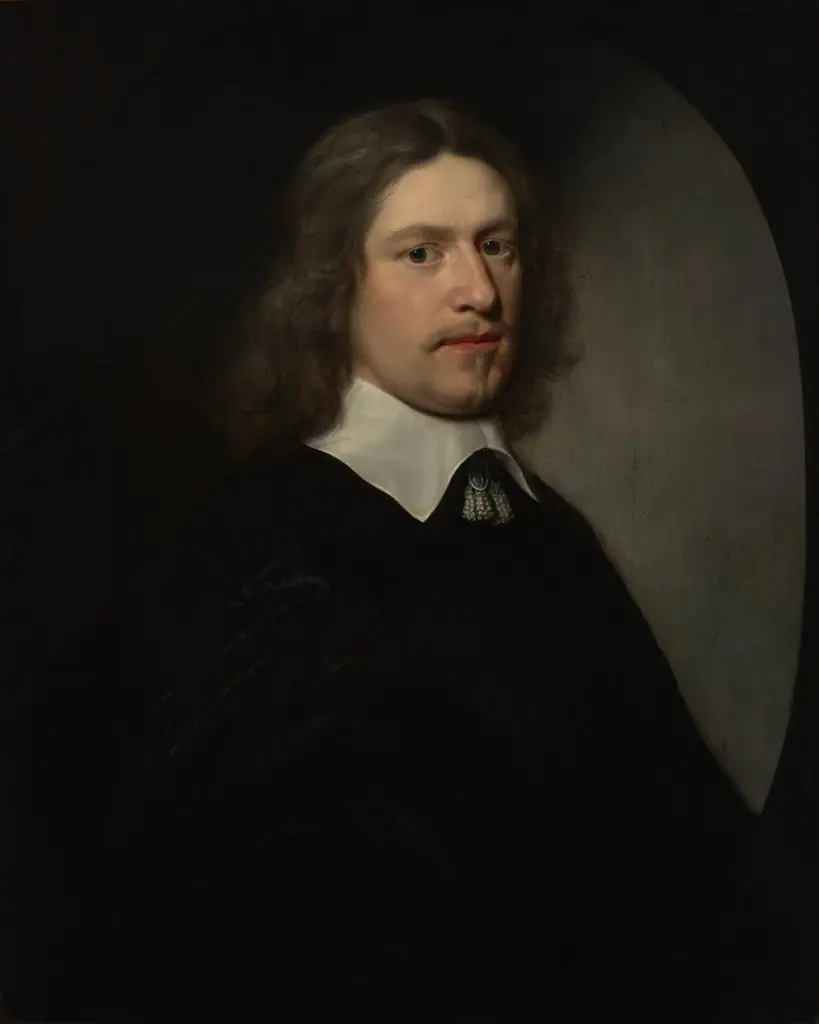 Portrait of a Man
 Presumed portrait of Remi Tronchot, alderman of Paris
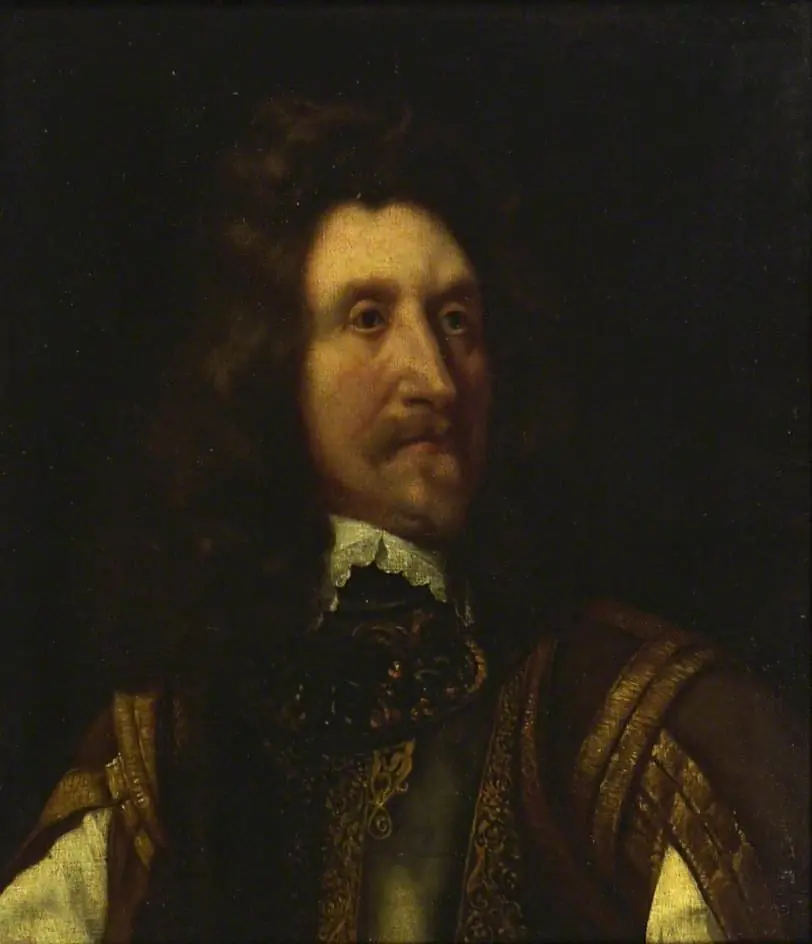 Edward Montagu, 2nd Earl of Manchester
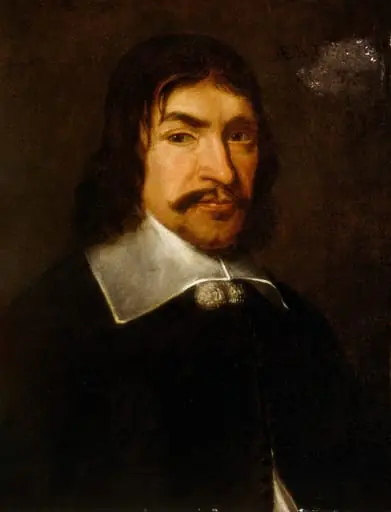 Portrait of a Man
 Portrait of a Man
 Portrait of Claudius Salmasius, professor at Leiden
 Portrait of a Man
 Portrait of a man
 William Lilly, Astrologer