Artwork
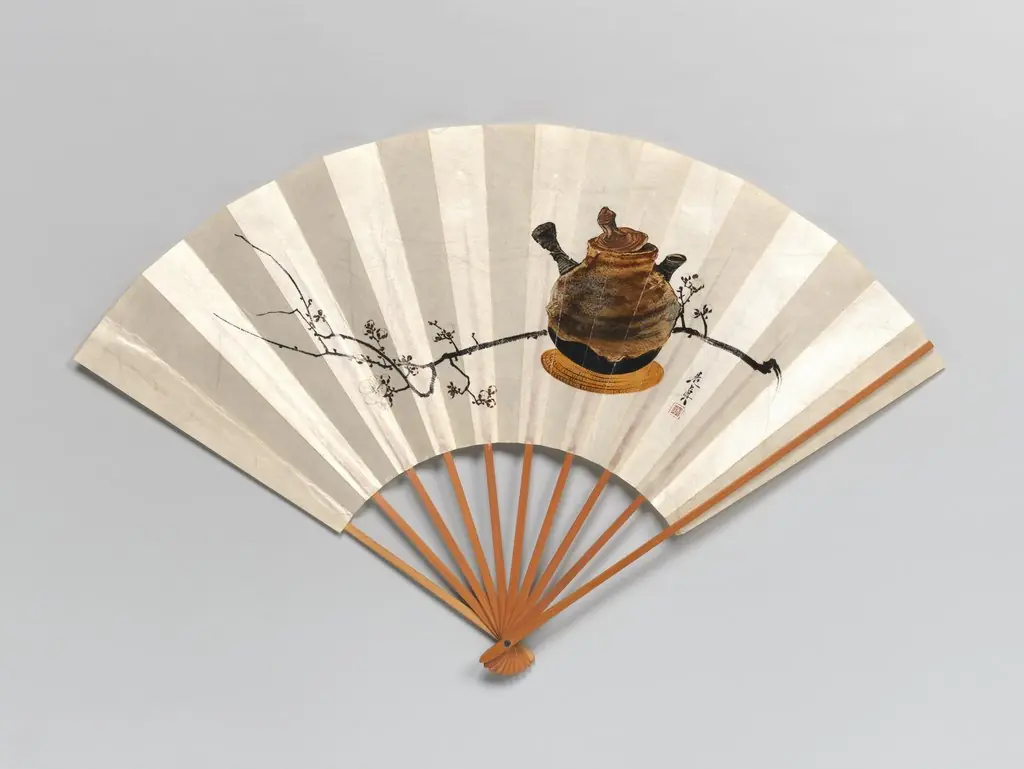
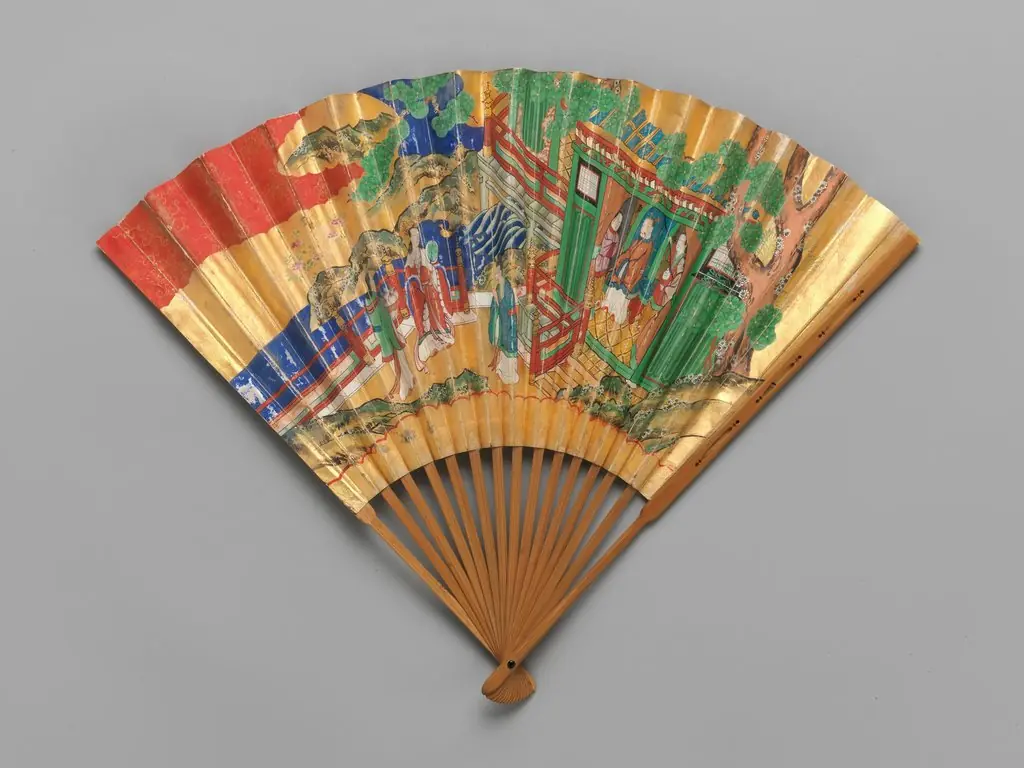
Chūkei Fan with Queen Mother of the West and King Mu of Zhou (obverse) and Plum Tree and Young Pines (reverse)
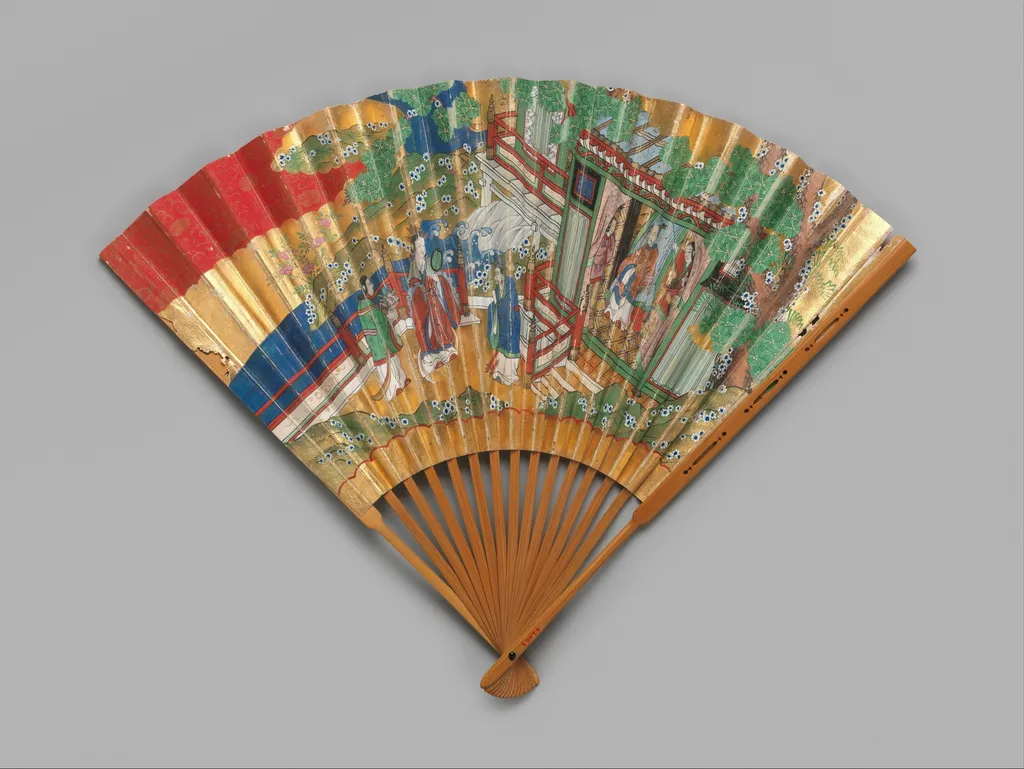
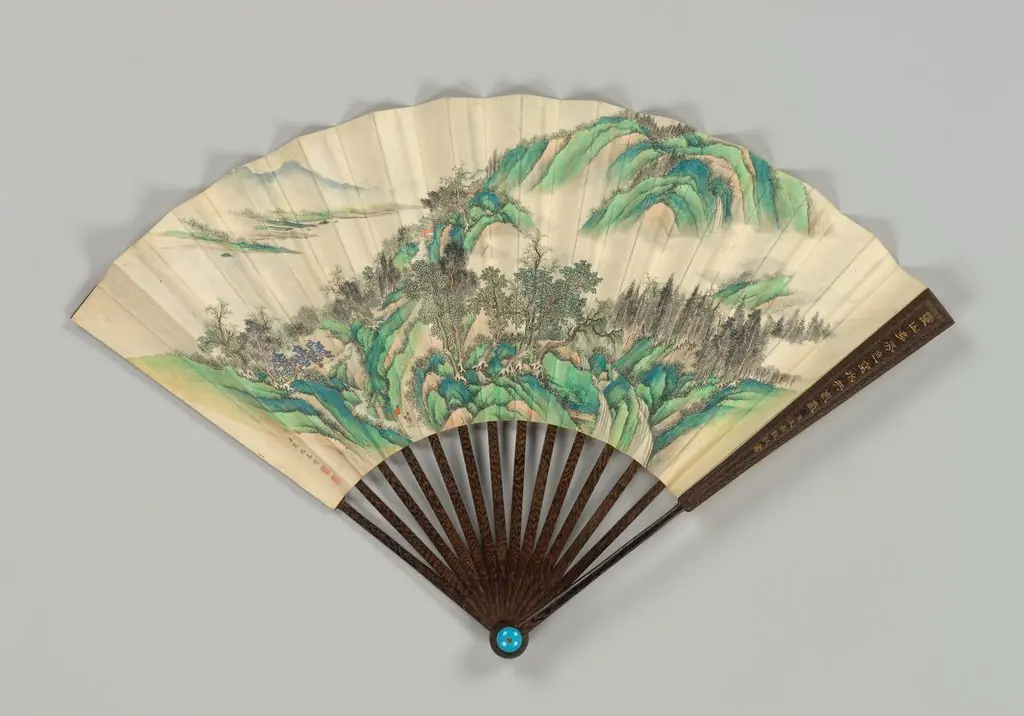
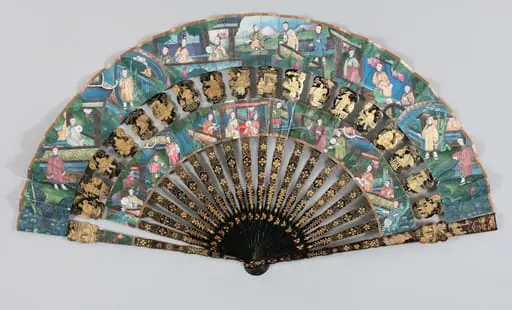
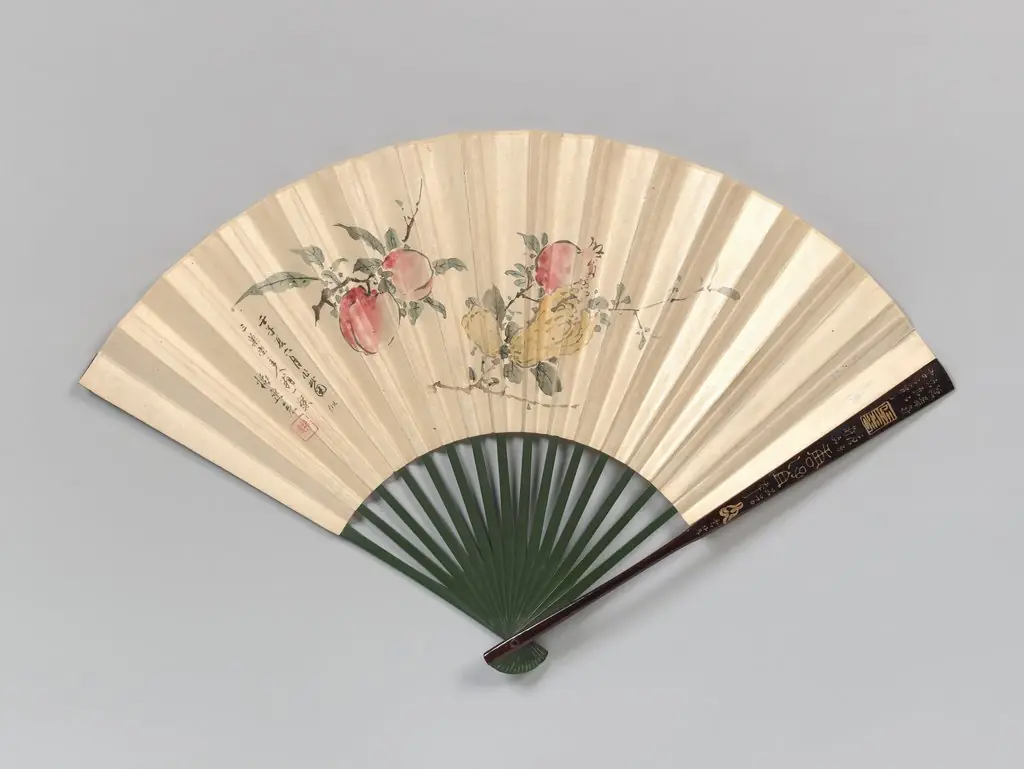
Chūkei Fan with Queen Mother of the West and King Mu of Zhou (obverse) and Plum Tree and Young Pines (reverse) is an unspecified painting by the Ukiyo-e artist Unknown. It dates from 1824 and is held in the collection of the Metropolitan Museum of Art. The object is a hand‑held fan painted on a thin, flexible surface, likely silk or paper, mounted on a curved frame with a long handle.
About this work
Overview
The object is a hand‑held fan painted on a thin, flexible surface, likely silk or paper, mounted on a curved frame with a long handle. Its decorative scheme is divided between two sides: the front (obverse) depicts a mythological gathering, while the back (reverse) presents a natural landscape.
Subject & Meaning
The reverse portrays a stylized plum tree with budding branches and youthful pines, symbols traditionally associated with resilience and renewal.
The obverse scene features the Queen Mother of the West, a prominent deity in Chinese mythology, alongside King Mu of Zhou, a historical ruler celebrated for his legendary journeys. Their encounter reflects themes of divine patronage and imperial virtue. The reverse portrays a stylized plum tree with budding branches and youthful pines, symbols traditionally associated with resilience and renewal.
Technique & Style
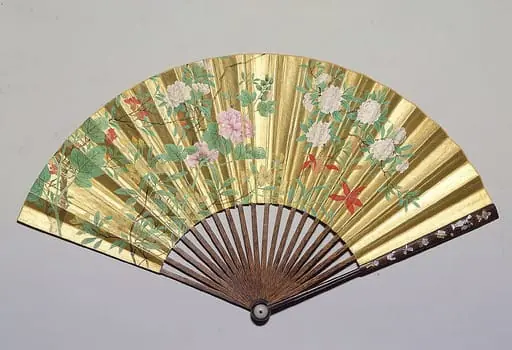
Executed with mineral pigments on a gold‑toned ground, the fan employs a vivid palette of red, blue, green and gold. Fine brushwork renders the intricate costumes and accessories of the figures, while the landscape side uses more fluid, calligraphic strokes to suggest foliage and bark, characteristic of Chinese decorative painting on portable objects.
History & Provenance
The fan is identified as a Chinese painted fan, a format popular from the Tang dynasty onward for both functional and ceremonial use. Specific provenance details are not recorded, but its iconography aligns with courtly tastes of the early medieval period, when depictions of the Queen Mother and King Mu were common in elite art.
Context
Fans of this type served as status objects, often exchanged as gifts among aristocrats and officials. The juxtaposition of mythic narrative and natural motifs reflects a broader aesthetic principle in Chinese art that balances human affairs with the cycles of nature.
Legacy
Such painted fans illustrate the integration of fine art techniques into everyday objects, offering insight into the visual culture of historic Chinese courts and the continued reverence for mythological and botanical symbolism.
Artist & collection

 Domestic Scene
 Giacomo and Cardinal Marco, investing Andrea, Abbot of San Zeno, with his Benefice
 The Nymph of Fontainebleau
 Portrait of a Woman
 Madonna and Child with Saints in the Enclosed Garden
 Venus and Minerva
 Family Group of Four on Sofa
 Wall painting from Room H of the Villa of P. Fannius Synistor at Boscoreale