Artwork
Adam and Eve
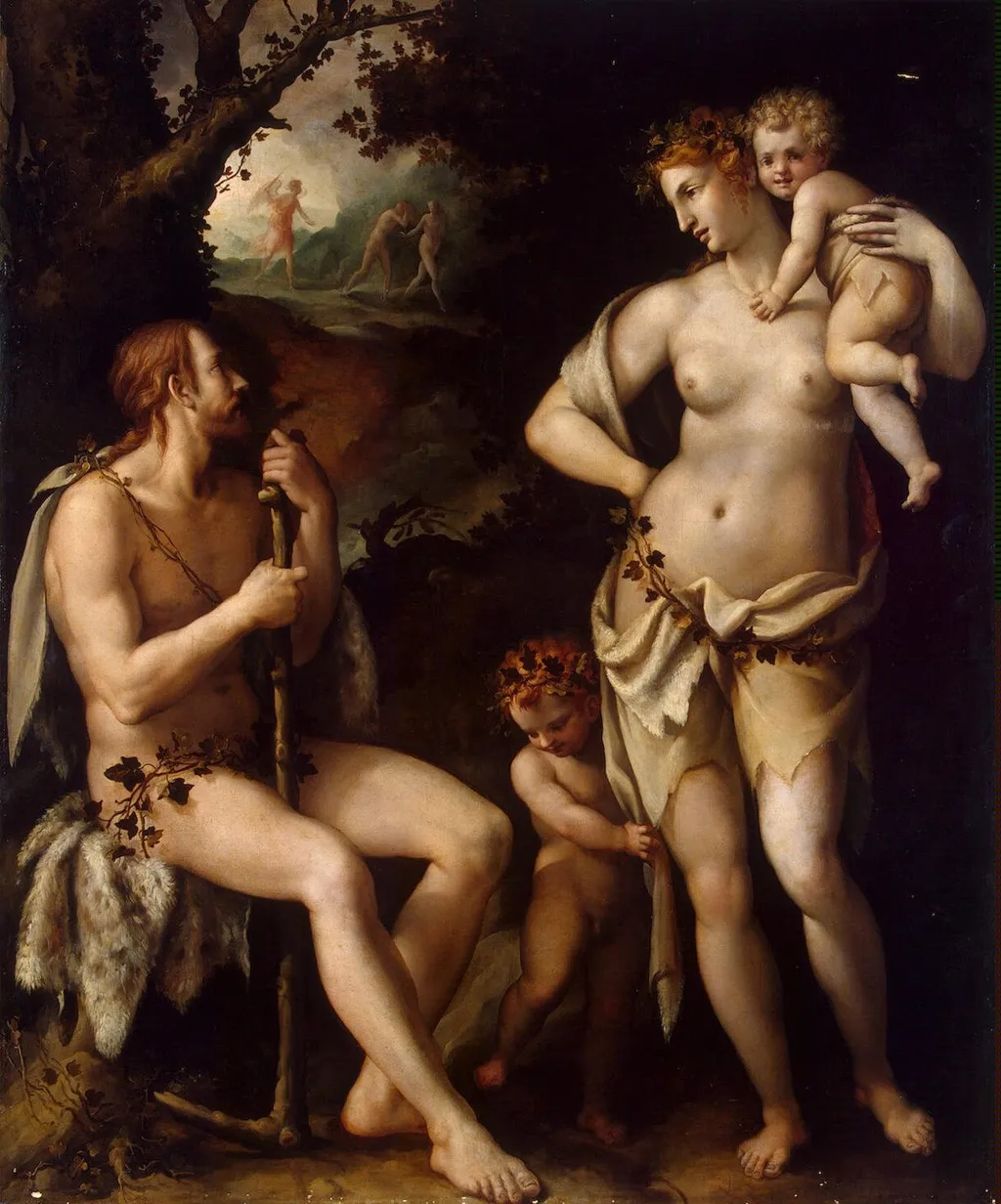
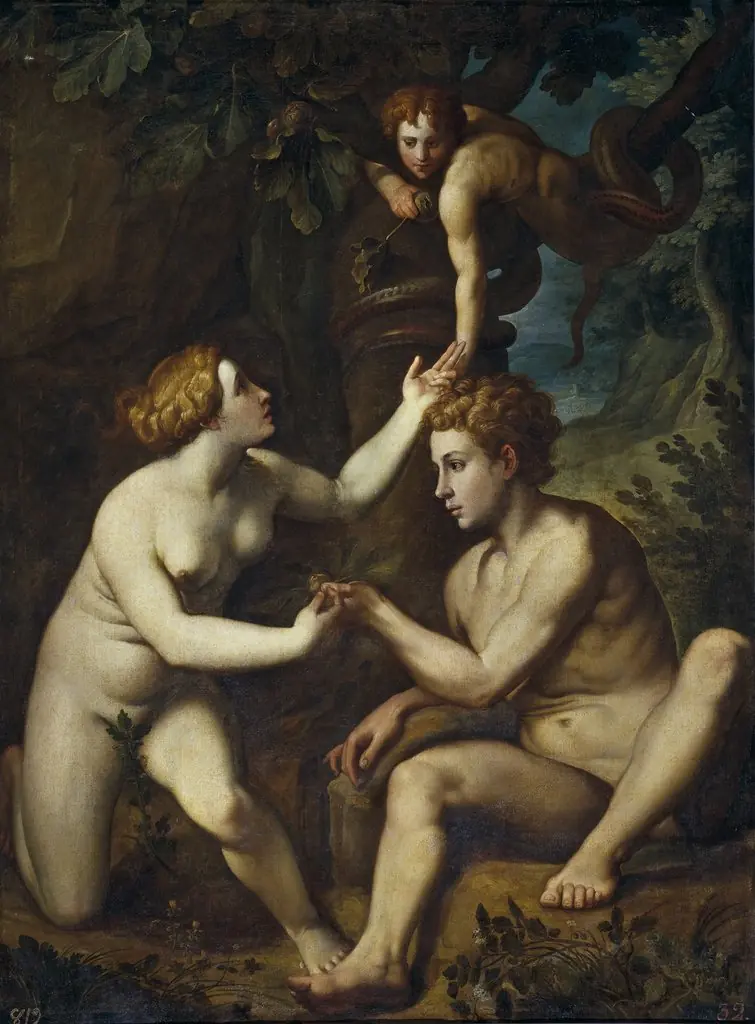
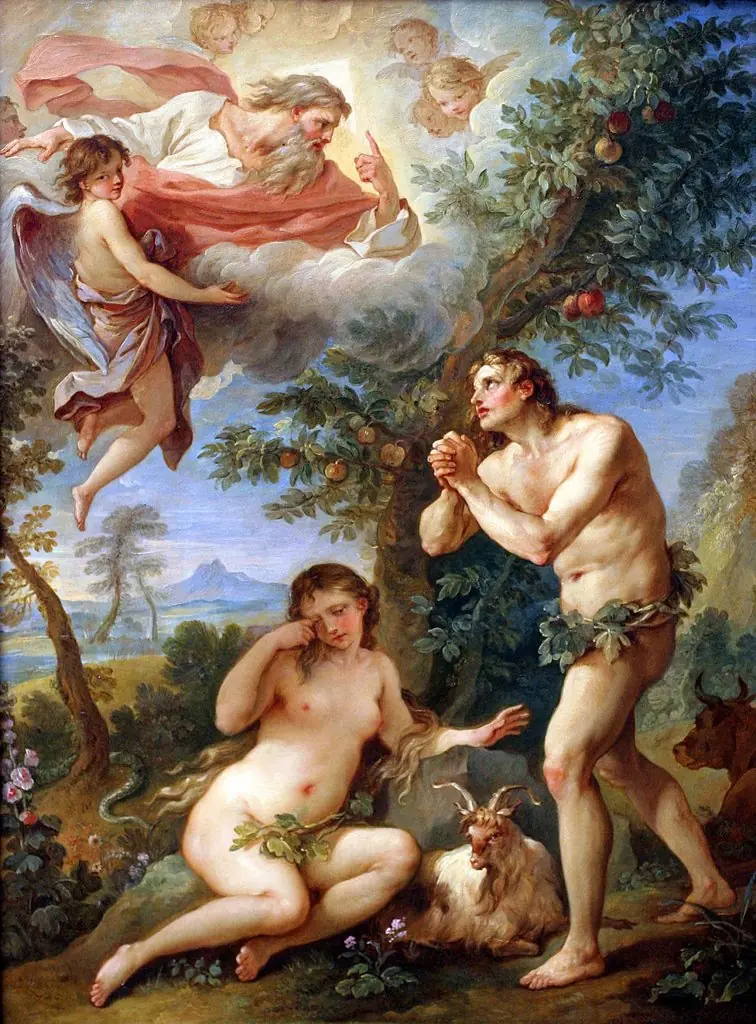
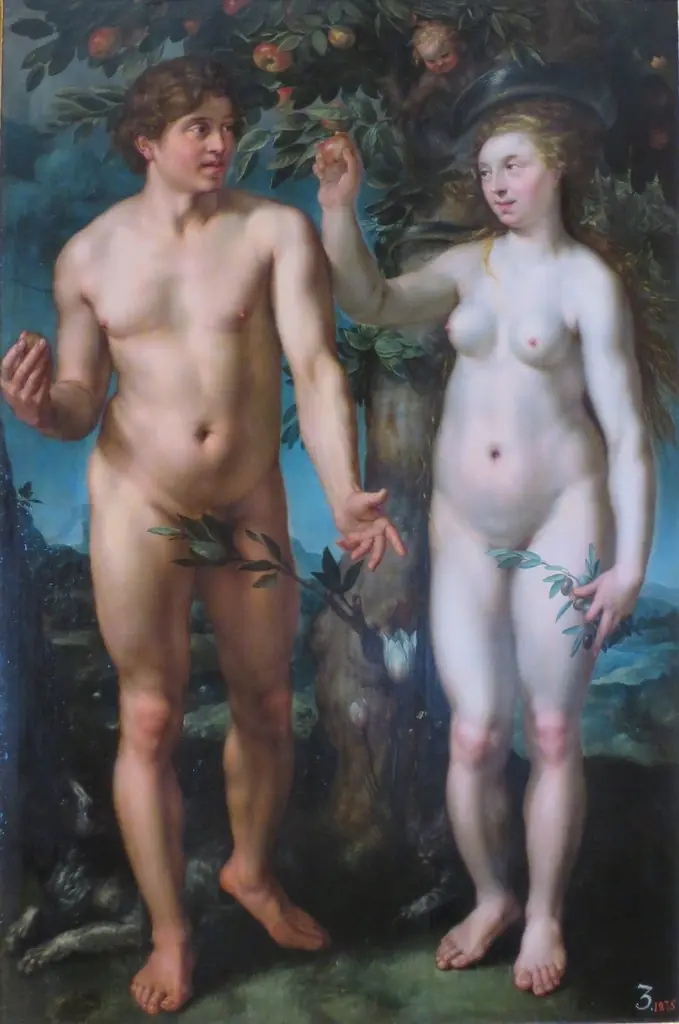
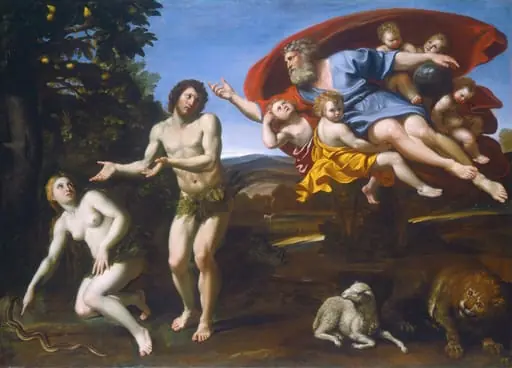
Adam and Eve is an oil painting by the Mannerist artist Unknown. It dates from 1550 and is held in the collection of the Hermitage Museum.
About this work
Overview
The background recedes into a hazy landscape with additional figures and trees, creating a sense of extended space beyond the central scene.
This oil painting depicts Adam and Eve in a forest setting, rendered with precise attention to form and spatial depth. The figures are arranged in a compact group, their postures and gestures suggesting narrative tension. The background recedes into a hazy landscape with additional figures and trees, creating a sense of extended space beyond the central scene. The lighting technique emphasizes volume and separation between subjects and environment.
Subject & Meaning
The figures represent the biblical pair after their expulsion from Eden, identified by their modest attire and the presence of children. The woman holds one infant while another sits on her arm, and a third kneels nearby, implying the beginning of human lineage under hardship. Their expressions convey quiet contemplation rather than overt sin or punishment, focusing on the weight of their new reality rather than moral judgment.
Technique & Style
The artist employs chiaroscuro to define the figures with strong contrasts between light and shadow, giving them sculptural presence against the dimmer background. Brushwork is controlled, with soft transitions in skin tones and crisp edges where fabric meets light. The forest is rendered with loose, atmospheric strokes, allowing the central group to remain the visual anchor through deliberate tonal isolation.
History & Provenance
The painting’s origin is tied to early 16th-century Northern European traditions, where biblical narratives were commonly depicted with domestic realism. While its exact commission and early ownership are undocumented, its style aligns with regional workshops that blended religious themes with naturalistic detail. It likely circulated among private collectors before entering institutional hands.
Context
Created during a period when religious imagery was shifting from altar pieces to intimate devotional works, this painting reflects a growing interest in human emotion within sacred stories. The inclusion of multiple children and a wooded setting echoes contemporary Northern Renaissance trends that emphasized familial bonds and the physical world as part of divine design.
Legacy
The work contributes to a broader visual language that reimagined biblical figures as relatable, psychologically nuanced individuals. Its use of light to isolate emotion and form influenced later depictions of Adam and Eve in both religious and secular art, reinforcing the idea that human vulnerability could be rendered with dignity and quiet gravity.
Artist & collection

 Domestic Scene
 Giacomo and Cardinal Marco, investing Andrea, Abbot of San Zeno, with his Benefice
 The Nymph of Fontainebleau
 Portrait of a Woman
 Madonna and Child with Saints in the Enclosed Garden
 Venus and Minerva
 Family Group of Four on Sofa
 Wall painting from Room H of the Villa of P. Fannius Synistor at Boscoreale