Artwork
Portrait of Karolina Radziwiłł née Pociej (1732–1776)
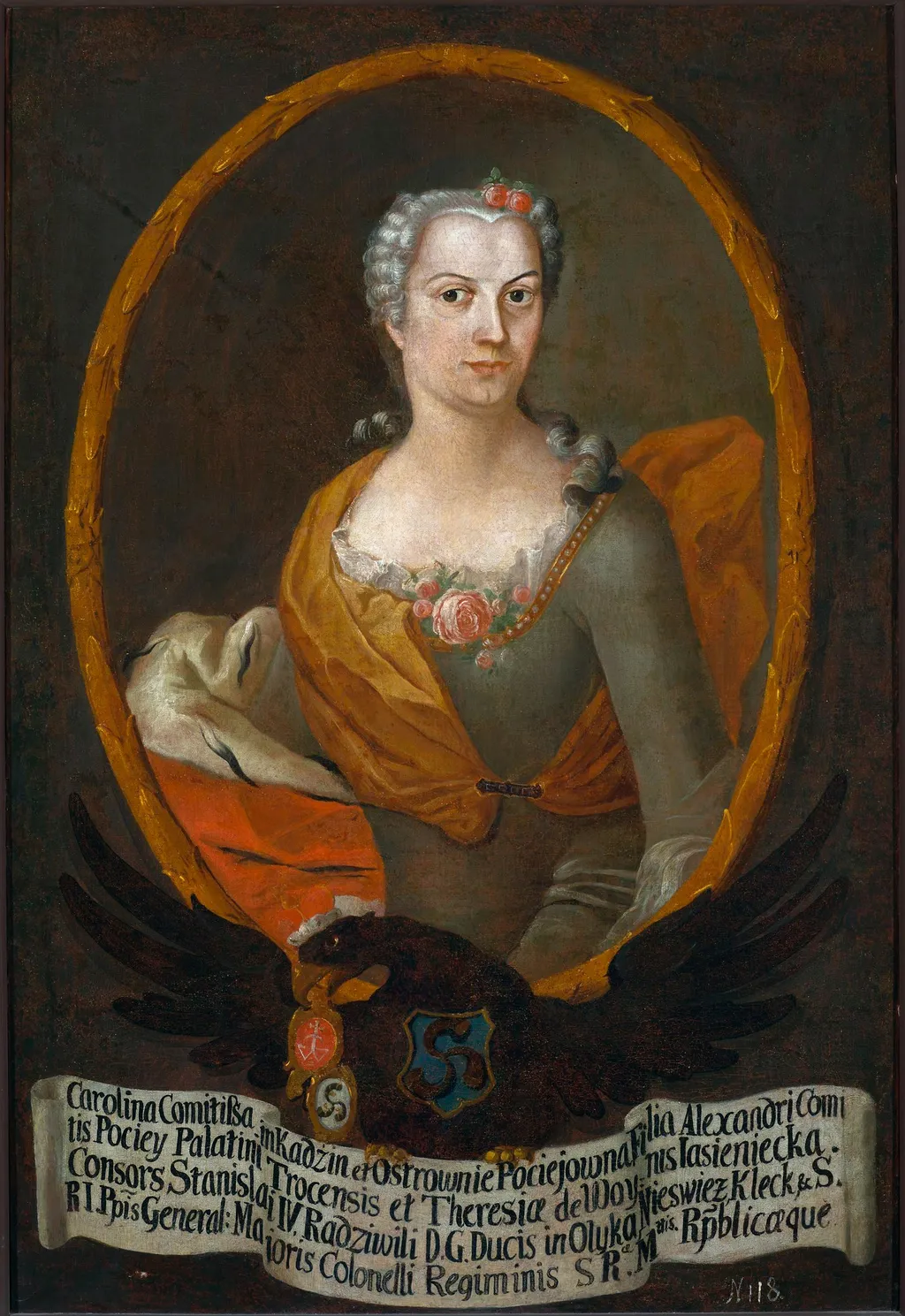
Portrait of Karolina Radziwiłł née Pociej (1732–1776) is an oil painting by the Rococo painting artist Unknown. It dates from 1749 and is held in the collection of the National Museum in Warsaw. The work is an oil portrait of Karolina Radziwiłł, née Pociej (1732–1776).
About this work
Overview
Her hair, showing signs of greying, is neatly gathered, and she rests a hand on a fur‑trimmed armchair against a dark backdrop framed by a golden oval.
The work is an oil portrait of Karolina Radziwiłł, née Pociej (1732–1776). She is depicted in an elaborate eighteenth‑century costume, featuring a green dress accented with orange and white, a pearl necklace, and a single flower pinned to her shoulder. Her hair, showing signs of greying, is neatly gathered, and she rests a hand on a fur‑trimmed armchair against a dark backdrop framed by a golden oval.
Subject & Meaning
The sitter, a member of the prominent Radziwiłł family, is presented with symbols of status: luxurious attire, jewelry, and the inclusion of a Latin inscription naming her titles. Her composed expression and the careful rendering of fabrics convey a sense of dignified authority, reflecting her social rank and the conventions of aristocratic portraiture in the Polish‑Lithuanian Commonwealth.
Technique & Style
The painter employs chiaroscuro, using strong contrasts between the illuminated figure and the shadowed background to model form and emphasize texture. Fine brushwork captures the sheen of silk, the luster of pearls, and the softness of fur, while the golden oval frame adds a decorative element typical of baroque portraiture.
History & Provenance
The portrait was created during the mid‑eighteenth century, likely commissioned to commemorate Karolina’s position within the noble hierarchy. It has remained in private collections associated with the Radziwiłł lineage before entering a public museum collection, where it is displayed as part of the broader representation of Polish aristocracy.
Context
In the period of the Polish‑Lithuanian Commonwealth, portraiture served both as personal commemoration and as a visual assertion of noble lineage. The painting reflects contemporary fashion and artistic conventions, aligning with other European aristocratic portraits that emphasized wealth, education, and familial prestige through elaborate dress and symbolic accessories.
Artist & collection

 Domestic Scene
 Giacomo and Cardinal Marco, investing Andrea, Abbot of San Zeno, with his Benefice
 The Nymph of Fontainebleau
 Portrait of a Woman
 Madonna and Child with Saints in the Enclosed Garden
 Venus and Minerva
 Family Group of Four on Sofa
 Wall painting from Room H of the Villa of P. Fannius Synistor at Boscoreale
 Bildnis der Kurfürstin Elisabeth Auguste von Pfalz-Bayern (Kopie nach)
 Portrait of a woman
 Elisabeth Maria Aloysia Auguste Gemahlin Karl Theodors
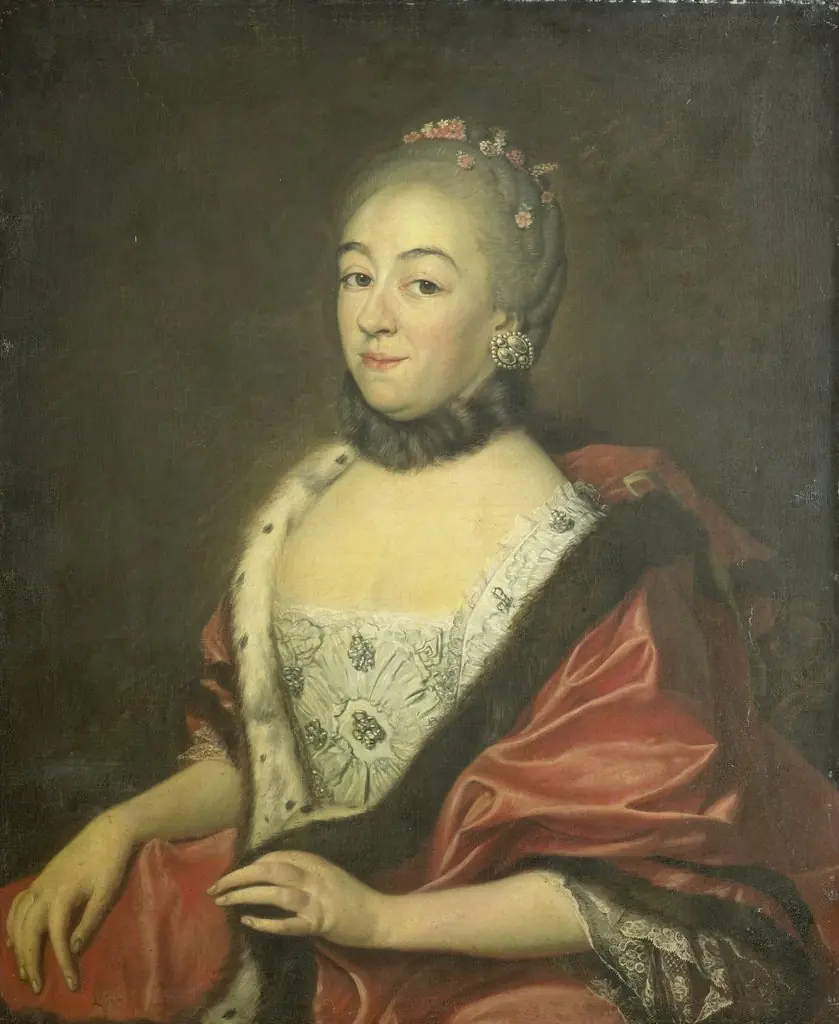 Sandrina van den Broecke, Wife of George Lodewijk Matthes
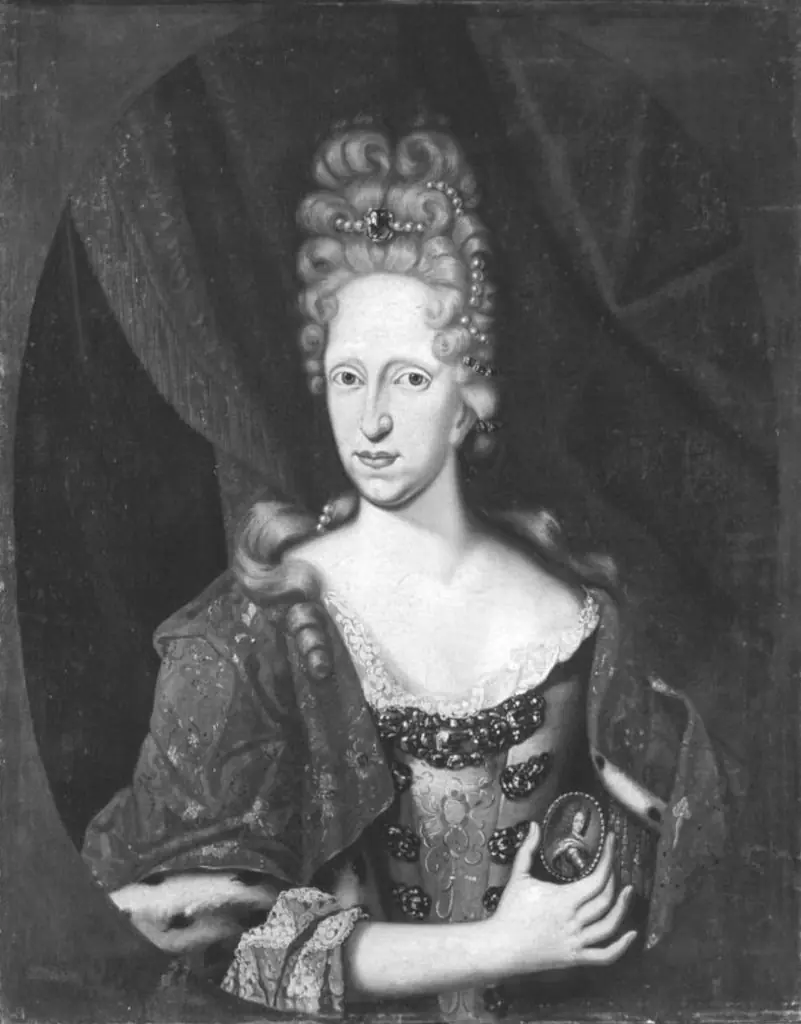 Pfalzgräfin Hedwig Elisabeth Amalie, Gemahlin des Prinzen Jacob Ludwig
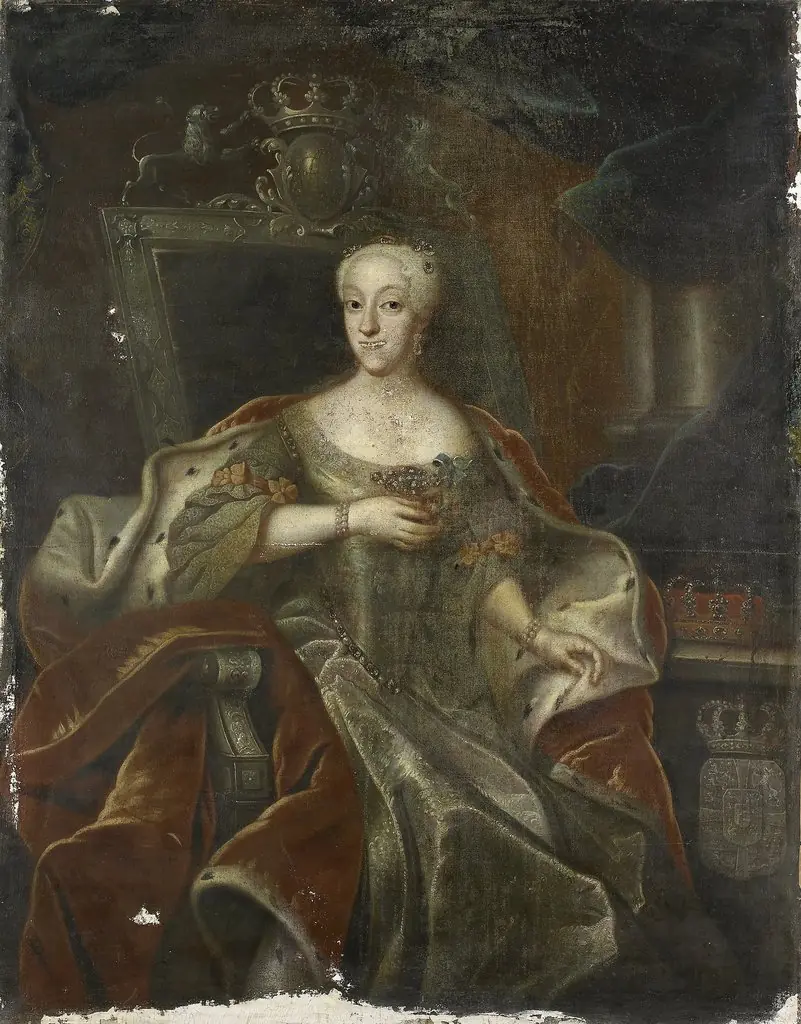 Portrait of Princess Charlotte Amalie, Daughter of Frederick IV, King of Denmark
![Portrait of a young woman [Sophie Markgräfin von Brandenburg-Bayreuth, née Duchess Sachsen-Weißenfels (1684–1752)?], by Unknown](https://artifactworldgallery.com/img/unknown--portrait-of-a-young-woman-sophie-markgrafin-von-brandenburg--2d73c9561763e528-w320.webp) Portrait of a young woman [Sophie Markgräfin von Brandenburg-Bayreuth, née Duchess Sachsen-Weißenfels (1684–1752)?]
Portrait of a young woman [Sophie Markgräfin von Brandenburg-Bayreuth, née Duchess Sachsen-Weißenfels (1684–1752)?]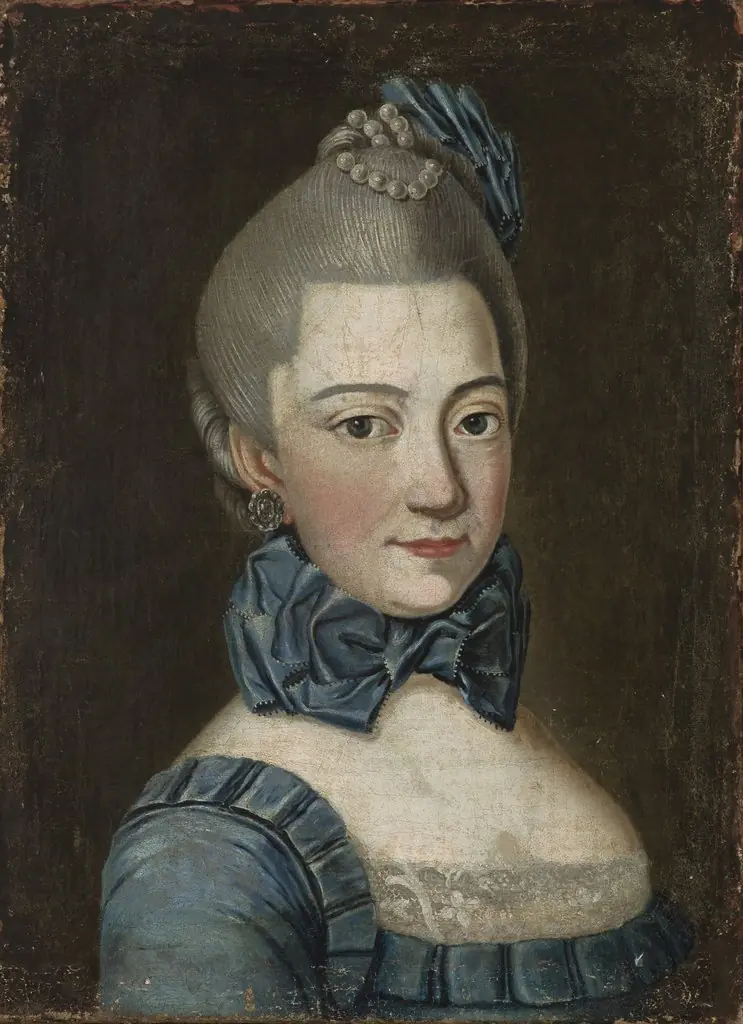 Portrait of Elżbieta Potocka née Wielopolska