Artwork
Rape of th Sabinians
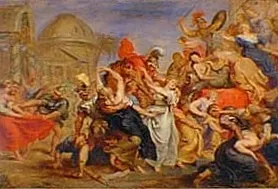
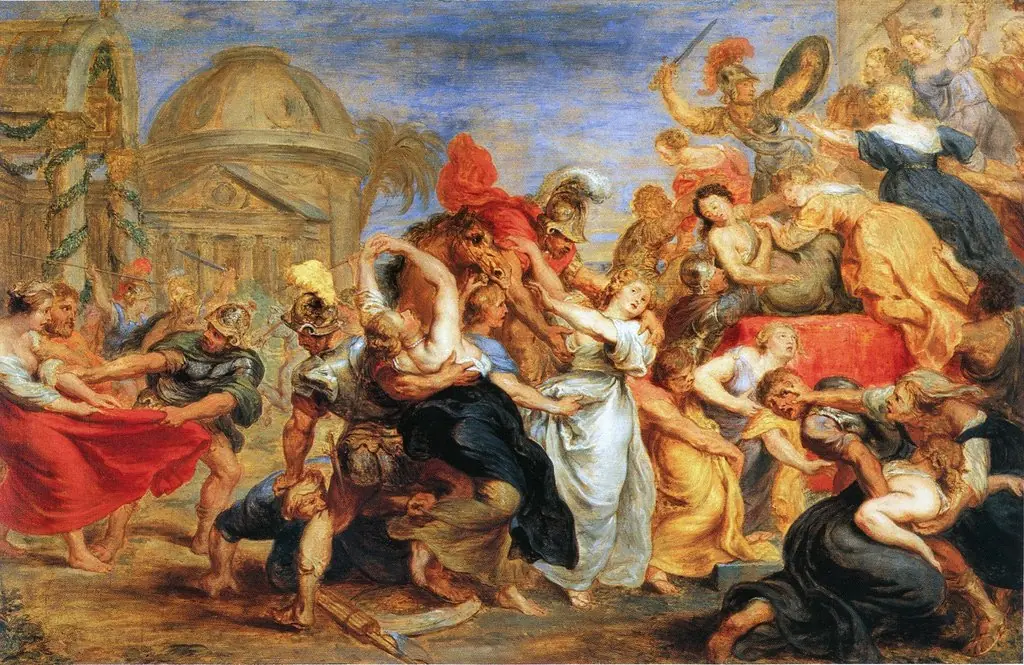
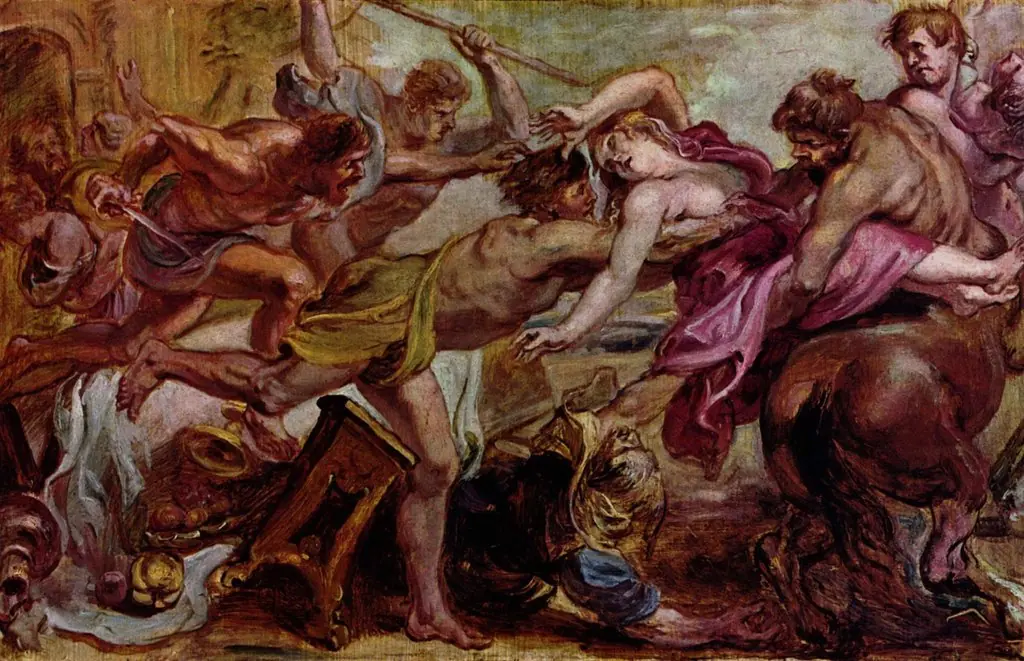
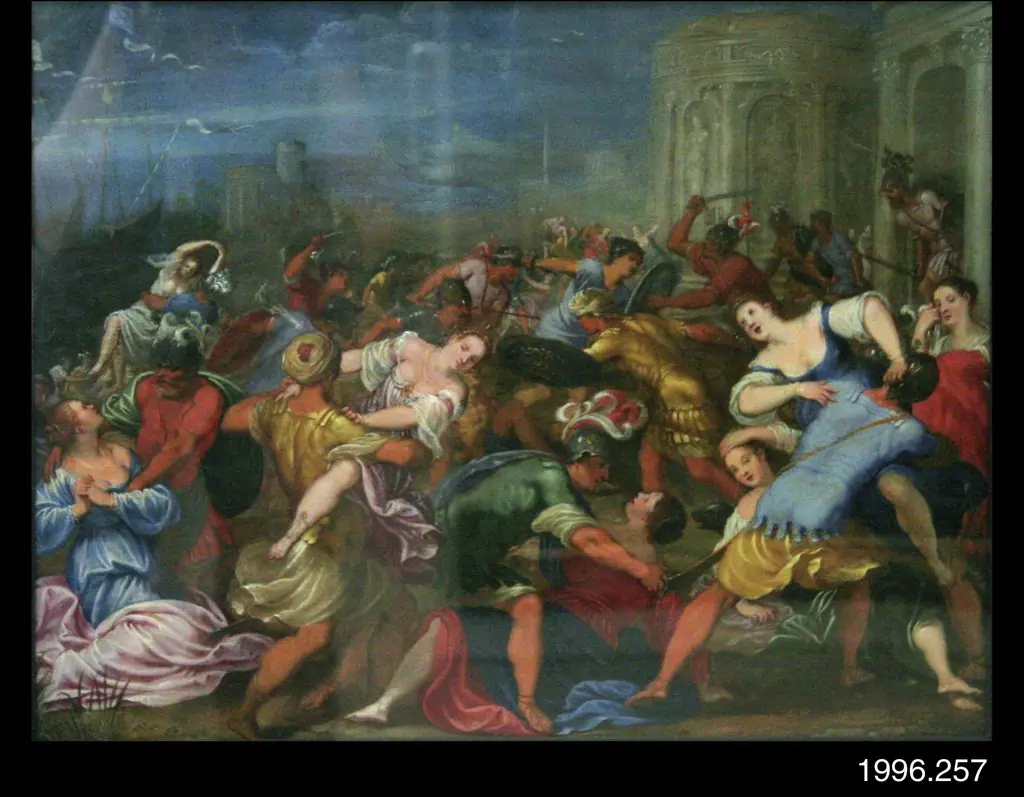
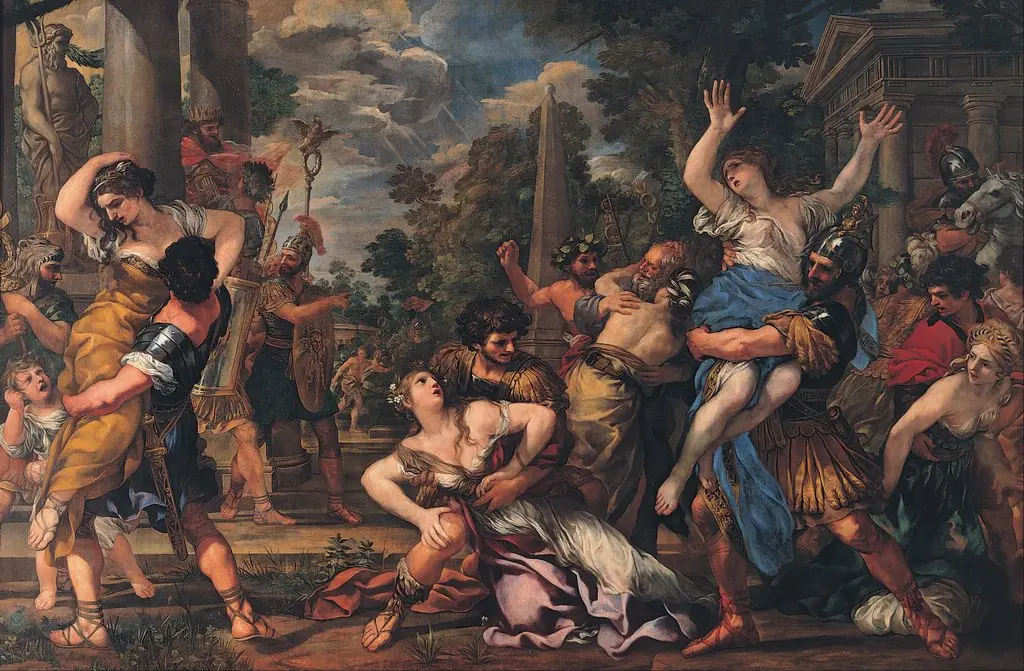
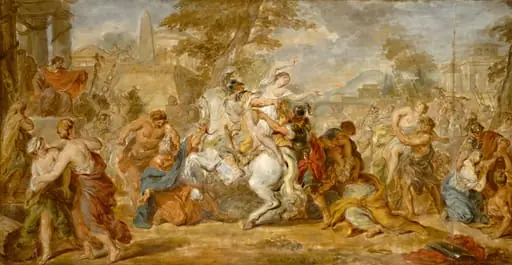
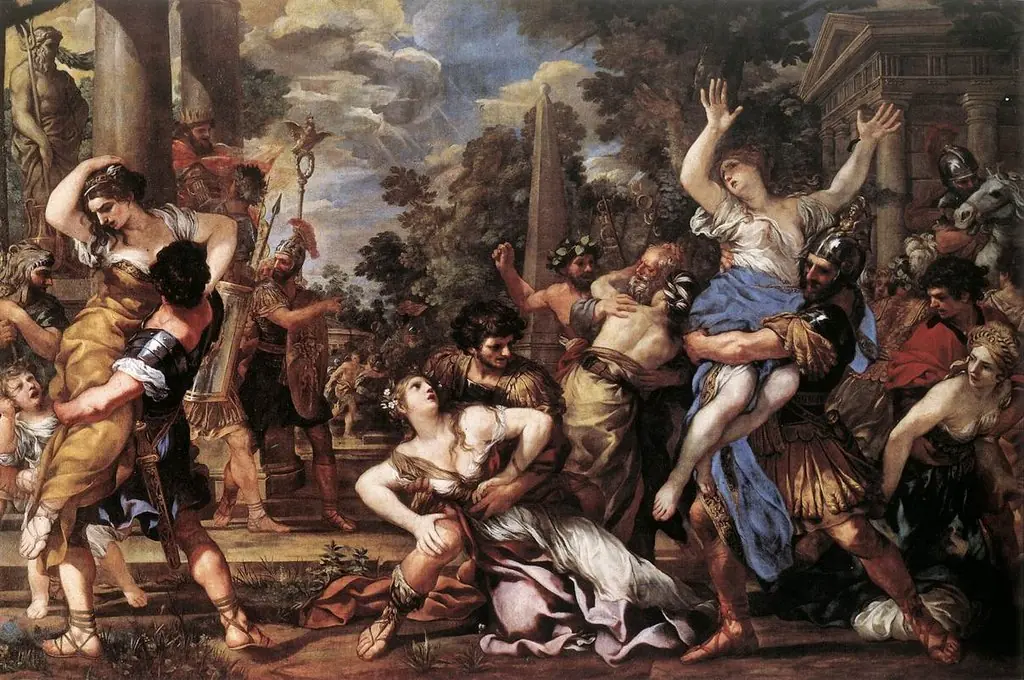
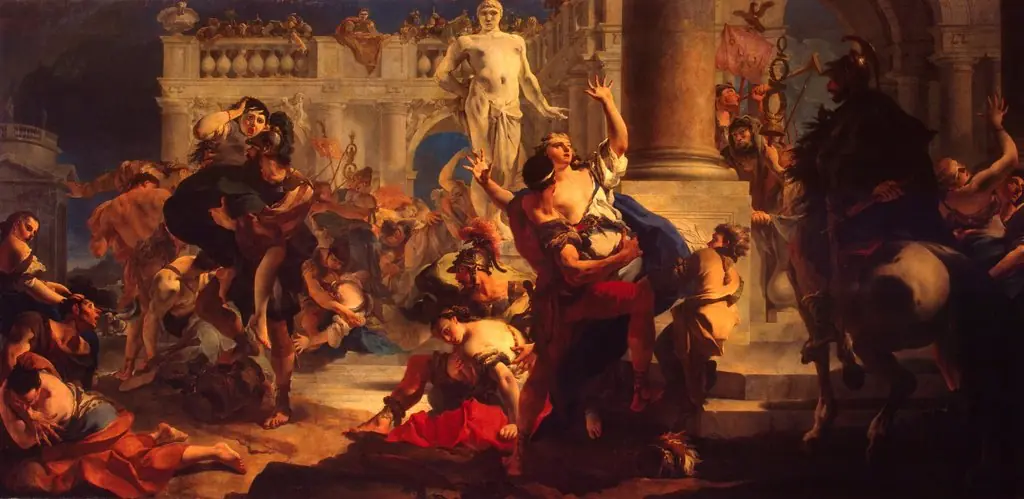
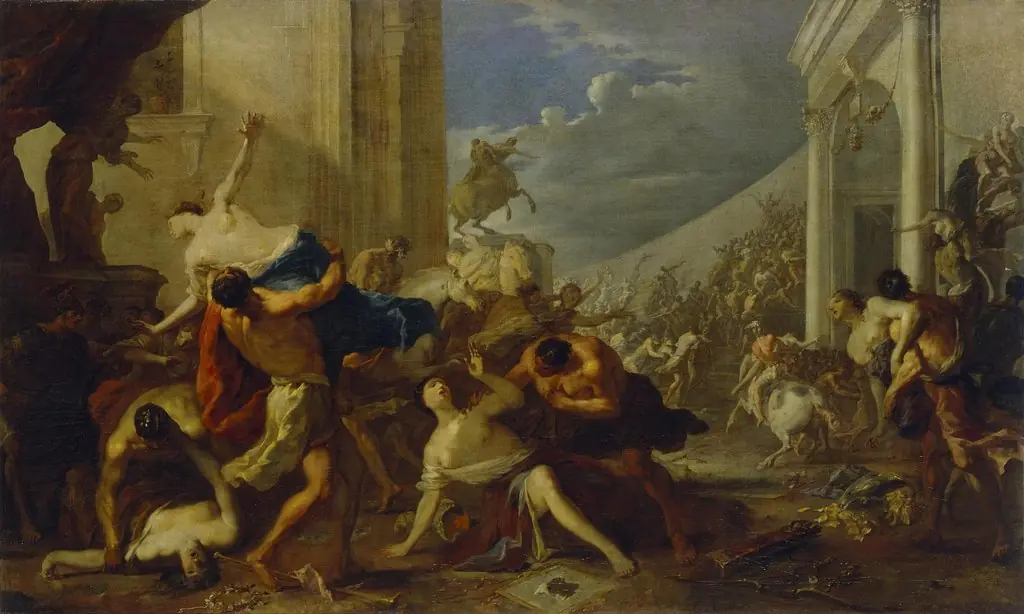
Rape of th Sabinians is an oil painting by the Early Baroque Italian artist Unknown. It dates from 1650 and is held in the collection of the National Museum of Fine Arts, Argentina. This oil painting depicts a violent episode from early Roman legend, capturing the abduction of Sabine women by Roman men.
About this work
Overview
Earth tones dominate the palette, accented by bursts of red and blue, while the background fades into an indistinct urban landscape.
This oil painting depicts a violent episode from early Roman legend, capturing the abduction of Sabine women by Roman men. The composition is densely populated with figures in motion, arranged in a swirling, chaotic group that fills the foreground. Earth tones dominate the palette, accented by bursts of red and blue, while the background fades into an indistinct urban landscape. The scene conveys tension through physical struggle and emotional distress.
Subject & Meaning
The work illustrates the mythic event in which Roman men, lacking wives, seized women from the neighboring Sabine tribe to populate their community. The scene does not glorify the act but presents its brutality through intertwined bodies and desperate gestures. Some women resist, others reach out in plea or intervention, while men strain to carry or restrain them. The narrative reflects themes of conquest, gendered violence, and the uneasy origins of Roman society.
Technique & Style
The artist employs chiaroscuro to heighten the drama, using sharp contrasts between light and shadow to define muscular forms and emotional intensity. Brushwork is energetic, with loose, visible strokes that enhance the sense of movement. Figures are rendered with anatomical precision, yet their arrangement avoids formal symmetry, reinforcing the chaos of the moment. The lack of clear spatial depth draws focus to the human struggle rather than the setting.
History & Provenance
The painting was created in the late 16th or early 17th century, during a period when classical myths were frequently revisited by European artists. Its early ownership is undocumented, but it likely passed through private collections in Italy or France before entering a public collection. No definitive record of its commission or original patron survives, though its scale and subject suggest it was intended for a discerning collector interested in historical narratives.
Context
This work emerged during a time when artists across Europe turned to ancient Roman history for moral and aesthetic inspiration. The Rape of the Sabines was a popular subject, often used to explore themes of power, civilization, and gender. While some versions emphasized heroic triumph, this painting leans into the physical and emotional turmoil of the event, aligning with a more critical, human-centered approach emerging in post-Renaissance art.
Legacy
Though not widely exhibited today, the painting contributes to a broader artistic dialogue on violence and myth in Western art. It reflects the enduring fascination with classical narratives and their capacity to convey complex social tensions. Its raw depiction of conflict influenced later artists who sought to portray historical events with psychological depth rather than idealized heroism.
Artist & collection

Museum
National Museum of Fine Arts, Argentina
Continue through works from the same source collection.
 Domestic Scene
 Giacomo and Cardinal Marco, investing Andrea, Abbot of San Zeno, with his Benefice
 The Nymph of Fontainebleau
 Portrait of a Woman
 Madonna and Child with Saints in the Enclosed Garden
 Venus and Minerva
 Family Group of Four on Sofa
 Wall painting from Room H of the Villa of P. Fannius Synistor at Boscoreale