Artwork
The Boppard Altarpiece: The Virgin and Christ Child (left panel); Saint Anne Offering a Pear (right panel) (triptych, closed)
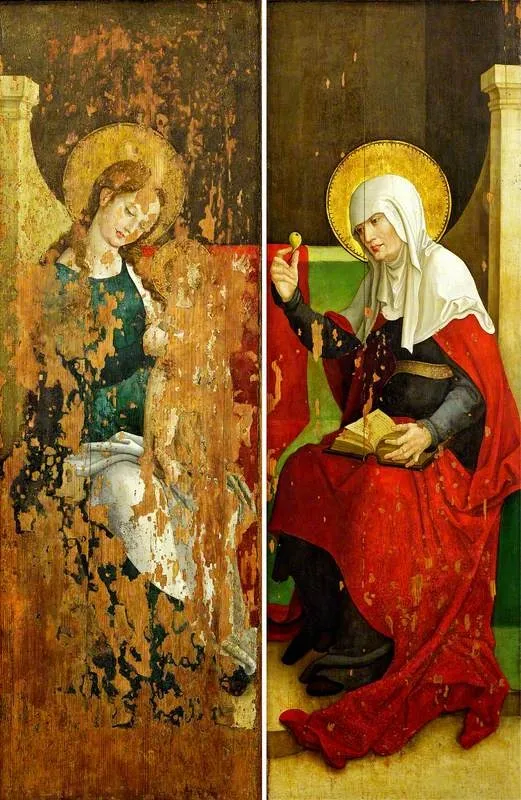
The Boppard Altarpiece: The Virgin and Christ Child (left panel); Saint Anne Offering a Pear (right panel) (triptych, closed) is an oil painting by the Northern Renaissance artist Unknown. It dates from 1515 and is held in the collection of the Victoria and Albert Museum. The work is a closed triptych executed in oil on panel, comprising two visible wings.
About this work
Overview
The work is a closed triptych executed in oil on panel, comprising two visible wings. The left wing presents a woman in a green dress with a white apron cradling an infant, both encircled by halos. The right wing shows a woman in a red robe and white headscarf, holding a book and a pear, also haloed. The surface shows age-related wear, with muted tones and softened details.
Subject & Meaning
The left panel identifies the Virgin Mary with the Christ Child, a conventional devotional image emphasizing maternal tenderness and divine incarnation.
The left panel identifies the Virgin Mary with the Christ Child, a conventional devotional image emphasizing maternal tenderness and divine incarnation. The right panel depicts Saint Anne, traditionally regarded as Mary's mother, offering a pear—a symbol of obedience and the sweetness of salvation—while holding a book that may allude to wisdom or the Psalms. Together the panels underscore intergenerational sanctity and the transmission of faith.
Technique & Style
Rendered in oil, the painting employs a restrained palette of greens, reds, and earth tones, typical of late medieval to early Renaissance devotional panels. The figures are outlined with delicate brushwork, and the halos are rendered in flat gold-like tones. Visible craquelure and faded pigments indicate extensive aging, while the overall composition remains balanced and symmetrical.
History & Provenance
The altarpiece originates from the Boppard region, though its exact workshop and date remain uncertain. It was likely created for a local church or private chapel, serving as a portable object of veneration. The work entered the museum collection through a 20th‑century acquisition, having previously been documented in regional inventories.
Context
Triptychs of this type were common in Germanic devotional practice, allowing the faithful to view distinct saints when the altar was closed. The pairing of the Virgin with Saint Anne reflects a medieval emphasis on the holy lineage, while the inclusion of a fruit and a book aligns with iconographic conventions that convey moral and theological messages.
Artist & collection

 Domestic Scene
 Giacomo and Cardinal Marco, investing Andrea, Abbot of San Zeno, with his Benefice
 The Nymph of Fontainebleau
 Portrait of a Woman
 Madonna and Child with Saints in the Enclosed Garden
 Venus and Minerva
 Family Group of Four on Sofa
 Wall painting from Room H of the Villa of P. Fannius Synistor at Boscoreale
 Geburt Christi
 Twee altaarluiken
 Annunciation to Saint Ann
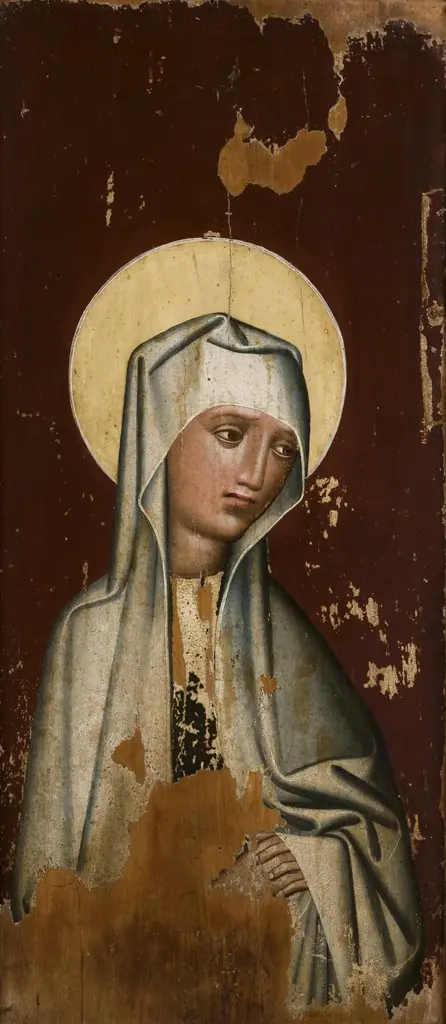 Our Lady of Sorrows from the parish church of St Ursula in Korzenna
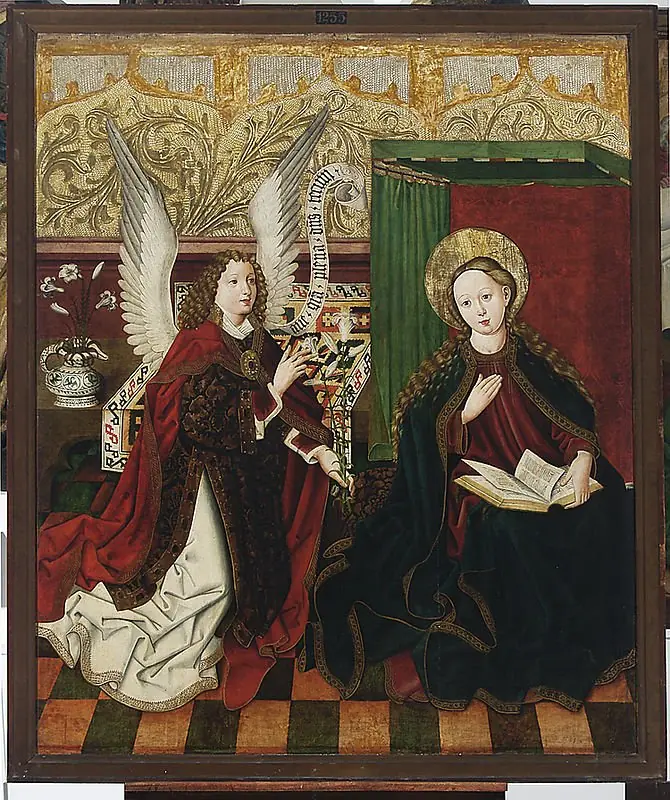 Legnica polyptych - left wing internal - upper panel - obverse: Annunciation; reverse: St Lawrence, St Vincent the Levite. St John the Baptist
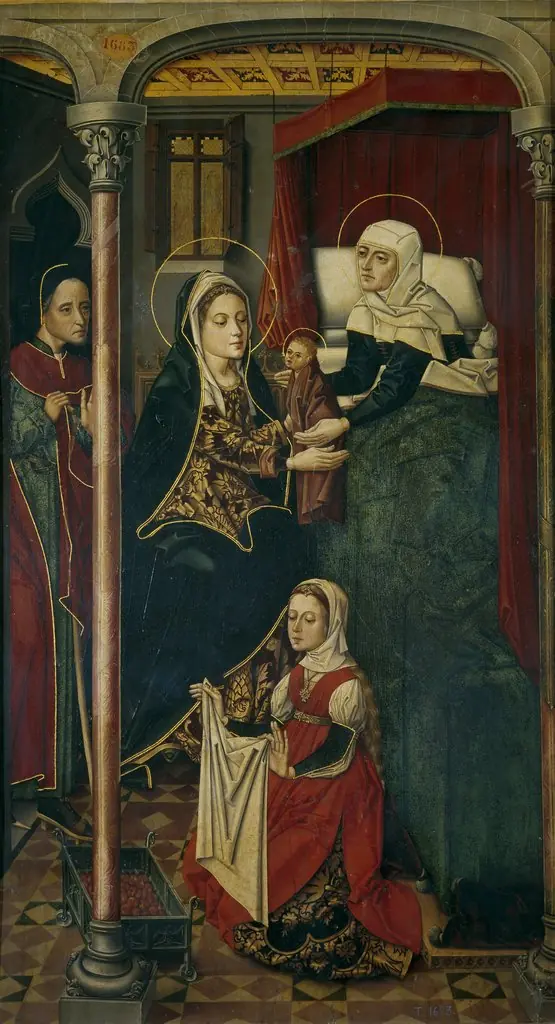 The Birth of Saint John the Baptist
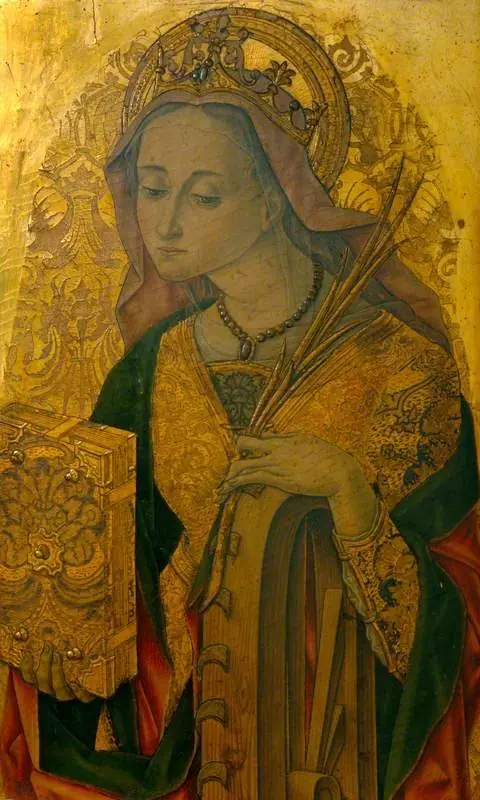 Saint Catherine (panel from an altarpiece)
 Coronació de la Mare de Déu amb àngels músics
 Assumption of the Virgin
 The Visitation
 Mary and child, Saint Julita and Saint Guerito.
 The Annunciation