Artwork
St. Anthony of Padua Convinces a Nobleman about the Innocence of his Wife in Ferrara
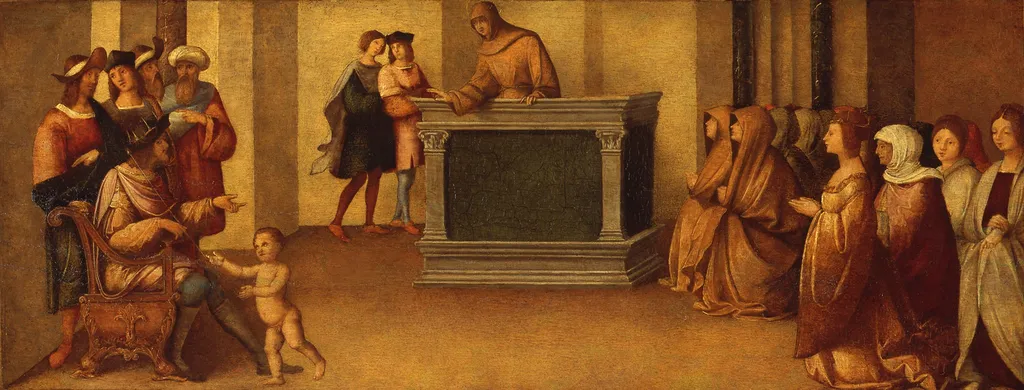
St. Anthony of Padua Convinces a Nobleman about the Innocence of his Wife in Ferrara is a paint painting by the Mannerist artist Unknown. It dates from 1520 and is held in the collection of the Gemäldegalerie Berlin. This oil painting depicts a moment of religious intervention in a domestic interior.
About this work
Overview
The muted palette and restrained lighting reflect a quiet solemnity, avoiding theatricality in favor of psychological gravity.
This oil painting depicts a moment of religious intervention in a domestic interior. The scene centers on St. Anthony of Padua, who stands behind a stone table, confronting a nobleman accused of unjustly doubting his wife’s fidelity. The composition is tightly grouped, with figures arranged to emphasize the tension between accusation and defense. The muted palette and restrained lighting reflect a quiet solemnity, avoiding theatricality in favor of psychological gravity.
Subject & Meaning
The narrative draws from a hagiographic legend in which St. Anthony, through divine authority, proves a noblewoman’s innocence by compelling her infant to speak and affirm her virtue. The seated man holding the child represents the husband, while the standing figures include witnesses and courtiers. The saint’s raised hand and commanding posture signify spiritual authority, transforming the room into a sacred tribunal where earthly doubt is overturned by divine truth.
Technique & Style
The artist employs precise brushwork to render textures of fabric, stone, and skin with quiet realism. Chiaroscuro models the figures with subtle gradations of light, enhancing their three-dimensionality without dramatic contrast. The background’s plain walls and columns frame the scene with architectural restraint, directing focus to the human interaction. Colors remain subdued—ochres, grays, and off-whites—reinforcing the painting’s contemplative tone and avoiding decorative excess.
History & Provenance
Created in Ferrara during the late 15th or early 16th century, the work likely originated in a private chapel or noble residence. Its subject matter aligns with devotional practices common in northern Italian cities, where St. Anthony was venerated as a miracle worker. The painting’s survival suggests it was valued locally, though its early ownership records are incomplete. It entered institutional collections in the 19th century after passing through private hands.
Context
This painting emerged in a region where religious narratives were frequently depicted in intimate settings to foster personal devotion. Ferrara’s court culture favored humanist themes and restrained aesthetics, influencing the work’s quiet realism over grandeur. Similar scenes by local artists often combined sacred stories with contemporary dress and architecture, bridging the divine and the everyday for the viewer’s moral reflection.
Legacy
Though not widely known outside regional collections, the painting exemplifies the quiet devotional tradition in early Renaissance Emilia-Romagna. Its emphasis on psychological nuance and restrained composition distinguishes it from more flamboyant contemporaries. Scholars recognize it as a representative example of how hagiographic tales were localized through domestic settings, contributing to a broader understanding of lay piety in northern Italy.
Artist & collection

 Domestic Scene
 Giacomo and Cardinal Marco, investing Andrea, Abbot of San Zeno, with his Benefice
 The Nymph of Fontainebleau
 Portrait of a Woman
 Madonna and Child with Saints in the Enclosed Garden
 Venus and Minerva
 Family Group of Four on Sofa
 Wall painting from Room H of the Villa of P. Fannius Synistor at Boscoreale
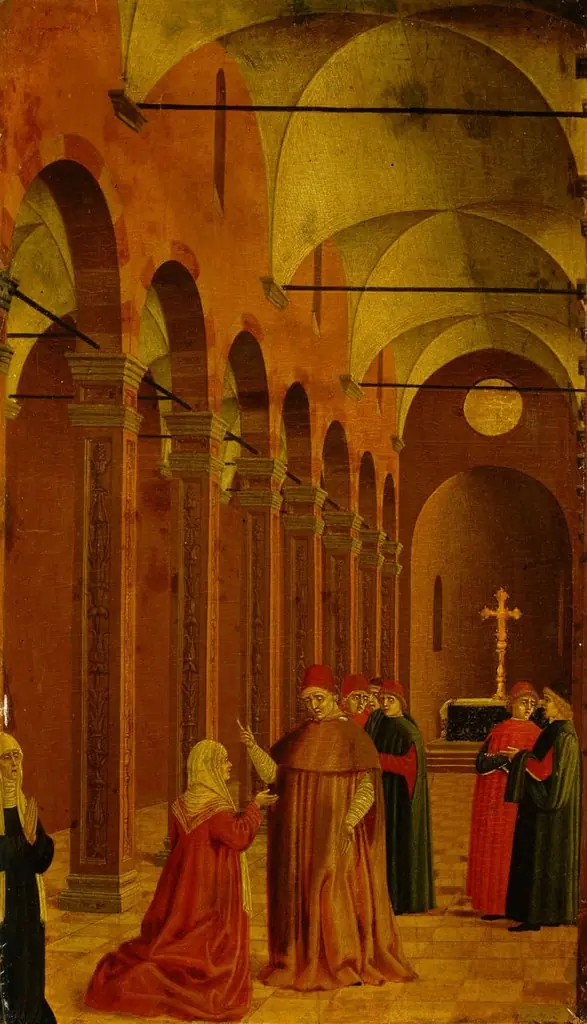 Szene aus dem Leben des Hl. Vinzenz Ferrer: Die Mutter des Heiligen fragt den Bischof von Valencia nach dem Sinn der wunderbaren Zeichen, die die Geburt ihres Kindes ankündigen
 Apollo and the Muses
 Joseph going to prison
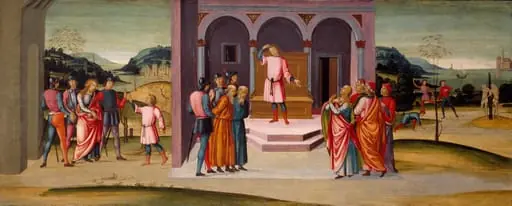 Daniel Saving Susanna, the Judgment of Daniel, and the Execution of the Elders
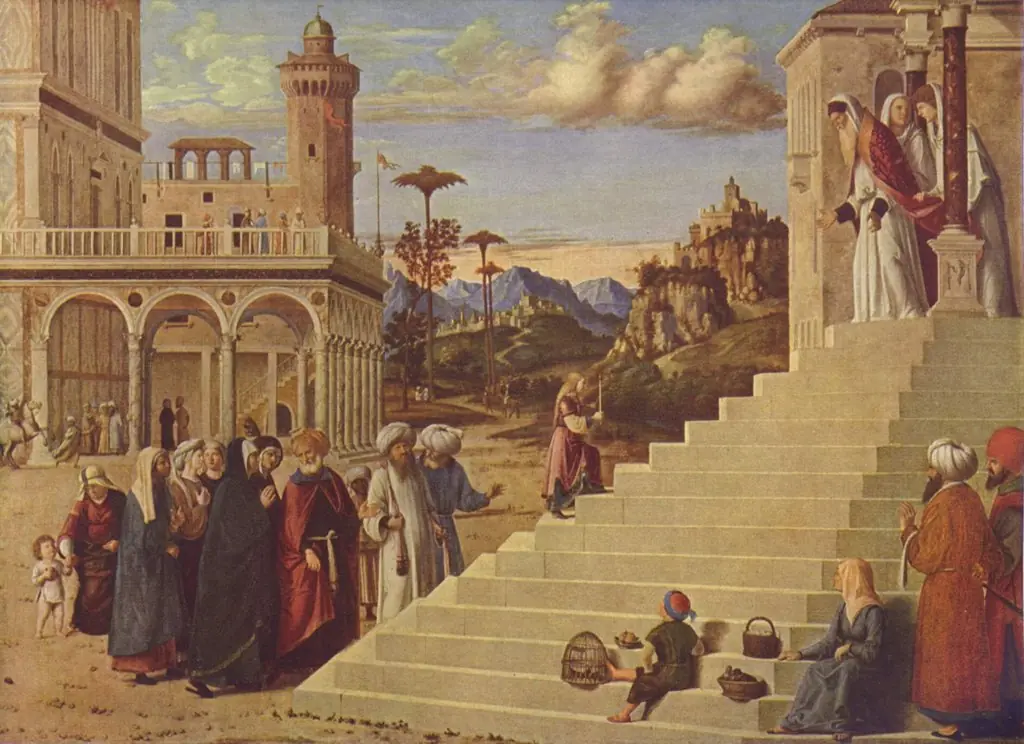 Presentation of the Virgin Mary at the Temple
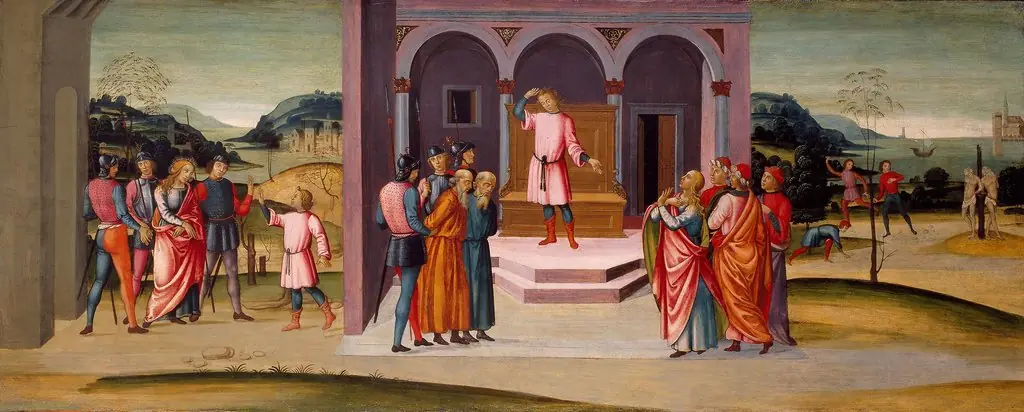 Daniel Saving Susanna, the Judgment of Daniel, and the Execution of the Elders
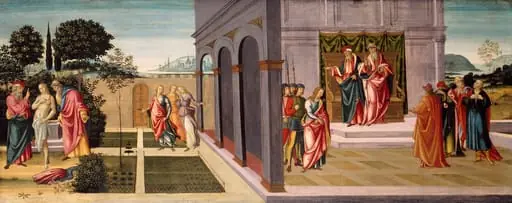 Susanna and the Elders in the Garden, and the Trial of Susanna before the Elders
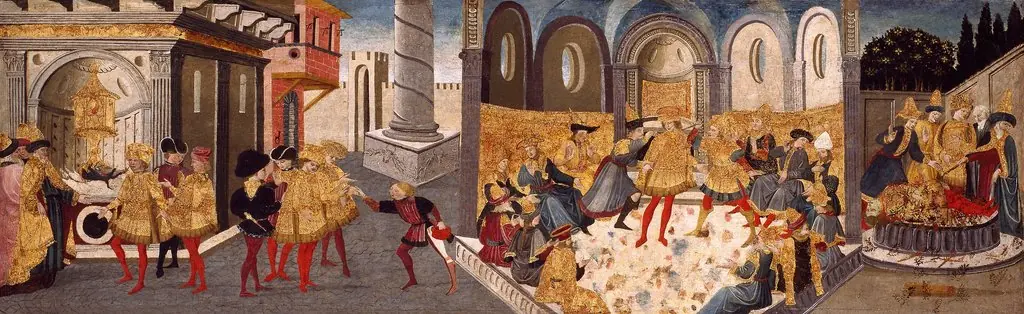 The Assassination and Funeral of Julius Caesar
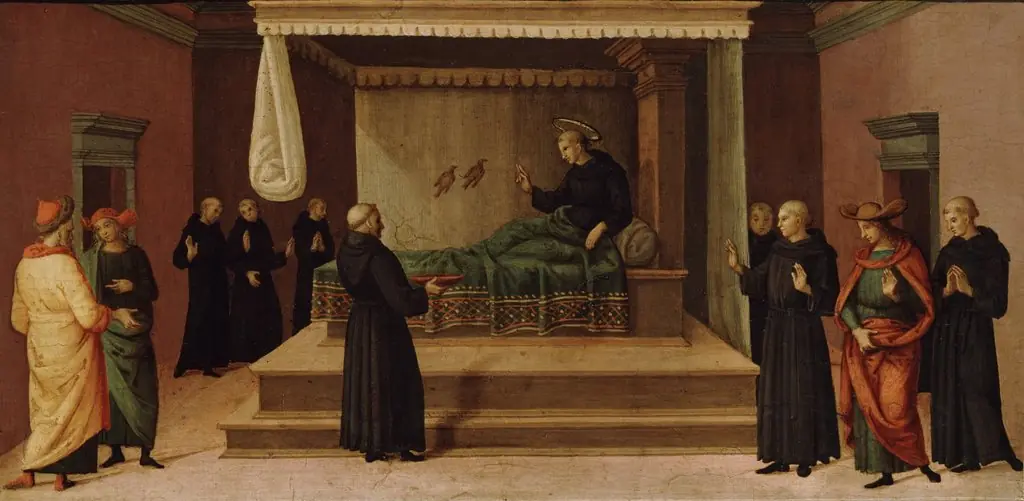 Saint Nicholas of Tolentino Restoring Two Partridges to Life
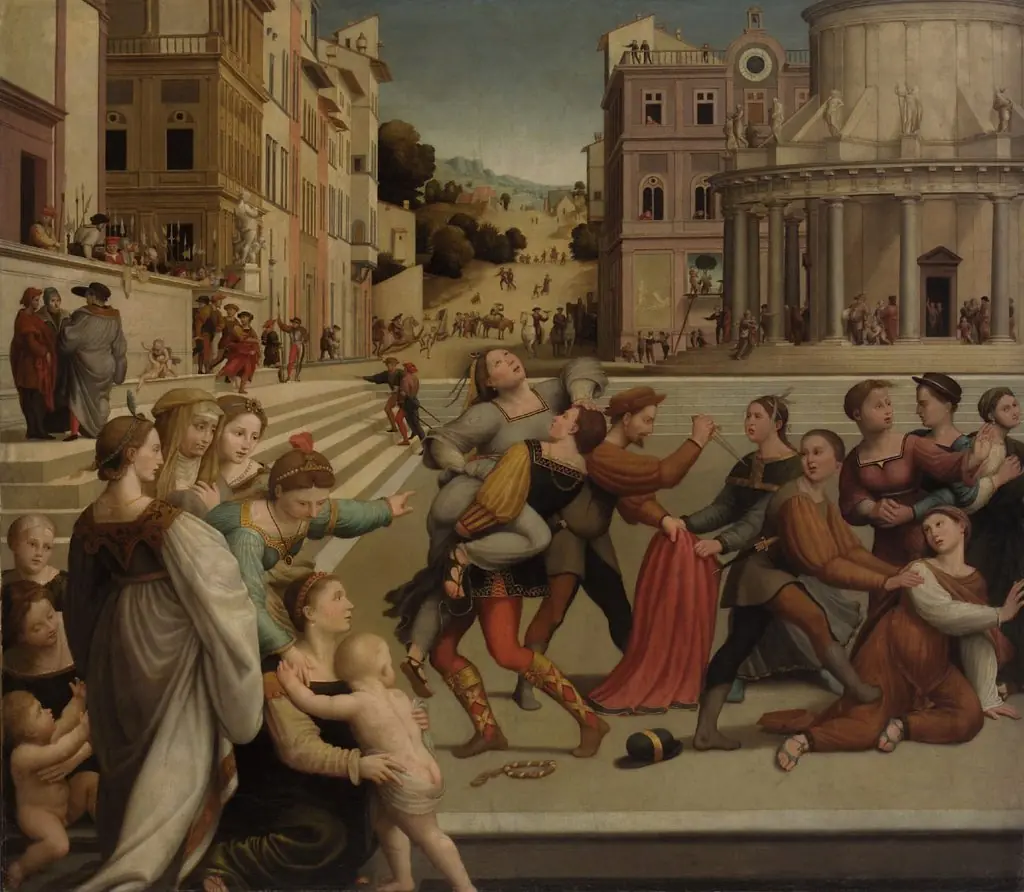 Rape of Dinah
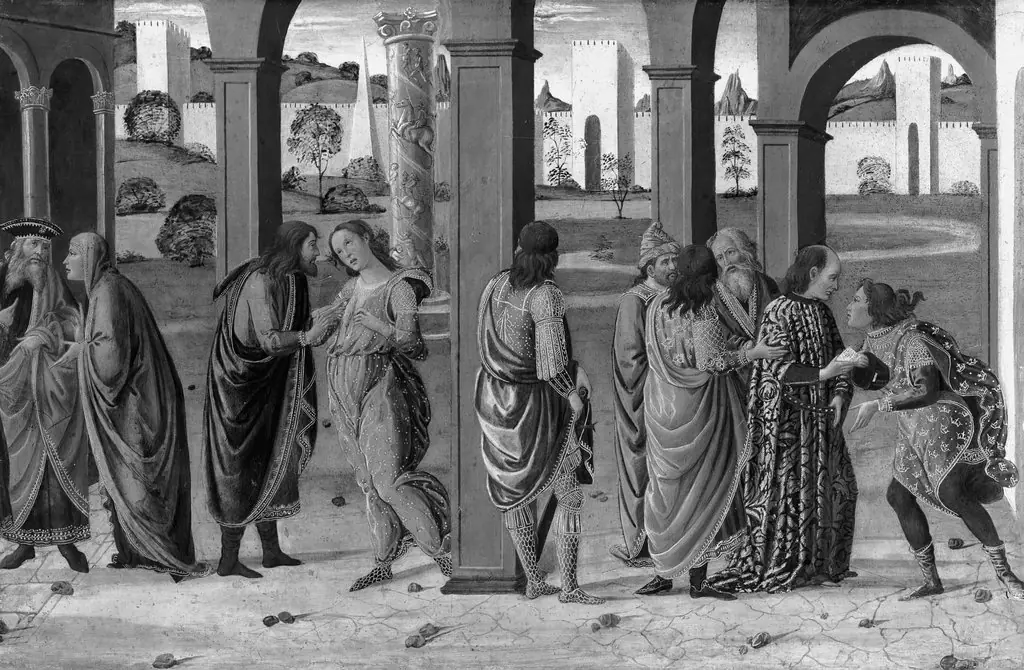 Julius Caesar before his assassination
 Saint Anthony of Padua