Artwork
Still life
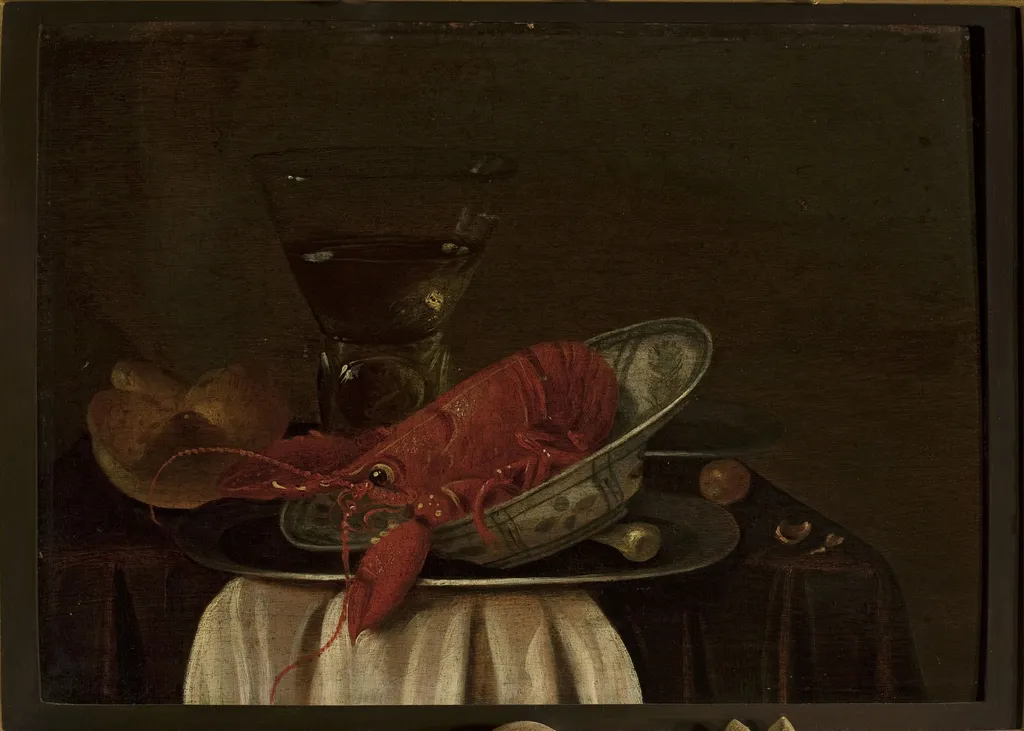
Still life is an oil painting by the Dutch Golden Age artist Unknown. It dates from 1696 and is held in the collection of the National Museum in Warsaw.
About this work
Overview
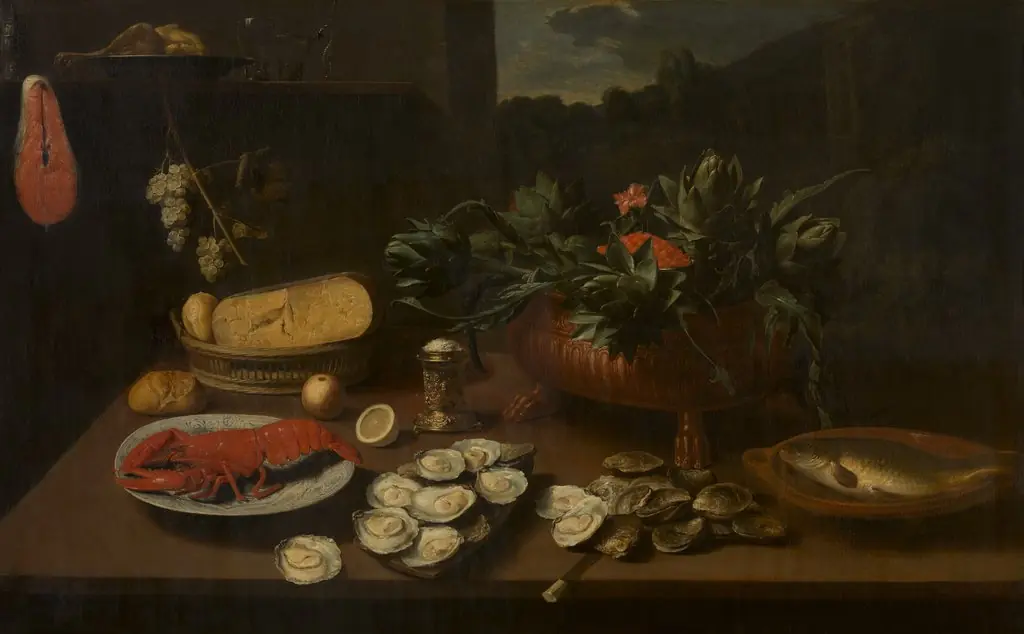
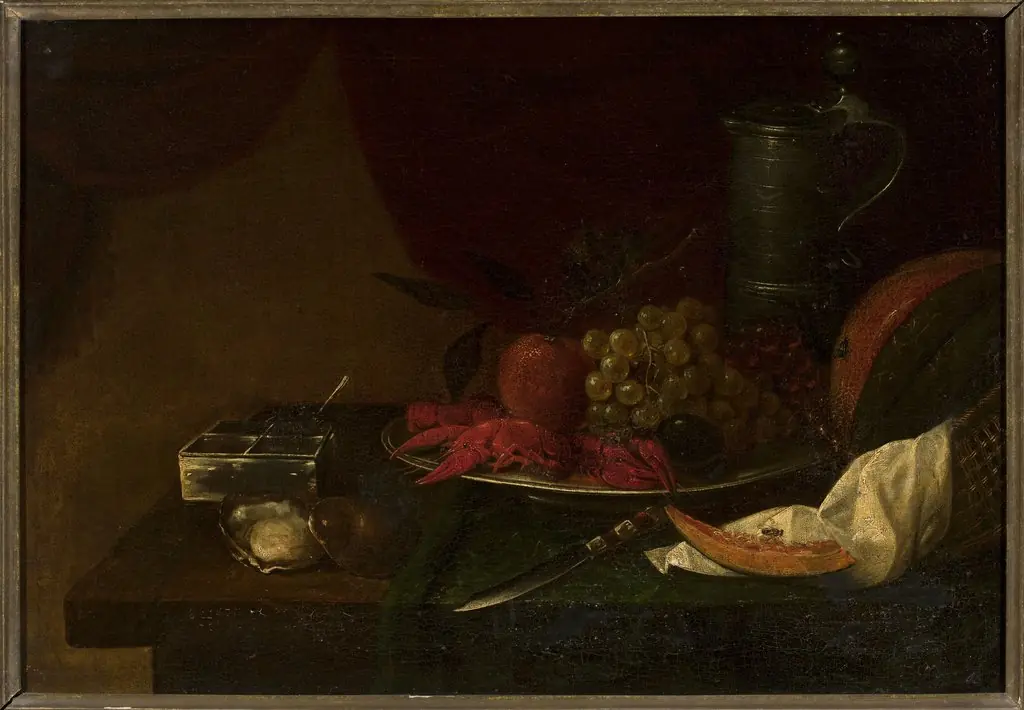
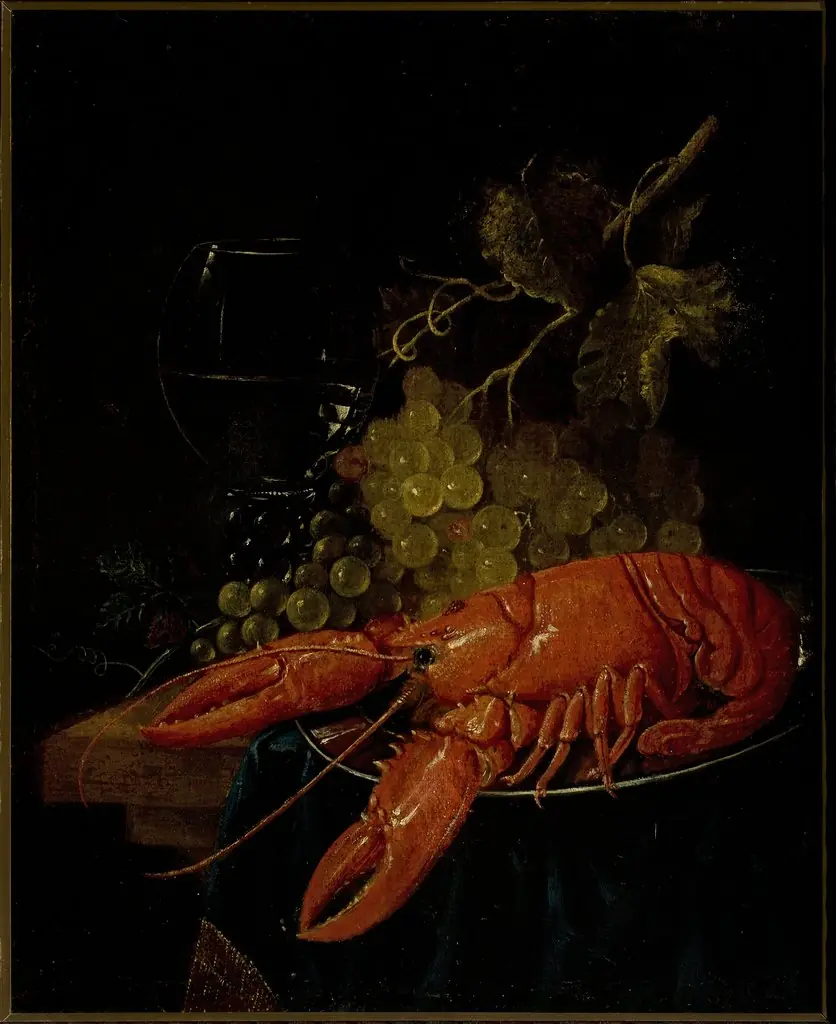
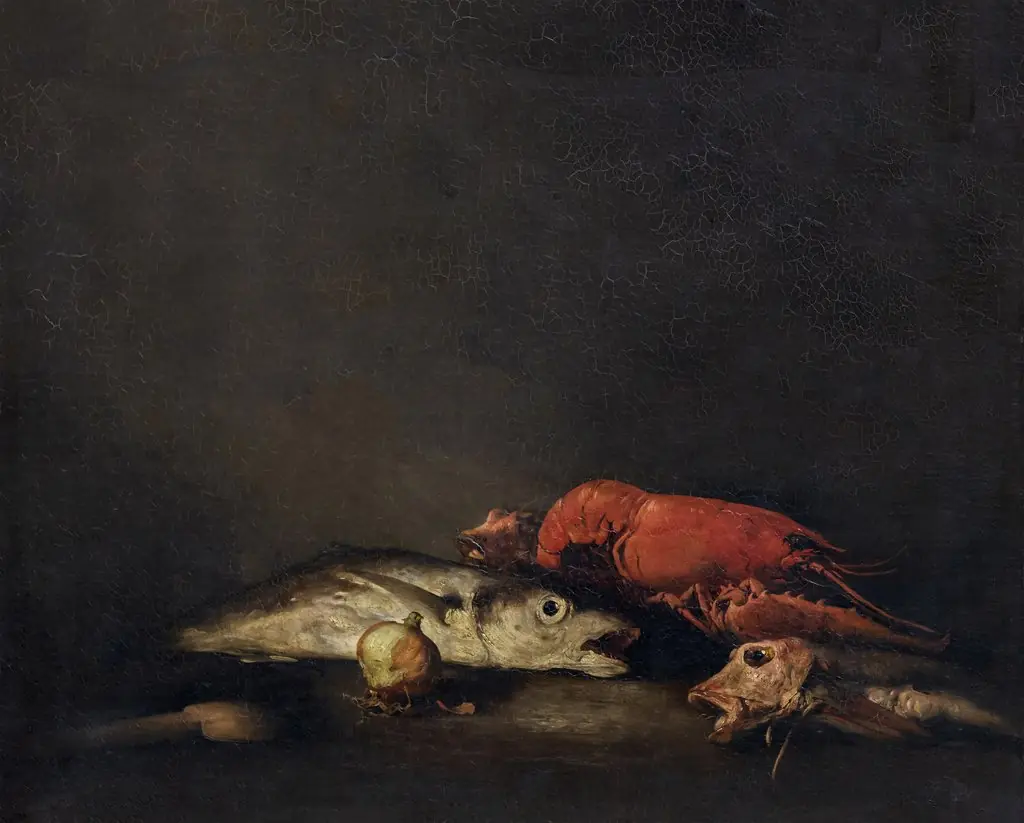
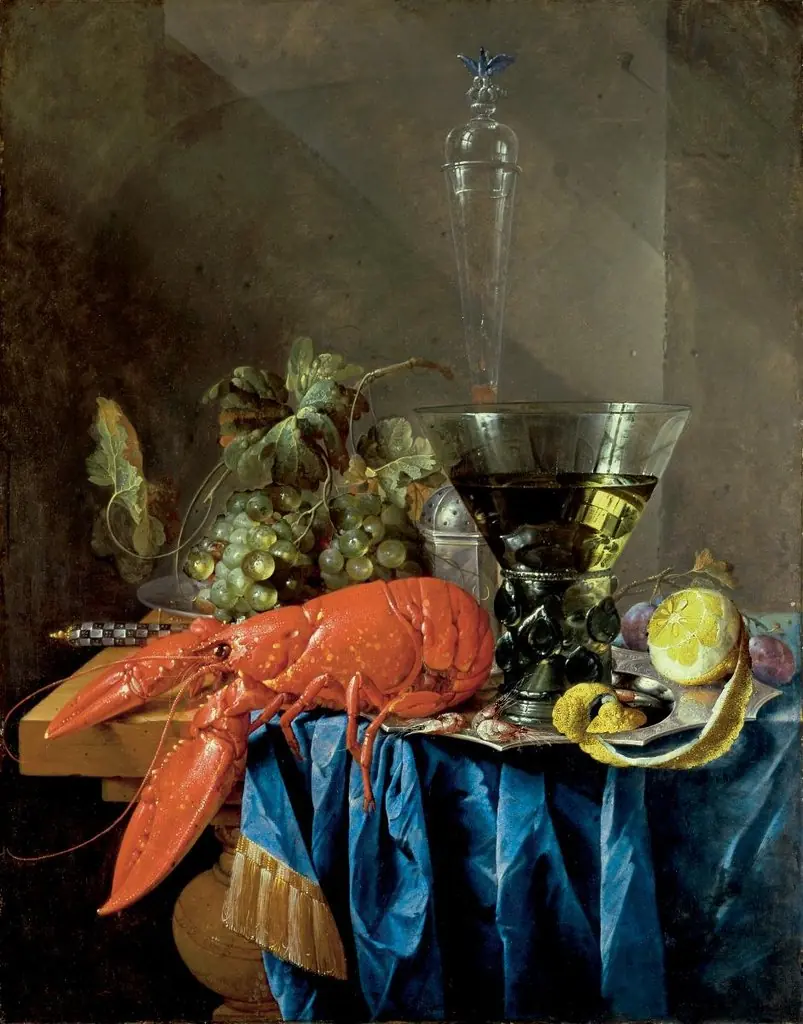
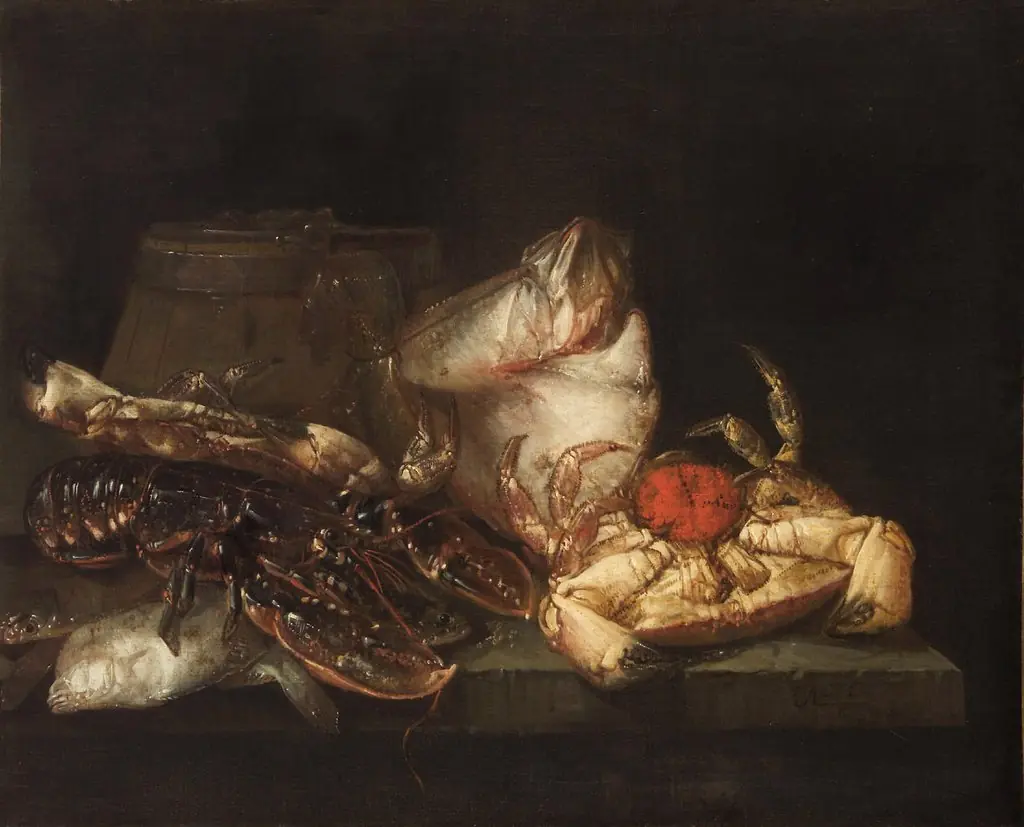
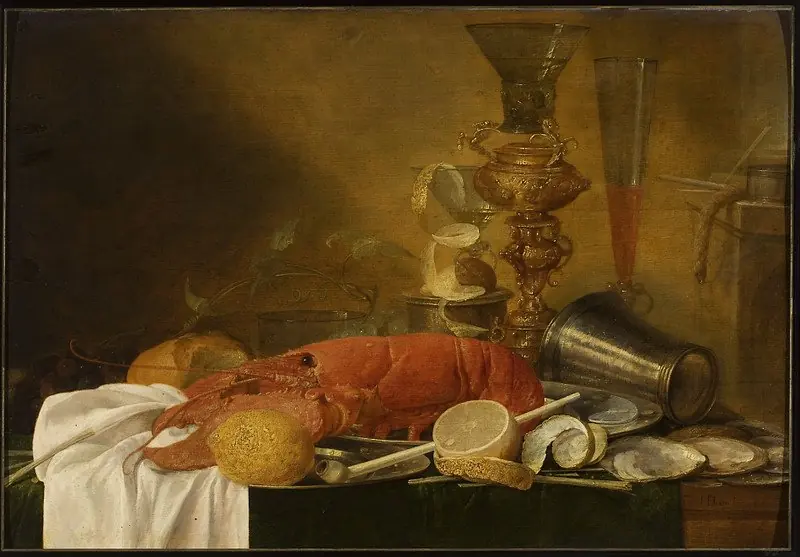
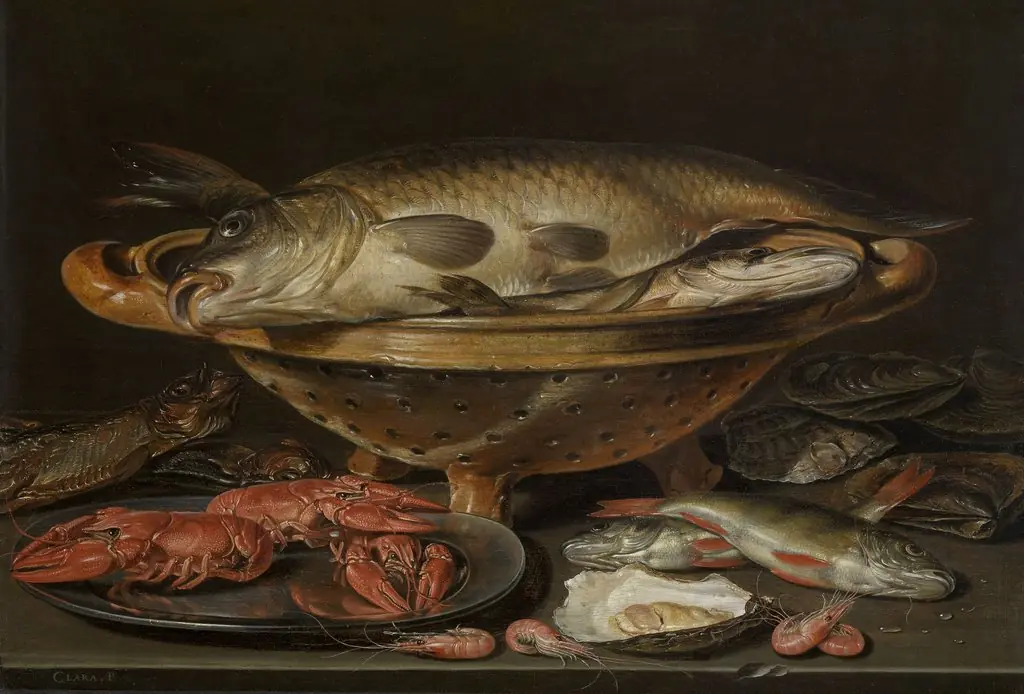
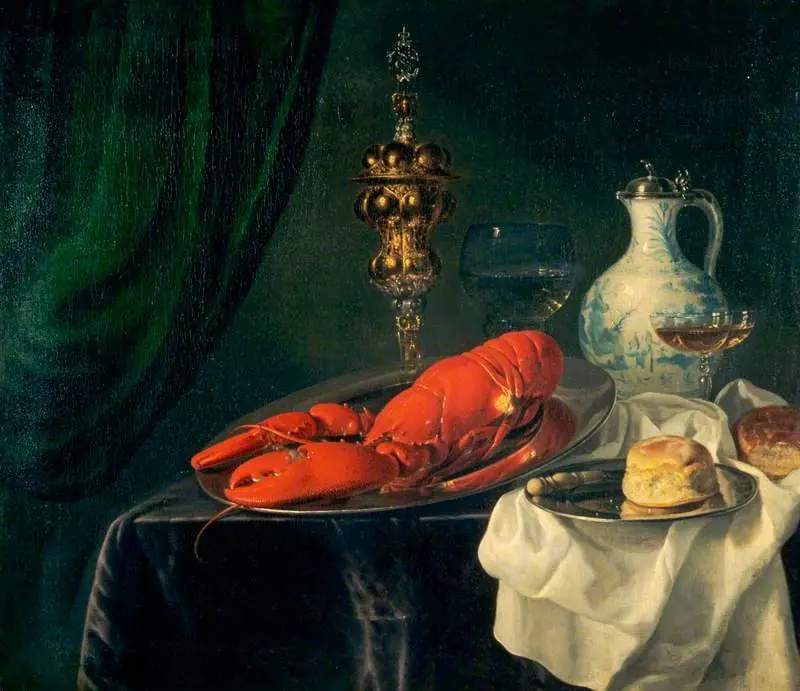
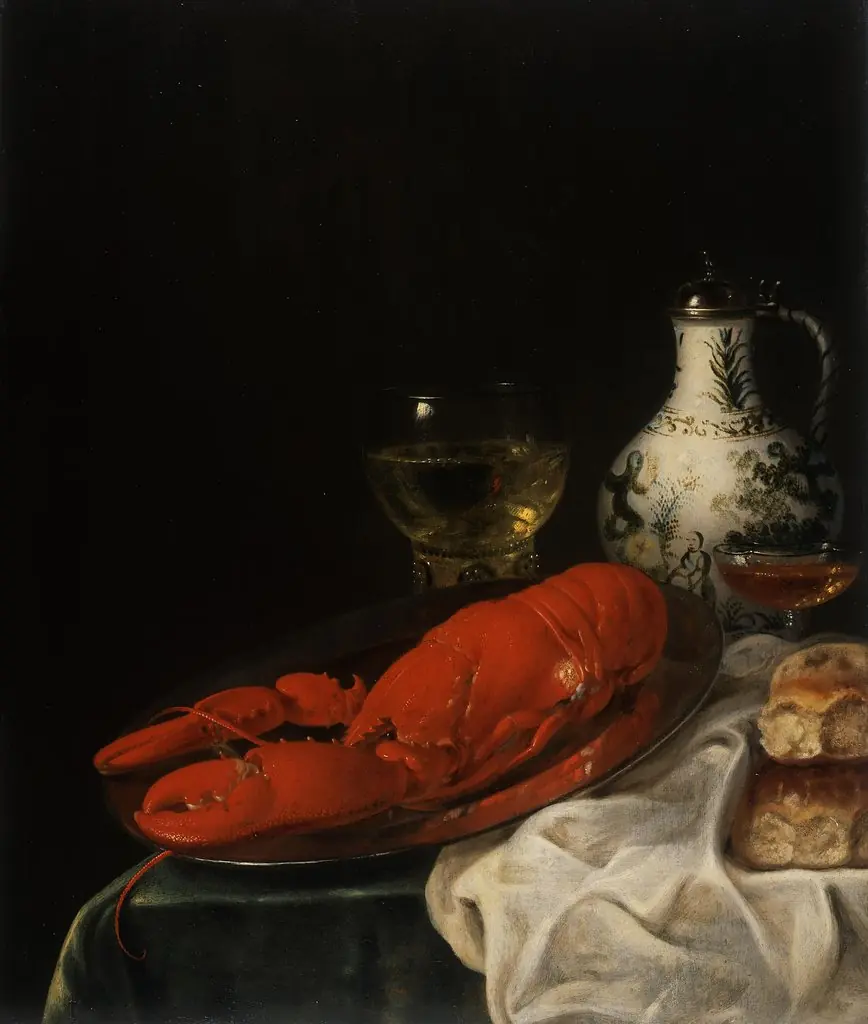
This oil painting depicts a still life arrangement featuring a prominently displayed lobster, accompanied by a silver cup and scattered nuts on a dark, draped table.
Subject & Meaning
The central subject, a cracked-open lobster with vivid red shell and lifelike eyes, draws the viewer’s gaze. The composition may allude to the transience of luxury or the immediacy of mortal awareness, given the lobster’s direct stare and freshly prepared state.
Technique & Style
The painting employs chiaroscuro, contrasting strong light with deep shadows to create visual tension and depth. This technique accentuates the vibrant red of the lobster’s shell against the dark, muted tones of the table and background.
Context
The use of chiaroscuro and the focus on everyday, yet potentially luxurious, objects place this work within the broader tradition of 17th-century Dutch still-life painting, which often explored themes of materiality and mortality.
Legacy
While specific influence or direct lineage are not detailed here, the painting’s effective use of chiaroscuro to evoke emotional response and its thoughtful composition contribute to its place in the continuum of still-life art.
Artist & collection

 Domestic Scene
 Giacomo and Cardinal Marco, investing Andrea, Abbot of San Zeno, with his Benefice
 The Nymph of Fontainebleau
 Portrait of a Woman
 Madonna and Child with Saints in the Enclosed Garden
 Venus and Minerva
 Family Group of Four on Sofa
 Wall painting from Room H of the Villa of P. Fannius Synistor at Boscoreale