Artwork
Old man in a truban casting charms
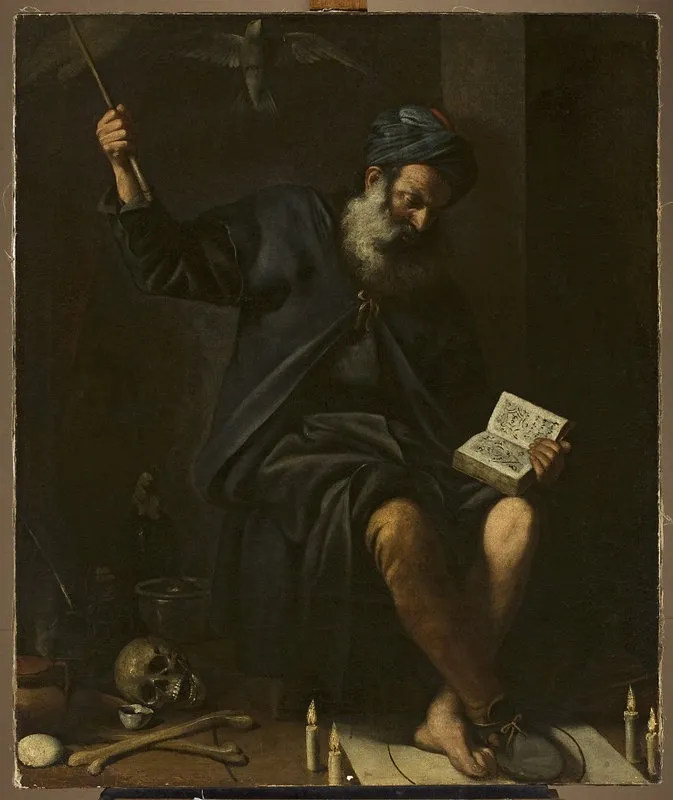
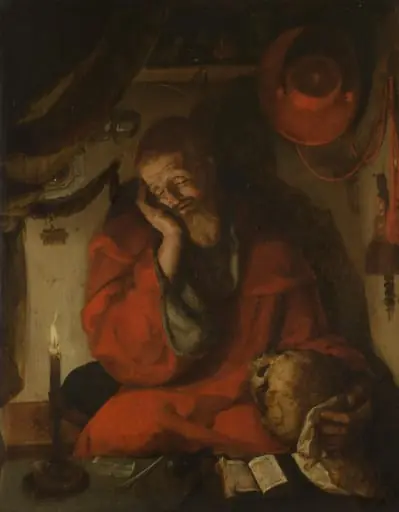
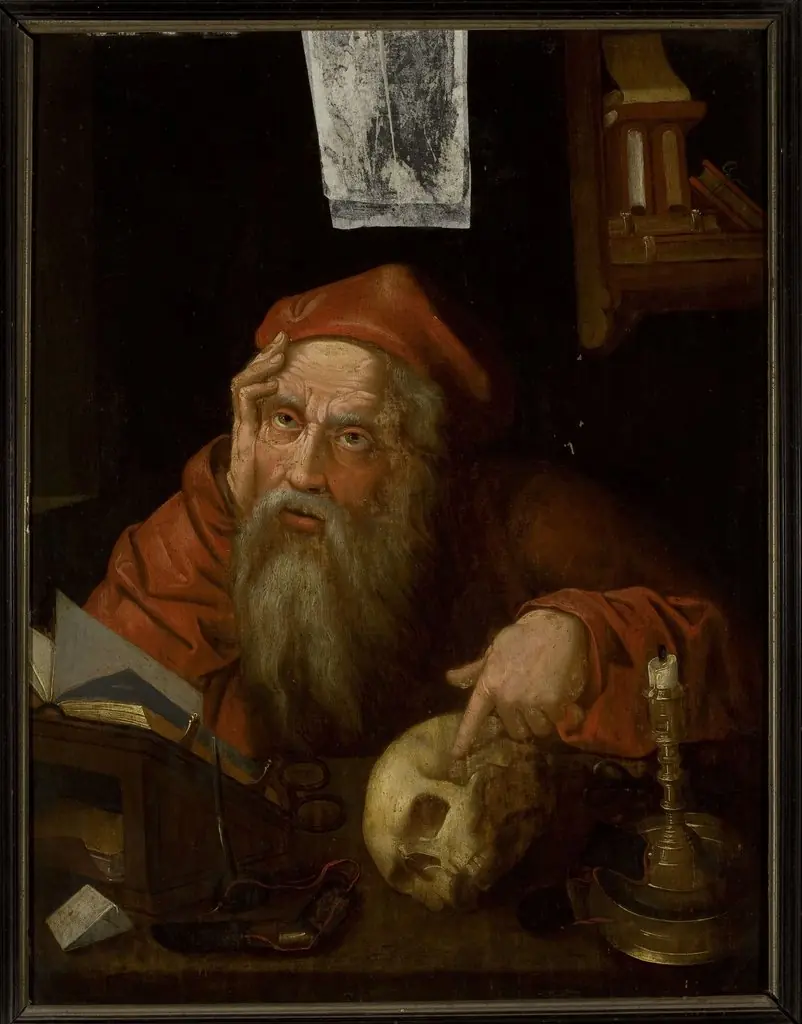
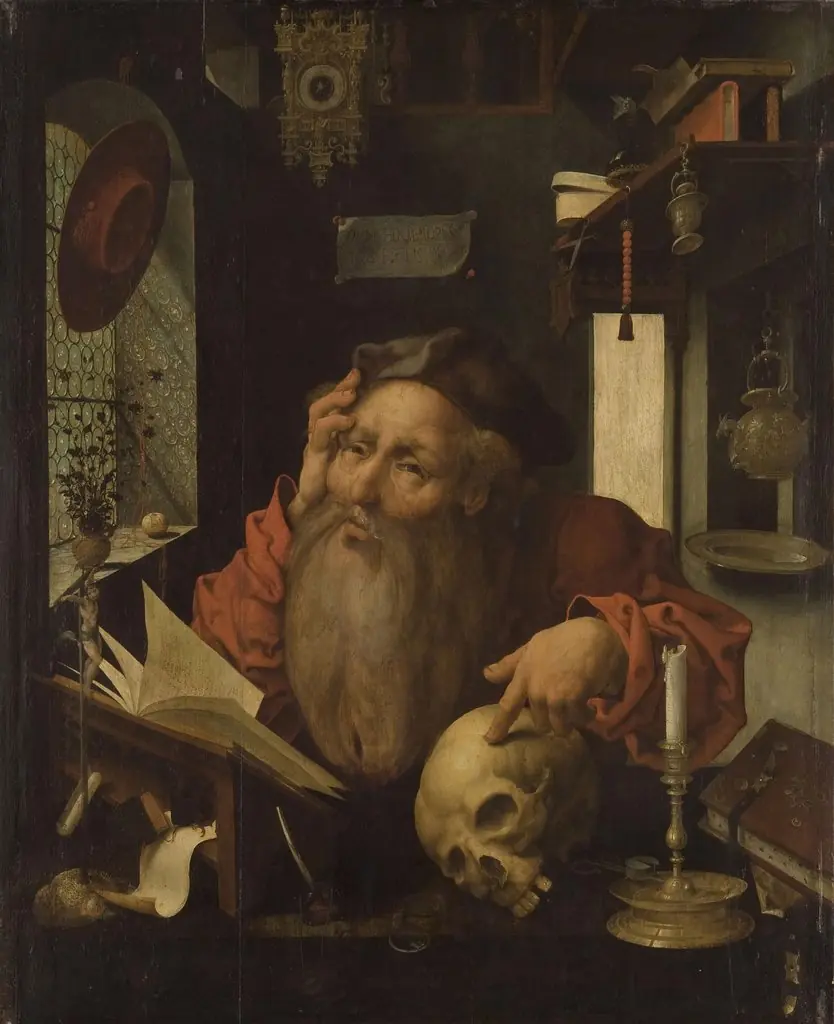
Old man in a truban casting charms is an oil painting by the Dutch Golden Age artist Unknown. It dates from 1650 and is held in the collection of the National Museum in Warsaw. This oil painting portrays an elderly man, dressed in a dark robe and turban, seated cross-legged on the floor.
About this work
Overview
The dim interior is cluttered with symbolic items—a skull, a crossbone, and a flickering candle—creating a quiet, contemplative mood.
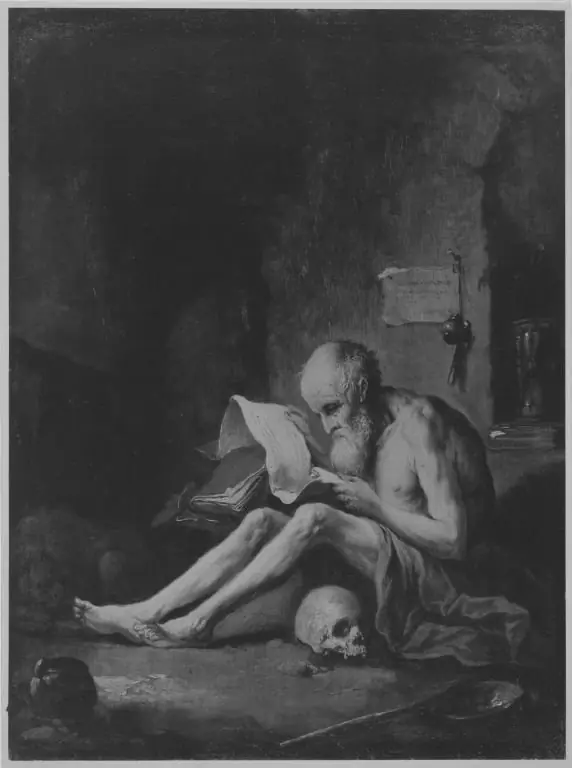
This oil painting portrays an elderly man, dressed in a dark robe and turban, seated cross-legged on the floor. He holds a book in one hand and a staff in the other, while a bird hovers above. The dim interior is cluttered with symbolic items—a skull, a crossbone, and a flickering candle—creating a quiet, contemplative mood. The scene suggests ritual or occult practice, though no specific cultural origin is confirmed.
Subject & Meaning
The figure appears to be a mystic or sorcerer engaged in solitary ritual. The book may represent sacred knowledge, the staff a tool of authority or invocation, and the bird a messenger between realms. The skull and bone hint at mortality or necromantic tradition, while the candle suggests illumination amid darkness. Together, these elements evoke a personal spiritual practice, neither clearly religious nor purely fantastical.
Technique & Style
The artist employs muted tones and controlled chiaroscuro to emphasize the figure’s stillness against a shadowed interior. Brushwork is precise in rendering textures—the fabric of the robe, the grain of the book, the smoothness of bone—while the dim lighting unifies the composition. The bird, rendered with lighter strokes, introduces a subtle contrast, drawing the eye upward without disrupting the scene’s solemnity.
History & Provenance
The painting’s origin remains undocumented in public records. No known artist, date, or exhibition history has been firmly established. It has appeared in private collections since at least the mid-20th century, with no clear lineage to major schools or movements. Its anonymity contributes to its enigmatic character, leaving interpretation open to speculation.
Context
The imagery aligns with 17th- and 18th-century European fascination with Eastern mysticism, alchemy, and occult symbolism, often depicted in genre scenes or allegorical works. While the turban and attire evoke Middle Eastern or South Asian associations, the objects—skull, crossbone, candle—are more typical of Western esoteric traditions. The blend suggests a fictionalized, hybridized vision rather than ethnographic accuracy.
Legacy
Though not widely studied or reproduced, the painting has influenced niche artistic circles interested in spiritual iconography and the aesthetics of solitude. Its quiet intensity and unresolved symbolism have made it a touchstone for creators exploring themes of hidden knowledge and the liminal space between life and death, without becoming part of mainstream art historical discourse.
Artist & collection

 Domestic Scene
 Giacomo and Cardinal Marco, investing Andrea, Abbot of San Zeno, with his Benefice
 The Nymph of Fontainebleau
 Portrait of a Woman
 Madonna and Child with Saints in the Enclosed Garden
 Venus and Minerva
 Family Group of Four on Sofa
 Wall painting from Room H of the Villa of P. Fannius Synistor at Boscoreale