Artwork
The parrot addresses Khujasta at the beginning of the thirty-sixth night, from a Tuti-nama (Tales of a Parrot)
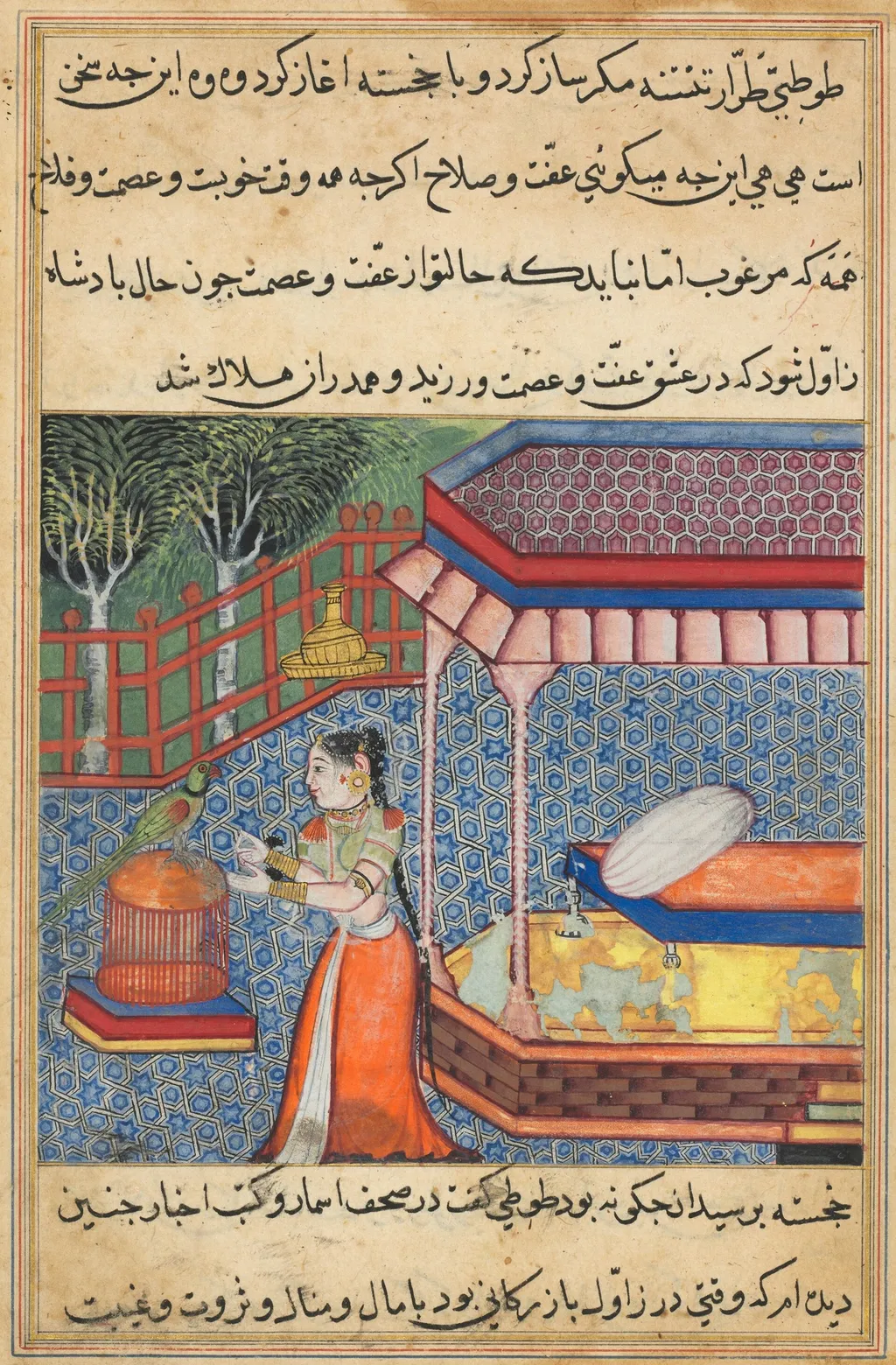
The parrot addresses Khujasta at the beginning of the thirty-sixth night, from a Tuti-nama (Tales of a Parrot) is an unspecified painting. It dates from 1560 and is held in the collection of the Cleveland Museum of Art. The work portrays a seated woman before a birdcage, a parrot perched atop the cage, and a richly patterned interior.
About this work
Overview
The work portrays a seated woman before a birdcage, a parrot perched atop the cage, and a richly patterned interior. She wears an orange skirt, a green blouse and gold ornaments, holding a small object that may be food. Behind her, a blue‑white tiled wall, a red railing and stylised palm fronds complete the setting, all rendered in vivid hues.
Subject & Meaning
The scene is drawn from the opening of the thirty‑sixth night of the Tuti‑nama, a collection of Persian tales featuring a talking parrot. The woman, identified as Khujasta, appears to be addressing the bird, suggesting a narrative moment in which the parrot delivers counsel or storytelling, a common motif in the literary tradition.
Technique & Style
Executed in oil on canvas, the painting employs a flat decorative approach typical of Persian miniature influences, with bold, saturated colours and intricate ornamental patterns. The contrast between the bright orange garment and the cool blue‑white background highlights the central figures, while the detailed rendering of jewelry and foliage reflects meticulous brushwork.
History & Provenance
The piece originates from a 19th‑century Persian workshop that produced illustrated copies of the Tuti‑nama. It entered a private collection in the early 1900s before being acquired by a museum in the mid‑20th century, where it has been catalogued as part of the illustrated manuscript tradition.
Context
The Tuti‑nama, or "Tales of the Parrot," is a didactic collection that uses the bird’s voice to convey moral lessons. Visual representations of its stories were common in manuscript illumination, and this painting adapts that narrative into a standalone canvas, reflecting the cross‑media popularity of the text during the Qajar period.
Artist & collection

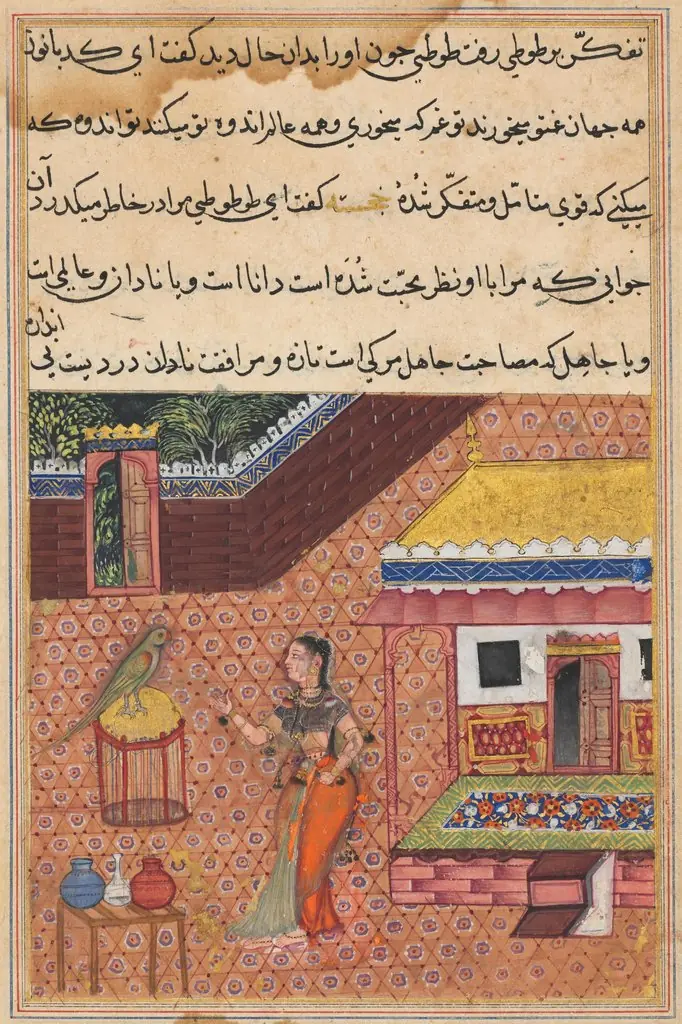 The parrot addresses Khujasta at the beginning of the thirty-fourth night, from a Tuti-nama (Tales of a Parrot)
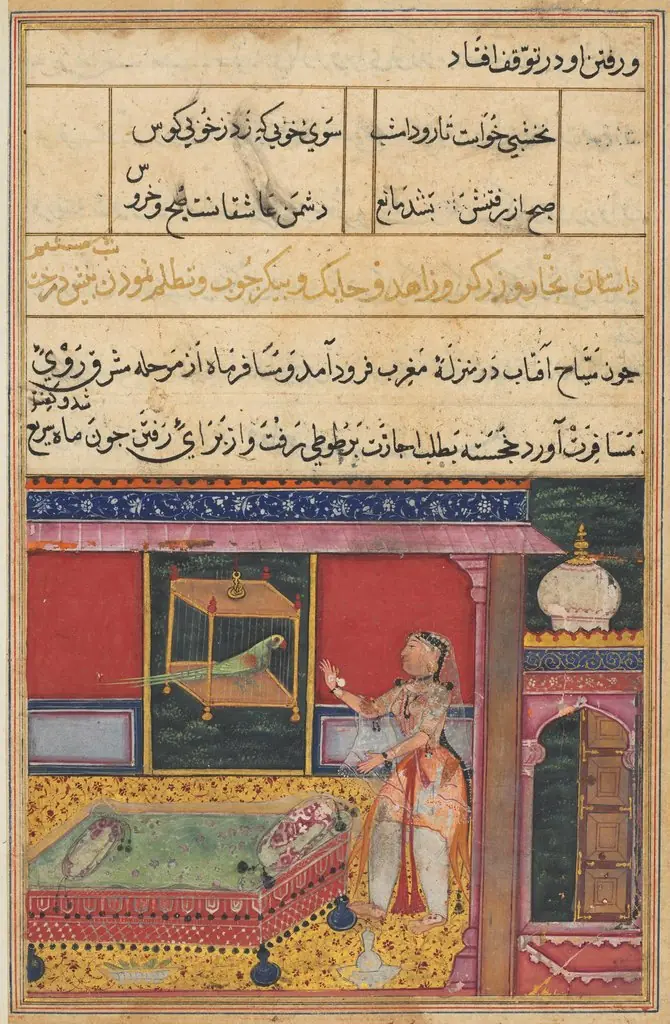 The Parrot Addresses Khujasta at the Beginning of the Sixth Night, from a Tuti-nama (Tales of a Parrot)
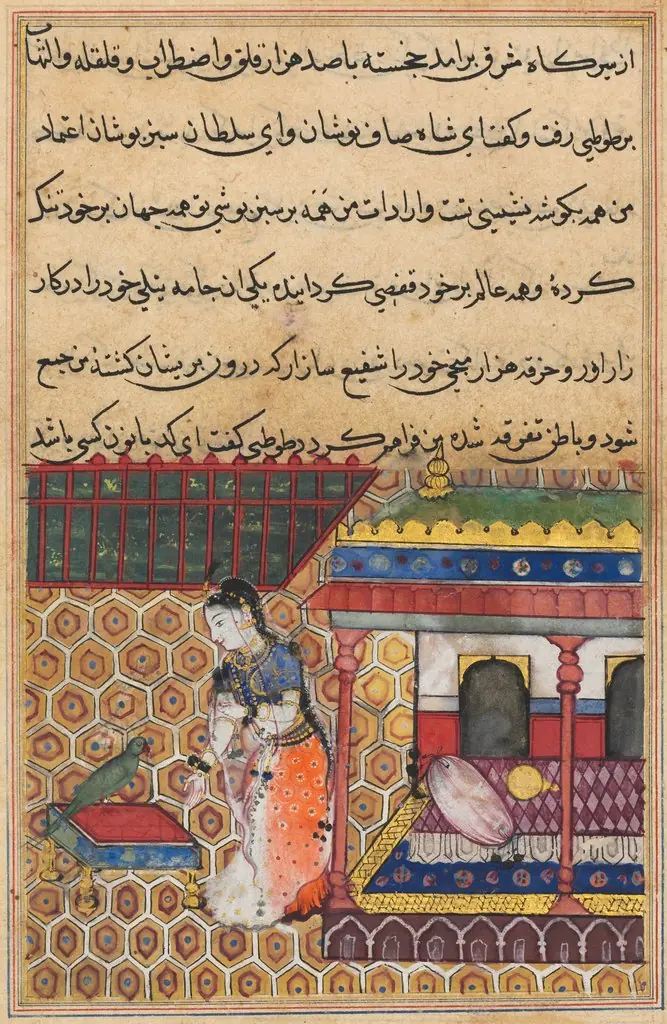 The parrot addresses Khujasta at the beginning of the thirty-eighth night, from a Tuti-nama (Tales of a Parrot)
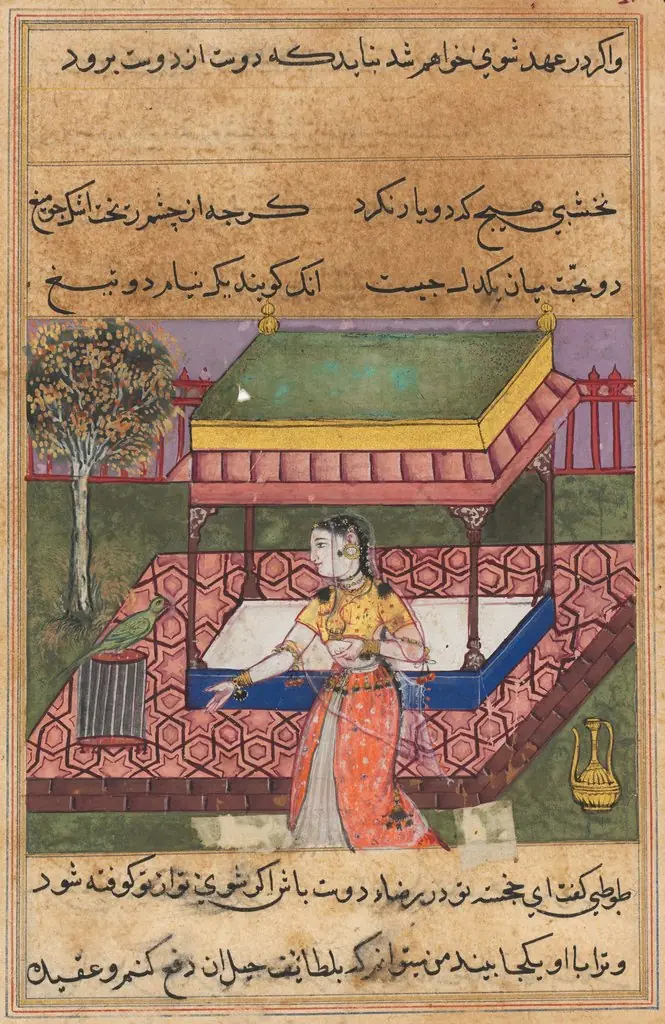 The parrot addresses Khujasta at the beginning of the fortieth night, from a Tuti-nama (Tales of a Parrot)
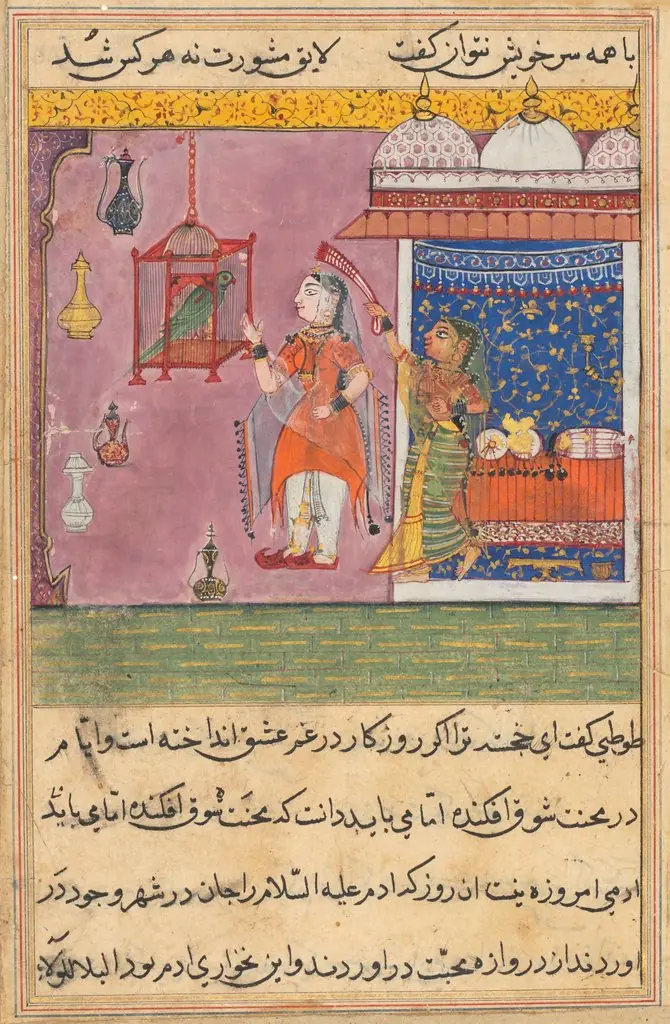 The Parrot Addresses Khujasta at the Beginning of the Nineteenth Night, from a Tuti-nama (Tales of a Parrot)
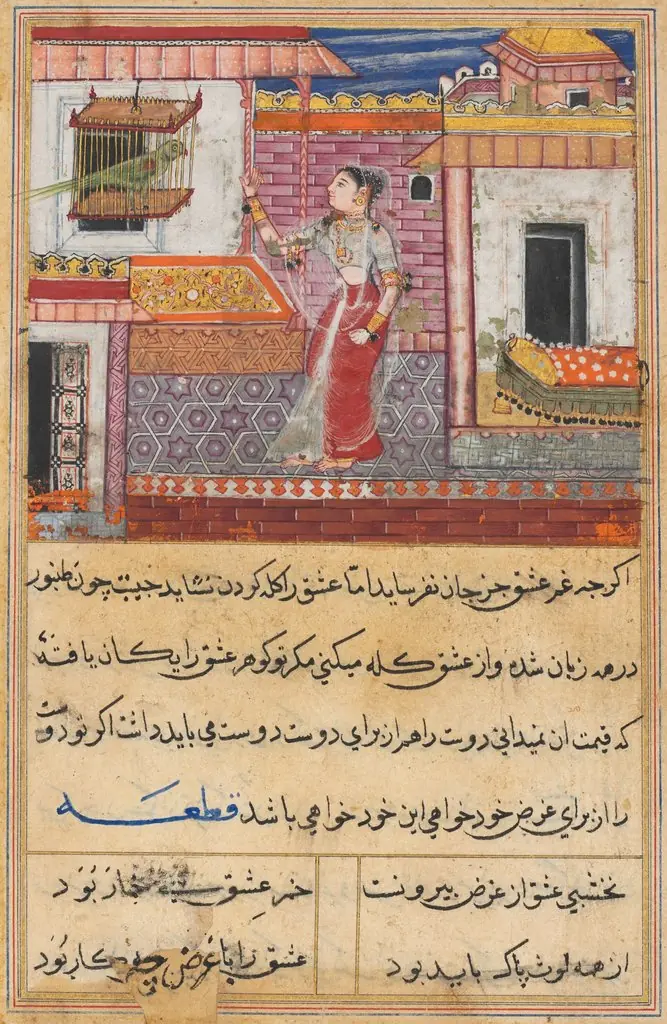 The Parrot Addresses Khujasta at the Beginning of the Thirteenth Night, from a Tuti-nama (Tales of a Parrot)
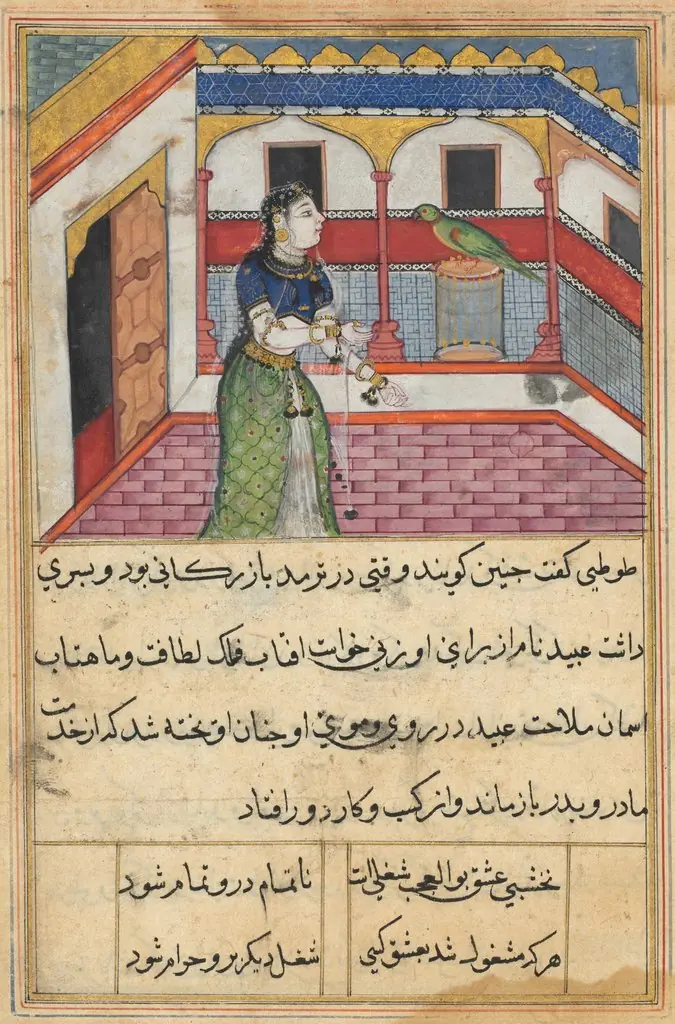 The parrot addresses Khujasta at the beginning of the forty-second night, from a Tuti-nama (Tales of a Parrot)
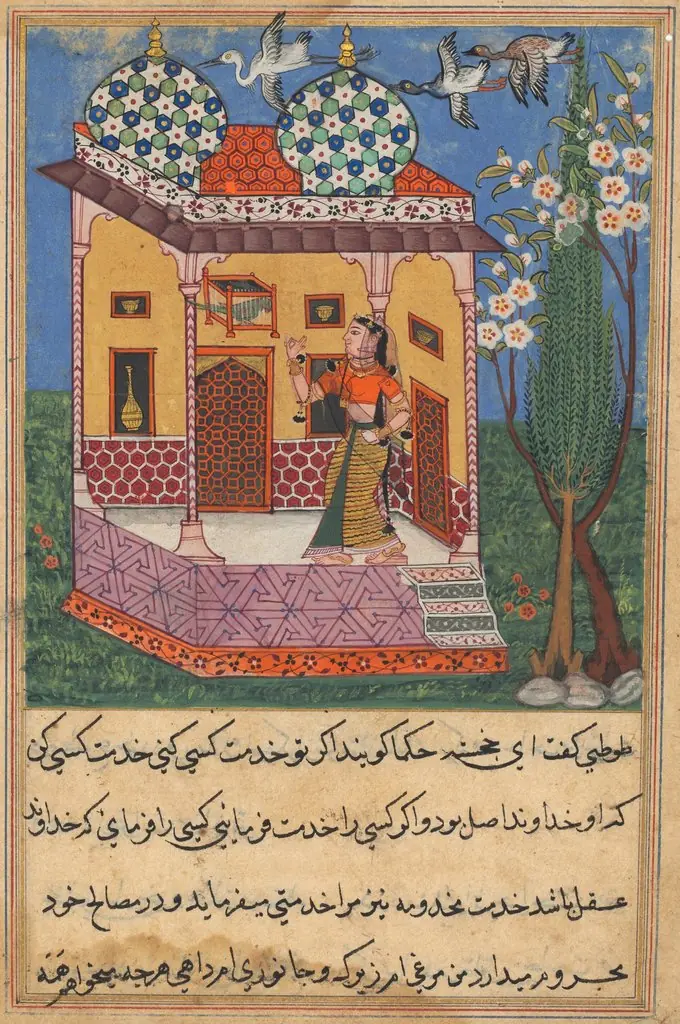 The Parrot Addresses Khujasta at the Beginning of the Twenty-sixth Night, from a Tuti-nama (Tales of a Parrot)
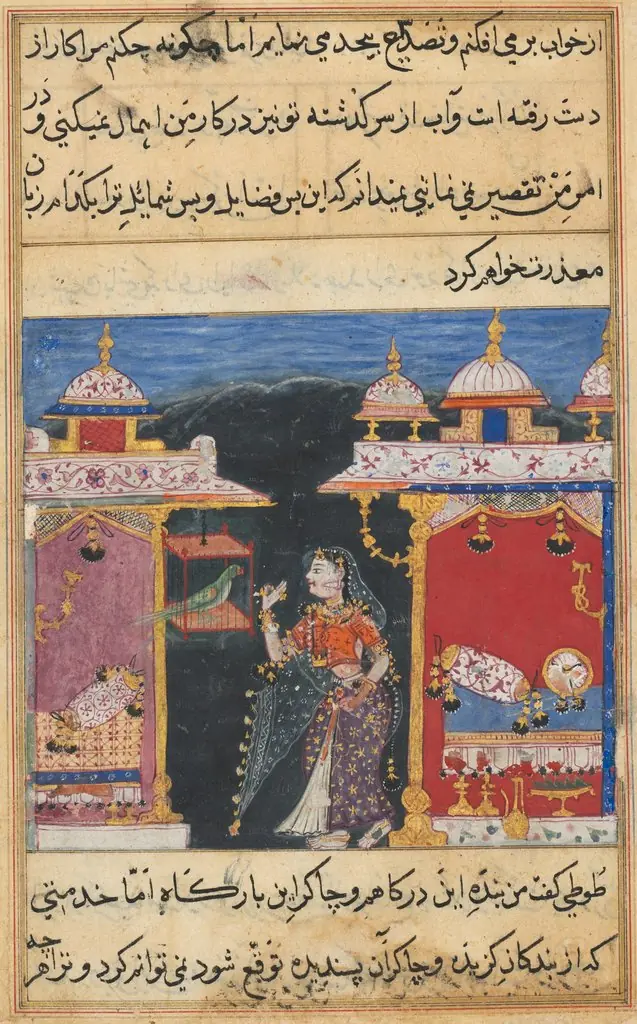 The Parrot Addresses Khujasta at the Beginning of the Seventh Night, from a Tuti-nama (Tales of a Parrot)
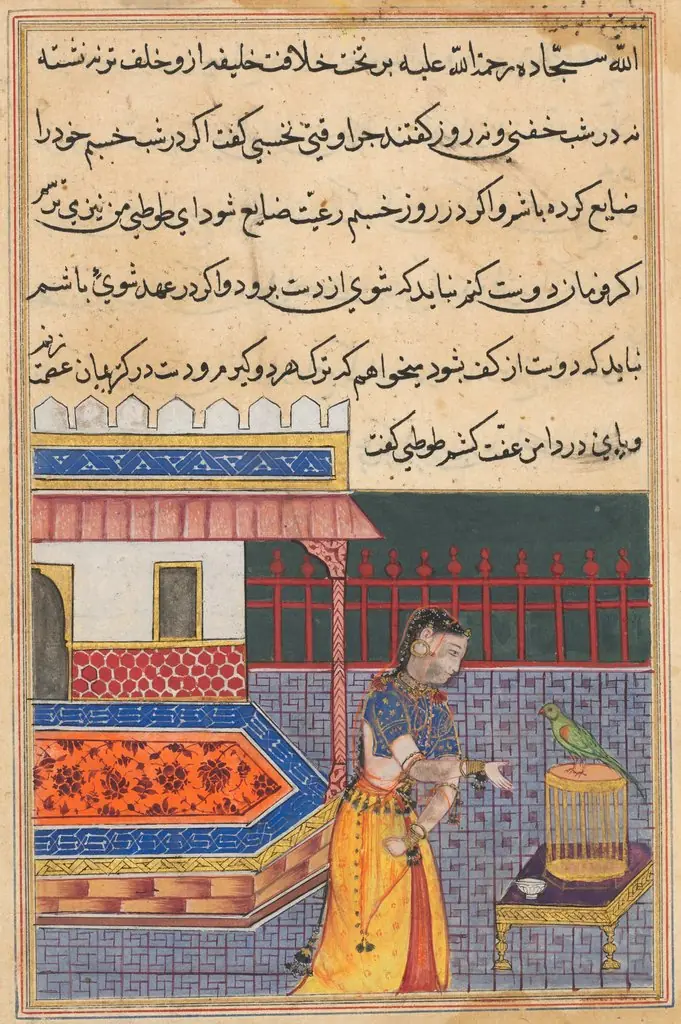 The parrot addresses Khujasta at the beginning of the forty-first night, from a Tuti-nama (Tales of a Parrot): Forty-first Night
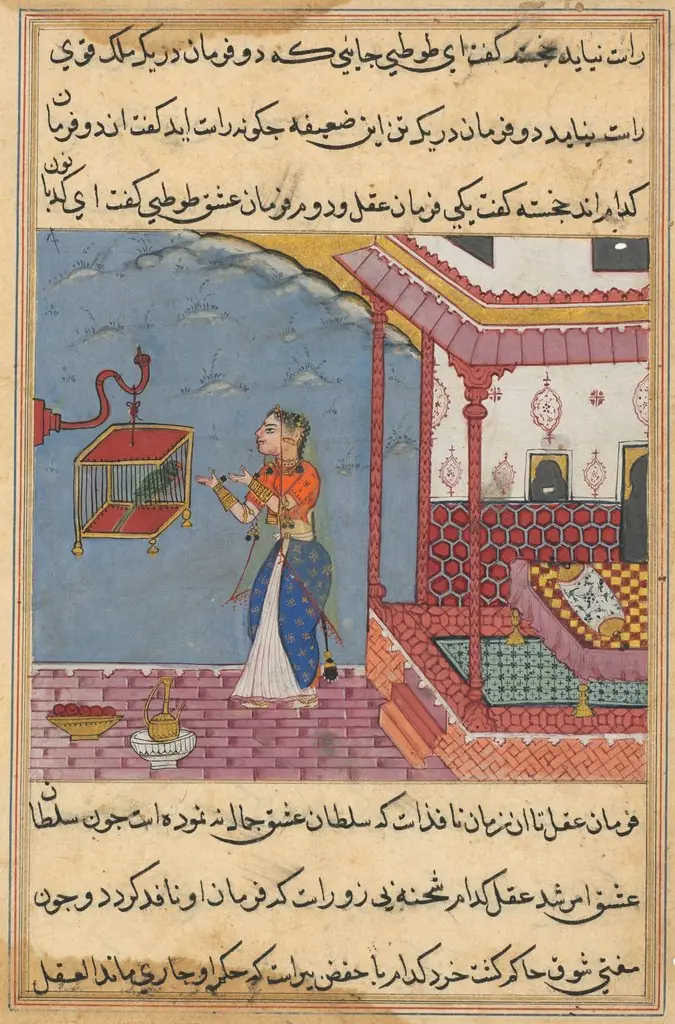 The Parrot Addresses Khujasta at the Beginning of the Twenty-Fourth Night, from a Tuti-nama (Tales of a Parrot)