Artwork
The parrot addresses Khujasta at the beginning of the fortieth night, from a Tuti-nama (Tales of a Parrot)
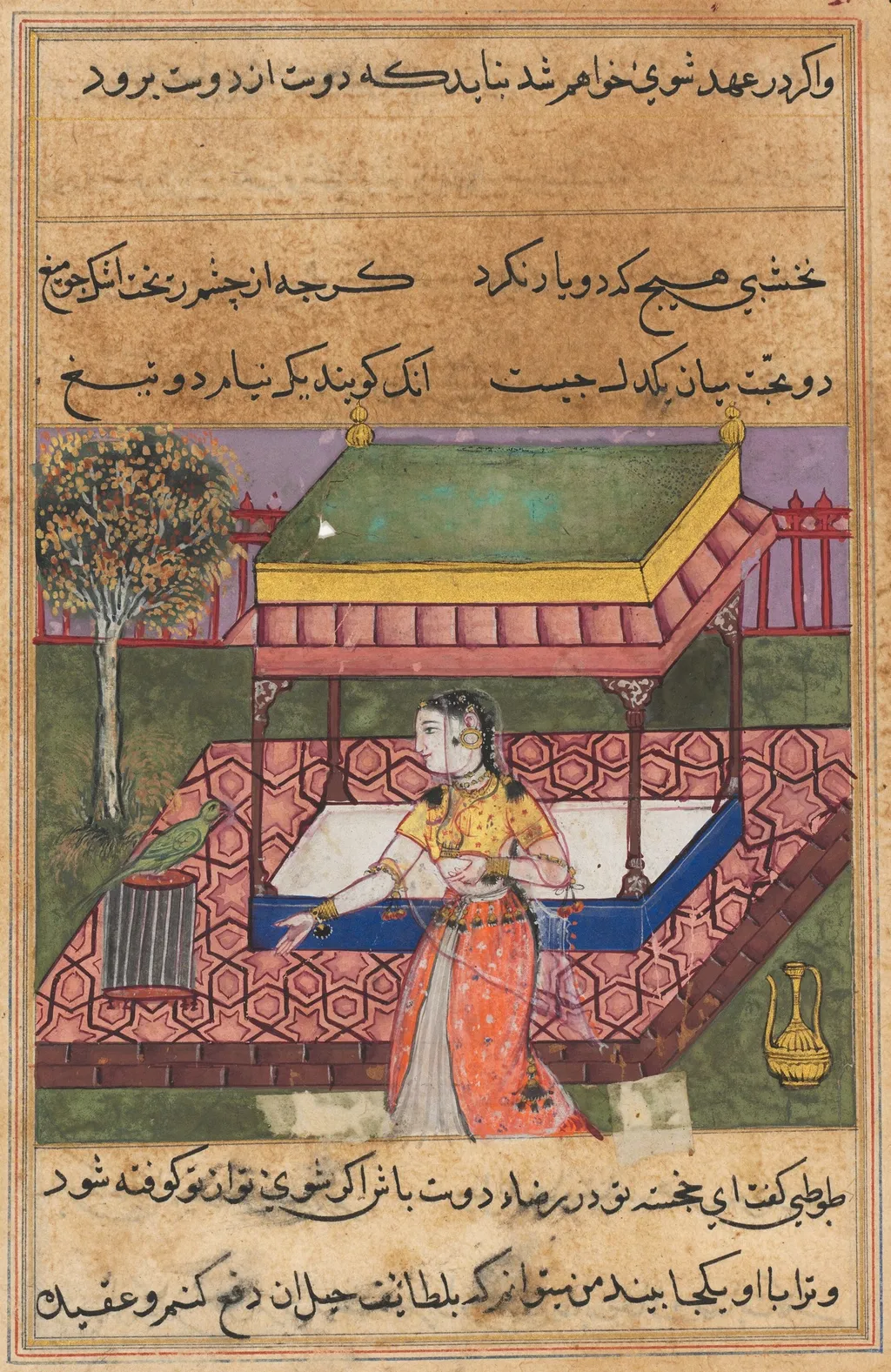
The parrot addresses Khujasta at the beginning of the fortieth night, from a Tuti-nama (Tales of a Parrot) is an unspecified painting. It dates from 1560 and is held in the collection of the Cleveland Museum of Art. The work is an illustrated miniature from the Persian manuscript *Tuti‑nama* (Tales of a Parrot).
About this work
Overview
The work is an illustrated miniature from the Persian manuscript *Tuti‑nama* (Tales of a Parrot).
The work is an illustrated miniature from the Persian manuscript *Tuti‑nama* (Tales of a Parrot). It depicts a scene in which a woman, dressed in a vivid red garment and adorned with gold jewelry, stands on a balcony and converses with a green parrot perched on a red railing. The composition is framed by a stylised tree with orange foliage and a building capped with a purple roof, all rendered in the intricate decorative style typical of courtly manuscript art.
Subject & Meaning
The narrative illustrated shows the parrot addressing a woman named Khujasta at the onset of the fortieth night, a moment drawn from the story’s moral and romantic themes. The bird’s speech, rendered in flowing Persian script, serves as a vehicle for counsel and intrigue, reflecting the tradition of using talking animals to convey ethical lessons within Persian literary culture.
Technique & Style
Executed in fine brushwork on paper, the miniature employs a limited yet saturated palette of reds, greens, gold, and purples. The figures are outlined with delicate black lines, while ornamental patterns decorate the balcony floor and canopy. Gold leaf highlights the jewelry and architectural details, exemplifying the lavish materials and meticulous detailing characteristic of Safavid‑era manuscript illumination.
History & Provenance
The miniature originates from a 17th‑century Persian codex of the *Tuti‑nama*, a popular collection of fables. The manuscript was later acquired by collectors of Islamic art and entered the Cleveland Museum of Art’s collection, where it is displayed among other examples of Persian miniature painting.
Context
The *Tuti‑nama* belongs to a broader tradition of illustrated moral tales that flourished in the Persianate world, often commissioned by aristocratic patrons for private reading. The depiction of a parrot—a symbol of eloquence and wisdom—interacting with a noblewoman reflects the courtly ideals of refined conversation and the didactic function of such stories.
Legacy
Illustrations like this continue to inform scholars about the visual conventions, material culture, and narrative strategies of early modern Persian art. The piece also contributes to the museum’s representation of cross‑cultural storytelling, highlighting the enduring appeal of animal‑talk narratives in literary and visual traditions.
Artist & collection

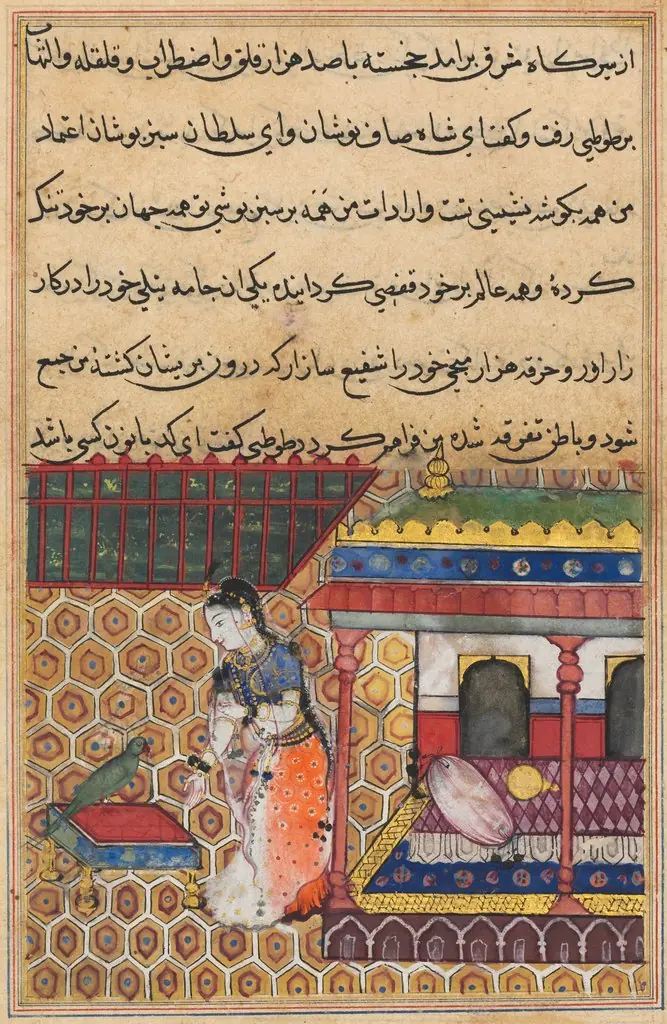 The parrot addresses Khujasta at the beginning of the thirty-eighth night, from a Tuti-nama (Tales of a Parrot)
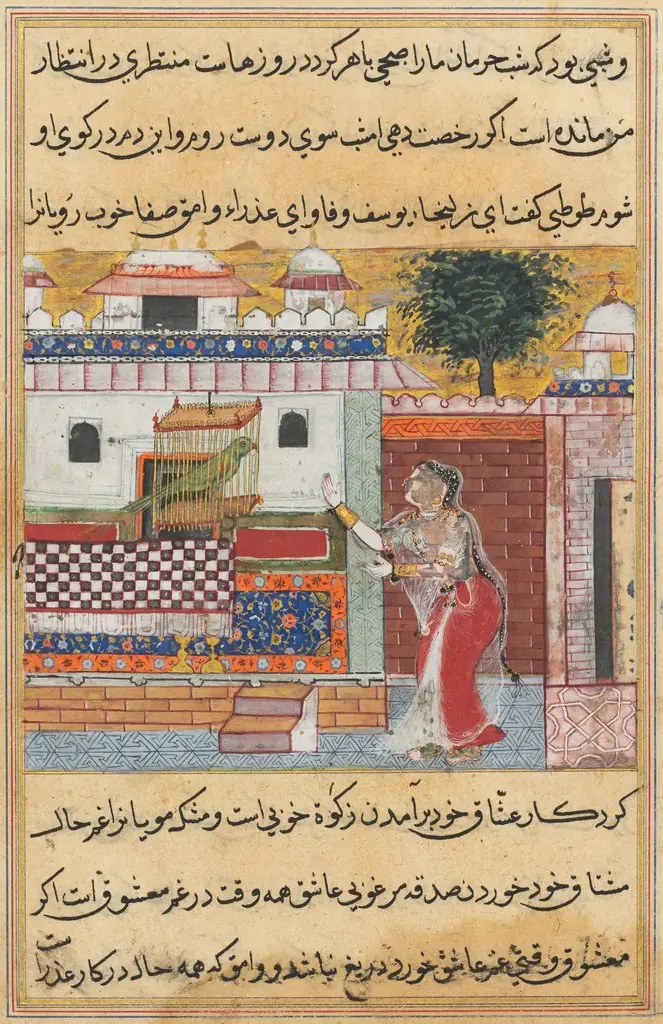 The Parrot Addresses Khujasta at the Beginning of the Twelfth Night, from a Tuti-nama (Tales of a Parrot)
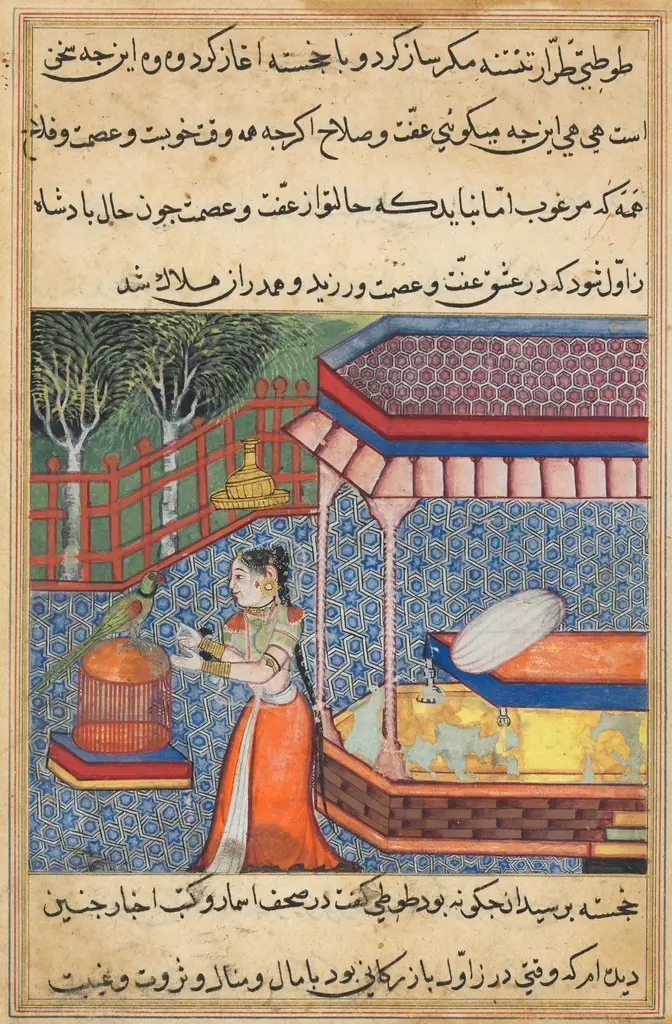 The parrot addresses Khujasta at the beginning of the thirty-sixth night, from a Tuti-nama (Tales of a Parrot)
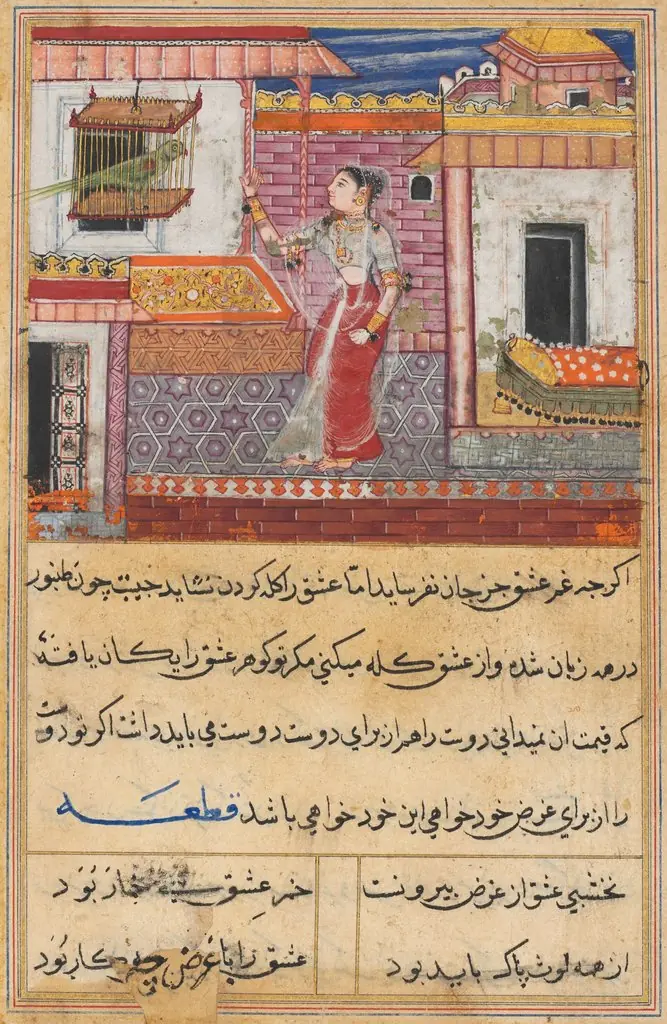 The Parrot Addresses Khujasta at the Beginning of the Thirteenth Night, from a Tuti-nama (Tales of a Parrot)
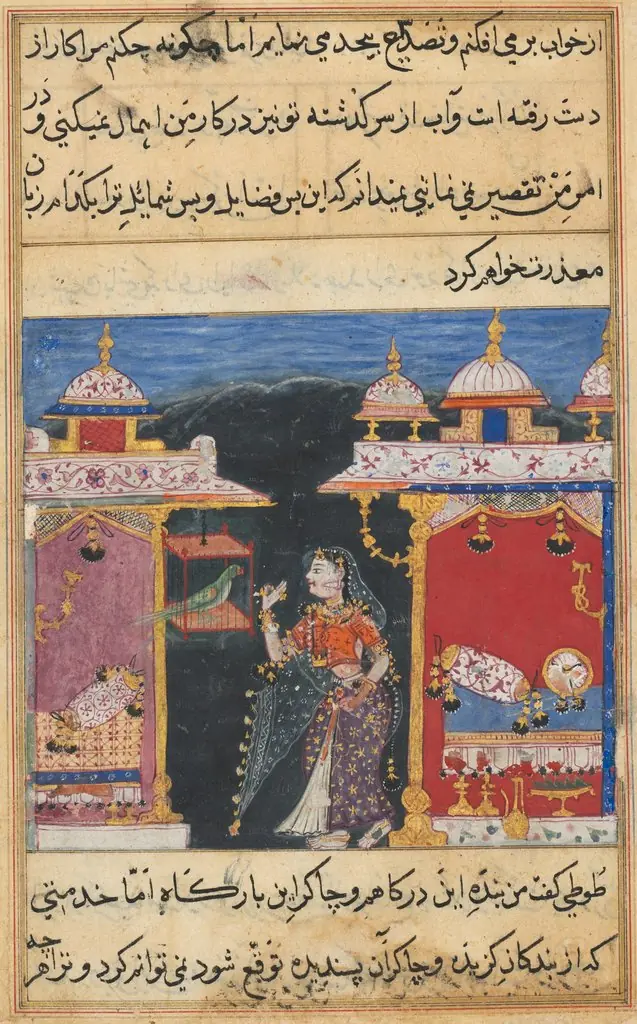 The Parrot Addresses Khujasta at the Beginning of the Seventh Night, from a Tuti-nama (Tales of a Parrot)
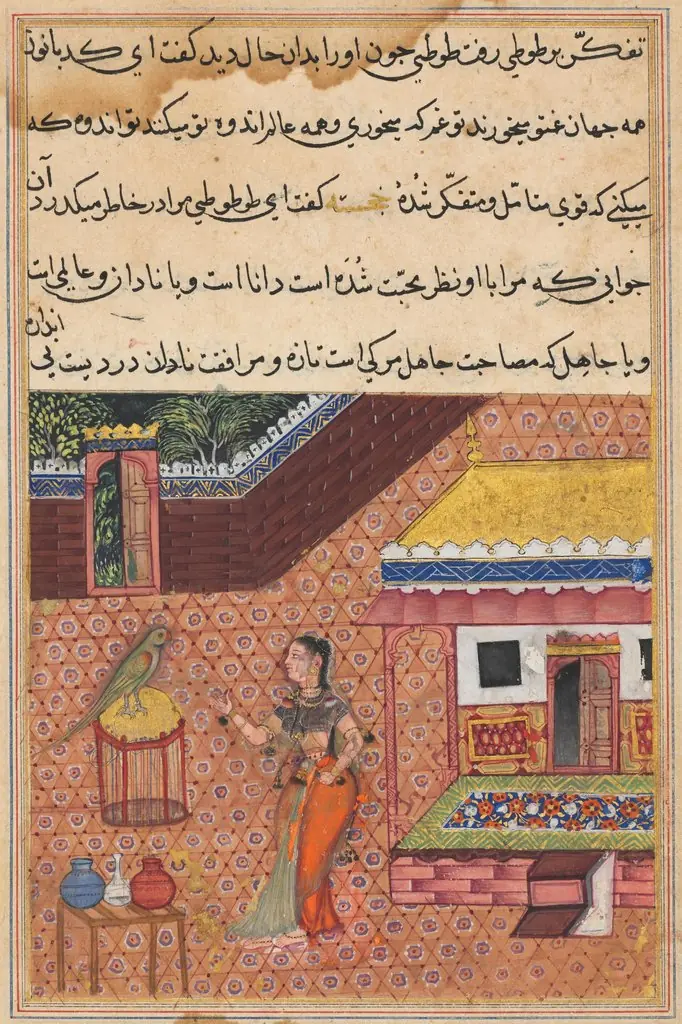 The parrot addresses Khujasta at the beginning of the thirty-fourth night, from a Tuti-nama (Tales of a Parrot)
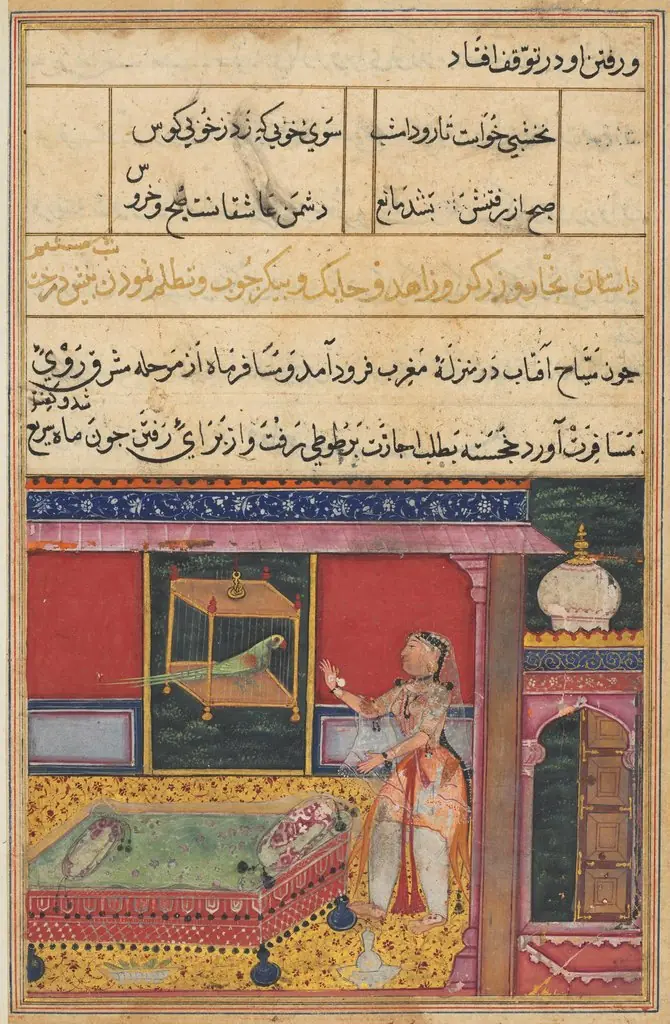 The Parrot Addresses Khujasta at the Beginning of the Sixth Night, from a Tuti-nama (Tales of a Parrot)
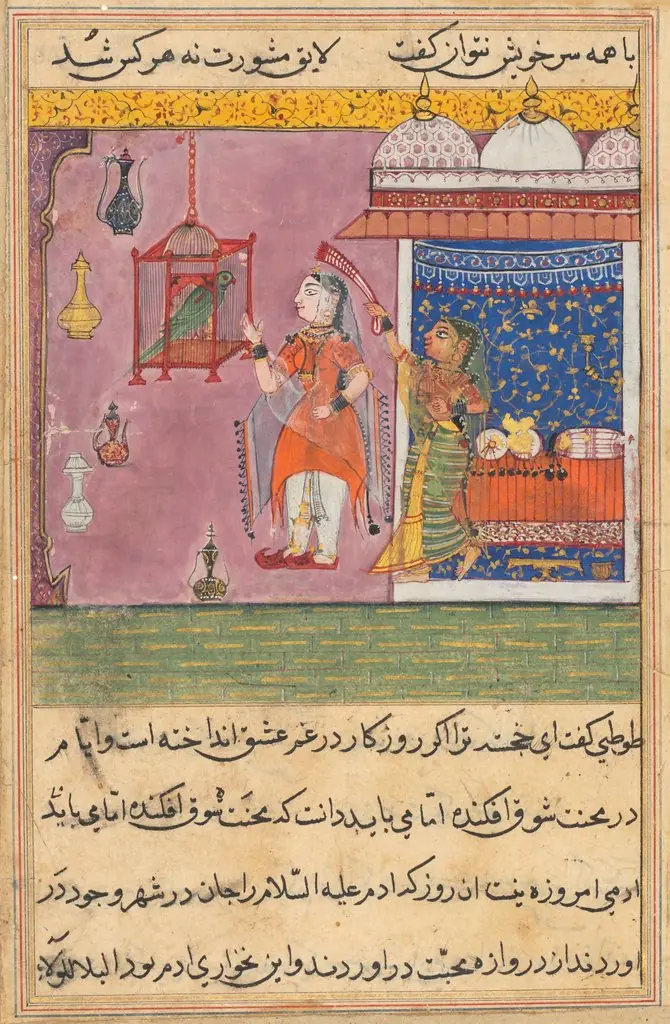 The Parrot Addresses Khujasta at the Beginning of the Nineteenth Night, from a Tuti-nama (Tales of a Parrot)
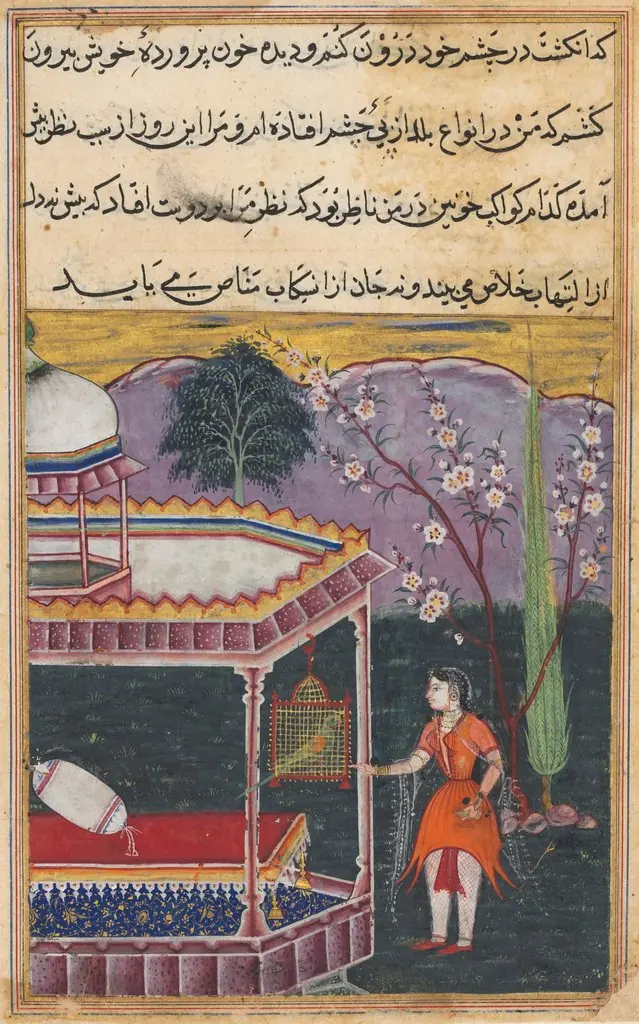 The Parrot Addresses Khujasta at the Beginning of the Eighth Night, from a Tuti-nama (Tales of a Parrot)
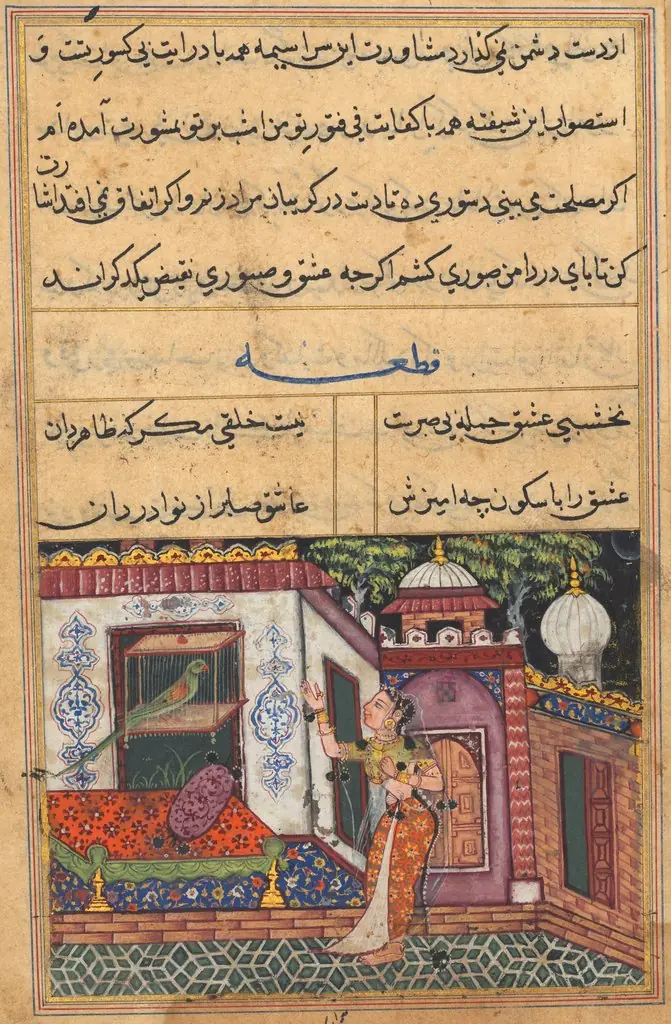 The Parrot Addresses Khujasta at the Beginning of the Eleventh Night, from a Tuti-nama (Tales of a Parrot)