Artwork
The king of Zabul sees Mahrusa from his palace balcony, from a Tuti-nama (Tales of a Parrot): Thirty-sixth Night
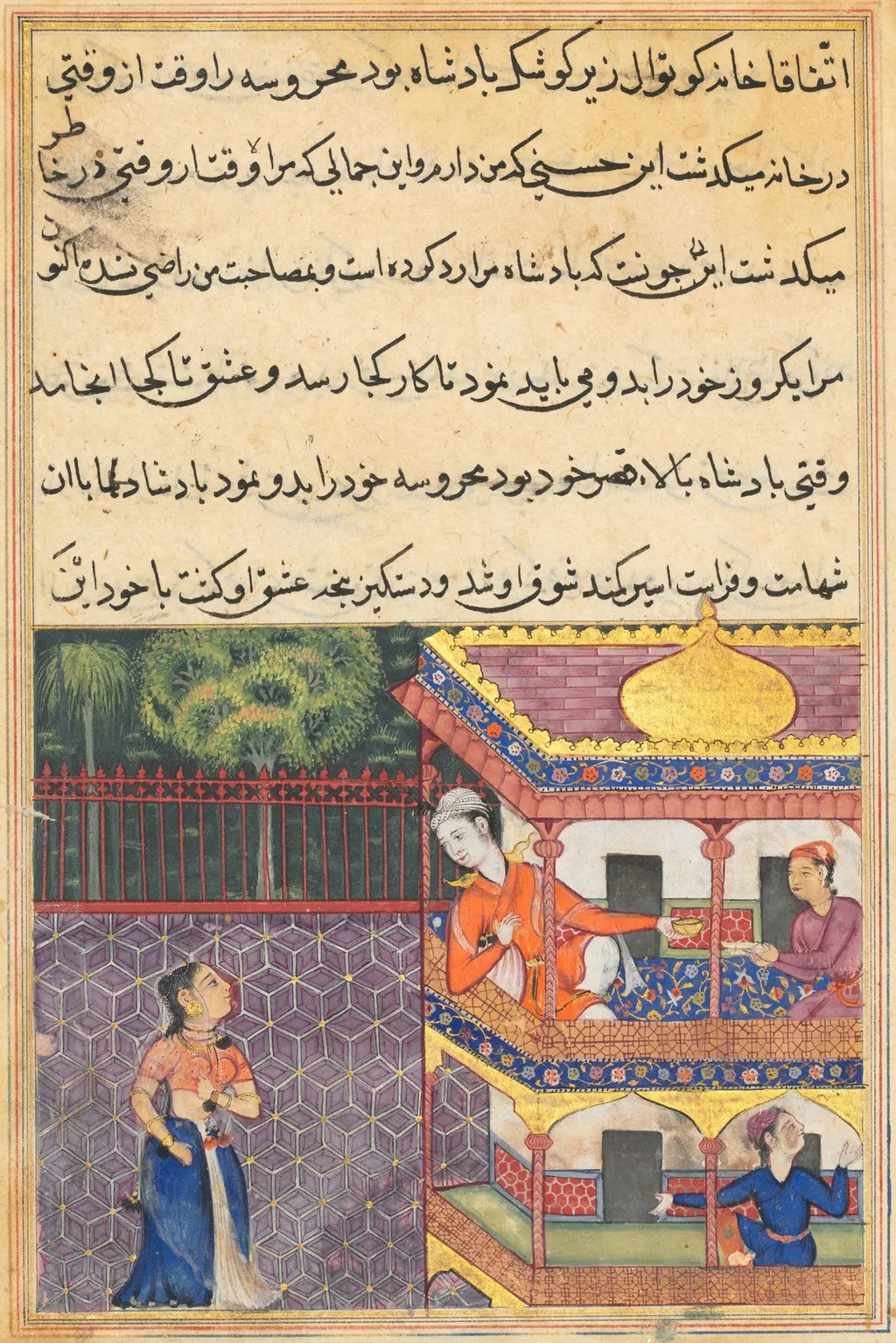
The king of Zabul sees Mahrusa from his palace balcony, from a Tuti-nama (Tales of a Parrot): Thirty-sixth Night is an unspecified painting. It dates from 1560 and is held in the collection of the Cleveland Museum of Art. The work illustrates a narrative episode from the Persian collection of stories known as the Tuti‑nama, or Tales of a Parrot.
About this work
Overview
Set on a palace balcony, the composition shows a woman in a blue skirt and orange blouse crossing her arms, while three men occupy the balcony and its base.
The work illustrates a narrative episode from the Persian collection of stories known as the Tuti‑nama, or Tales of a Parrot. Set on a palace balcony, the composition shows a woman in a blue skirt and orange blouse crossing her arms, while three men occupy the balcony and its base. Architectural elements such as a decorative railing, canopy, and patterned wall frame the scene, with a tree visible beyond.
Subject & Meaning
The painting captures the moment when the king of Zabul observes Mahrusa from his elevated perch, a scene drawn from the thirty‑sixth night of the Tuti‑nama. The interaction between the seated figures and the standing woman suggests a narrative of courtly intrigue or romantic encounter, reflecting the moral and didactic themes typical of the tale’s storytelling tradition.
Technique & Style
Executed in a refined painting technique, the piece employs a clear, flattened pictorial space characteristic of Persian miniature traditions. The use of vivid, contrasting colors—particularly the orange garments and blue skirt—highlights individual figures, while the geometric wall pattern and stylized foliage convey decorative richness without striving for naturalistic depth.
History & Provenance
The artwork is part of the collection of the Cleveland Museum of Art. Its acquisition details trace back to the museum’s broader efforts to represent Persian narrative painting, though specific information about its earlier ownership or date of creation is not provided in the available records.
Context
Narrative paintings like this one were commonly produced to illustrate literary manuscripts, serving both as visual accompaniment to text and as objects of aesthetic appreciation. The Tuti‑nama, a collection of moral stories featuring a parrot narrator, was popular across the Persianate world, influencing visual culture in courts and workshops.
Artist & collection

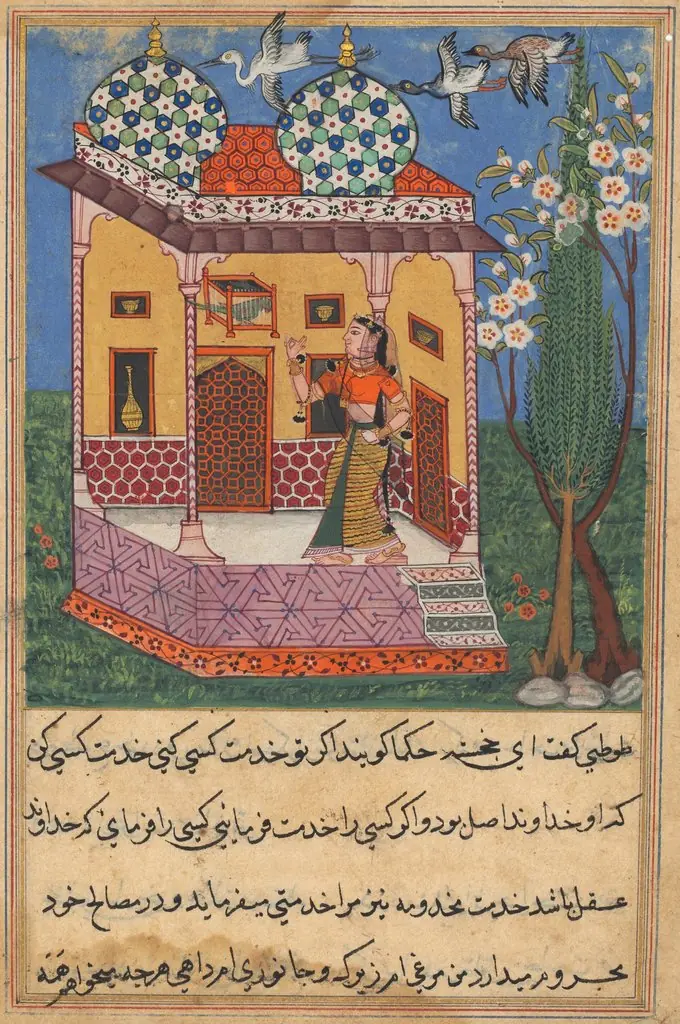 The Parrot Addresses Khujasta at the Beginning of the Twenty-sixth Night, from a Tuti-nama (Tales of a Parrot)
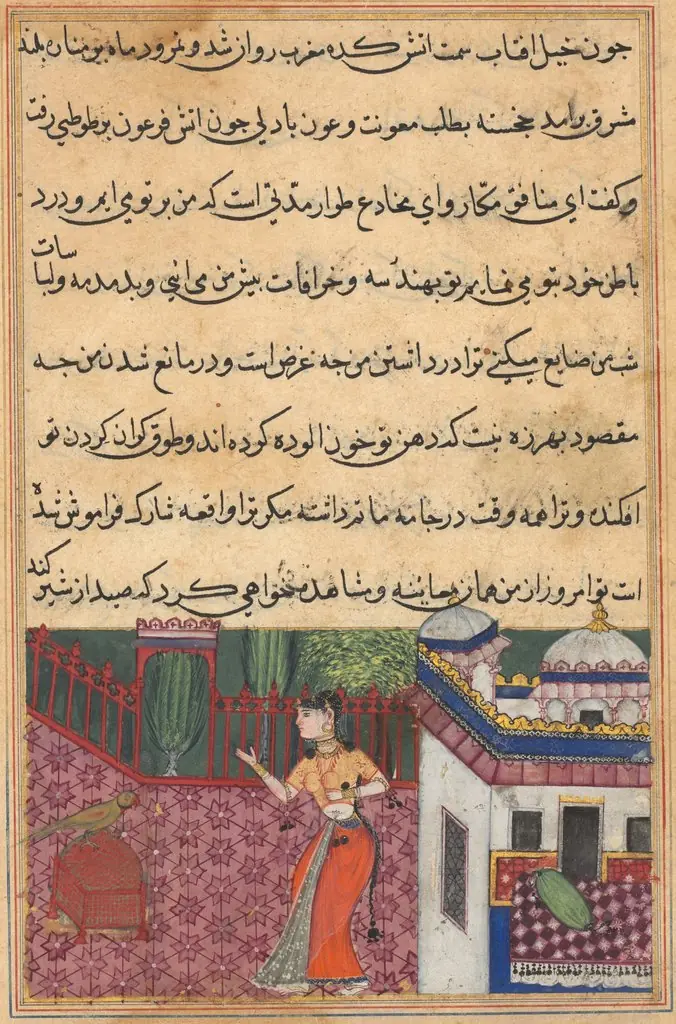 The parrot addresses Khujasta at the beginning of the thirty-third night, from a Tuti-nama (Tales of a Parrot)
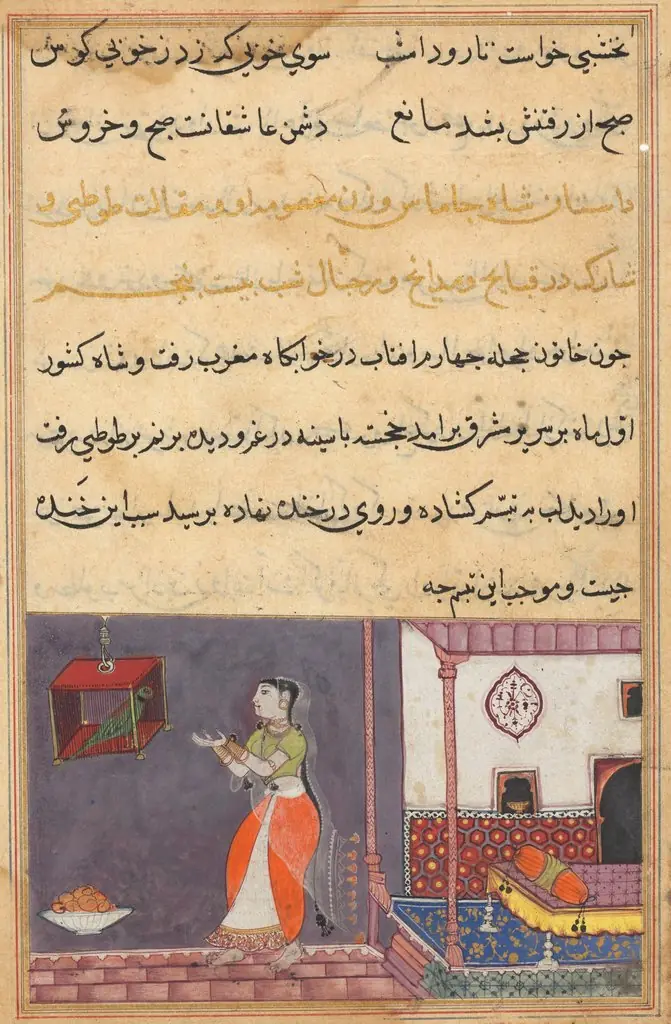 The Parrot Addresses Khujasta at the Beginning of the Twenty-fifth Night, from a Tuti-nama (Tales of a Parrot)
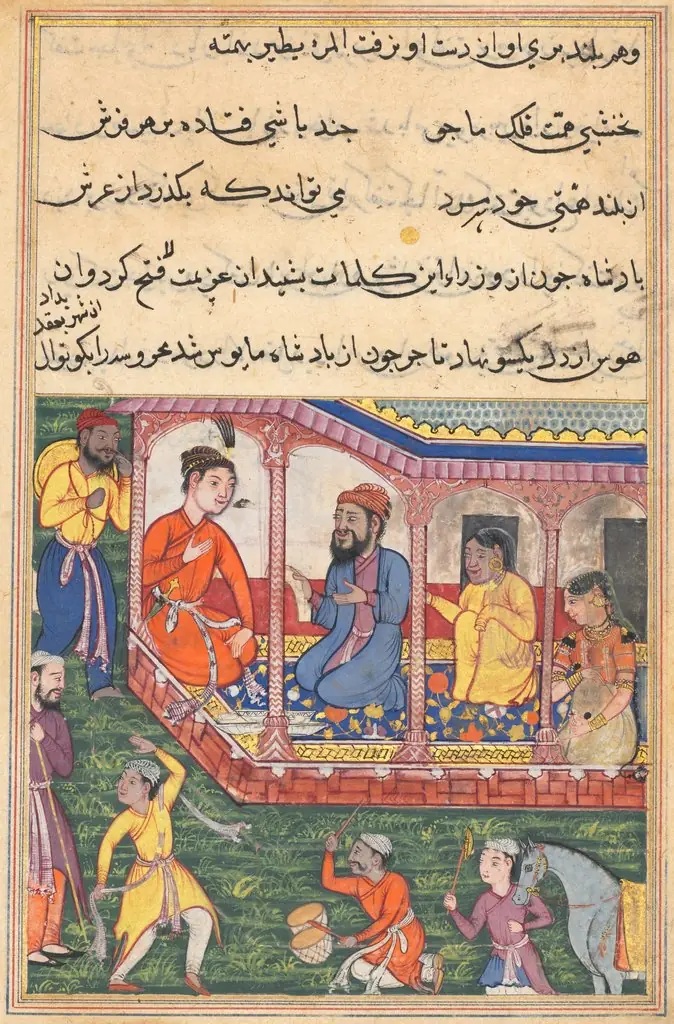 Mahrusa’s marriage to the prefect of the city, from a Tuti-nama (Tales of a Parrot): Thirty-sixth Night
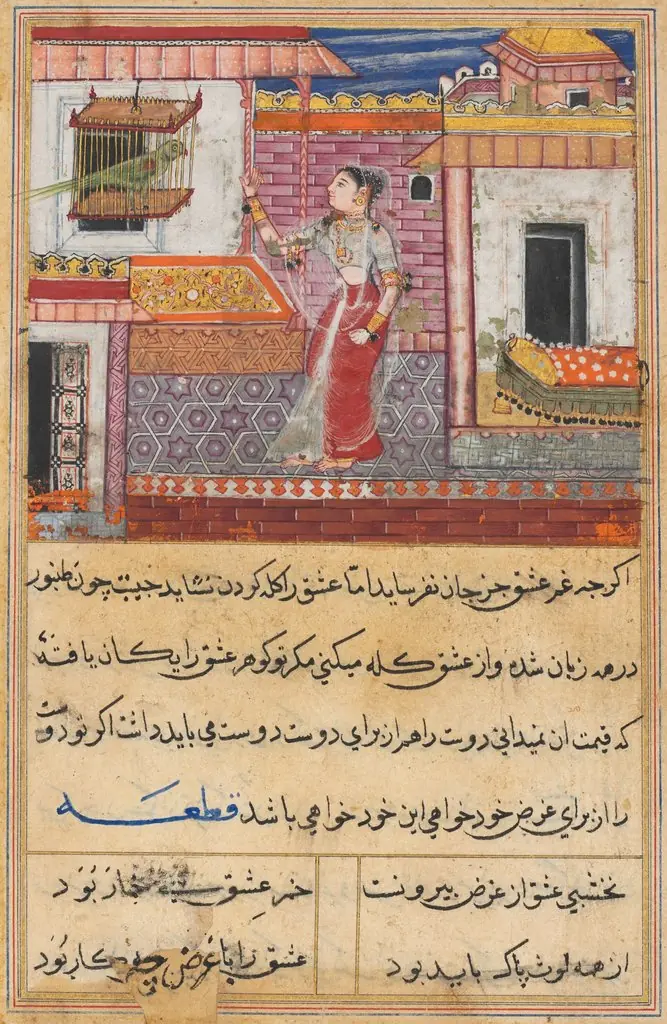 The Parrot Addresses Khujasta at the Beginning of the Thirteenth Night, from a Tuti-nama (Tales of a Parrot)
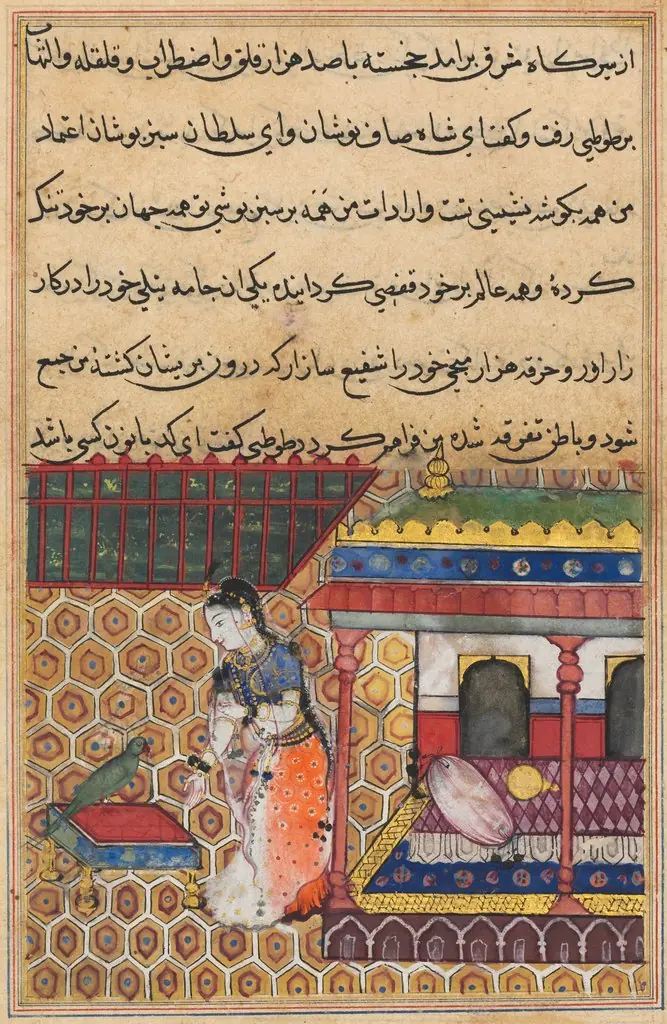 The parrot addresses Khujasta at the beginning of the thirty-eighth night, from a Tuti-nama (Tales of a Parrot)
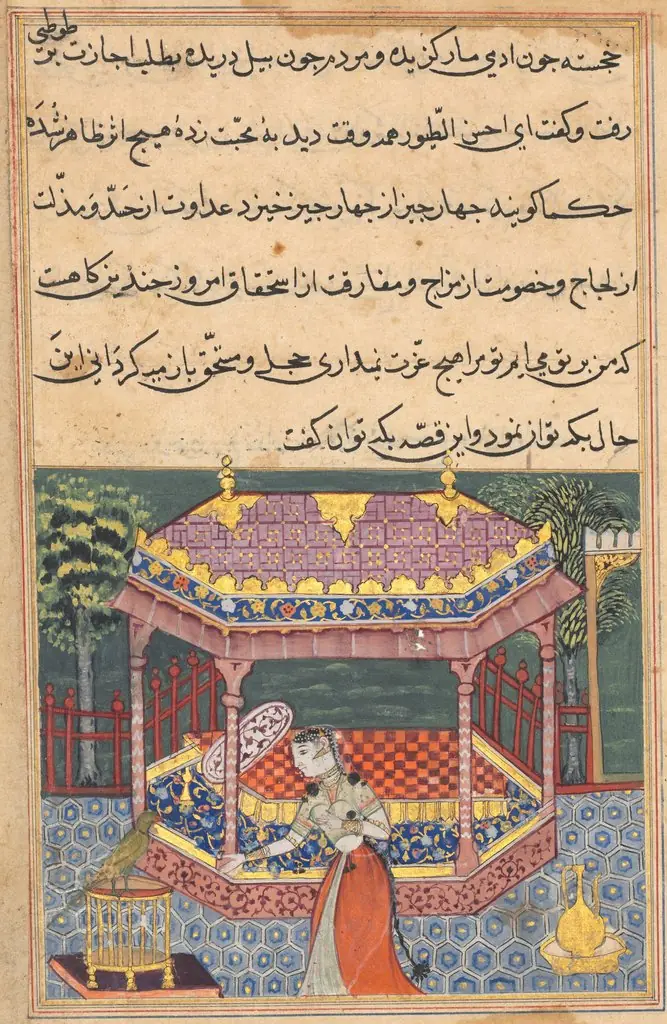 The parrot addresses Khujasta at the beginning of the thirty-seventh night, from a Tuti-nama (Tales of a Parrot)
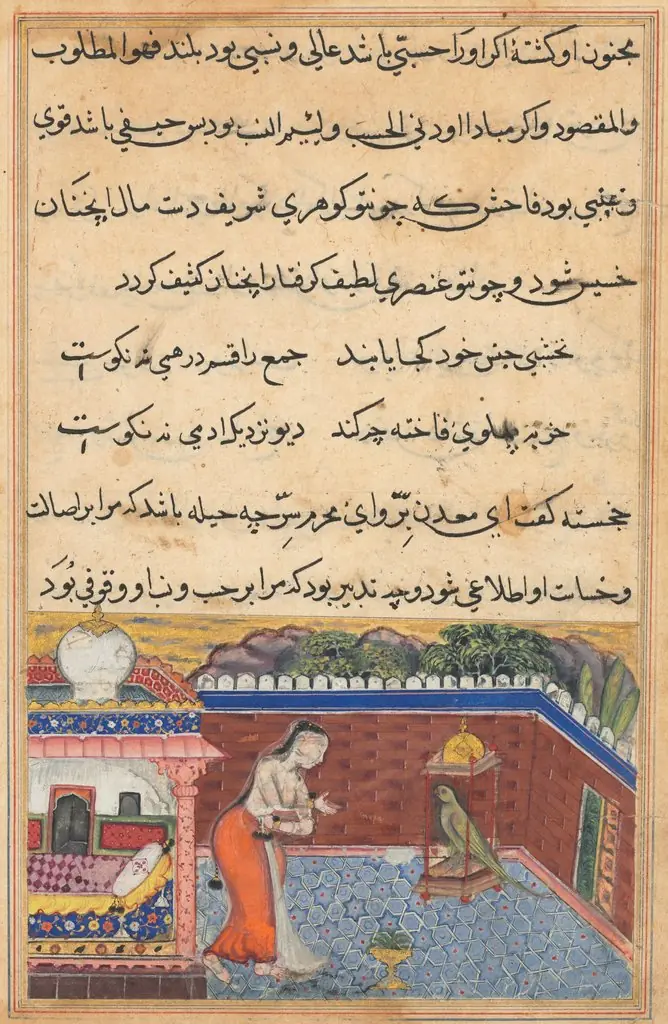 The parrot addresses Khujasta at the beginning of the thirty-first night, from a Tuti-nama (Tales of a Parrot)
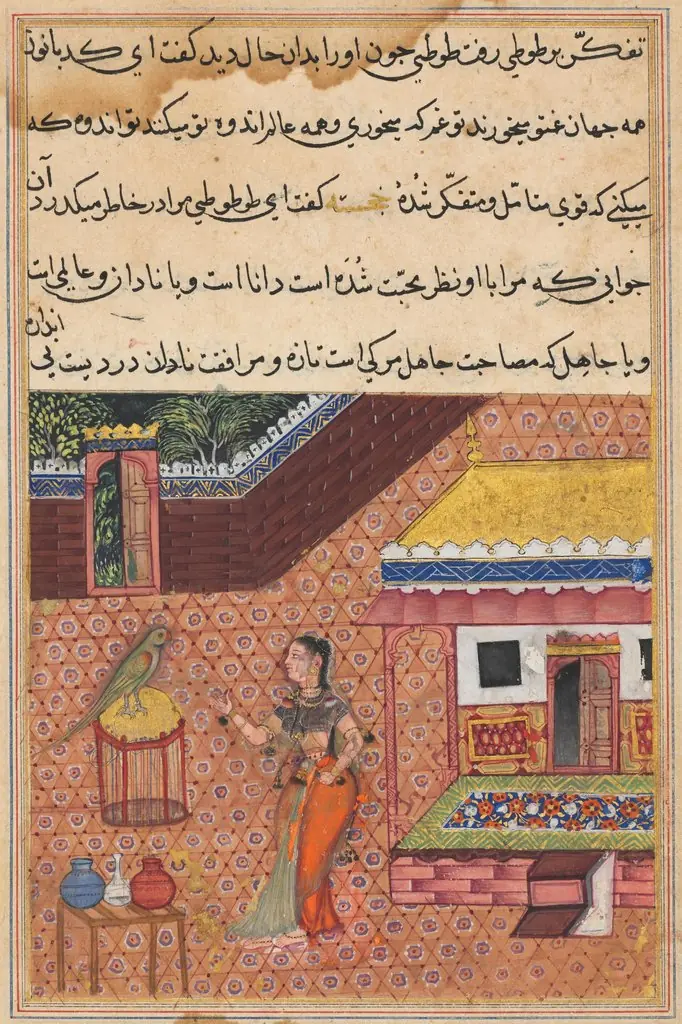 The parrot addresses Khujasta at the beginning of the thirty-fourth night, from a Tuti-nama (Tales of a Parrot)
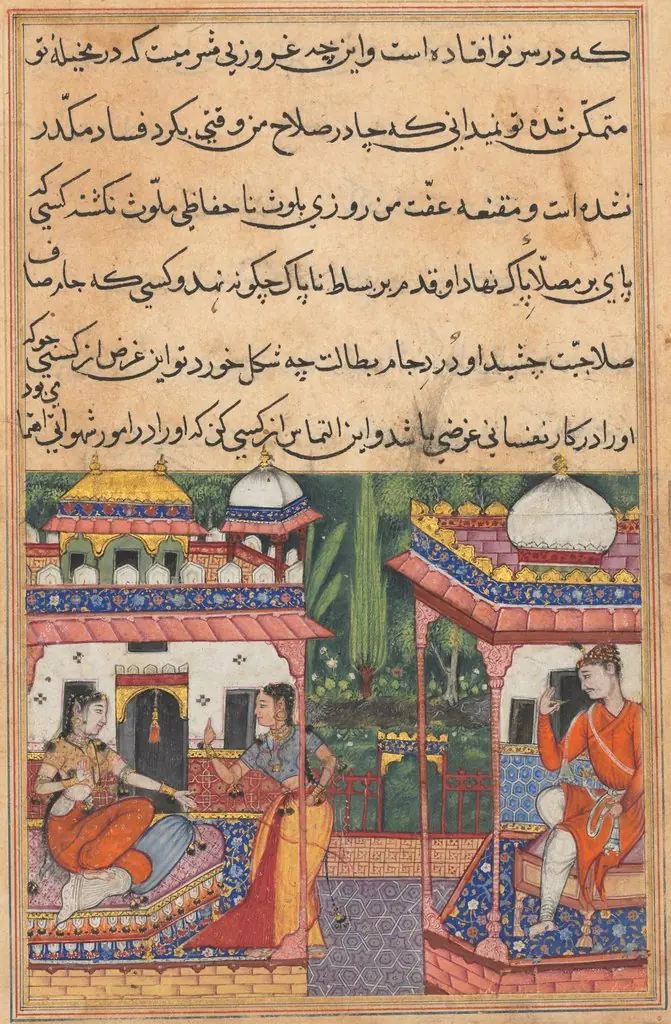 Kaiwan sends a message of love to Khurshid, wife of his brother Utarid who is away on a journey, from a Tuti-nama (Tales of a Parrot): Thirty-second Night
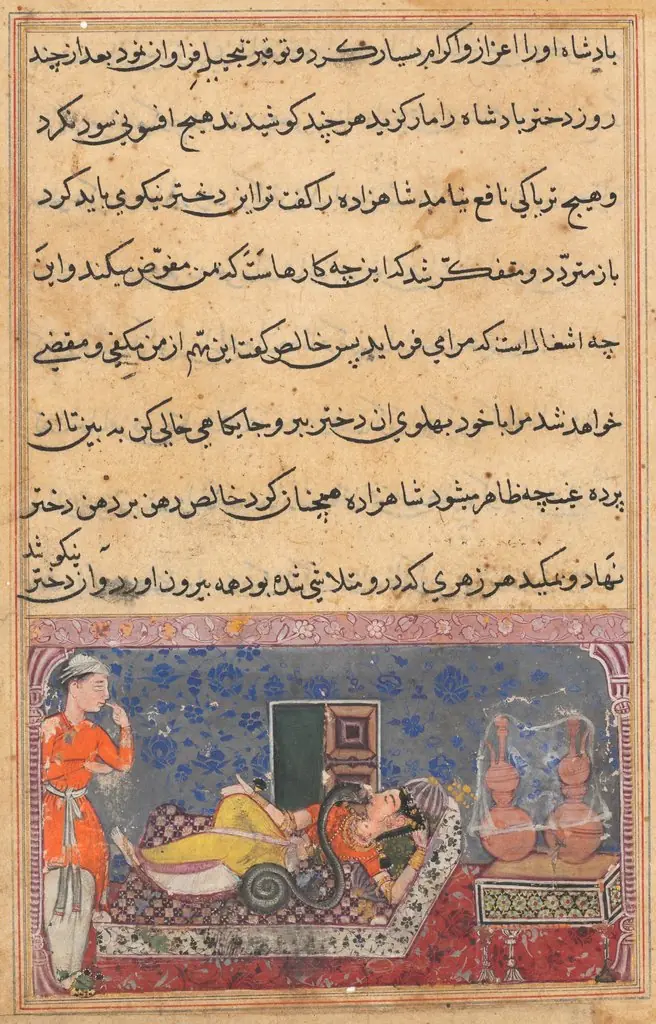 Khalis repays the prince for his kindness by changing into a snake and sucking the poison from the king’s daughter, from a Tuti-nama (Tales of a Parrot): Eighteenth Night
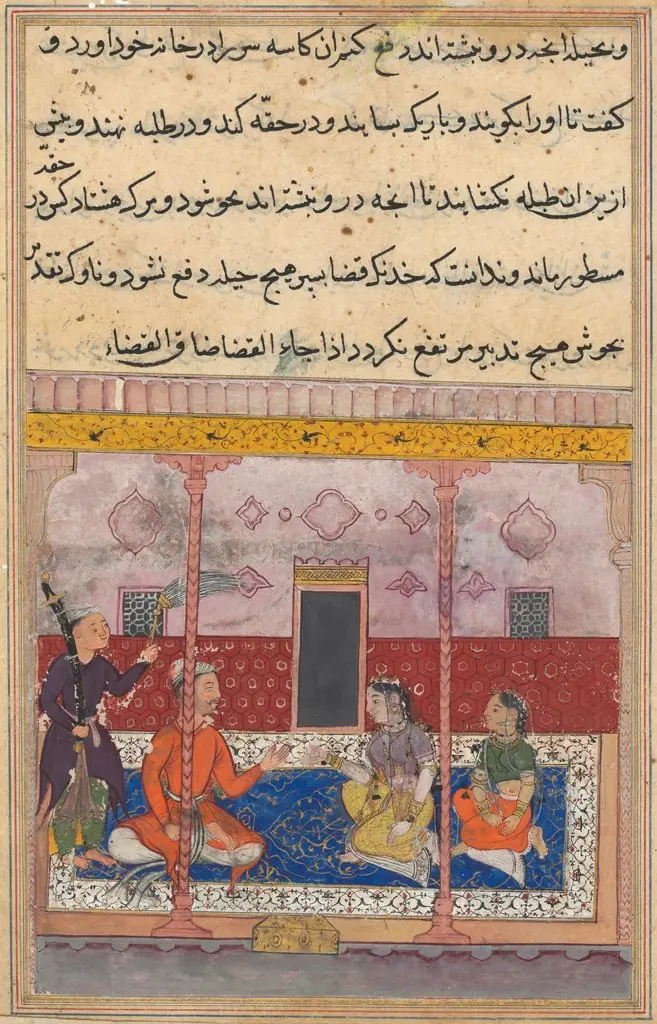 The merchant has the hateful skull ground and put into a box, from a Tuti-nama (Tales of a Parrot): Twenty-third Night
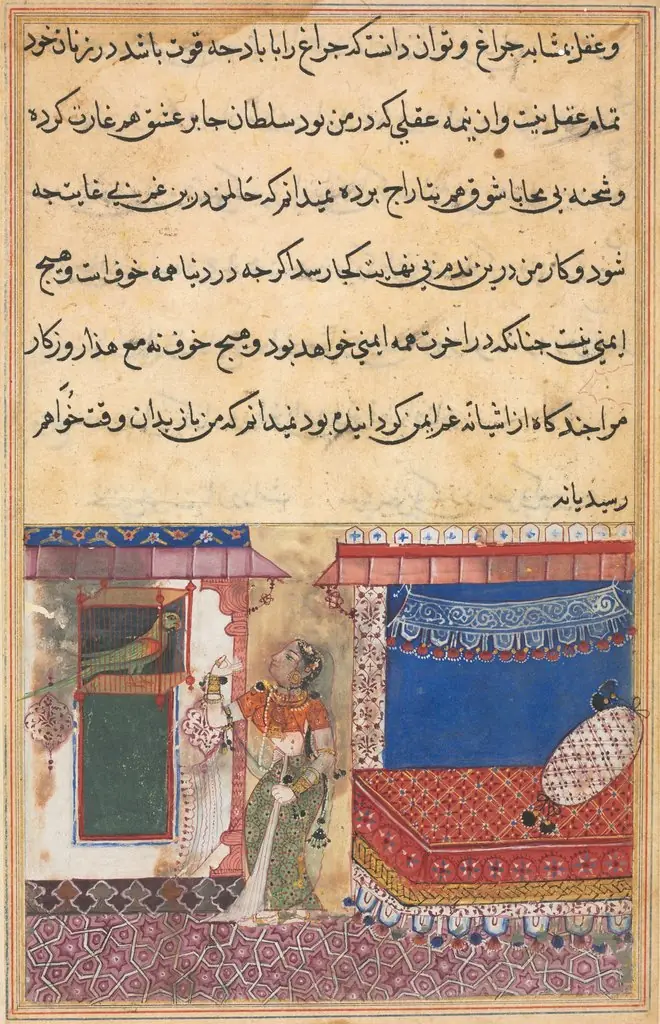 The Parrot Addresses Khujasta at the Beginning of the Eighteenth Night, from a Tuti-nama (Tales of a Parrot)