Artwork
Kaiwan sends a message of love to Khurshid, wife of his brother Utarid who is away on a journey, from a Tuti-nama (Tales of a Parrot): Thirty-second Night
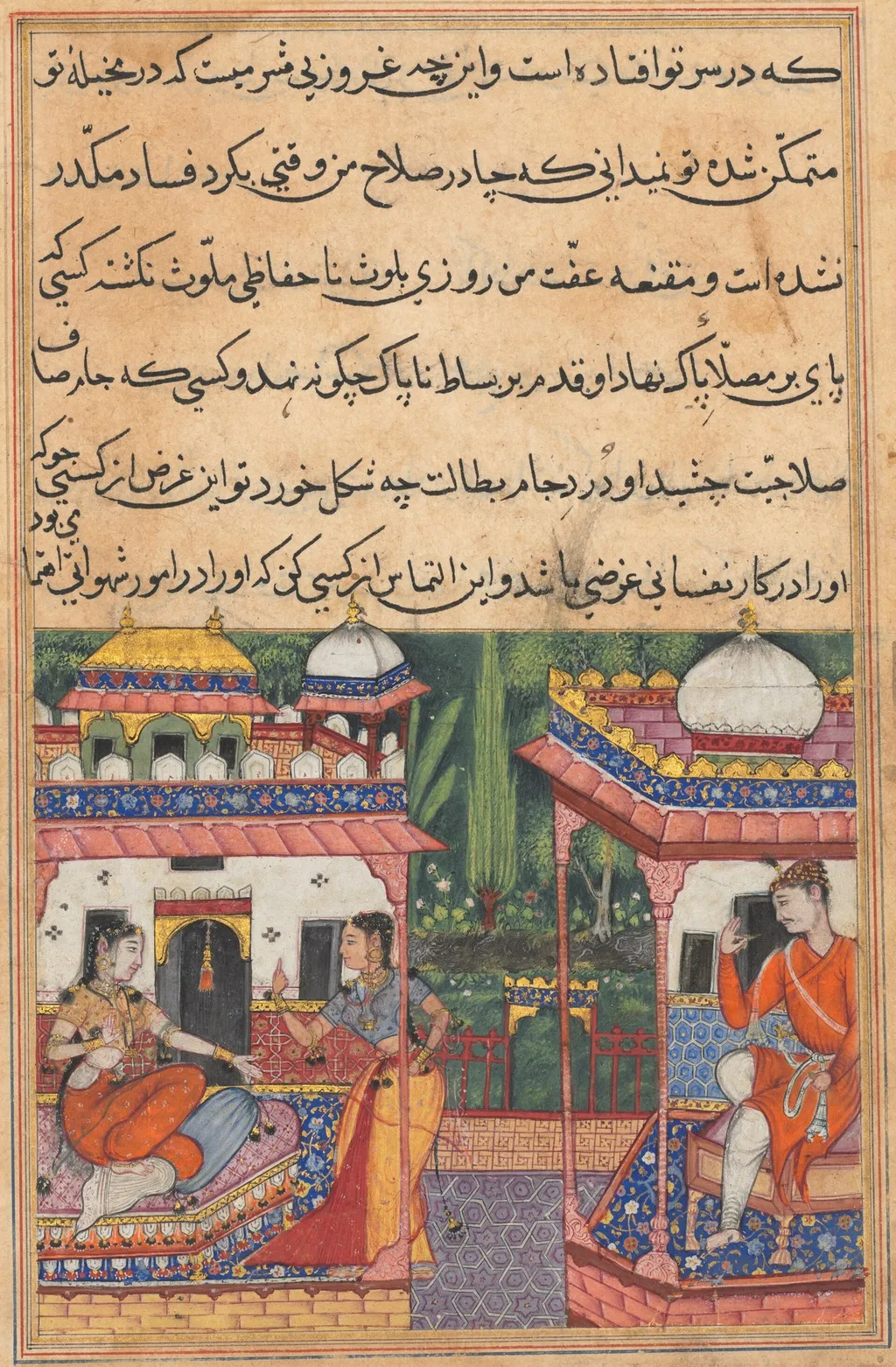
Kaiwan sends a message of love to Khurshid, wife of his brother Utarid who is away on a journey, from a Tuti-nama (Tales of a Parrot): Thirty-second Night is an unspecified painting. It dates from 1560 and is held in the collection of the Cleveland Museum of Art.
About this work
Overview
One figure is seated beneath a red‑tented pavilion, while the other stands in an adjacent pavilion, gesturing as if speaking.
The work, titled “Kaiwan sends a message of love to Khurshid, wife of his brother Utarid who is away on a journey, from a Tuti‑nama (Tales of a Parrot): Thirty‑second Night,” depicts a garden interior where two figures exchange a letter. One figure is seated beneath a red‑tented pavilion, while the other stands in an adjacent pavilion, gesturing as if speaking. The setting is framed by domed structures and verdant foliage, rendered in vivid reds, blues, and golds.
Subject & Meaning
The narrative derives from the Persian literary collection Tuti‑nama, a series of romantic tales told by a parrot. In this episode, Kaiwan delivers a love message to Khurshid, the spouse of his traveling brother Utarid. The letter held by the seated figure suggests a private communication, while the standing figure’s animated pose conveys the act of speaking, emphasizing themes of longing and familial affection.
Technique & Style
Executed in a miniature‑painting tradition, the composition relies on meticulous brushwork and a rich palette of saturated reds, ultramarine blues, and metallic gold. Architectural elements—arched domes, tiled roofs, and a patterned garden—are rendered with linear precision, while the figures’ flowing robes display intricate textile patterns. The overall effect balances decorative opulence with narrative clarity, characteristic of courtly Persian art.
History & Provenance
The painting is part of a series illustrating episodes from the Tuti‑nama, likely produced for a patron interested in literary illustration. Though the exact date and workshop remain uncertain, its stylistic affinities place it within the Safavid period of Iran. The work entered the collection of the Cleveland Museum of Art, where it is displayed alongside other miniature paintings of similar origin.
Artist & collection

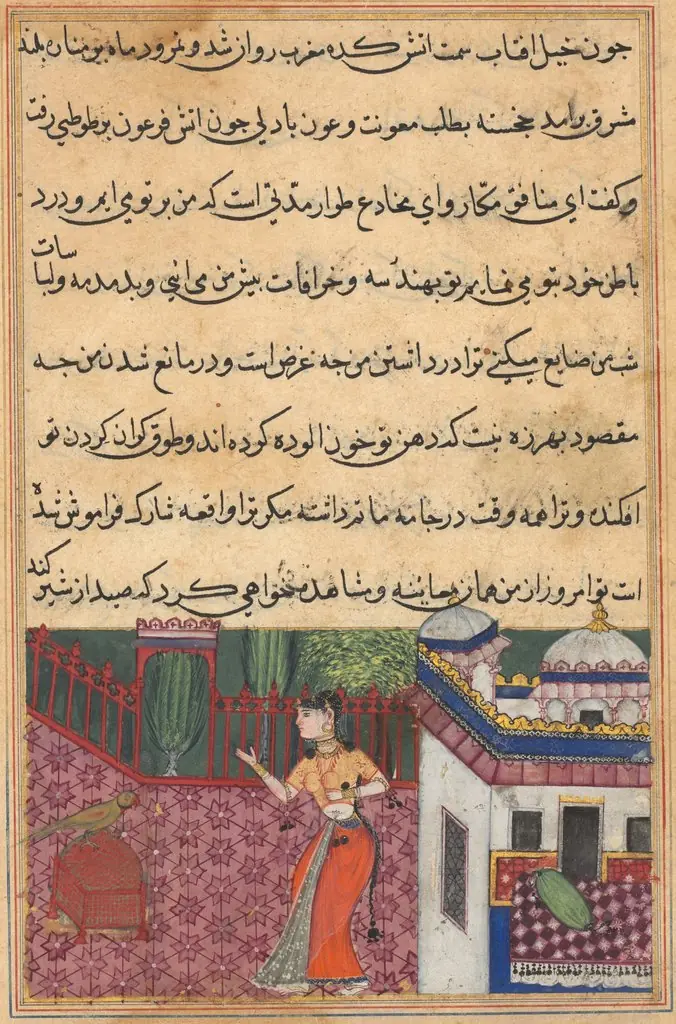 The parrot addresses Khujasta at the beginning of the thirty-third night, from a Tuti-nama (Tales of a Parrot)
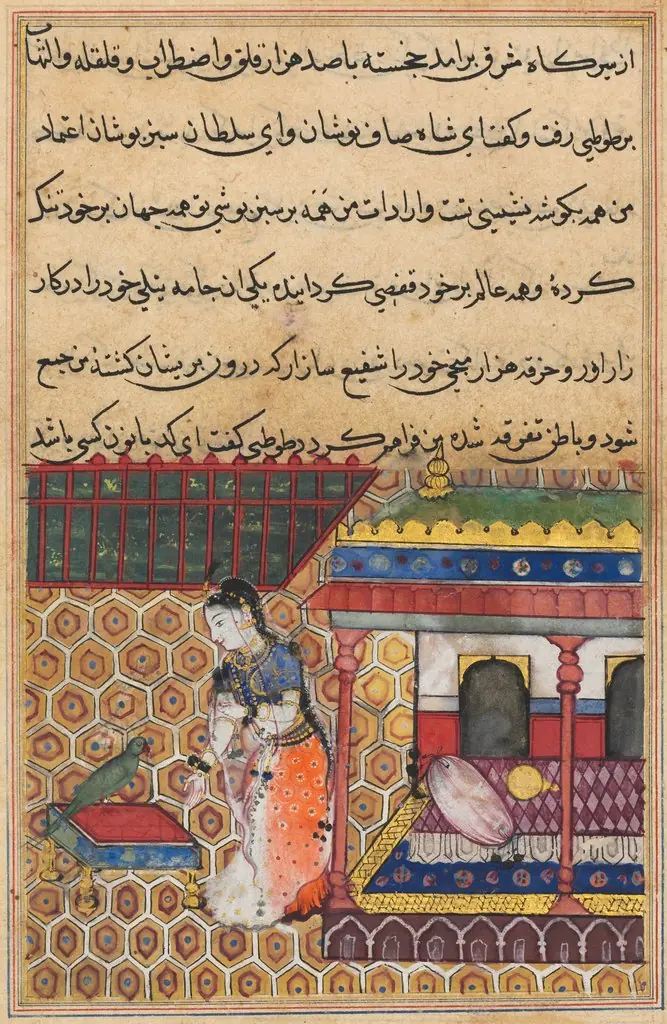 The parrot addresses Khujasta at the beginning of the thirty-eighth night, from a Tuti-nama (Tales of a Parrot)
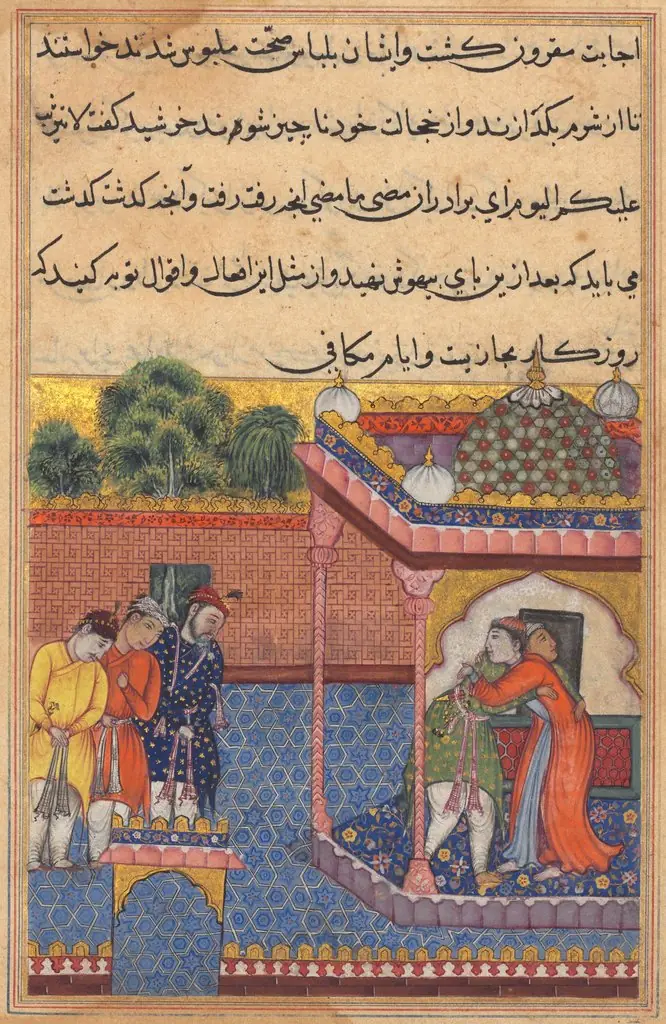 Khurshid reunited with her husband Utarid, from a Tuti-nama (Tales of a Parrot): Thirty-second Night
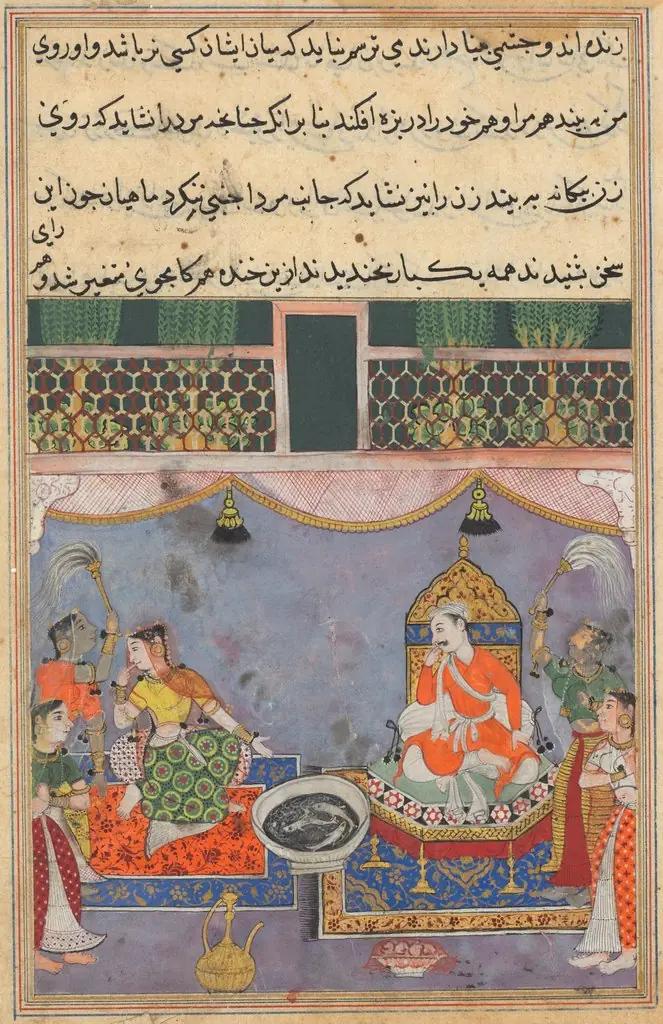 Kamjuy, the wife of the Raja, averts her face from the fishes, from a Tuti-nama (Tales of a Parrot): Twenty-third Night
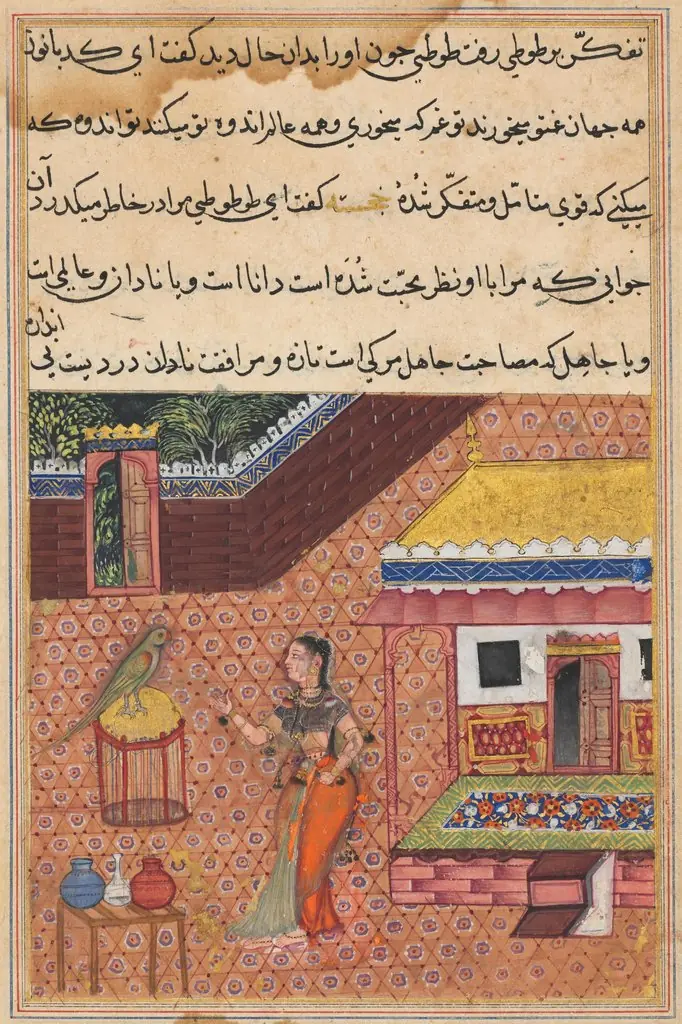 The parrot addresses Khujasta at the beginning of the thirty-fourth night, from a Tuti-nama (Tales of a Parrot)
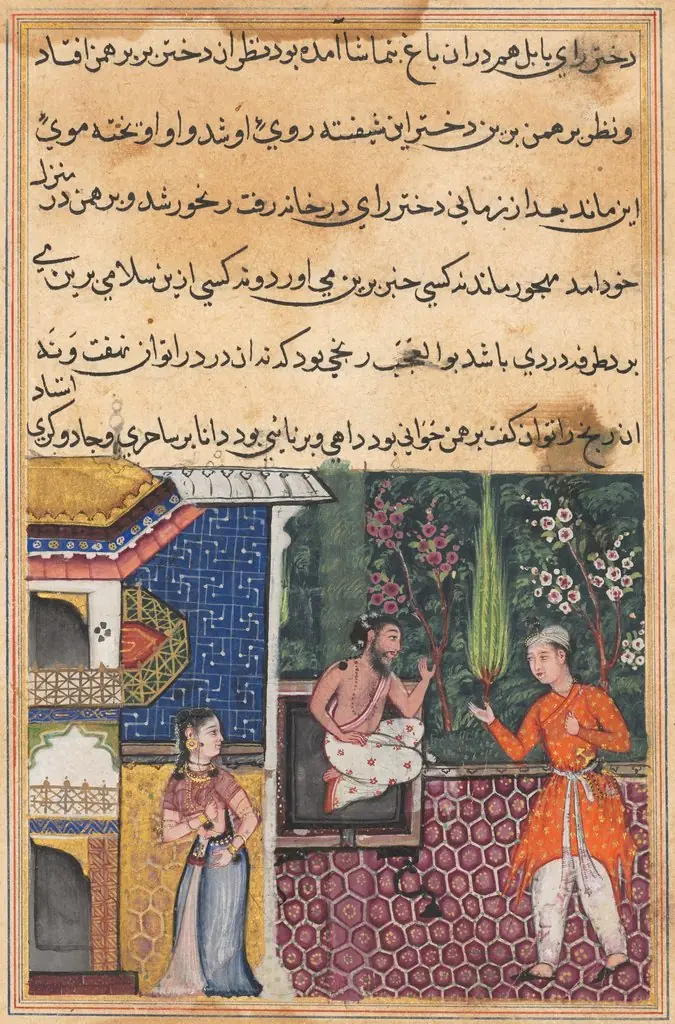 The Brahman gives an account of his falling in love with the king of Babylon’s daughter to his friend, the magician, from a Tuti-nama (Tales of a Parrot): Thirty-fifth Night
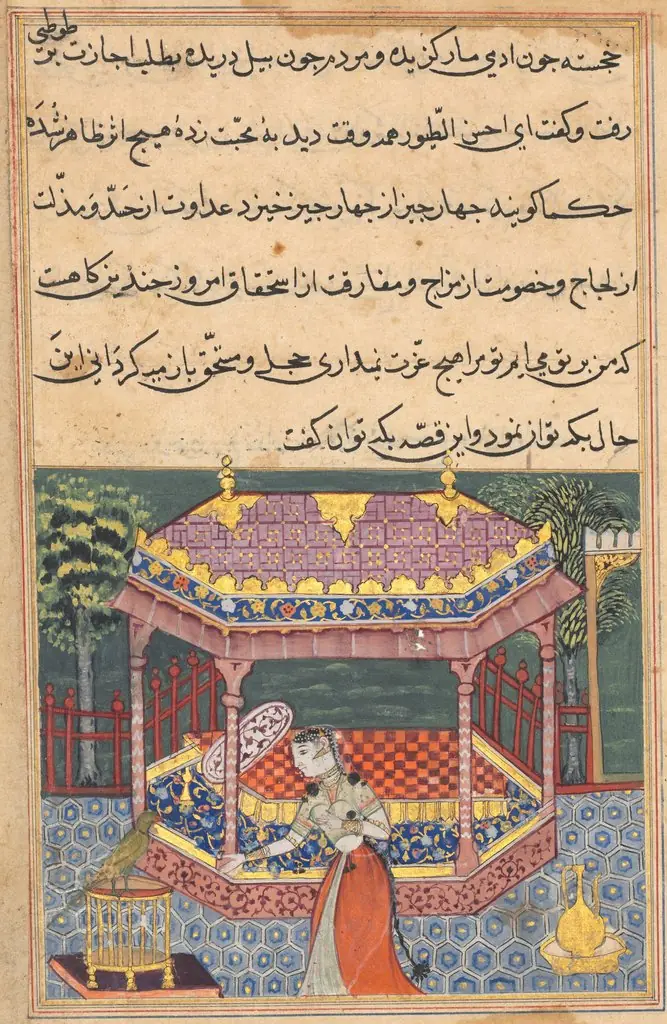 The parrot addresses Khujasta at the beginning of the thirty-seventh night, from a Tuti-nama (Tales of a Parrot)
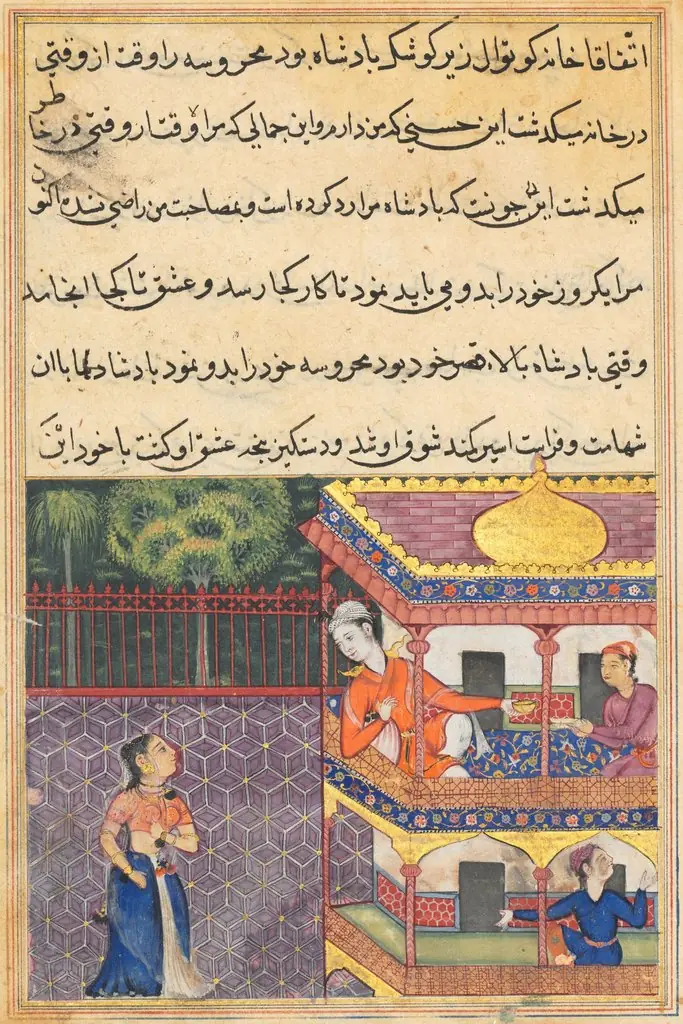 The king of Zabul sees Mahrusa from his palace balcony, from a Tuti-nama (Tales of a Parrot): Thirty-sixth Night
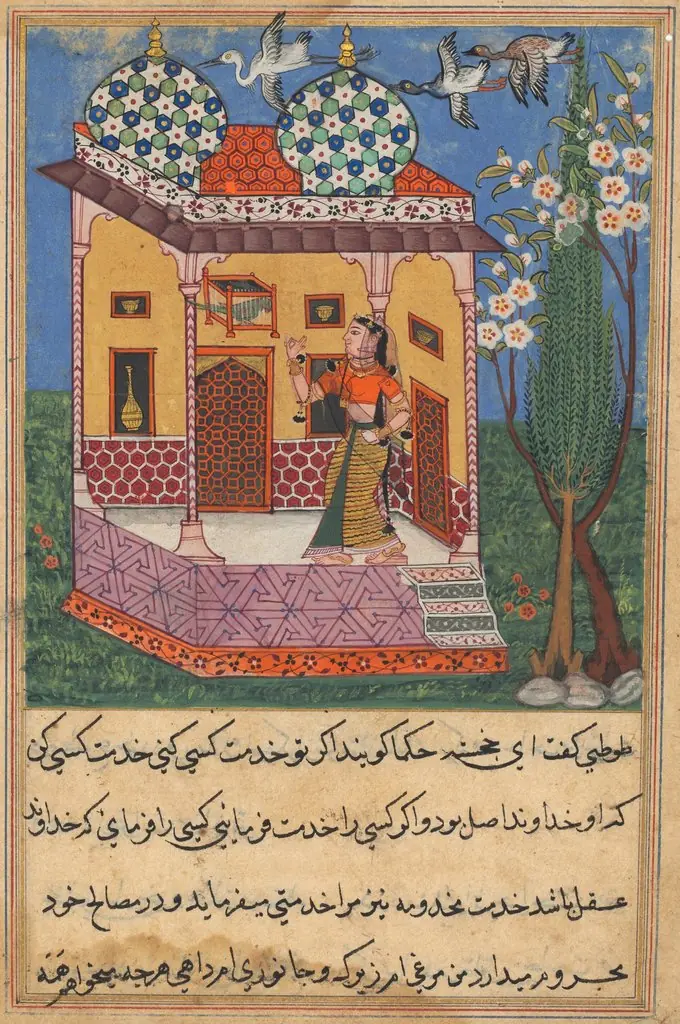 The Parrot Addresses Khujasta at the Beginning of the Twenty-sixth Night, from a Tuti-nama (Tales of a Parrot)
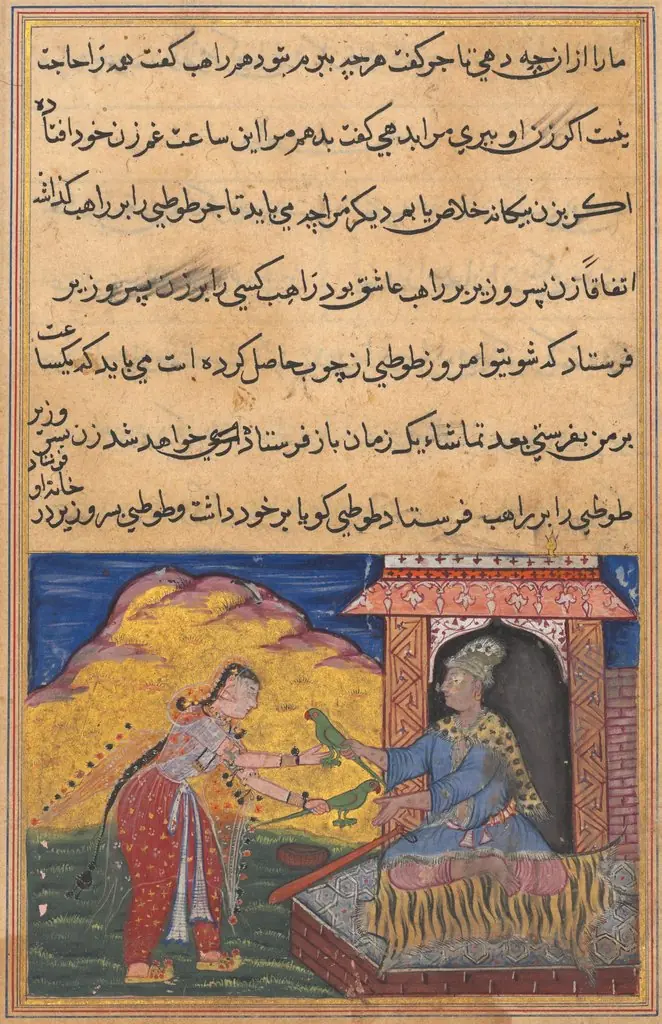 The wife of the son of the vizier brings the magic wooden parrot to her lover, the monk, who exchanges it for the replica, from a Tuti-nama (Tales of a Parrot): Tenth Night
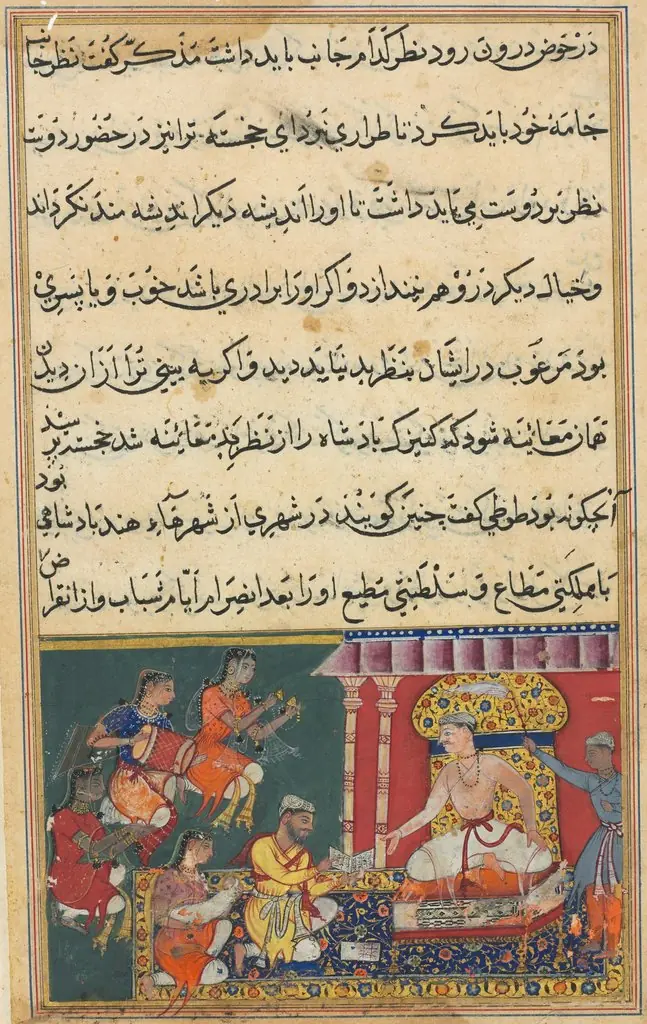 The astrologer predicts a calamity for the newly born prince in his thirteenth year, but one which he would be able to overcome, from a Tuti-nama (Tales of a Parrot): Eighth Night
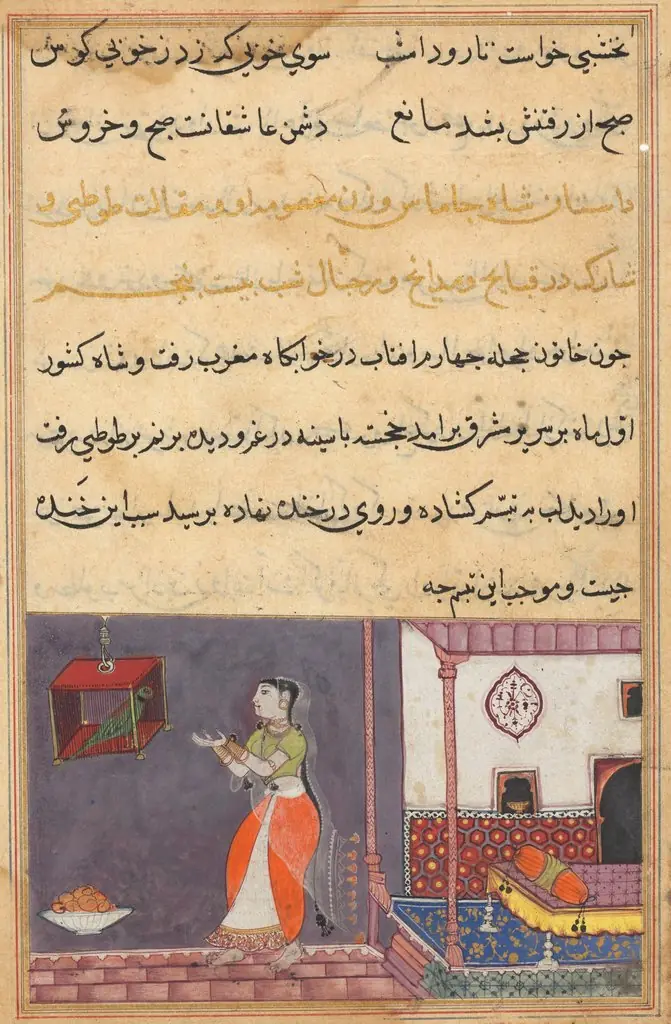 The Parrot Addresses Khujasta at the Beginning of the Twenty-fifth Night, from a Tuti-nama (Tales of a Parrot)
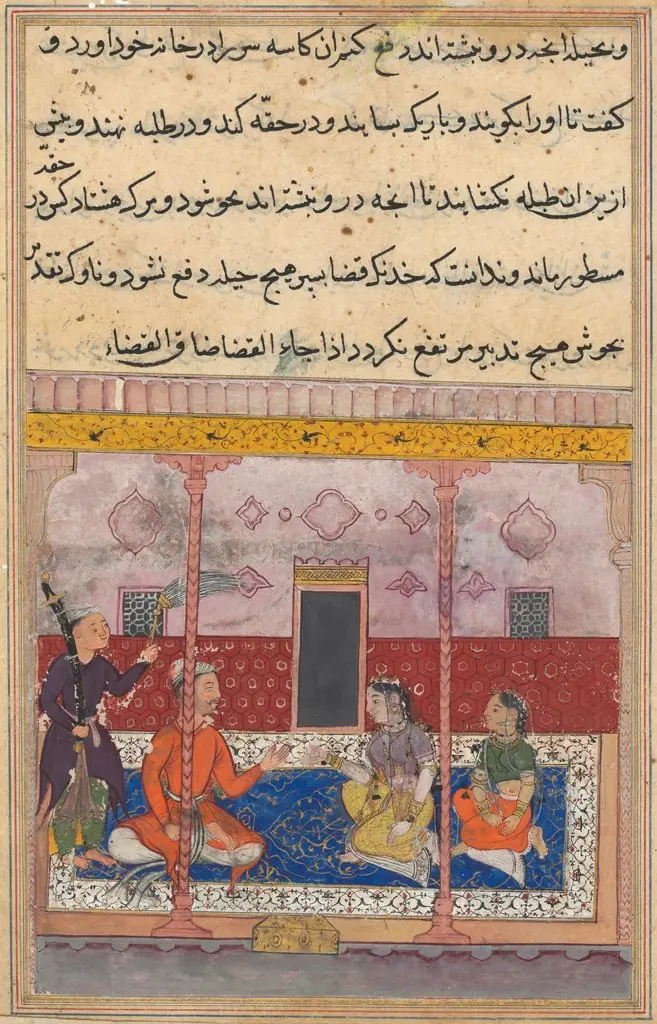 The merchant has the hateful skull ground and put into a box, from a Tuti-nama (Tales of a Parrot): Twenty-third Night
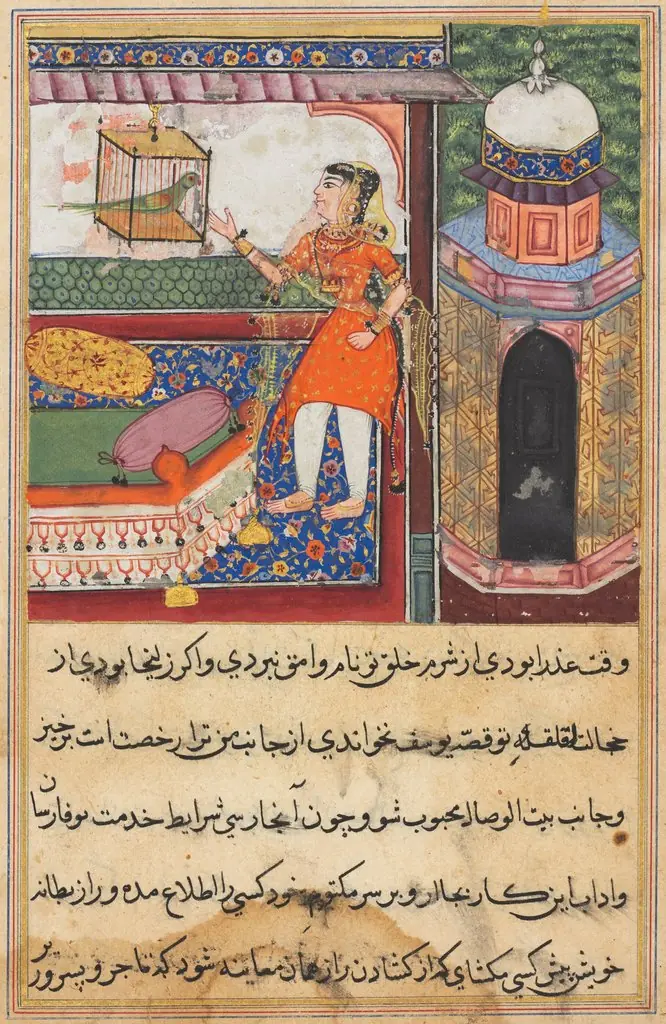 The Parrot Addresses Khujasta at the Beginning of the Tenth Night, from a Tuti-nama (Tales of a Parrot)
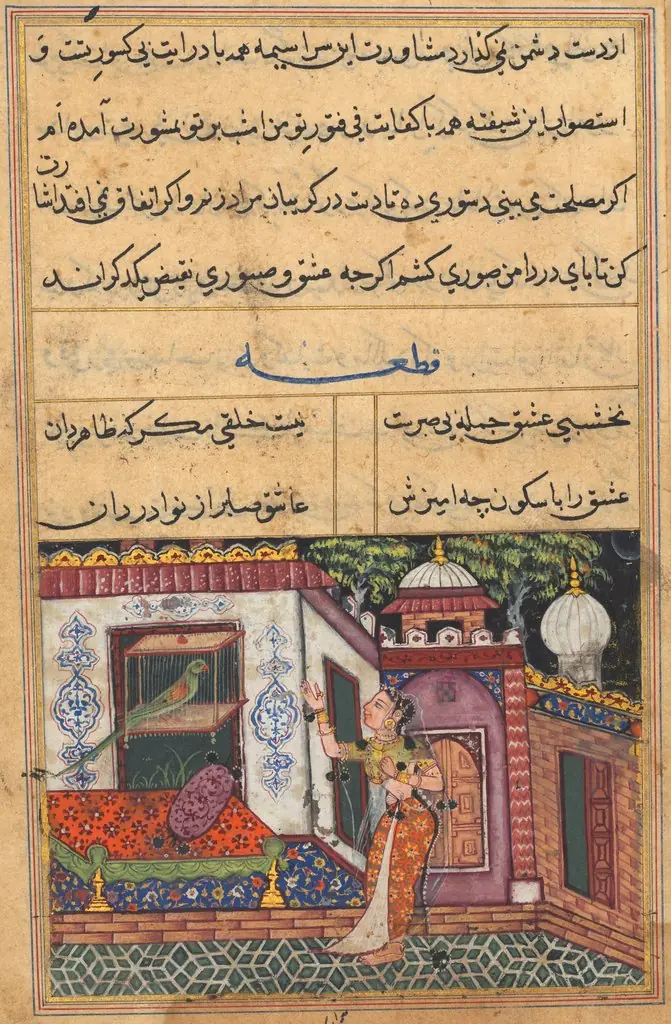 The Parrot Addresses Khujasta at the Beginning of the Eleventh Night, from a Tuti-nama (Tales of a Parrot)