Artwork
"Krishna and the Gopis on the Bank of the Yamuna River", Folio from the "Second" or "Tehri Garhwal" Gita Govinda (Song of the Cowherd)
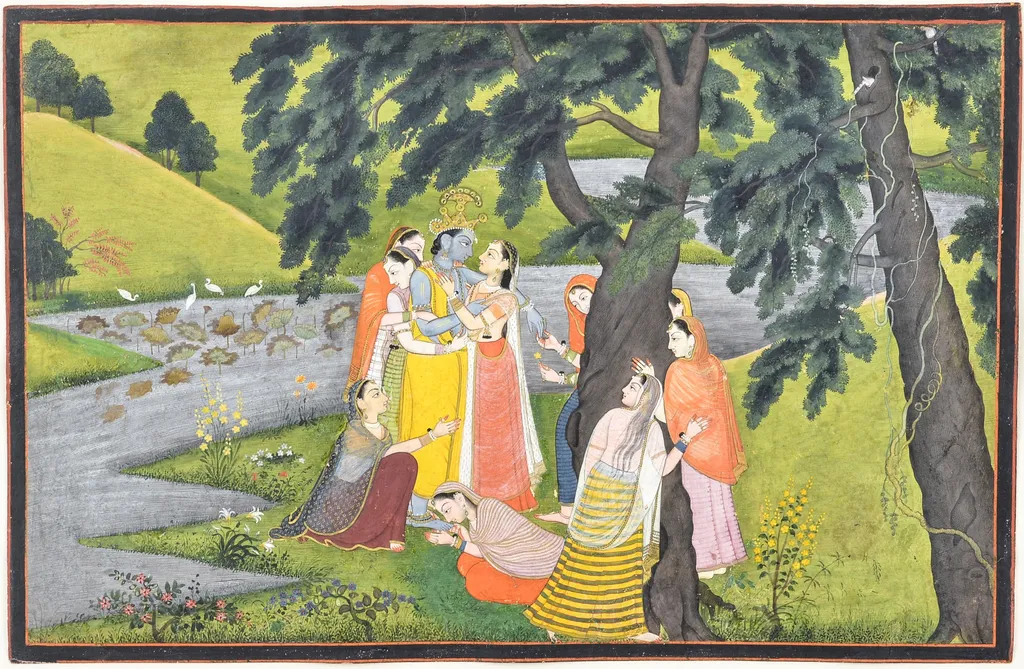
"Krishna and the Gopis on the Bank of the Yamuna River", Folio from the "Second" or "Tehri Garhwal" Gita Govinda (Song of the Cowherd) is an unspecified painting by the Mughal Painting artist Unknown. It dates from 1789 and is held in the collection of the Metropolitan Museum of Art.
About this work
Overview
It is now held in the collection of The Metropolitan Museum of Art.
This folio originates from a illustrated manuscript of the Gita Govinda, a 12th-century Sanskrit text by Jayadeva that celebrates the divine love between Krishna and the gopis. Created in the Tehri Garhwal region of the Himalayan foothills, the painting is one of several folios produced in a distinct local style during the late 17th or early 18th century. It is now held in the collection of The Metropolitan Museum of Art.
Subject & Meaning
The scene depicts Krishna surrounded by the gopis, or cowherd maidens, along the banks of the Yamuna River. Drawing from the poetic imagery of the Gita Govinda, the moment captures Krishna’s playful, intimate interactions with the gopis, symbolizing the soul’s longing for union with the divine. The setting reflects both earthly beauty and spiritual yearning, central themes in Vaishnavite devotional traditions.
Technique & Style
Executed in opaque watercolor and gold on paper, the painting features delicate lines, flattened spatial depth, and vivid, non-naturalistic color. Figures are rendered with graceful, elongated forms and expressive gestures, characteristic of the Tehri Garhwal school. The landscape is stylized, with rhythmic patterns of trees and riverbanks framing the figures, emphasizing emotional resonance over realism.
History & Provenance
The folio belongs to a manuscript commissioned likely for a local royal or temple patron in the Tehri Garhwal region. Though the full manuscript’s early history is undocumented, its style aligns with other known works from the late 1600s to early 1700s. It entered the Metropolitan Museum of Art’s collection through established acquisition channels in the 20th century.
Context
The Tehri Garhwal style emerged as a regional variant of Pahari painting, influenced by both Mughal precision and local folk traditions. The Gita Govinda was a favored subject among Hindu patrons in the hills, where devotional poetry inspired visual art. This folio reflects a broader trend of illustrating sacred texts in portable formats for private devotion and courtly display.
Legacy
Though not widely known outside scholarly circles, this folio exemplifies the quiet sophistication of Himalayan manuscript painting. It preserves a regional artistic voice that adapted literary devotion into intimate visual form. Its preservation in a major museum ensures continued study of how devotional texts were interpreted through regional aesthetics in early modern India.
Artist & collection

 Domestic Scene
 Giacomo and Cardinal Marco, investing Andrea, Abbot of San Zeno, with his Benefice
 The Nymph of Fontainebleau
 Portrait of a Woman
 Madonna and Child with Saints in the Enclosed Garden
 Venus and Minerva
 Family Group of Four on Sofa
 Wall painting from Room H of the Villa of P. Fannius Synistor at Boscoreale
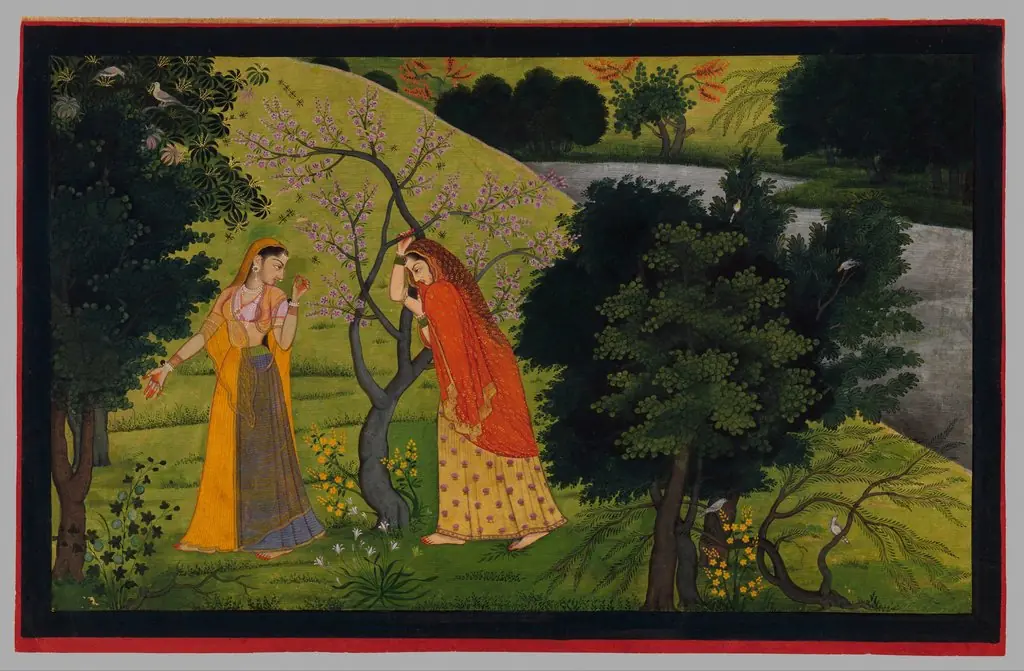 "Radha with Her Confidant, Pining for Krishna", Folio from the "Second" or "Tehri Garhwal" Gita Govinda (Song of the Cowherd)
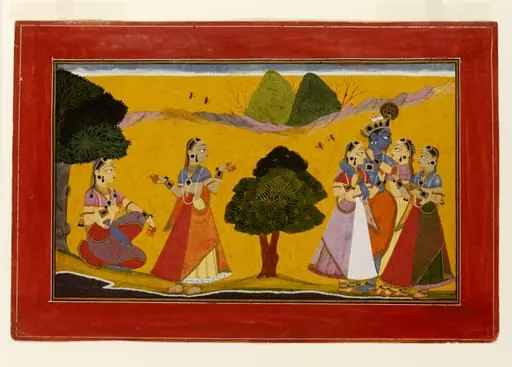 Radha and Krishna
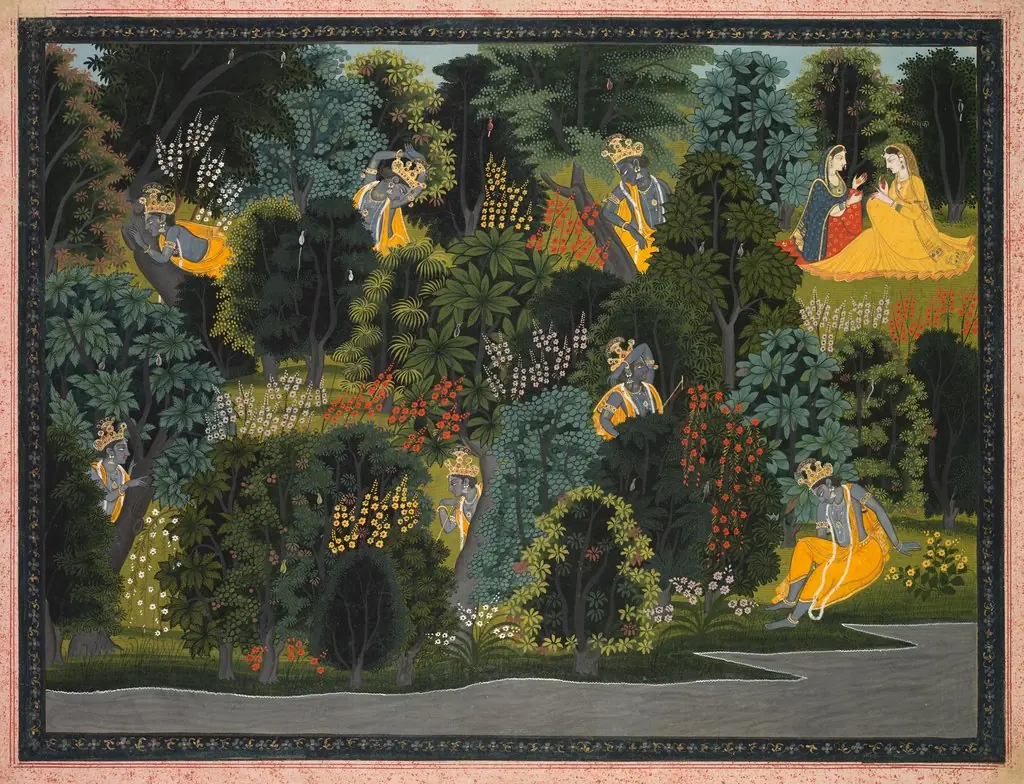 Krishna's Longing for Radha, from the Gita Govinda of Jayadeva
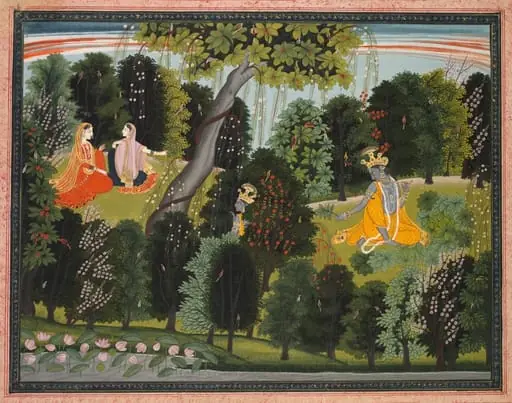 Sakhi persuades Radha to meet Krishna, from a Gita Govinda (Song of the Cowherd) of Jayadeva
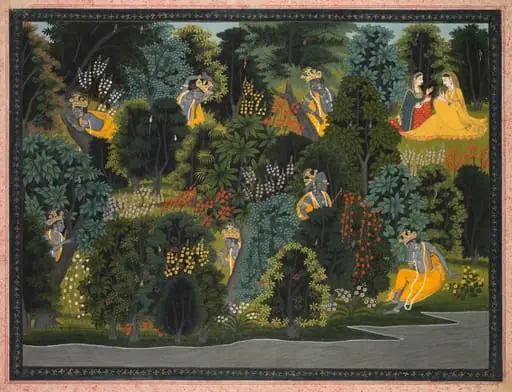 Krishna’s longing for Radha, from a Gita Govinda (Song of the Cowherd) of Jayadeva
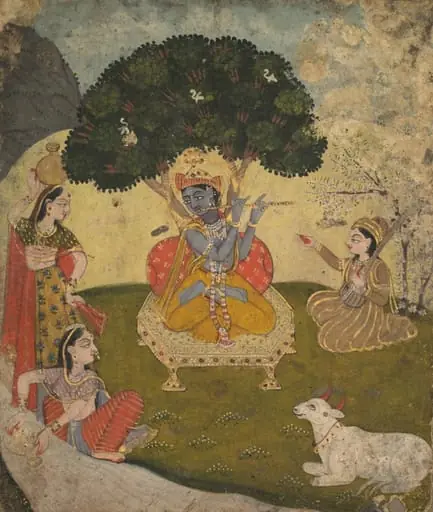 Krishna and Gopis
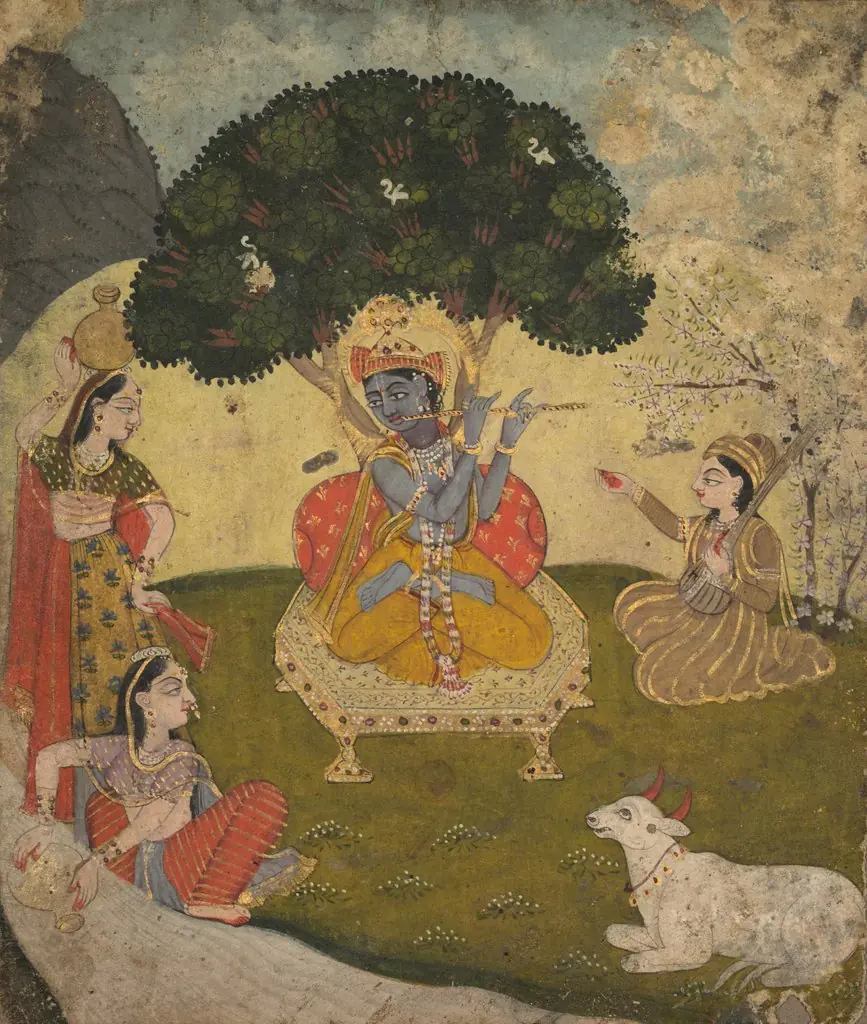 Krishna and Gopis
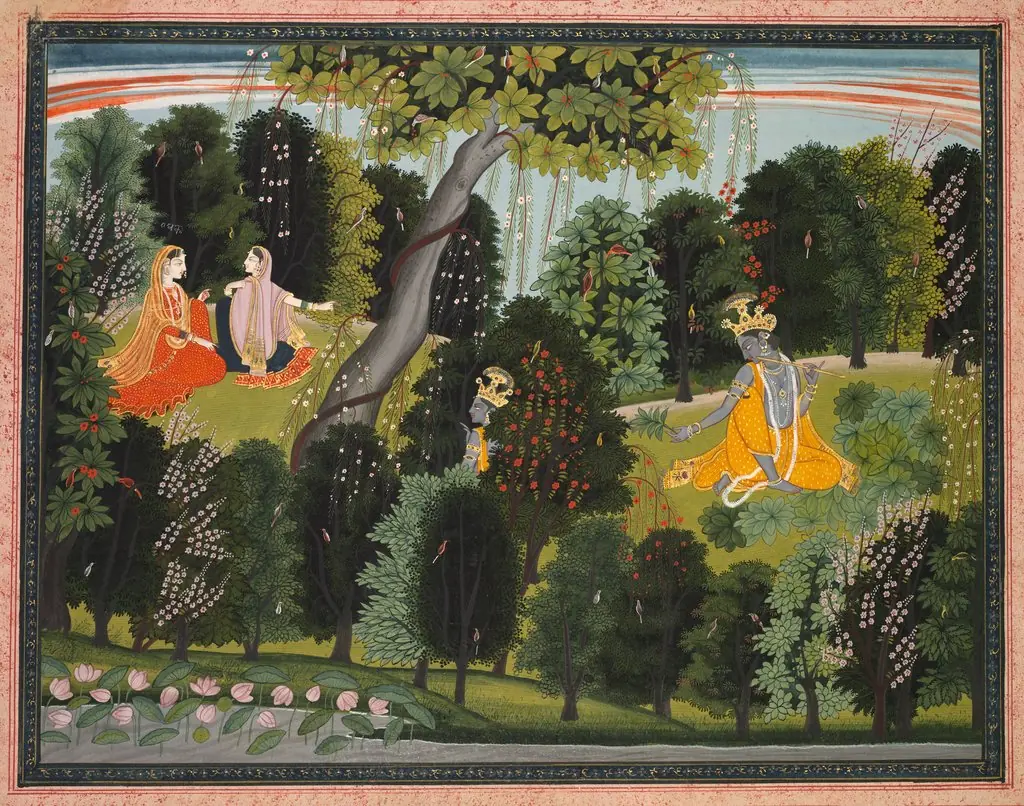 Sakhi Persuades Radha to Meet Krishna, from a Gita Govinda (Song of the Cowherd) of Jayadeva
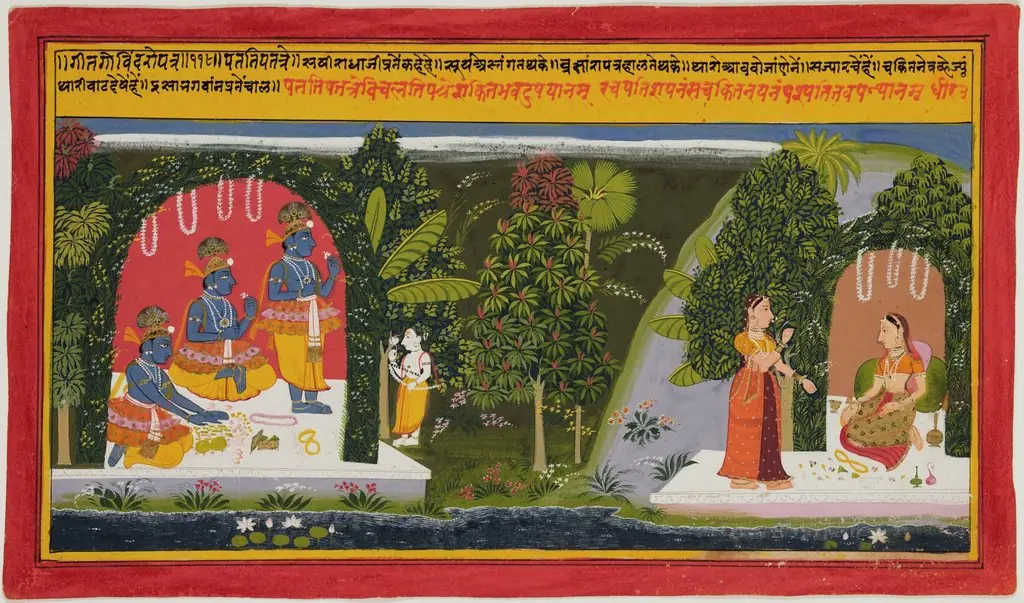 Krishna Prepares for Radha's Visit (page from the Gita Govinda)
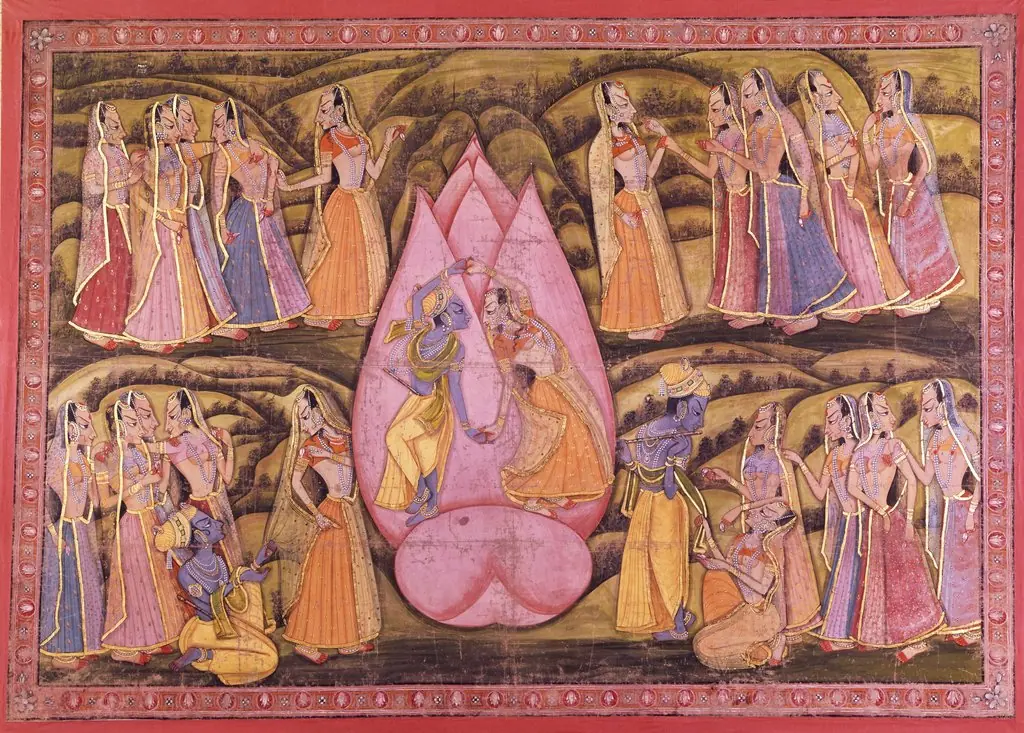 Krishna and Radha with Gopis
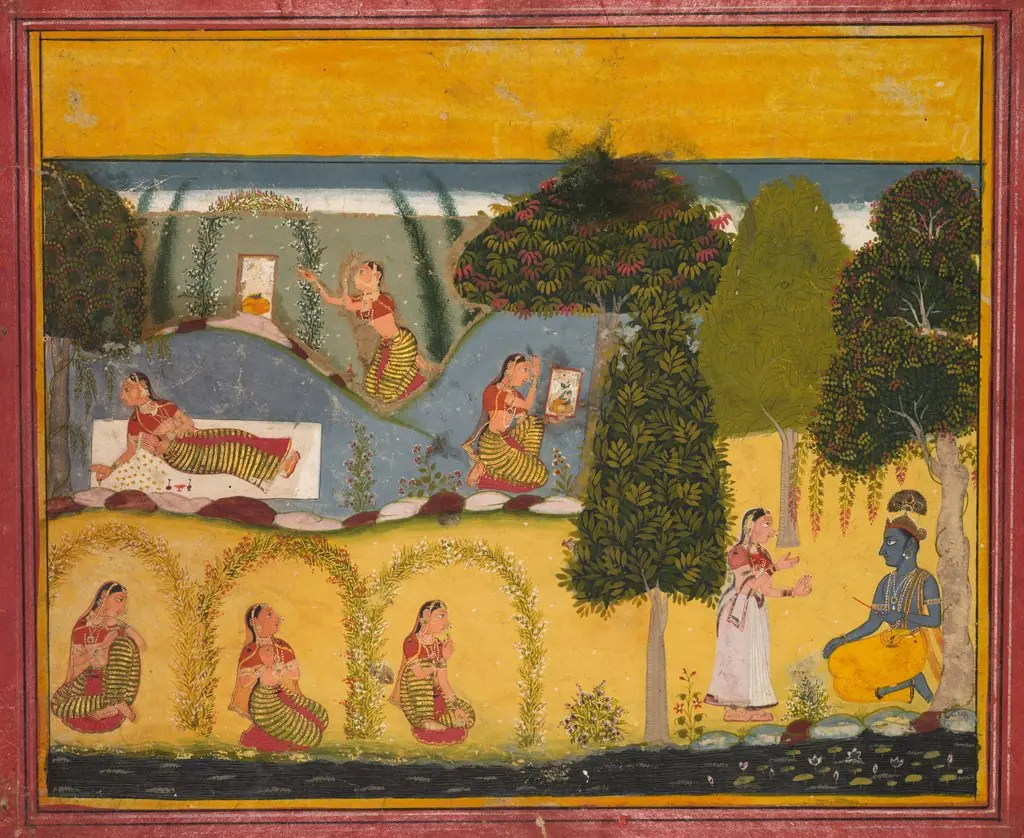 Radha Awaiting Reconciliation with Krishna, from a Gita Govinda of Jayadeva