Artwork
"Radha with Her Confidant, Pining for Krishna", Folio from the "Second" or "Tehri Garhwal" Gita Govinda (Song of the Cowherd)
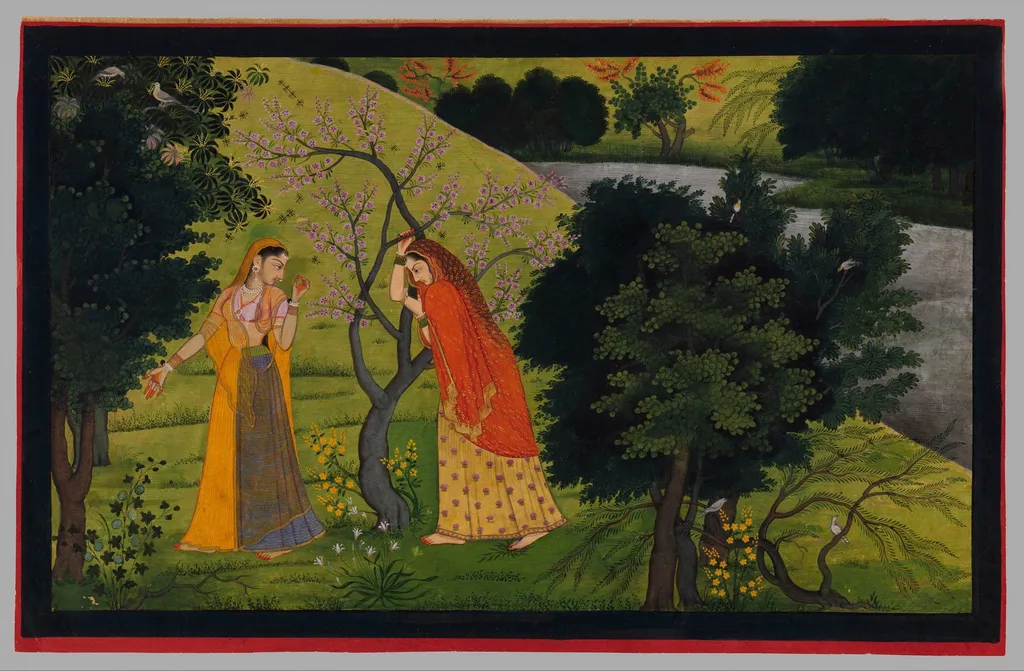
"Radha with Her Confidant, Pining for Krishna", Folio from the "Second" or "Tehri Garhwal" Gita Govinda (Song of the Cowherd) is an unspecified painting by the Mughal Painting artist Unknown. It dates from 1789 and is held in the collection of the Metropolitan Museum of Art.
About this work
Overview
The work, titled “Radha with Her Confidant, Pining for Krishna,” is a painted folio from the “Second” or “Tehri Garhwal” version of the Gita Govinda. It portrays two women amid a verdant landscape of trees, flowers, rolling hills and a water body. The composition is tranquil, with vivid hues and detailed rendering that convey a sense of quiet intimacy.
Subject & Meaning
The figures represent Radha and a close companion, engaged in a whispered dialogue while longing for the divine lover Krishna. The right‑hand figure leans against a tree branch, suggesting a moment of private confession. The setting underscores the pastoral ideal of devotion, situating the emotional exchange within nature’s lush abundance.
Technique & Style
Executed in a traditional Indian miniature style, the painting employs bright pigments—yellow, orange, blue and green—to delineate garments and foliage. Fine brushwork defines intricate patterns on the saris and the delicate foliage, while layered washes create depth in the hills and water, achieving a richly textured surface typical of Gita Govinda manuscripts.
Context
The folio belongs to the Tehri Garhwal manuscript tradition, a regional variant of the Gita Govinda that circulated in the Himalayan foothills during the 18th–19th centuries. Such illustrated copies served both devotional and literary functions, visualising the poetic narrative of Krishna’s relationship with the gopis for courtly and temple audiences.
Artist & collection

 Domestic Scene
 Giacomo and Cardinal Marco, investing Andrea, Abbot of San Zeno, with his Benefice
 The Nymph of Fontainebleau
 Portrait of a Woman
 Madonna and Child with Saints in the Enclosed Garden
 Venus and Minerva
 Family Group of Four on Sofa
 Wall painting from Room H of the Villa of P. Fannius Synistor at Boscoreale
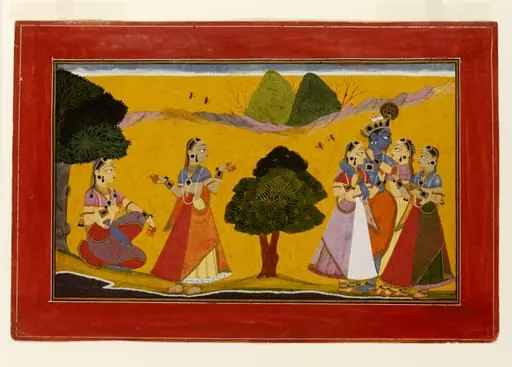 Radha and Krishna
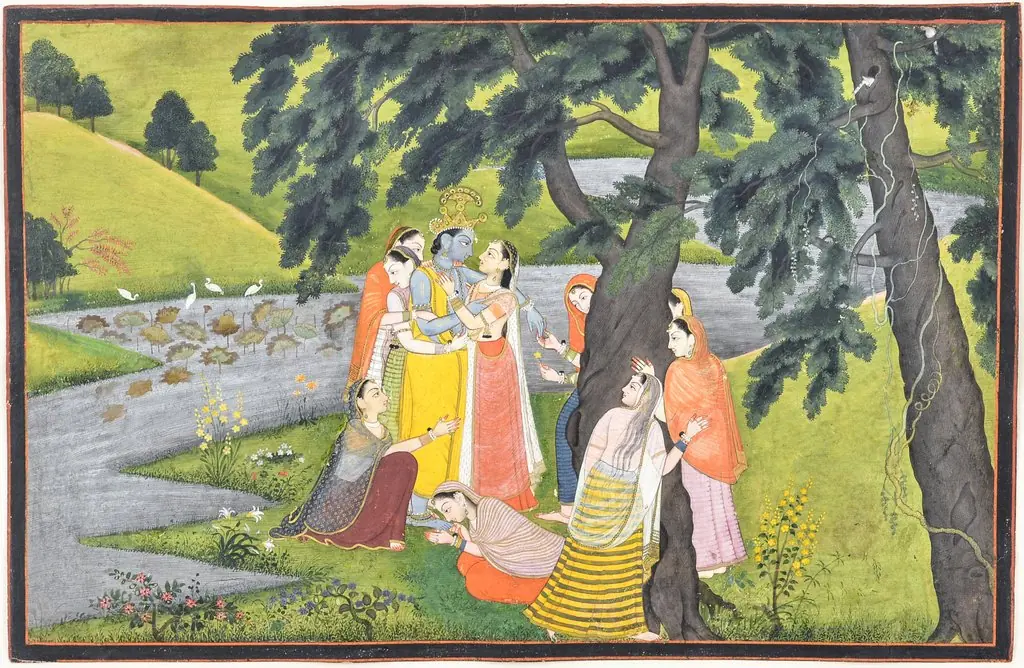 "Krishna and the Gopis on the Bank of the Yamuna River", Folio from the "Second" or "Tehri Garhwal" Gita Govinda (Song of the Cowherd)
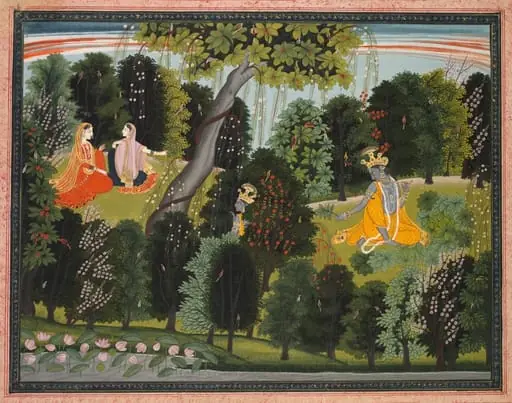 Sakhi persuades Radha to meet Krishna, from a Gita Govinda (Song of the Cowherd) of Jayadeva
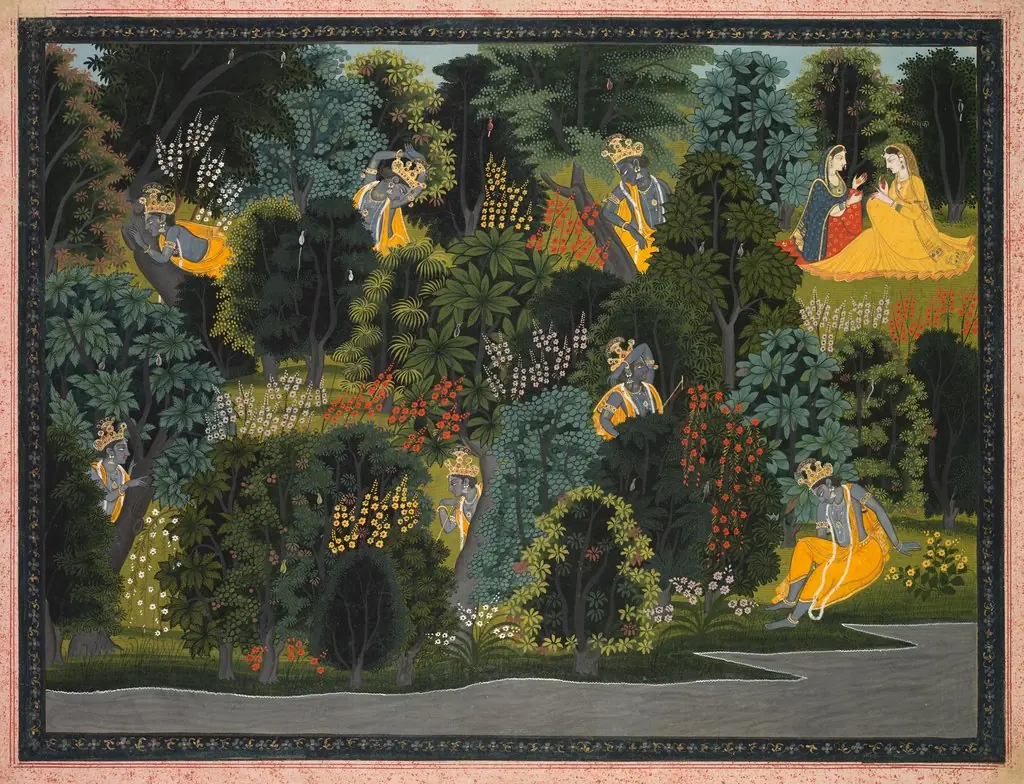 Krishna's Longing for Radha, from the Gita Govinda of Jayadeva
 Radha Awaiting Reconciliation with Krishna, from a Gita Govinda of Jayadeva
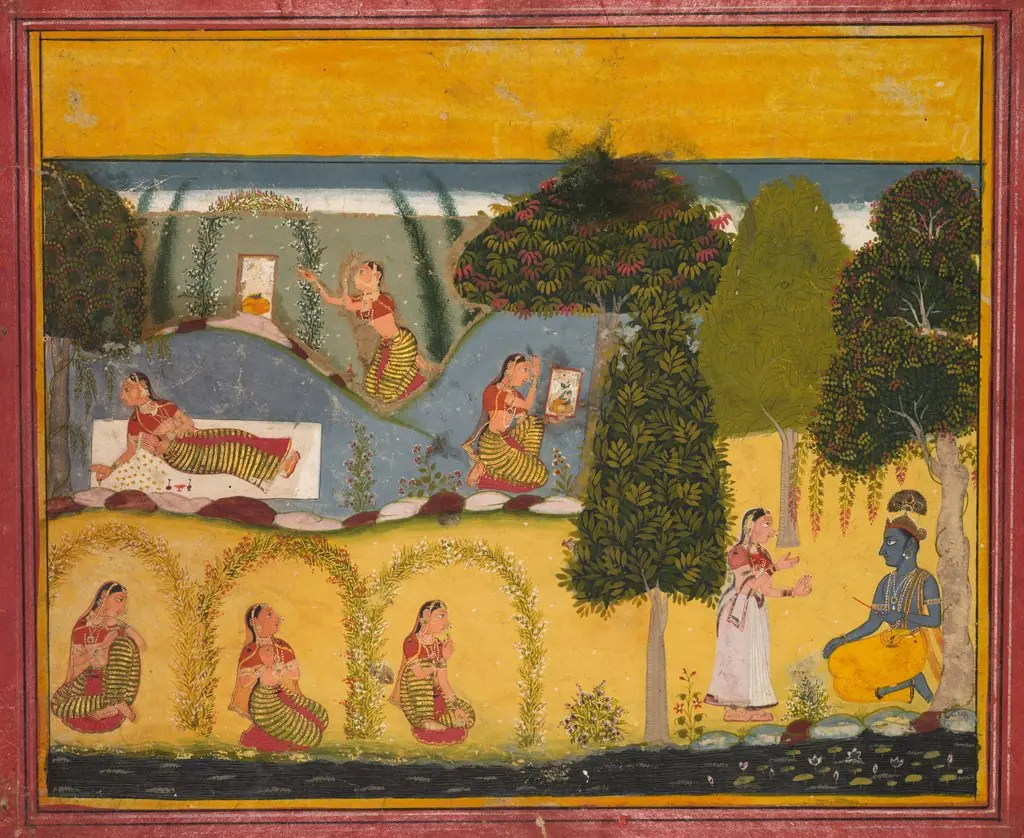 Radha Awaiting Reconciliation with Krishna, from a Gita Govinda of Jayadeva
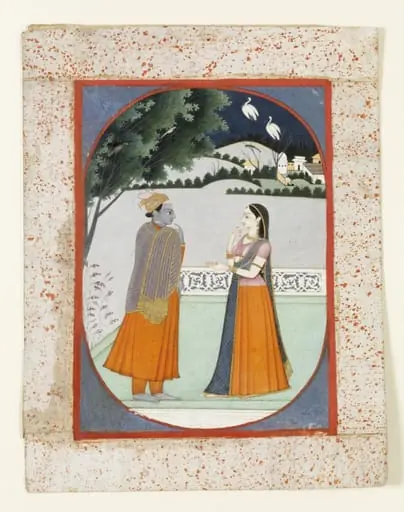 Radha and Krishna
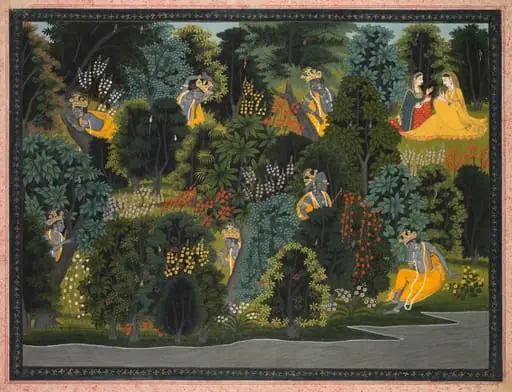 Krishna’s longing for Radha, from a Gita Govinda (Song of the Cowherd) of Jayadeva
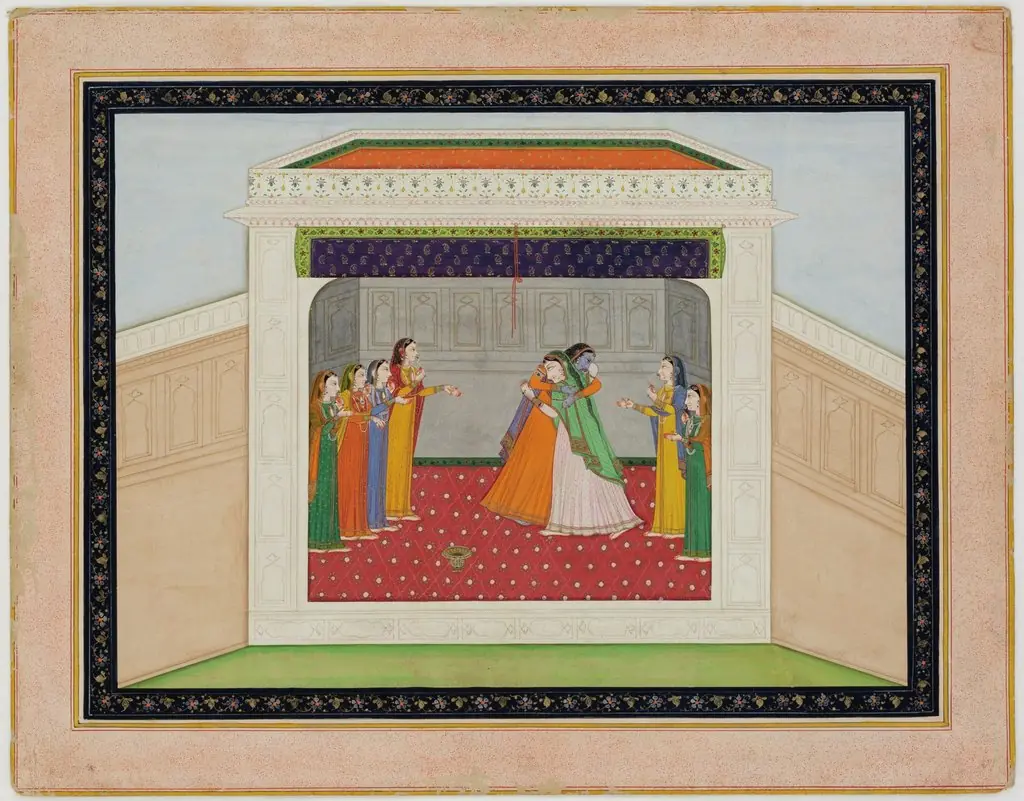 Story of Krishna and Radha
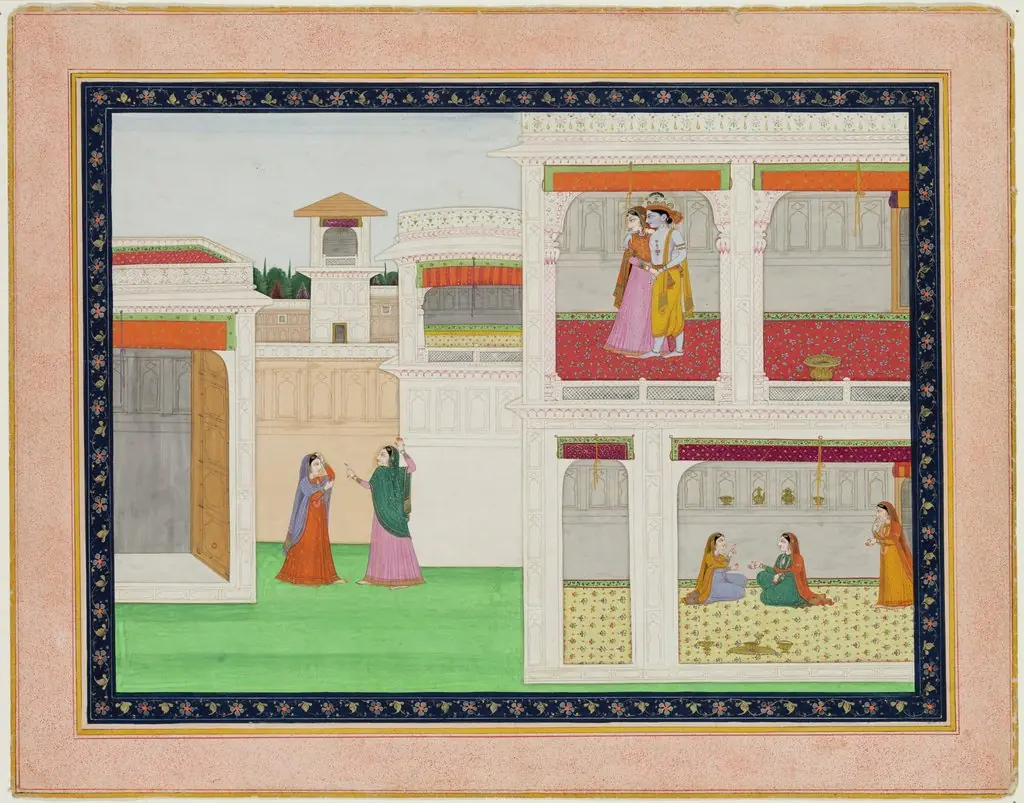 Story of Krishna and Radha