Artwork
Page from Tales of a Parrot (Tuti-nama): text page
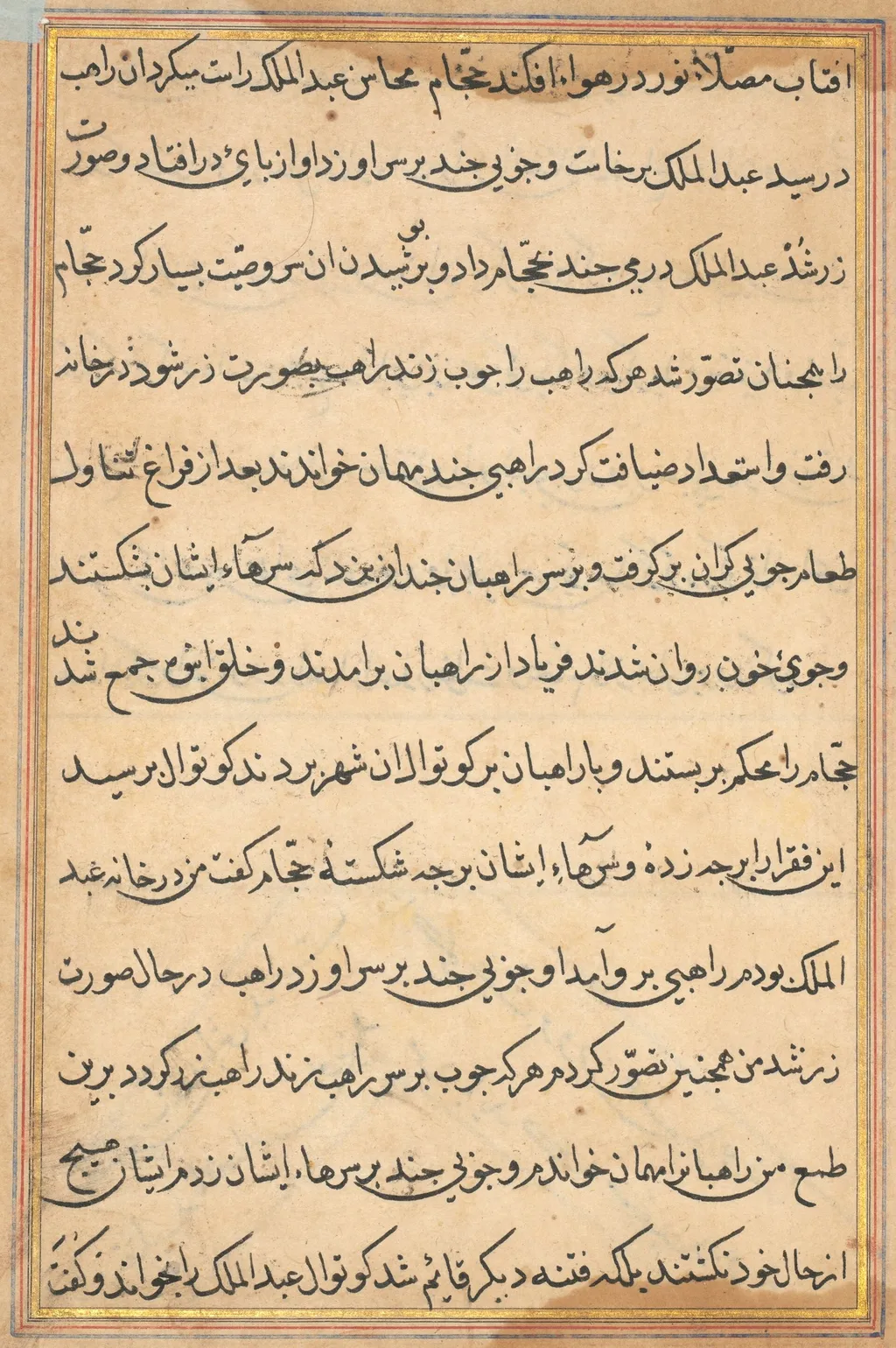
Page from Tales of a Parrot (Tuti-nama): text page is an unspecified painting. It dates from 1560 and is held in the collection of the Cleveland Museum of Art. The object is a single leaf from the Persian manuscript known as the Tales of a Parrot (Tuti‑nama).
About this work
Overview
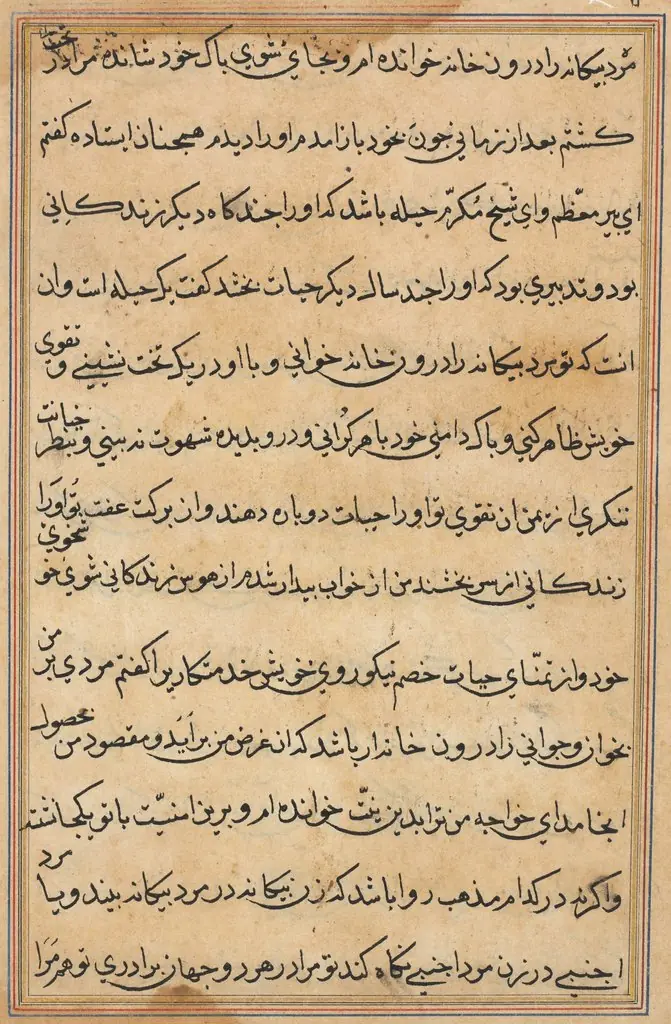
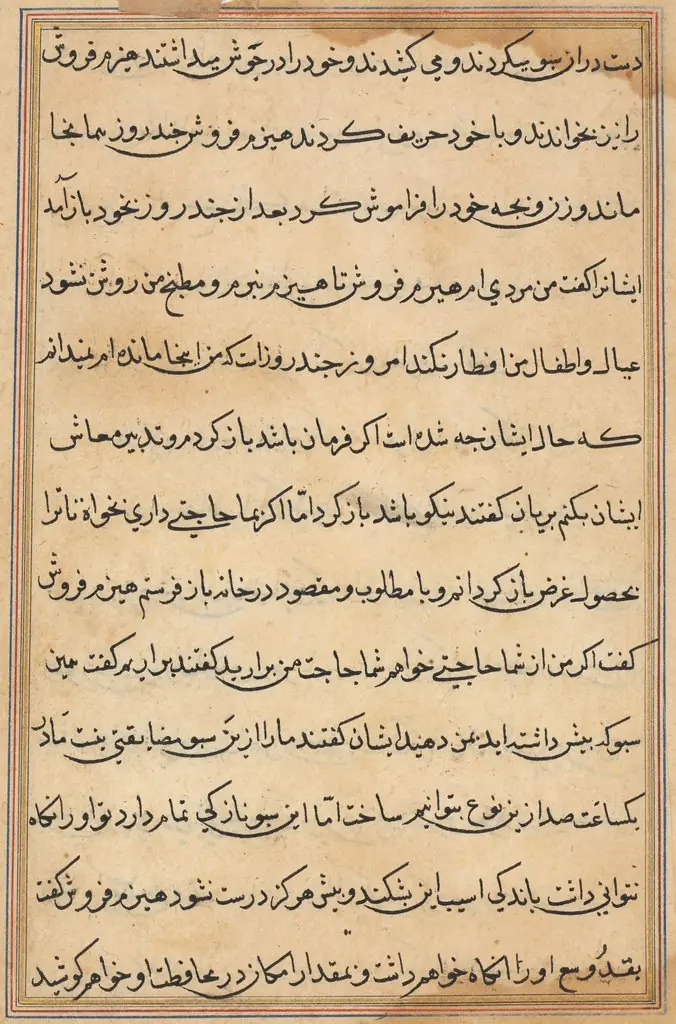
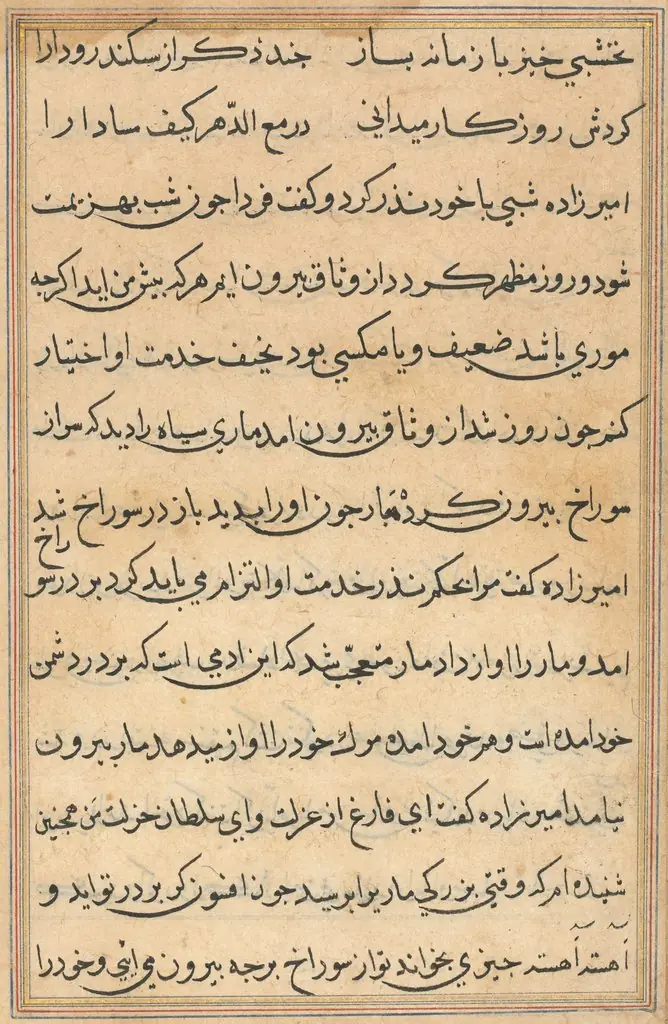
The object is a single leaf from the Persian manuscript known as the Tales of a Parrot (Tuti‑nama). It consists of a text page rendered in black ink upon a light‑colored parchment, framed by narrow decorative bands that incorporate thin red, blue and yellow lines. The composition balances a restrained palette with subtle ornamental accents.
Subject & Meaning
The page contains a passage from the Tuti‑nama, a moral and didactic collection of stories traditionally illustrated for courtly audiences. The narrative typically employs the parrot as a vehicle for ethical instruction, though the specific excerpt on this leaf is not identified in the available description.
Technique & Style
The script is executed in a flowing, cursive hand, each line gently curving across the surface, characteristic of Persian calligraphic practice in the early modern period. The borders are applied with fine linear strokes in three primary colors, providing a modest yet deliberate decorative framework that enhances the visual hierarchy of text and margin.
History & Provenance
The manuscript originates from the Persian literary tradition, though the precise date, workshop, or patron remains unspecified. Its survival as an individual page suggests it may have been detached from a larger codex, a common occurrence in the collection and trade of manuscript fragments.
Context
The Tuti‑nama belongs to a genre of illustrated books that combined poetic prose with moral lessons, often produced for elite patrons in the Safavid and later periods. Such works reflect the cultural emphasis on literary refinement and the visual integration of text and ornamentation.
Legacy
Pages like this illustrate the enduring appeal of Persian narrative art and its influence on manuscript production across the Islamic world. The delicate balance of calligraphy and modest color accents exemplifies the aesthetic values that continued to inform book design into the modern era.
Artist & collection

 Page from Tales of a Parrot (Tuti-nama): text page
 Page from Tales of a Parrot (Tuti-nama): text page
 Page from Tales of a Parrot (Tuti-nama): text page
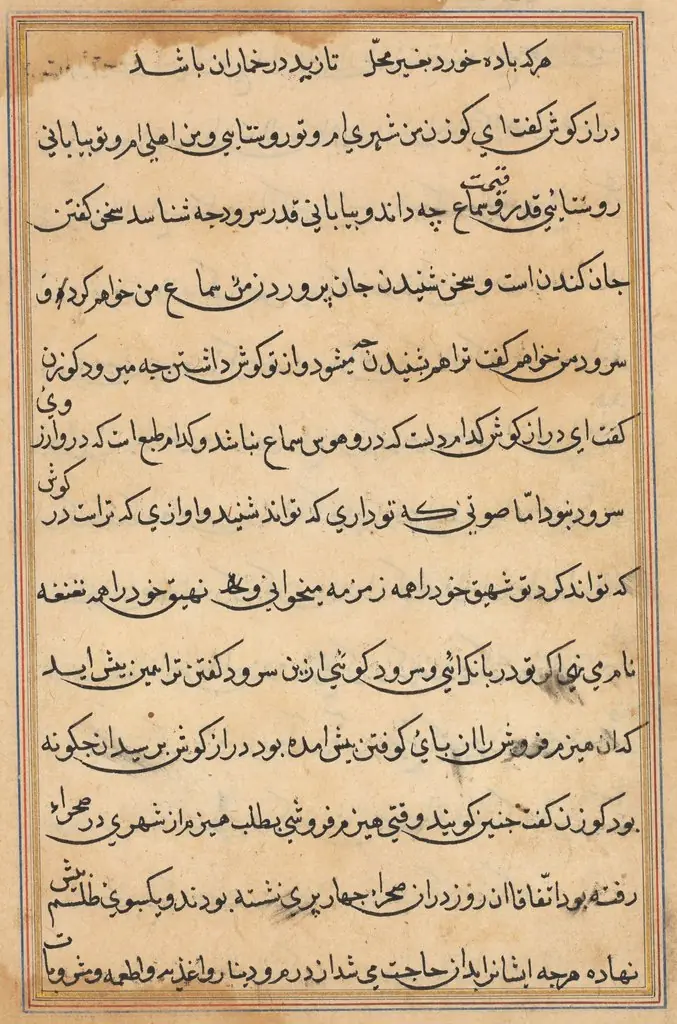 Page from Tales of a Parrot (Tuti-nama): text page
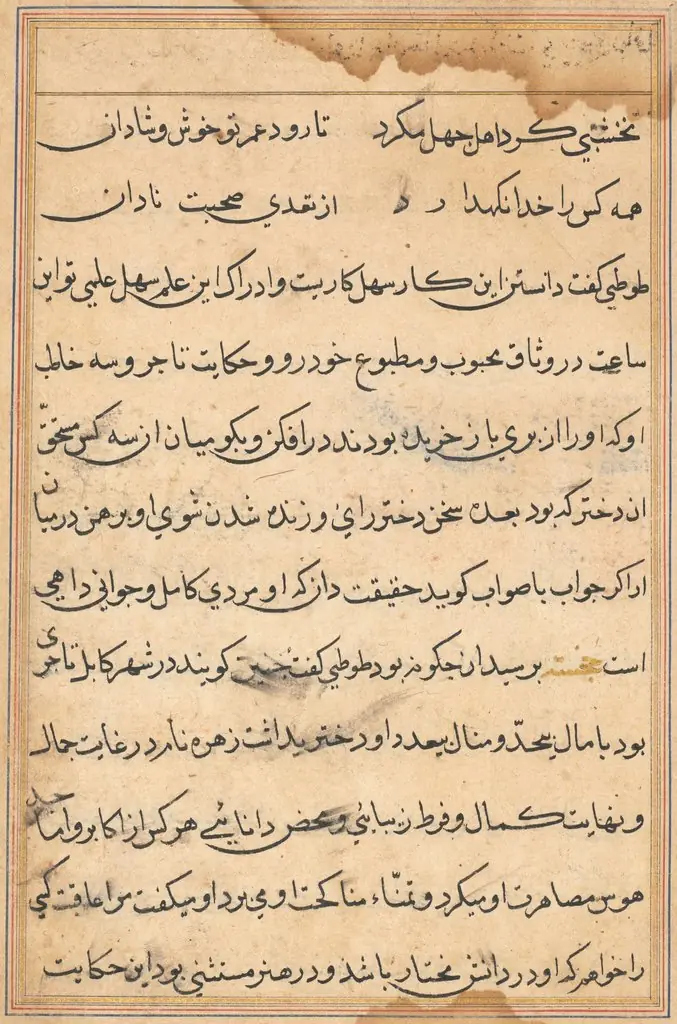 Page from Tales of a Parrot (Tuti-nama): text page
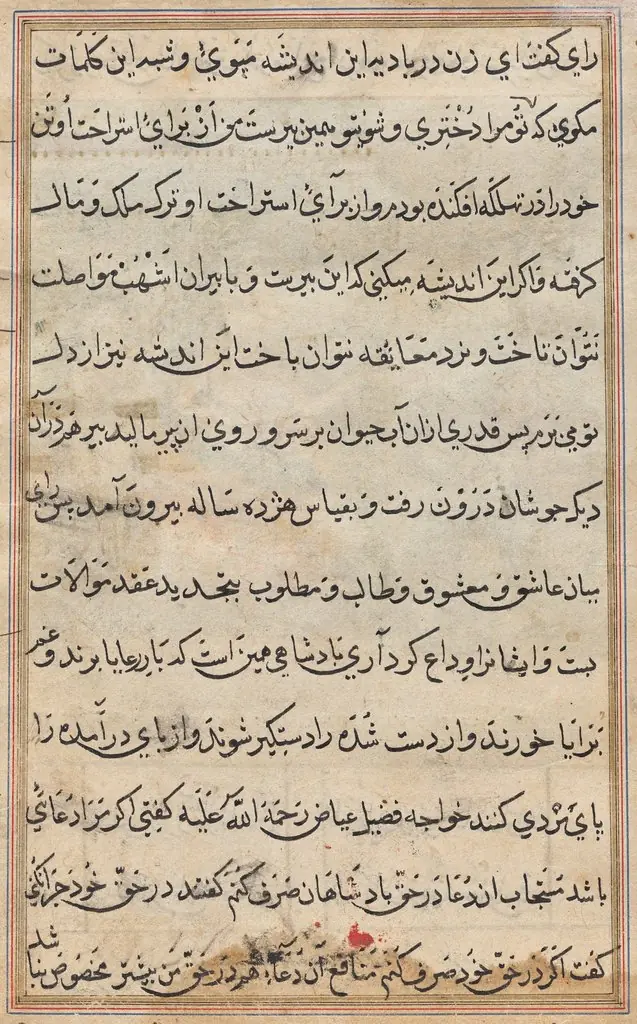 Page from Tales of a Parrot (Tuti-nama): text page
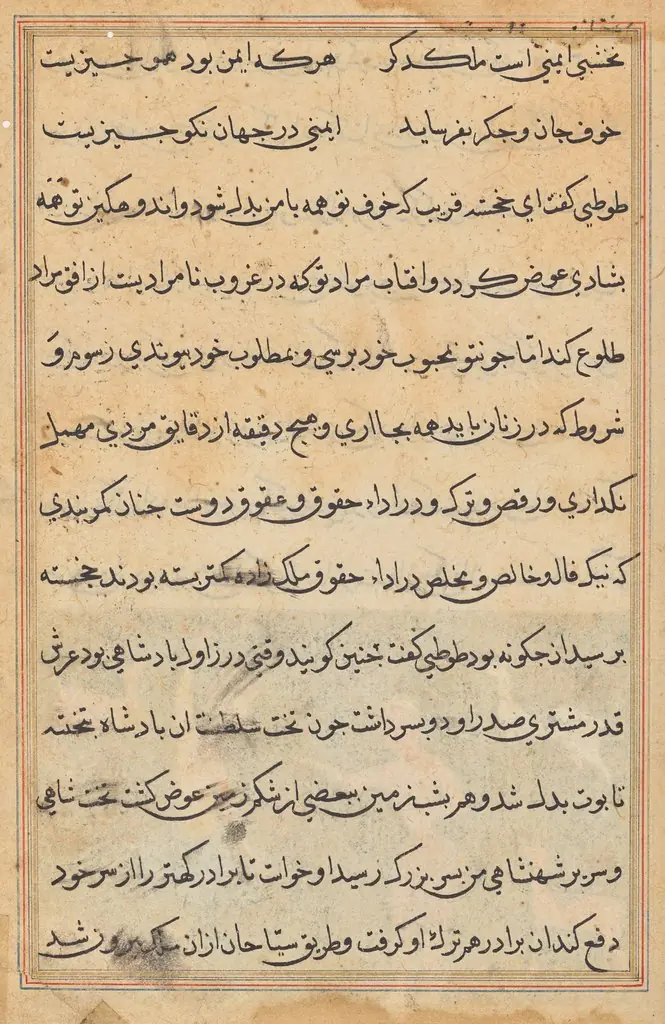 Page from Tales of a Parrot (Tuti-nama): text page
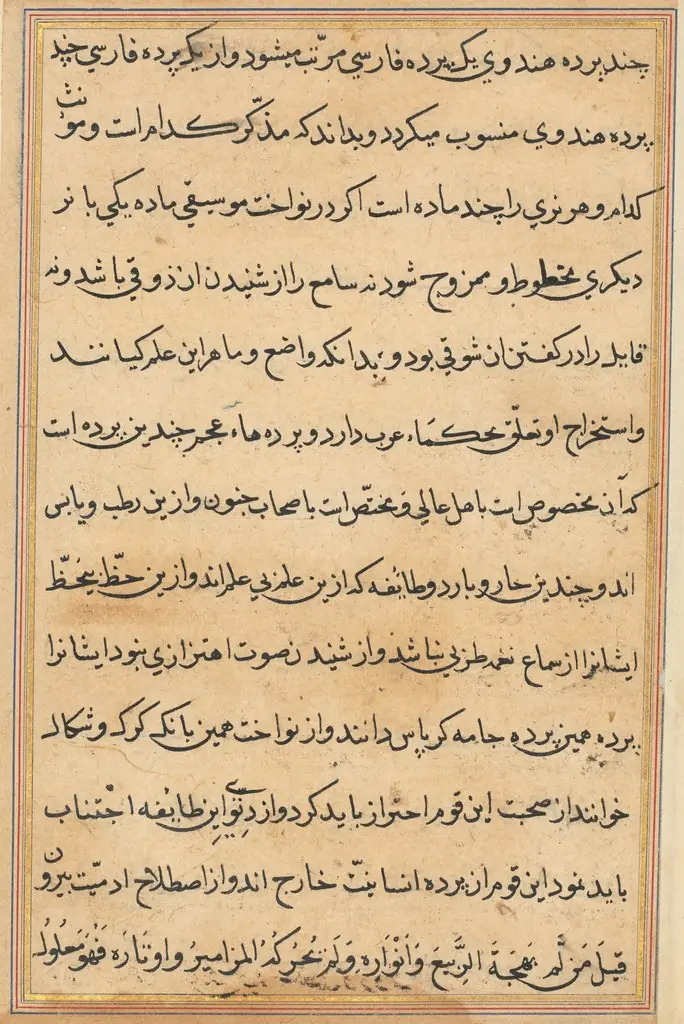 Page from Tales of a Parrot (Tuti-nama): text page
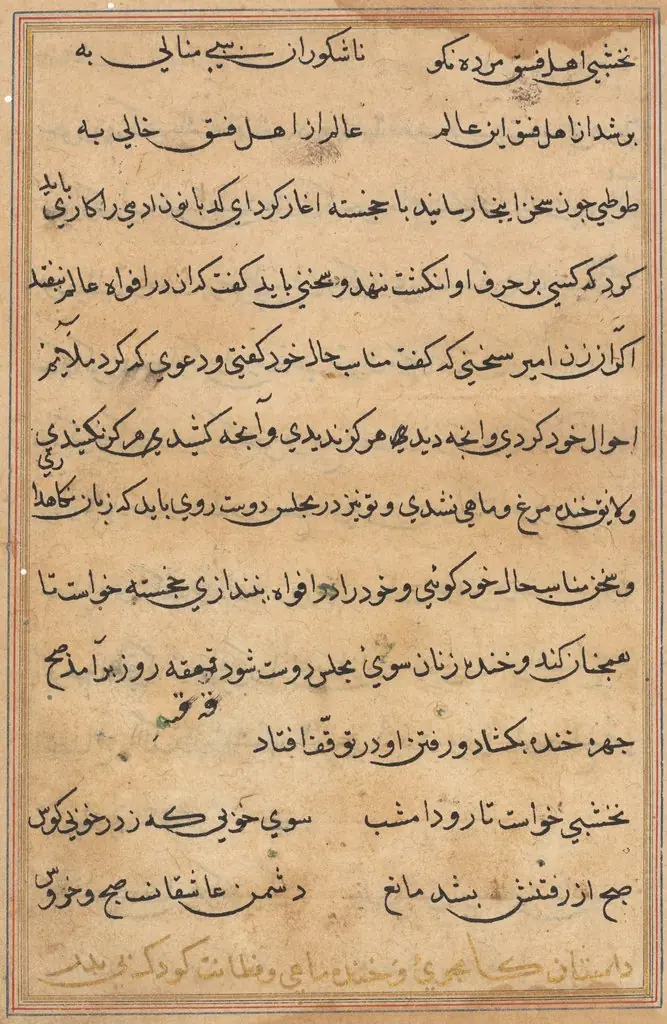 Page from Tales of a Parrot (Tuti-nama): text page
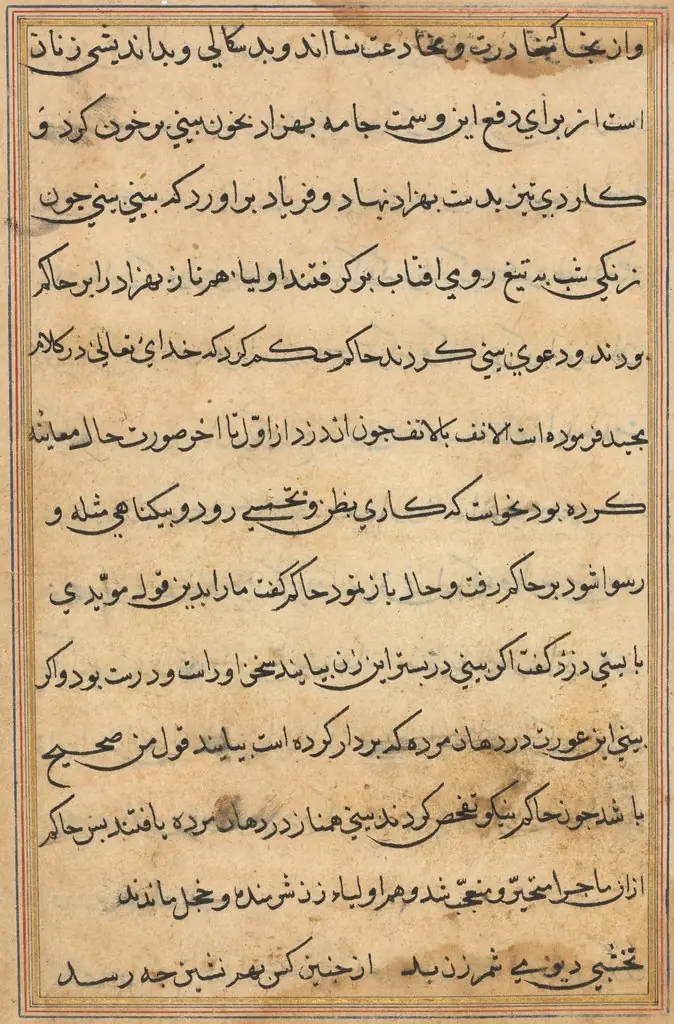 Page from Tales of a Parrot (Tuti-nama): text page
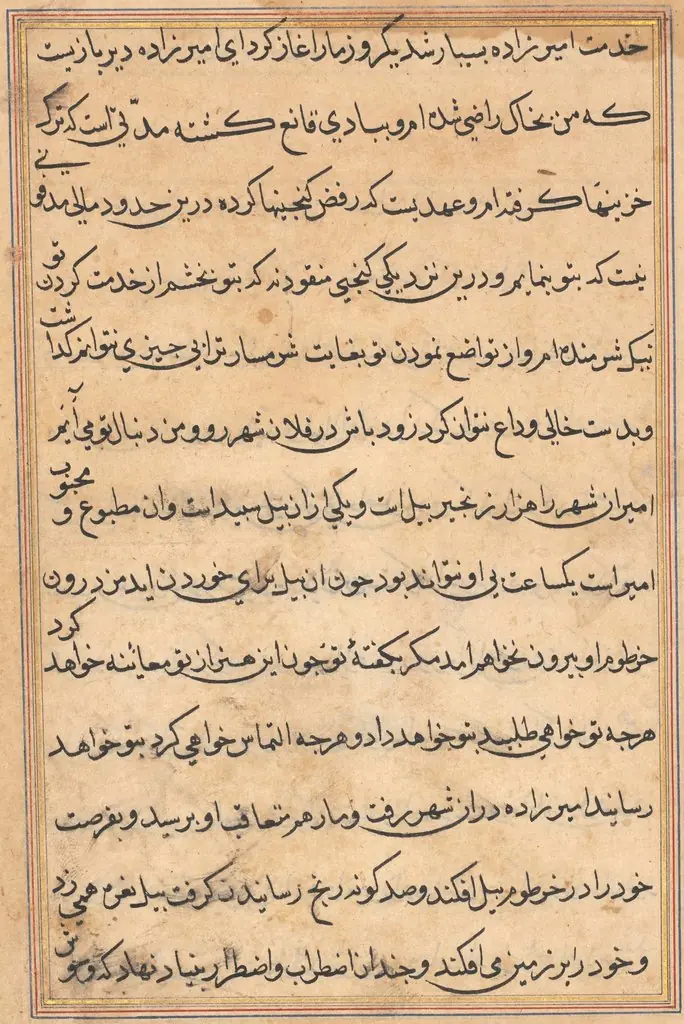 Page from Tales of a Parrot (Tuti-nama): text page