Artwork
Portrait of a young lady as Mary Magdalene
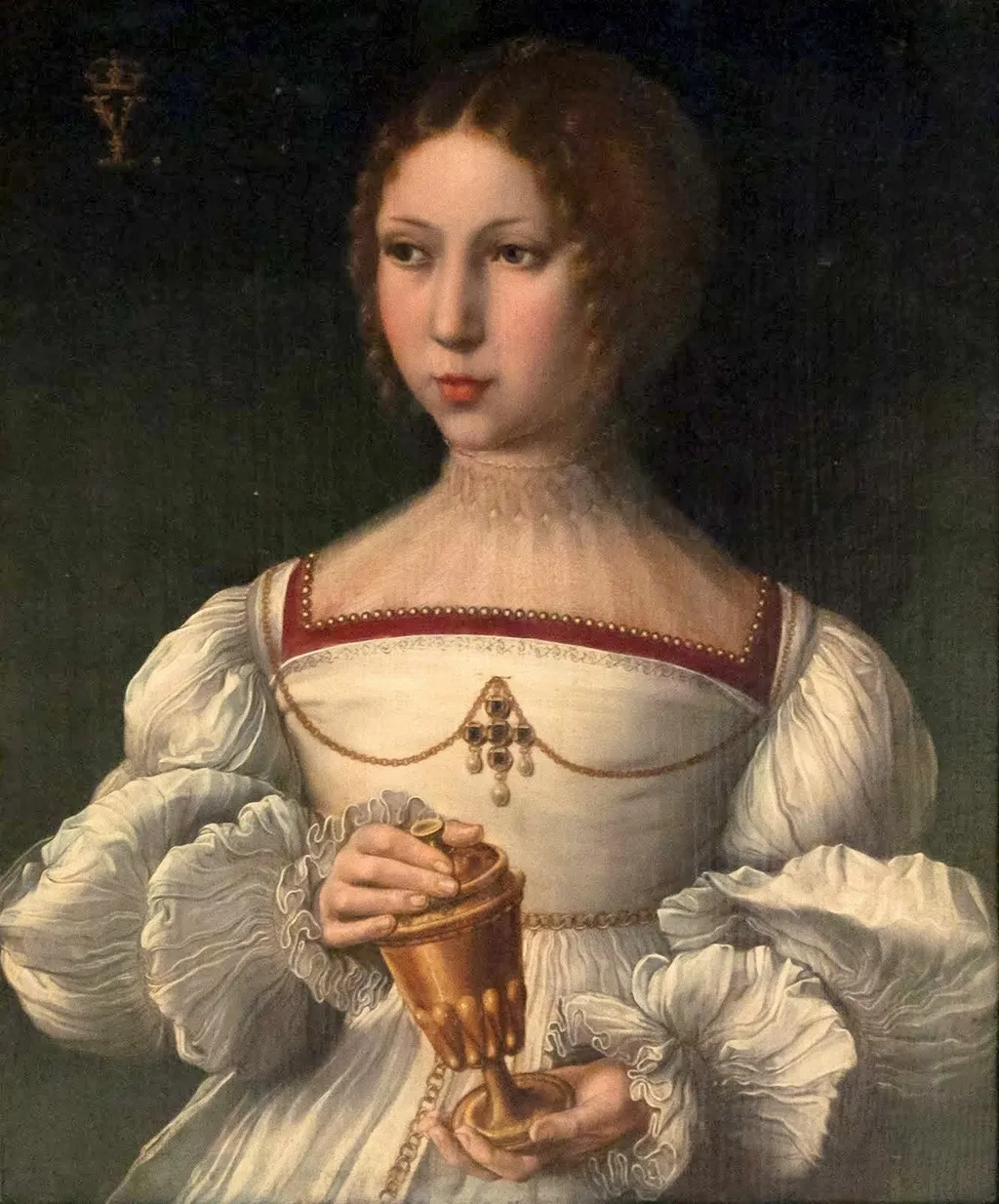
Portrait of a young lady as Mary Magdalene is an oil painting by the Mannerist artist Jan Gossaert. It dates from 1530 and is held in the collection of the Royal Museums of Fine Arts of Belgium.
About this work
Overview
Gossaert, trained in the Flemish tradition, had recently returned from Italy, where he encountered Renaissance ideals that informed his approach.
Painted in 1530 by Jan Gossaert, also known as Jan Mabuse, this oil portrait depicts a noblewoman embodying the biblical figure Mary Magdalene. Gossaert, trained in the Flemish tradition, had recently returned from Italy, where he encountered Renaissance ideals that informed his approach. The work merges northern European precision with Italianate composition, reflecting a transitional moment in Northern art. It is now part of the Royal Museums of Fine Arts of Belgium’s collection.
Subject & Meaning
The sitter, identified as Isabella of Austria, is portrayed not as herself but as Mary Magdalene, a figure associated with penitence and devotion. The golden box she holds likely represents the ointment jar traditionally linked to her anointing of Christ. Her solemn gaze and restrained posture convey spiritual gravity, while the choice of attire—elegant yet modest—blends aristocratic identity with religious symbolism, inviting contemplation rather than narrative.
Technique & Style
Gossaert employs oil paint with meticulous detail, particularly in the rendering of textures: the sheen of pearls, the crisp folds of the white fabric, and the metallic gleam of the reliquary. The dark, undefined background isolates the figure, heightening focus on facial expression and gesture. Subtle chiaroscuro models the face and hands, lending volume without dramatic contrast. The composition’s stillness and refined elegance align with early Mannerist tendencies, prioritizing grace over naturalism.
History & Provenance
Commissioned during Isabella of Austria’s time in the Habsburg court, the portrait reflects the cultural exchange between the Low Countries and Italy. Gossaert’s exposure to Italian art, particularly after his 1508–09 trip to Rome, influenced his handling of form and portraiture. The painting remained in noble collections before entering the Royal Museums of Fine Arts of Belgium, where it has been preserved as a key example of early 16th-century Northern Renaissance portraiture.
Context
In the early 1530s, Northern European courts increasingly adopted Italianate aesthetics to signal sophistication and piety. Portraits of noblewomen as biblical figures were not uncommon, serving both devotional and political purposes. By casting Isabella as Mary Magdalene, the image subtly reinforced her moral authority and dynastic legitimacy. Gossaert’s synthesis of Flemish detail and Italian harmony mirrored broader trends among elite patrons seeking to align themselves with classical and Christian ideals.
Legacy
This work exemplifies how Northern artists adapted Italian Renaissance principles without abandoning their own traditions. Gossaert’s integration of psychological depth and symbolic detail influenced later portraitists in the Low Countries. The painting remains a reference point for understanding the intersection of secular identity and religious iconography in Habsburg-era art, illustrating how portraiture could function as both personal likeness and moral allegory.
Own this work as a print
Artist & collection
Artist
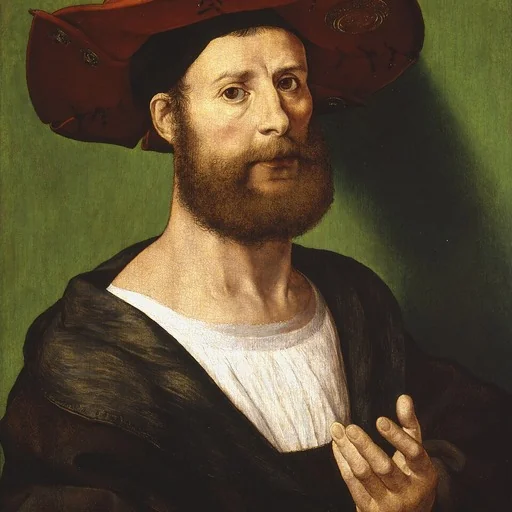
Jan Gossaert (c. 1478 – 1 October 1532) was a French-speaking painter from the Low Countries also known as Jan Mabuse (the name he adopted from his birthplace, Maubeuge) or Jennyn van Hennegouwe (Hainaut), as he called…

Museum
Royal Museums of Fine Arts of Belgium
Continue through works from the same source collection.
 Portrait of a young woman
 Portrait of a young woman
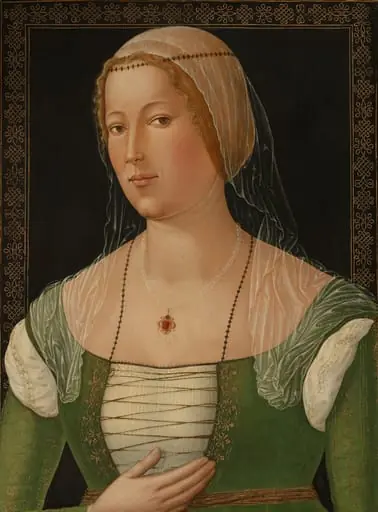 Portrait of a Young Woman
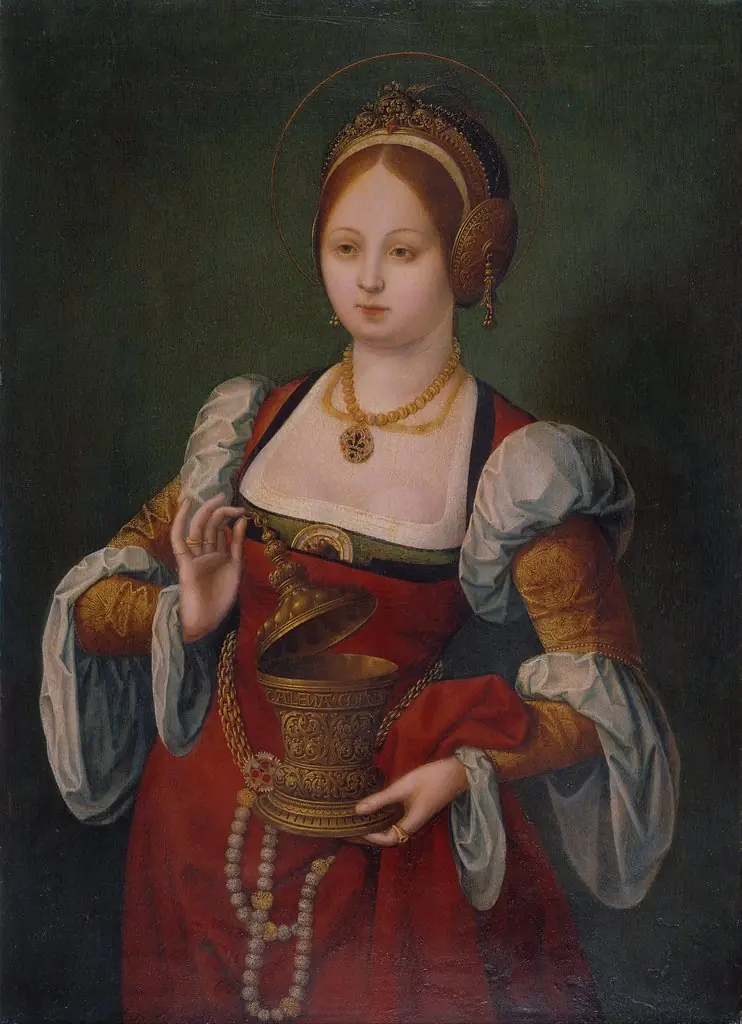 Mary Magdalene
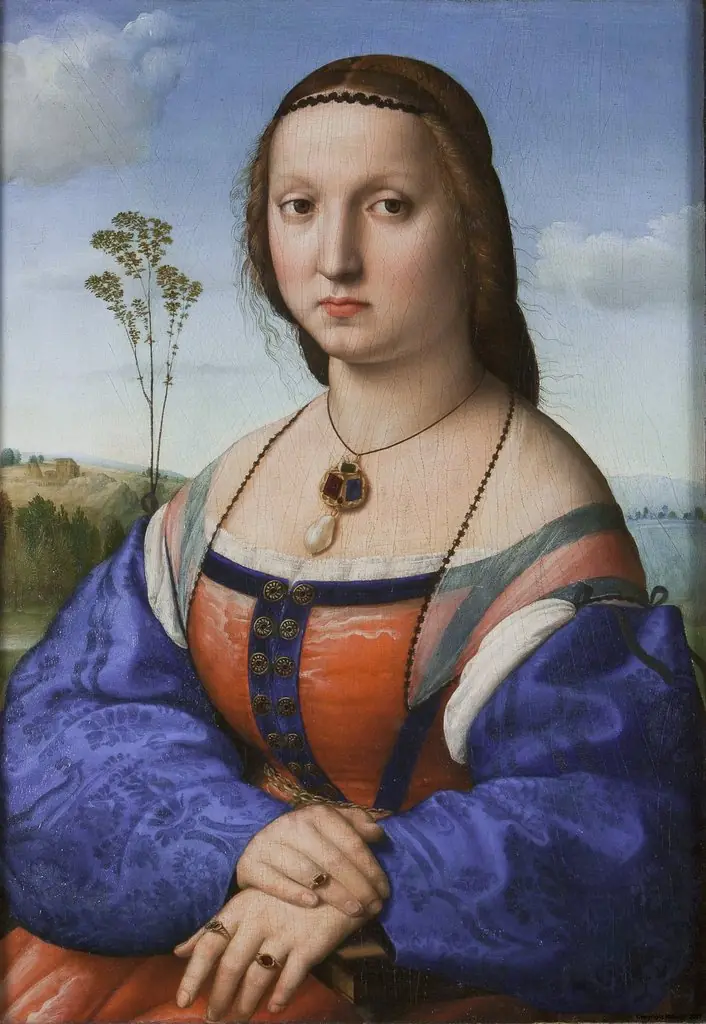 Portrait of Maddalena Doni
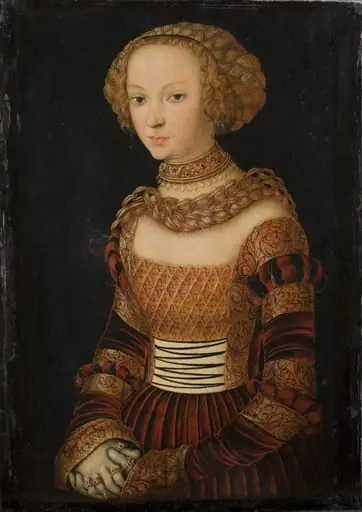 Portrait of a Young Woman. Princess Emily of Saxony?
 Portrait of a Lady
 Portrait of a Lady
 Eleanor of Austria, queen of France (1498-1558)
 Saint Mary Magdalene
 Portrait of a girl
 Portrait of a Young Lady