Artwork
The dream of Zulaykha, from the Amber Album
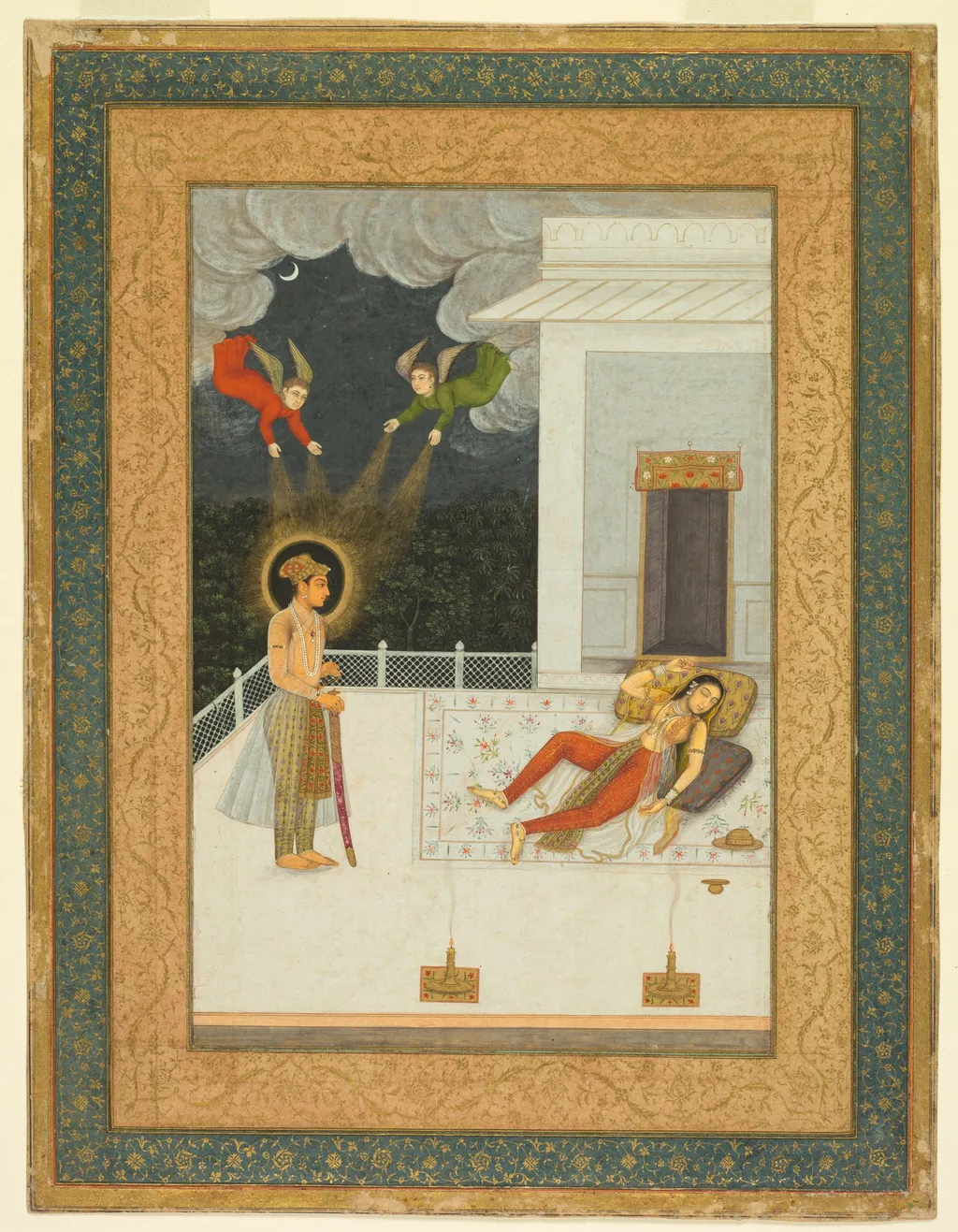
The dream of Zulaykha, from the Amber Album is an unspecified painting. It dates from 1670 and is held in the collection of the Cleveland Museum of Art.
About this work
Overview
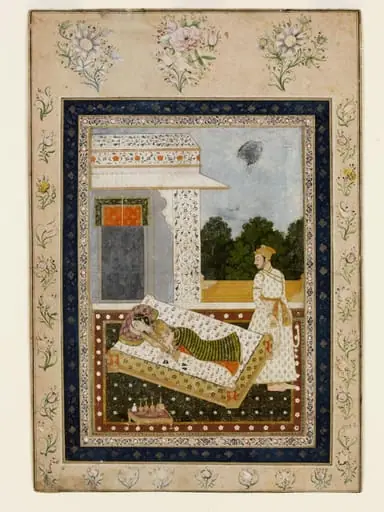
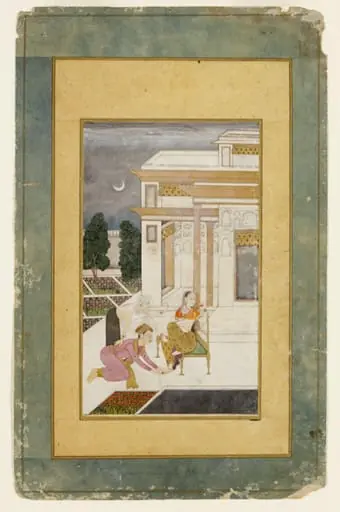
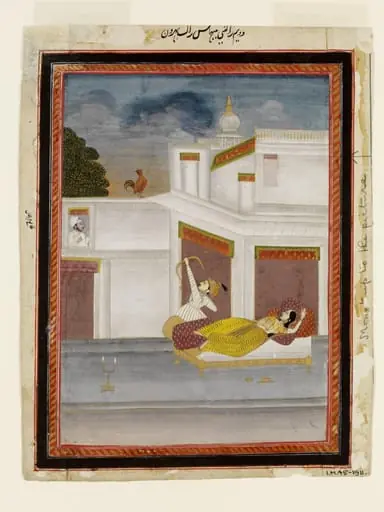
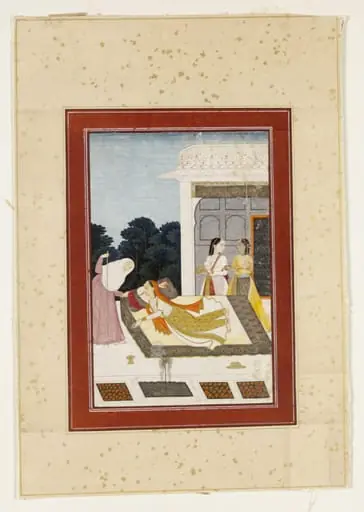
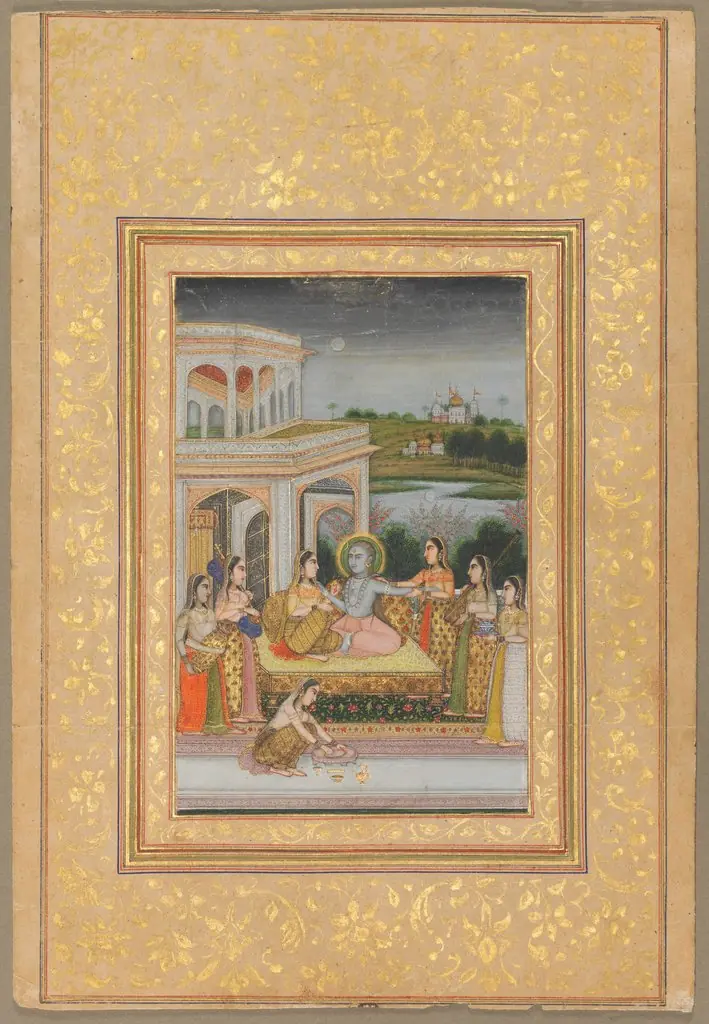
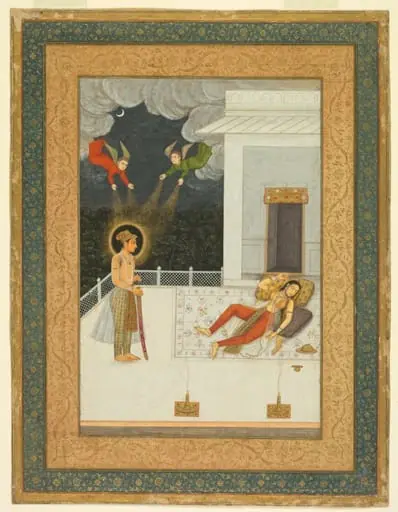
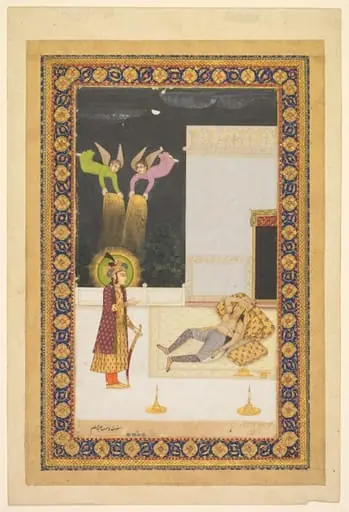
The work, titled “The Dream of Zulaykha” and taken from the Amber Album, depicts a nocturnal interior scene illuminated by a golden balcony light. A standing male figure occupies the balcony, his visage radiant as if surrounded by a halo, while two angels hover above, dispensing a luminous substance onto the space below.
Subject & Meaning
Within the room, a woman lies asleep on a bed draped with a richly patterned red‑and‑gold textile, her feet resting on a modest stool. The presence of angels and the dream‑like atmosphere suggest a narrative drawn from the legendary tale of Zulaykha, whose nocturnal visions were a common motif in Persian literary tradition.
Technique & Style
The painting employs a vivid palette of gold, red, green, and brown, with decorative borders that feature swirling vegetal motifs. Fine detailing appears in the woman’s garment, where tiny embroidered flowers are rendered, and the angels’ wings are painted in striking red and green hues, contrasting with the dark night sky beyond the balcony.
History & Provenance
The piece forms part of the Amber Album, a collection of miniature paintings assembled in the early modern period. It is presently housed in the Cleveland Museum of Art, where it forms part of the museum’s holdings of Persian and Islamic art.
Context
The composition reflects the Persian miniature tradition’s fascination with courtly romance and mystical dream narratives. The use of illuminated borders and intricate interior decoration aligns with the aesthetic conventions of manuscript illustration that were adapted for standalone panel paintings during the era.
Artist & collection