Artwork
Head of Christ in the crown of thorns
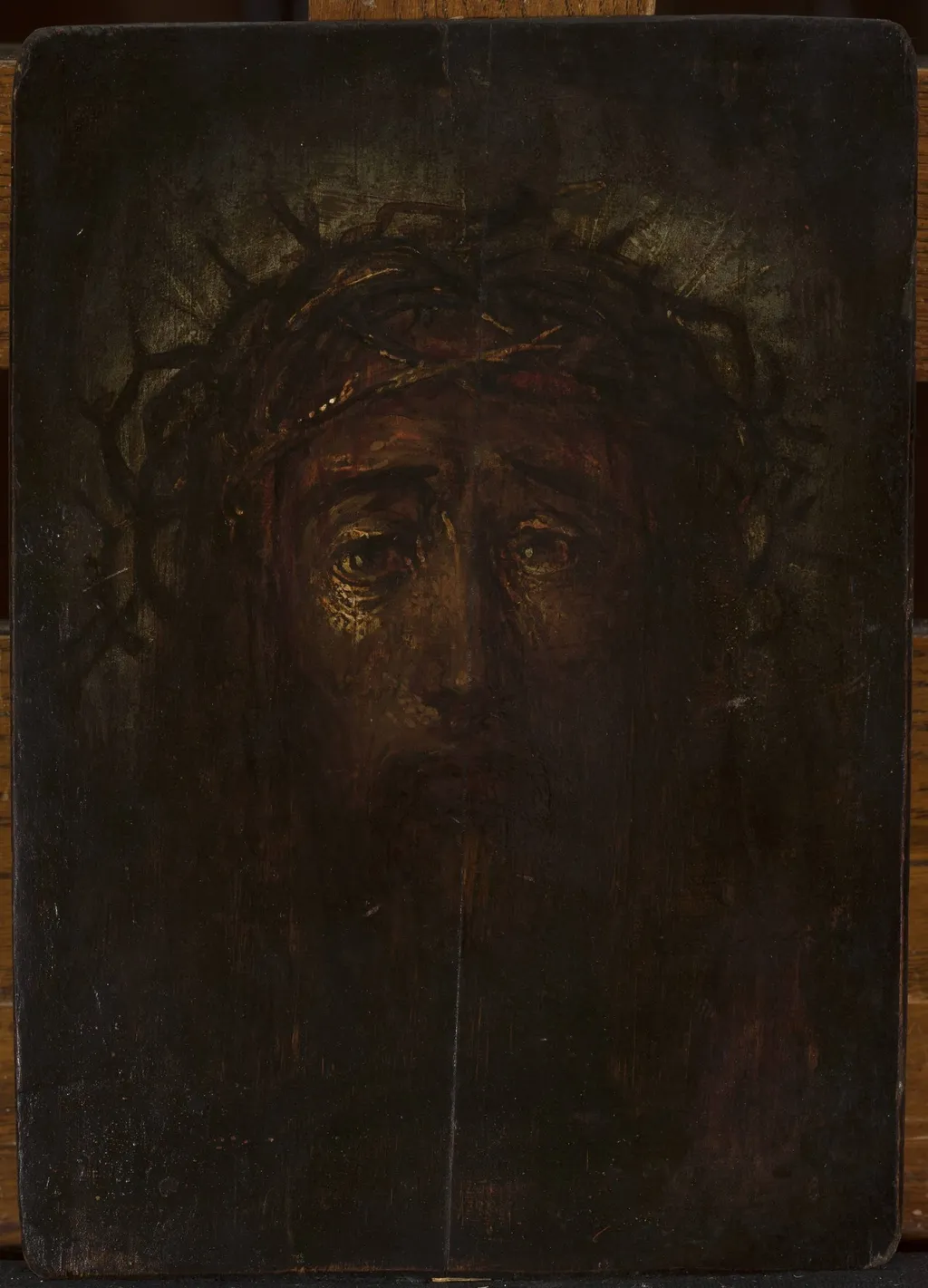
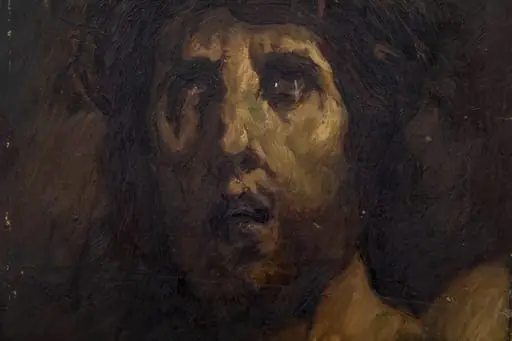
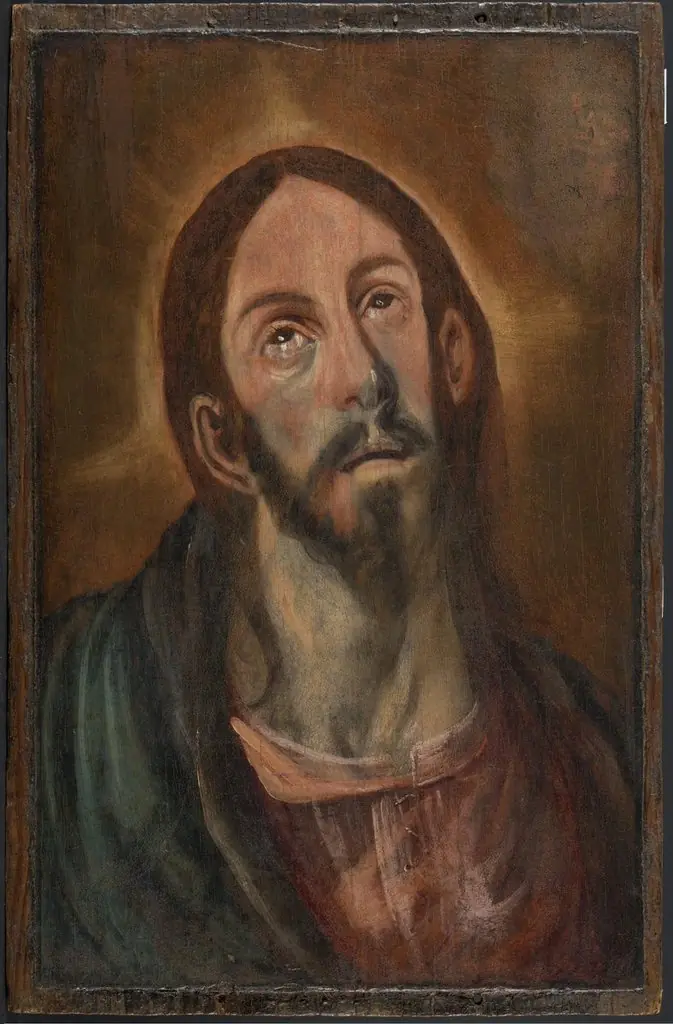
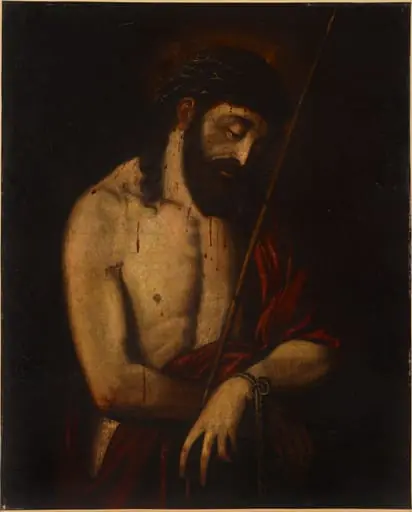
Head of Christ in the crown of thorns is an oil painting by the Spanish Baroque Tenebrist artist Unknown. It dates from 1711 and is held in the collection of the National Museum in Warsaw. This oil painting depicts a close-up portrait of Christ wearing the crown of thorns.
About this work
Overview
This oil painting depicts a close-up portrait of Christ wearing the crown of thorns. Rendered in muted browns and blacks, the composition emphasizes texture and shadow. The face is rendered with intense realism, conveying physical and emotional weight. The brushwork is deliberate and visible, enhancing the tactile quality of skin and thorns without idealization.
Subject & Meaning
The image focuses on Christ’s suffering immediately prior to crucifixion. His downcast gaze and tightly pressed lips suggest resignation, not agony. The crown, rendered with jagged, interwoven thorns, is not ornamental but brutal—emphasizing the physical torment of the Passion. The absence of halos or divine light shifts focus to human vulnerability.
Technique & Style
The artist employs chiaroscuro to model form through stark contrasts of light and shadow. Thick, layered brushstrokes build the texture of skin and thorns, avoiding smooth blending. The limited palette—dominated by earth tones—heightens the somber mood. This approach prioritizes emotional gravity over decorative detail, aligning with devotional realism of the period.
History & Provenance
The painting’s origin is undocumented in public records, though its style suggests a 17th-century European workshop, possibly Spanish or Italian. No known collector or institution is recorded as its early owner. Its survival implies private devotional use rather than public display, likely kept in a domestic or monastic setting.
Context
Created during a time when Catholic devotional imagery emphasized Christ’s humanity and sacrifice, this work reflects Counter-Reformation ideals. Such portraits were used to foster personal meditation on suffering. The absence of narrative elements—no soldiers, no cross—focuses the viewer’s attention inward, on contemplation rather than storytelling.
Legacy
Though not widely exhibited or reproduced, the painting exemplifies a quiet tradition of intimate religious portraiture. Its restrained style influenced later artists seeking emotional authenticity over theatricality. It remains a quiet testament to the power of minimalism in sacred art, where restraint deepens spiritual resonance.
Artist & collection

 Domestic Scene
 Giacomo and Cardinal Marco, investing Andrea, Abbot of San Zeno, with his Benefice
 The Nymph of Fontainebleau
 Portrait of a Woman
 Madonna and Child with Saints in the Enclosed Garden
 Venus and Minerva
 Family Group of Four on Sofa
 Wall painting from Room H of the Villa of P. Fannius Synistor at Boscoreale