Artwork
The Parrot Addresses Khujasta at the Beginning of the Twentieth Night, from a Tuti-nama (Tales of a Parrot)
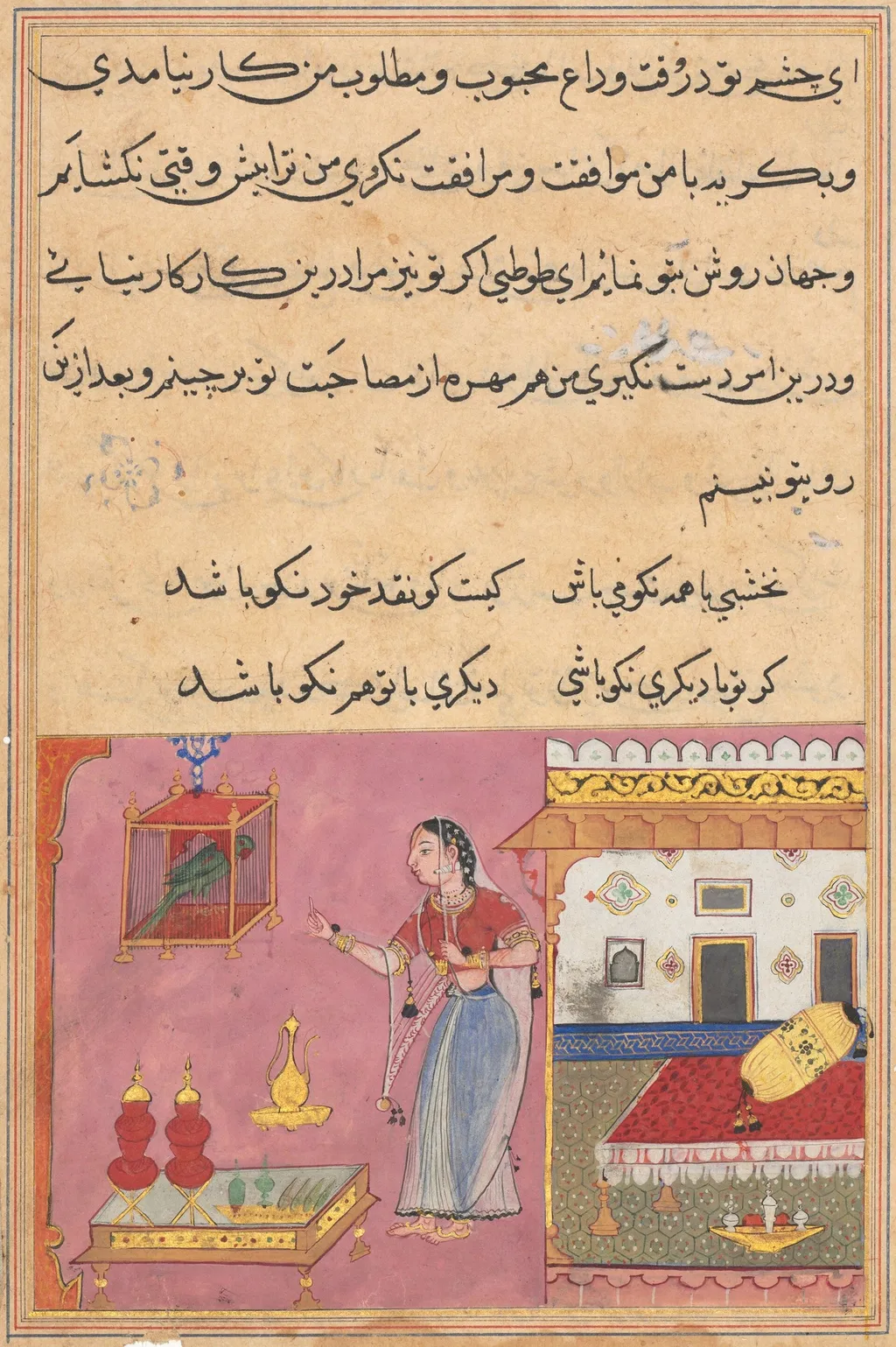
The Parrot Addresses Khujasta at the Beginning of the Twentieth Night, from a Tuti-nama (Tales of a Parrot) is an unspecified painting. It dates from 1560 and is held in the collection of the Cleveland Museum of Art. The work depicts a woman in traditional dress standing beside a caged parrot, engaged in a quiet conversation.
About this work
Overview
The work depicts a woman in traditional dress standing beside a caged parrot, engaged in a quiet conversation. She wears a long skirt and a red upper garment, her hair modestly covered, and holds a small object while addressing the bird. The interior is richly patterned, featuring a low table laden with assorted items, all rendered in vivid blues, reds, and yellows that convey depth and texture.
Subject & Meaning
The scene illustrates a moment from a Persian narrative tradition, specifically a tale in which a parrot relays stories to a character named Khujasta. The woman's interaction with the bird suggests a conveyance of moral or didactic content, a common motif in illustrated manuscripts where animals serve as narrative agents.
Technique & Style
Executed with a bold palette, the painting employs flat areas of saturated color alongside intricate decorative motifs typical of early‑twentieth‑century Persian illustration. Fine brushwork delineates textile patterns and architectural details, while the use of contrasting hues creates a sense of spatial layering without relying on linear perspective.
History & Provenance
The image originates from a Tuti‑nama, or "Tales of a Parrot," a genre of illustrated book that flourished in Iran and surrounding regions. The specific copy from which this panel is taken dates to the early twentieth century, reflecting the period’s revival of traditional manuscript aesthetics in a modern context.
Context
During the era of its creation, Persian visual culture experienced a resurgence of interest in historic literary themes, often rendered in a style that blended classic miniature conventions with contemporary color sensibilities. This work exemplifies that synthesis, situating a timeless story within a visual language familiar to early‑twentieth‑century audiences.
Artist & collection

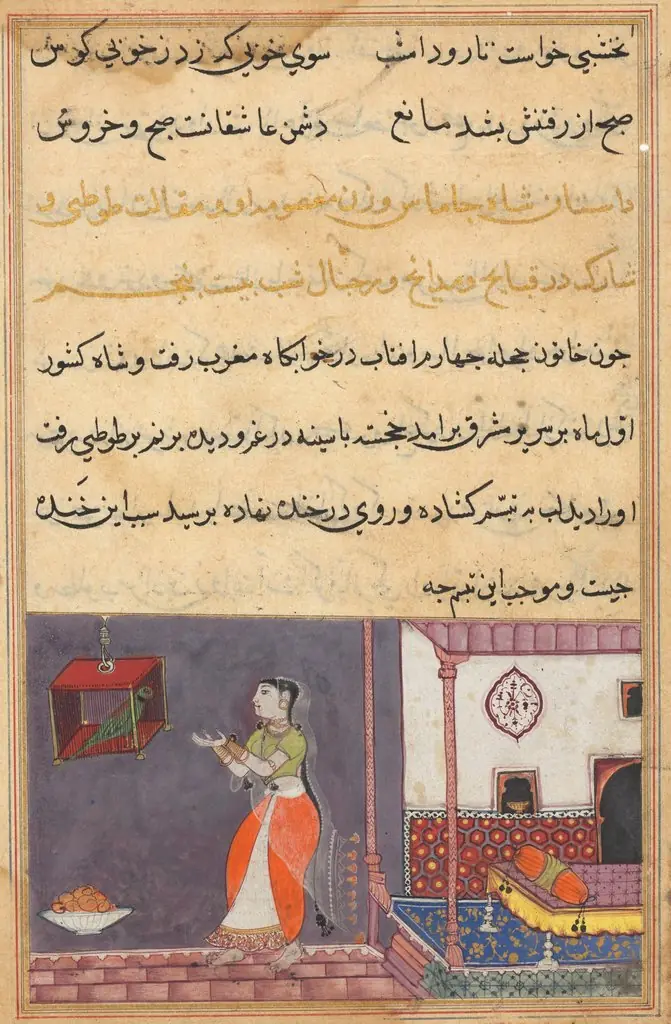 The Parrot Addresses Khujasta at the Beginning of the Twenty-fifth Night, from a Tuti-nama (Tales of a Parrot)
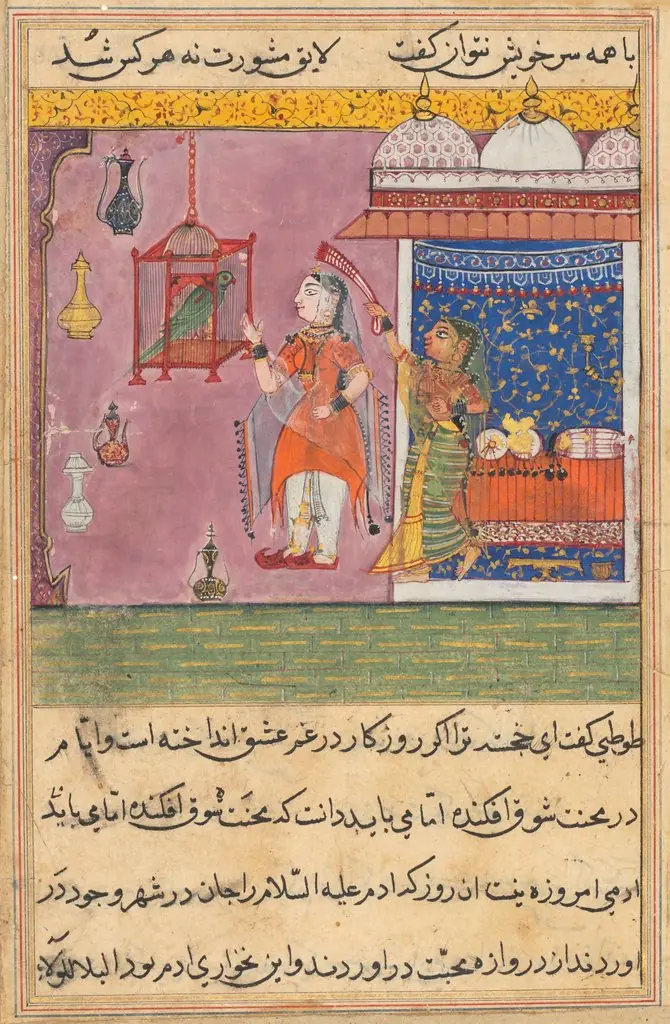 The Parrot Addresses Khujasta at the Beginning of the Nineteenth Night, from a Tuti-nama (Tales of a Parrot)
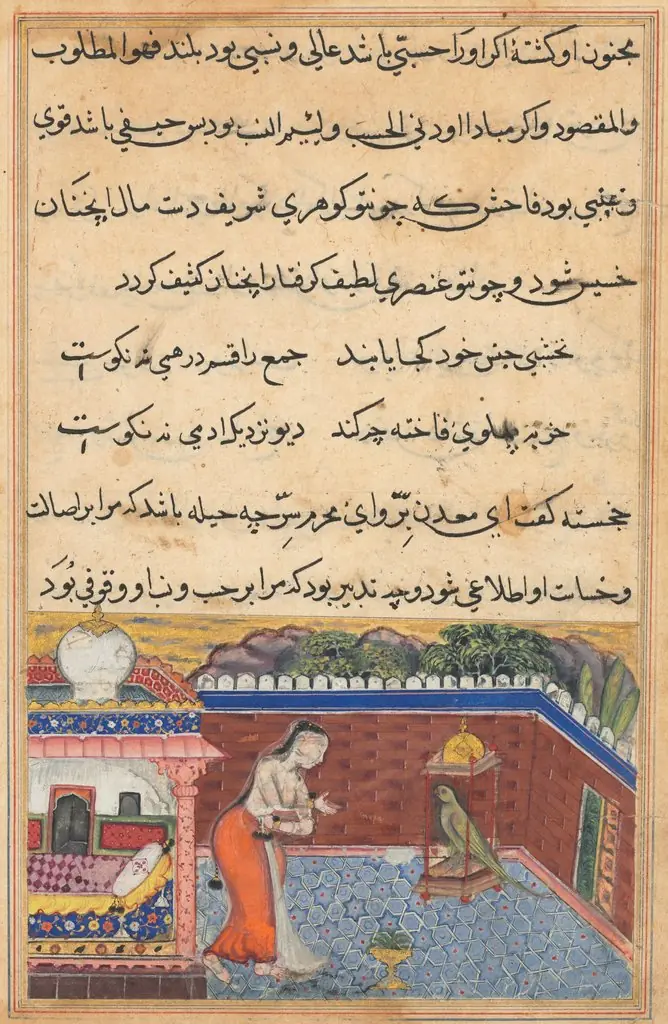 The parrot addresses Khujasta at the beginning of the thirty-first night, from a Tuti-nama (Tales of a Parrot)
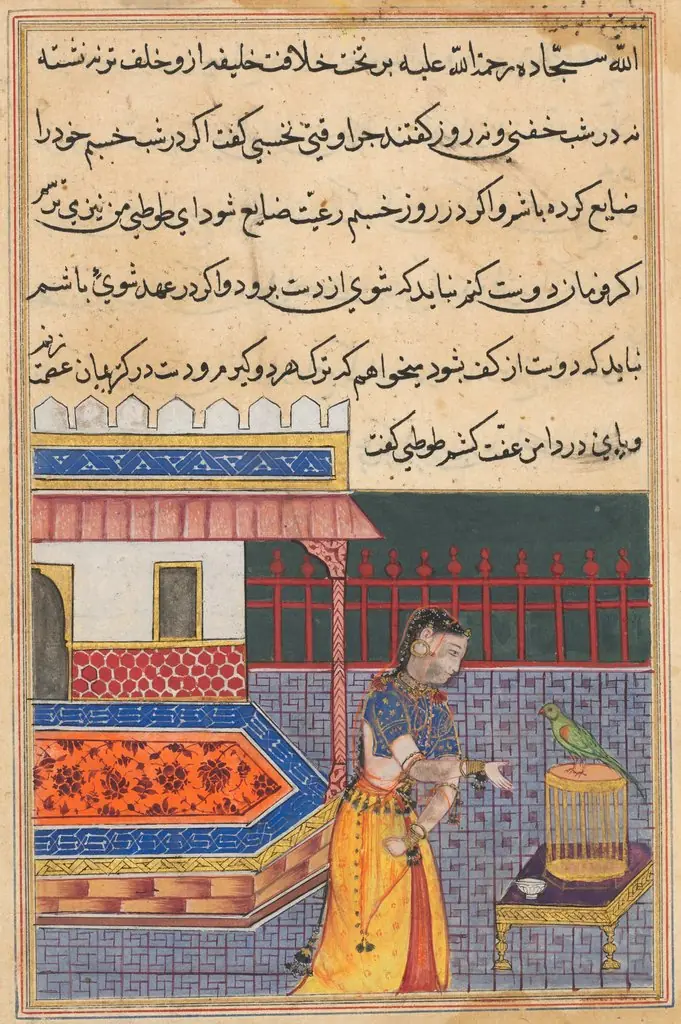 The parrot addresses Khujasta at the beginning of the forty-first night, from a Tuti-nama (Tales of a Parrot): Forty-first Night
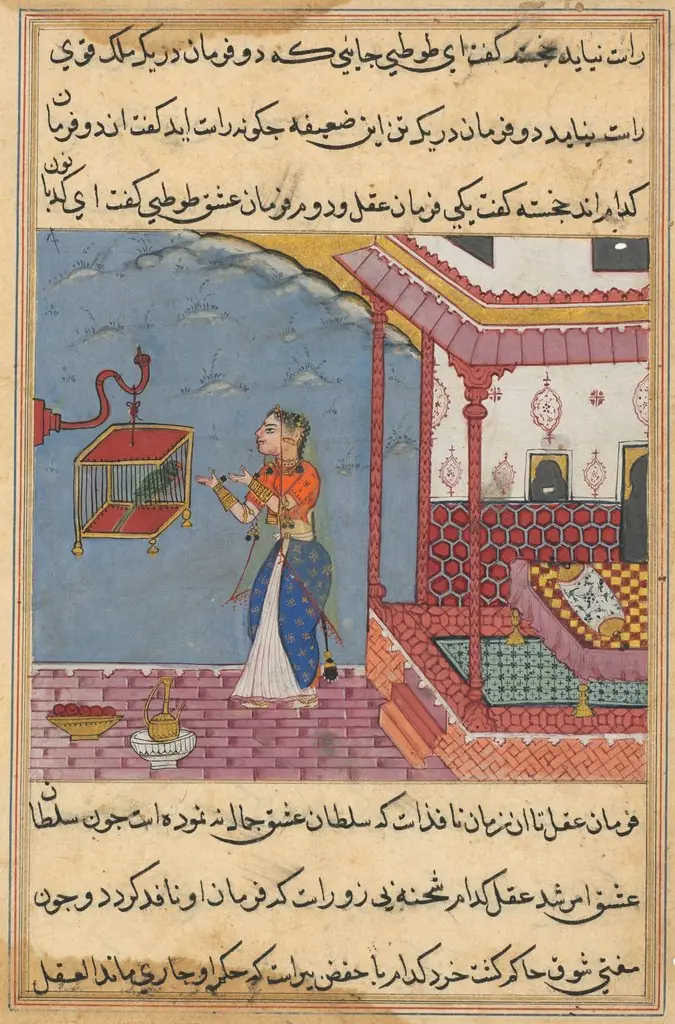 The Parrot Addresses Khujasta at the Beginning of the Twenty-Fourth Night, from a Tuti-nama (Tales of a Parrot)
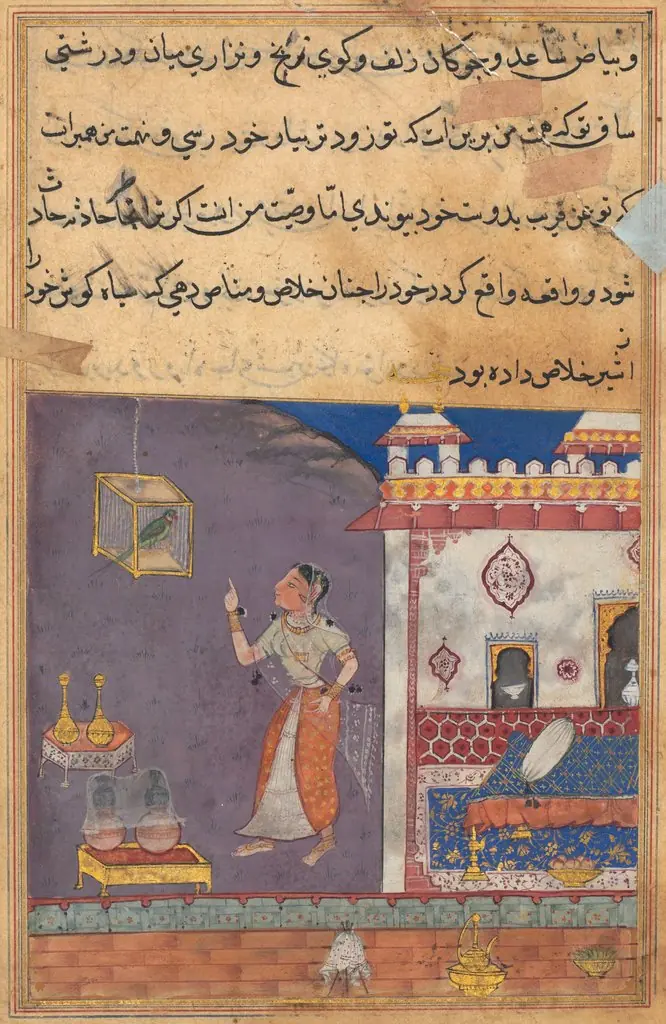 The Parrot Addresses Khujasta at the Beginning of the Twenty-ninth Night, from a Tuti-nama (Tales of a Parrot)
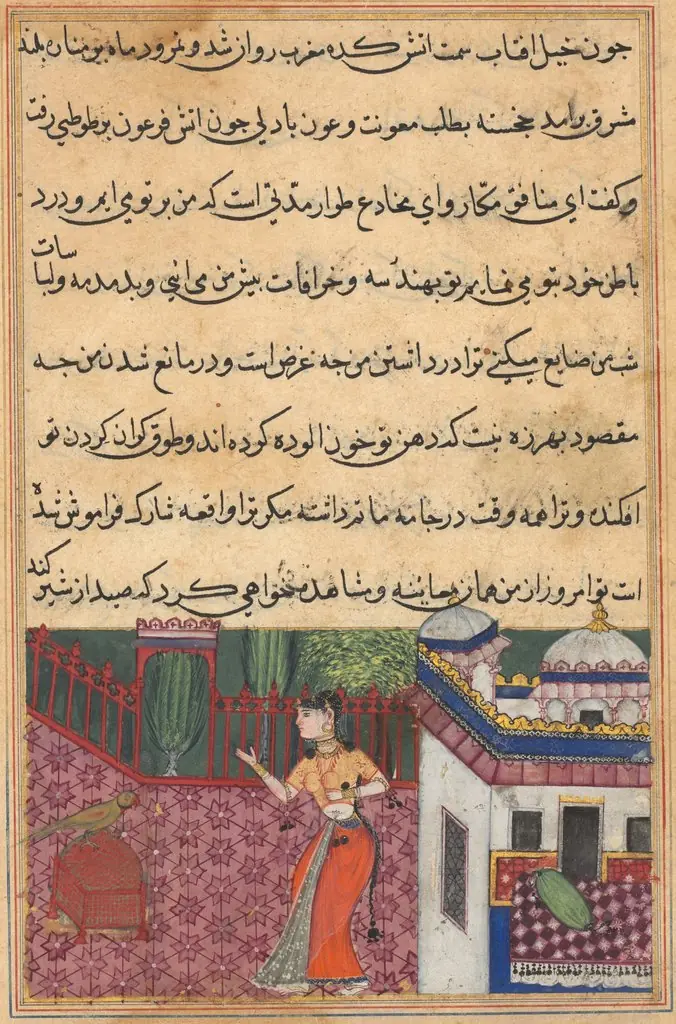 The parrot addresses Khujasta at the beginning of the thirty-third night, from a Tuti-nama (Tales of a Parrot)
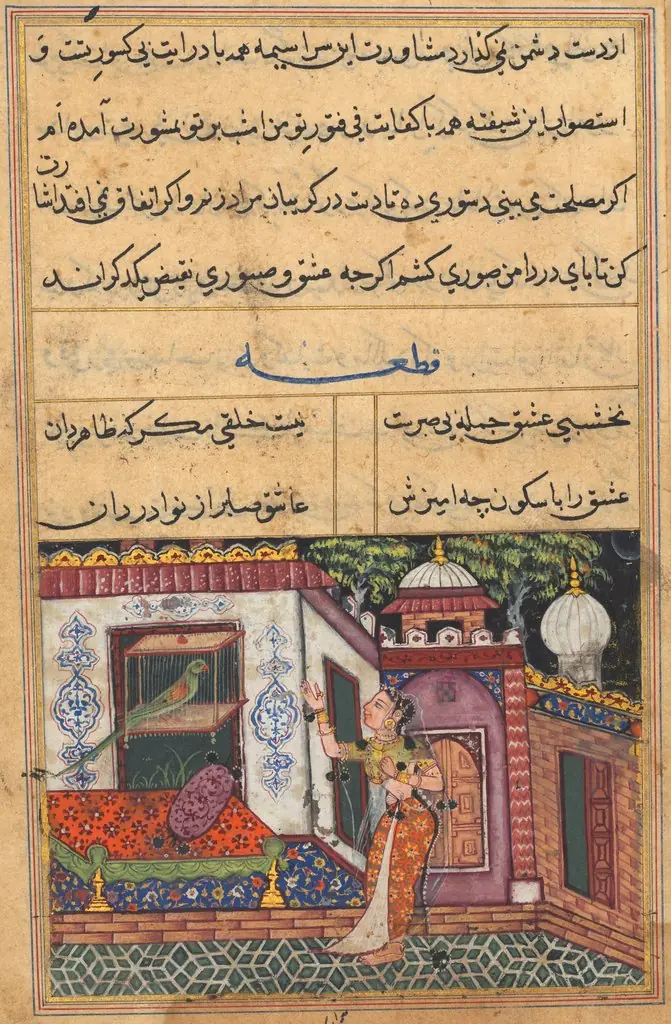 The Parrot Addresses Khujasta at the Beginning of the Eleventh Night, from a Tuti-nama (Tales of a Parrot)
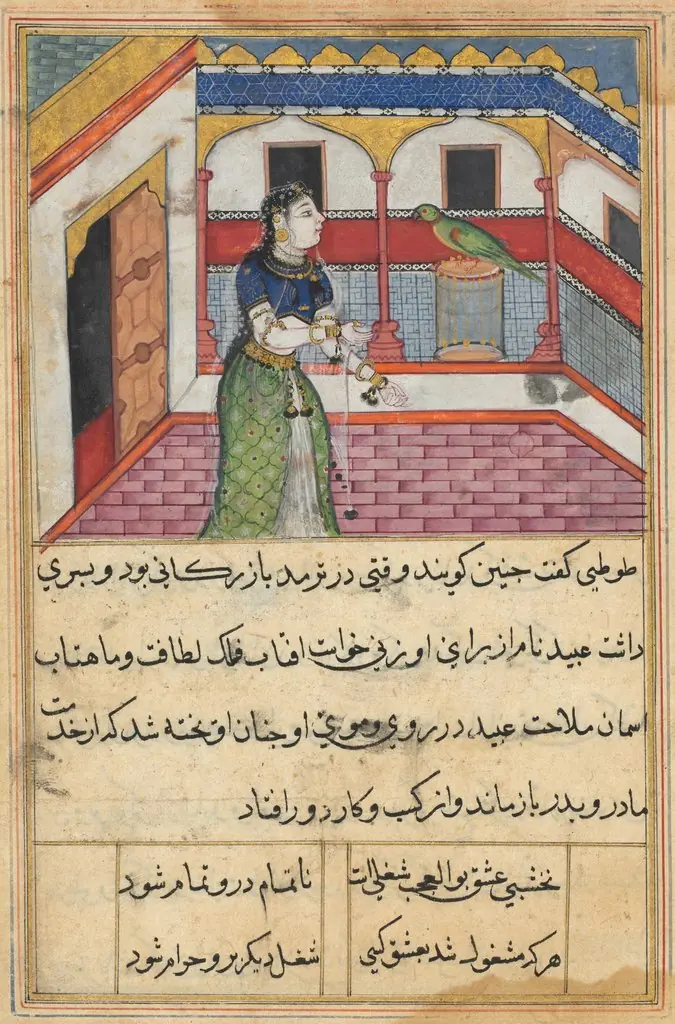 The parrot addresses Khujasta at the beginning of the forty-second night, from a Tuti-nama (Tales of a Parrot)
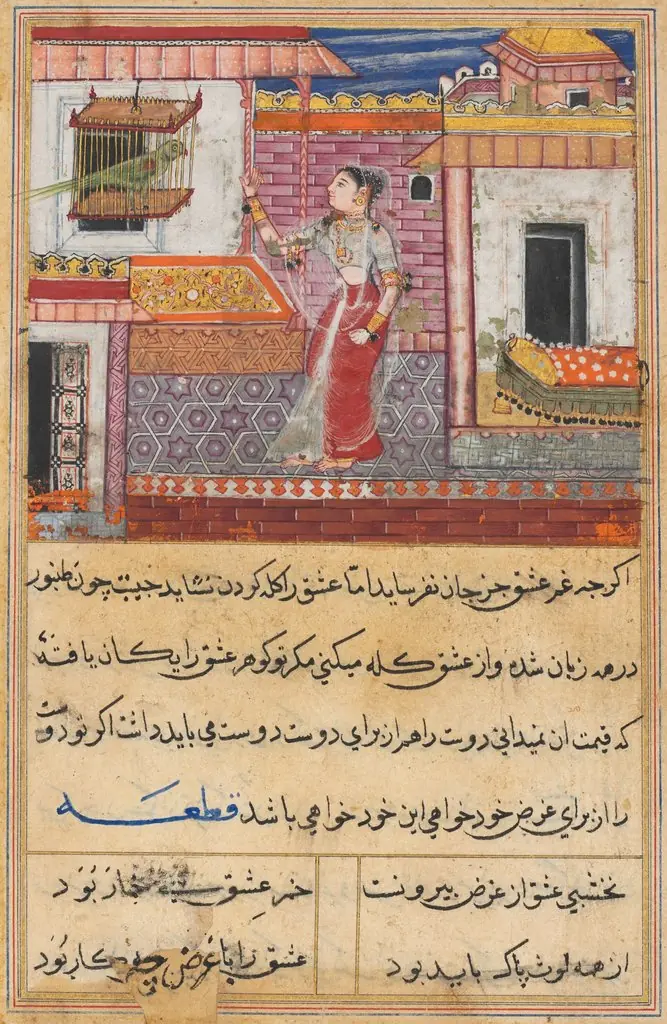 The Parrot Addresses Khujasta at the Beginning of the Thirteenth Night, from a Tuti-nama (Tales of a Parrot)