Artwork
The parrot addresses Khujasta at the beginning of the forty-fourth night, from a Tuti-nama (Tales of a Parrot)
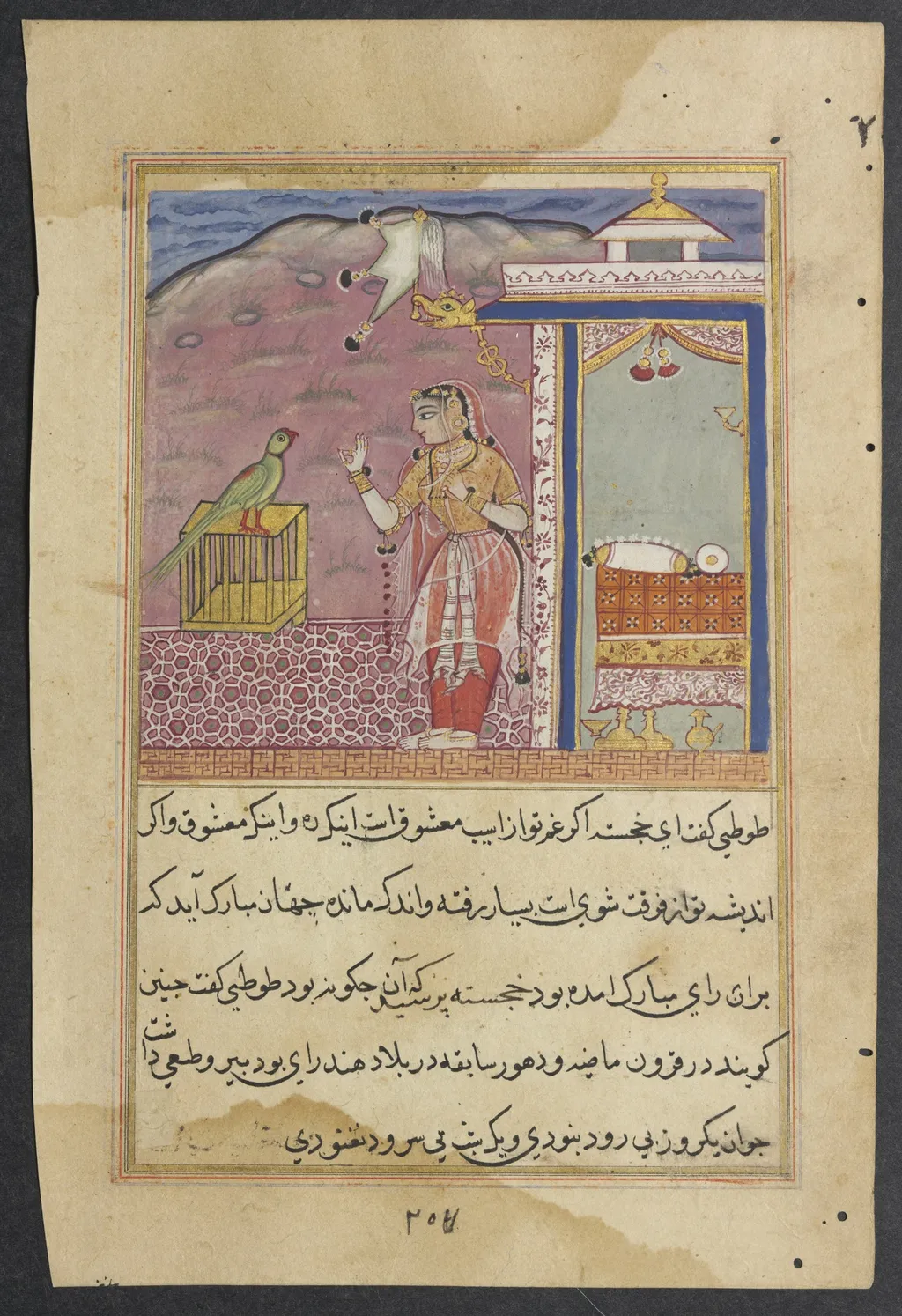
The parrot addresses Khujasta at the beginning of the forty-fourth night, from a Tuti-nama (Tales of a Parrot) is an unspecified painting. It dates from 1560 and is held in the collection of the Cleveland Museum of Art.
About this work
Overview
The work portrays a woman in traditional Indian dress standing before a modest structure, a parrot perched within a cage at her left. She wears a red‑and‑white sari and a gold ornamental headpiece, holding a small object while appearing to converse with the bird. A gentle hillside, scattered trees, and a blue sky with clouds form the background, creating a calm, contemplative scene.
Subject & Meaning
The composition illustrates a moment from the Tuti‑nama, a collection of stories featuring a talking parrot. The woman, identified as Khujasta, is shown at the start of the forty‑fourth night, engaged in dialogue with the bird, suggesting themes of communication, wisdom, and the exchange between human and animal voices within the narrative tradition.
Technique & Style
Rendered in a delicate, flat‑color palette, the painting employs precise line work to define the figures and architectural elements. The use of bright reds, whites, and golds on the sari and headpiece contrasts with the muted earth tones of the hillside, while the soft, diffused sky adds depth without sacrificing the overall two‑dimensional aesthetic typical of manuscript illustration.
Context
The image originates from a Tuti‑nama manuscript, a genre of illustrated Persian and Indian literature that blends moral tales with fantastical elements. Such works were commonly produced for courtly or elite patrons, reflecting a cultural exchange between Persian storytelling traditions and Indian visual motifs during the period of Mughal artistic synthesis.
Artist & collection

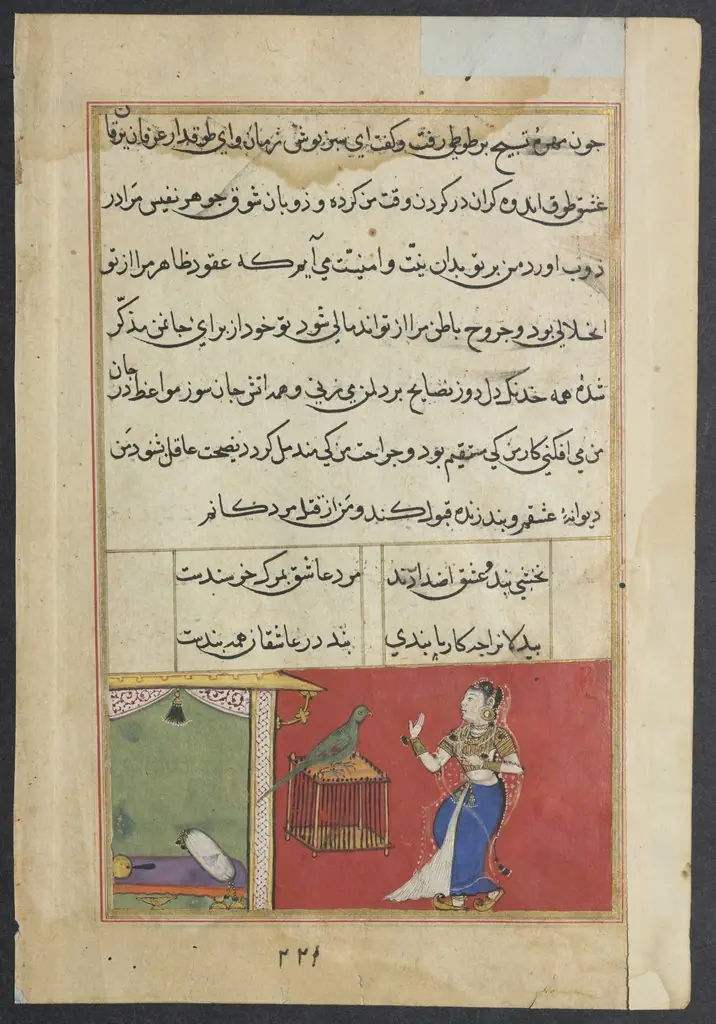 The parrot addresses Khujasta at the beginning of the forty-seventh night, from a Tuti-nama (Tales of a Parrot): Forty-seventh Night
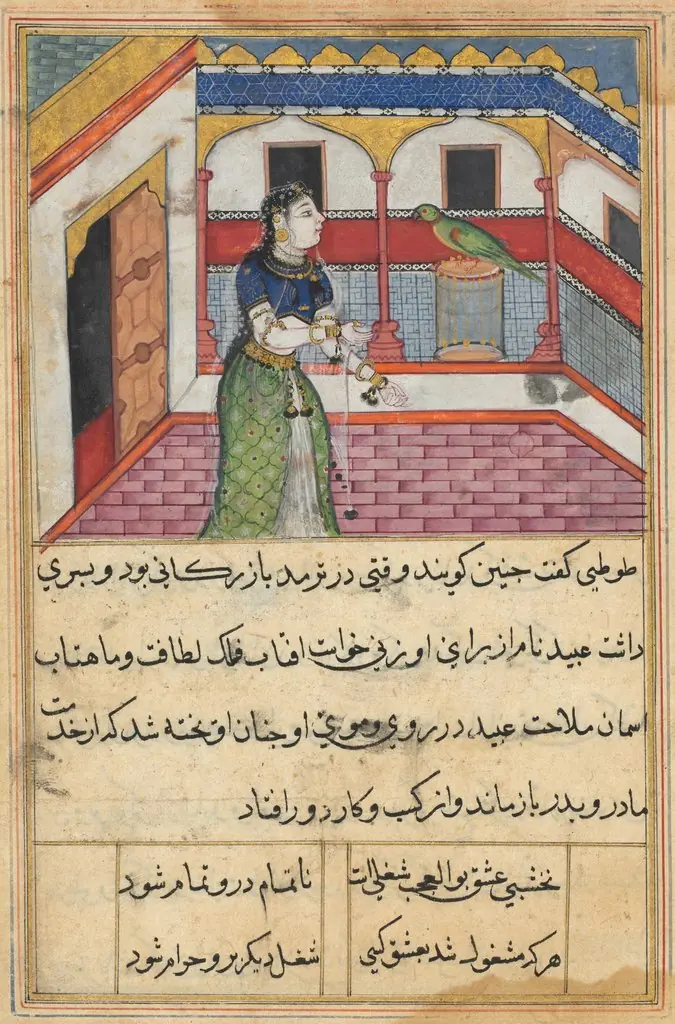 The parrot addresses Khujasta at the beginning of the forty-second night, from a Tuti-nama (Tales of a Parrot)
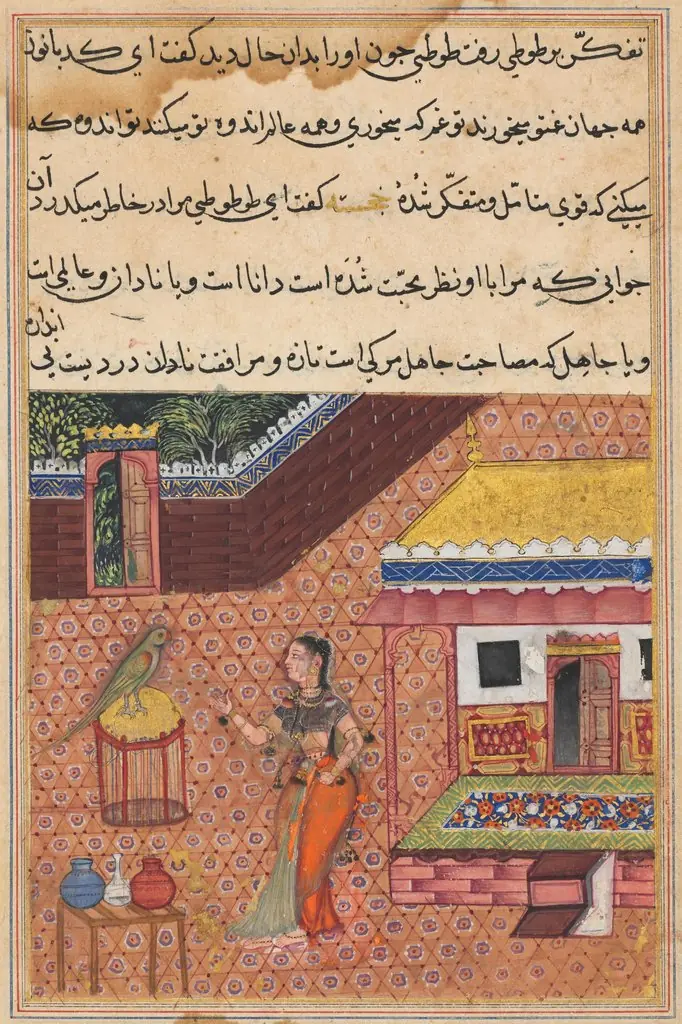 The parrot addresses Khujasta at the beginning of the thirty-fourth night, from a Tuti-nama (Tales of a Parrot)
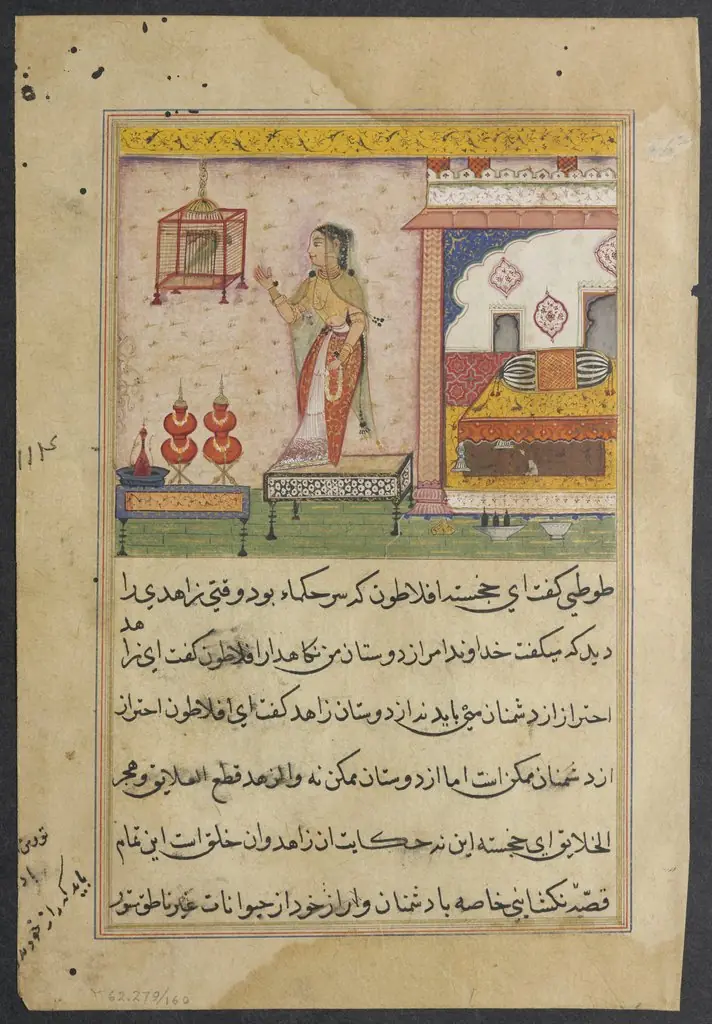 The Parrot Addresses Khujasta at the Beginning of the Twenty-third Night, from a Tuti-nama (Tales of a Parrot)
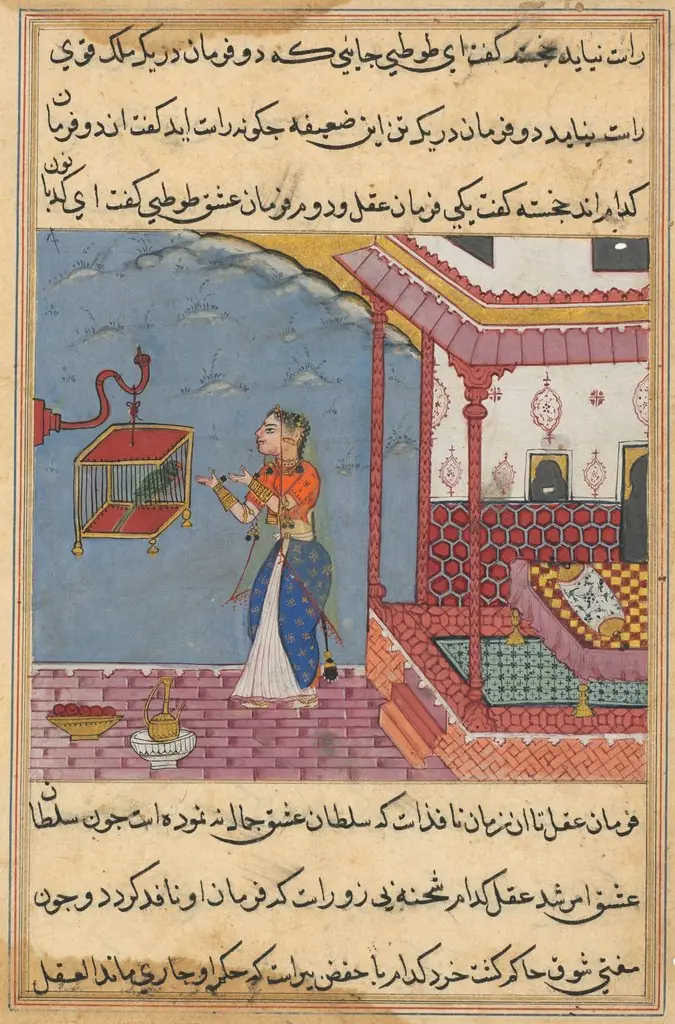 The Parrot Addresses Khujasta at the Beginning of the Twenty-Fourth Night, from a Tuti-nama (Tales of a Parrot)
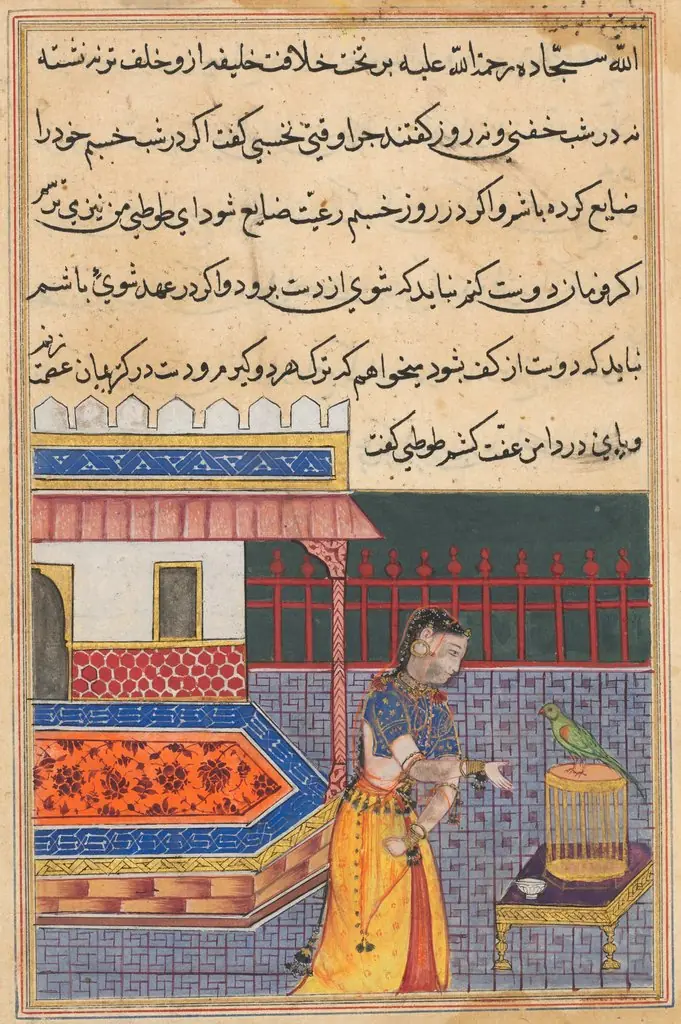 The parrot addresses Khujasta at the beginning of the forty-first night, from a Tuti-nama (Tales of a Parrot): Forty-first Night
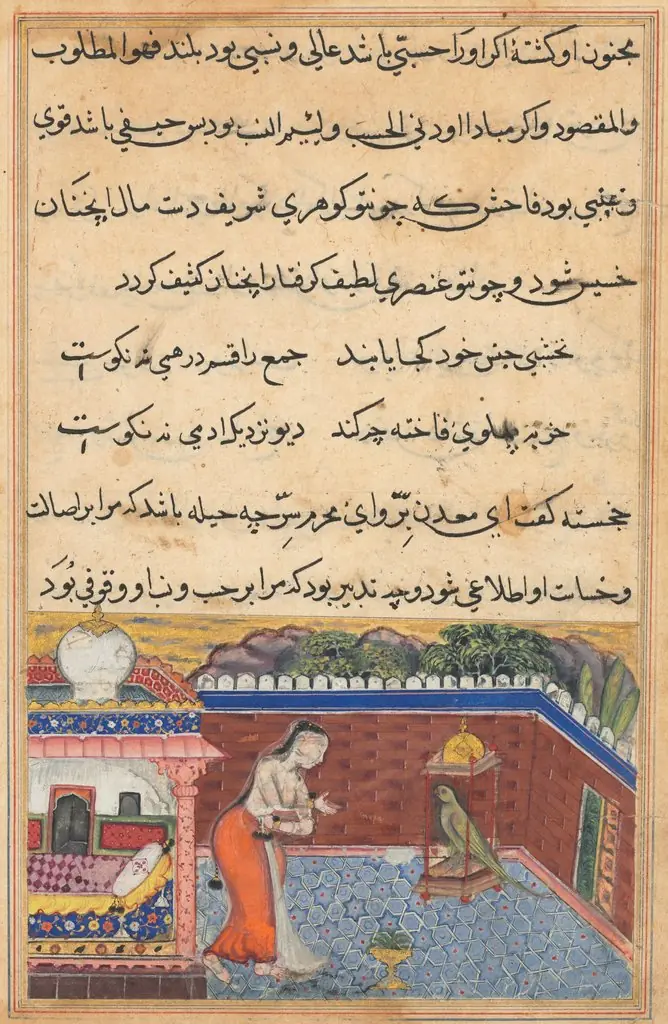 The parrot addresses Khujasta at the beginning of the thirty-first night, from a Tuti-nama (Tales of a Parrot)
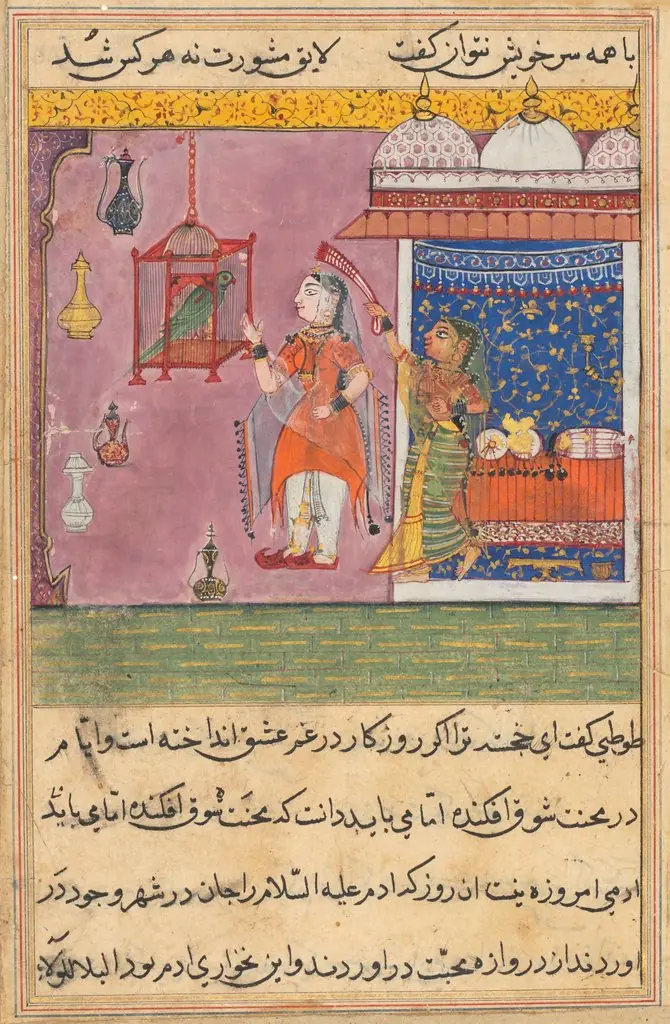 The Parrot Addresses Khujasta at the Beginning of the Nineteenth Night, from a Tuti-nama (Tales of a Parrot)
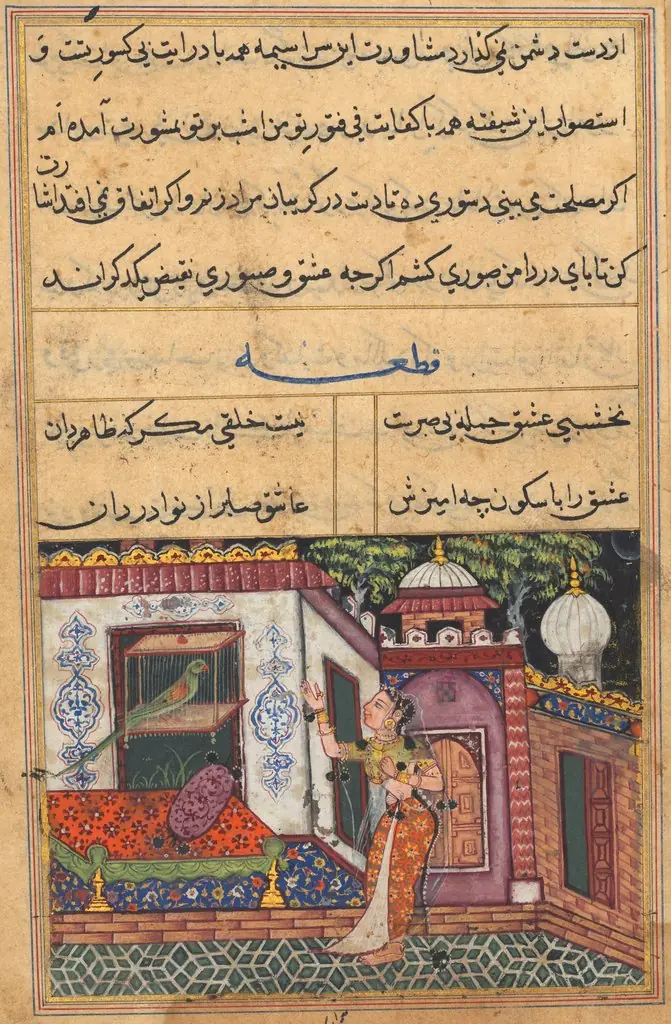 The Parrot Addresses Khujasta at the Beginning of the Eleventh Night, from a Tuti-nama (Tales of a Parrot)
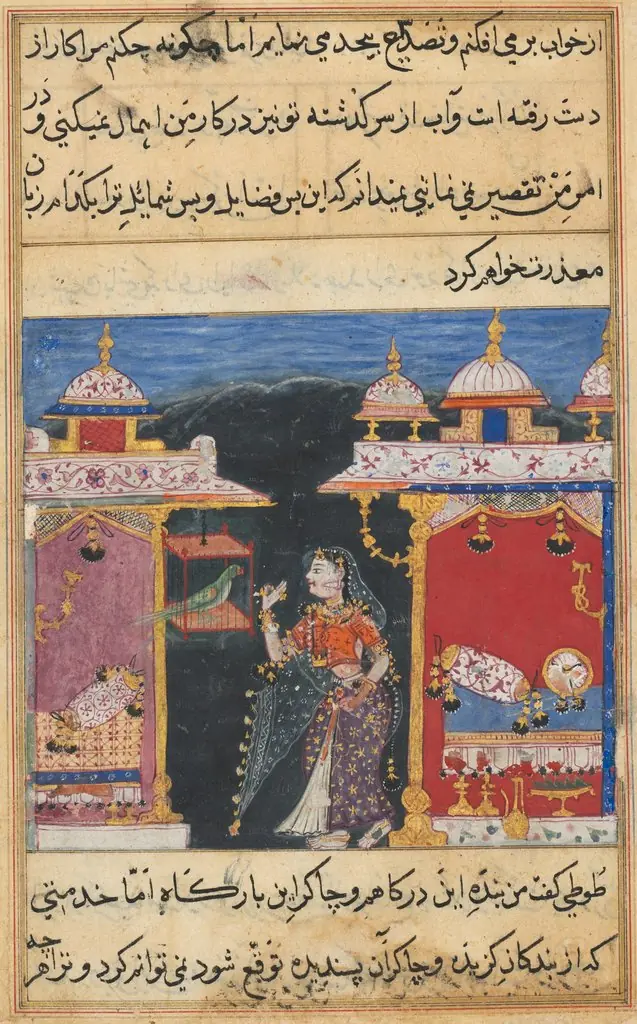 The Parrot Addresses Khujasta at the Beginning of the Seventh Night, from a Tuti-nama (Tales of a Parrot)
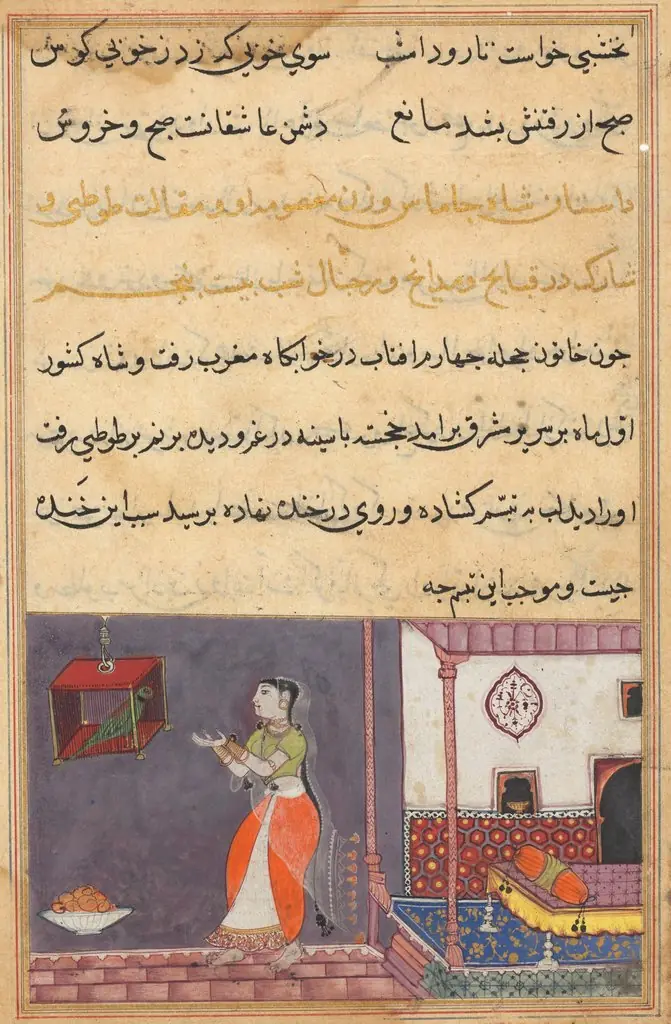 The Parrot Addresses Khujasta at the Beginning of the Twenty-fifth Night, from a Tuti-nama (Tales of a Parrot)