Artwork
The parrot addresses Khujasta at the beginning of the forty-seventh night, from a Tuti-nama (Tales of a Parrot): Forty-seventh Night
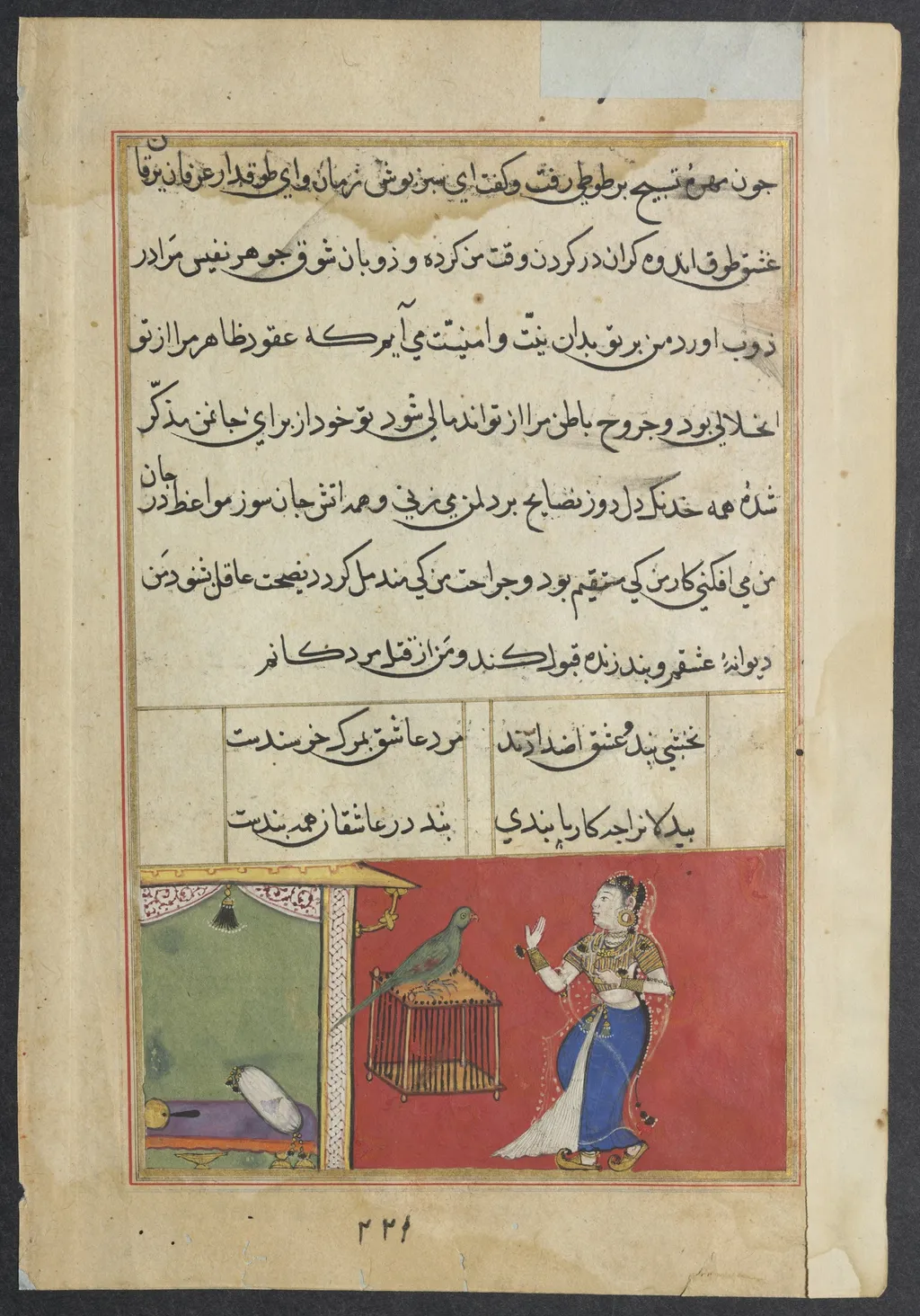
The parrot addresses Khujasta at the beginning of the forty-seventh night, from a Tuti-nama (Tales of a Parrot): Forty-seventh Night is an unspecified painting. It dates from 1560 and is held in the collection of the Cleveland Museum of Art. The work depicts a richly dressed woman in a blue‑gold costume extending her hand toward a green parrot perched in an ornate gilded cage.
About this work
Overview
The work depicts a richly dressed woman in a blue‑gold costume extending her hand toward a green parrot perched in an ornate gilded cage. A partially concealed male figure reclines on a bed within a verdant‑hued chamber, his form obscured by a draped curtain. Above the scene, flowing black calligraphy set against a red border presents a line from the narrative known as the *Tuti‑nama*.
Subject & Meaning
The tableau illustrates a moment from the *Tales of a Parrot*, specifically the episode in which the bird addresses the character Khujasta on the forty‑seventh night. The woman's attentive gesture suggests a listening posture, while the concealed man hints at a private or secretive context within the story, emphasizing themes of communication and hidden intrigue.
Technique & Style
Rendered in vivid pigments, the painting employs a combination of flat decorative surfaces and subtle modeling to convey texture in the fabrics and cage. Gold leaf accents highlight the cage and elements of the woman's attire, while the black script above is integrated as a decorative border, reflecting the manuscript illustration tradition of Persian storytelling.
History & Provenance
The piece originates from a manuscript of the *Tuti‑nama*, a medieval Persian collection of moral tales featuring a talking parrot. Though the exact date of creation is not specified, such illustrated manuscripts were commonly produced between the 14th and 16th centuries. The work now forms part of the Cleveland Museum of Art’s collection of Islamic art.
Context
Illustrations like this served both decorative and didactic purposes, accompanying the text to enhance narrative comprehension for readers. The use of luxurious colors and gilding reflects the patronage of elite courts, where such books were prized as objects of cultural and educational value, integrating visual art with literary tradition.
Artist & collection

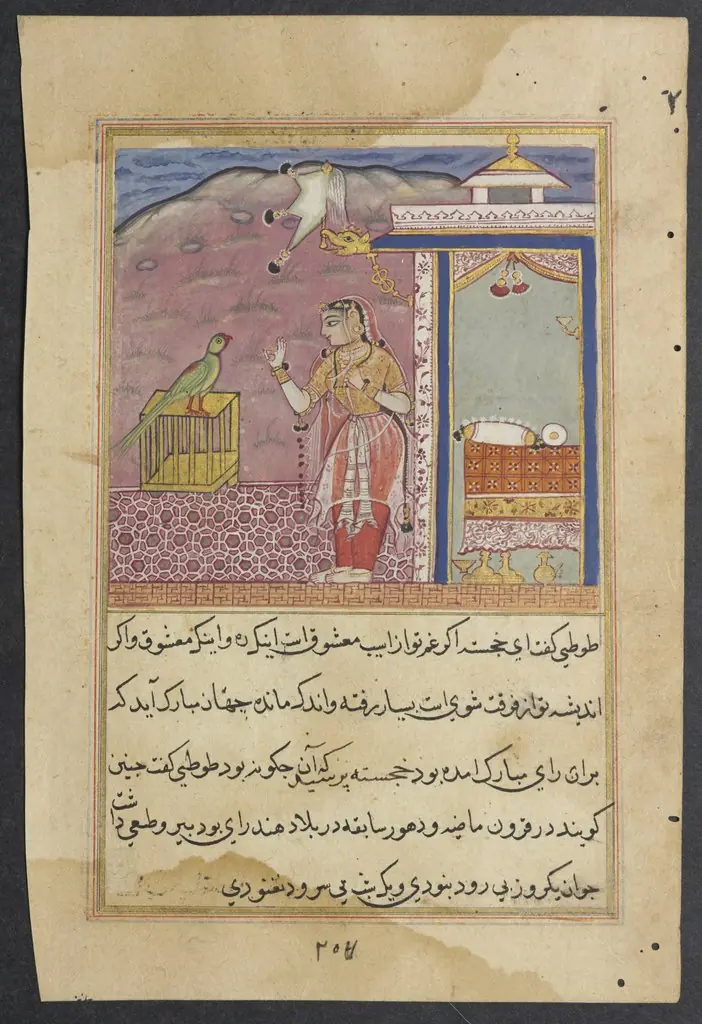 The parrot addresses Khujasta at the beginning of the forty-fourth night, from a Tuti-nama (Tales of a Parrot)
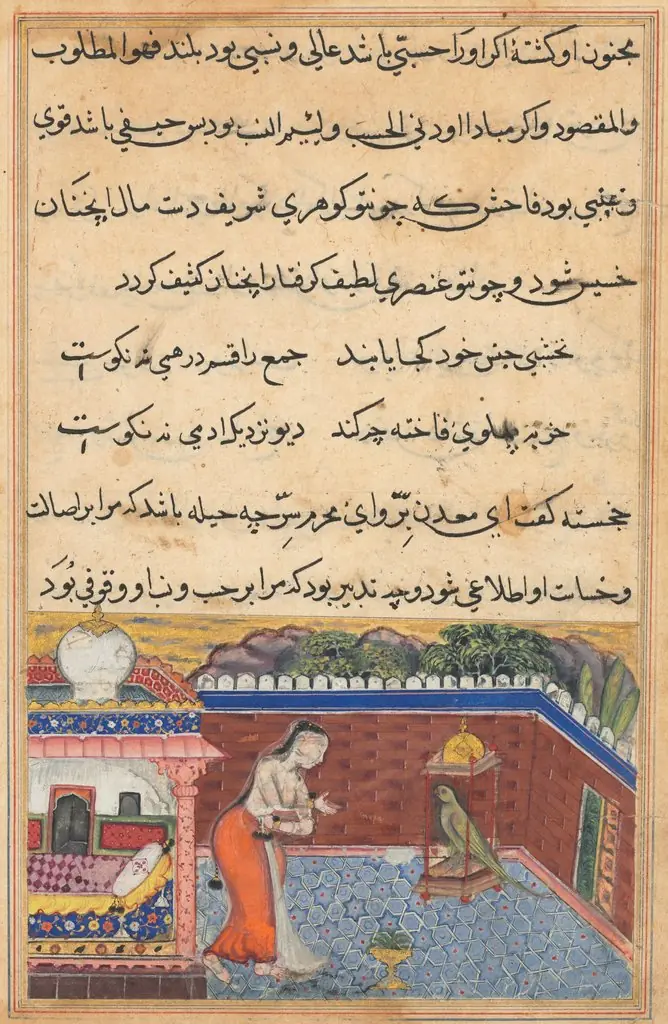 The parrot addresses Khujasta at the beginning of the thirty-first night, from a Tuti-nama (Tales of a Parrot)
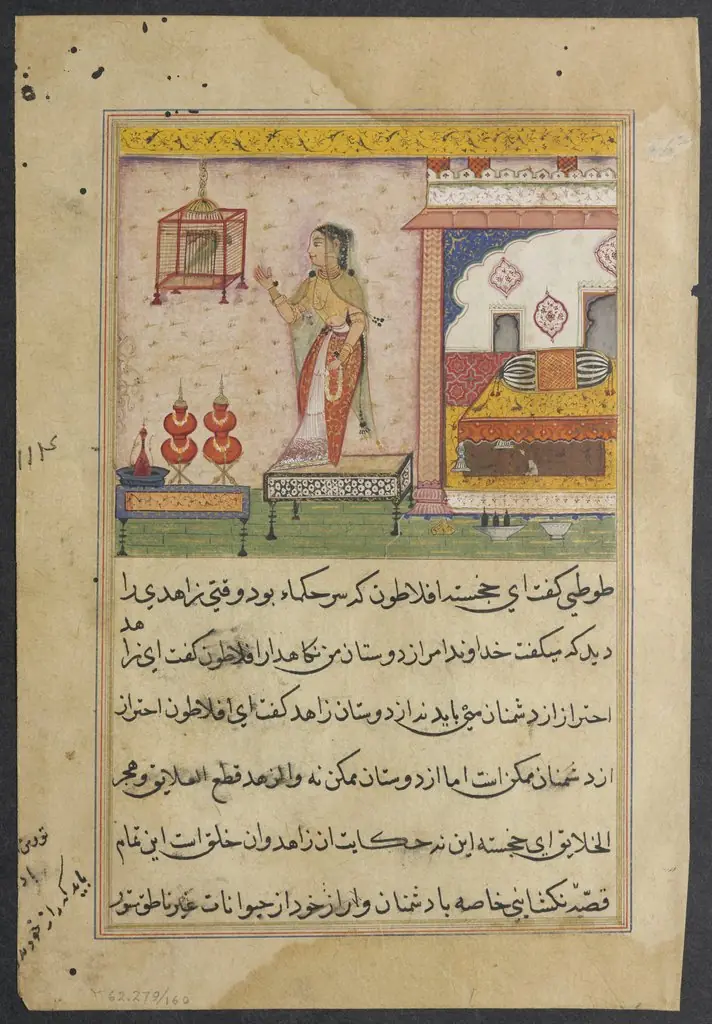 The Parrot Addresses Khujasta at the Beginning of the Twenty-third Night, from a Tuti-nama (Tales of a Parrot)
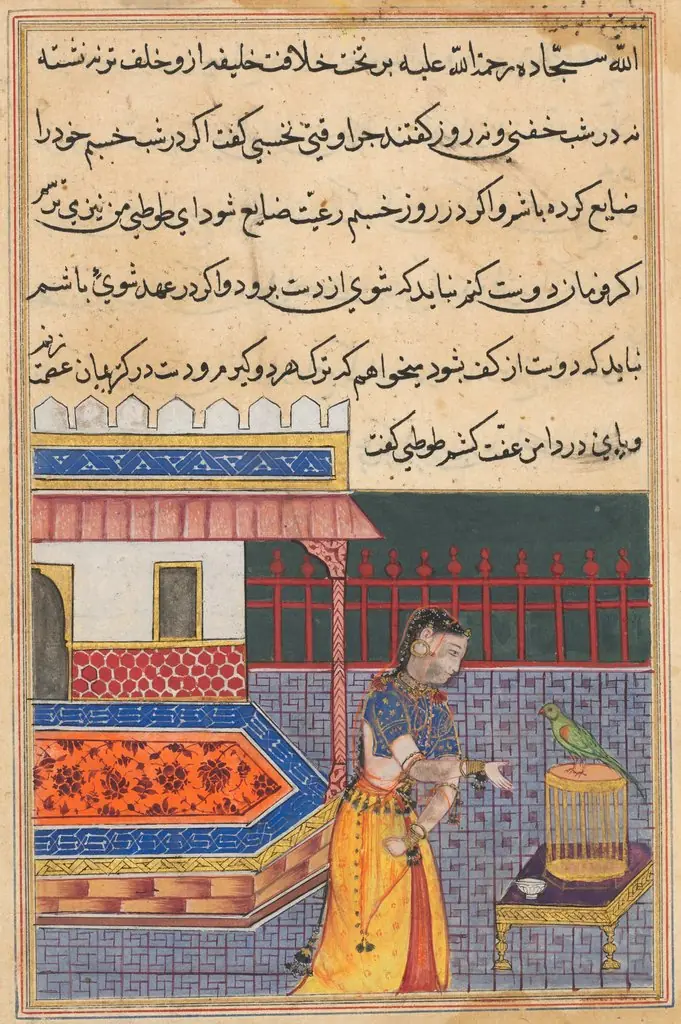 The parrot addresses Khujasta at the beginning of the forty-first night, from a Tuti-nama (Tales of a Parrot): Forty-first Night
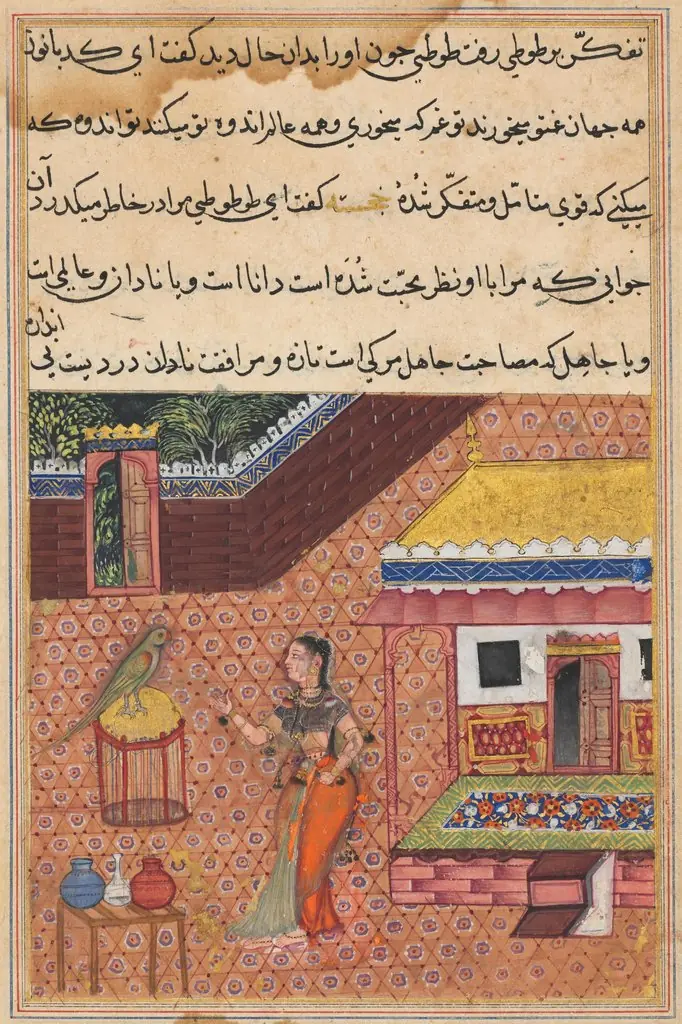 The parrot addresses Khujasta at the beginning of the thirty-fourth night, from a Tuti-nama (Tales of a Parrot)
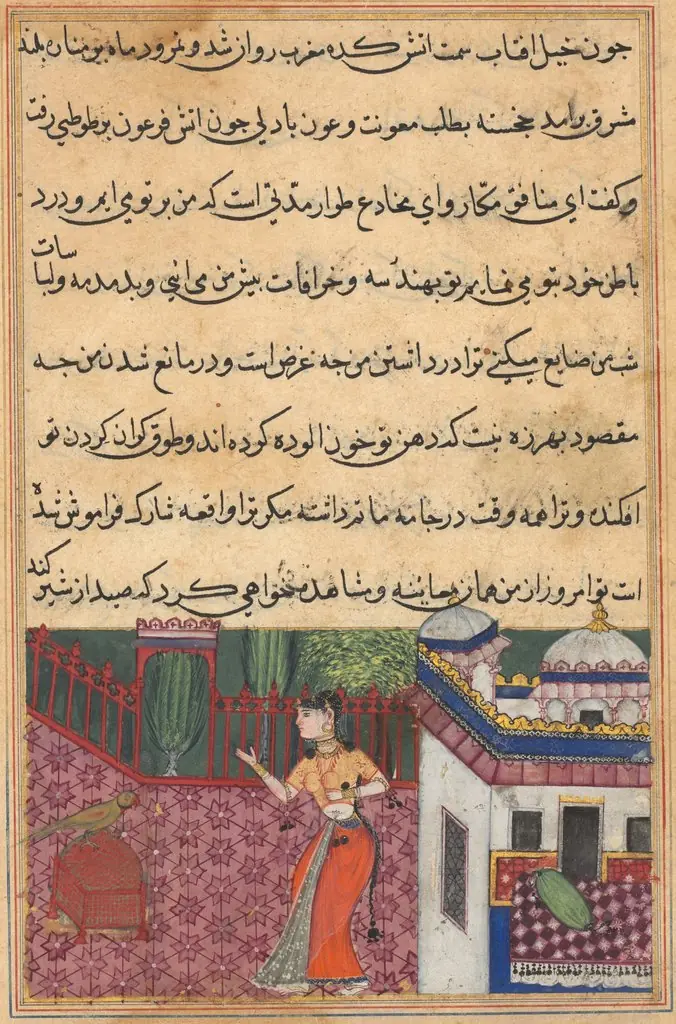 The parrot addresses Khujasta at the beginning of the thirty-third night, from a Tuti-nama (Tales of a Parrot)
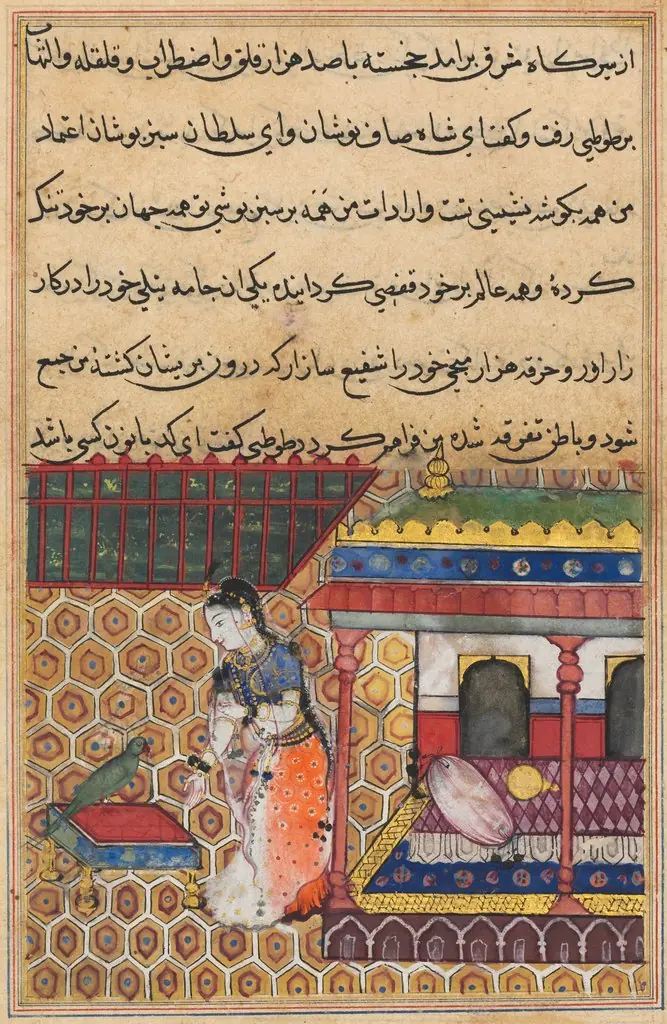 The parrot addresses Khujasta at the beginning of the thirty-eighth night, from a Tuti-nama (Tales of a Parrot)
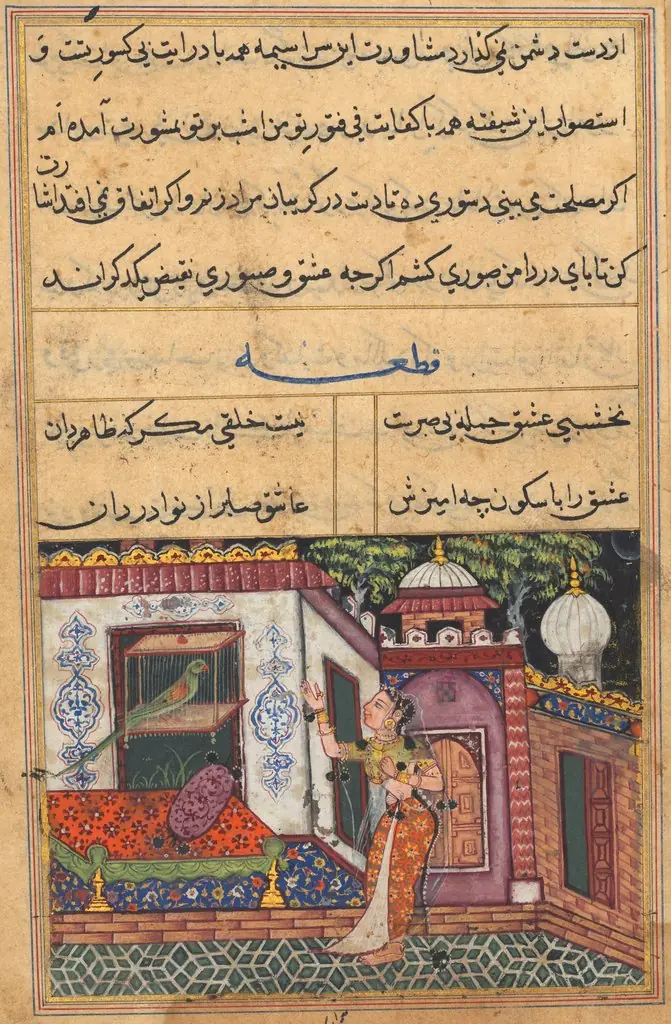 The Parrot Addresses Khujasta at the Beginning of the Eleventh Night, from a Tuti-nama (Tales of a Parrot)
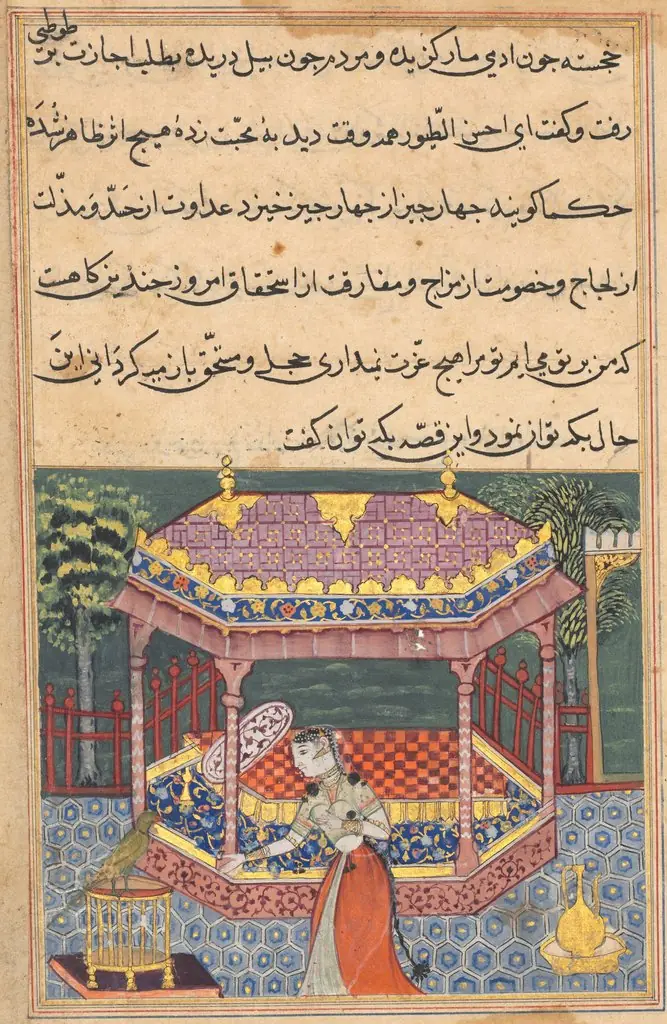 The parrot addresses Khujasta at the beginning of the thirty-seventh night, from a Tuti-nama (Tales of a Parrot)
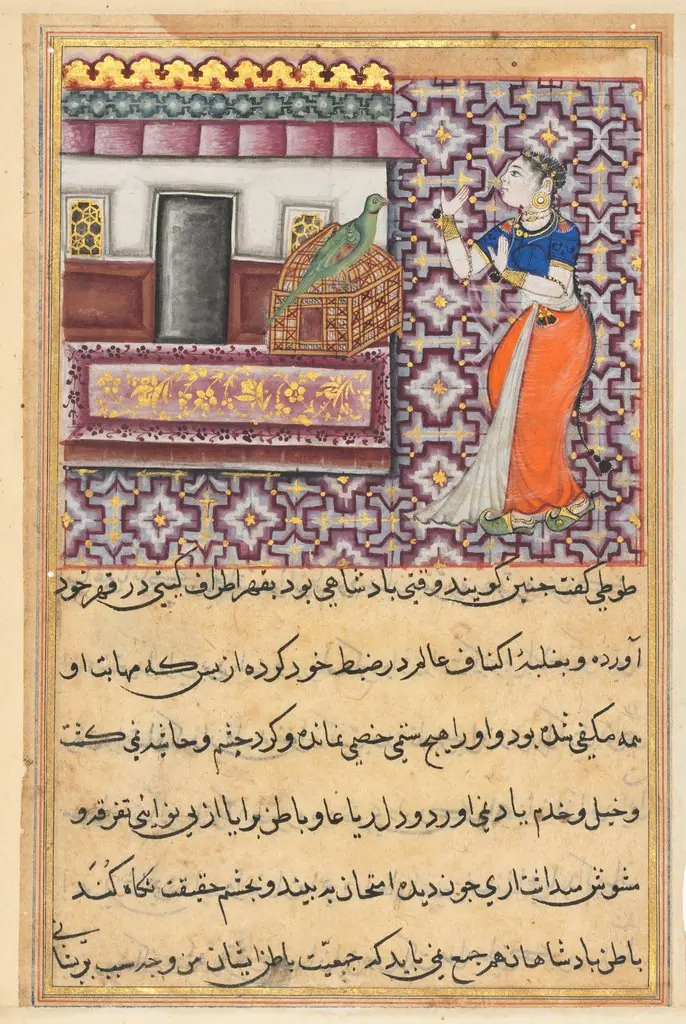 The parrot addresses Khujasta at the beginning of the fiftieth night, from a Tuti-nama (Tales of a Parrot): Fiftieth Night
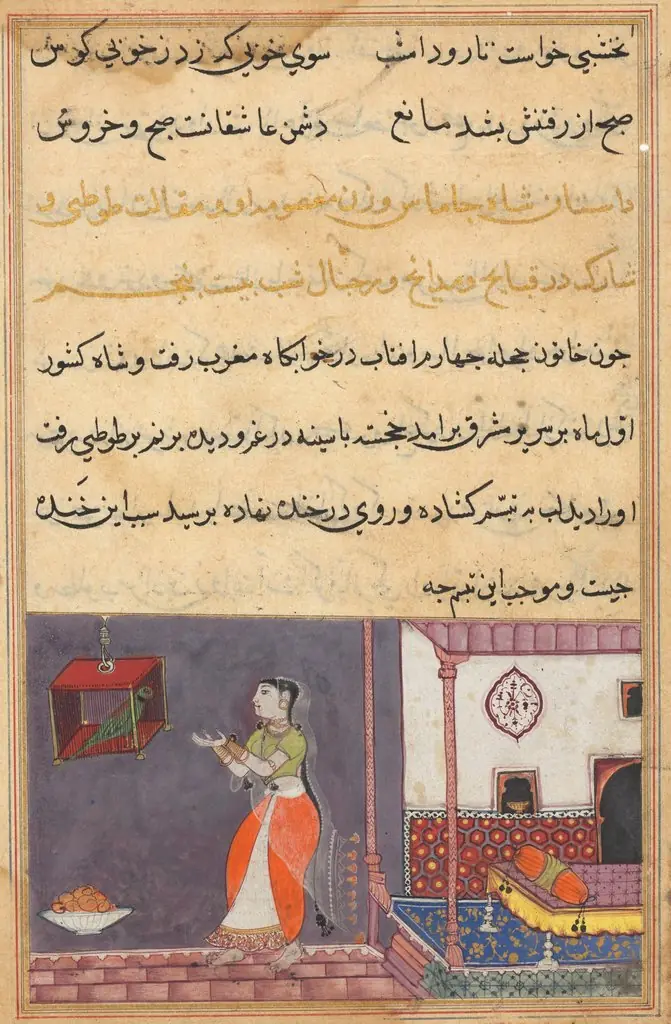 The Parrot Addresses Khujasta at the Beginning of the Twenty-fifth Night, from a Tuti-nama (Tales of a Parrot)
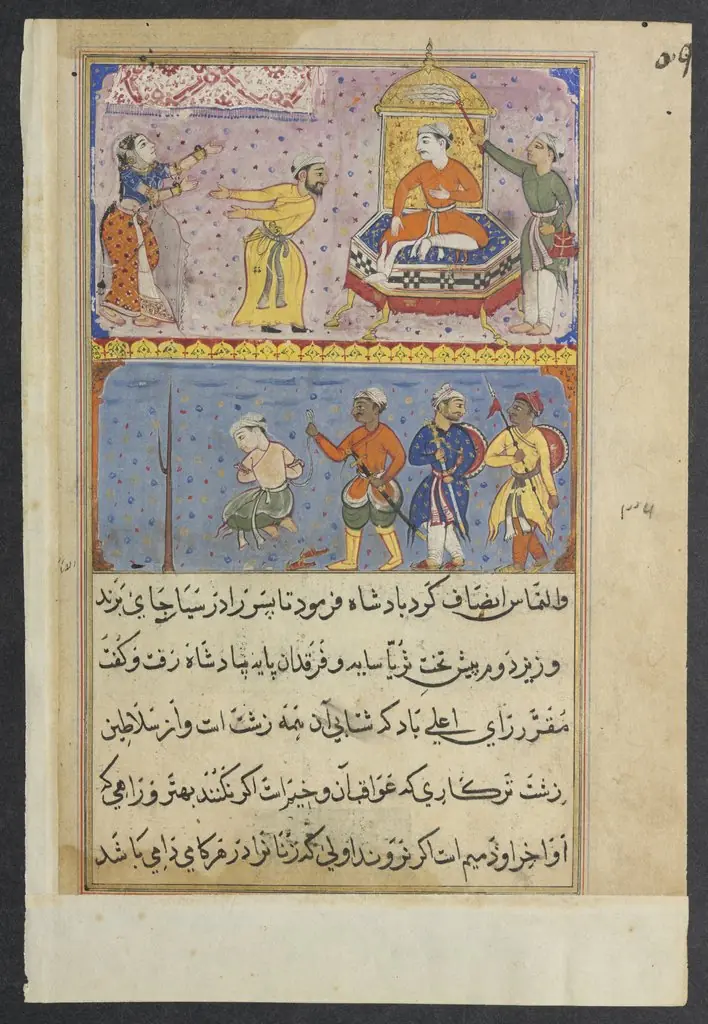 The prince, once reprieved, is returned to the palace of execution a second time on the plea of the king’s handmaiden, from a Tuti-nama (Tales of a Parrot): Eighth Night
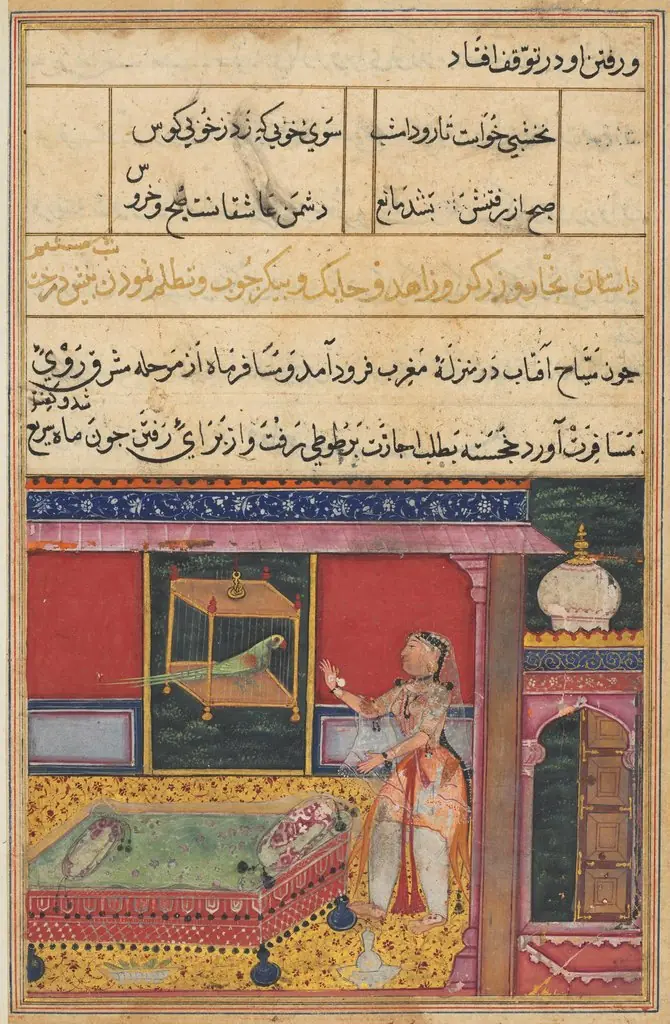 The Parrot Addresses Khujasta at the Beginning of the Sixth Night, from a Tuti-nama (Tales of a Parrot)
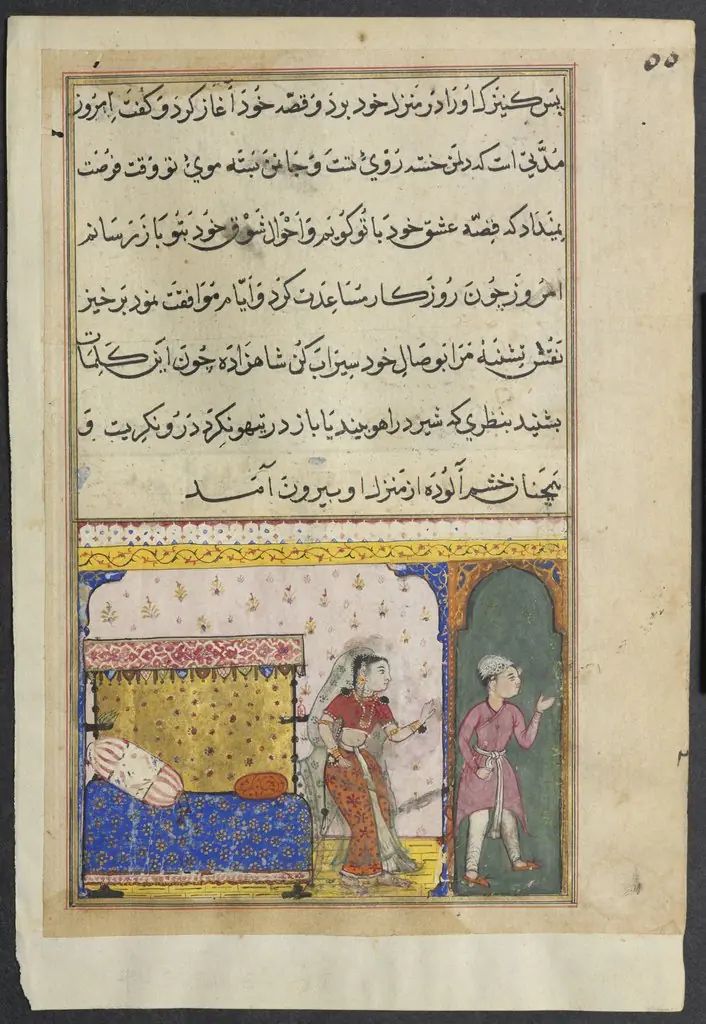 The prince rejects the amorous advances of the king’s handmaiden, from a Tuti-nama (Tales of a Parrot): Eighth Night