Artwork
Mongol horseman
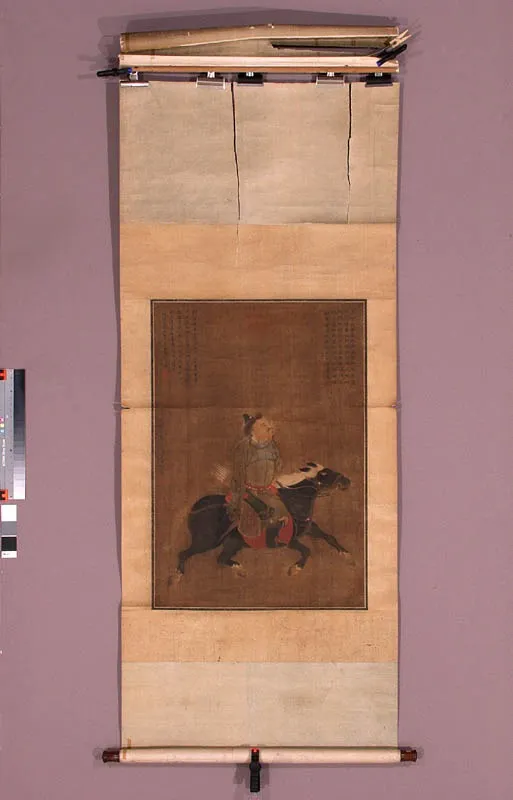
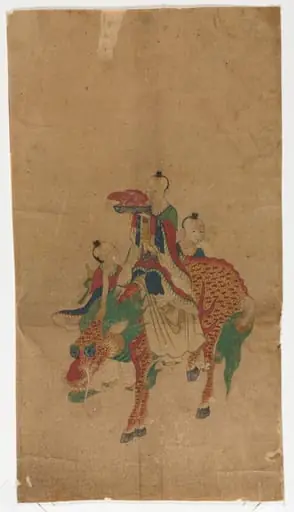
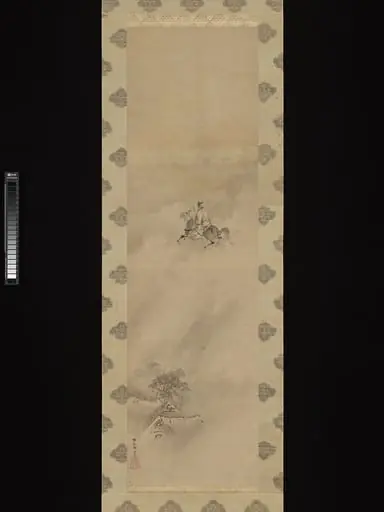
Mongol horseman is an unspecified painting by Unknown. It is held in the collection of the National Museum in Warsaw. This painting depicts a mounted rider from the Mongol Empire, rendered with simplified forms and vivid pigments.
About this work
Overview
The style reflects a tradition of portable art, likely intended for decoration or ceremonial use within nomadic courts.
This painting depicts a mounted rider from the Mongol Empire, rendered with simplified forms and vivid pigments. The figure and animal are isolated against a flat, earth-toned background, emphasizing their dynamic presence. The composition avoids depth or landscape, focusing instead on the rider’s posture and the horse’s motion. The style reflects a tradition of portable art, likely intended for decoration or ceremonial use within nomadic courts.
Subject & Meaning
The horseman, clad in a tunic and distinctive headgear, holds a bow, signaling his role as a warrior or hunter. The black horse, with its contrasting white mane and tail, symbolizes strength and speed—qualities central to Mongol military identity. The absence of context or narrative elements suggests the image served as a symbol of power or status, possibly commissioned to honor a leader or commemorate martial prowess.
Technique & Style
The artist employed bold, confident outlines and flat areas of bright color to convey movement and form. Pigments were likely mineral-based, applied with precision despite the lack of shading or perspective. The stylized rendering of anatomy—elongated limbs, simplified musculature—reflects a deliberate aesthetic choice common in Central Asian court art, prioritizing symbolic clarity over naturalism.
History & Provenance
Though exact origins are undocumented, the painting’s iconography and materials align with 13th- to 14th-century Mongol artistic production. It may have been created in a court workshop in Karakorum or a regional center under Mongol rule. Its survival suggests it was preserved in a monastic, noble, or imperial collection, possibly later acquired by collectors during the expansion of Eurasian trade networks.
Context
During the height of the Mongol Empire, visual culture blended Persian, Chinese, and steppe traditions. Equestrian imagery was ubiquitous, reflecting the centrality of horsemanship to governance and warfare. This painting fits within a broader corpus of portable artworks—textiles, metalwork, and panel paintings—that circulated among elites, reinforcing identity and authority across vast territories.
Legacy
The painting stands as a rare surviving example of secular Mongol painting, offering insight into a culture whose artistic output was largely ephemeral. It informs modern understanding of how nomadic empires expressed power through visual symbols. While not widely known in Western collections, it remains a key reference for scholars studying the material culture of the Eurasian steppe.
Artist & collection

 Domestic Scene
 Giacomo and Cardinal Marco, investing Andrea, Abbot of San Zeno, with his Benefice
 The Nymph of Fontainebleau
 Portrait of a Woman
 Madonna and Child with Saints in the Enclosed Garden
 Venus and Minerva
 Family Group of Four on Sofa
 Wall painting from Room H of the Villa of P. Fannius Synistor at Boscoreale