Artwork
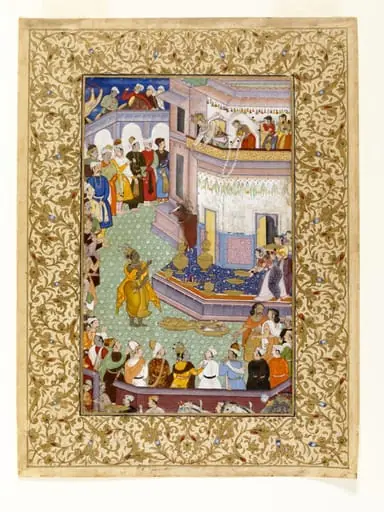
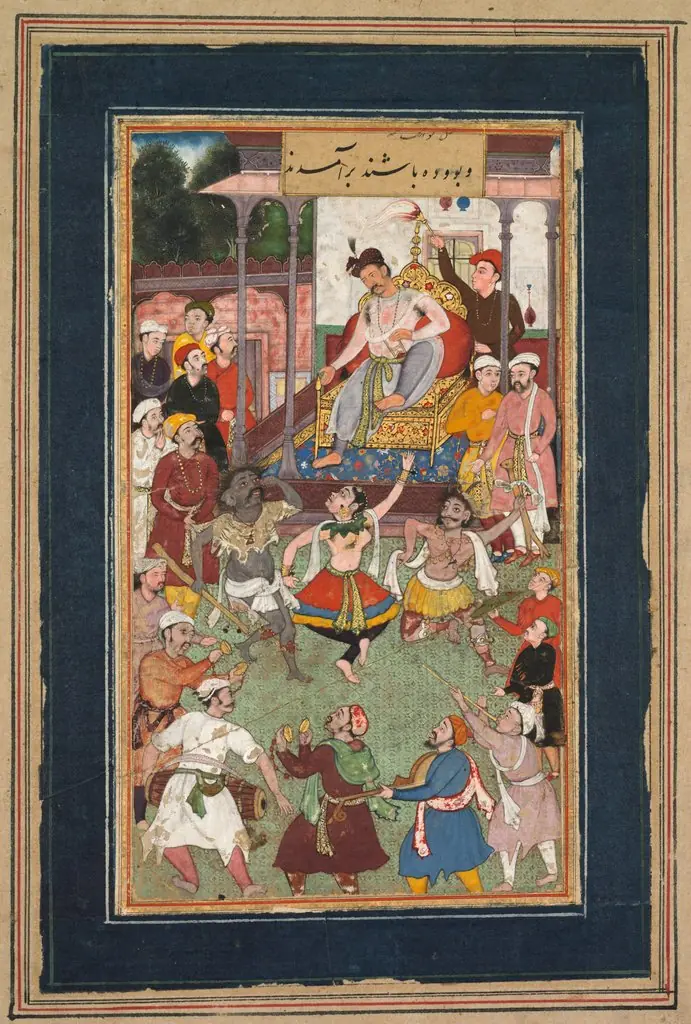
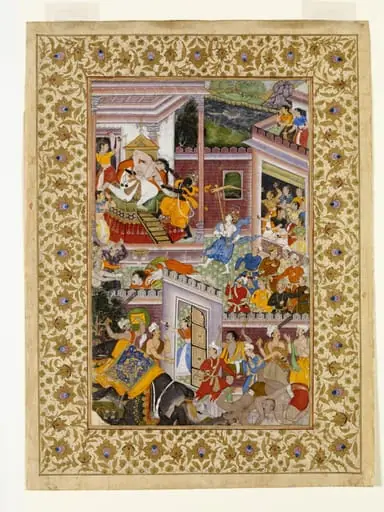
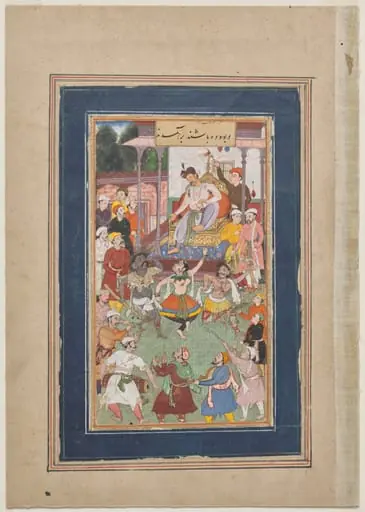
Circumcision ceremony for Akbar’s sons, painting 126 from an Akbar-nama (Book of Akbar) of Abu’l Fazl (Indian, 1551–1602)
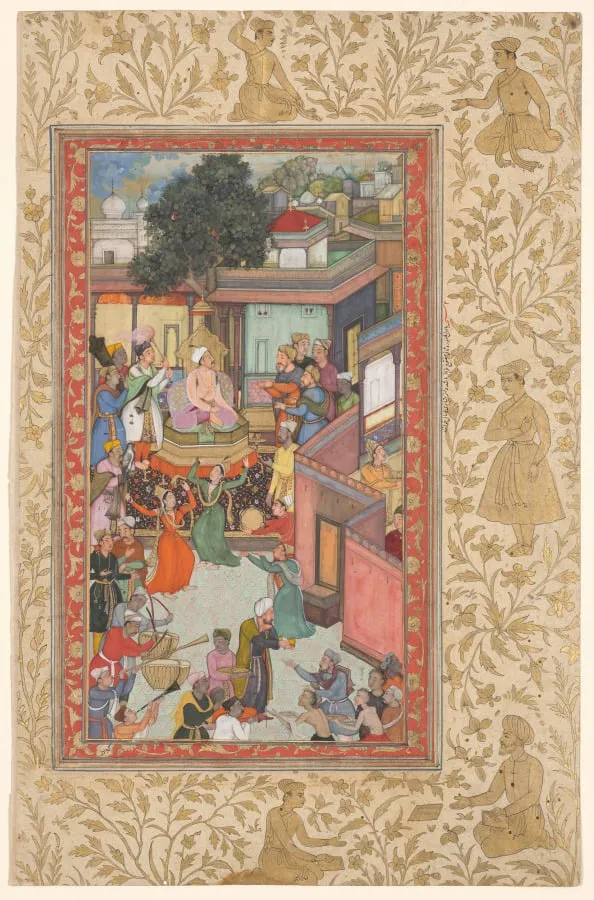
Circumcision ceremony for Akbar’s sons, painting 126 from an Akbar-nama (Book of Akbar) of Abu’l Fazl (Indian, 1551–1602) is an unspecified painting by the Baroque artist Dharam Das. It dates from 1602 and is held in the collection of the Cleveland Museum of Art. This painting is from the Akbar-nama, a biography of Emperor Akbar written by Abu'l Fazl.
About this work
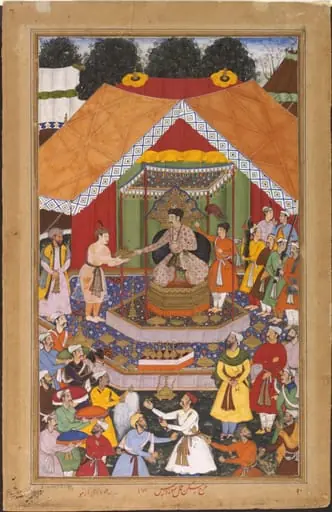
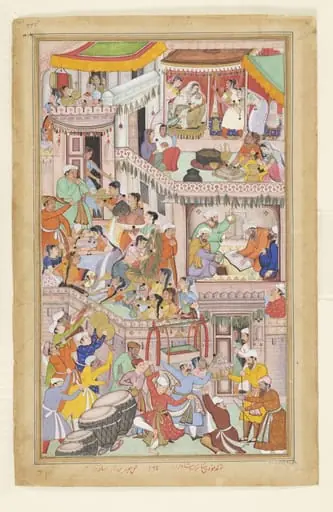
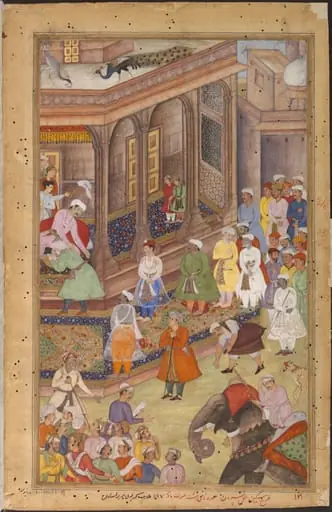
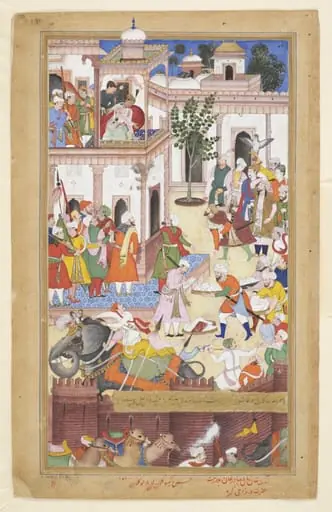
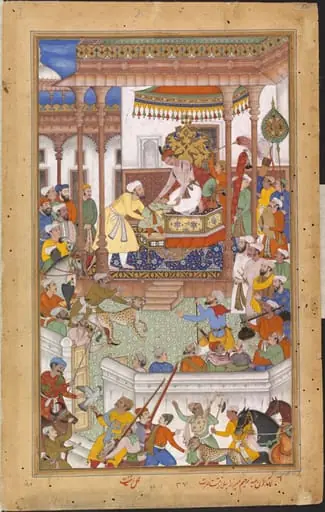
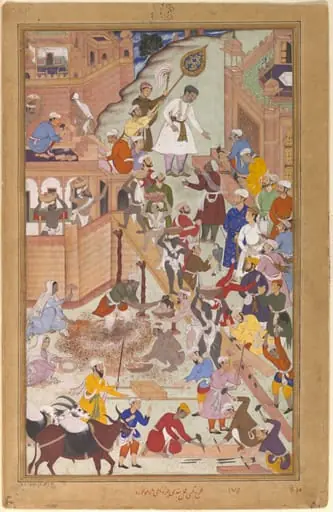
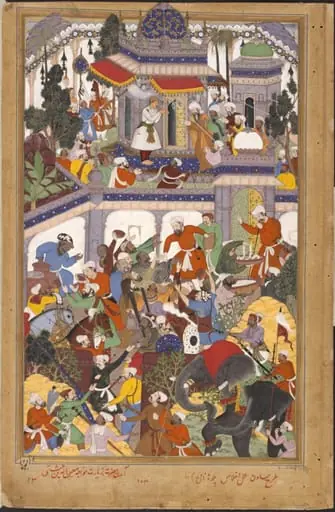
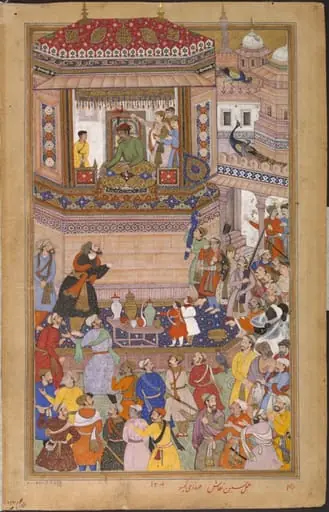
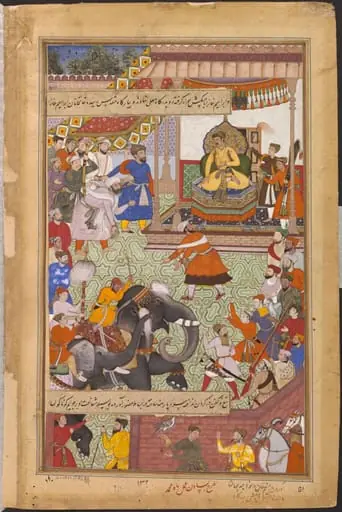
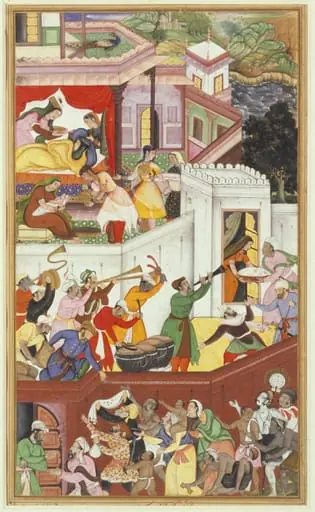
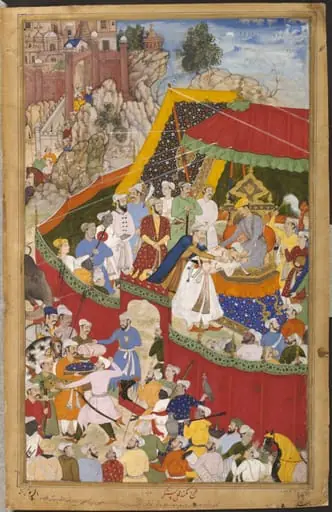
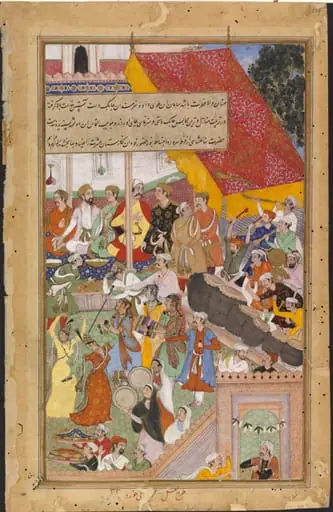
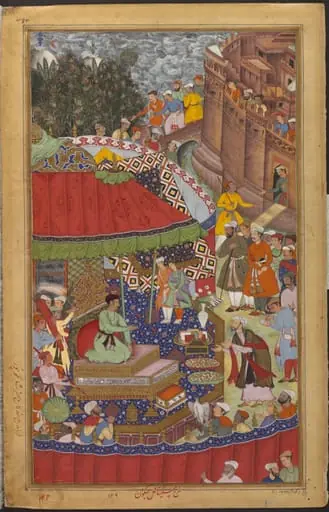
You see a crowded royal party: men in bright robes, dancers twirling, and a king in white watching his sons’ circumcision ceremony.
You see a crowded royal party: men in bright robes, dancers twirling, and a king in white watching his sons’ circumcision ceremony.
This painting comes from a book written while Emperor Akbar was still alive. The artist shows the emperor young, even though the book was finished just before his death. Look at the sweat stains under Akbar’s arms—tiny details like that make the scene feel real.
To see more of these lively court scenes, look up mughal india, court of akbar (reigned 1556–1605).
Overview
This painting is from the Akbar-nama, a biography of Emperor Akbar written by Abu'l Fazl. It depicts a significant event in Akbar's life, the circumcision ceremony of his three sons, held in 1573 at Fatehpur Sikri.
Subject & Meaning
The scene shows Akbar, dressed in a simple white tunic, observing the ceremony while dancers perform and his weight in gold is distributed to the poor. The event is a celebration of a crucial rite of passage for his sons.
Technique & Style
The artist has captured a vivid and crowded scene, with intricate details such as Akbar's musk-stained tunic and a curved dagger in a red velvet sheath. The use of bright colors and dynamic composition creates a lively atmosphere.
History & Provenance
The Akbar-nama was completed shortly before Akbar's death in 1605. Despite being finished near the end of his life, the painting depicts Akbar in his youth, reflecting the event that took place in 1573.
Artist & collection