Artwork
Royal Horse Inspection
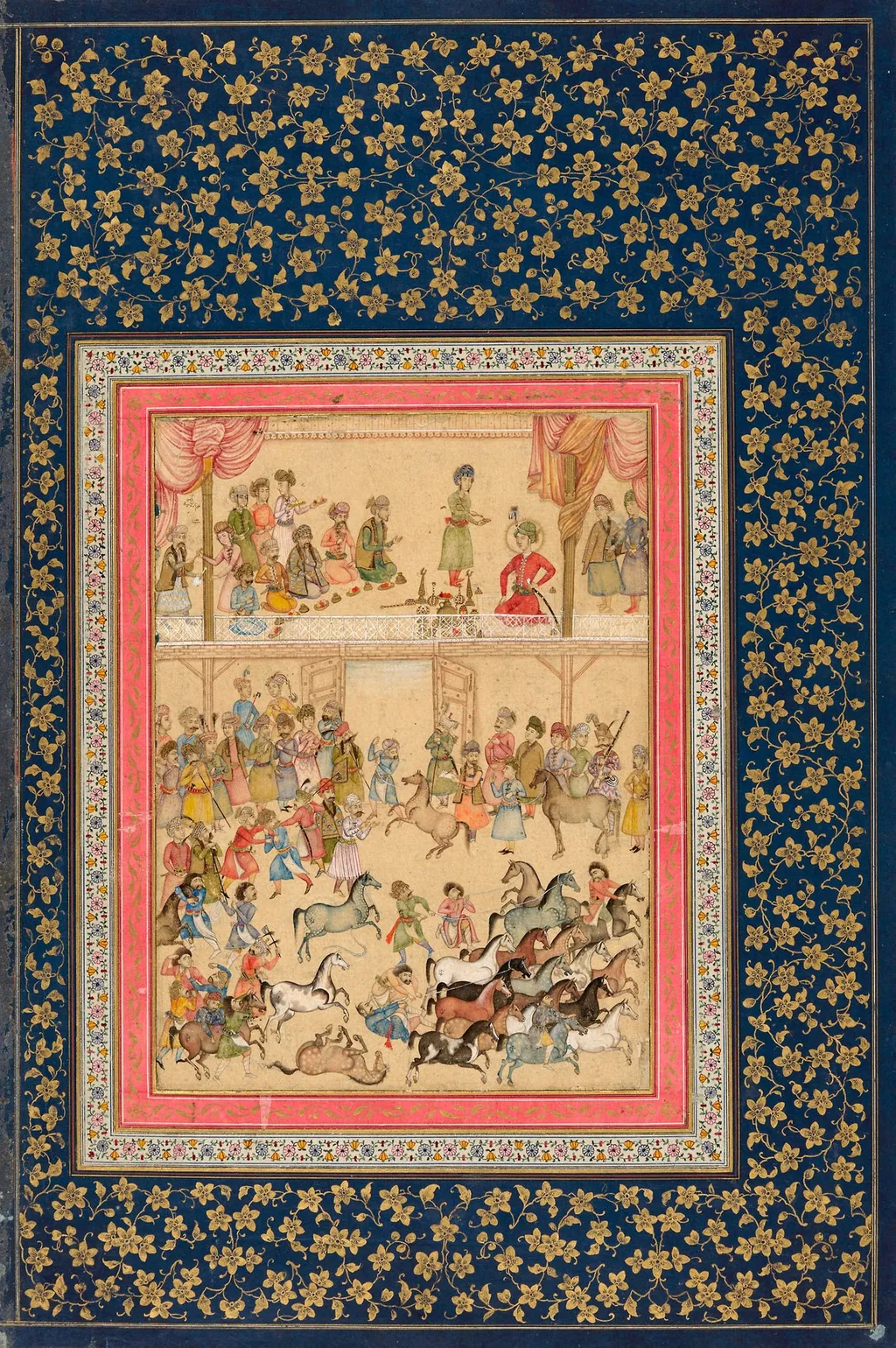
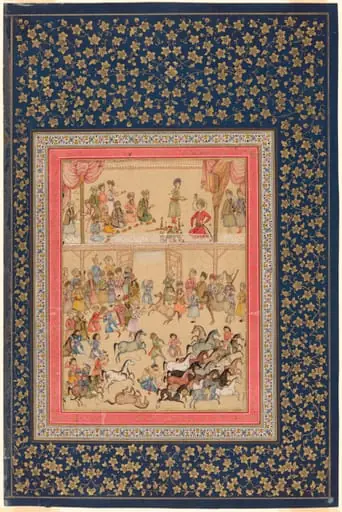
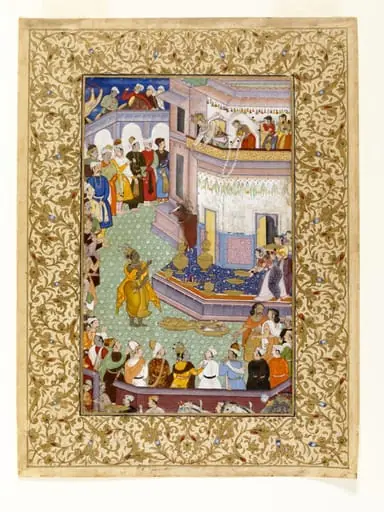
Royal Horse Inspection is an unspecified painting by the Persian Miniature artist 'Aliquli Jabbadar. It dates from 1662 and is held in the collection of the Art Institute of Chicago.
About this work
Overview
Painted in 1662 by 'Aliquli Jabbadar, this work depicts a formal royal ceremony centered on the assessment of horses. Executed in the Persian miniature tradition, it combines detailed figural composition with ornamental backgrounds. The painting resides in the Art Institute of Chicago, where it stands as a rare surviving example of Safavid courtly imagery from the mid-17th century.
Subject & Meaning
Below, horses are arranged in varied postures—some calm, others in motion—while attendants hold weapons and gear.
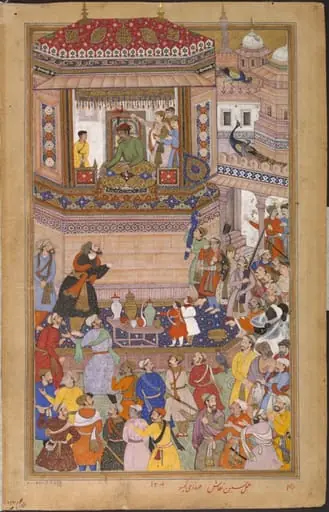
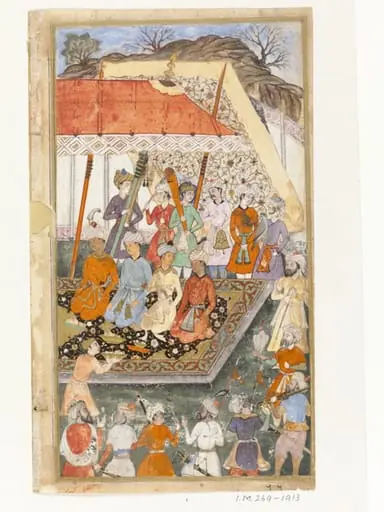
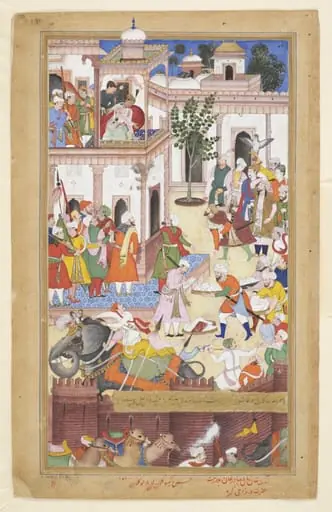
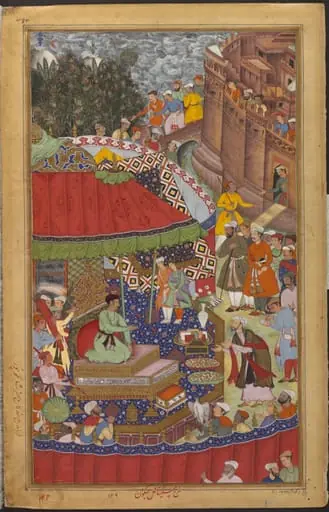
The scene portrays a state ritual in which horses are presented for evaluation by royal officials. Below, horses are arranged in varied postures—some calm, others in motion—while attendants hold weapons and gear. Above, seated dignitaries observe from an elevated platform, with a central figure standing to report or direct. The composition reflects the hierarchy and discipline of the Safavid court, emphasizing control, order, and the symbolic importance of equine strength in state power.
Technique & Style
The painting employs fine brushwork typical of Persian miniature painting, with precise outlines and flat, saturated colors. Gold leaf accents trace intricate patterns across the dark blue background, creating a luminous contrast. Figures are rendered with stylized proportions and minimal perspective, prioritizing symbolic clarity over naturalism. The balance between dynamic movement below and static authority above demonstrates a deliberate visual hierarchy rooted in courtly aesthetics.
History & Provenance
Created during the Safavid dynasty’s later period, the painting likely originated in a royal atelier, possibly in Isfahan. Its survival into the modern era is uncommon, as many such works were dispersed or lost after the dynasty’s decline. Acquired by the Art Institute of Chicago in the 20th century, it remains one of the few documented examples of Jabbadar’s known oeuvre, offering insight into courtly artistic production under Shah Abbas II.
Context
In 17th-century Persia, horse inspections were not merely logistical but ceremonial acts reinforcing royal authority. Horses symbolized military readiness and elite status, and their presentation before the court was a public display of power. Jabbadar’s work aligns with a broader tradition of illustrated manuscripts and album pages that documented court life, blending administrative function with artistic expression under royal patronage.
Legacy
Though 'Aliquli Jabbadar was not widely documented, this painting contributes to understanding the continuity of Persian miniature traditions beyond the dynasty’s peak. Its preservation allows scholars to study the evolution of courtly iconography and the role of visual culture in legitimizing authority. The work remains a key reference for researchers examining Safavid-era artistic practice and its transmission into later periods.
Artist & collection
Artist
Persian artists in the late 1600s painted vivid tales of royal life on paper, bright with gold and watercolor.