Artwork
Royal Horse Inspection
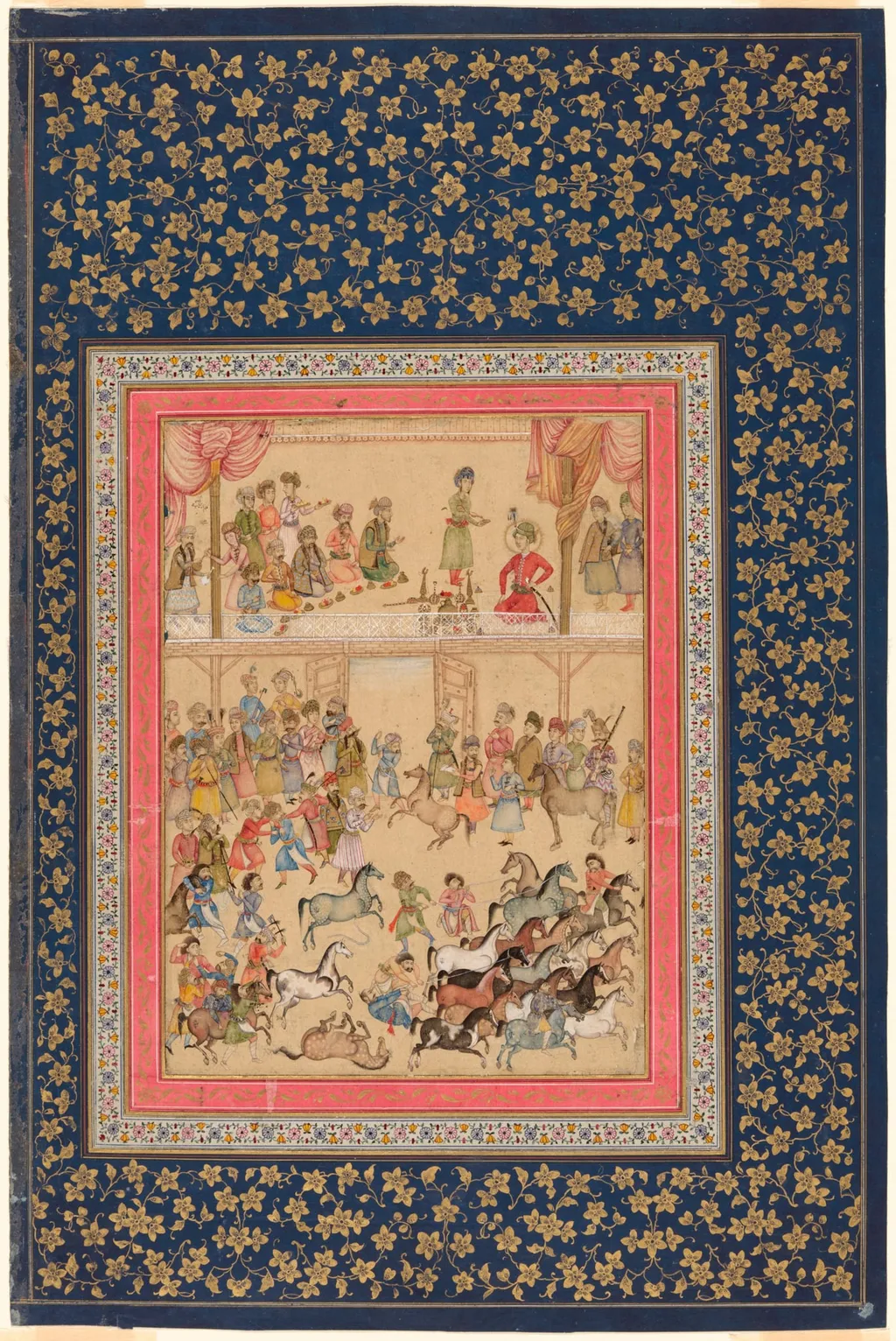
Royal Horse Inspection is a watercolor painting by the Baroque artist 'Aliquli Jabbadar. It dates from 1662 and is held in the collection of the Art Institute of Chicago. The work portrays a bustling scene inside the royal stables of Isfahan, divided into two registers.
About this work
Overview
The work portrays a bustling scene inside the royal stables of Isfahan, divided into two registers. In the upper register a seated monarch presides over a platform attended by courtiers and servants offering fruit and wine. Below, a chaotic herd of horses bearing the royal trident brand spirals in a counter‑clockwise motion, suggesting a moment of lively activity within the court’s daily routine.
Subject & Meaning
His elevated status is underscored by a golden halo and the presence of richly decorated gold and jeweled vessels before him.
The central figure is identified as Shah Abbas II, whose name appears in the artist’s signature. His elevated status is underscored by a golden halo and the presence of richly decorated gold and jeweled vessels before him. The contrast between the composed courtly gathering above and the unruly horse roundup below highlights the dual aspects of royal authority: ceremonial splendor and the practical management of the royal menagerie.
Technique & Style
Executed in opaque watercolor with gold leaf on paper, the painting employs a vivid palette and intricate detailing. Figures are rendered with individualized facial features and clothing, moving away from the conventional stylized types of earlier Persian art. The composition’s dynamic diagonal movement and the use of gold to accentuate the monarch reflect a late‑seventeenth‑century shift toward more narrative, almost journalistic visual reporting.
History & Provenance
The artist signed the work at the upper left, naming Shah Abbas II, who died in 1666, indicating that the painting was created after his death, likely as a retrospective record. The piece originates from the Safavid court’s artistic production in Isfahan, the empire’s capital during the period, and exemplifies the court’s patronage of detailed, documentary‑style paintings.
Context
During the second half of the seventeenth century, Persian painters began to incorporate more observational detail into their compositions, capturing specific episodes of court life. This painting aligns with that trend, presenting a snapshot that may have been witnessed firsthand, and reflects the broader Safavid interest in documenting the splendor and operational aspects of the royal household.
Artist & collection
Artist
Persian artists in the late 1600s painted vivid tales of royal life on paper, bright with gold and watercolor.

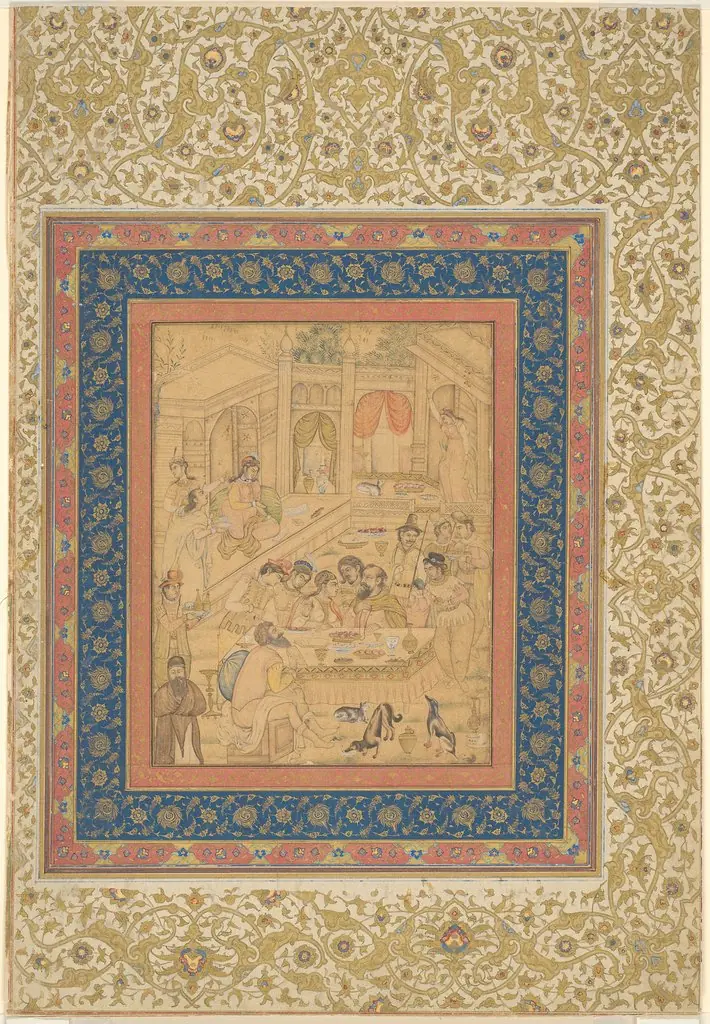 European Banquet Scene
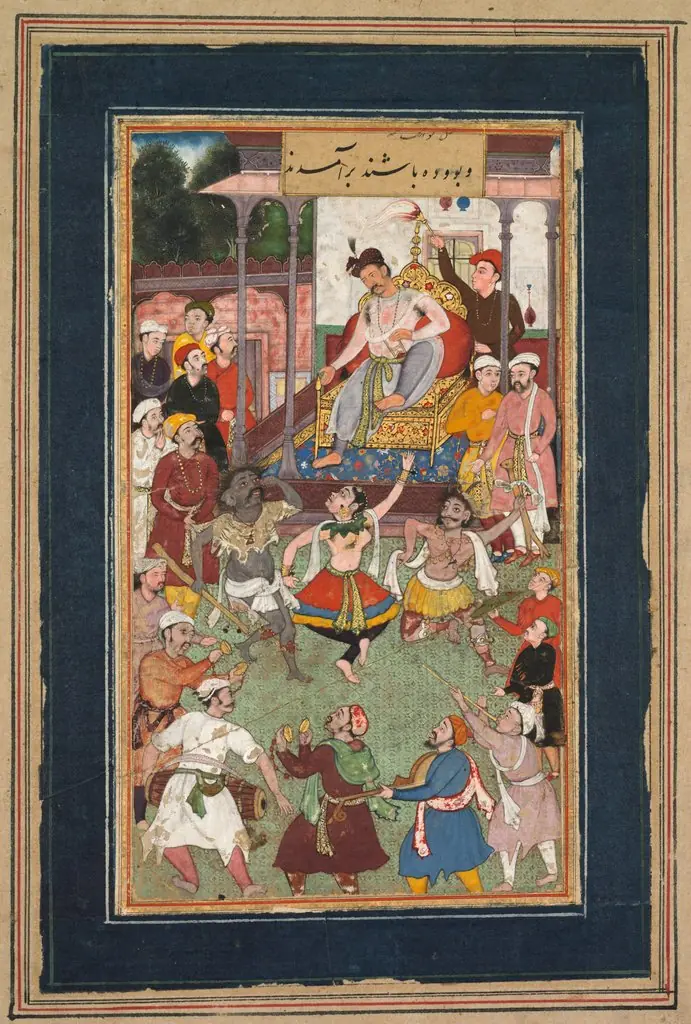 Grotesque Dancers Performing
 Grotesque Dancers Performing
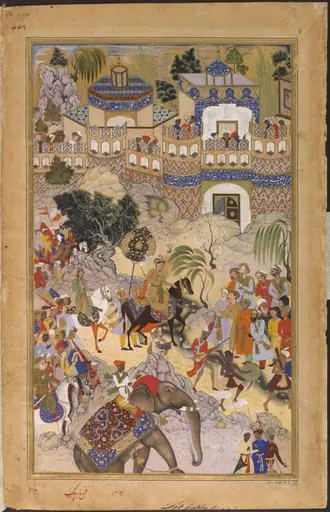 Akbar
Akbar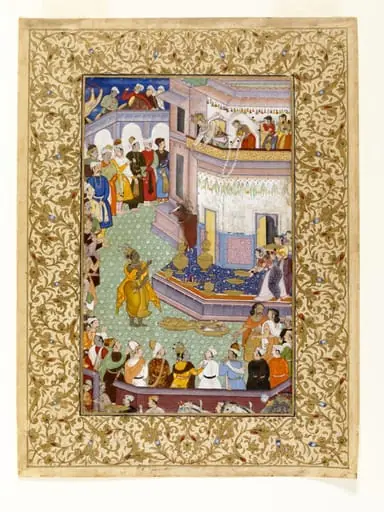 Krishna and Raja Bhishmaka
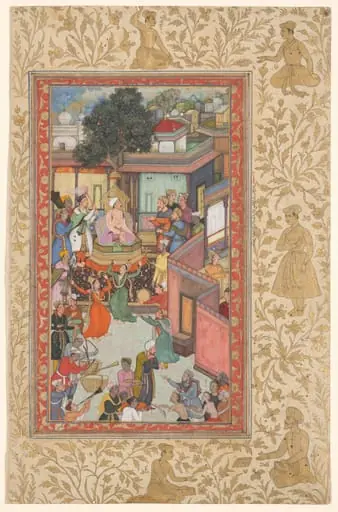 Circumcision ceremony for Akbar’s sons, painting 126 from an Akbar-nama (Book of Akbar) of Abu’l Fazl (Indian, 1551–1602)
 Untitled
 Akbar
Akbar Akbar
Akbar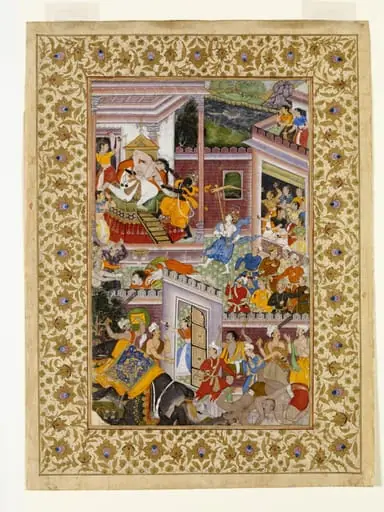 Krishna kills his uncle, the tyrant ruler Kamsa
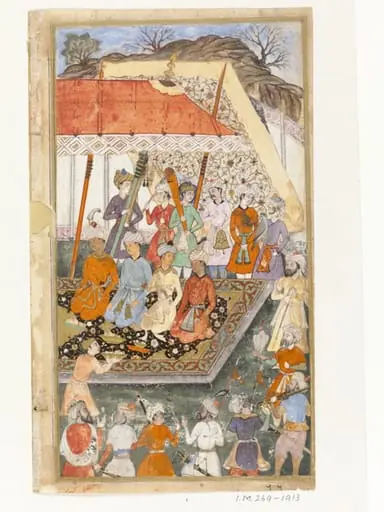 Untitled