Artwork
Seated Manjusri
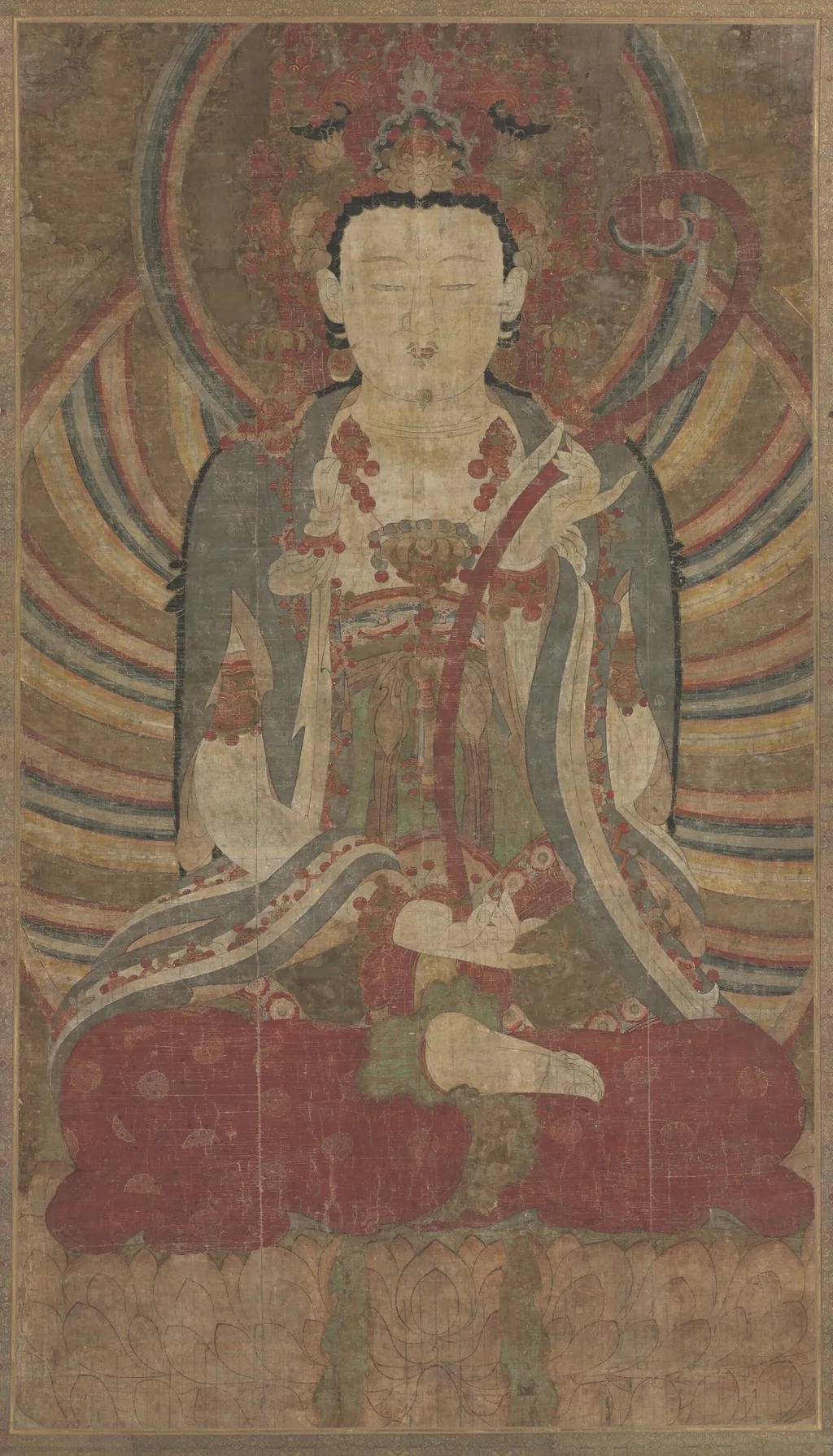
Seated Manjusri is an unspecified painting by Unknown. It dates from 1749 and is held in the collection of the Cleveland Museum of Art.
About this work
Overview
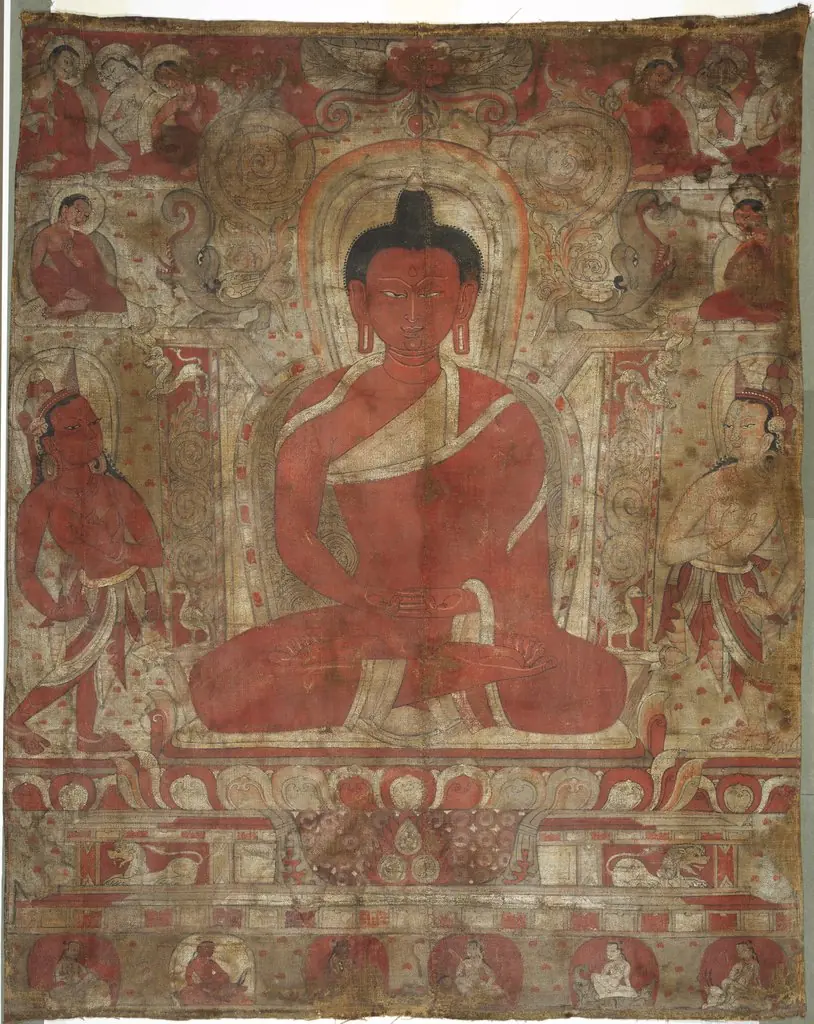
Seated Manjusri is a painted panel that presents a solitary figure in a meditative posture, seated cross‑legged upon a vivid red lotus. The subject is clothed in a white robe edged in red and holds an open book in one hand, while a luminous halo of swirling red and gold surrounds the head, punctuated by diminutive faces at its margins.
Subject & Meaning
The central figure represents Manjusri, the bodhisattva of wisdom in Buddhist tradition. The lotus, a recurring emblem of spiritual purity, underscores the serene composure of the deity, while the book alludes to his role as a teacher and source of enlightened knowledge.
Technique & Style
Executed in pigment on a silk or paper support, the work employs a restrained palette of whites, reds, and golds. The halo’s intricate patterning demonstrates fine brushwork, and the delicate rendering of the small faces suggests a meticulous, layered approach typical of East Asian devotional painting.
History & Provenance
The painting is part of the collection of the Cleveland Museum of Art, where it is displayed for public viewing. Its acquisition details and earlier ownership remain undocumented in the available sources.
Context
Manjusri iconography flourished in Chinese and Korean Buddhist art from the Tang period onward, often depicted seated on lotus blossoms to emphasize transcendence. This work follows that visual convention, situating the figure within a broader religious visual language.
Legacy
As an example of devotional imagery, the painting continues to inform contemporary understandings of Buddhist visual culture, offering scholars and visitors insight into the symbolic vocabulary used to convey wisdom and purity.
Artist & collection

 Domestic Scene
 Giacomo and Cardinal Marco, investing Andrea, Abbot of San Zeno, with his Benefice
 The Nymph of Fontainebleau
 Portrait of a Woman
 Madonna and Child with Saints in the Enclosed Garden
 Venus and Minerva
 Family Group of Four on Sofa
 Wall painting from Room H of the Villa of P. Fannius Synistor at Boscoreale
 Seated Manjusri
 Miroku (Maitreya)
 The Jina Buddha of Infinite Light (Amitabha) in His Pure Land Paradise (Sukhavati)
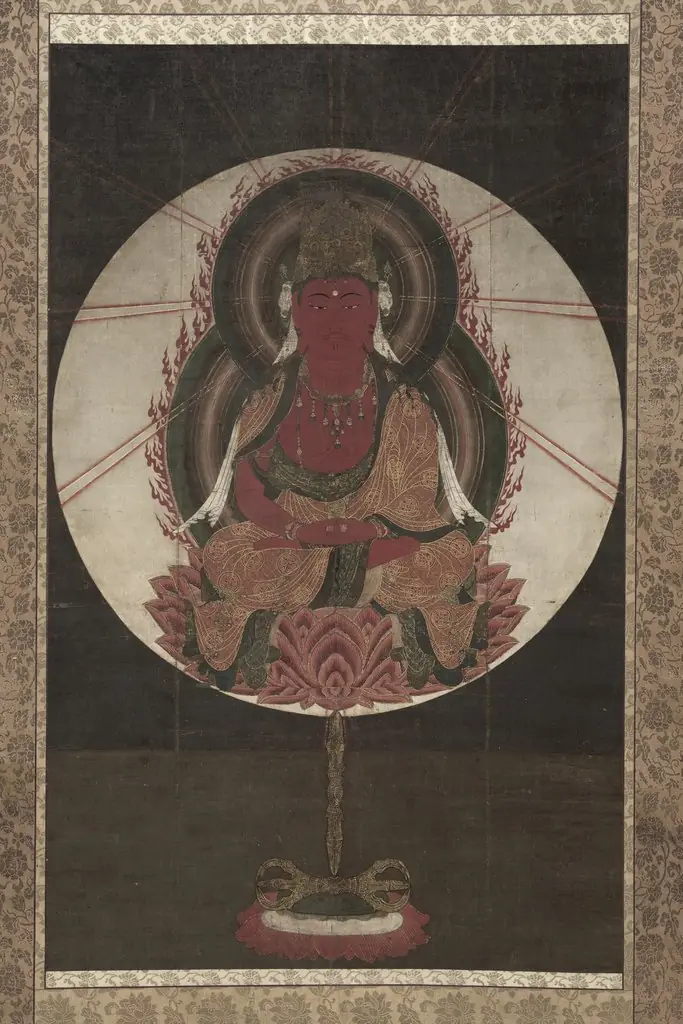 Red Amida
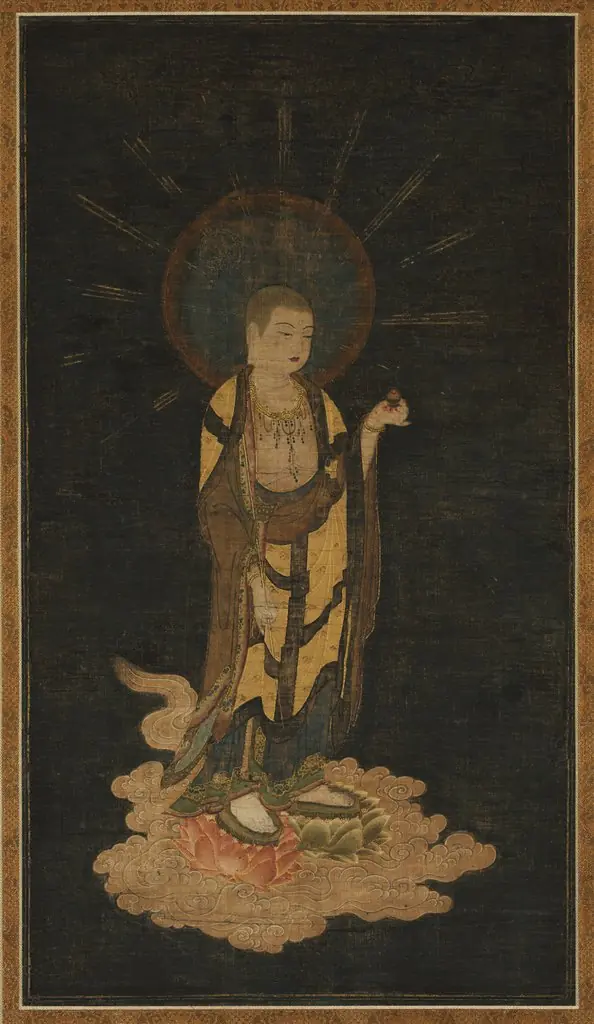 Welcoming Descent of Jizō
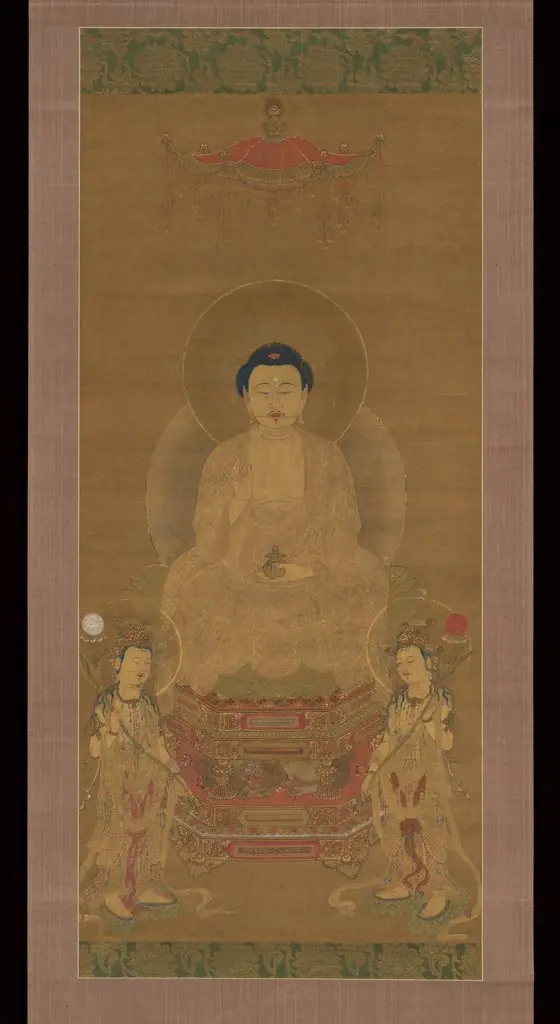 Triad of the Medicine Master Buddha Yakushi (Bhaisajya Buddha)
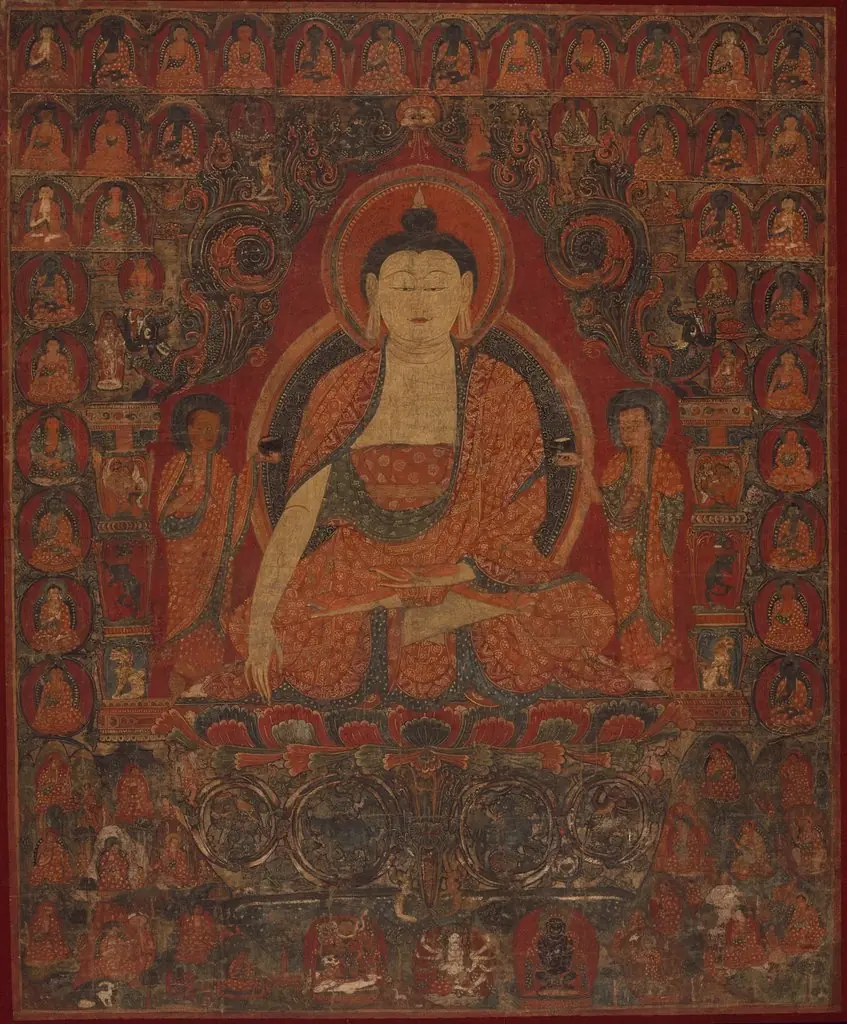 Shakyamuni with the Thirty-Five Buddhas of the Confession of Sins and the Eighteen Arhats
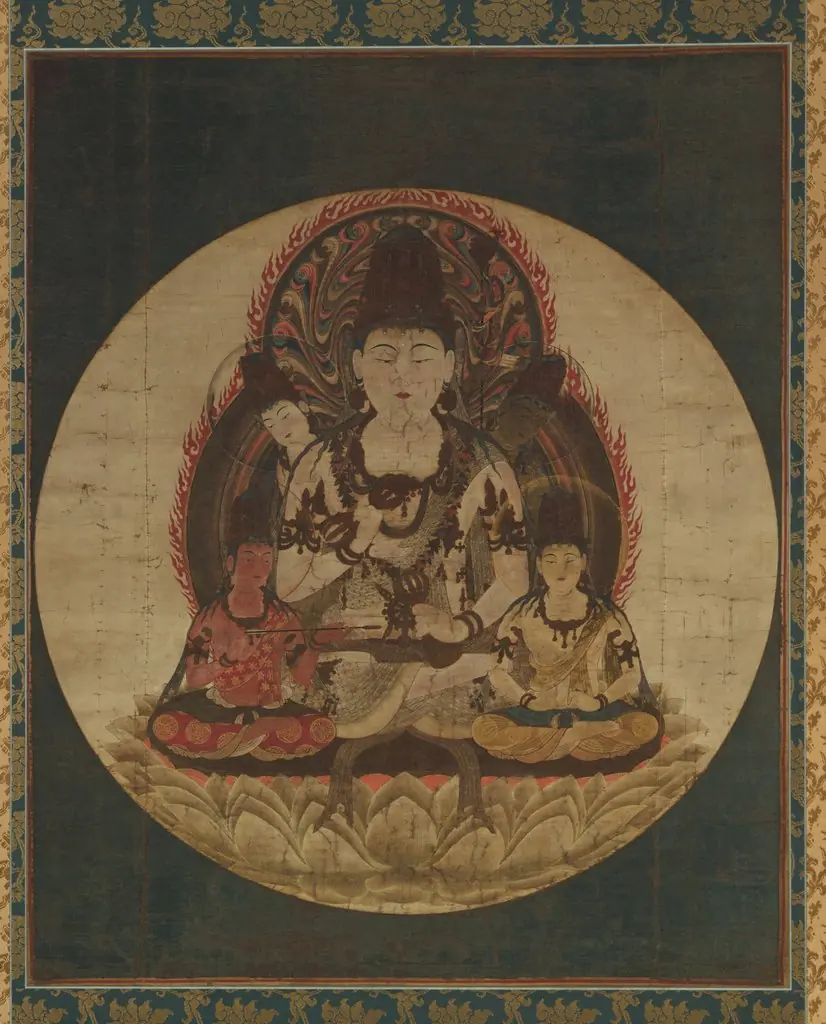 The Secret Five Bodhisattvas (Gohimitsu Bosatsu)
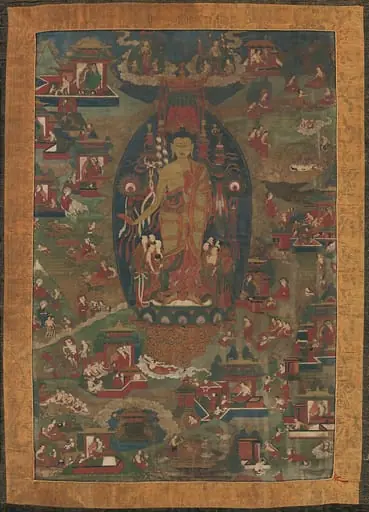 Untitled
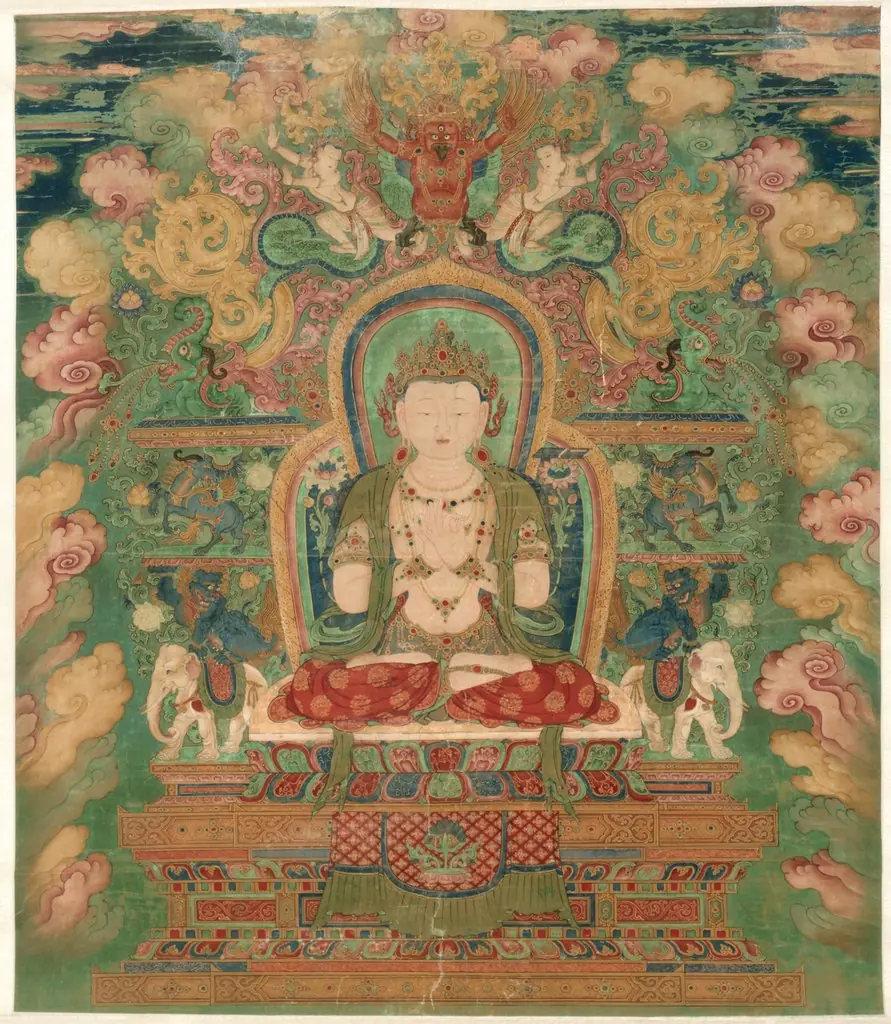 Manjushri
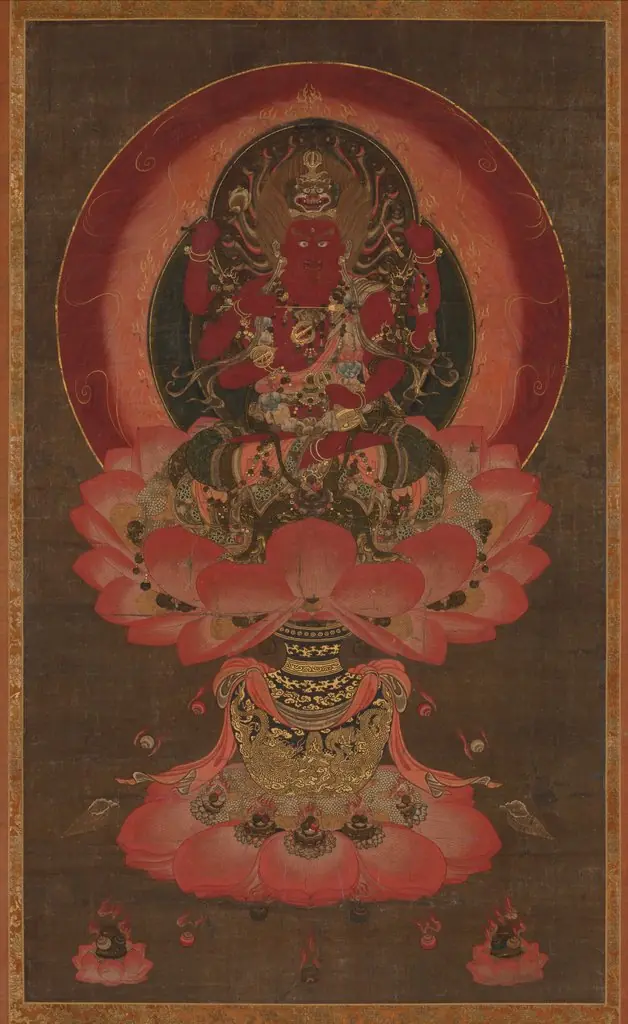 Aizen Myōō
 Seated Amitabha with Attendants