Artwork
Portrait of the Actor Fyodor Volkov (?)
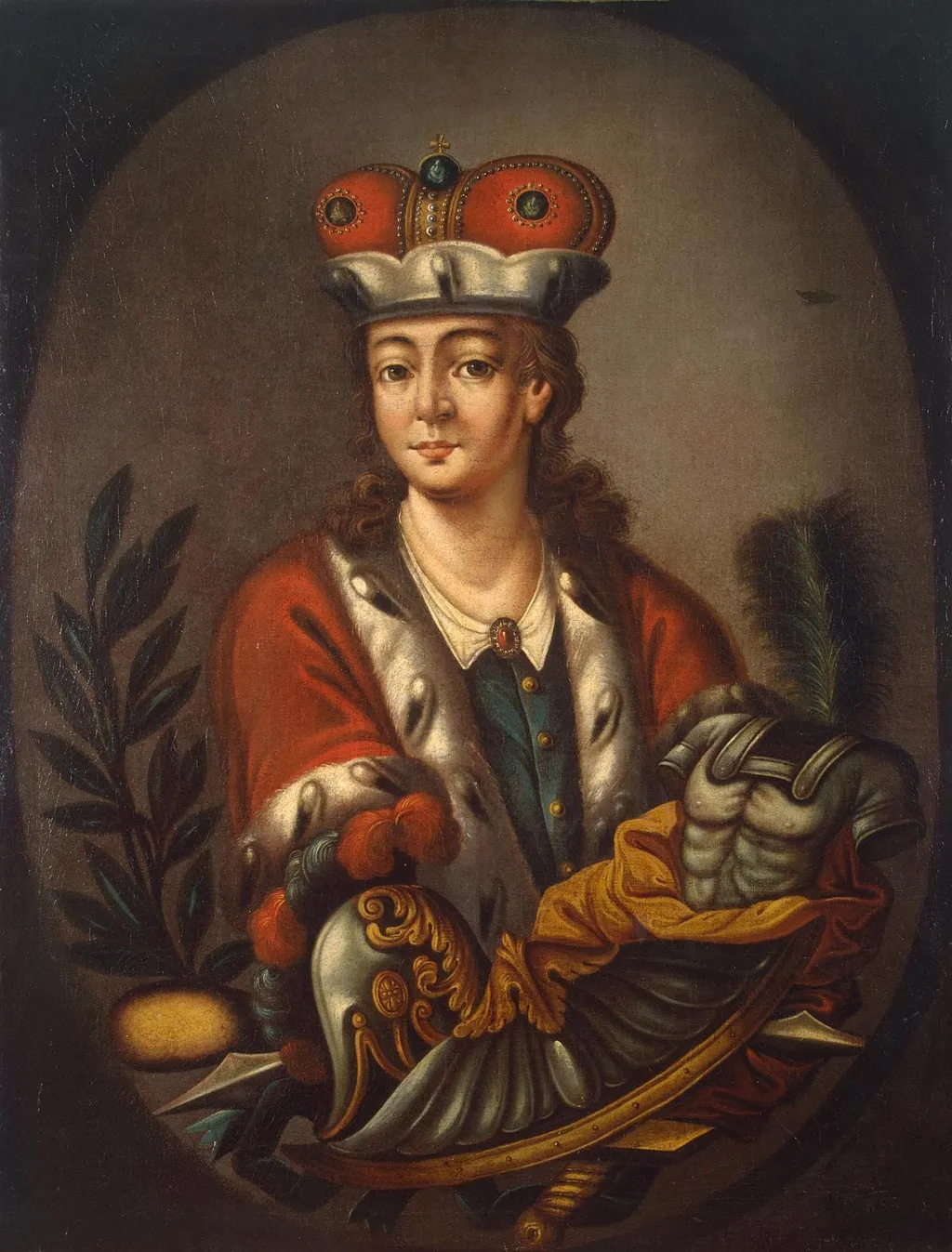
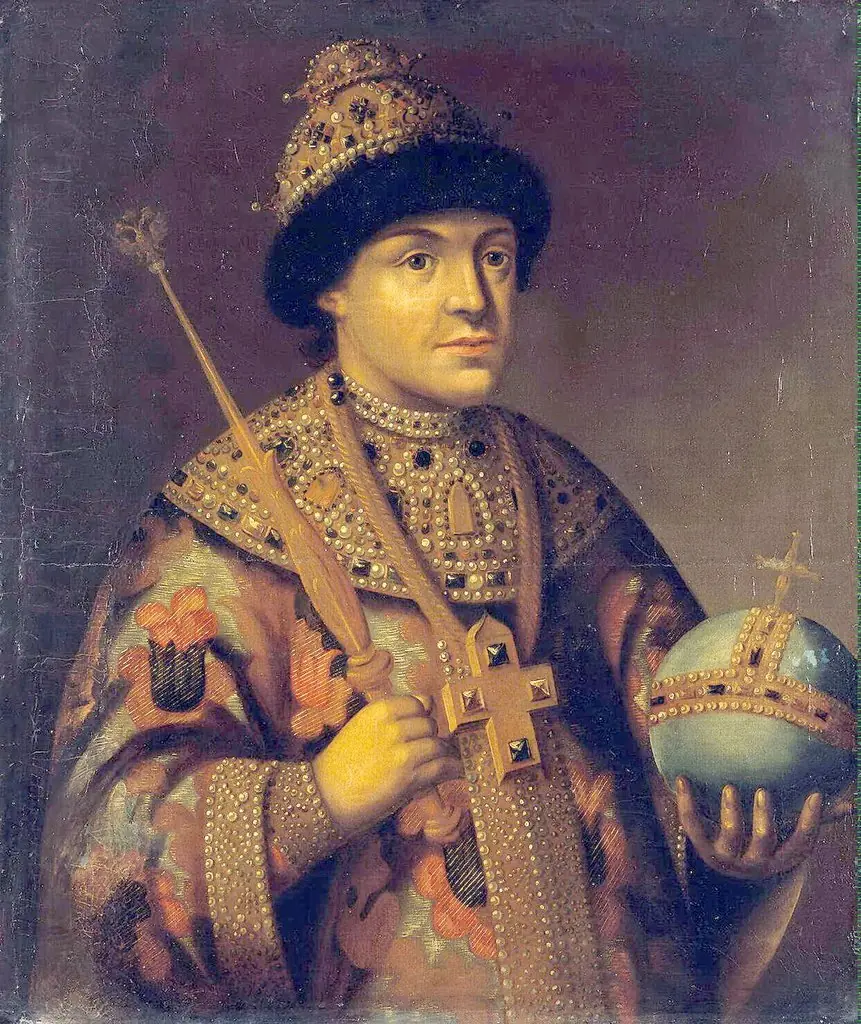
Portrait of the Actor Fyodor Volkov (?) is an oil painting by the Rococo painting artist Unknown. It dates from 1775 and is held in the collection of the Hermitage Museum. This painting presents a full-length portrait of a man in elaborate costume, executed in oil.
About this work
Overview
This painting presents a full-length portrait of a man in elaborate costume, executed in oil. The subject stands against a neutral background, his figure rendered with attention to texture and detail. The composition emphasizes both the sartorial richness and the symbolic objects held by the figure, suggesting a role beyond mere likeness.
Subject & Meaning
The sitter’s attire—a red and white coat with gold buttons, a crown, and a sword wrapped in yellow fabric—points to a theatrical or allegorical identity.
The sitter’s attire—a red and white coat with gold buttons, a crown, and a sword wrapped in yellow fabric—points to a theatrical or allegorical identity. The helmet with a red plume reinforces this ambiguity, evoking either a stage character or a historical military figure. The crown and sword may allude to authority, performance, or a specific dramatic role, though the exact intent remains uncertain.
Technique & Style
The artist employs a controlled use of chiaroscuro, modeling the figure through sharp contrasts of light and shadow. Brushwork is precise, particularly in the rendering of textiles and metallic surfaces, while the palette relies on vivid reds, whites, and golds to heighten visual impact. The composition balances decorative excess with anatomical accuracy, characteristic of portraiture from the period.
History & Provenance
The painting has been tentatively associated with Fyodor Volkov, an 18th-century Russian actor and theater founder, though attribution remains unverified. Little is documented about its early ownership or commission. The work entered public collections in the 20th century, where it has been studied primarily for its cultural and stylistic references.
Context
Portraits of actors and public figures in costume were common in European art, serving both as personal likenesses and as records of performance. The painting’s attributes—costume, props, and dramatic lighting—align with conventions of theatrical portraiture, where identity and role often blurred. Its possible connection to Volkov situates it within the emergence of Russian professional theater.
Artist & collection

 Domestic Scene
 Giacomo and Cardinal Marco, investing Andrea, Abbot of San Zeno, with his Benefice
 The Nymph of Fontainebleau
 Portrait of a Woman
 Madonna and Child with Saints in the Enclosed Garden
 Venus and Minerva
 Family Group of Four on Sofa
 Wall painting from Room H of the Villa of P. Fannius Synistor at Boscoreale
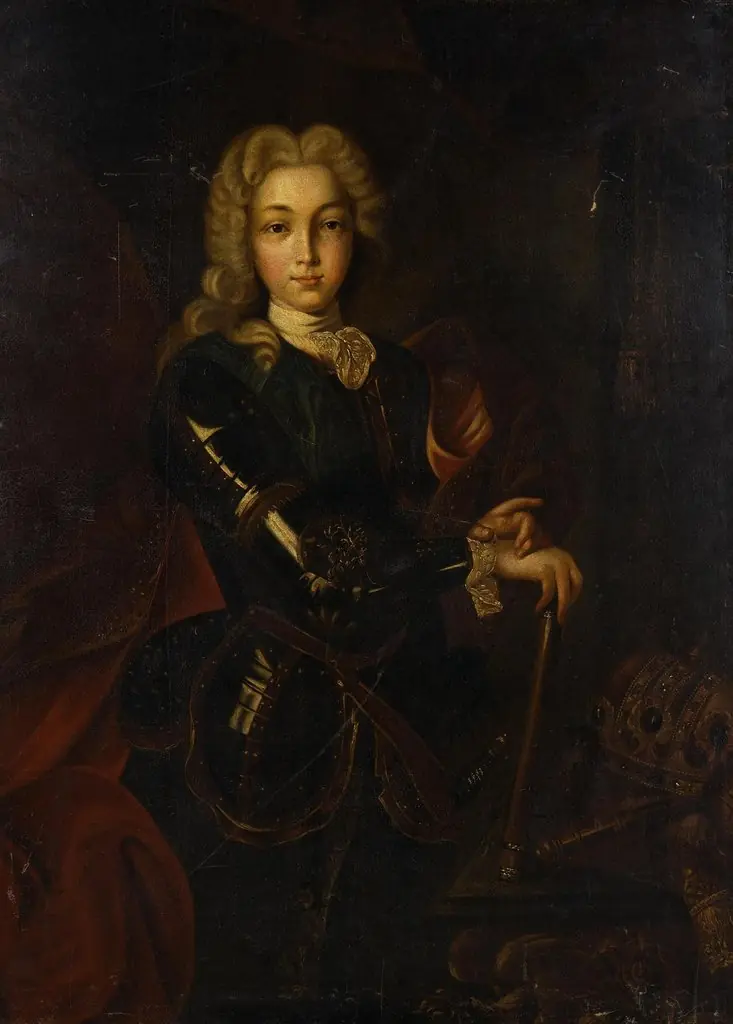 Portrait of Peter II
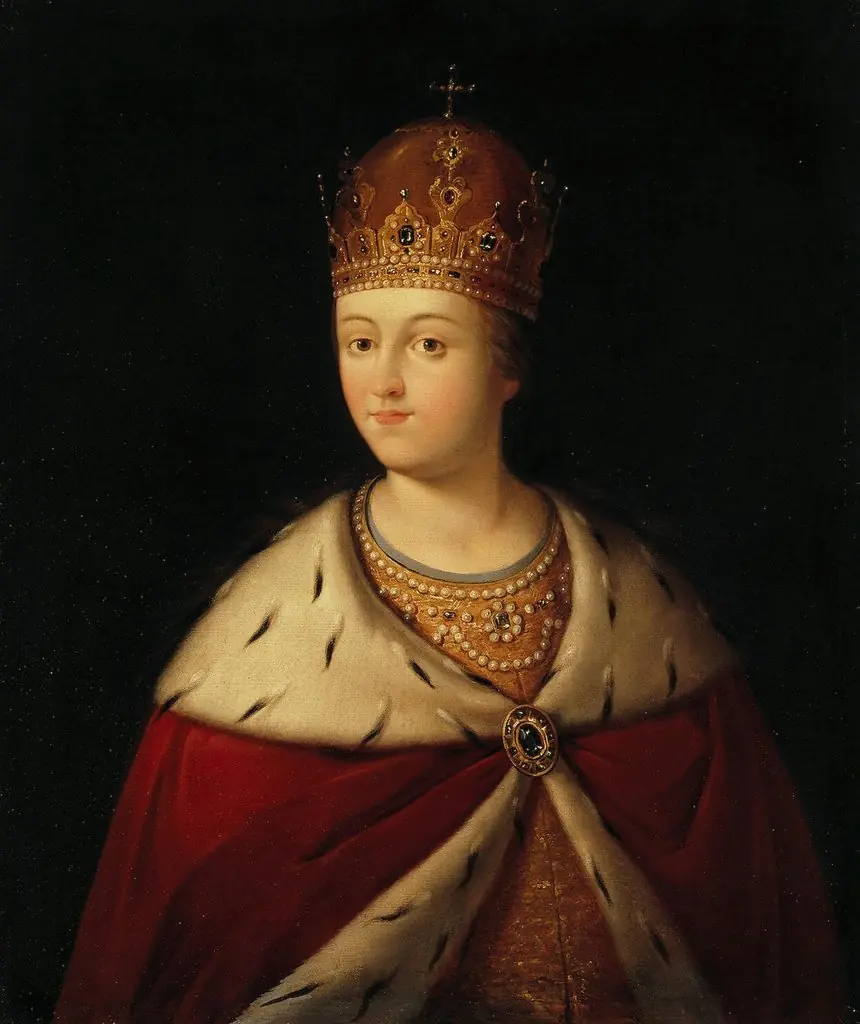 Portrait of Tsarevna Sophia (1657-1704), the Regent of the Russian Empire from 1682 tell 1689
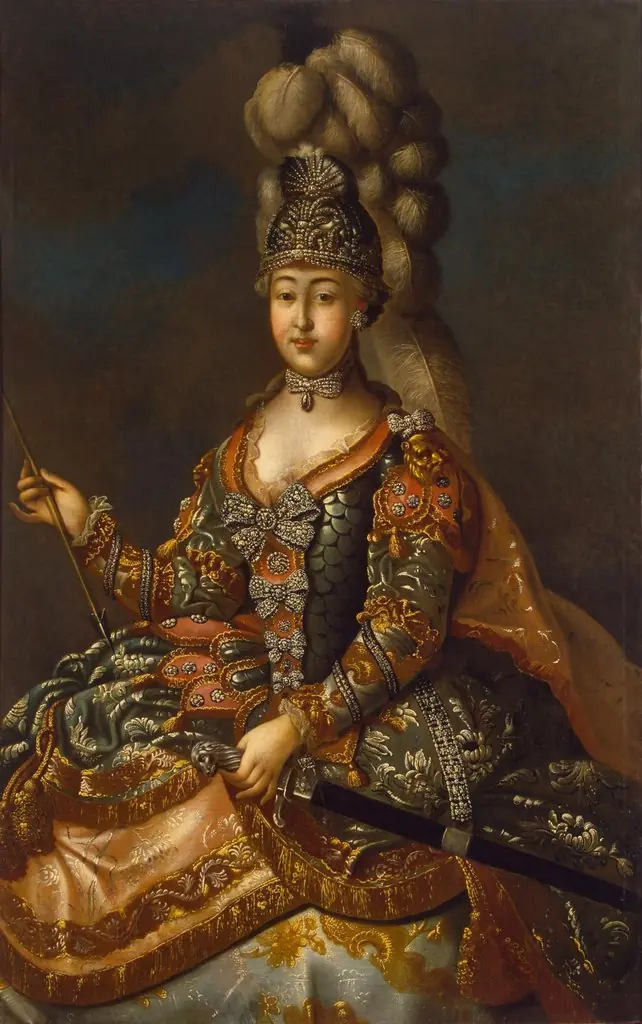 Portrait of Countess Anna Sheremetyeva in a ''Carousel'' Costume
 Portret de femeie
 Portrait of Empress Catherine I
 Portrait of Karl XI, King of Sweden
 Maria Theresia, arhiducesă de Austria ; în registrul inventar: Prințesă în haină albastră
 Portrait of E. Biron (nee Princess Yusupova)
 Portrait of Empress Anna Ioannovna
 Anna Leopoldovna
 Portrait of Marguerite Louise d'Orléans, Grand Duchess of Tuscany
 Portrait of Fiodor Alexeyevich Romanov