Artwork
St. Martin and the Beggar
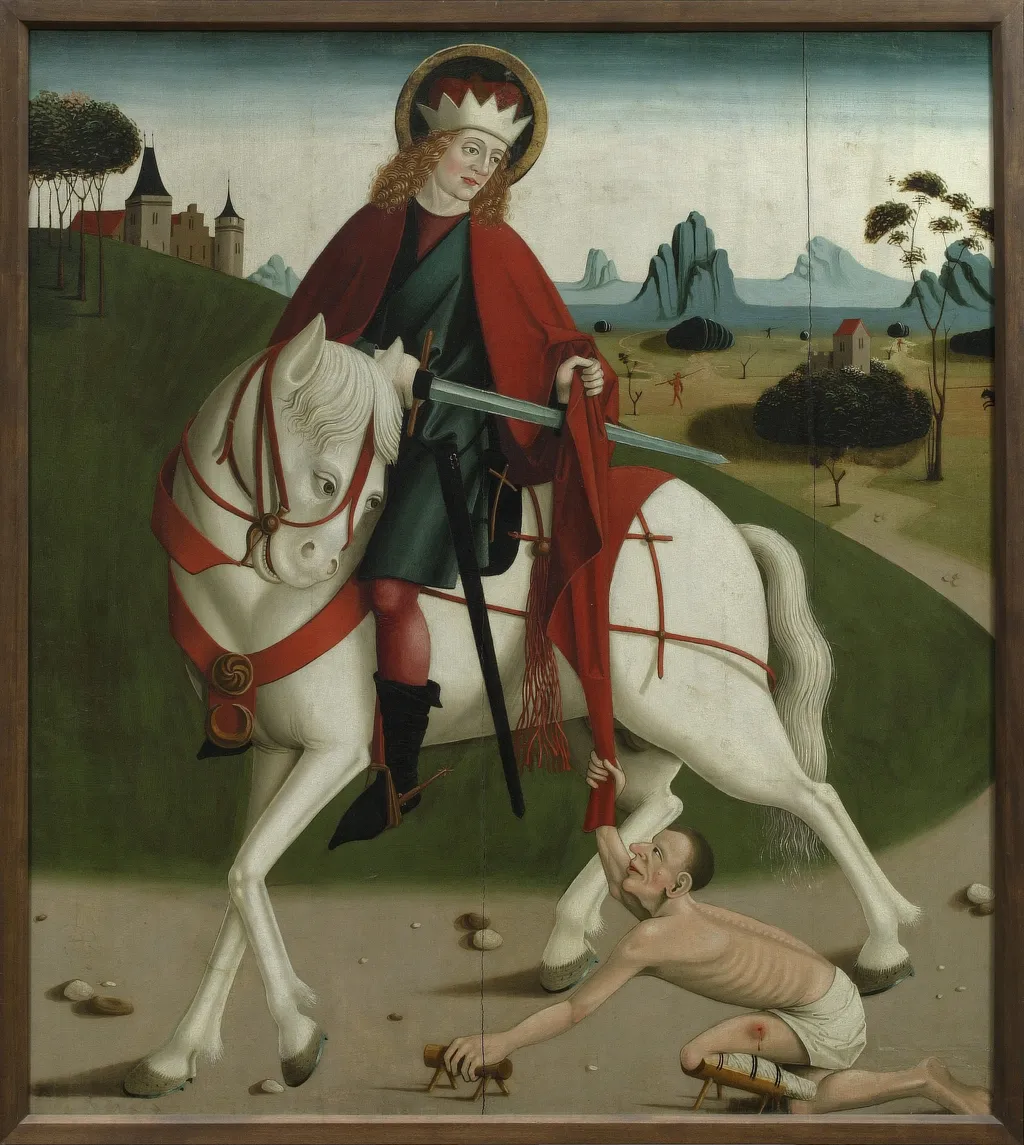
St. Martin and the Beggar is an unspecified painting by the Early Renaissance artist Unknown. It dates from 1496 and is held in the collection of the Hungarian National Gallery. The work portrays Saint Martin on horseback, garbed in a red cape over a green tunic, with a sword at his side.
About this work
Overview
The work portrays Saint Martin on horseback, garbed in a red cape over a green tunic, with a sword at his side. He is captured in the act of slicing his cloak and offering half to a kneeling beggar. The composition is set against a pastoral backdrop of trees, rolling hills and distant structures, focusing attention on the charitable exchange.
Subject & Meaning
The central narrative illustrates the legendary act of Saint Martin sharing his garment with a destitute traveler, a story traditionally associated with compassion and almsgiving. By juxtaposing the richly attired rider with the humble supplicant, the painting underscores themes of generosity, humility and the moral duty of the affluent toward the needy.
Technique & Style
The artist employs a vivid palette, using the bright red of the cape to draw the eye to the saint, while the surrounding landscape is rendered in more subdued tones. Compositionally, the figures dominate the foreground, creating a dramatic tension that is balanced by the calmer, atmospheric background, a common approach in narrative religious paintings of the period.
Context
Such depictions of Saint Martin were popular in medieval and early modern devotional art, serving both as moral exemplars and as visual aids for liturgical instruction. The inclusion of a recognizable landscape situates the miracle within a familiar world, reinforcing the saint’s accessibility and the universality of charitable acts.
Artist & collection

 Domestic Scene
 Giacomo and Cardinal Marco, investing Andrea, Abbot of San Zeno, with his Benefice
 The Nymph of Fontainebleau
 Portrait of a Woman
 Madonna and Child with Saints in the Enclosed Garden
 Venus and Minerva
 Family Group of Four on Sofa
 Wall painting from Room H of the Villa of P. Fannius Synistor at Boscoreale
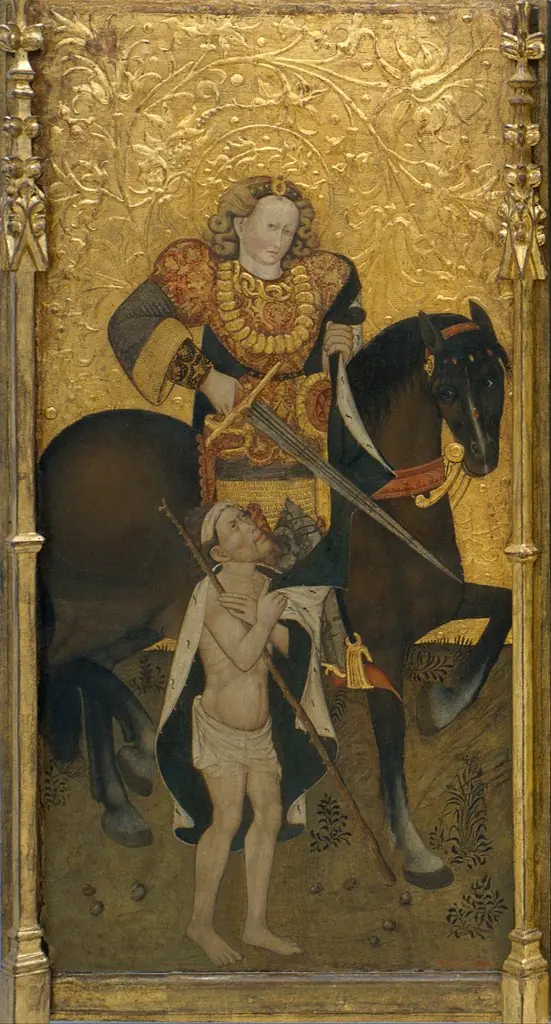 Saint Martin Sharing his Cloak
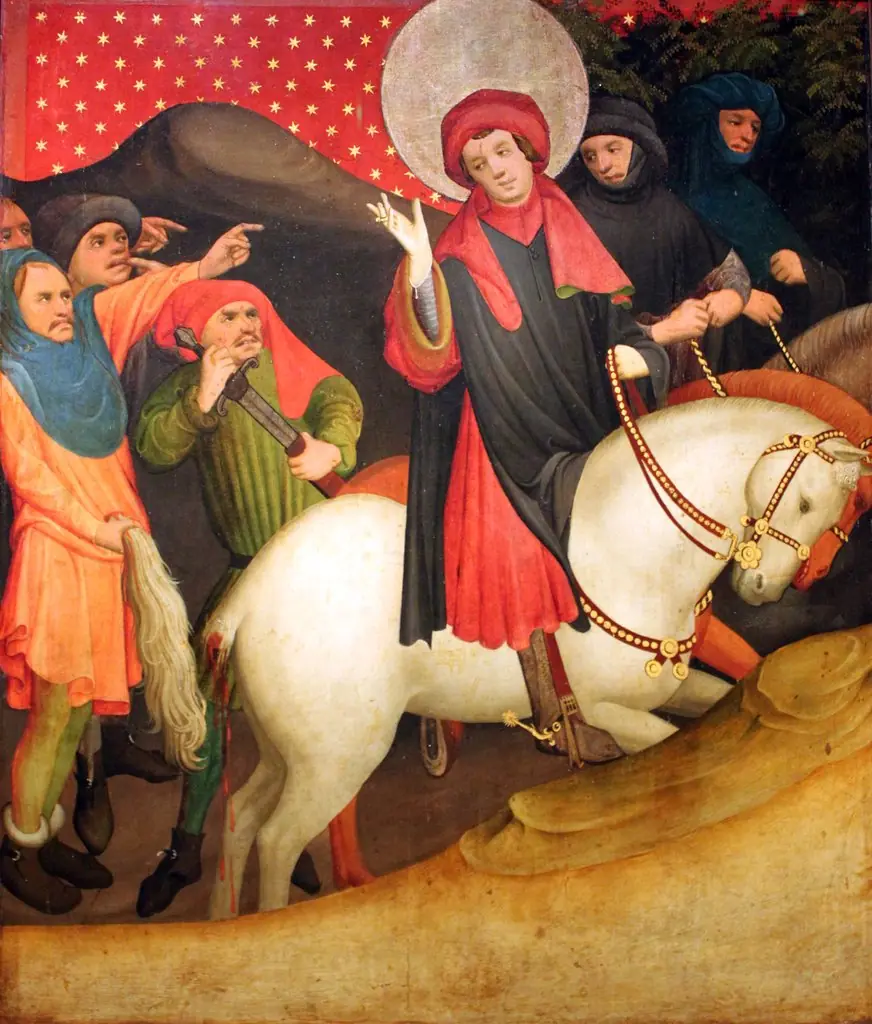 The Mocking of Saint Thomas of Canterbury
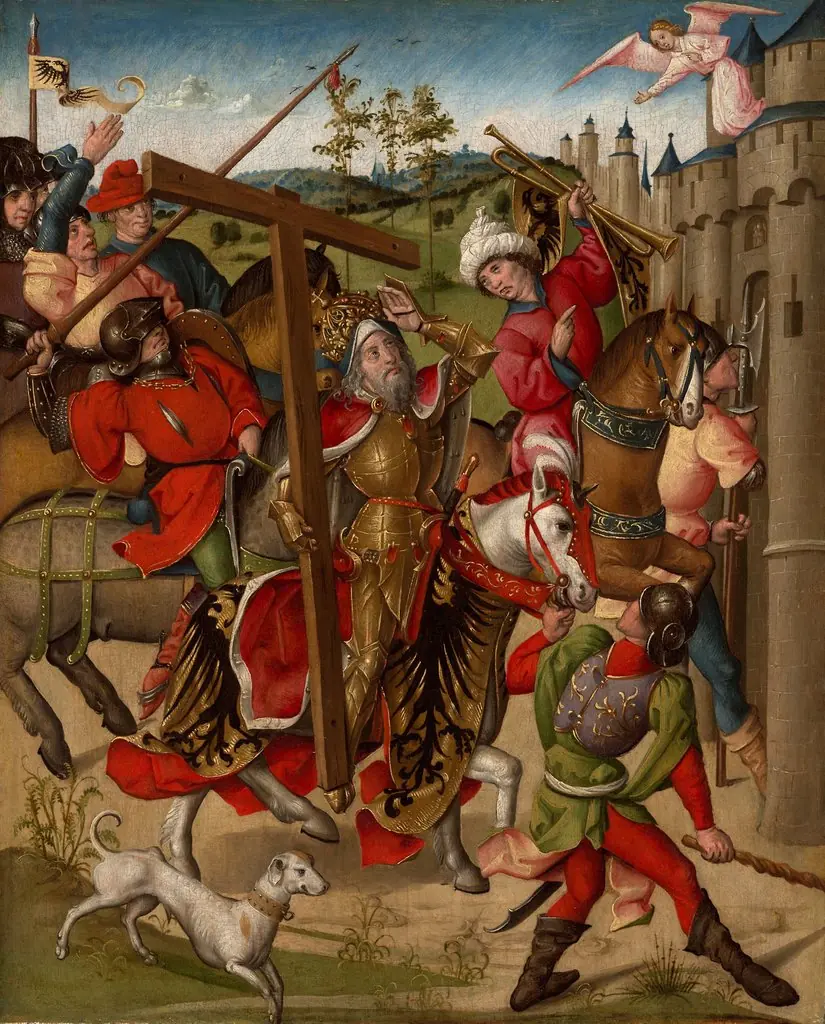 Emperor Heraclius Denied Entry into Jerusalem
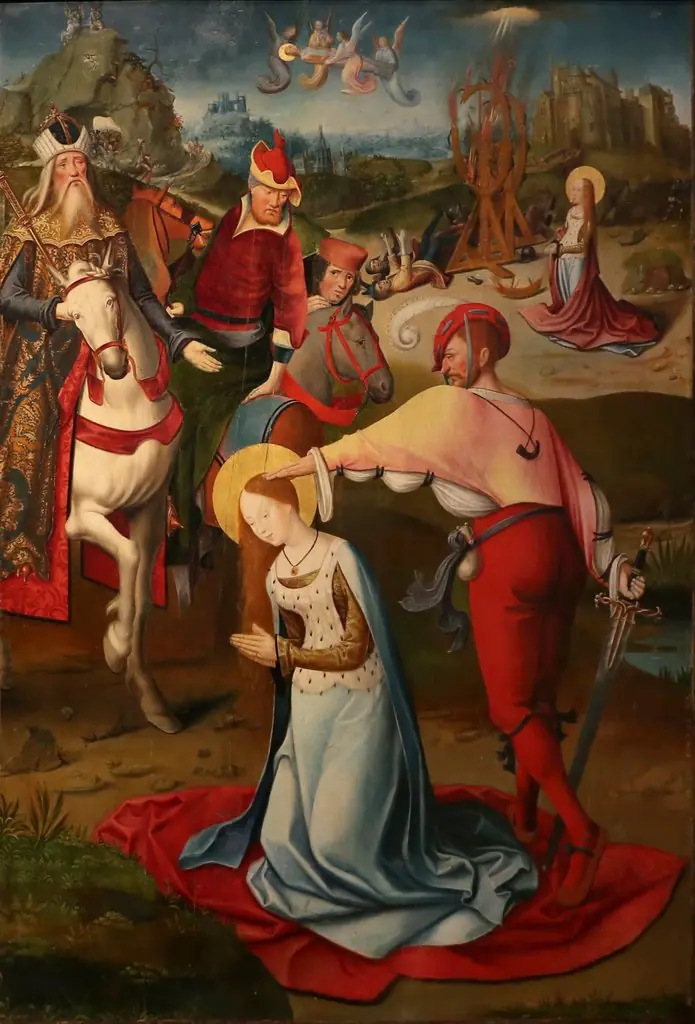 Beheading of Saint Catherine
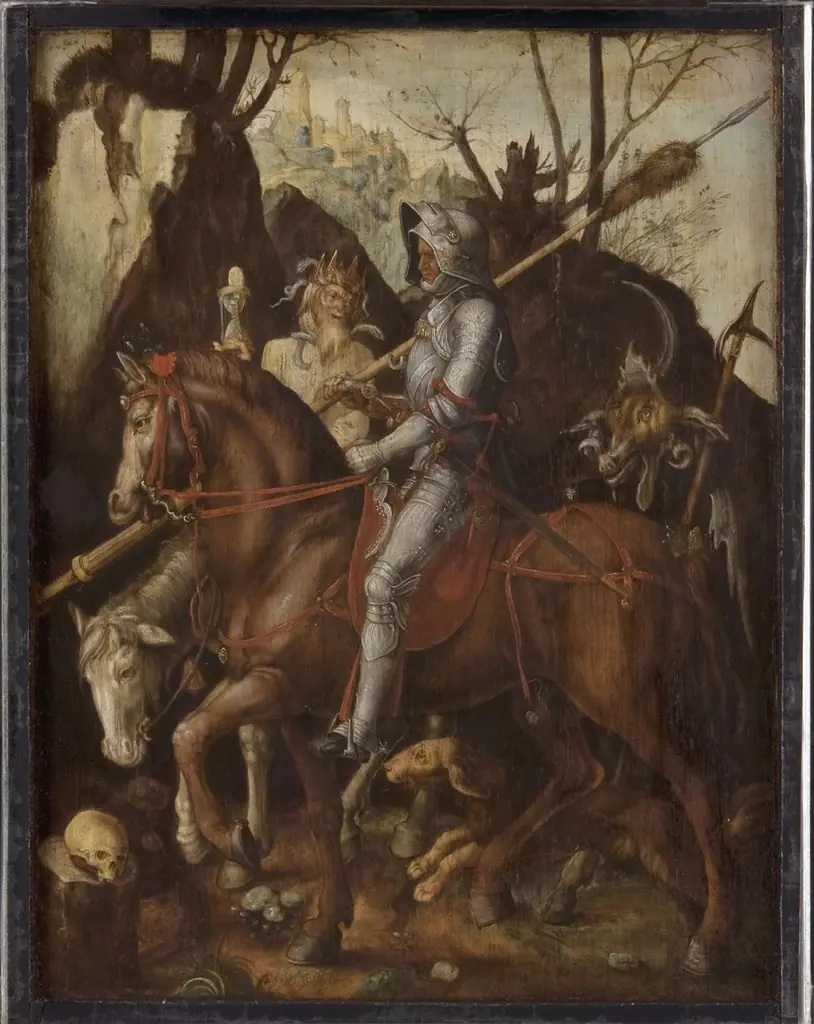 A Knight, Death, and the Devil
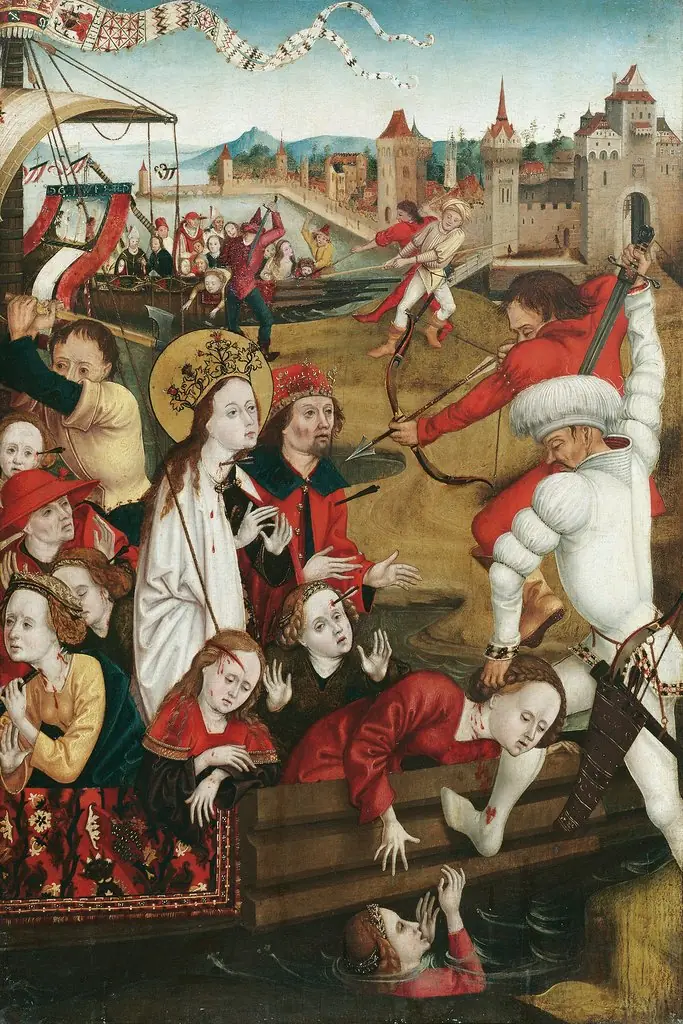 Martyrdom of Saint Ursula and her companions
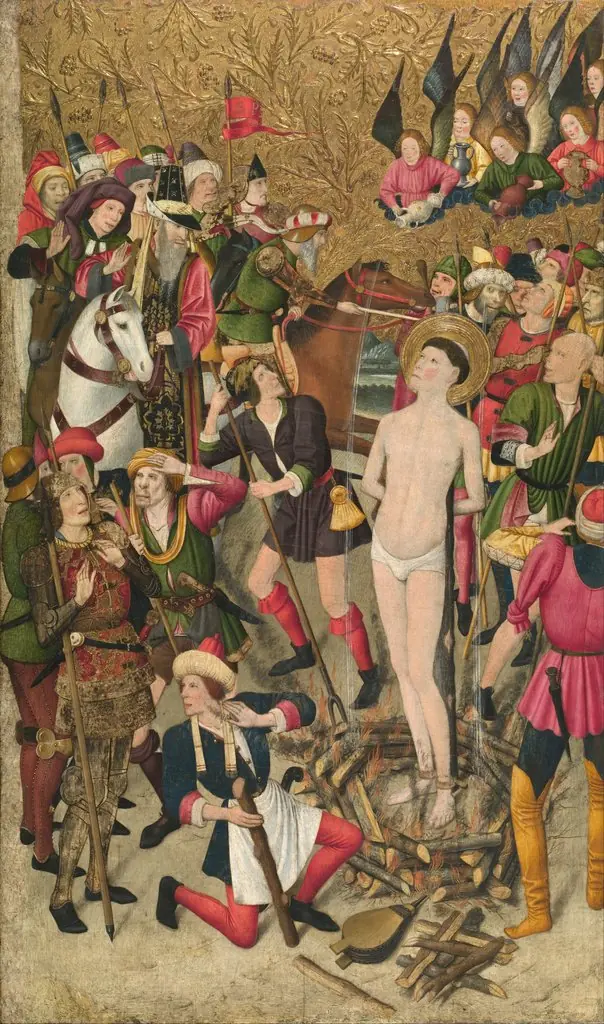 Saint Vincent at the Stake
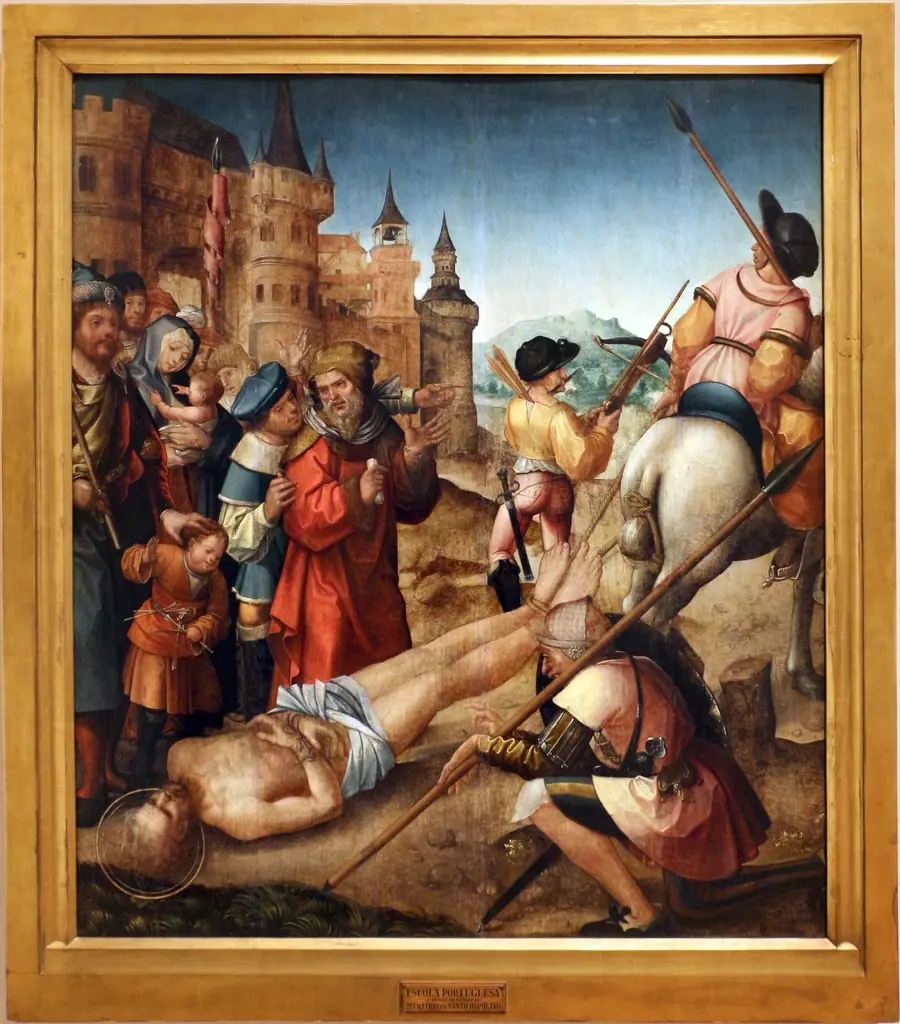 Martyrdom of Saint Hippolyte
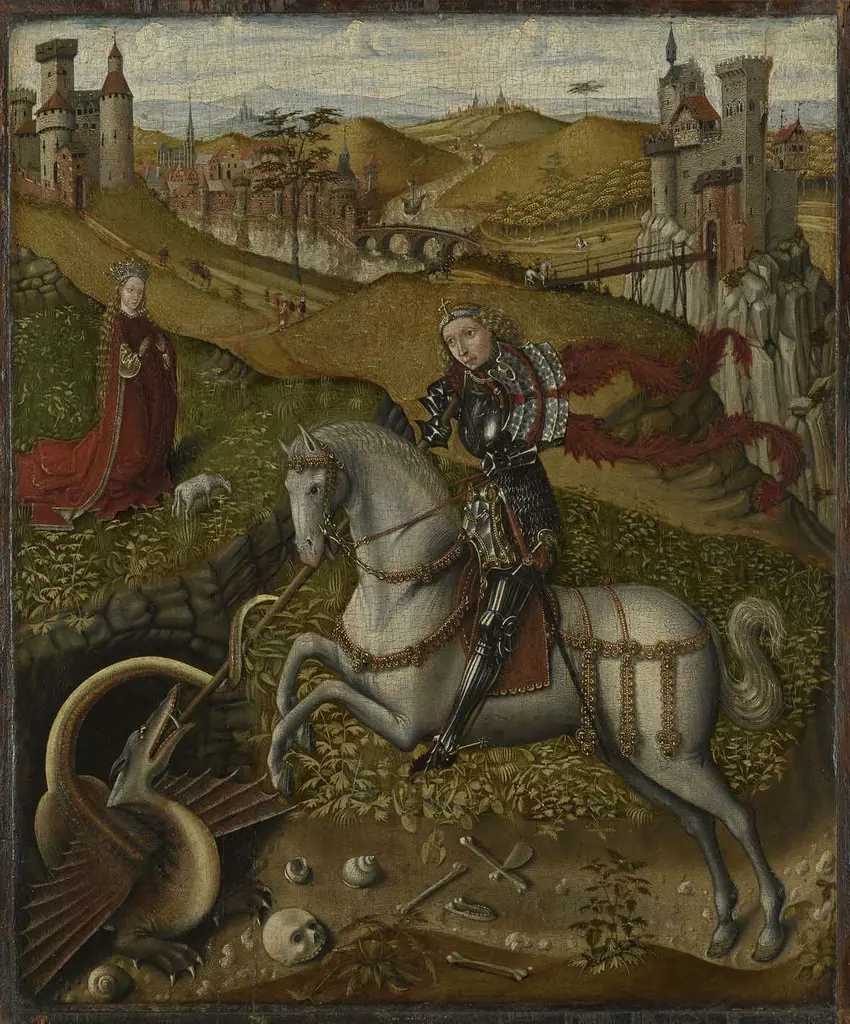 Der hl. Georg mit dem Drachen
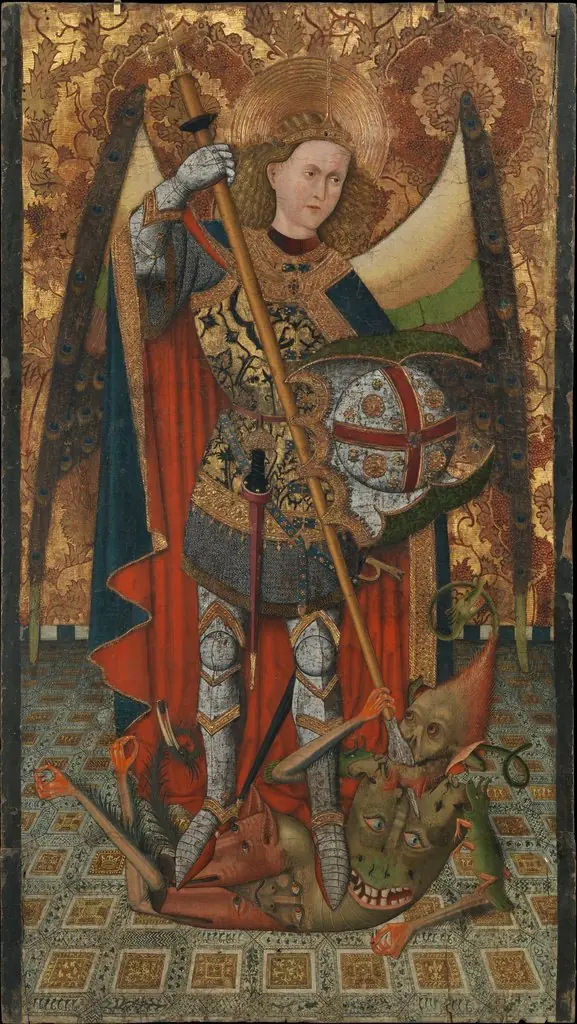 Saint Michael