Artwork
Henry VIII (1491–1547)
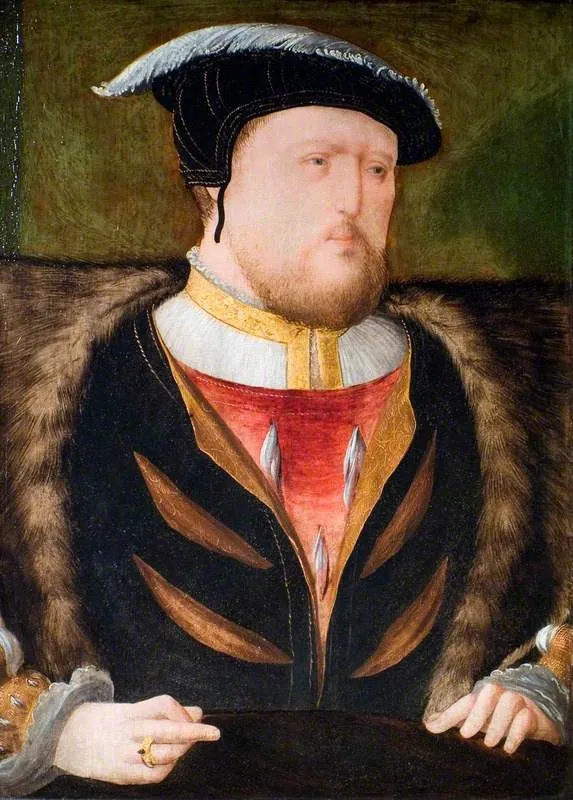
Henry VIII (1491–1547) is an oil painting by the Early Baroque Italian artist Unknown. It dates from 1537 and is held in the collection of the Victoria and Albert Museum. This oil painting presents a formal portrait of Henry VIII, king of England from 1509 to 1547.
About this work
Overview
Rendered with deliberate solemnity, the image captures him in mid-life, dressed in rich but dark garments that convey authority without overt opulence.
This oil painting presents a formal portrait of Henry VIII, king of England from 1509 to 1547. Rendered with deliberate solemnity, the image captures him in mid-life, dressed in rich but dark garments that convey authority without overt opulence. His posture is rigid, gaze direct, and the muted green background isolates him as the sole focus, reinforcing the portrait’s function as a statement of royal presence.
Subject & Meaning
The portrait emphasizes Henry’s authority through controlled posture and symbolic attire. The black hat with a white feather suggests nobility, while the fur-trimmed jacket and gold-accented shirt denote status without excess. His right hand pointing downward may imply command or judgment, and the left hand resting on a surface suggests stability. The overall composition avoids sentimentality, projecting an image of sovereign control.
Technique & Style
The painting employs traditional Northern Renaissance techniques, with careful attention to textile detail and texture. Oil paint allows for subtle gradations in the fur trim and metallic embroidery, while the flat, muted green background avoids distraction. Facial features are rendered with precision, particularly the beard and mustache, which frame the face and add gravitas. Brushwork is controlled, prioritizing clarity over expressive flourish.
History & Provenance
The portrait likely originated in the Tudor court, possibly as part of a series commissioned to reinforce royal imagery. It was likely created during the 1530s or 1540s, when Henry’s public persona was being carefully curated following the English Reformation. Its survival suggests it was valued by later collectors or institutions, though its exact provenance before modern times remains undocumented.
Context
During Henry VIII’s reign, portraiture became a tool of political messaging. Artists were directed to depict the monarch as powerful and unyielding, especially after his break with Rome. This image aligns with other contemporary portraits that emphasize physical presence and regal bearing, replacing medieval iconography with a new, humanized yet imposing royal archetype.
Legacy
This portrait contributes to the enduring visual identity of Henry VIII as a formidable, austere ruler. It reflects the shift in English art toward secular, individualized portraiture under the Tudors. Though not attributed to a specific artist, its style places it within the circle of Hans Holbein the Younger’s workshop, influencing later royal imagery and the conventions of English court portraiture.
Artist & collection

 Domestic Scene
 Giacomo and Cardinal Marco, investing Andrea, Abbot of San Zeno, with his Benefice
 The Nymph of Fontainebleau
 Portrait of a Woman
 Madonna and Child with Saints in the Enclosed Garden
 Venus and Minerva
 Family Group of Four on Sofa
 Wall painting from Room H of the Villa of P. Fannius Synistor at Boscoreale
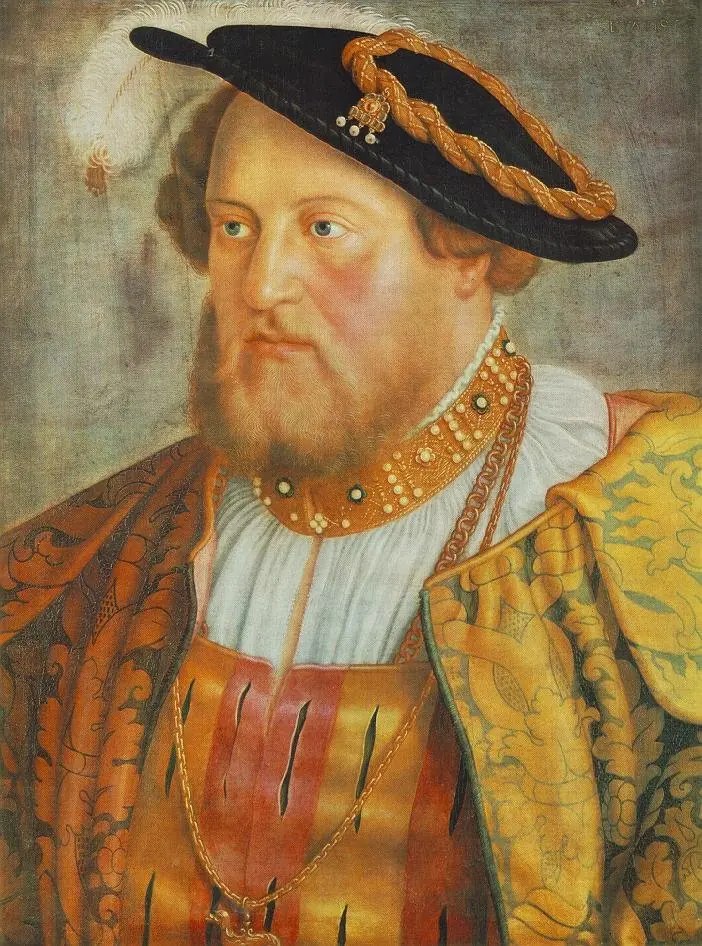 Portrait of Ottheinrich, Prince of Pfalz
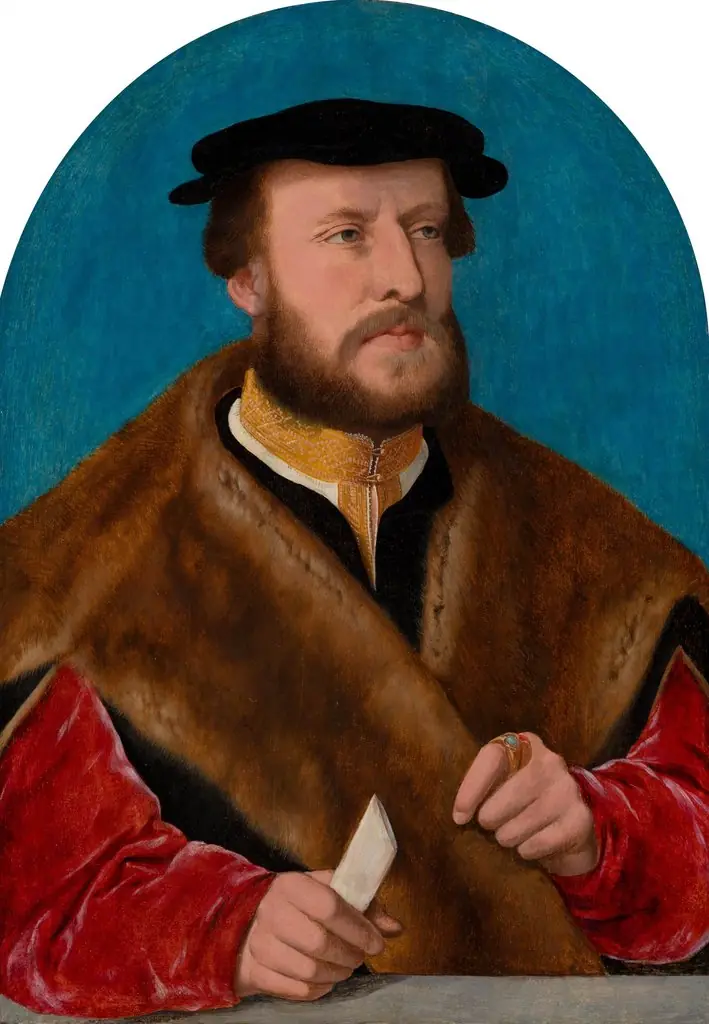 Portrait of Jakob Omphalius
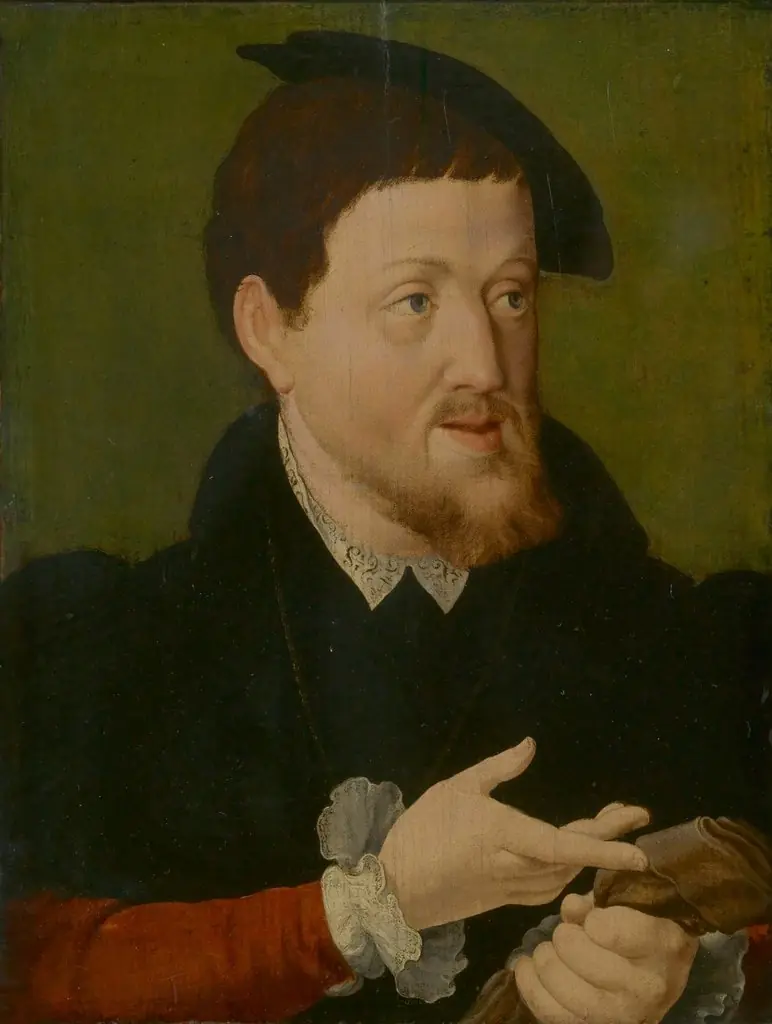 Portrait of emperor Charles V
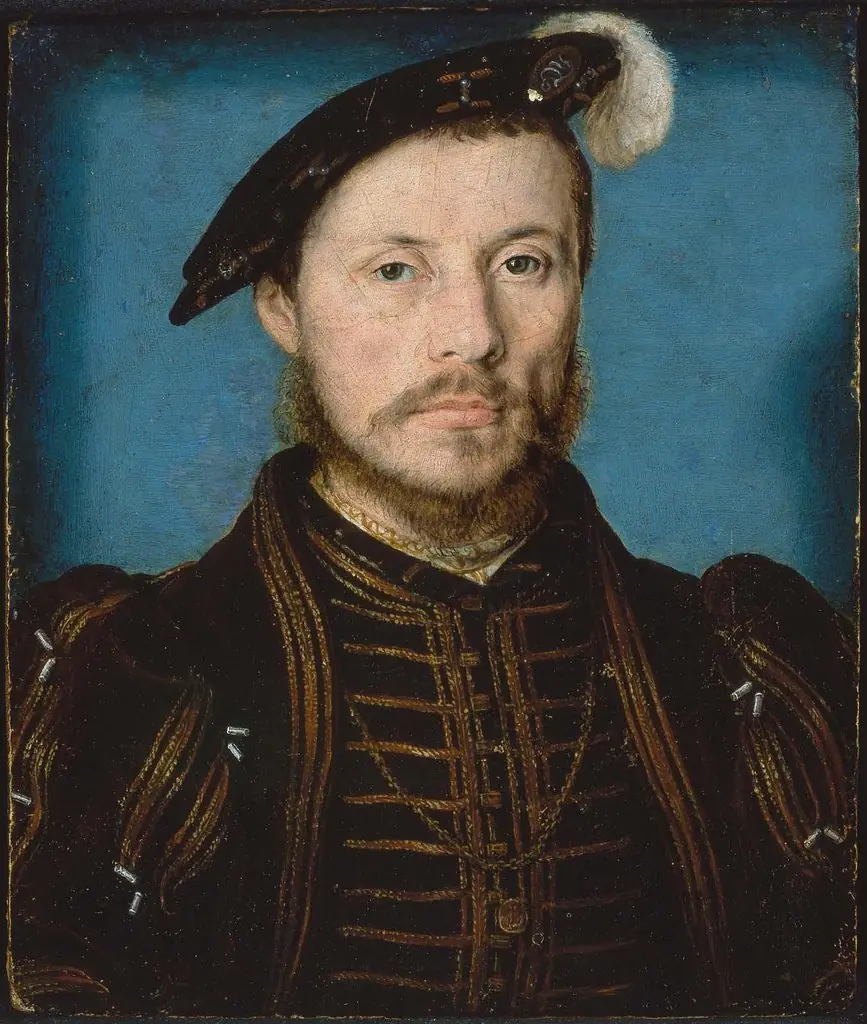 Portrait of a Man, identified as Anne de Montmorency (1493 - 1567)
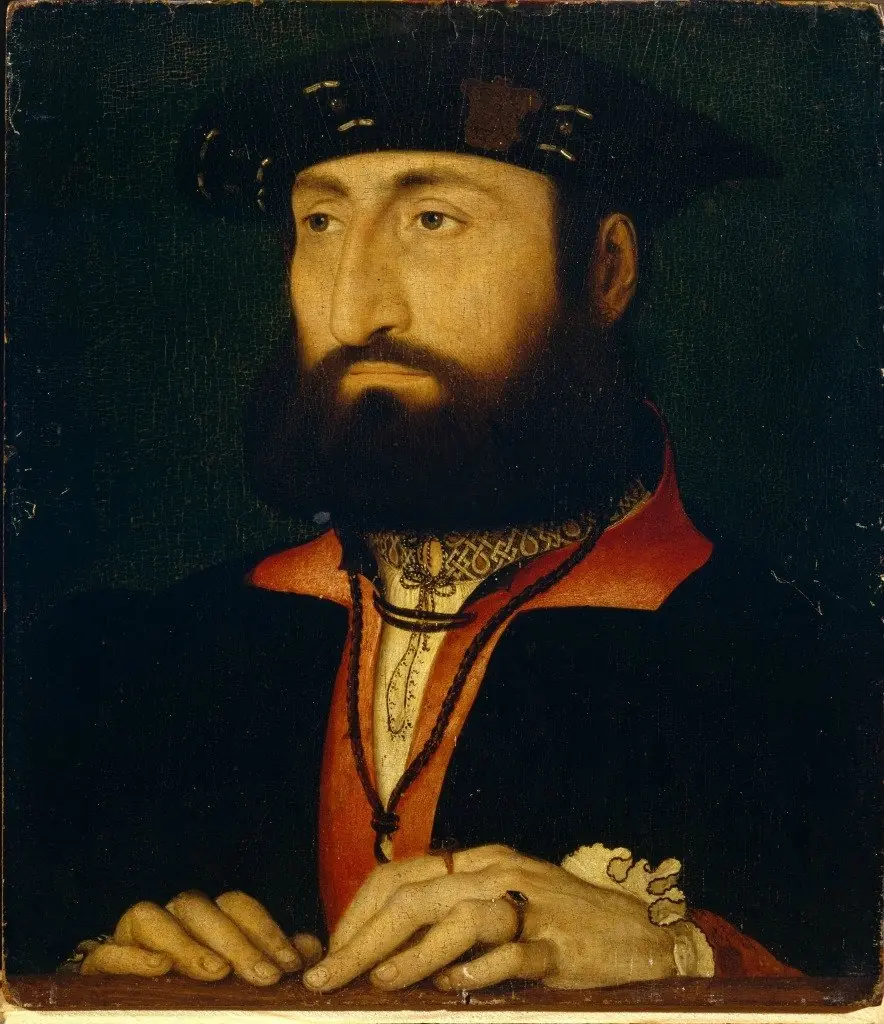 Portrait of Louis de Cleves
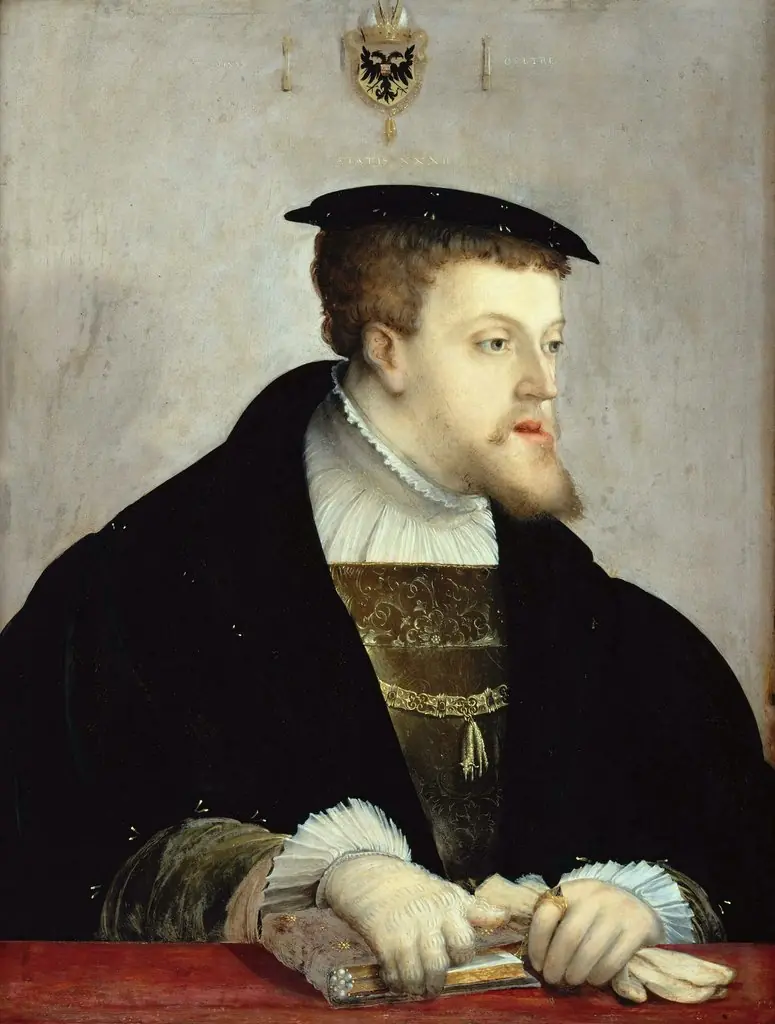 Portrait of Charles V (1500-1558)
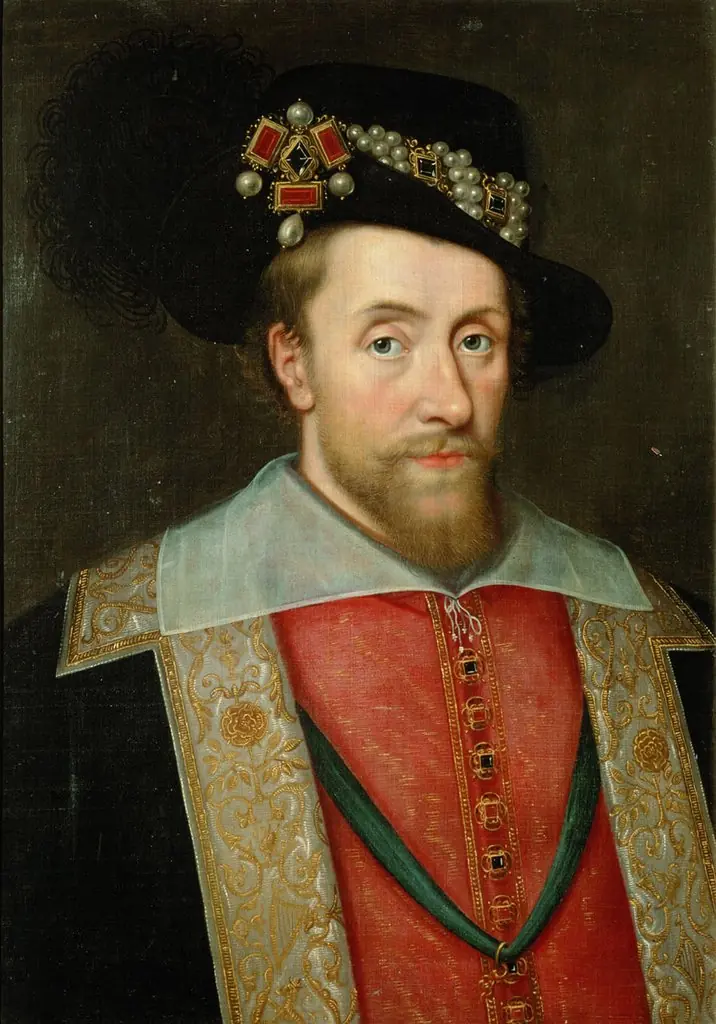 Portrait of James I with The Three Brothers
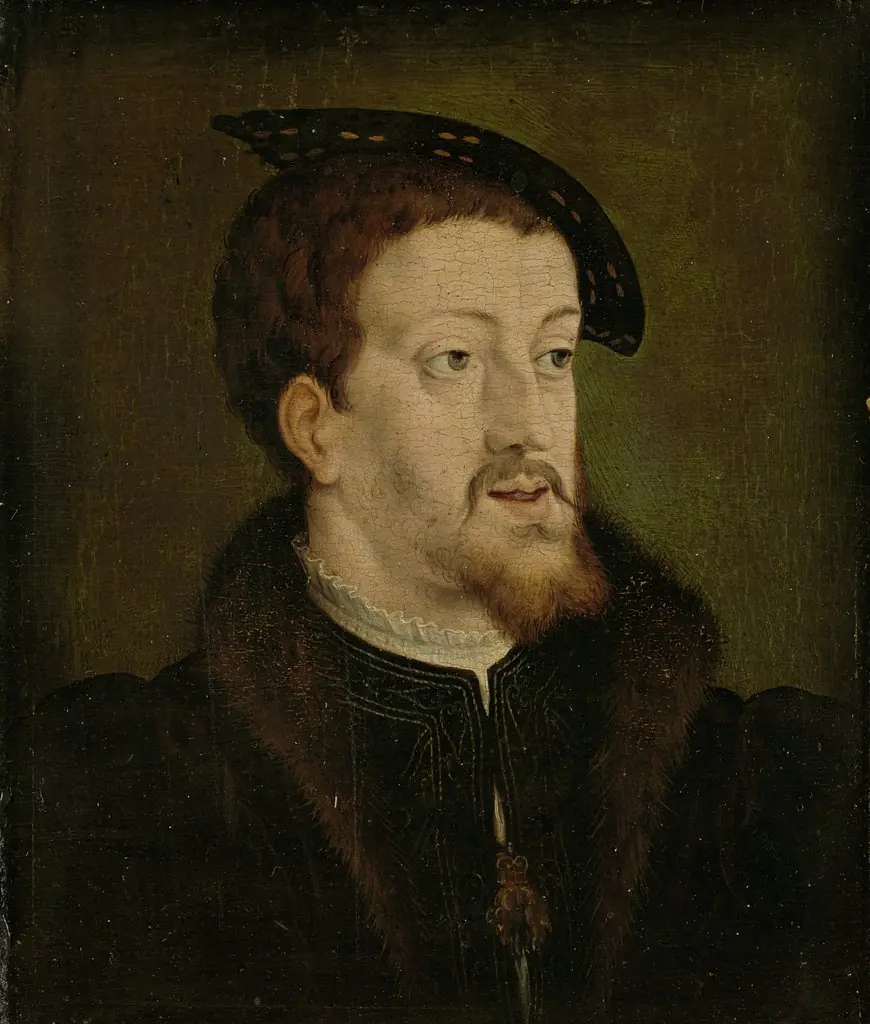 Portrait of Charles V (1500-58), emperor of the Holy Roman Empire
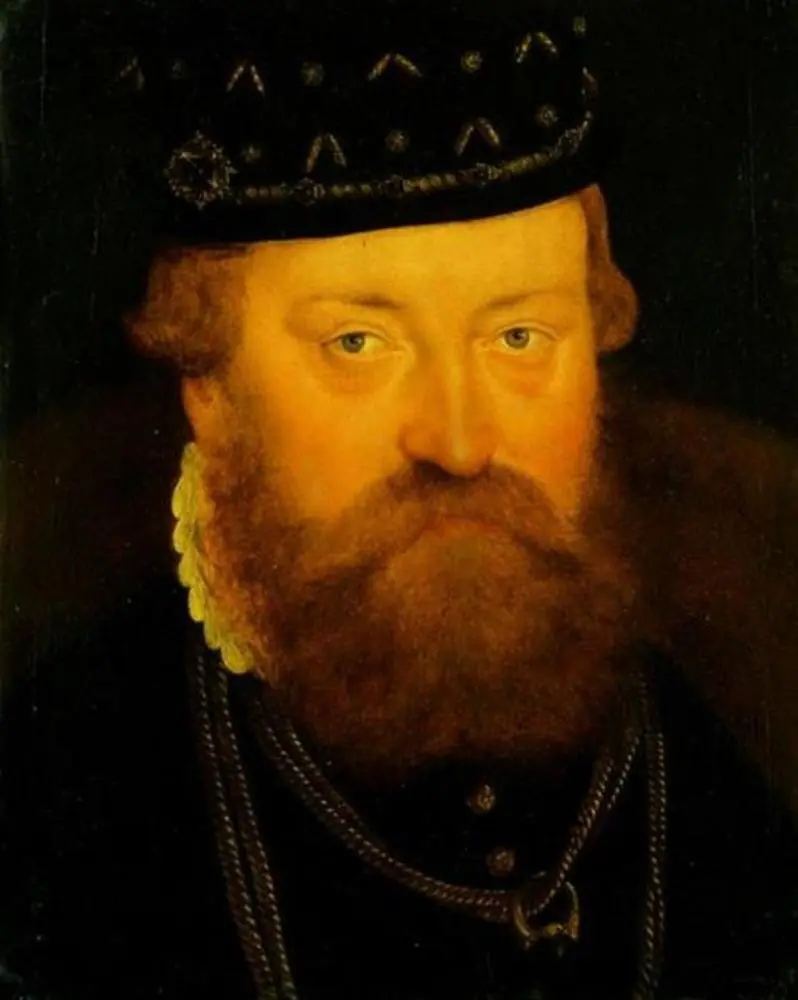 Elector Johann Georg of Brandenburg (1525-1598)